Princess Matoaka / Pocahontas / Rebecca Powhatan (1595–1617)
Diplomatic Daughter of Chief Wahunsenacawh
🎥 This is a VIDEO
To watch, click the words “TRUE STORY” at the link below:
https://www.youtube.com/watch?v=oXpFzanqoZA
Princess Matoaka / Pocahontas / Rebecca Powhatan (1595–1617)
Diplomatic Daughter of Chief Wahunsenacawh
& 12th Great-Grandaunt of Janet Kira Lessin, who wrote this post
For deeper context and related writings, visit:
👉 https://dragonattheendoftime.com/we-are-the-many-a-loving-response-to-fear-based-patriotism/
PRINCESS MATOAKA — SPIRIT OF TWO WORLDS
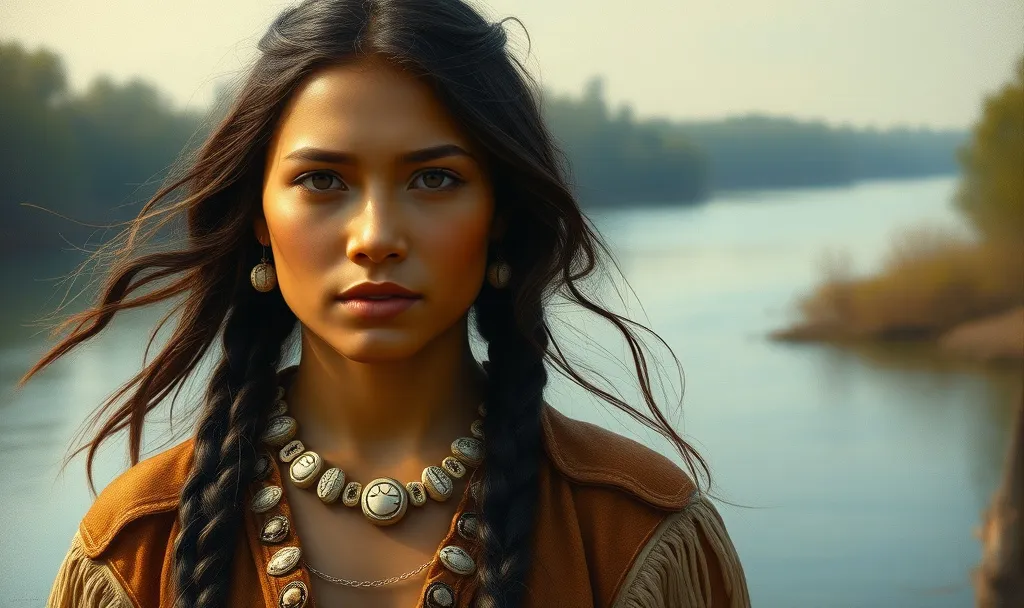
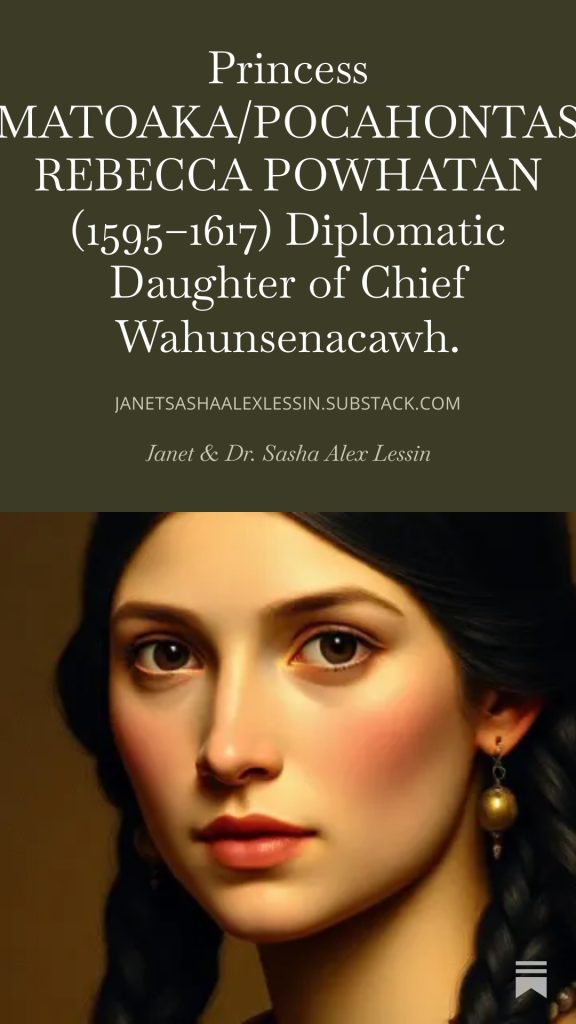
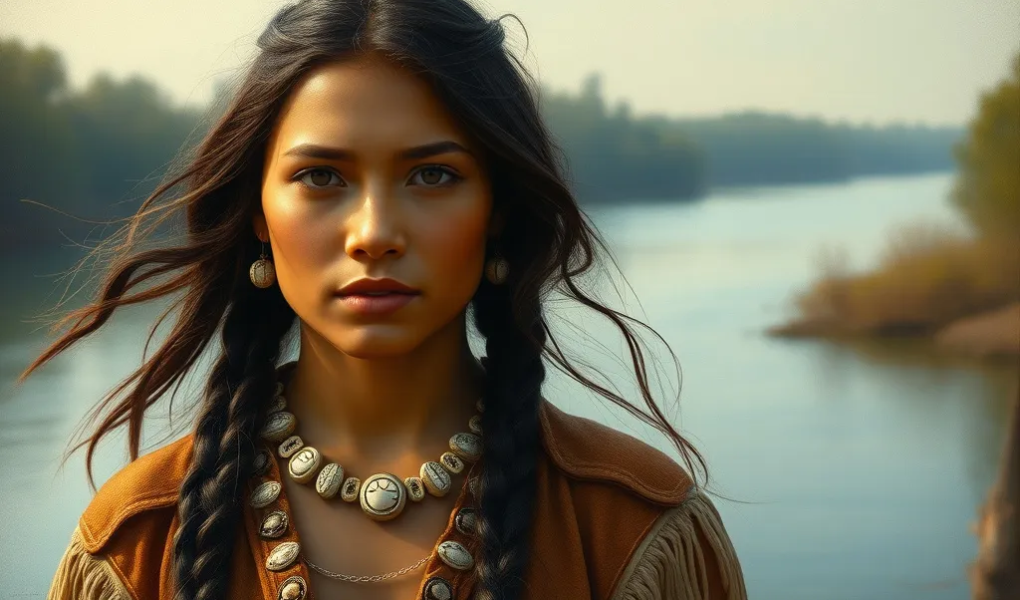
This intimate oil portrait captures Pocahontas as she may have appeared before colonization, known by her birth name, Matoaka. Dressed in finely tanned deerskin adorned with shell and quillwork, she stands along the riverbanks of Werowocomoco, her hair loose in the wind, her gaze calm and resolute.
Her eyes hold both the wisdom of the forest and the sorrow of what lies ahead. Behind her, the Pamunkey River shimmers under early morning light. This portrait honors her true identity as a daughter of the Powhatan Confederacy—before captivity, before England, before the myth.
Matoaka was born in the village of Werowocomoco, on the banks of the Pamunkey River in what is now Virginia. To her family and tribe, she was known for her spirited nature, curiosity, and luminous presence—hence her nickname Pocahontas, meaning “playful one.”
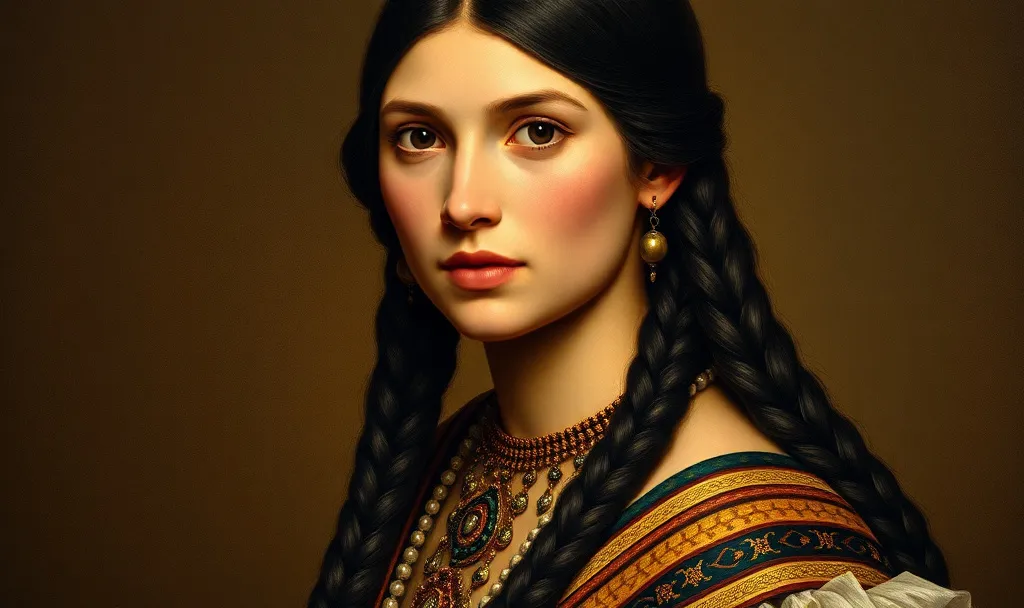
The English would later rename her Rebecca after her Christian baptism, but her soul always belonged to the rivers and forests of her homeland.
Pocahontas was the daughter of Chief Wahunsenacawh (also known as Wahunsonacock), the paramount chief of the Powhatan Confederacy, which governed more than thirty Algonquian-speaking tribes. As his favored child, she was trained not only in traditional women’s roles—gathering, cooking, herbal healing—but also in the arts of diplomacy. She listened during tribal councils and learned to read the silences between words.
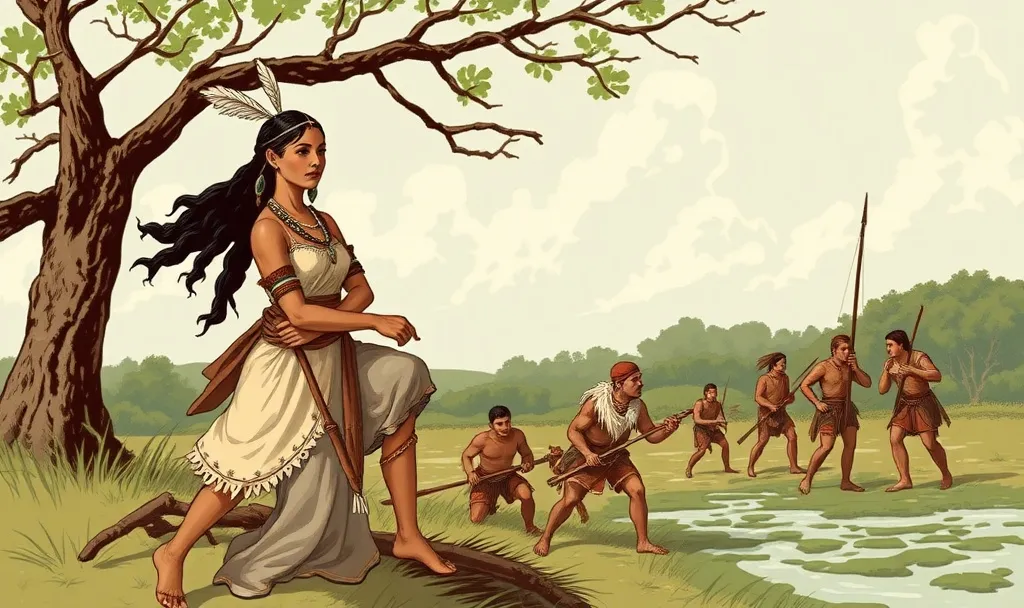
THE OFFERING AT JAMESTOWN
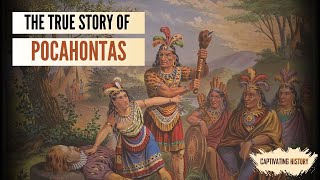
That moment came in 1607, when Powhatan warriors captured Captain John Smith. The oft-retold story of Pocahontas saving him from execution—whether literal, symbolic, or later mythologized—reflects her pivotal role in early colonial diplomacy.
What is certain is that she mediated peace between her people and the Jamestown settlers, visiting the fort with food during times of hunger and negotiating a fragile coexistence during periods of crisis.
But her story does not end there.
CAPTIVITY AND TRANSFORMATION
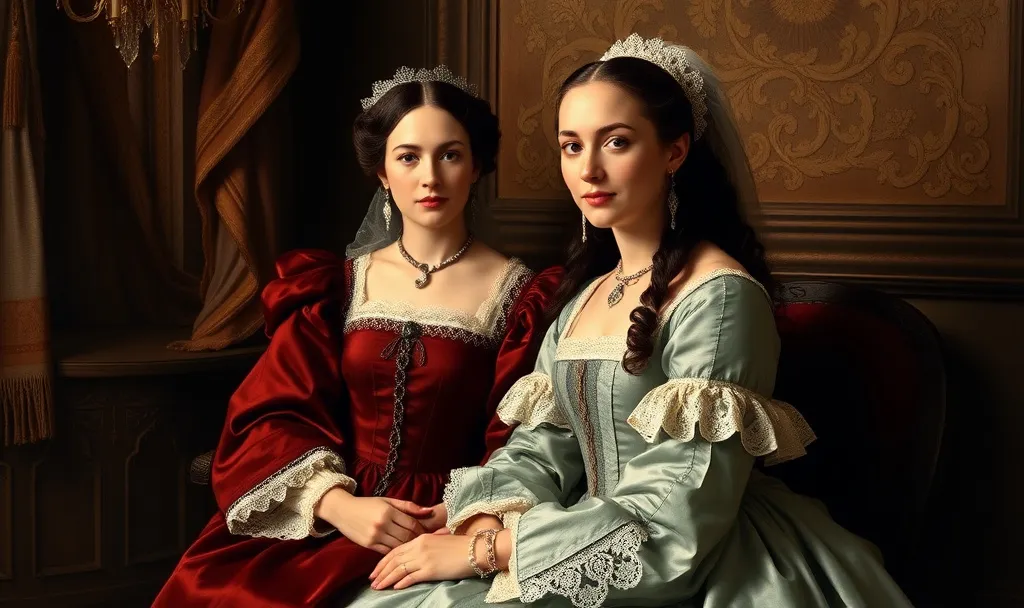
In 1613, Pocahontas was kidnapped by English colonists, held hostage for over a year, and forcibly separated from her people. During captivity, she was baptized and renamed Rebecca. She later married John Rolfe, a tobacco planter whose agricultural success helped sustain the colony’s economy.
In 1616, Rolfe brought her to England, where she was presented as a symbol of the “civilized native”—a tragic and revealing example of how Indigenous women were used as political instruments of empire.
REBECCA POWHATAN — A STRANGER IN THE EMPIRE
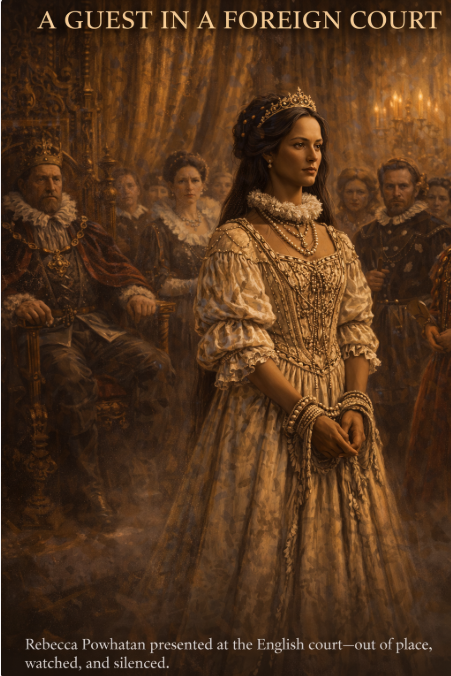
The English transformed a free Powhatan child into a political prisoner, wife, mother, and colonial emblem.
At court, she met King James I and Queen Anne.
She attended high-society events.
She was paraded as proof of imperial success.
Yet beneath the lace, the English gowns, and the public performances lived a woman who had lost her homeland, her people, and her name.
Pocahontas died in March 1617 in Gravesend, England, just as she was preparing to return to Virginia. She was approximately 21 years old.
THE LEGACY THAT ENDURES
But Pocahontas never truly left.
Historians distorted her story. Romantic myths replaced lived truth. Yet she remains a powerful symbol of cultural bridging, survival, and the profound cost of contact.
Her genes live on in her descendants.
Her spirit echoes in every heart that seeks justice, peace, and truth.
THE LEGACY LOOKS BACK
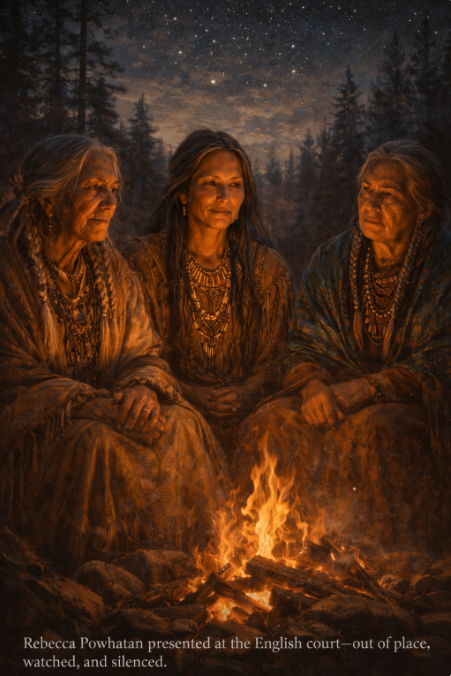
Native American ancestors live within their descendants. May we behold them with respect. Their presence is alive—timeless and unshakable.
Do not only look at the ancestors of today’s Native peoples. Let them look back at you.
Remember. Reflect. Carry forward the sacred story of who they are. And listen—especially to the wisdom of the Grandmothers.
Suggested Hashtags
#AmericanHistoryAncestors, #AncestralWisdom, #BridgeBuilders, #Colonization, #CulturalCoexistence, #IndigenousHistory
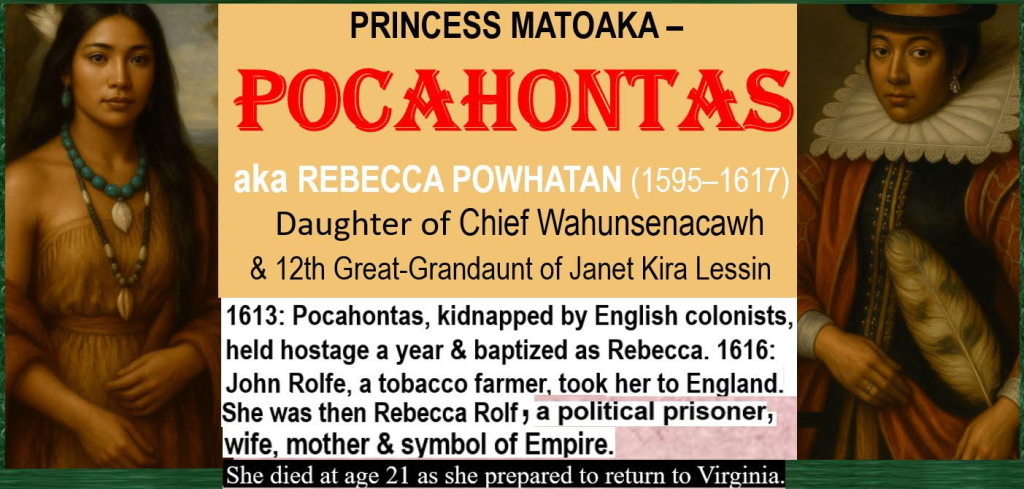
Princess MATOAKA/POCAHONTAS REBECCA POWHATAN (1595–1617)
Diplomatic Daughter of Chief Wahunsenacawh.
https://www.youtube.com/watch?v=oXpFzanqoZA
Princess MATOAKA/POCAHONTAS REBECCA POWHATAN (1595–1617)
Diplomatic Daughter of Chief Wahunsenacawh
&
12th Great-Grandaunt of Janet Kira Lessin, who wrote this post.
Get way more on this at https://dragonattheendoftime.com/we-are-the-many-a-loving-response-to-fear-based-patriotism/
PRINCESS MATOAKA – SPIRIT OF TWO WORLDS
This intimate oil portrait captures Pocahontas as she may have appeared before colonization, known by her birth name, Matoaka. Dressed in finely tanned deerskin adorned with shell and quillwork, she stands by the riverbanks of Werowocomoco, hair loose in the wind, her gaze calm and resolute. Her eyes hold the wisdom of the forest and the sorrow of what’s to come. Behind her, the Pamunkey River shimmers under early morning light. This portrait honors her true identity as a daughter of the Powhatan Confederacy—before captivity, before England, before the myth.
She was born as Matoaka in the village of Werowocomoco, on the banks of the Pamunkey River in what is now Virginia. To her family and tribe, she was known for her spirited nature, her curiosity, and her luminous presence—hence her nickname, Pocahontas, meaning “playful one.” The English would later rename her Rebecca after her Christian baptism, but her soul always belonged to the rivers and forests of her homeland.
Pocahontas was the daughter of Chief Wahunsenacawh (also known as Wahunsonacock), the paramount chief of the Powhatan Confederacy, which governed over more than thirty Algonquian-speaking tribes. As his favored child, she was trained not only in the roles of women—gathering, cooking, herbal healing—but also in the diplomatic arts. She listened closely during tribal councils and learned to read the silences between words.
THE OFFERING AT JAMESTOWN
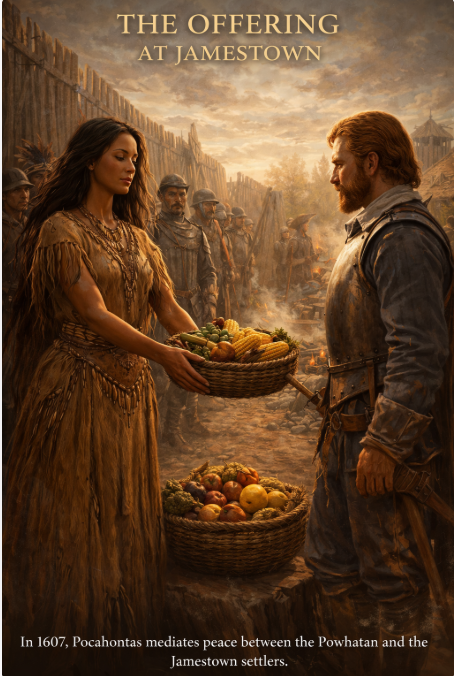
That meeting came in 1607, when Powhatan warriors captured Captain John Smith. The oft-retold tale of Pocahontas saving him from execution—whether literal, symbolic, or mythologized—reflects her pivotal role in early colonial diplomacy. What is certain is that she mediated peace between her people and the Jamestown settlers, visiting the fort with gifts of food during times of hunger and negotiating safe passage for both cultures in times of crisis.
But her story does not end there.
In 1613, Pocahontas was kidnapped by English colonists, held hostage for over a year, and eventually baptized as Rebecca. During captivity, she met and married John Rolfe, a tobacco farmer whose success would help sustain the colony’s economy. In 1616, Rolfe took her to England as a symbol of the “tamed savage”—a tragic but revealing display of how the English used Indigenous women as political tools.
REBECCA POWHATAN – A STRANGER IN THE EMPIRE
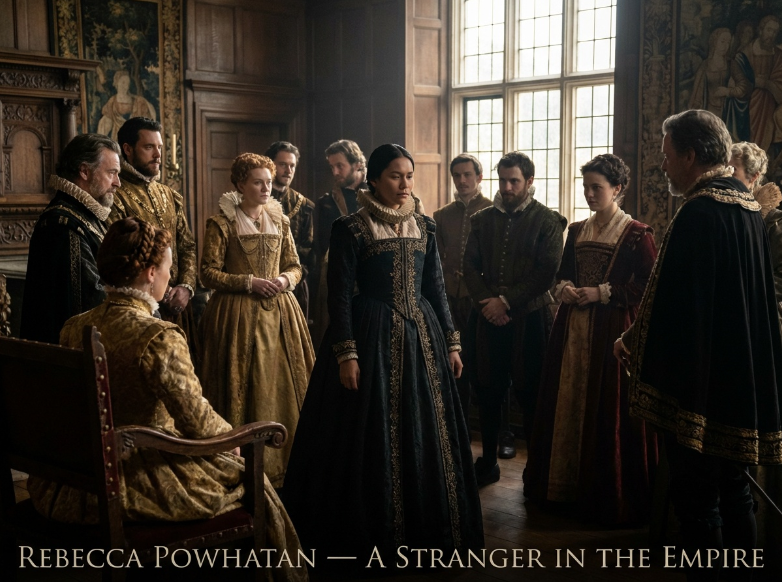
The English transformed her from a free Powhatan child to a political prisoner, wife, mother, and symbol of the British Empire.
In court, she met King James I and Queen Anne. She attended high society events.
The Royals paraded her as an emblem of their colonial success.
Yet behind the lace and English dresses lived a woman who had left her homeland, her people, and her name behind.
She died in March 1617, in Gravesend, England, just as she was preparing to return to Virginia. She was around 21 years old.
But Pocahontas never truly left. Paleface historians distorted, romanticized, and misunderstood her, but she remains a symbol of survival, cultural bridging, and the cost of contact. Her genes run through every descendant. Her spirit echoes in every heart that seeks justice, peace, and truth.
THE LEGACY LOOKS BACK
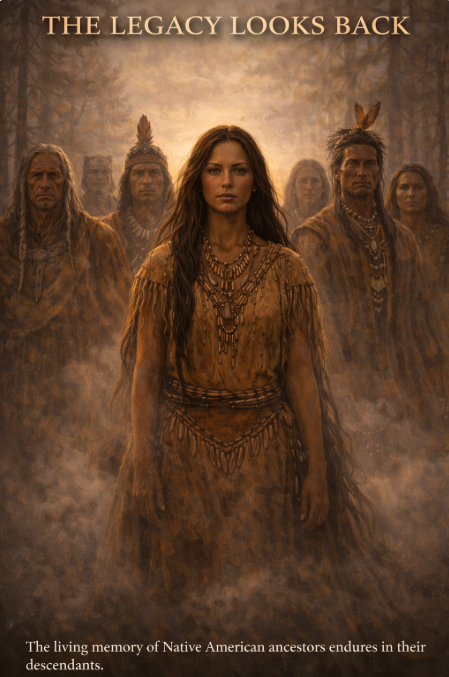
Native American ancestors live in their descendants. May we all behold them with respect. Their presence feels alive, timeless, and unshakable. Look not only at the ancestors of today’s Native Americans; let them see you. Remember to reflect and to carry forward the sacred story of who they are. Listen to their wisdom, especially that of the Grandmothers.
I, Janet, look very white. I had no idea I had Native American DNA until I took my ancestry test. I have many tribes in my tree.
#AmericanHistoryAncestors #Ancestral wisdom #BridgeBuilder #Colonization Ccommunity #Cultural coexistence #culturalPreservation #Decolonize #Diversity #First Contact #Healing #HistoricalMeeting #Matriarch #Mohawk #Montauk #Multicultural #NativeAmerican #NativeMidwife #Pamunkey #Peacemaker #Powhatan #spiritual lineage
Share this post, help the world remember, pay reparations, and make amends to the living descendants of the proud, advanced, partnership-oriented people of America who preceded the rapacious White settlers and their miserable enslaved, indentured, and other victims of European domination-obsession.
Princess Matoaka / Pocahontas / Rebecca Powhatan (1595–1617)
Diplomatic Daughter of Chief Wahunsenacawh
FEATURED IMAGE
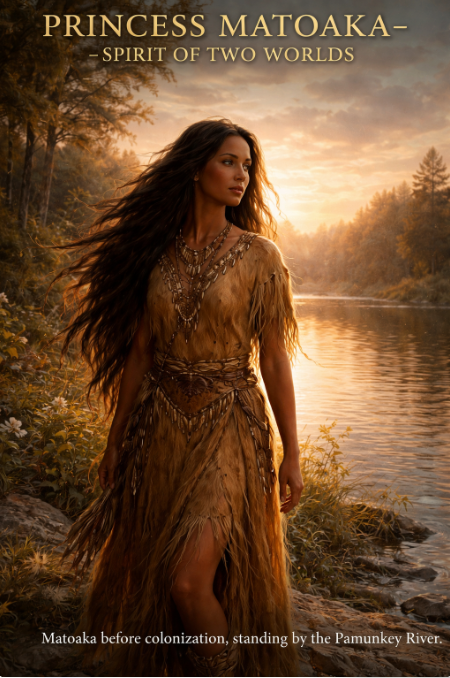
TITLE: PRINCESS MATOAKA — SPIRIT OF TWO WORLDS
DESCRIPTION: A reverent, intimate portrait of Matoaka before colonization, honoring her true identity as a Powhatan daughter, diplomat, and bridge between worlds.
IMAGE PROMPT: A realistic, photorealistic, cinematic oil‑style portrait of a young Native American woman standing along a wide riverbank at dawn. She wears finely tanned deerskin clothing adorned with shell and quillwork. Her long, dark hair flows freely in the breeze. Her expression is calm, intelligent, and quietly resolute. Behind her, the Pamunkey River glows under early morning mist, with forested banks and soft golden light. No European elements. Mood: dignified, ancestral, sacred. Style: realistic, photorealistic, cinematic lighting, soft natural colors, fantasy realism, highly detailed, emotional depth, artistic composition. Landscape orientation.
PRINCESS MATOAKA — SPIRIT OF TWO WORLDS
IMAGE TITLE: DAUGHTER OF WEROWOCOMOCO
DESCRIPTION: Matoaka, as a child of the Powhatan homeland, was rooted in the river, forest, and kinship.
IMAGE PROMPT: A cinematic landscape of Werowocomoco along the Pamunkey River. A young Native American girl stands barefoot near the water’s edge, forest behind her, sunlight filtering through trees. Her posture is relaxed but aware, embodying curiosity and confidence. No colonial presence. Style: realistic, photorealistic, cinematic lighting, soft natural colors, fantasy realism, highly detailed, emotional depth. Landscape.
THE OFFERING AT JAMESTOWN
IMAGE TITLE: THE DIPLOMAT BETWEEN WORLDS
DESCRIPTION: Pocahontas, as a young diplomat, brings food and peace during the fragile early days of Jamestown.
IMAGE PROMPT: A realistic cinematic scene showing a young Indigenous woman standing between Powhatan people and early Jamestown settlers. She holds baskets of food, her posture calm and authoritative. Tension is present but restrained. Fort structures appear distant and minimal. Focus on her role as mediator. Style: realistic, photorealistic, cinematic lighting, soft natural colors, fantasy realism, highly detailed, emotional depth. Landscape.
CAPTIVITY AND TRANSFORMATION
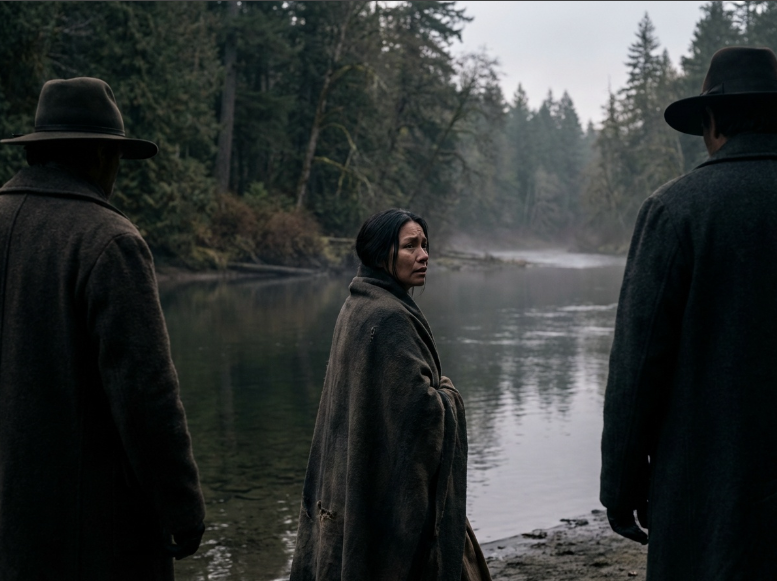
IMAGE TITLE: TAKEN FROM THE RIVER
DESCRIPTION: The moment of rupture—loss of freedom, homeland, and identity.
IMAGE PROMPT: A somber cinematic image of a Native American woman on a riverbank being escorted away by shadowed figures in European clothing. Her gaze turns back toward the water and forest. Mood: grief, restraint, injustice. No violence shown. Style: realistic, photorealistic, cinematic lighting, muted natural colors, emotional depth, artistic composition. Landscape.
REBECCA POWHATAN — A STRANGER IN THE EMPIRE
IMAGE TITLE: A GUEST IN A FOREIGN COURT
DESCRIPTION: Rebecca Powhatan presented at the English court—out of place, watched, and silenced.
IMAGE PROMPT: A cinematic interior scene of an English royal court. A Native American woman in early 17th‑century English dress stands apart from richly dressed courtiers. Her expression is composed but distant. Ornate surroundings contrast with her stillness. Style: realistic, photorealistic, cinematic lighting, soft natural colors, highly detailed, emotional depth. Landscape.
THE LEGACY THAT ENDURES
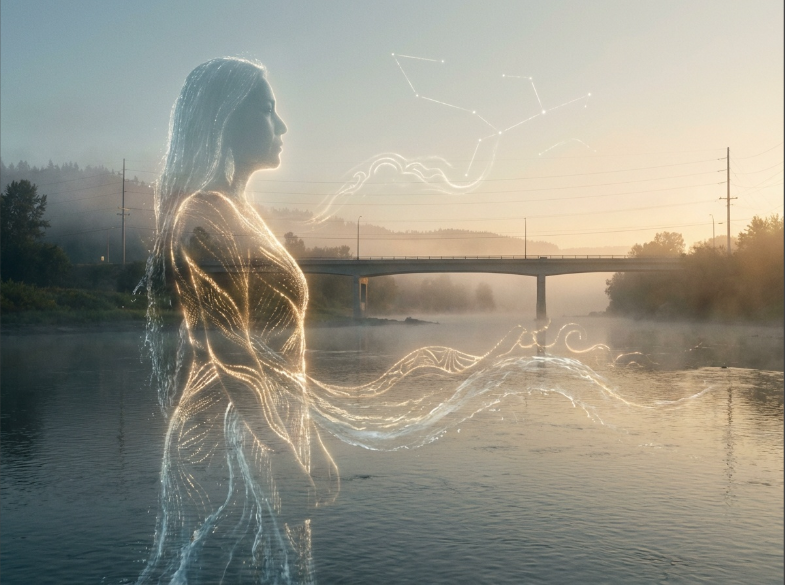
IMAGE TITLE: BLOOD MEMORY
DESCRIPTION: Ancestral presence flowing forward through time.
IMAGE PROMPT: A symbolic cinematic image of a translucent Native American woman’s figure blending into a modern river landscape. Subtle light patterns suggest ancestry and continuity. Mood: timeless, reverent, hopeful. Style: realistic, photorealistic, cinematic lighting, soft natural colors, fantasy realism, emotional depth. Landscape.
THE LEGACY LOOKS BACK
IMAGE TITLE: THE GRANDMOTHERS REMEMBER
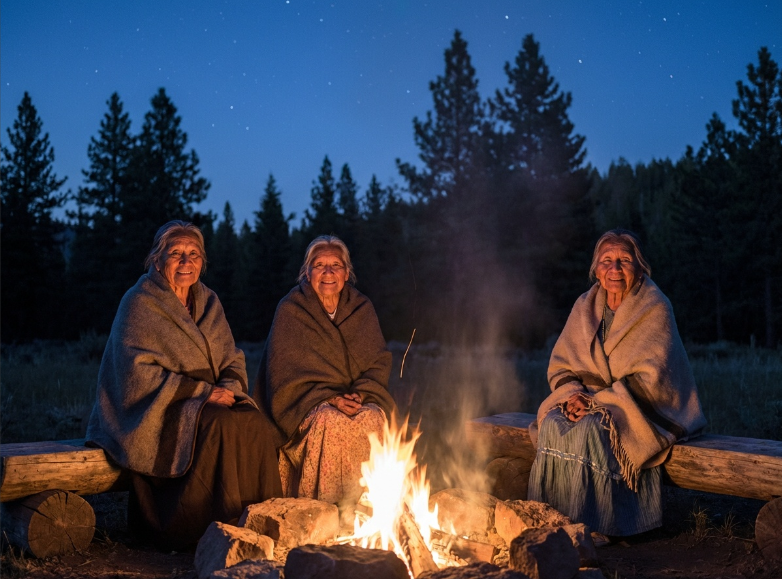
DESCRIPTION: Honoring Indigenous matrilineal wisdom and continuity.
IMAGE PROMPT: A serene cinematic scene of elder Native American women seated near a fire at dusk, their faces illuminated by warm light. Their expressions convey wisdom, compassion, and strength. Forest and stars in the background. Style: realistic, photorealistic, cinematic lighting, soft natural colors, highly detailed, emotional depth. Landscape.
TAGS (Comma‑Separated)
Pocahontas, Matoaka, Rebecca Powhatan, Powhatan Confederacy, Indigenous History, Native American History, American History, Colonial America, Jamestown, Indigenous Women, Ancestral Wisdom, Ancestral Memory, Cultural Bridge Builders, Diplomacy, Colonization and Its Costs, Women in History, Matrilineal Legacy, Spiritual Ancestry, Living Ancestors, Decolonizing History, Dragon at the End of Time
AUTHOR BIOS
Janet Kira Lessin is a writer, historian, and experiencer‑researcher exploring ancestral memory, alternative history, and consciousness through a heart‑centered lens. She is a co‑author of numerous works with Dr. Sasha Alex Lessin and the founder of Dragon at the End of Time, where history, lineage, and multidimensional awareness converge.
Dr. Sasha Alex Lessin, Ph.D. (Anthropology, UCLA) is an anthropologist, author, and researcher focused on partnership societies, Indigenous histories, and long‑arc human evolution. Together, Janet and Sasha explore humanity’s past to illuminate compassionate futures.
REFERENCES & FURTHER READING
• Rountree, Helen C. Pocahontas, Powhatan, Opechancanough: Three Indian Lives Changed by Jamestown • Townsend, Camilla. Pocahontas and the Powhatan Dilemma • National Park Service – Jamestown & Powhatan History • Smithsonian National Museum of the American Indian • Oral histories of the Pamunkey Tribe • https://dragonattheendoftime.com/we-are-the-many-a-loving-response-to-fear-based-patriotism/
Preview YouTube video The True Story of PocahontasPreview YouTube video The True Story of Pocahontas