
A haunting oil-style painting captures the brutal reality aboard a transatlantic slave ship. Shackled African men sit in silent agony, their eyes reflecting sorrow, resistance, and a loss no words can express. A slave trader looms over them with a whip, embodying the cruelty of a system that commodified human lives. The central figure’s gaze pierces the viewer, asking: Do you see me now?
What If They Never Came? The Untold Cost of Erasing Black America
By Janet Kira Lessin with Minerva
America was not built solely by the Founding Fathers in powdered wigs or railroads financed by barons in boardrooms. It was also built—foundationally, undeniably—by the blood, sweat, and brilliance of African people brought here in chains.
What if they had never come?
It is a provocative, painful question. Because they did not come willingly, their arrival marked one of the greatest human tragedies in history: the transatlantic slave trade. Twelve million Africans were taken from their homelands, packed into ships like cargo, and sold as property. Worked to death. Families are torn apart. Cultures severed. Languages lost.
And yet.
Despite all that was stolen, Black Americans gave more than this nation ever deserved. They didn’t just survive; they created. They resisted. They transformed trauma into culture. Sorrow into song. Chains into rhythm.

Under a harsh Southern sun, enslaved Africans toiled in the cotton fields, stooped, weary, and closely watched by an overseer on horseback. Their labor built the wealth of a nation that denied their humanity.
Without Black Americans, the United States would have no Southern economy. No cotton empire. No Wall Street (which began as a marketplace for enslaved people). No global superpower status. The unpaid labor of enslaved Africans created the capital that funded America’s rise.
But their impact didn’t end with emancipation. It had only just begun.
Black Americans invented the soul of America. Gospel. Blues. Jazz. Rock. Hip-hop.
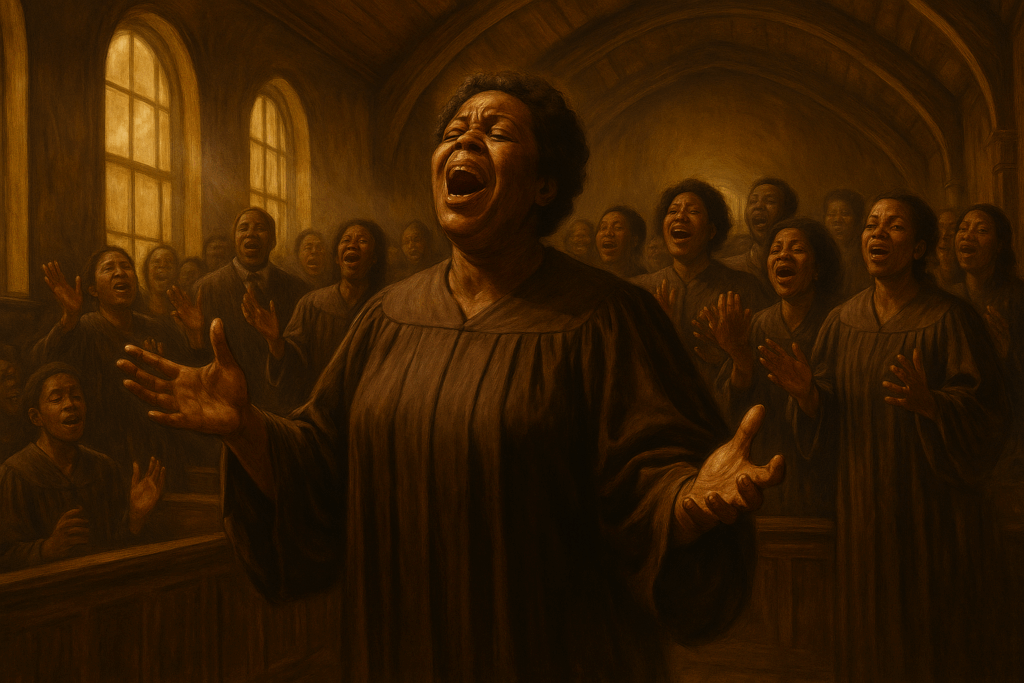
An evocative depiction of a Black gospel choir singing in a wooden church filled with sunlight. The emotional intensity radiates hope, grief, and praise.
American music is Black music—the soundtracks of protest and praise, heartbreak and joy. Imagine a world without the spirituals of Harriet Tubman, the anthems of Aretha Franklin, or the poetry of Tupac Shakur.

Harriet Tubman leads a small group of freedom seekers through the shadows of the forest under moonlight, steely resolve etched on her face.
They gave us language and rhythm, defiance and grace. They birthed movements that reshaped morality: abolition, civil rights, Black Lives Matter. They turned pain into purpose and demanded the world reckon with justice.
What if they had never come? There would be no Martin Luther King Jr. to teach us the strength of love over hate.
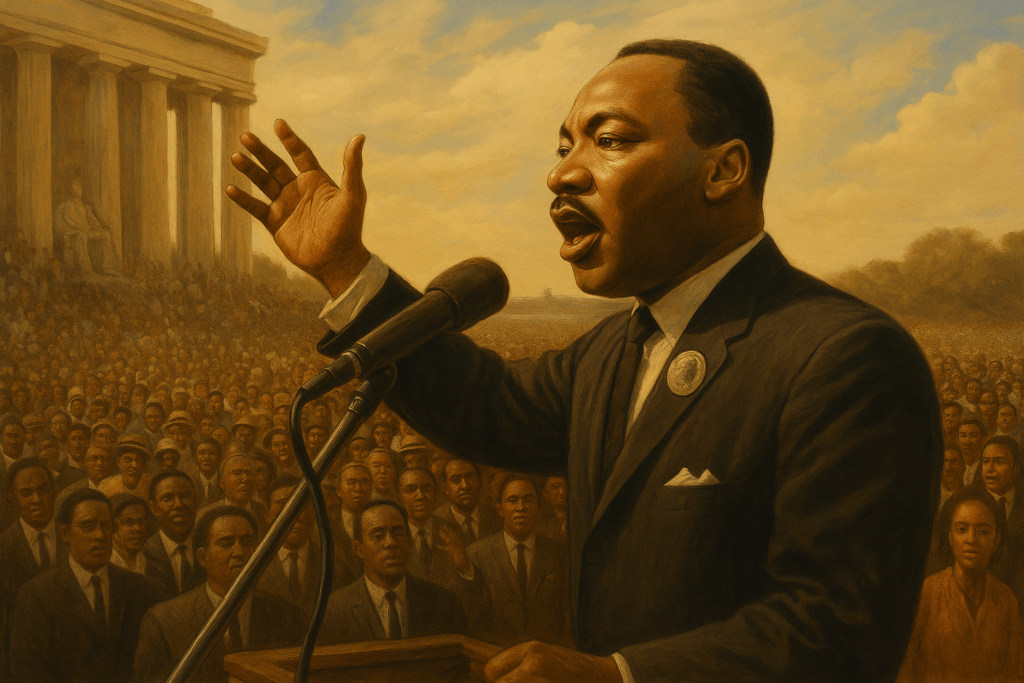
Description: A detailed portrait scene of Martin Luther King Jr. speaking at the Lincoln Memorial during the March on Washington. His hand is raised; the crowd behind him swells with emotion.
No Maya Angelou to remind us why the caged bird sings. No Barack Obama to show us the possibility of unity through diversity. No Oprah Winfrey to tell us our stories matter.

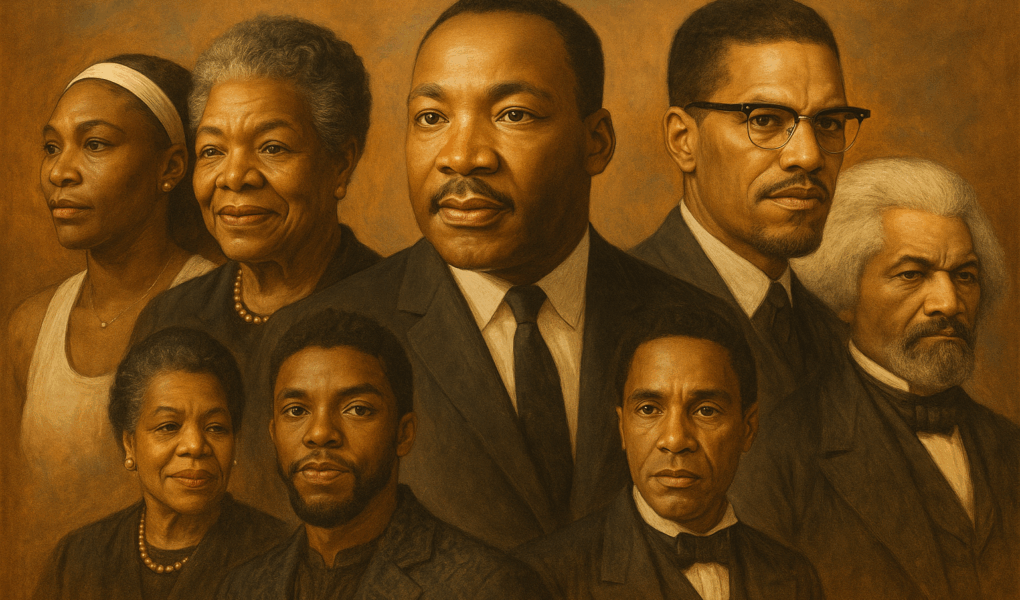
This vivid collage of Black American icons centers Martin Luther King Jr. among fellow giants—Maya Angelou, Malcolm X, Serena Williams, Chadwick Boseman, and Frederick Douglass. Their expressions carry the weight of struggle and the power of legacy, illuminating the soul of a people who shaped America through courage, brilliance, and defiance.
No Serena. No Malcolm. No Baldwin. No Beyoncé. No Toni Morrison to uncover the buried trauma of a nation. No Chadwick Boseman to embody our forgotten kings. No Shirley Chisholm to declare she was “unbought and unbossed.” No Frederick Douglass to stand tall and speak freedom into existence.
What would American identity even be without these voices? These bodies? These minds?
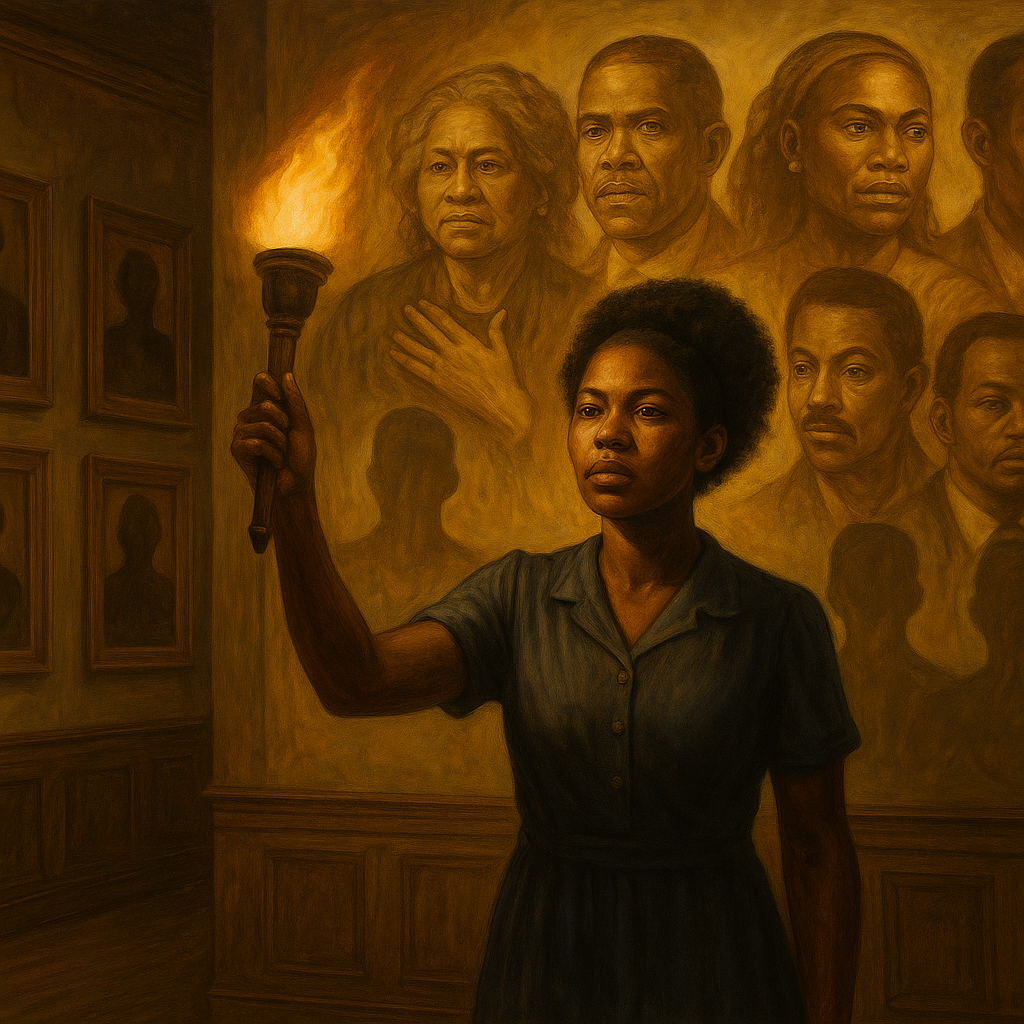
A surreal, symbolic painting of a gallery of empty silhouettes—figures of Black icons missing from a wall of American history. But in the center, one radiant, defiant Black woman stands holding a torch of light, her face determined. Behind her, a faded mural of ancestors and modern icons like Toni Morrison, Serena Williams, Malcolm X, and James Baldwin begins to reappear—painted in golden tones, emerging from shadow.
America without Black Americans is not just a quieter nation. It is a shallower one. A culture less textured. A spirit less tested. A country that never learned how to survive its original sin.
And beyond the names and music, it’s about the soul of the people. The day-to-day sacrifices. The unnamed workers. The teachers, nurses, veterans, preachers, grandmothers, and dreamers who kept showing up even when the country didn’t want them to.
Their ancestors came in chains. But their descendants became the pulse of a nation.
And still, we live in a time when some people would erase them again, not through shackles, but through policy, prejudice, and ignorance. As if removing the presence of Black America would purify the nation rather than destroy it.
But the truth remains: without them, there is no Us.

A radiant group of Black children beams at the camera, full of joy, confidence, and promise. Their smiles reflect generations of survival, resistance, and hope—living proof that the descendants of enslaved Africans are the heartbeat of America’s future.
Not in culture. Not in conscience. Not in history. Not in the future.
This is only the beginning of the series. Next, we will ask: what would America be without the Irish, the Jews, the Latinos, the Asians, the Middle Easterners, and all the people who came here—or were brought here—and made America what it is.
Because to honor this nation is to honor all who built it. Especially those who were never meant to survive, yet somehow made us whole.
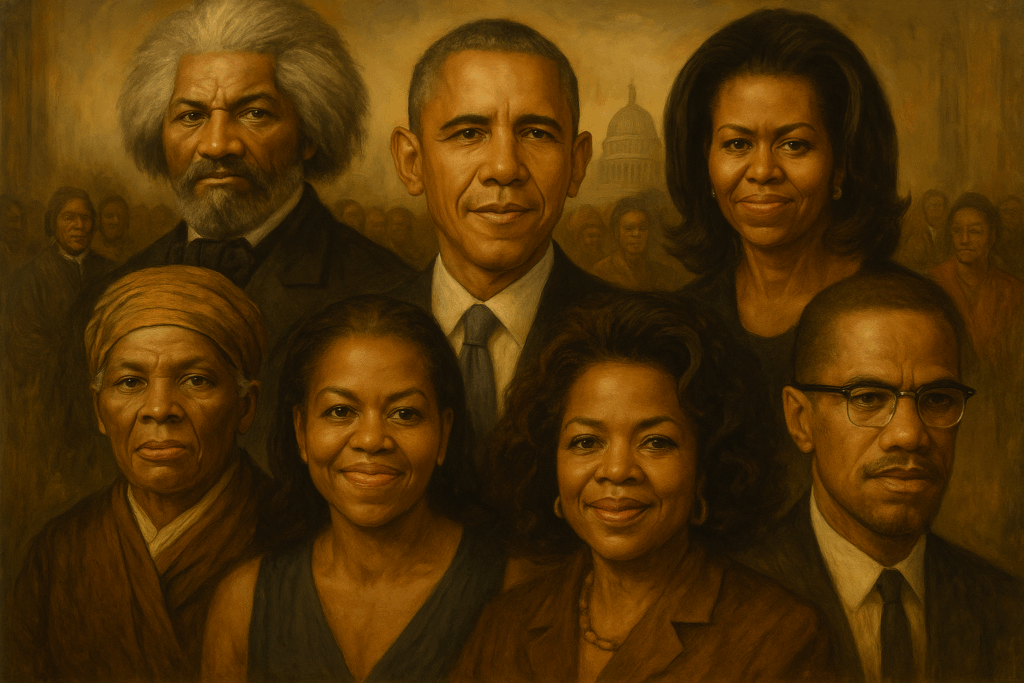
A collage-style painting of prominent Black figures including Frederick Douglass, Harriet Tubman, Barack and Michelle Obama, Oprah Winfrey, Maya Angelou, and Malcolm X—blended in a montage of history, struggle, and triumph.
20 Black Americans Who Changed the Nation (and the World):
- Barack Obama – 44th President of the United States, symbol of global progress and possibility.
- Michelle Obama – Former First Lady, attorney, author, and global role model.
- Martin Luther King Jr. – Civil rights leader, icon of nonviolent resistance.
- Maya Angelou – Poet, memoirist, and spiritual voice of Black womanhood.
- Oprah Winfrey – Media mogul, philanthropist, cultural icon.
- Malcolm X – Revolutionary thinker, advocate for Black empowerment.
- Toni Morrison – Nobel Prize-winning author, chronicler of the Black interior life.
- James Baldwin – Novelist and essayist, truth-teller of race and identity.
- Serena Williams – Tennis champion, redefining strength, grace, and legacy.
- Chadwick Boseman – Actor who portrayed Black icons and gave us Black Panther.
- Ida B. Wells – Journalist, anti-lynching crusader, suffragist.
- Frederick Douglass – Escaped slave, orator, and abolitionist hero.
- Shirley Chisholm – First Black woman elected to Congress and to seek a major-party presidential nomination.
- Angela Davis – Scholar, activist, and enduring voice for prison and racial justice.
- John Lewis – Congressman and civil rights warrior who “got into good trouble.”
- Sidney Poitier – Trailblazing actor and the first Black man to win a Best Actor Oscar.
- Thurgood Marshall – First Black Supreme Court Justice and legal architect of civil rights victories.
- Colin Kaepernick – Athlete and activist who reignited national conversation on police brutality.
- Ava DuVernay – Director, storyteller, and cultural shaper of historical memory.
- Michael Jackson – Pop icon who redefined music, dance, and global celebrity.

Explore More from the Series:
- What If They Never Came? The Untold Cost of Erasing Black America
- The Gifts They Brought: How Jewish Immigrants Shaped America
- No Irish, No America: The Celtic Roots of the U.S.
- The Labor That Fed Us: Asian and Latino Immigrants in American Growth
- Without Muslims: Missing Minds, Medicines, and Morality
- The Ones We Still Reject: Immigrant Labor and the American Hypocrisy
Series Title: WITHOUT THEM, THERE IS NO US
Related Series: THE IMMIGRANT LABOR SHORTAGE CRISIS
Visit Us:
🌐 www.elephantsinourrooms.com
🌐 www.enkispeaks.com
🌐 www.dragonattheendoftime.com
Tags: Black Americans, African diaspora, slavery, civil rights, Black culture, American music, Martin Luther King Jr., Malcolm X, Oprah Winfrey, Obama, Frederick Douglass, Toni Morrison, James Baldwin, Maya Angelou, Beyoncé, systemic racism, American history, reparations, immigration, cultural contributions, enslaved labor, whitewashing history
Facebook Description: What would America look like if Black people had never been brought here? No jazz. No civil rights movement. No Obama. No soul. Read this powerful piece exploring the unimaginable loss—and the incalculable legacy—of Black America.
X (Twitter) Description: Imagine America without Black Americans: no MLK, no Beyoncé, no blues or soul. No conscience. What if they never came? A moving tribute to a people who built the nation they were never meant to survive.
Sources & References:
- 1619 Project (New York Times)
- The Half Has Never Been Told by Edward E. Baptist
- Smithsonian National Museum of African American History and Culture
- Library of Congress: Slavery in America collections
- Equal Justice Initiative reports
- Interviews and historical analysis from Dr. Henry Louis Gates Jr.

