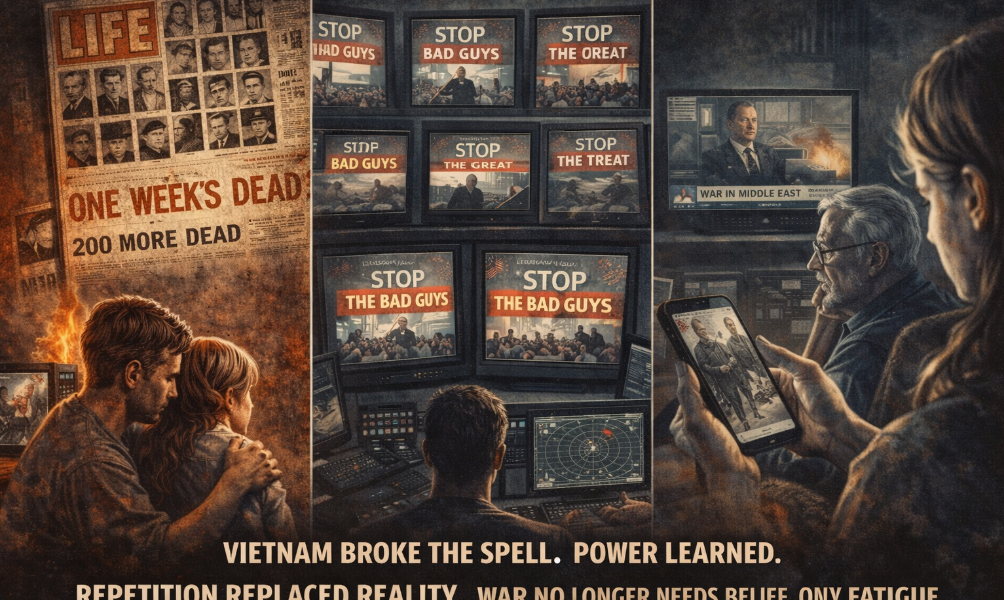
How Manufactured Threats Create Leaders While Civilians Disappear
By Sasha Alex Lessin, Ph.D. and Janet Kira Lessin
WORK IN PROGRESS — Part of an ongoing investigative series.
This article examines historical patterns of manufactured war narratives and their modern evolution.
Wars do not merely destroy nations; they construct ladders. Someone always climbs while others fall, and the higher the bodies pile, the steeper the ascent becomes for those who learn how to frame conflict as necessity rather than choice. By the time the public notices the cost, the beneficiaries are already installed, insulated by power, medals, and the language of “security.”
Vietnam was the last time this pattern fractured under the weight of public disgust. That rupture did not end the war; it taught its architects a lesson they would never forget. Never again would images, numbers, and raw human grief be allowed to interrupt momentum. Never again would narrative control be surrendered to witnesses, reporters, or moral shock. What followed was not restraint, but refinement.
WAR AS LADDER, NOT ACCIDENT


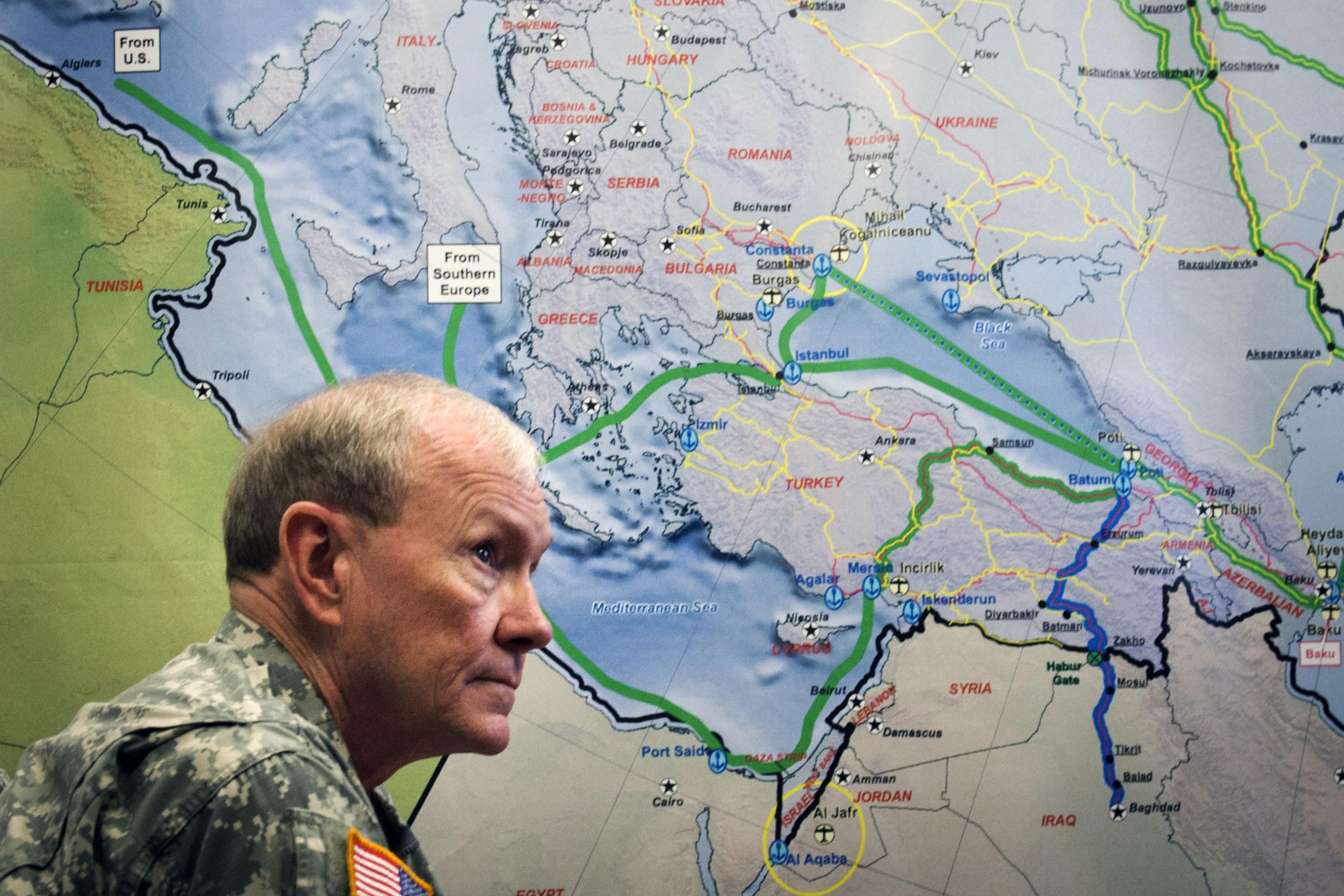
Description:
A modern conflict without declarations: night patrols, checkpoints, and briefings that look procedural rather than exceptional—war as routine governance.
Prompt:
Realistic, cinematic illustration, contemporary Latin American coastal and urban security scenes at night, subdued lighting, documentary realism, restrained color palette, landscape orientation.
Venezuela sits squarely within that refinement. The modern pretext no longer requires a formal declaration of war, nor even a coherent explanation. It requires only a repeated phrase, a vague menace, and a population conditioned to accept that violence, somewhere else, against unnamed others, must be necessary.

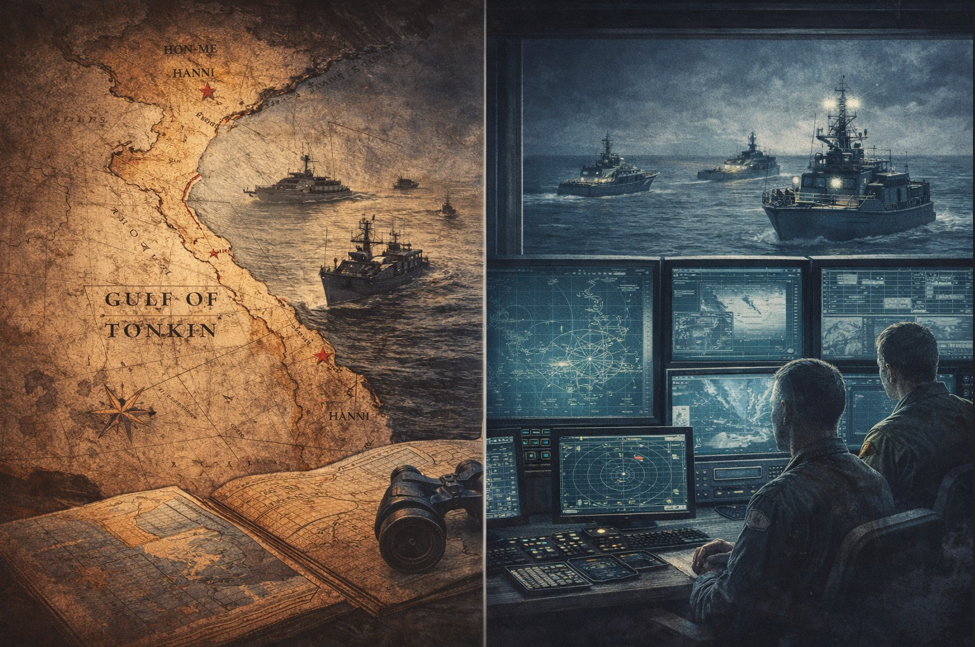
Where Vietnam relied on claims of attacks in distant waters, today’s conflicts rely on boats again—intercepted, targeted, or erased from the story before questions can form. The language has shifted from “communism” to “drugs,” from ideology to criminality, but the function remains identical: remove political complexity, replace it with threat.
BOATS, PRETEXTS, AND THE DISAPPEARING STORY

Description:
Echoes across decades: maps, patrols, and radar rooms—different eras, same logic of provocation without accountability.
Prompt:
Conceptual historical-comparison illustration, Gulf of Tonkin-era naval mapping blended with modern coastal surveillance, restrained tones, educational realism, and landscape orientation.
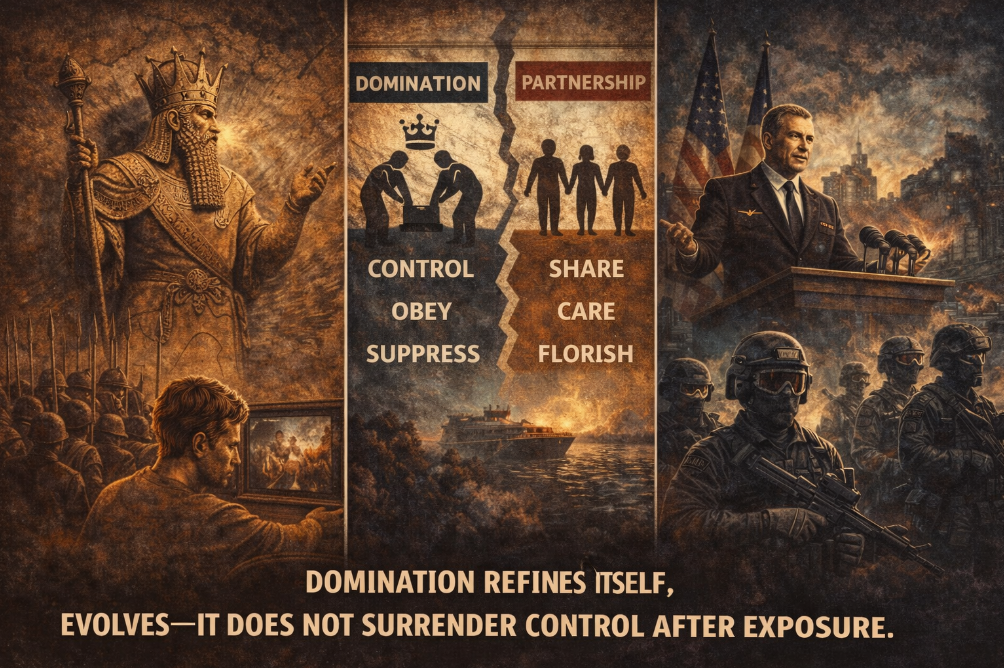
Enemies are no longer soldiers; they are smugglers, traffickers, terrorists, or “bad actors.” Once labeled, they need not be captured, questioned, or tried. They can disappear. There are no prisoners to interview, no draft notices arriving at suburban homes, no hometown newspapers printing faces of the dead. The war no longer enters the living room. It hums quietly in the background while daily life continues uninterrupted.
This is not an accident of technology; it is a political achievement.
WARS CREATE LEADERS
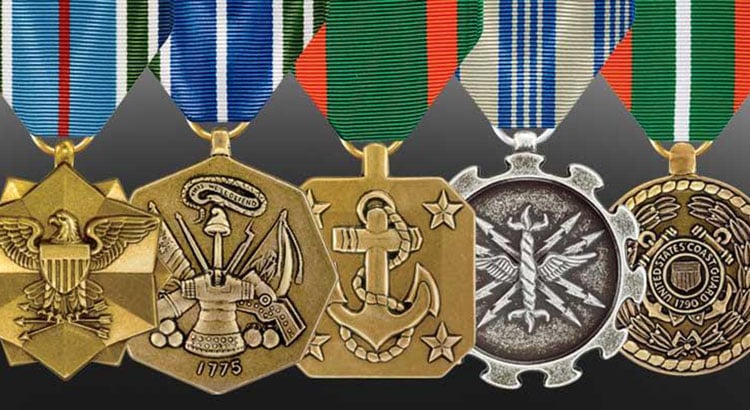


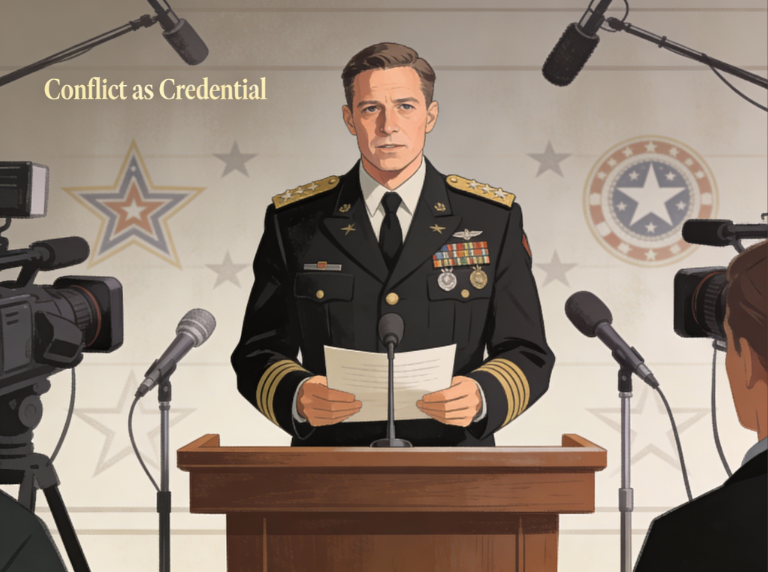
Wars now function as proving grounds for ambition. They generate credentials, command experience, security portfolios, and media visibility. Those who rise do so not despite the chaos, but because of it. Civilians are reduced to abstraction, invoked rhetorically but never centered. Suffering becomes a statistic at best, a rumor at worst.
In Vietnam, leaders still feared the camera. They feared the photograph that could undo a speech, the headline that could shatter a justification, the body count that could not be spun fast enough. Today, fear has shifted downward. Civilians fear invisibility more than death, because invisibility guarantees that nothing will change.
THE ANUNNAKI OVERLAY: DOMINATION VS. PARTNERSHIP
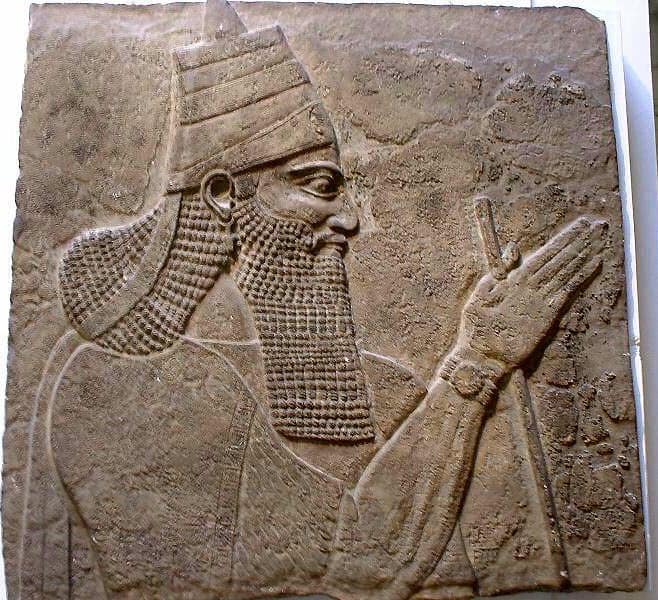

Description:
An archetypal lens: domination consciousness centralizes power through fear, while partnership consciousness disperses authority through care.
Prompt:
Symbolic anthropological illustration, ancient-to-modern continuum of power, domination vs partnership themes, respectful mythic realism, and landscape orientation.
Through the Anunnaki overlay, this pattern reads as ancient. Domination consciousness—associated with control hierarchies often symbolized by Enlil–Marduk archetypes—demands obedience, sacrifice, and silence. War divides populations, exhausts resistance, and redirects creativity toward destruction. Partnership consciousness, by contrast, prioritizes care, accountability, and shared prosperity—qualities systematically displaced when war becomes policy.
THE PSYCHOLOGICAL PAYOFF—AND THE BILL
Many who support these operations do not do so out of cruelty, but out of psychological need. War offers belonging, clarity, and purpose. It simplifies a chaotic world into teams, uniforms, and enemies. It promises meaning to those who feel dislocated, valor to those who feel ignored, and righteousness to those who fear irrelevance.
But the system does not reward loyalty; it consumes it. Those who die believing they served a noble cause often meet, in conscience if not theology, an unbearable clarity: their courage was real; its use was not.
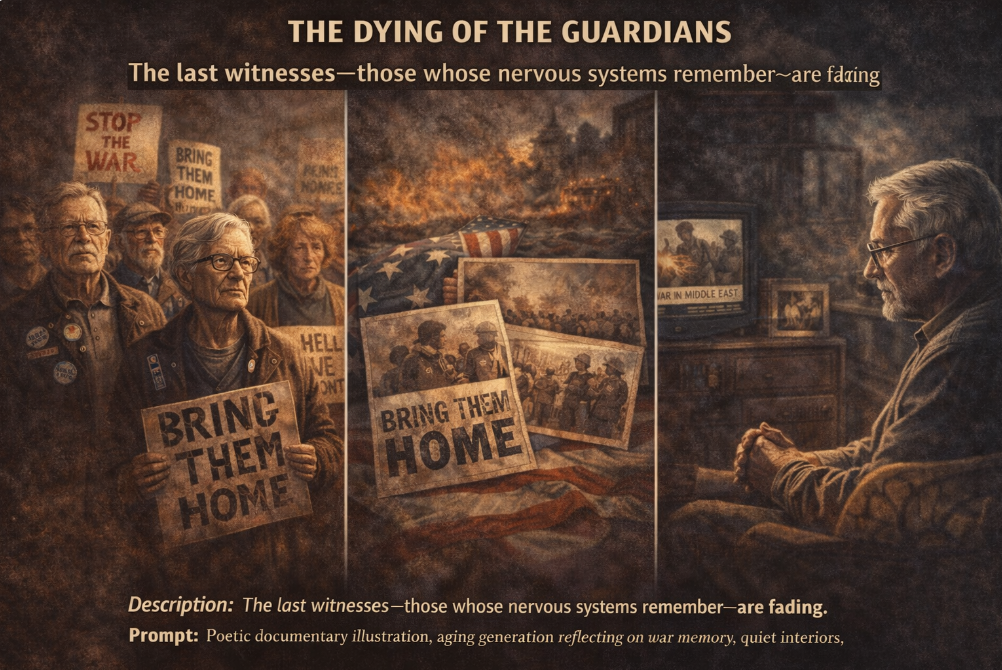
WHEN SHOCK FAILS
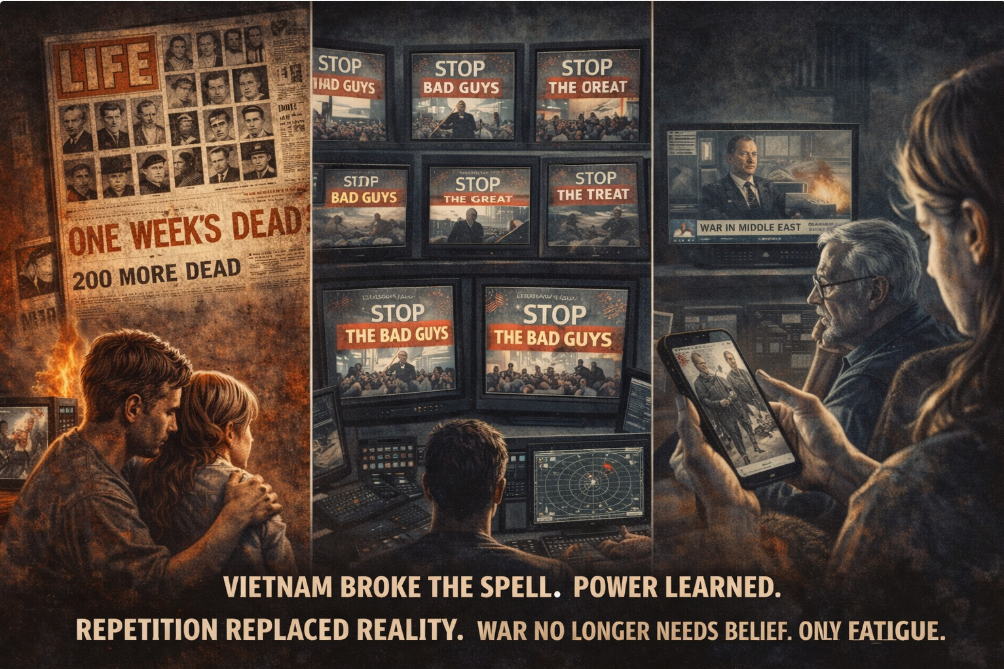
Venezuela reveals what Vietnam taught power: wars persist not because everyone believes the lie, but because enough people are exhausted, distracted, or anesthetized to stop resisting it. There is no single image left to break the spell. No magazine cover. No nightly body count. The absence is engineered.
When war no longer shocks, it no longer needs to justify itself. It becomes procedural, bureaucratic, and normalized. It becomes policy. It becomes a career.
UP NEXT IN THIS SERIES
WHEN DISGUST NO LONGER STOPS WAR
A short, devastating coda on narrative anesthesia, repetition, and the end of moral interruption.
SUBSCRIBE
Follow this series on Substack for updates, revisions, and companion essays.
https://substack.com/@janetalexlessinphd
BELLS & WHISTLES
Series: WAR AS STORY
Articles in this series:
- Vietnam: A War That Did Not Need to Happen
- Venezuela: When War Becomes a Career Path
- When Disgust No Longer Stops War
- When the Faces Could Still Stop the War
Series Closure: Coda: When the Guardians Are Gone
Related Themes: Domination vs Partnership, Narrative Control, Manufactured Consent, Careerism in War
References (selected):
- Zinn, Howard. War Is a Force That Gives Us Meaning.
- Harman, Chris. A People’s History of the World.
- Hartmann, Thom. The Hidden History of American Oligarchy.
Promotions:
- X: War doesn’t erupt. It’s taught. Venezuela shows how conflict becomes a career.
- Facebook: From Vietnam to Venezuela—how narrative control normalized war.
- LinkedIn: When conflict becomes résumé, civilians disappear.
- Substack: New in WAR AS STORY: Venezuela and the political economy of war.
Tags (comma-separated):
Vietnam War, Venezuela, Manufactured War, Propaganda, Narrative Control, Domination Consciousness, Partnership Consciousness, Anunnaki Overlay, Careerism, Imperial History, Peace Studies, Media Critique, Anthropology

