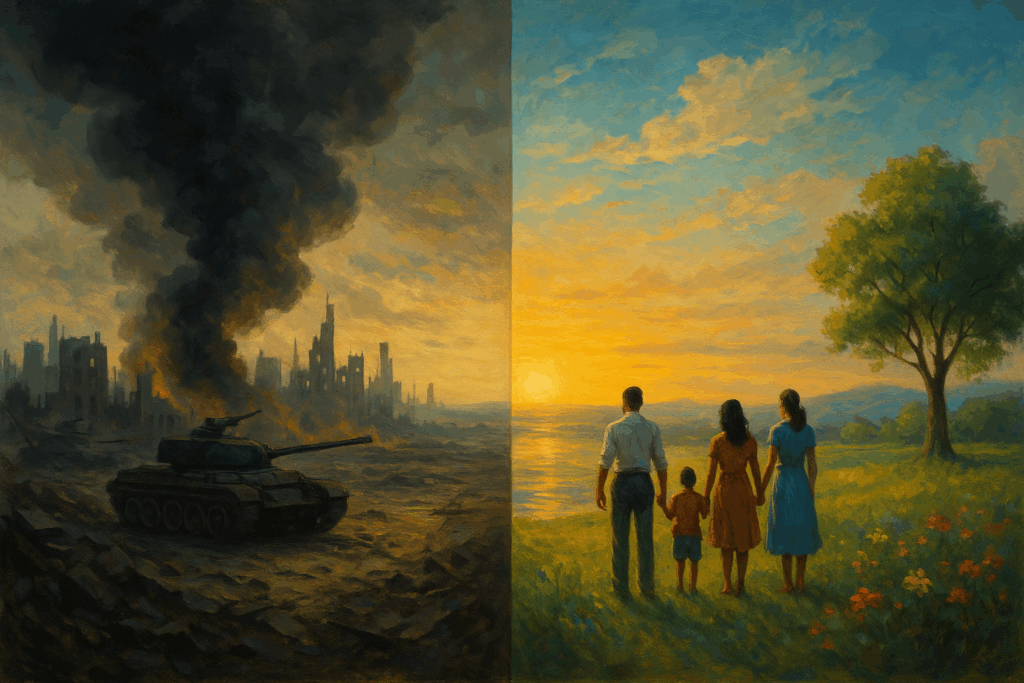
A striking oil-style painting split in two—on the left, a war-torn landscape with a tank and smoking ruins; on the right, a diverse family stands hand-in-hand, gazing toward a peaceful sunrise over a meadow, symbolizing humanity’s choice between destruction and unity.
The Price of Peace: Can Humanity Afford It?
By Janet Kira Lessin | July 4, 2025
In the quiet hours between bombings, broadcasts, and broken treaties, a question lingers, barely audible over the roar of global discontent—a question so simple, so human, and so fundamental that it has echoed through every age of civilization: Can we afford peace?
Not peace as a vague ideal printed on bumper stickers or murmured during candlelight vigils, but peace as an embodied living system—a structural, economic, emotional, and spiritual choice that reshapes how we build our cities, educate our children, care for our elders, share our resources, and tell our stories. What would it take to make peace not just a prayer but a policy?
The honest answer is one we rarely dare to face: we already pay far more to sustain war than it would ever cost us to build a world grounded in peace.
The Real Cost of War
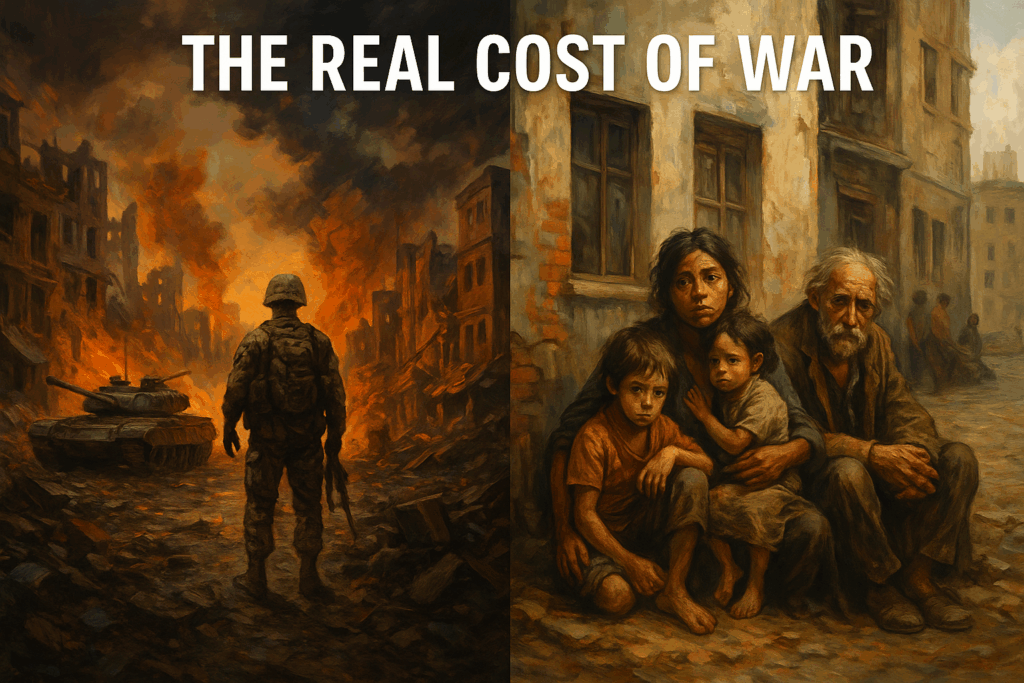
A soldier stands in the ruins of a burning city, silhouetted against fire and destruction. At the same time, on the other side of the image, a mother clutches her children beside an elderly man, poverty, fear, and abandonment written on their faces. This stark visual contrasts the frontlines of war with the suffering left behind in its wake.
As of 2024, global military expenditures had surpassed $2.4 trillion, an astronomical sum allocated to the production of weapons, the fortification of borders, and the maintenance of sprawling war machines designed not to preserve life but to assert dominance. At the same time, nearly 10% of the world’s population lived in extreme poverty, and tens of millions of human beings—many of them children—faced hunger, displacement, or death due to preventable causes.
And yet, when asked if we can afford to care for our sick, shelter our unhoused, or educate our youth beyond mere survival, the answer given by many world leaders remains a cautious, calculated “no.” The reality, however, is that peace doesn’t cost too much—it threatens those who profit from war.
Why We Keep Choosing Conflict
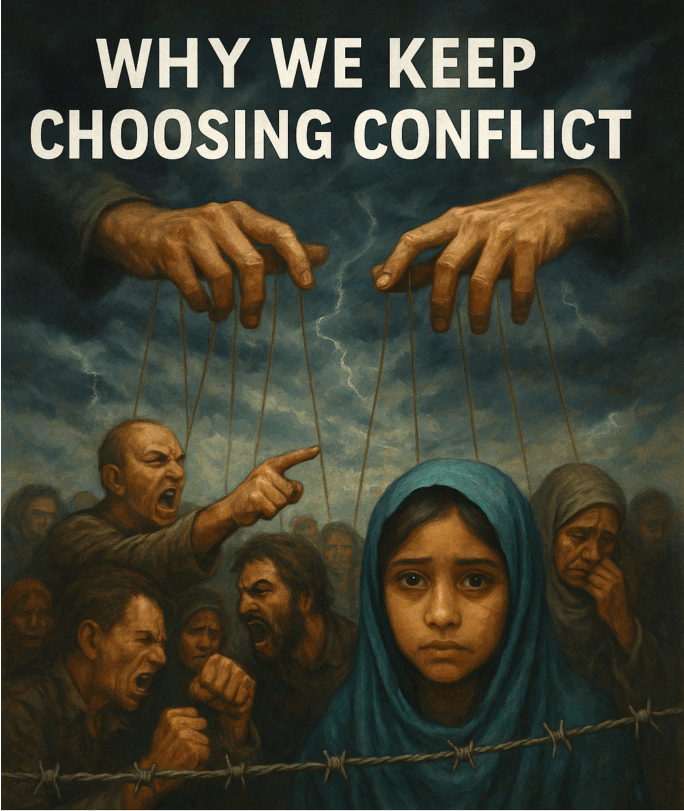
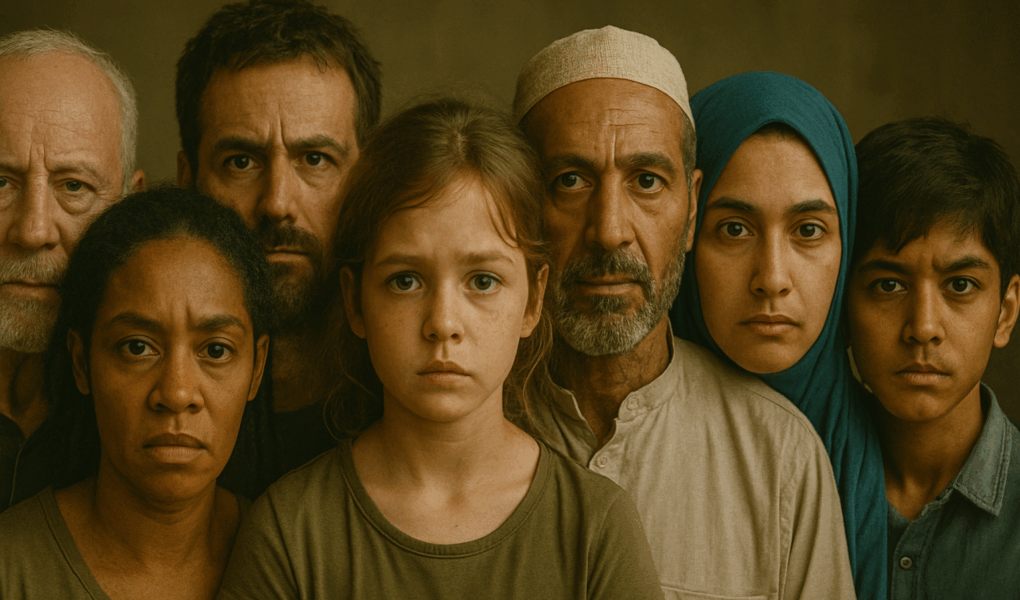
Under a storm-laced sky, puppet-master hands manipulate the strings of enraged figures shouting and pointing on one side of a barbed wire fence, while on the other, a girl in a teal headscarf looks on in sorrow, surrounded by silent, grieving faces. The image starkly reveals how manipulation and fear manufacture division and suffering.
If peace is more affordable, more sustainable, and ultimately more beneficial for the collective well-being of our species and our planet, then why have we not already embraced it?
The roots of war do not grow only in the soil of economics or politics—they are buried deep in the tangled emotional underworld of human fear, wounded identity, inherited trauma, and a kind of spiritual amnesia that makes us forget we are one human family, spinning together on a single, fragile sphere.
Greed certainly plays a central role—the desire to hoard more than one’s share of resources, land, wealth, or power—but it is often fear that opens the door to violence. Fear of loss. Fear of difference. Fear of being forgotten, replaced, or rendered powerless. And when that fear is weaponized by politicians, corporations, or ideology—it can be used to turn neighbor against neighbor, citizen against stranger, self against soul.
The Emotional Mechanics of War

A grieving soldier hides his face in his hands amidst the flames and shadows of battle, while beside him, in a separate scene, three villagers—two elders and a young man—share a gesture of trust and healing. The background shifts from smoke to sunlight, war to reconciliation, revealing how deep wounds and deliberate forgiveness shape our world.
What we’ve come to understand through decades of psychological and sociological research is that war is not simply a geopolitical accident or a failure of diplomacy—it is the outward expression of inner wounds that have gone unacknowledged and unhealed for too long. Generational trauma, passed down like heirlooms, can fester into nationalism, extremism, or religious fanaticism. When shame and pain are suppressed, they tend to erupt in the form of violence.
And yet, we also know that healing is possible. We’ve seen it in post-genocide Rwanda, in the truth and reconciliation processes of South Africa, in communities torn apart by civil war who learned to live together again—not because justice was perfect, but because they chose connection over vengeance.
Could Meeting Everyone’s Needs End War?
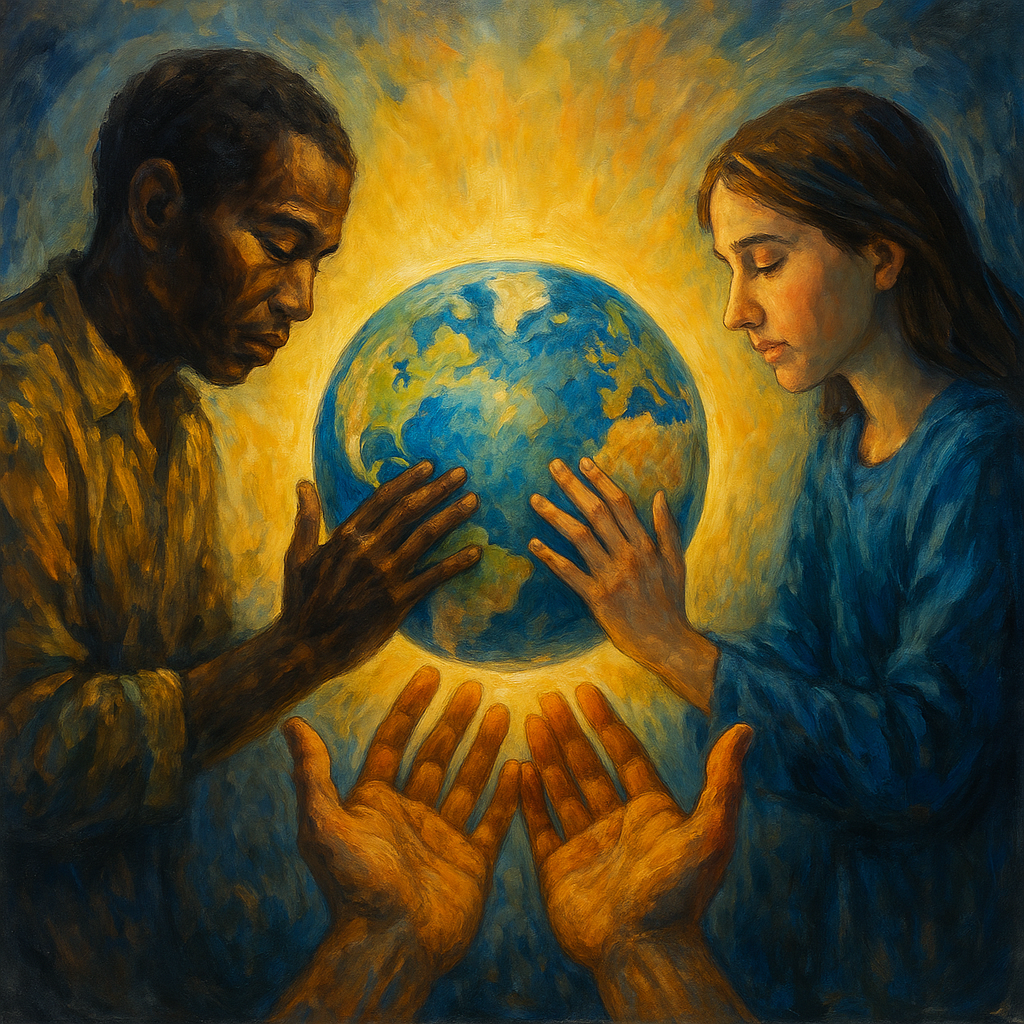
A man and woman from different backgrounds gently reach out toward a radiant Earth suspended between them while open hands rise from below in support. Bathed in golden light, the image evokes a quiet prayer for unity, compassion, and shared stewardship of the planet.
One of the most radical yet reasonable propositions we can make in the 21st century is this: if every human being had their basic survival needs met—if no child went hungry, no elder was abandoned, no community was left without water, medicine, or education—could we begin to unravel the fabric of violence that has bound us for millennia?
To some, this sounds naïve. But to many who’ve lived through war, it sounds like the only logical path forward.
Meeting needs isn’t just about providing goods or services. It’s about recognizing dignity, restoring balance, and acknowledging the shared humanity in each person, regardless of borders, beliefs, or bank accounts. When people feel secure, seen, and supported, the impulse to destroy diminishes. When needs are unmet, however—when scarcity is manufactured, when justice is delayed, when people are told their suffering is invisible—desperation becomes combustible.
What Is the Price of Peace?

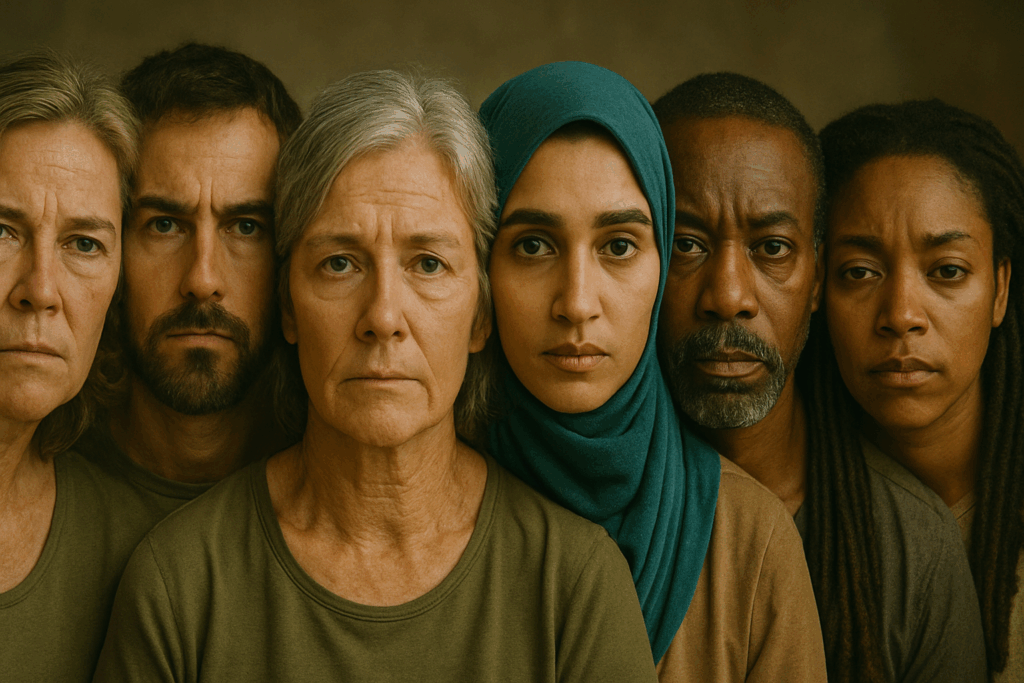
Amid the smoldering remains of a bombed-out city, three survivors embody the weight of loss. A kneeling woman buries her face in her hands, an elderly man stands with his hand to his heart, and another woman gazes upward, eyes brimming with unspeakable sorrow. Behind them, flames rise through the ruins, reminding us what’s at stake when we fail to choose peace.
Peace, if we truly mean to build it and not merely imagine it, requires far more than a ceasefire. It demands profound systemic changes. We must be willing to redistribute not just wealth but voice and power. We must rewrite the stories we tell about strength, replacing images of soldiers and strongmen with those of diplomats, caregivers, artists, and bridge-builders. We must unlearn the myth that war is inevitable and relearn that empathy is a teachable skill.
And most of all, we must be willing to confront ourselves—our complicity in systems that prioritize consumption over compassion, profit over people, and punishment over prevention.
The price of peace, then, is not money—it is transformation. It is humility. It is the courage to evolve.

Why Do We Still Destroy What We Love?

Three barefoot children struggle across a barren, war-ravaged landscape—each burdened with a heavy sack, their faces marked by fatigue and sorrow. The youngest clutches her dress, the middle child stares ahead with solemn determination, and the eldest looks off into the distance, carrying the grief of generations. A dramatic sky looms overhead, but a break of light hints at hope beyond suffering.
Throughout history, humanity has exhibited a paradoxical tendency to annihilate the very things we claim to love most: our homeland, our heritage, and our children’s futures. We fight not only to defend ourselves but often to assert illusions of superiority, legacy, or vengeance.
At times, it seems as if the species is hell-bent on its undoing, locked in a psychological loop where pain begets pain. But the truth may be more tender than tragic: we destroy because we are afraid to feel. We lash out because we do not know how to grieve. We go to war because we have not yet learned how to sit together in sorrow, in apology, in awe of one another.
But there is another way.
We Have Learned Something—Now We Must Apply It
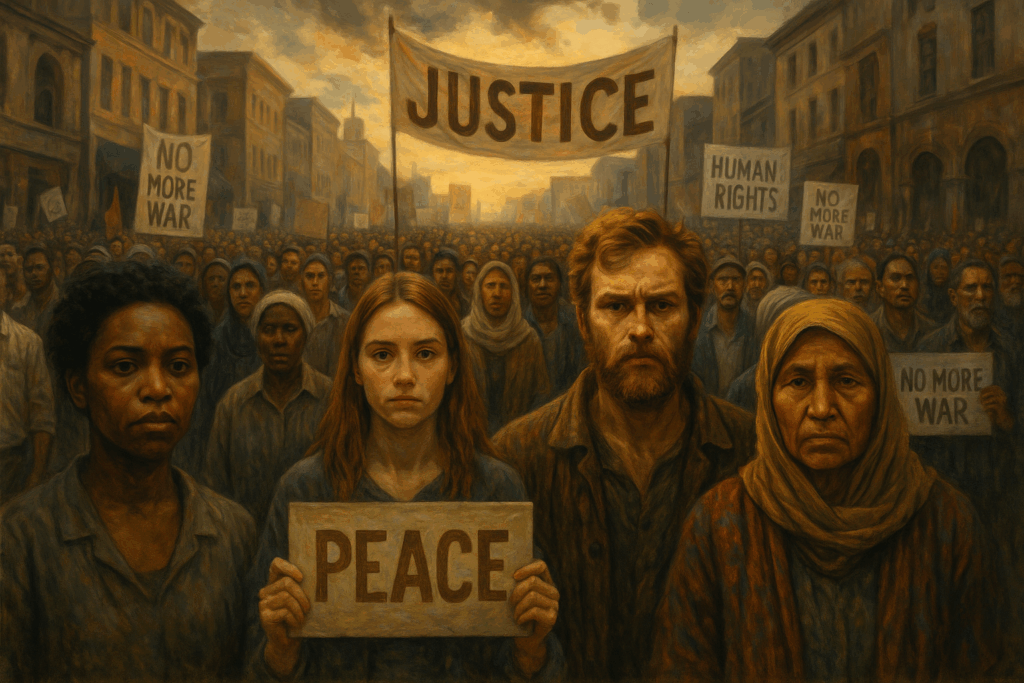
A diverse group of youths rises in the distance, holding signs, instruments, and open hands. The painting blends memory and momentum, knowledge and action—an urgent call to remember and respond.
We have the data. We have the wisdom. We have the stories of survivors, the blueprints of peacemakers, and the frameworks of conflict resolution and trauma-informed education. What we lack is the collective will to implement what we know.
There are signs of hope. Young people across the globe are rising—not with guns, but with cameras, voices, petitions, and songs. Indigenous communities are leading climate justice movements that center on balance and interconnection. Women in war-torn regions are refusing to let their children inherit cycles of bloodshed.
The way forward is not a mystery. It is a memory—a remembering of who we truly are when we are not afraid.
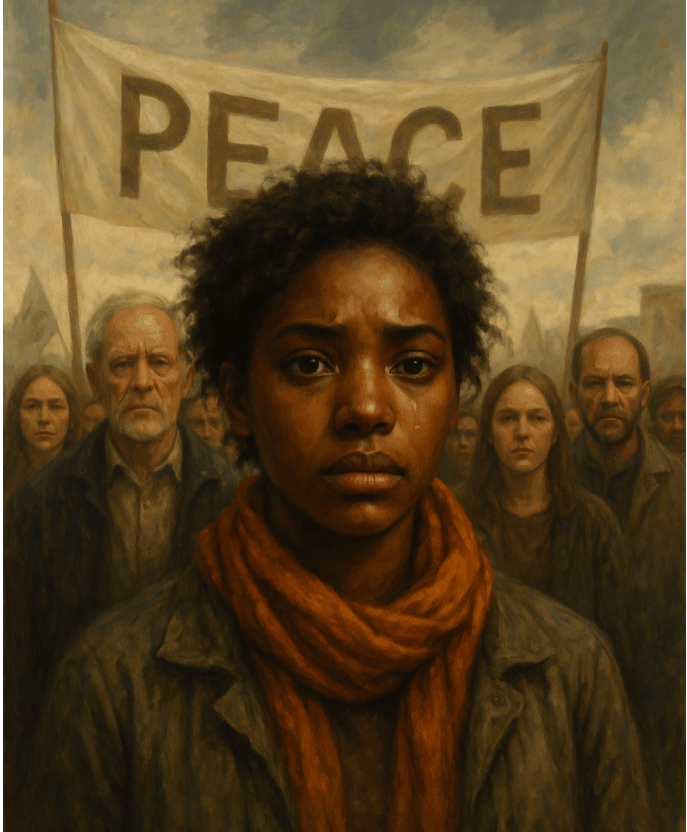
What Happens Next Is Up to Us
Peace is not passive. It is not the absence of noise or conflict. It is the active presence of justice, compassion, and sanity in a world that has too often normalized brutality.
To afford peace, we must value it more than pride, more than profit, more than the temporary high of domination.
And in the end, it may come down to something as quiet and radical as this:
Every heartbeat is a vote.
Every tear shed for a stranger ripples through the collective field.
Every act of kindness reshapes the future.
What we do matters.
What we choose becomes who we are.
References:
- Stockholm International Peace Research Institute (SIPRI), 2024 Global Military Expenditure Report
- UNHCR Global Trends: Forced Displacement 2024
- The Body Keeps the Score, Bessel van der Kolk, M.D.
- Waging Peace: Global Lessons in Conflict Transformation, Diana Ohlbaum
- United Nations Sustainable Development Goals Data Portal, 2024
✅ TAGS (Comma-Separated):
peace, war and peace, anti-war, humanity, global unity, trauma healing, economic justice, emotional healing, conflict resolution, post-war recovery, reconciliation, justice, empathy, compassion, ending war, military spending, peacebuilding, trauma, transformation, human rights, spiritual awakening, generational trauma, dignity, social justice, world peace, nonviolence, hope, activism, peace economy, human evolution
📘 Facebook Caption:
🌍✨ Can humanity afford peace?
In a world drowning in military budgets, broken treaties, and wounded hearts, this powerful, heartfelt article asks the most challenging question of all: Why do we keep choosing war? What would it truly cost to build peace instead?
Explore the psychological roots of violence, the spiritual price of injustice, and the extraordinary possibility that healing is not only necessary but inevitable.
🕊️ Read “The Price of Peace: Can Humanity Afford It?” by Janet Kira Lessin, now illustrated with breathtaking images that speak louder than words.
#Peace #Humanity #Awakening #WarAndPeace #EmpathyMatters #CompassionIsStrength #StopTheWars #StartTheHealing

🕊️ X (Twitter) Post:
Can humanity afford peace?
This stunning article by Janet Kira Lessin explores the real cost of war, the emotional wounds we carry, and the radical possibility of healing. Illustrated & urgent.
Read now ➡️ #Peace #War #Empathy #Justice #Healing #EndWar #Transformation #ThePriceOfPeace
