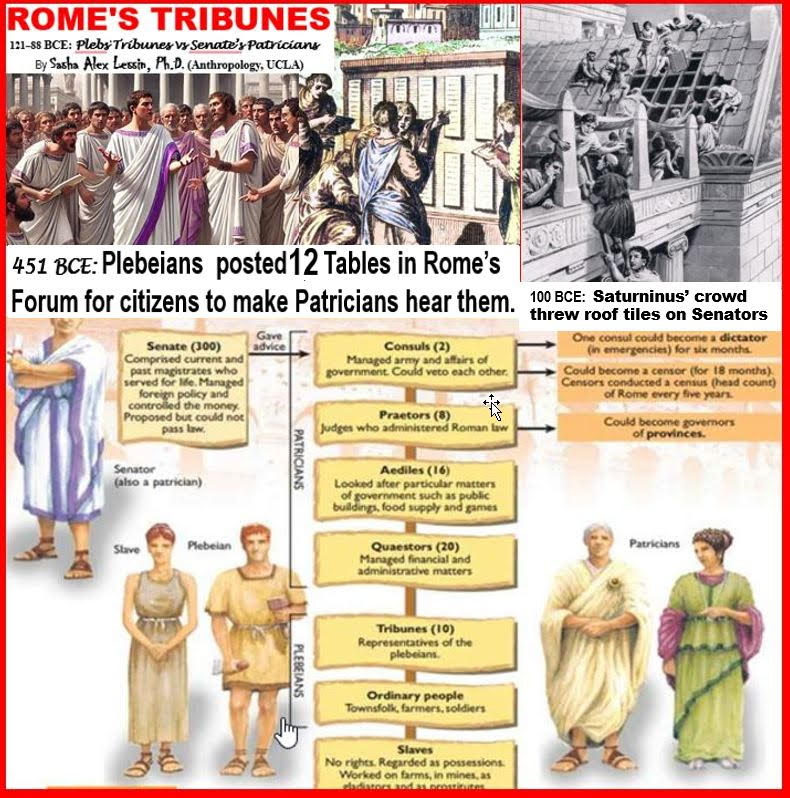
Peruse the video on Tribunes in the post below this one.
Backstory
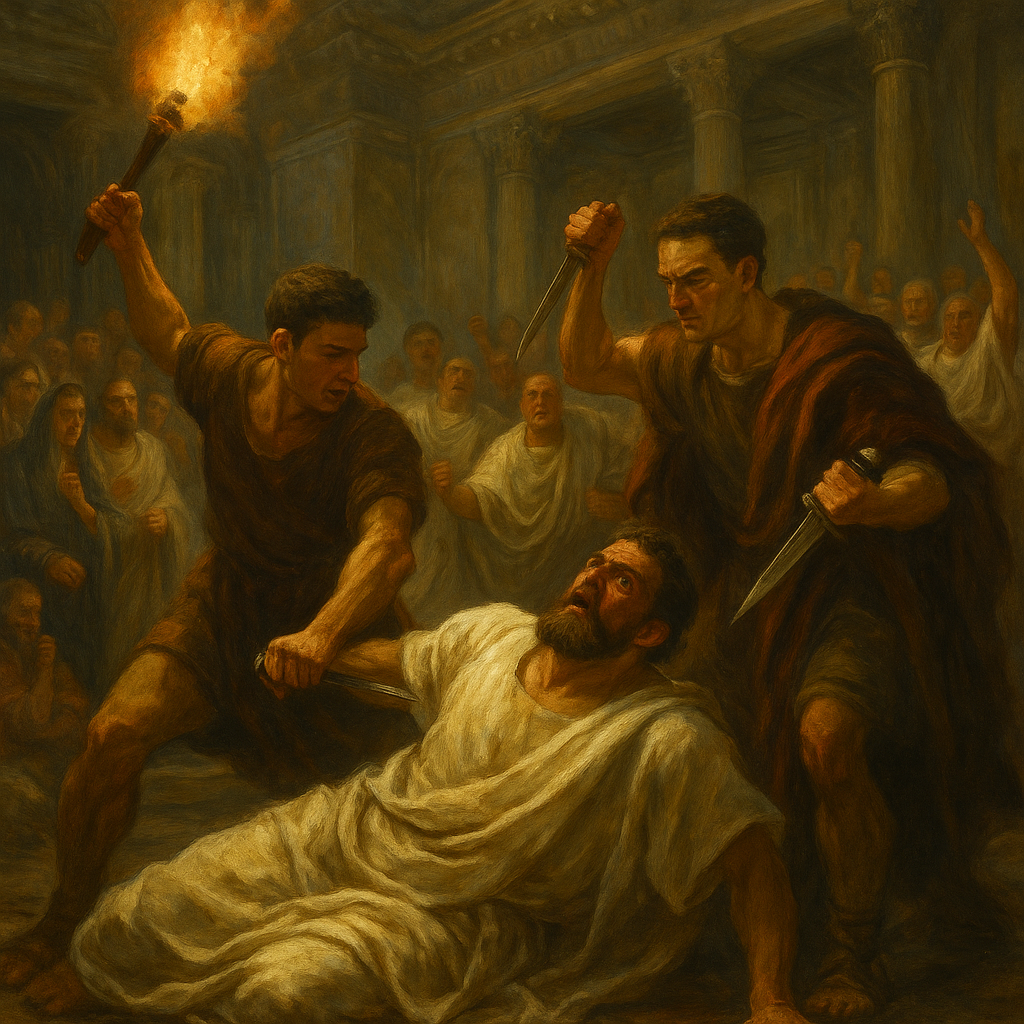
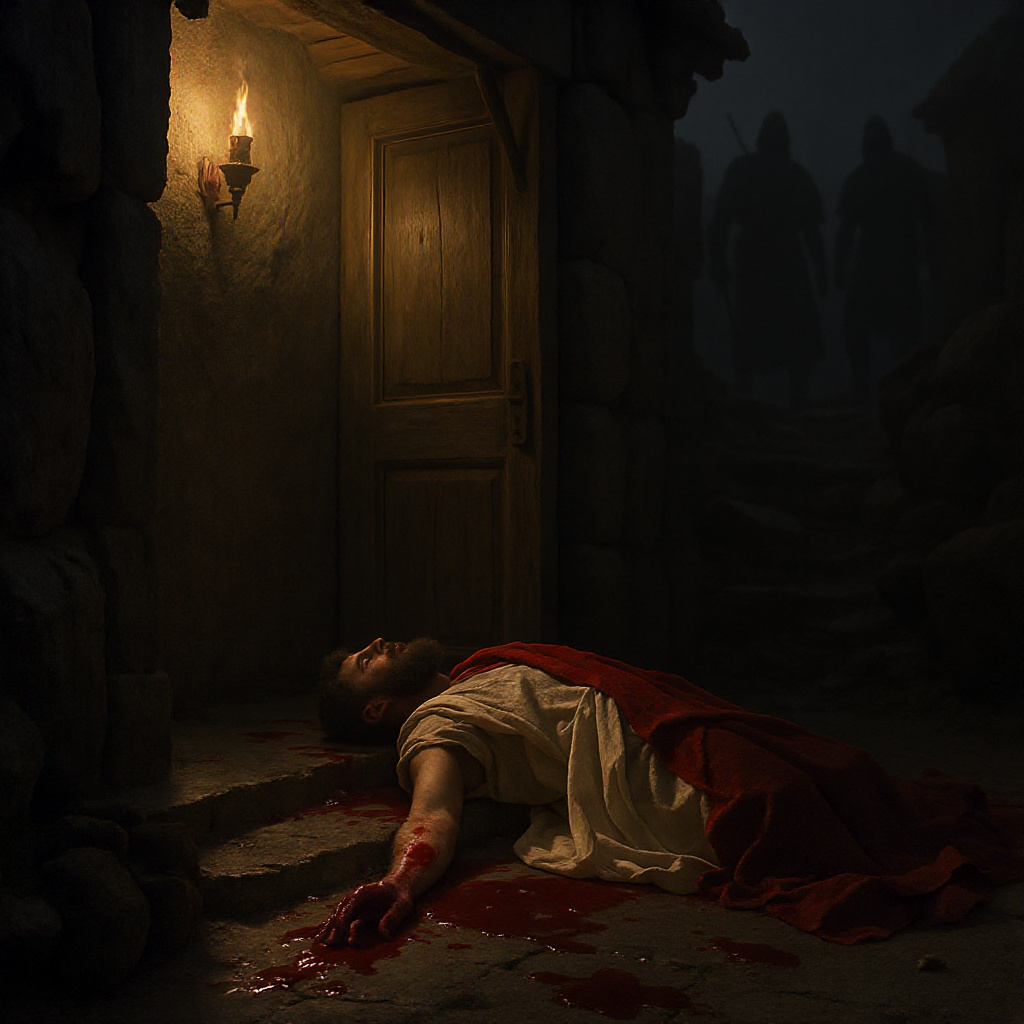
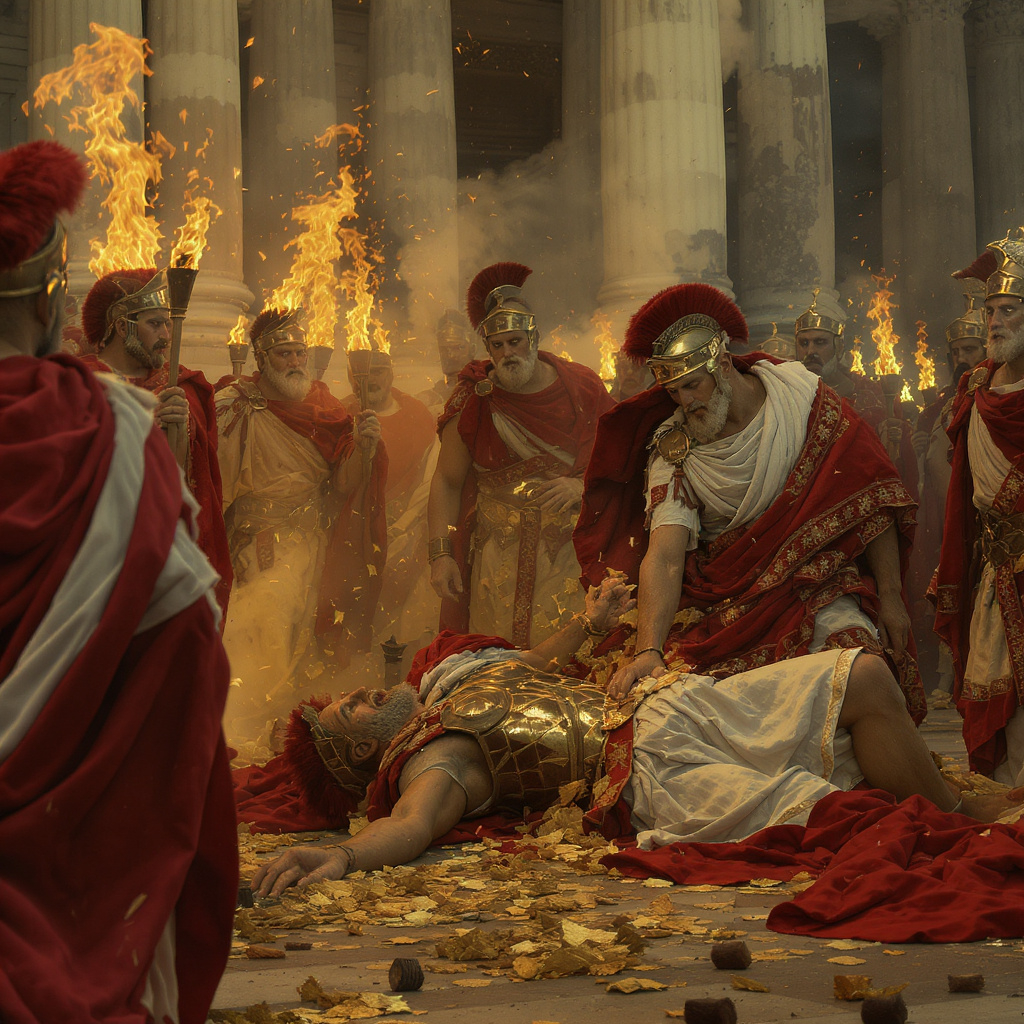
MURDER OF GAIUS GRACCHUS (121 BCE) Gaius Gracchus falls under the blades of patrician assassins while the Senate erupts into chaos, marking the violent turning point of Rome’s Republic.
The 121 BCE murder of Tribune Gaius Gracchus, who had championed the Plebeians in the Senate, left Rome trembling. The Senate’s Patricians unleashed the senatus consultum ultimum—a decree allowing consuls to use violence to “defend the Republic.” From then on, Plebeian tribunes (roughly equivalent to Marx’s bourgeoisie), elected by Rome’s poor men, risked death from “Make-Rome-Great-Again” Senators if they dared to veto patrician law-making or enforcement.
Despite the violence, the Senate increased the number of Tribunes from two to ten. These ten pledged to stand together as a group against any threats from senators and their hired assassins.
MURDER OF GAIUS GRACCHUS (121 BCE) Gaius Gracchus falls under the blades of patrician assassins while the Senate erupts into chaos, marking the violent turning point of Rome’s Republic.
TRIBUNE SATURNINUS IGNITED SENATE RAGE (100 BCE)
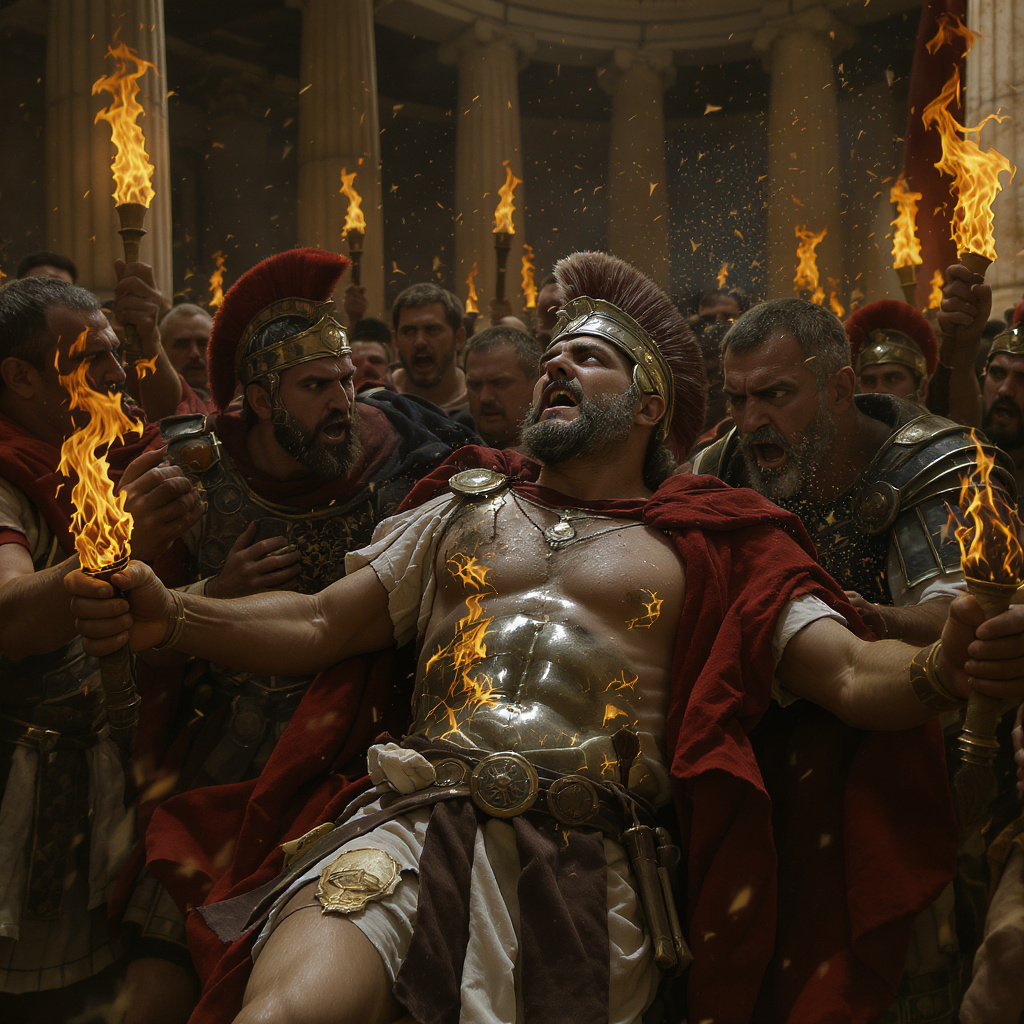
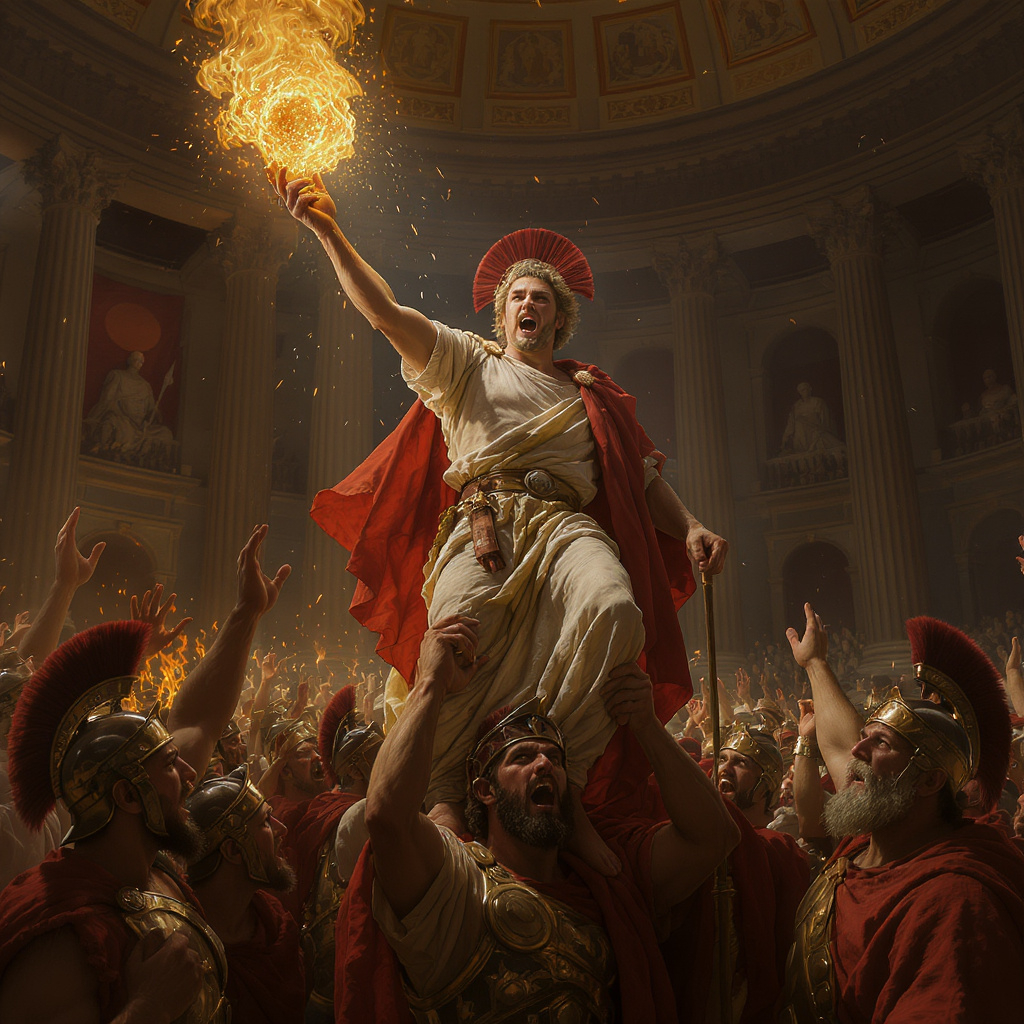
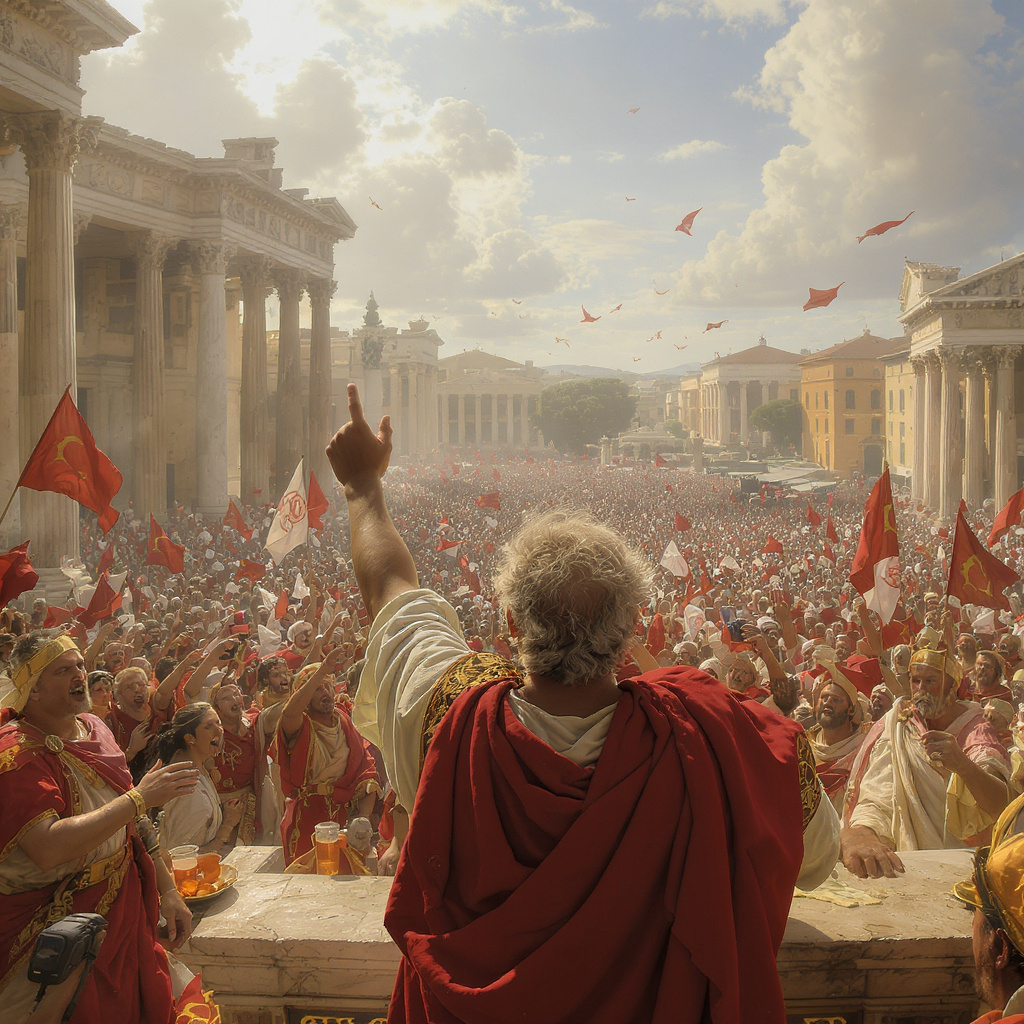
SATURNINUS ROUSES THE MOB (100 BCE) Saturninus, lifted on the shoulders of supporters, promises cheap grain and land to veterans as senators look on with fury.
In 100 BCE, Tribune Lucius Appuleius Saturninus and his ally Gaius Servilius Glaucia, a fiery orator, stirred the mob with jeers at senatorial arrogance.
A gang of hired thugs carried Saturninus into the Senate on their shoulders. He promised veterans cheap grain and new land in return for their service under Marius in the Numidian War.
Saturninus raised his arm:
“Rome feeds you poorly, while the Senate feasts! I give you bread for your children and farms for your sons.”
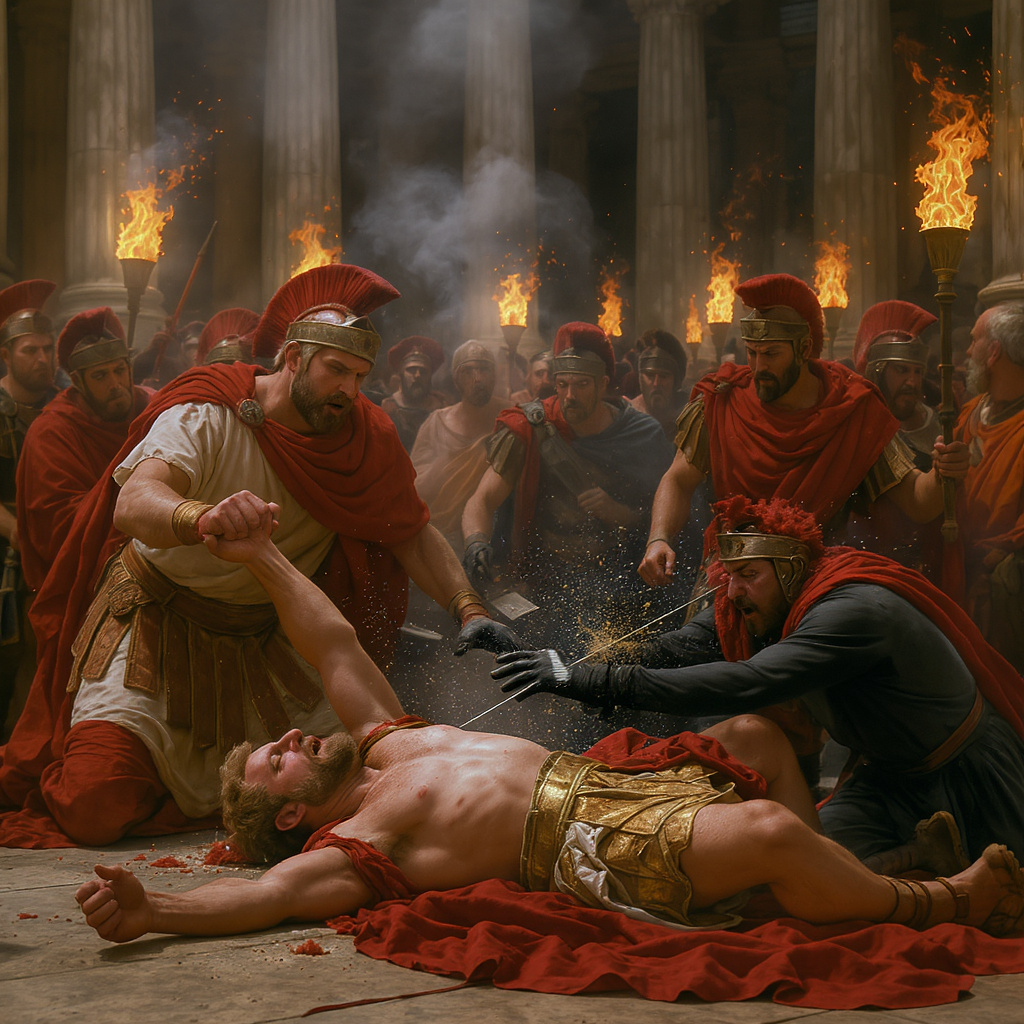
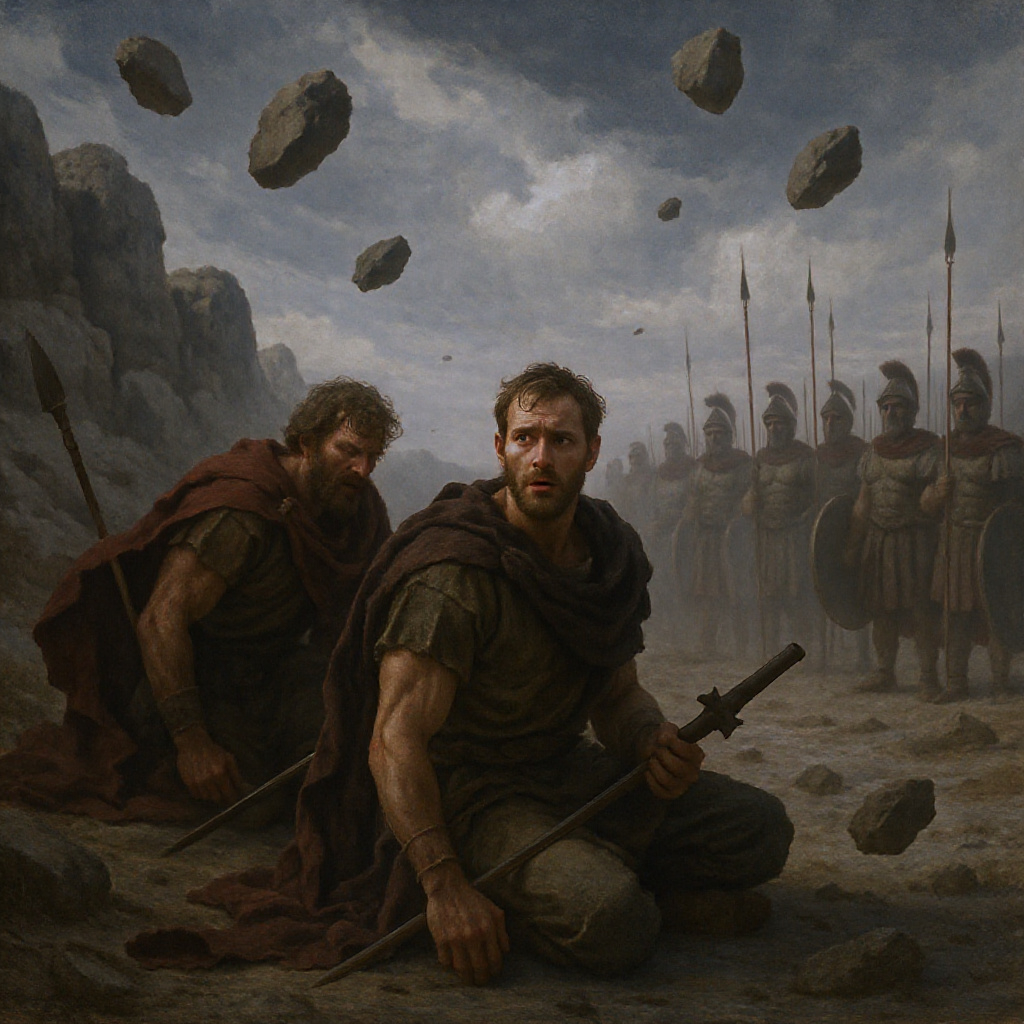
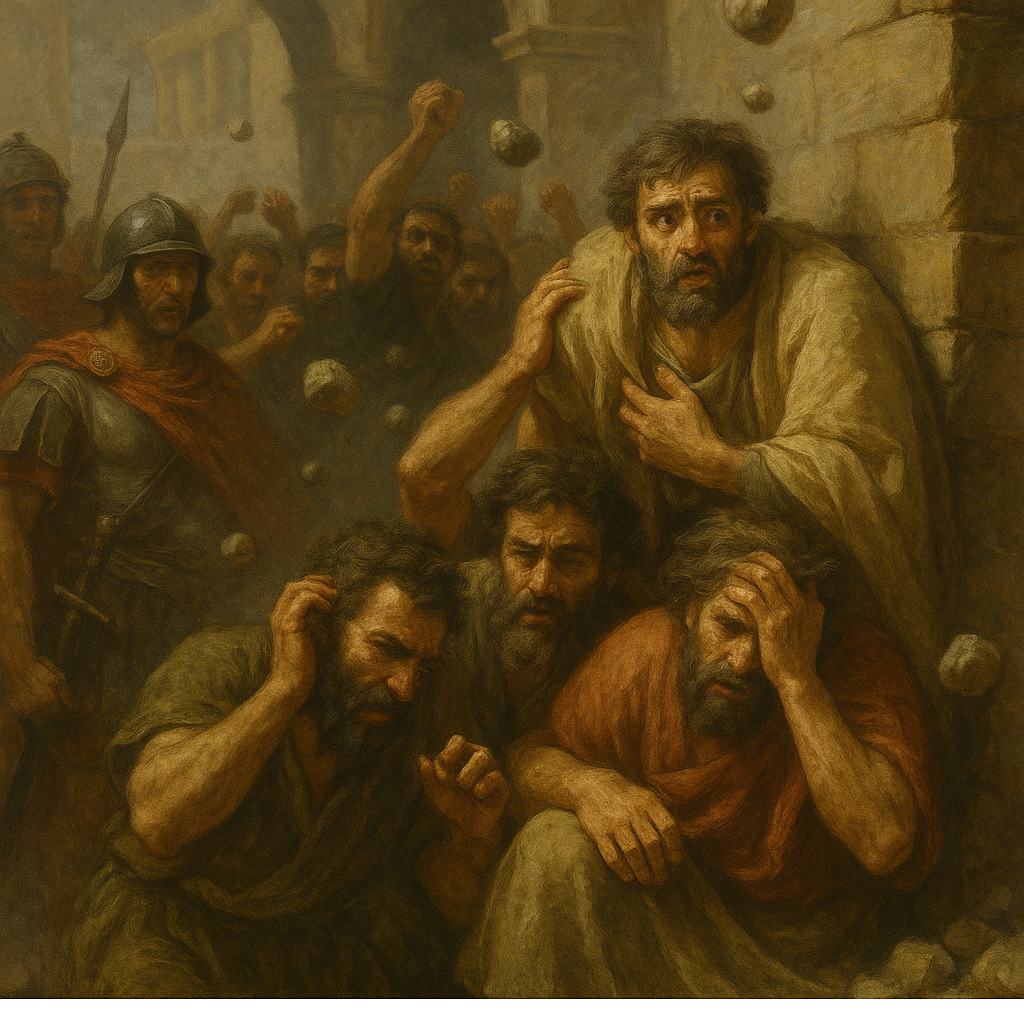
DEATH OF SATURNINUS (100 BCE) Saturninus and his followers, betrayed after promises of safety, are stoned to death under the Senate’s orders.
Consul Marius and his soldiers marched into the Senate. Saturninus fled with his gang but surrendered when Marius’ men promised them safety—only to be stoned to death.
The Tribunate had shown its teeth—but also its vulnerability. Reform could ignite the people, but armed resistance invited swift annihilation.
MAKE-ROME-GREAT-AGAIN SENATORS KILL TRIBUNE MARCUS LIVIUS DRUSUS (91 BCE)
Marcus Livius Drusus, scion of a patrician family yet Tribune of the Plebs, tried to unite Senate aristocrats and Rome’s commoners. He proposed colonies to house the poor, checks on corrupt courts, and citizenship for Rome’s Italian allies.
Drusus warned:
“If Rome denies her allies a share in citizenship, she’ll face their swords instead.”
Some senators nodded, but most scowled, fearing treason and the loss of their control.
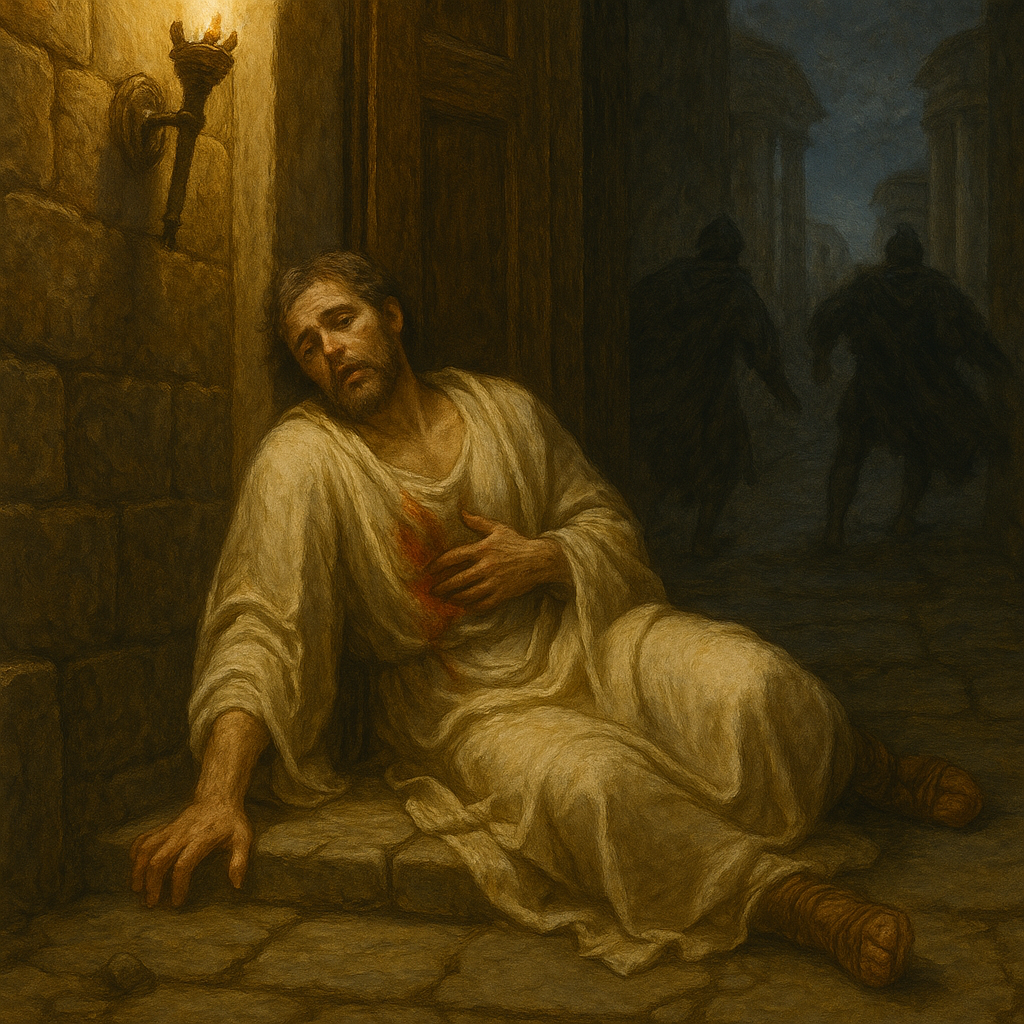
ASSASSINATION OF MARCUS LIVIUS DRUSUS (91 BCE) Drusus collapses at his doorstep after being stabbed, whispering his final words as Rome’s dream of unity dies with him.
One evening, assassins struck as Drusus returned home. He fell bleeding on his threshold, gasping:
“When will Rome find a true friend of the people?”
His death ignited the Social War. Italy’s allies, long scorned, rose in revolt. For three bitter years, blood ran through Italy. The Tribune’s dream of unity became a nightmare of rebellion.
SULPICIUS AND THE COUP OF 88 BCE
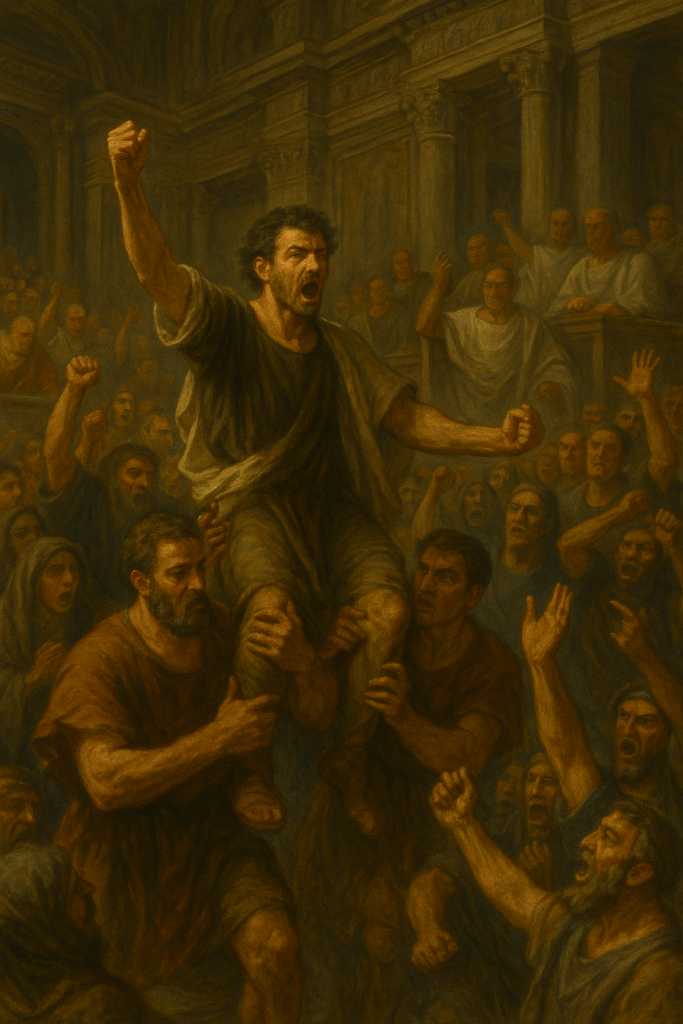
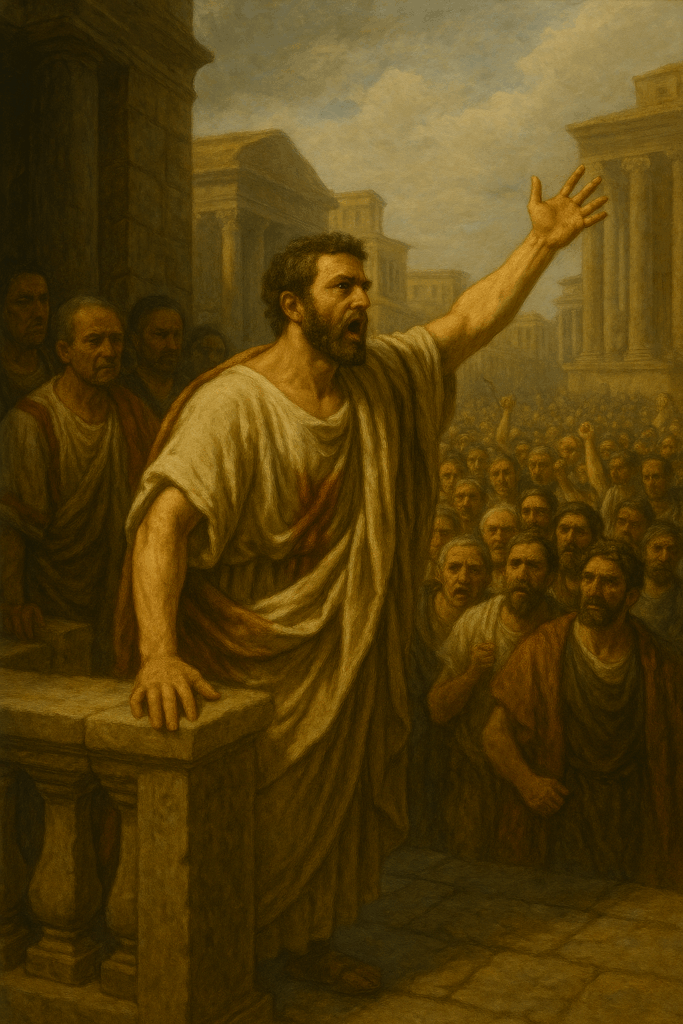
SULPICIUS SPEAKS TO THE PEOPLE (88 BCE) Tribune Sulpicius Rufus thunders before a roaring assembly, demanding voting rights for Rome’s Italian allies.
When the war ended, new citizens clamored for enrollment in the tribes. In 88 BCE, Publius Sulpicius Rufus, a tribune allied with Marius, sought to grant them full voting rights.
He thundered:
“Are Italians not our brothers? Did they not bleed for Rome? Shall we deny them the voice they earned in war?”
The crowd roared, but the consuls resisted. Worse still, Sulpicius pushed a law transferring command against Mithridates from Sulla, the sitting consul, to Marius.
Street mobs armed with swords chased senators. One consul barely escaped alive. Rome was paralyzed, strangled by vetoes and violence.
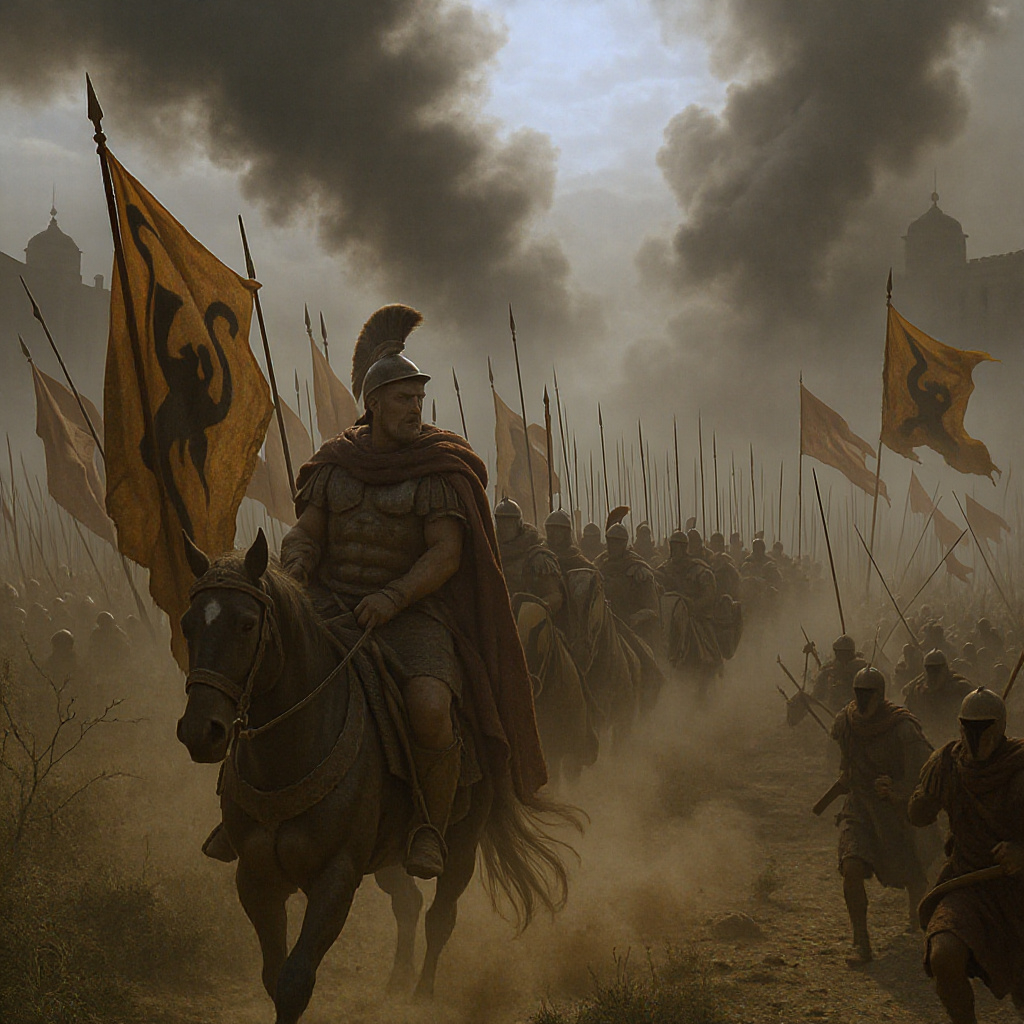
But Sulla was no Gracchus, no Saturninus. He fled the city and returned—with his legions. For the first time in the Republic’s history, a Roman general marched his army against Rome itself.
SULLA’S ARMY ENTERS ROME (88 BCE) For the first time in history, Roman legions stormed the gates of Rome itself, led by Sulla, forever changing the Republic.
Sulpicius was hunted down and killed. Marius fled into exile. In the Senate, Sulla proclaimed:
“From this day, the Tribunate shall no longer corrupt the state. Their vetoes are a scourge; their ambition, poison. I will bind them with laws, and Rome shall obey her Senate again.”
Thus ended the age of tribunes as unchecked champions of the people. From the Gracchi to Sulpicius, their bold moves swayed assemblies, toppled laws, sparked wars, and brought Rome to the edge of ruin.
Sulla’s iron hand crushed them—but their spirit lived on, waiting for another man, Julius Caesar, to seize their legacy.
Modern Reflection
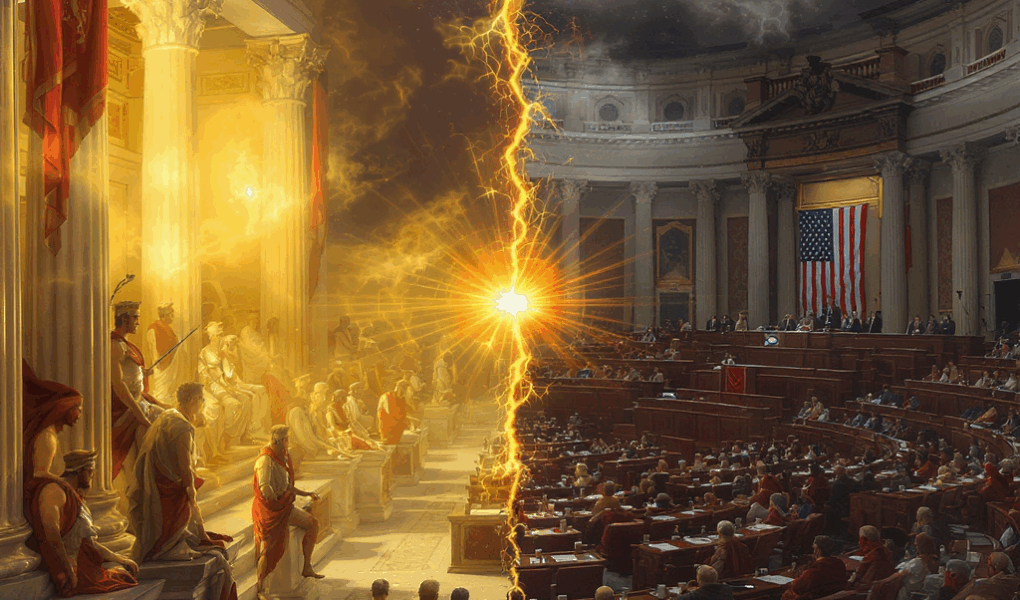
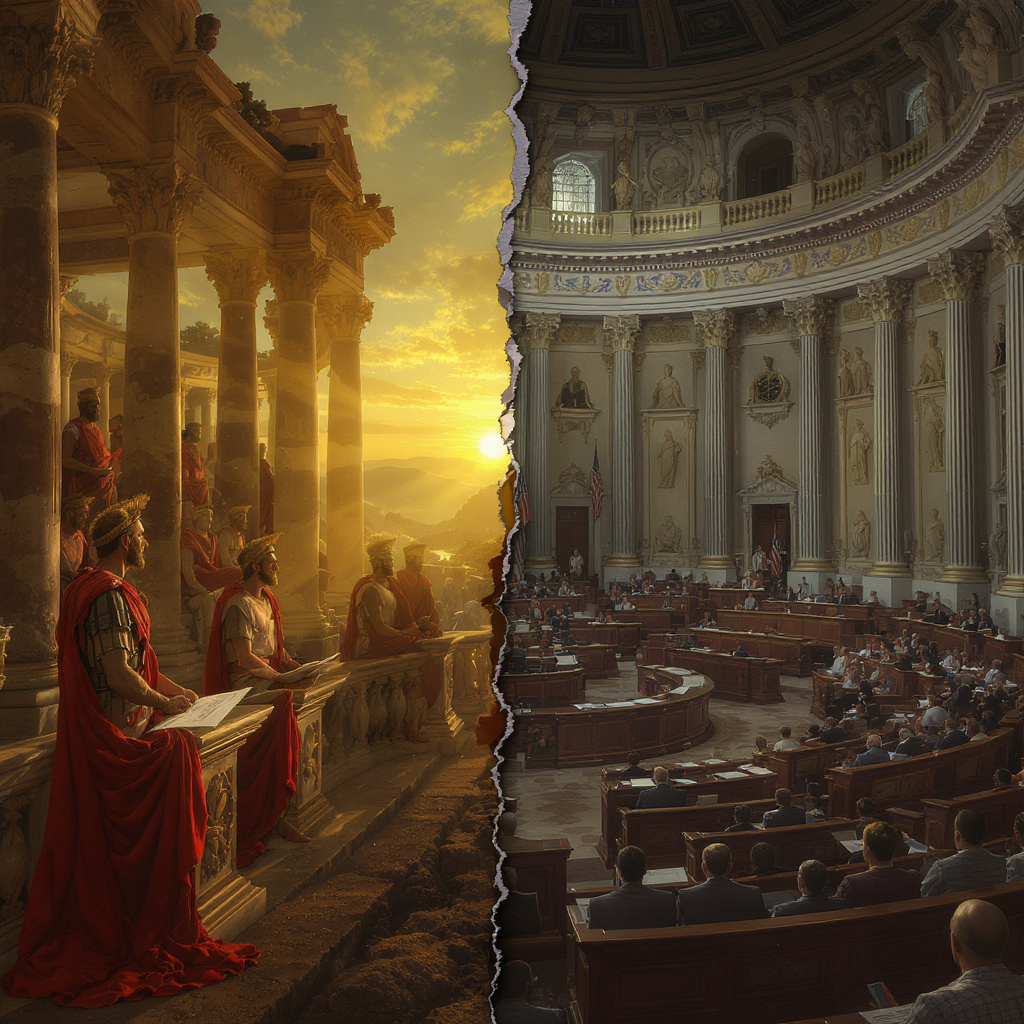
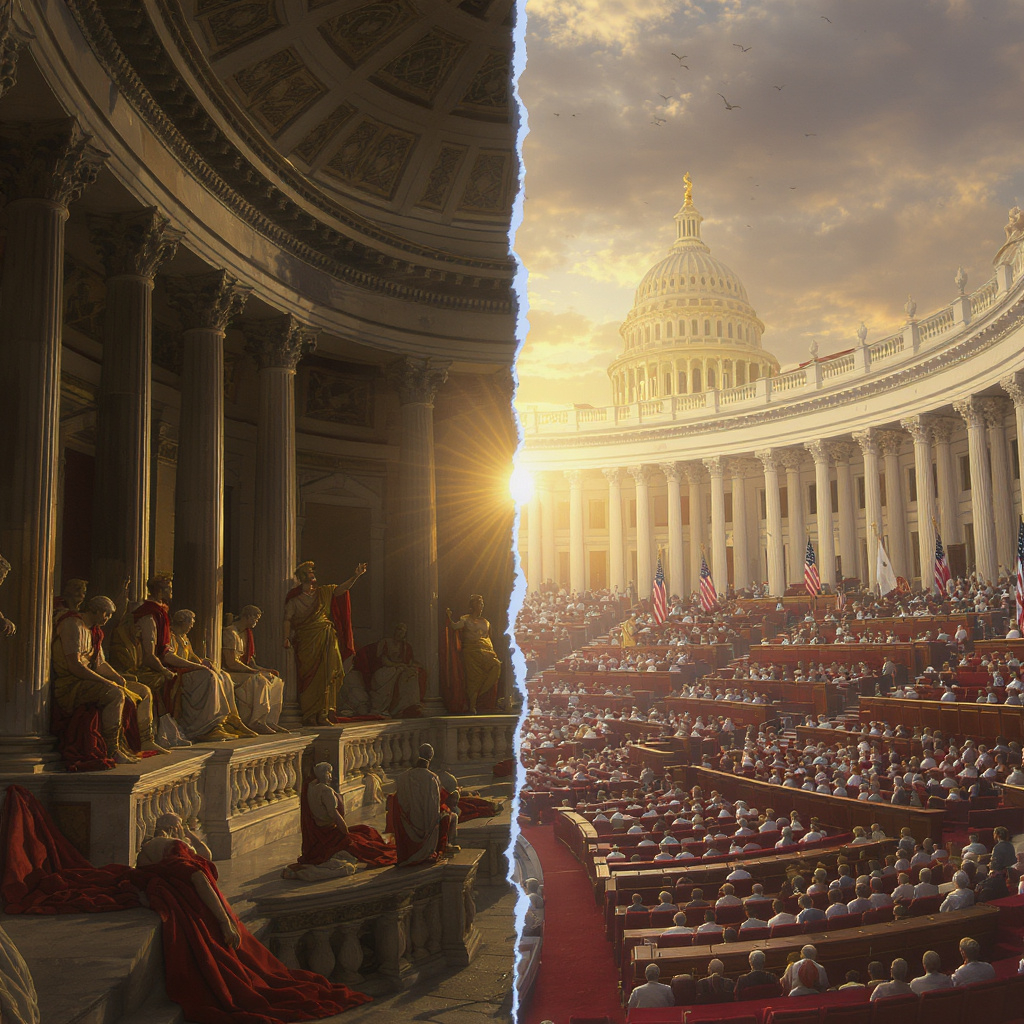
MODERN REFLECTION (Symbolic) A symbolic mirror scene: Roman tribunes confronting senators, blended with a modern U.S. Congress chamber, showing echoes across time.
✅ References
Beard, Mary. SPQR: A History of Ancient Rome. New York: Liveright, 2015.
Flower, Harriet I. Roman Republics. Princeton: Princeton University Press, 2010.
Scullard, H. H. From the Gracchi to Nero: A History of Rome 133 B.C. to A.D. 68. London: Routledge, 2011.
Stockton, David. The Gracchi. Oxford: Oxford University Press, 1979.
Plutarch. Lives of the Noble Greeks and Romans. Translated by John Dryden.
Appian. The Civil Wars. Loeb Classical Library.
✅ Related Articles
ROME’S GRACCHI: Seeds of Reform and Violence
SULLA THE DICTATOR: The Man Who Rewrote Rome’s Laws
JULIUS CAESAR: Tribune’s Legacy Fulfilled
ROME VS. THE UNITED STATES: Republics in Crisis
PLEBEIANS & PATRICIANS: Class Struggles Across History
✅ Tags
Rome, Roman Republic, Roman Tribunes, Gaius Gracchus, Saturninus, Marcus Livius Drusus, Publius Sulpicius Rufus, Sulla, Julius Caesar, Social War, Roman Senate, Patricians, Plebeians, Ancient Rome, Roman History, Class Struggle, Civil War, Republic in Crisis
✅ Bios
Dr. Sasha Alex Lessin, Ph.D. (Anthropology, UCLA) – Anthropologist, therapist, and author who has spent decades studying ancient Sumerian texts, Anunnaki history, and Roman political systems. Co-author of numerous books with Janet Kira Lessin, Sasha brings an academic yet open-minded lens to human origins, mythology, and the evolution of governance.
Janet Kira Lessin (Contributor) – Author, experiencer, researcher, and CEO of Aquarian Media. Janet integrates personal encounters, historical research, and visionary narratives to weave together ancient astronaut theory, disclosure, metaphysics, and multidimensional consciousness. She is the co-author with Dr. Sasha Lessin of books and articles exploring humanity’s extraterrestrial and political connections.
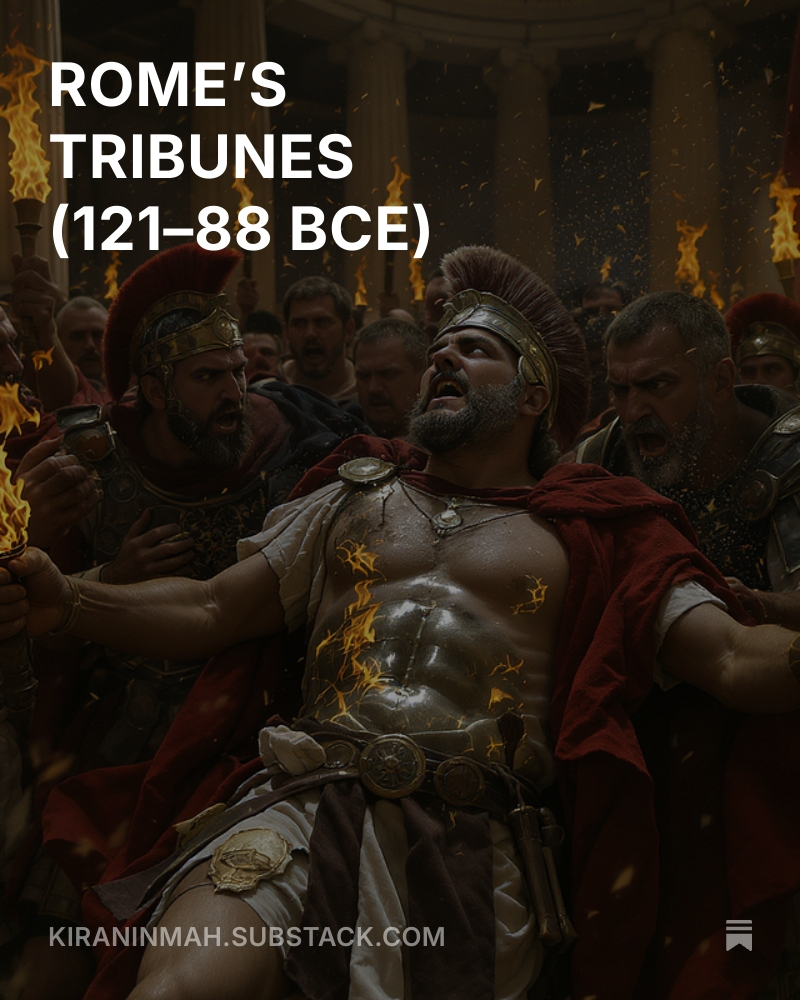
⚖️ ROME’S TRIBUNES (121–88 BCE) From the murder of Gaius Gracchus to Sulla’s armies storming Rome, the tribunes stood as champions of the people—only to be crushed by patrician power. Their struggle is a warning for today, as echoes of Rome’s class wars shape modern politics.
ROME’S TRIBUNES (121–88 BCE): From Gracchus to Sulla, tribunes fought for Rome’s poor against patrician elites. Their fate is a warning for our times. ⚖️
Read Sasha’s article + watch the video 👉 DragonAtTheEndOfTime.com
Please share this post—it’s a guide to what’s happening in the U.S. nowadays, with Republicans acting as patrician apologists and state governors representing ordinary citizens as plebeians.
This is a VIDEO; click the words “THE FIFTH CENTURY BCE” to start it.
ROME’S TRIBUNES (121–88 BCE)
By Sasha Alex Lessin, Ph.D. (Anthropology, UCLA)
Peruse the Video on Tribunes on the post below this post.
Backstory: The 121 BCE murder of Tribune Gaius Gracchus, who had, in the Senate, championed the Plebeians, left Rome trembling. The Senate’s Patricians unleashed the senatus consultum ultimum—its decree that Consuls could use violence to defend the Republic. From then on, the Plebeians, the Plebeians [roughly equivalent to Marx’s bourgeoisie] elected by Rome’s poor men, faced murderous Make-Rome-Great-Again Senators if they vetoed Senate Patricians’ law-making or enforcement.
Despite the threat of violent Senators and their hired assassins, the Senate increased the number of Tribunes from two to ten. The ten pledged to stand together as a group against any of them that the Senators and their deplorables threatened.
TRIBUNE SATURNINUS INGNITED SENATE RAGE (100 BCE)
In 100 BCE, Gaius Servilius GLAUCIA, a fiery orator, stirred the mob with jeers at senatorial arrogance.
A gang of hired thugs carried Tribune Saturninus on their shoulders into the Senate. He promised the vets cheap grain and new land in return for their service under Marius during the war against Numidia. Saturninus’ ally, Gaius Servilius GLAUCIA, a fiery orator, stirred the mob with jeers at senatorial arrogance.
Saturninus raised his arm. Rome feeds you poorly, while the Senate feasts! I give you bread for your children and farms for your sons.
Consul Marius and his soldiers marched into the Senate. They interrupted Saturninus, who, with his gang, fled but surrendered when Marius’ men promised them safety, but then stoned them to death. The Tribunate had shown its teeth—but also its vulnerability. Reform could ignite the people, but armed resistance invited swift annihilation.
MAKE-ROME-GREAT-AGAIN SENATORS HAD TRIBUNE MARCUS LIVIUS DUSUS KILLED (91 BCE)
Marcus Livius Drusus, scion of a Patrician family yet Tribune of the plebs, tried to unite Senate aristocrats and Rome’s commoners. Drusus proposed colonies to house the poor, checks on corrupt courts, and citizenship for Rome’s Italian allies. Drusis said, If Rome denies her allies a share in citizenship, she’ll face their swords instead.
Some Senators nodded. But more of them scowled. They suspected treason and feared losing control over the Republic.
One evening, as he returned to his home, assassins struck. He fell bleeding on his threshold, gasping, “When will Rome find a true friend of the people?”
His death ignited revolt. The Italian allies, long scorned, rose in the Social War. For three bitter years, blood ran through Italy. The Tribune’s dream of unity became a nightmare of rebellion.
Sulpicius and the Coup of 88 BCE
When the war ended, new citizens clamored for enrollment in the tribes. In 88, Publius Sulpicius Rufus, a tribune with Marius at his side, sought to grant them full voting rights. He thundered in the assembly.
“Are Italians not our brothers? Did they not bleed for Rome? Shall we deny them the voice they earned in war?”
The crowd roared, but the consuls resisted. Worse still, Sulpicius pushed a law transferring command against Mithridates from Sulla, the sitting consul, to Marius.
In the chaos, Sulpicius’s mobs chased senators with swords. One consul barely escaped alive. Rome lay paralyzed, its government strangled by a tribune’s vetoes and the terror of street violence.
But Sulla was no Gracchus, no Saturninus. He fled the city and returned with his legions. His soldiers, hardened from the Social War, marched through the gates of Rome itself. For the first time in the Republic’s history, a Roman general used his army against Rome.
Sulpicius was hunted down and killed. Marius fled into exile. In the curia, Sulla proclaimed, “From this day, the Tribunate shall no longer corrupt the state. Their vetoes are a scourge; their ambition, poison. I will bind them with laws, and Rome shall obey her Senate again.”
Thus ended the age of tribunes as unchecked champions of the people. From the Gracchi to Sulpicius, their bold moves had swayed assemblies, toppled laws, sparked wars, and brought Rome to the edge of ruin. Sulla’s iron hand crushed them—but their spirit would live on, waiting for another man, Julius Caesar, to seize their legacy.
Please share this post; it’s a guide to what’s happening in the U.S. nowadays, with Republicans acting as Patrician apologists and State governors representing ordinary citizens asPlebeians.