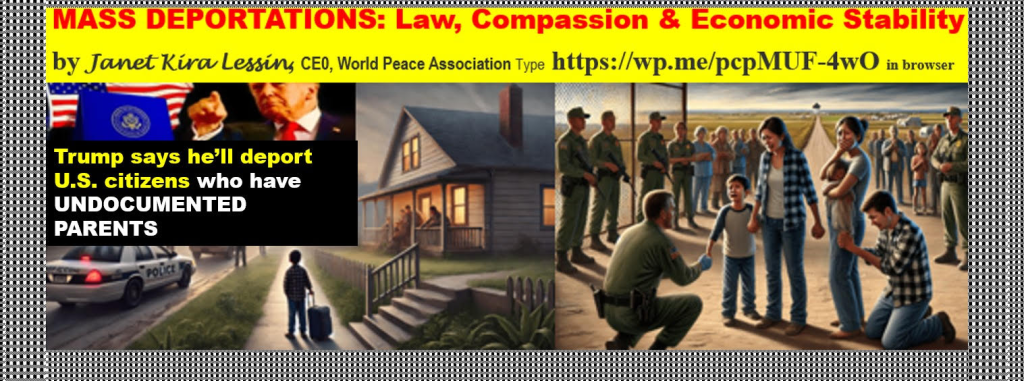
This is a VIDEO; click the word “DEPORTATION” below to see & hear it.
Click https://wp.me/pcpMUF-4wO to check out research on this subject.
Mass deportations, a contentious proposal by some political leaders like Trump, extend far beyond the realm of policy debates. They touch the core of human existence, disrupting families, unsettling communities & threatening the fabric of the economy. At the heart of this debate lies a profound dilemma: how does a nation balance the enforcement of its laws with compassion & fairness, primarily when those laws affect the most vulnerable among us—children, families & essential workers? The answers are as complex as the questions themselves, demanding a thoughtful exploration of choices & consequences.

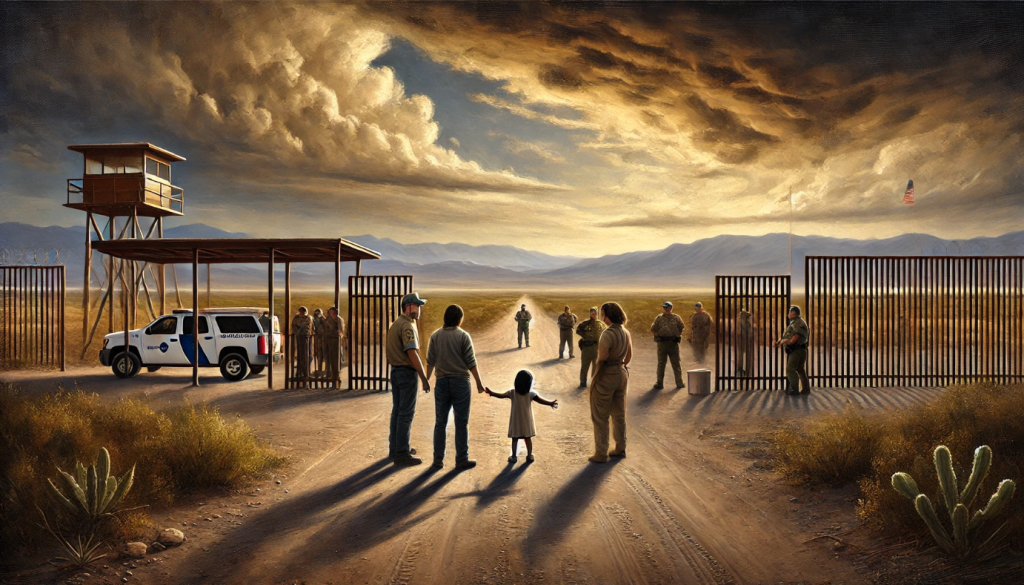
CHILDREN LEFT BEHIND: One of the most heart-wrenching aspects of mass deportations is the impact on U.S.-born children of undocumented parents. These children may live & grow in the United States as citizens. Deportation thrusts these children into impossible situations. For younger children, the decision often falls to their parents, who must choose whether to leave them behind in foster care or take them to an unfamiliar country. Teenagers & young adults face an even heavier burden—deciding whether to remain in the only home they’ve ever known or follow their parents into uncertainty. Some of these children may be old enough to decide for themselves. We must give them a voice & a choice; we must not automatically deport them simply because one or more family members are undocumented. Those who are already citizens cannot have their citizenship revoked just because a family member is “illegal.”

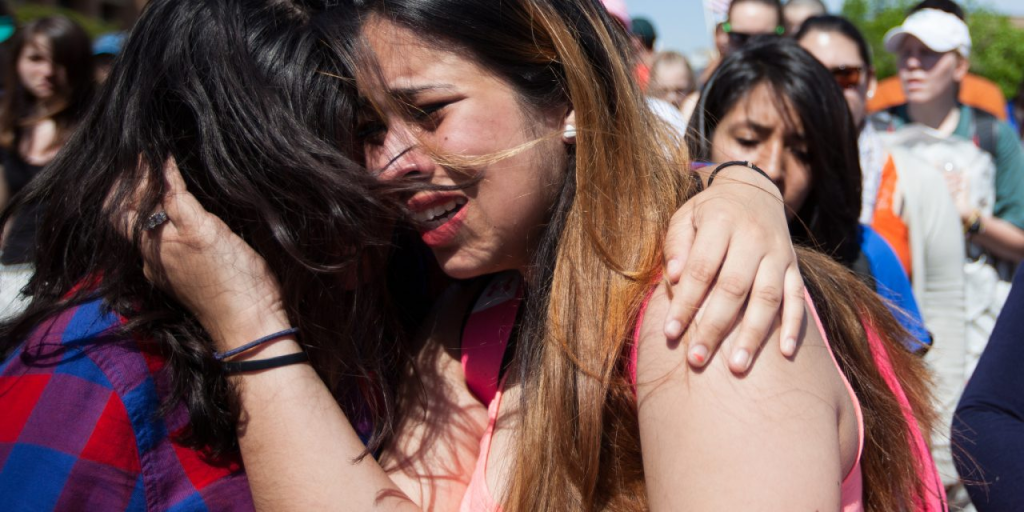
One cannot overstate the emotional toll of these choices. Staying behind often means entering foster care or relying on distant relatives for support, situations that lack the emotional security of a stable family. Meanwhile, leaving with deported parents severe children’s ties to their home country, friends & future opportunities. Every option carries profound loss for these families, creating a ripple effect that extends through communities & schools.

STRAIN ON MIXED-STATUS FAMILIES: In mixed-status families, where some members are citizens or legal residents & others are undocumented, the stakes grow even higher. Deportation may force adult citizens or permanent resident children to choose between staying or following their deported relatives. Current policies cannot address these nuances, leaving families to navigate a legal & emotional minefield. Expanding family sponsorship options could offer a lifeline, enabling citizen relatives to sponsor younger family members & maintain familial bonds. This approach, rooted in compassion & practicality, prioritizes unity while respecting the rights of citizen children to remain in their homeland.
ETHICAL & LEGAL QUANDARY: At its core, mass deportations challenge foundational moral principles. The indiscriminate deportation of family members undermines the rights of U.S. citizens, particularly children. Forcing families to choose between separation & displacement is not merely a logistical problem—it is a moral failure. It disrupts the stability of family units, the cornerstone of emotional & social well-being & sends shockwaves through communities, schools & local economies. As the nation grapples with these questions, policymakers must recognize that the children affected by these decisions are the future of the United States. Whether they stay or leave, their experiences shape their ability to contribute to society. Policies rooted in fairness & humanity would ensure that these children & their families have opportunities to thrive.
ESSENTIAL WORKERS: THE INVISIBLE BACKBONE: Beyond the immediate human cost, mass deportations threaten industries & services critical to daily life. Undocumented immigrants form the backbone of essential sectors such as agriculture, construction, hospitality & caregiving—roles often shunned by U.S.-born workers. These laborers, many of whom endure grueling conditions for low pay, ensure the nation’s food supply, build its infrastructure & care for its aging population.
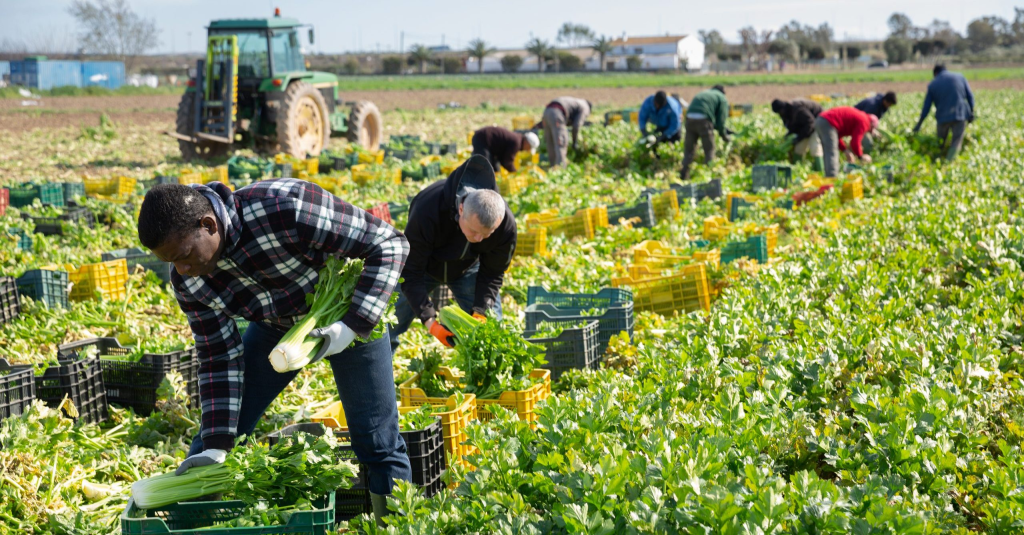
In agriculture, for instance, over half of U.S. farmworkers are undocumented. Their removal would devastate food production, leading to shortages, inflated prices & increased reliance on imports. Similarly, losing construction workers would delay infrastructure projects, drive up costs & leave communities without necessary services. In healthcare & elder care, undocumented caregivers support a growing elderly demographic. Deporting them would strain an already overburdened system, leaving vulnerable populations at risk.

NO THREAT TO SKILLED PROFESSIONALS: The contributions of skilled undocumented immigrants, particularly those brought to the U.S. as children, are equally critical. Many individuals have embarked on higher education & are thriving in sought-after medical, engineering & technology domains. Programs such as DACA & Deferred Action for Childhood Arrivals have allowed these individuals to make noteworthy contributions. However, their prospects for the future remain uncertain. Deporting these professionals would exacerbate labor shortages & hinder the nation’s global competitiveness. Teachers, social workers & entrepreneurs also face an uncertain future. Immigrant professionals often serve in under-funded & underserved areas, filling roles others avoid. Their businesses create jobs & stimulate local economies, fostering growth & innovation. Removing these individuals undermines community development & economic stability.
PRAGMATIC & HUMANE APPROACH: Rather than resorting to blanket deportations, the United States must adopt policies that balance enforcement with compassion & pragmatism. Pathways to legalization for undocumented immigrants contributing to critical industries could preserve economic stability while honoring the dignity of individuals & families. Expanding targeted visa programs & implementing case-by-case reviews would ensure that deportation decisions consider community ties, financial contributions & family status. Policies that prioritize family unity & create opportunities for undocumented parents of citizen children to regularize their status would uphold the nation’s values of fairness & justice. These measures would protect vulnerable populations & strengthen communities & the economy.

VALUES AT STAKE: The debate over immigration policy transcends politics & economics—a profoundly human issue. Behind every statistic are families facing unimaginable choices, communities grappling with uncertainty & a nation wrestling with its identity. As the United States considers its next steps, it must carefully balance the rule of law with the principles of compassion, fairness & respect for individual rights. The actual cost of mass deportations extends beyond immediate disruptions. It jeopardizes the nation’s social fabric, economic stability & moral integrity. The United States can honor its legacy as a beacon of hope & opportunity only by crafting policies that reflect unity & inclusivity.

Please share this post & help hearten our immigrants; we need each other.

Preview YouTube video How Trump’s Deportation Machine Will Make Him MILLIONS $$$

How Trump’s Deportation Machine Will Make Him MILLIONS $$$