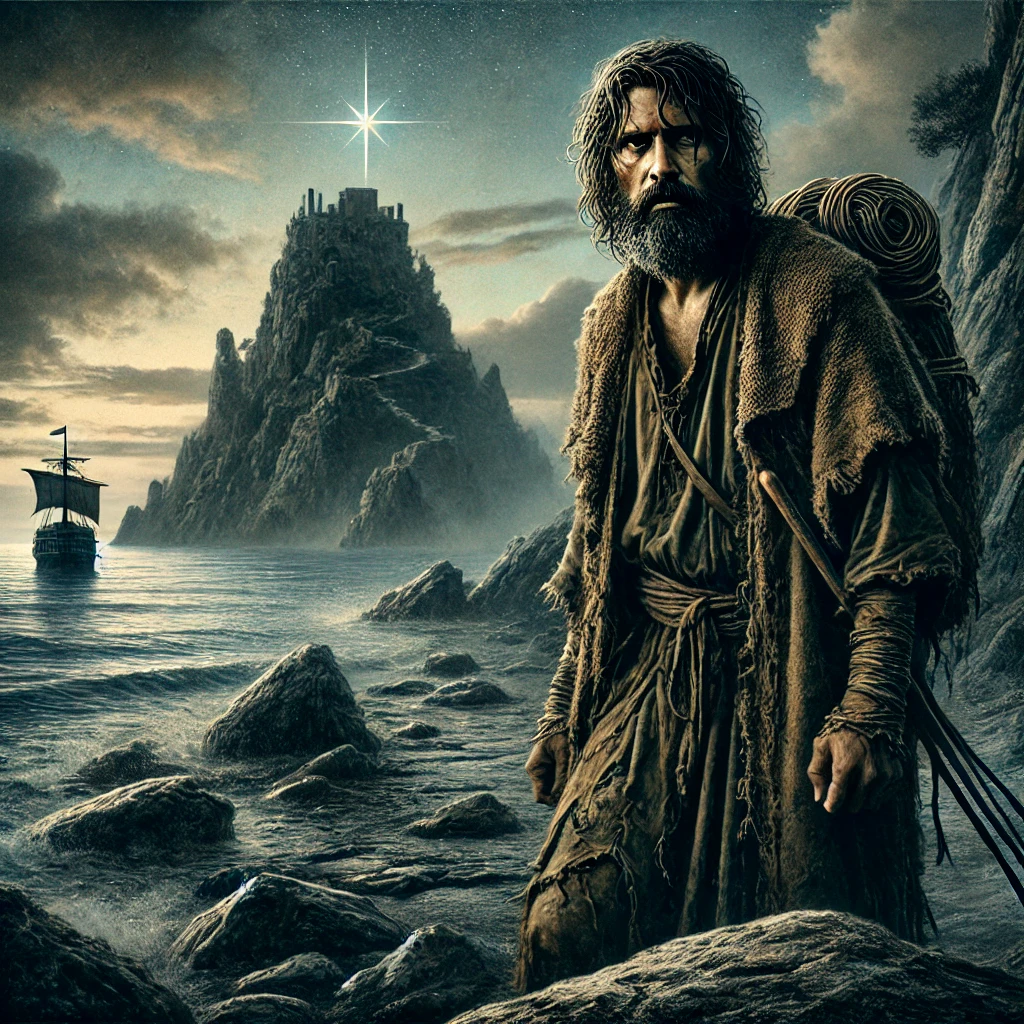
Odysseus, dressed in tattered robes, lands secretly on the rocky coast of Ithaca after twenty years. The twilight sky and distant glow of Athena’s light hint at the divine forces at play.
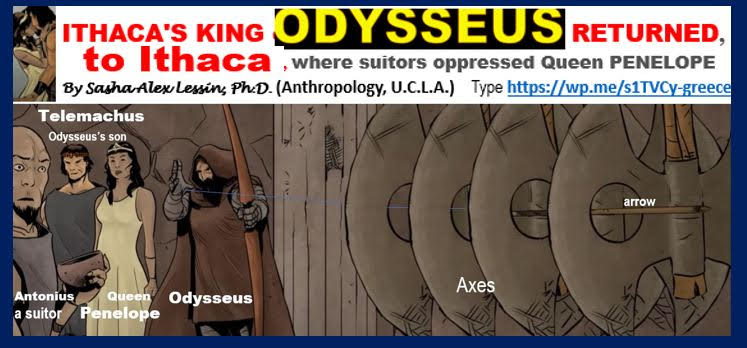
ITHACA’S KING ODYSSEUS RETURNED TO ITHACA, where suitors oppressed Queen PENELOPE.
https://www.youtube.com/watch?v=_sENhQOfzu8
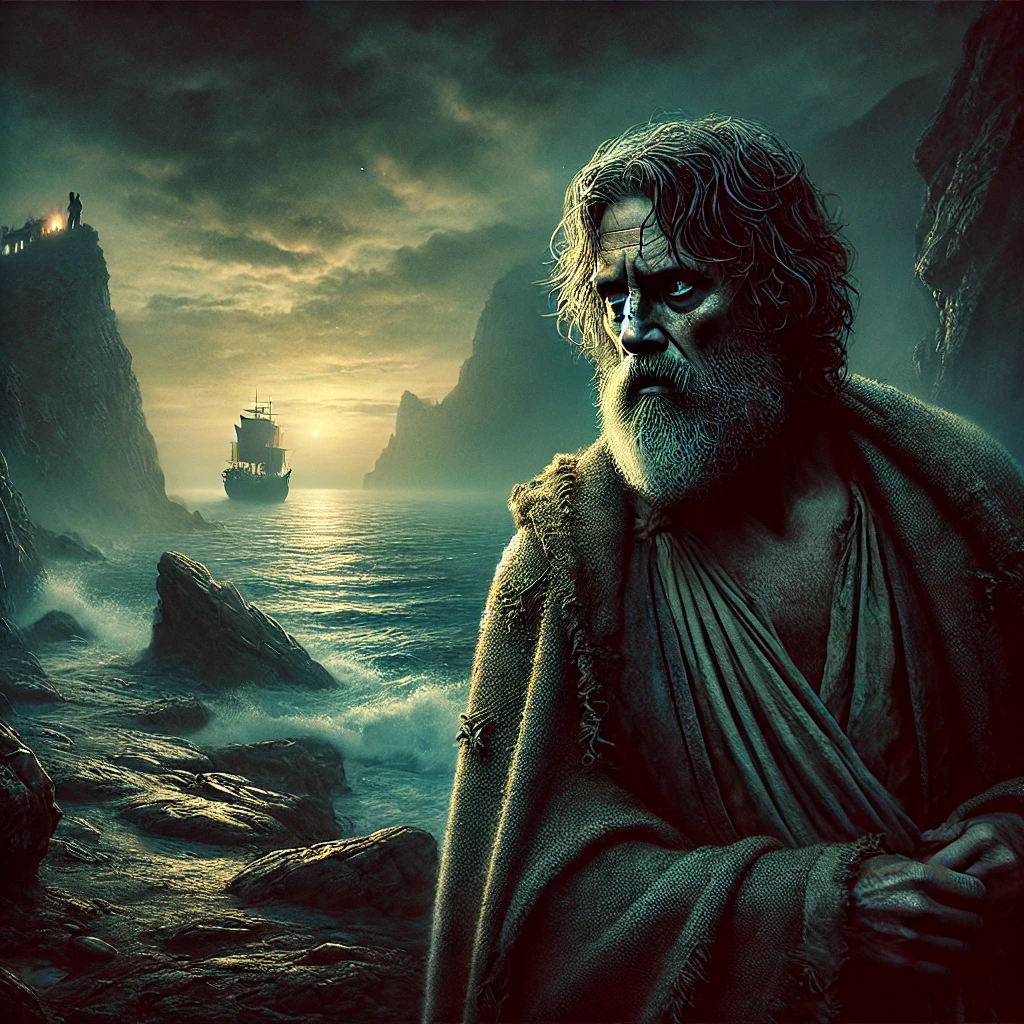
Odysseus gazes toward his homeland. Weathered by years of war and wandering, his expression holds a quiet mix of sorrow, hope, and determination.
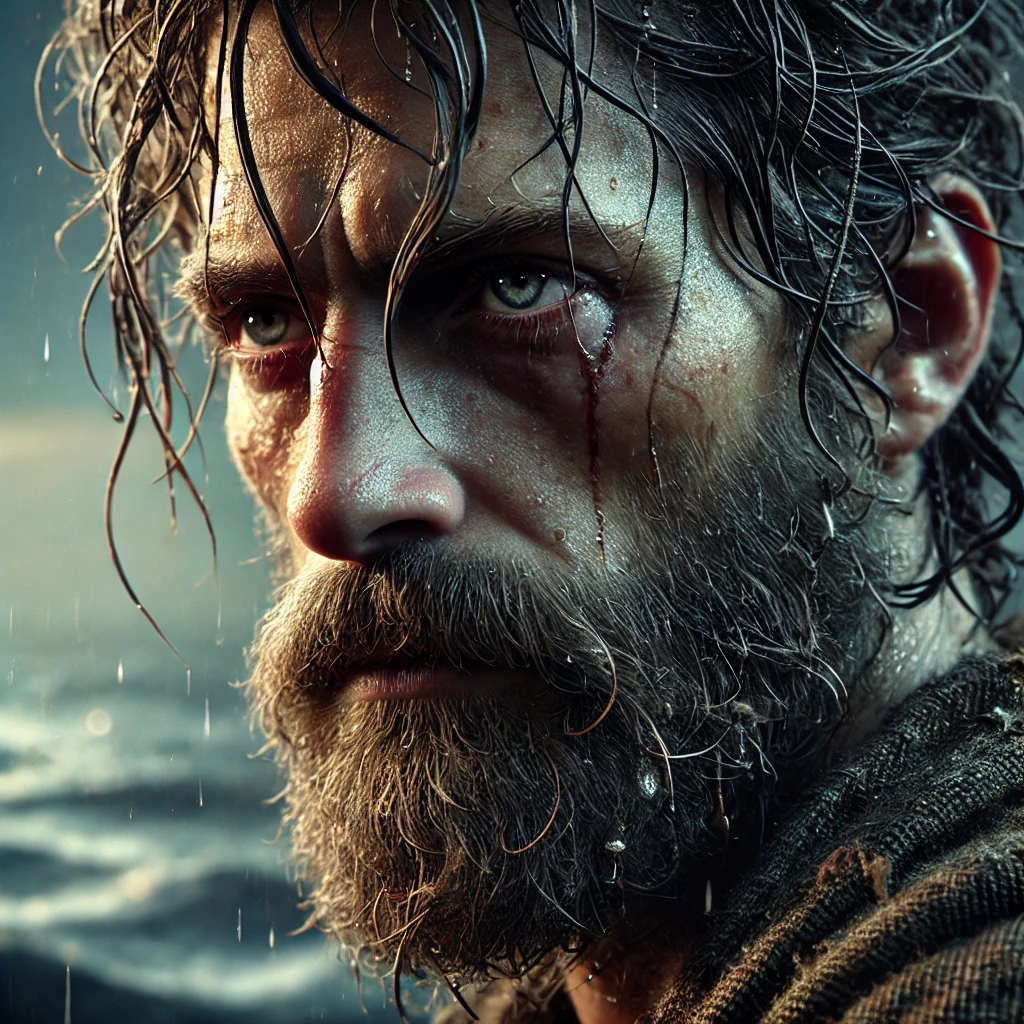
His face tells the story of storms, battles, and gods. Twilight glows on his sea-worn features. He is no longer the cunning warrior of Troy—but something more profound, quieter, and stronger: a man forged by time.
ITHACA’S KING ODYSSEUS RETURNED TO ITHACA, where suitors oppressed Queen PENELOPE.
https://www.youtube.com/watch?v=MB9urpL2r90
ITHACA’S KING ODYSSEUS (after killing the Trojans) RETURNED, after 10 more years, TO ITHACA, where the suitors oppressed Queen PENELOPE
By Sasha Alex Lessin, Ph.D. (Anthropology, U.C.L.A.)
For more on Ancient Greece & its Anunnaki connection, click https://wp.me/s1TVCy-greece
The film below this post explicates Odysseus’ return.
Backstory: In 1184 BCE, the Mycenaean Greeks pretended to sail away from Troy. They left a secretly hollowed-out wooden horse on shore. With the horse, they left Sinon, a Greek soldier, on the beach. Sinon said he was a deserter. He convinced the Trojans that the Greeks had left him to sacrifice to Athena and that they had left the horse as a monument to the ten-year war that they and the Trojans had endured.
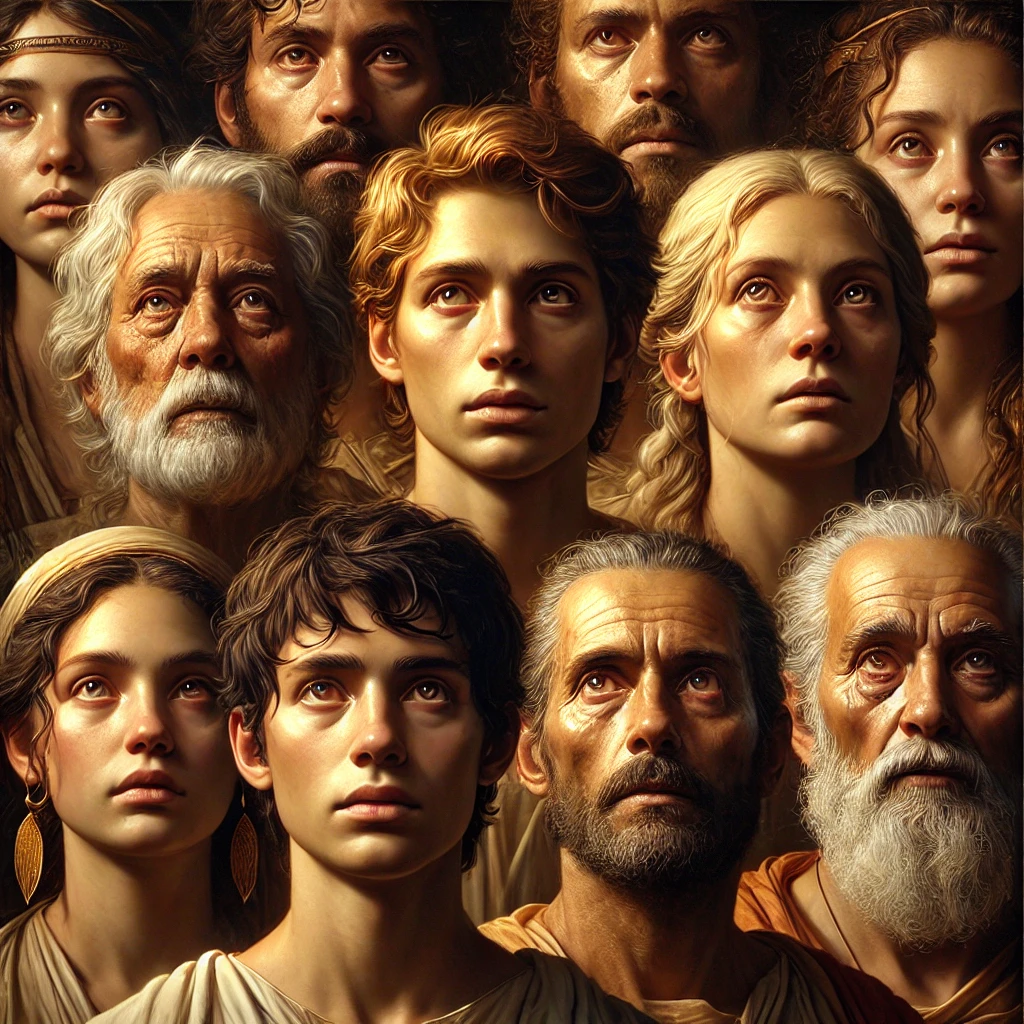
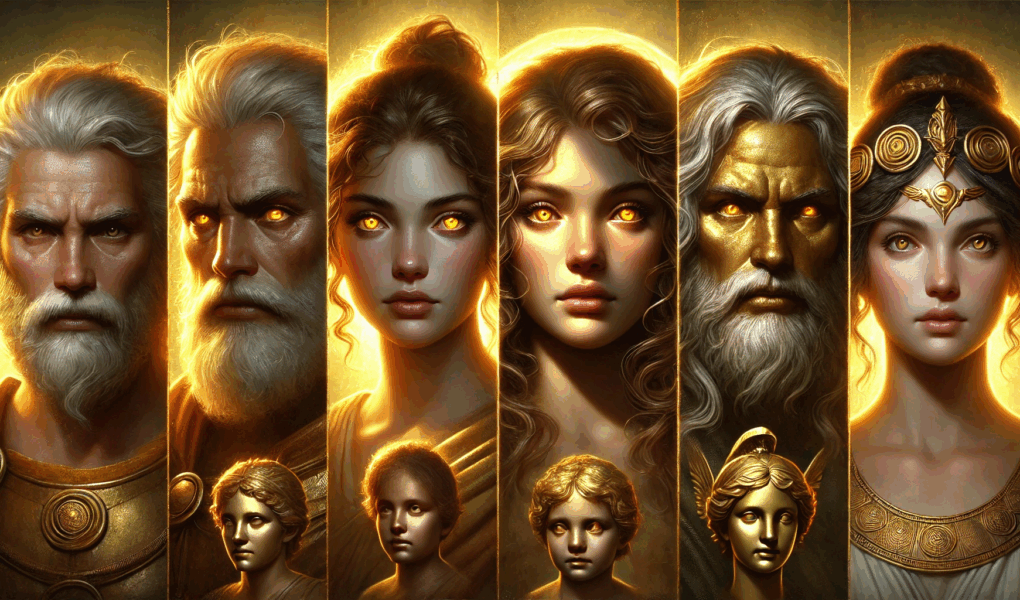
Together they stand—husbands and wives, sons and mothers, elders and youth. In their eyes: the memory of waiting, the cost of war, the awe of return. This is the face of a people who have seen gods walk among them.
Odysseus led the squadron of Mainland Greeks hidden in the trophy horse; the Trojans tore down a section of the wall Heracles had built around Troy so they could drag the giant wooden horse into their central plaza. They believed Sinon’s lie that the fleet had sailed back to Greece.
The Trojans partied all night, then fell asleep before dawn. The Greeks in the horse emerged, signaled their fleet back to Troy, rushed into the city, and killed or enslaved all the Trojans. Only the forces of Trojan Prince Aeneas, defending the Trojan ships rather than being trapped in the city, survived the final massacre.
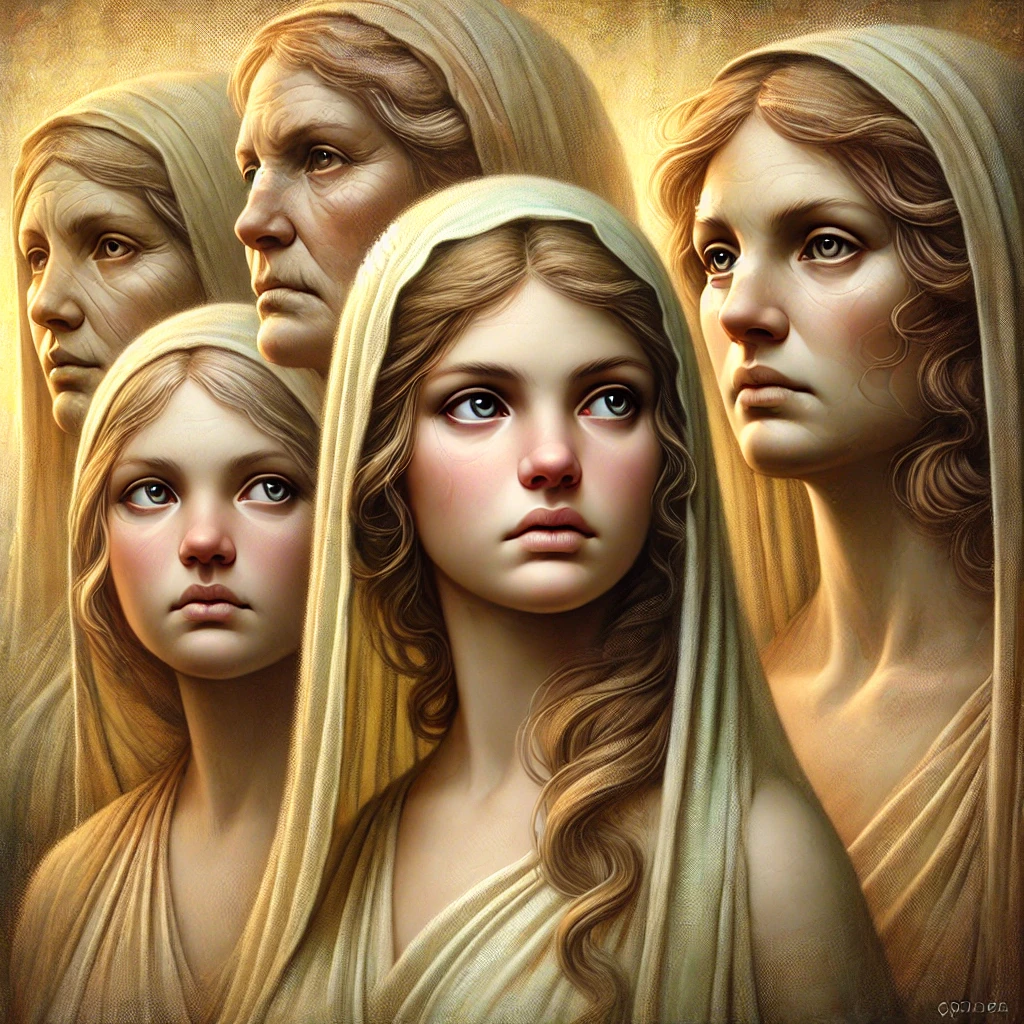
Their eyes hold generations of silence and song—mothers, widows, daughters, and queens. In their gaze: the strength of survival, the ache of waiting, and the memory of gods and men.
ODYSSEUS TOOK 10 MORE YEARS TO GET BACK TO ITHACA, HIS KINGDOM
Odysseus, after a series of adventures, returned to the island kingdom of Ithaca, which he had left to fight the Trojans, and ten more years passed [as Odysseus experienced the adventures, as seen in the second video beneath this one].
Ithaca rests in the Ionian Sea, off the northeast coast of Kefalonia and to the west of mainland Greece.
On Ithaca, everyone thought Odysseus had died. When Odysseus, after 20 years, finally reached his island, he found 100 Greek nobles courting his wife, PENELOPE. They pressured her to choose one of them as her mate and make him King of the island.
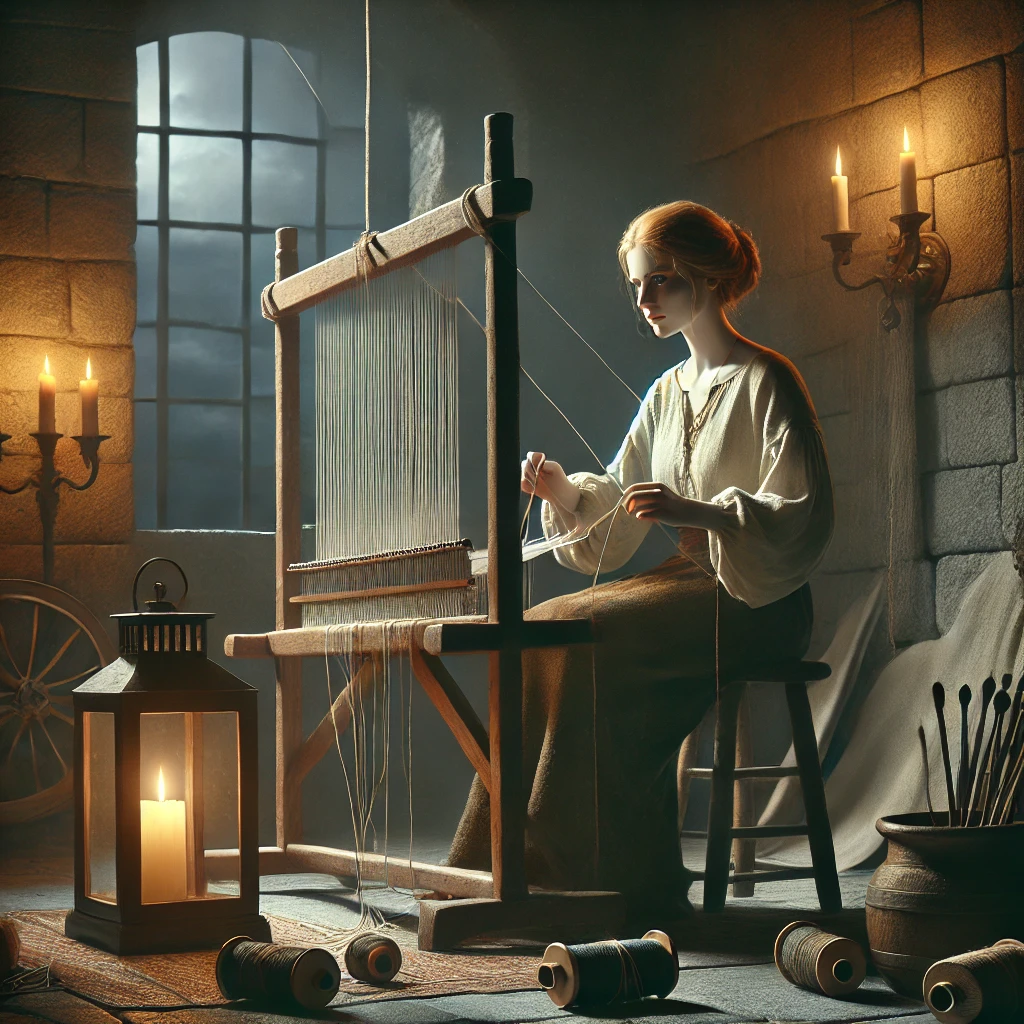
In the soft glow of candlelight, Penelope weaves a burial shroud for Odysseus’ father, knowing she will unravel it by night. Her chamber is hushed, timeless, yet heavy with the pressure of waiting suitors and her unspoken hope.
Penelope, to delay her forced marriage to any suitor, said, I’ll marry when I finish the burial shroud for Odysseus’ old father, LAERTES.
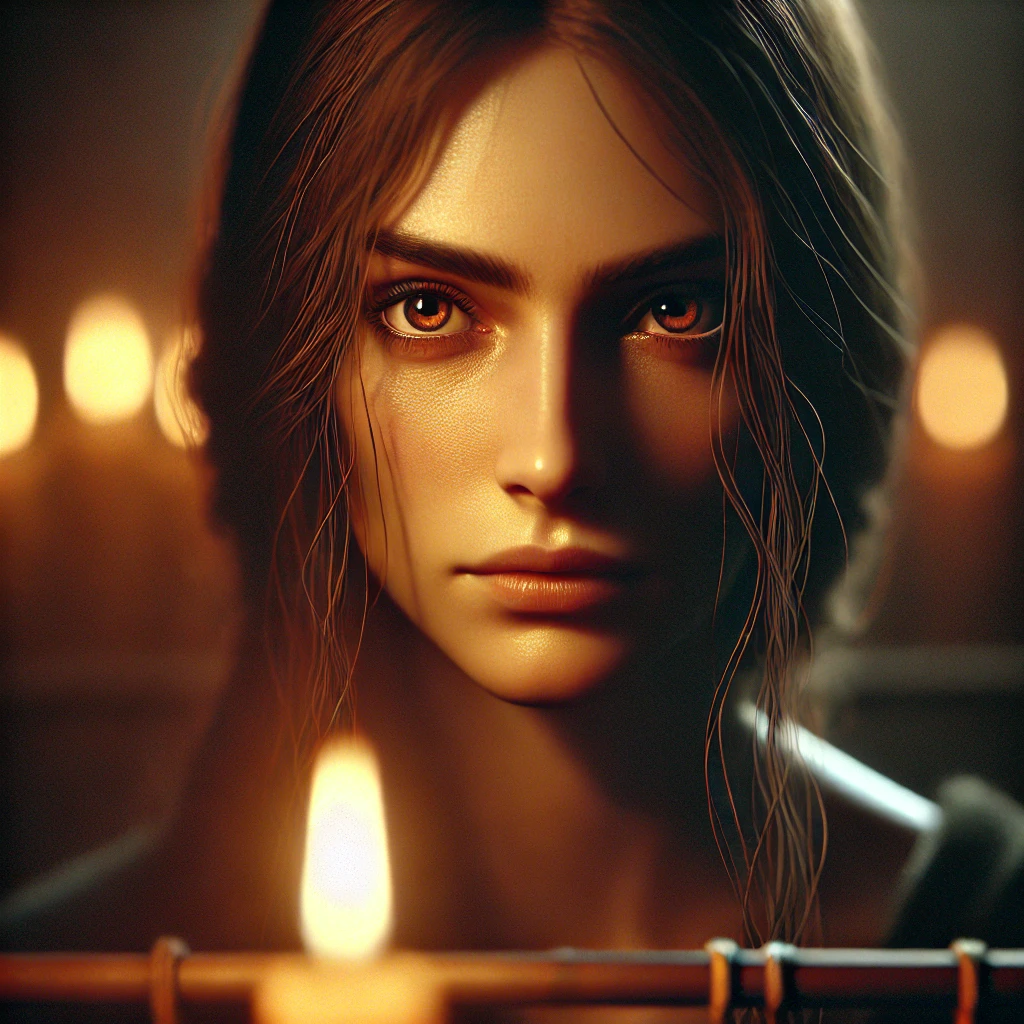
Lit by flickering candlelight, Penelope’s face reveals the toll of waiting and the strength it takes to outwit the suitors. Her gaze is distant, but her will is unshaken. She holds the thread not just of a loom, but of a kingdom’s hope.
Each day, she wove diligently; each night, she unraveled her work. This ruse stalled her suitors for 3 years.
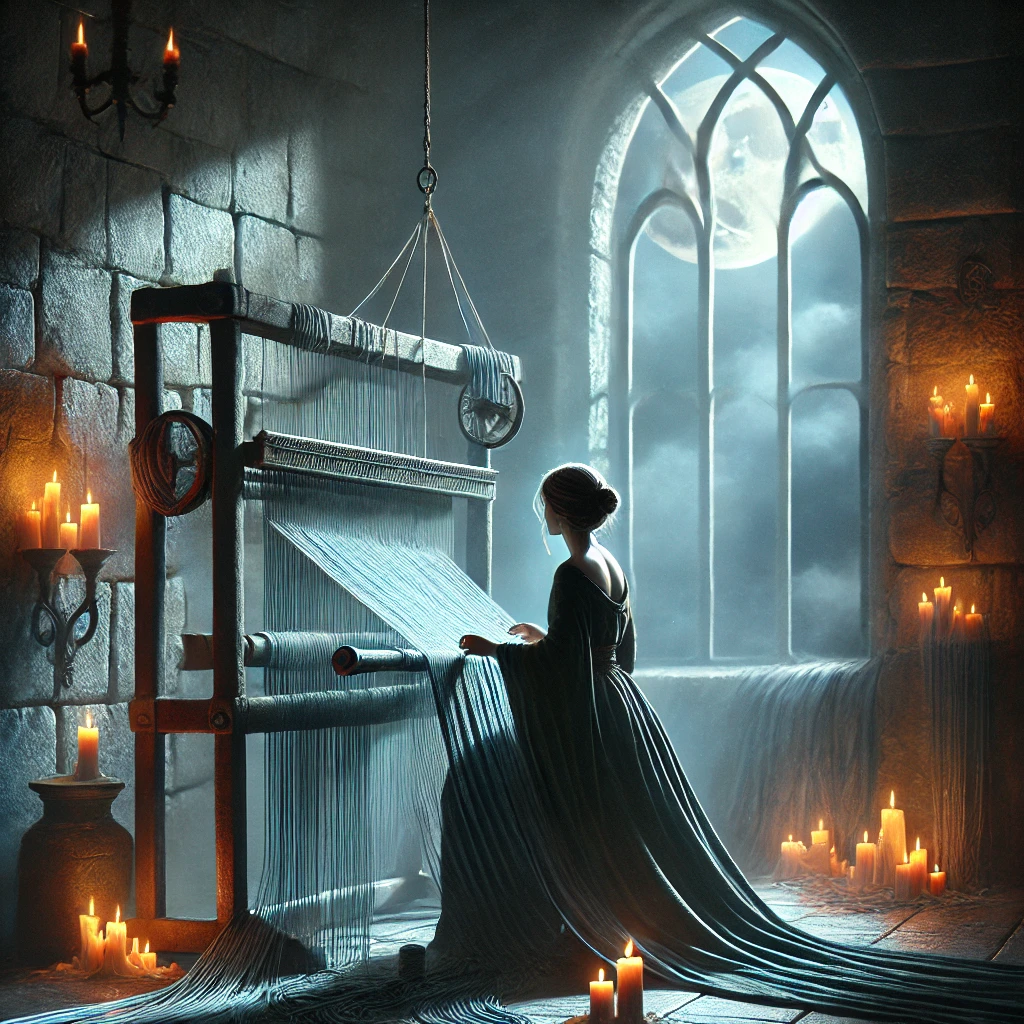
Alone in her candlelit chamber, Penelope works the loom by night—her green robes pooling like the threads she’ll soon unravel. The moon watches silently through arched windows as she delays the fate others would force upon her.
But a maid leaked her secret to the suitors. She couldn’t put them off with the excuse of her work on Laertes’ shroud.
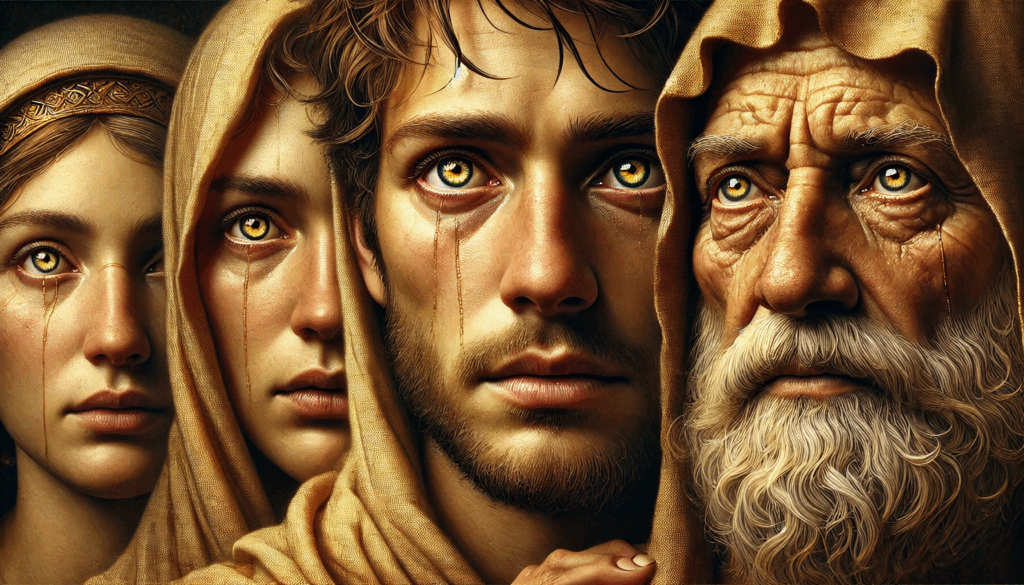
Every line, every gaze, holds a story: of love lost, of gods seen, of waiting that shaped a generation. Their eyes meet ours not as characters in legend, but as souls who lived through it.
Guided by the Goddess* Athena, Odysseus arrived in Ithaca disguised as a beggar to assess the situation. Only his old dog recognized him.
He revealed his identity as Ithaca’s long-absent King to his son, Telemachus, to his pig-keeper, EUMAEUS, and the pig master’s servant, PHILOETIUS.
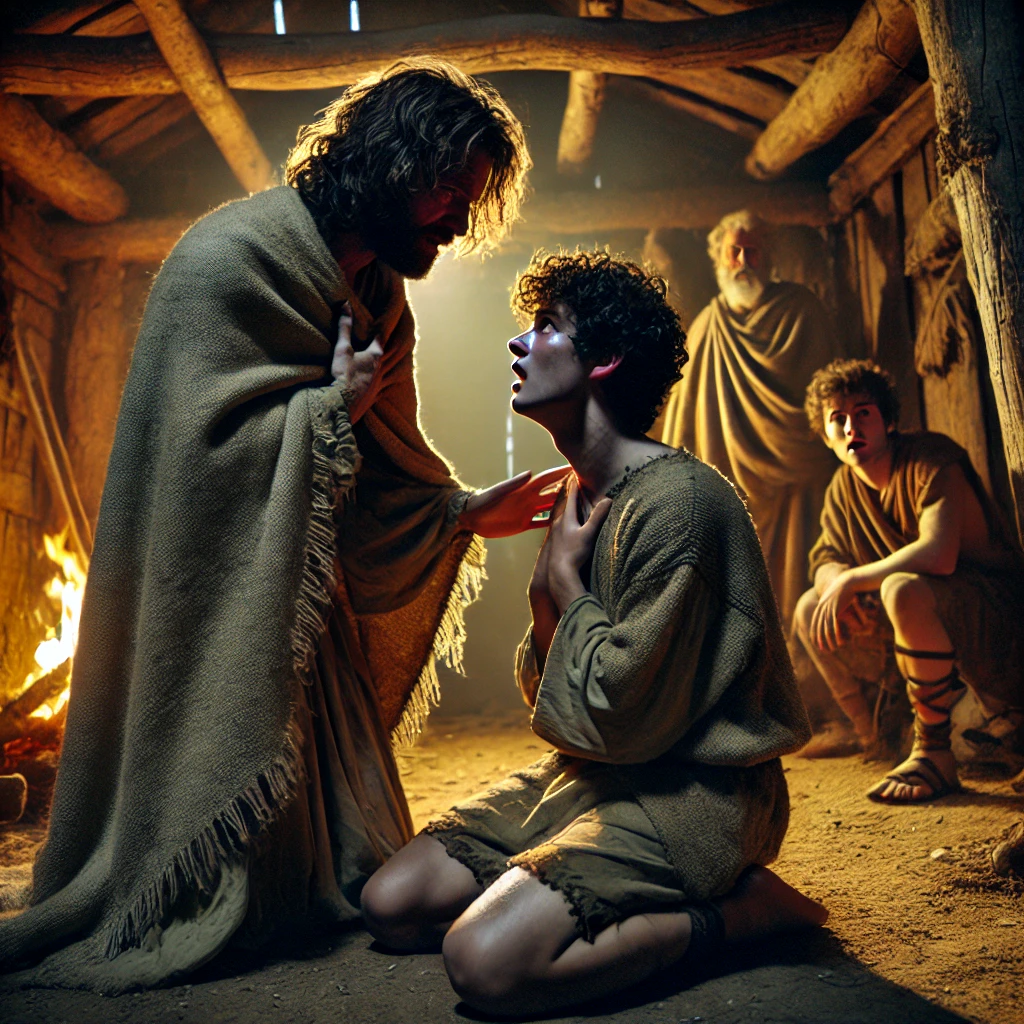
This image beautifully captures the moment when Odysseus, disguised as a beggar, finally reveals his true identity to his son, Telemachus, in a humble shepherd’s hut.

Odysseus’ eyes hold years of pain and pride; Telemachus gazes up at the father he barely remembers. Lit by firelight in the shepherd’s hut, the moment pulses with disbelief, love, and fate fulfilled.
Facing relentless pressure, Penelope said she’d marry the man who could string Odysseus’ great bow and shoot an arrow through twelve axe heads.
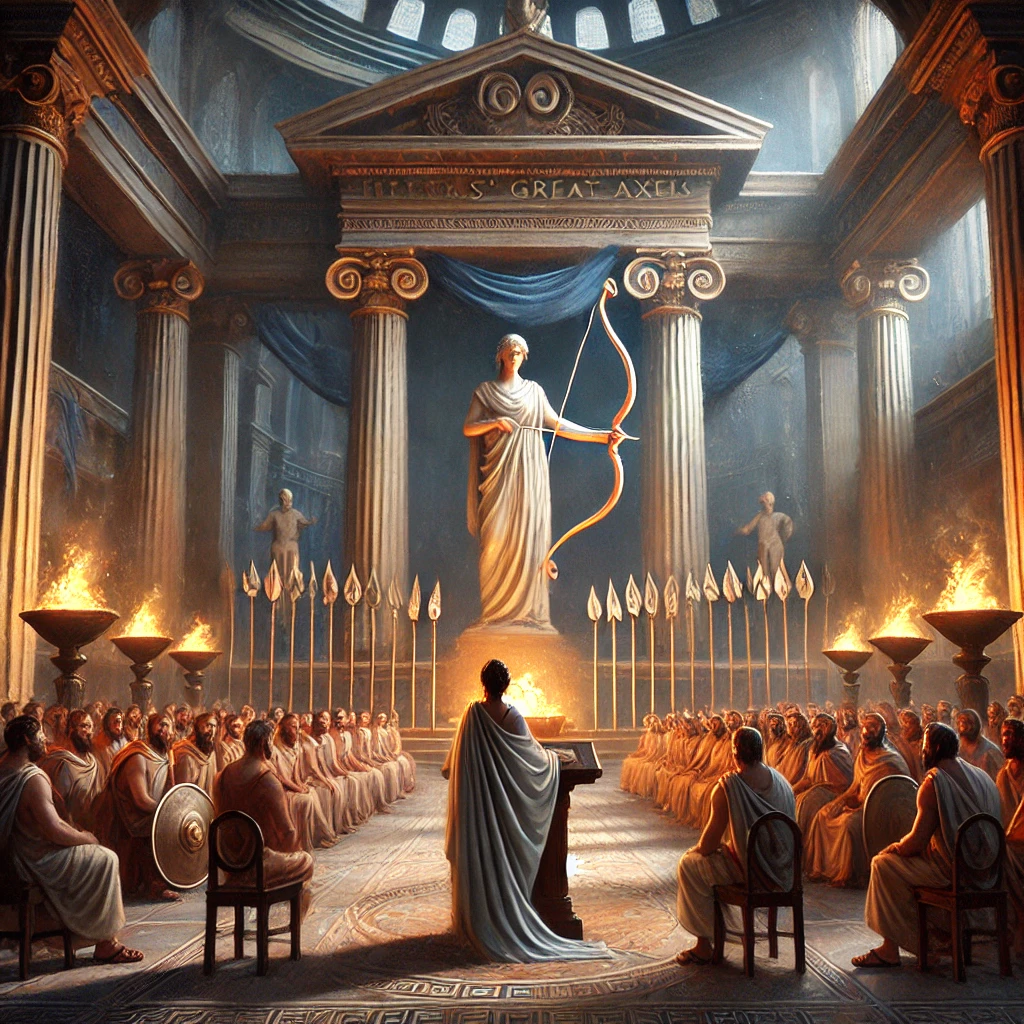
In the great hall of Ithaca, Penelope presents the challenge: only the man who can string Odysseus’ mighty bow and shoot an arrow through twelve axe heads may win her hand. The suitors watch, scoffing. But something ancient stirs in the air.
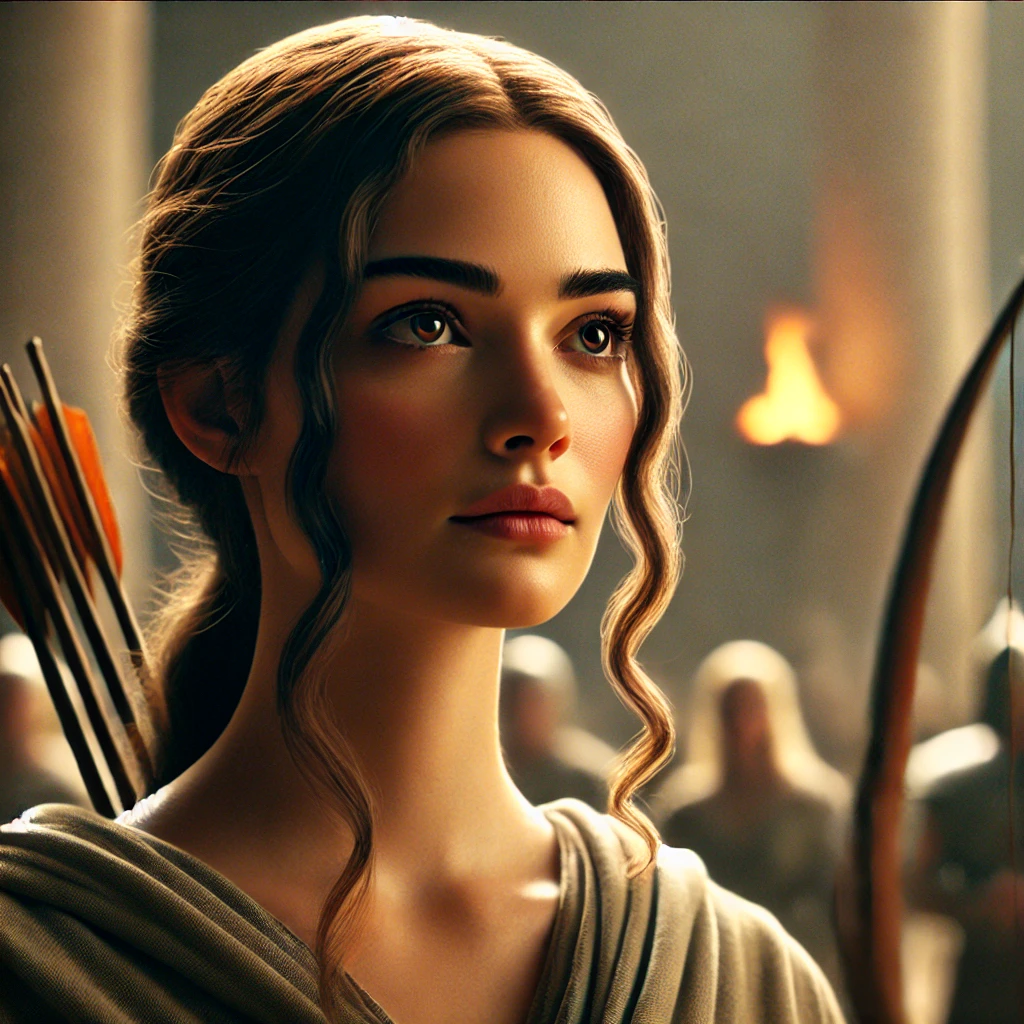
Eyes steady, shoulders lifted, Penelope commands the room without raising her voice. Behind her wait the bow and axes—symbols of a kingdom’s fate. In her silence lies defiance, in her gaze, a prayer.
None of the suitors could even string the bow. One by one, they strained. Arms trembled. Jaws clenched. Sweat rolled. They failed.
Odysseus, still dressed in rags, stepped forward. The suitors laughed—one spat.
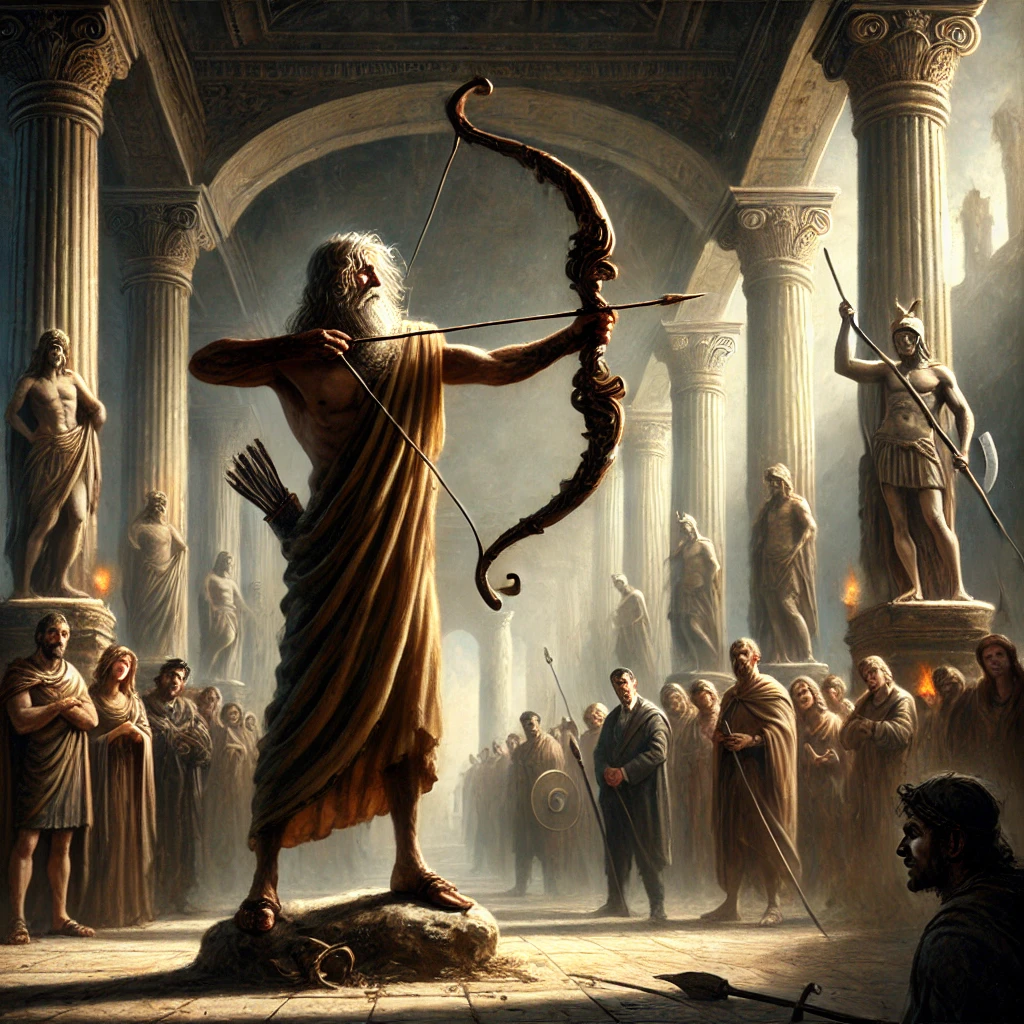
In rags and silence, Odysseus steps forward. Laughter fades as he lifts the bow that none could bend. With a single breath, he strings it—the hall stills. Something ancient awakens in the hush—a king reclaiming his throne.
Penelope stepped close to the beggar. Her eyes locked on his. Her fingers brushed the back of his hand. Her voice, soft and shaking, If you genuinely are him, end this.
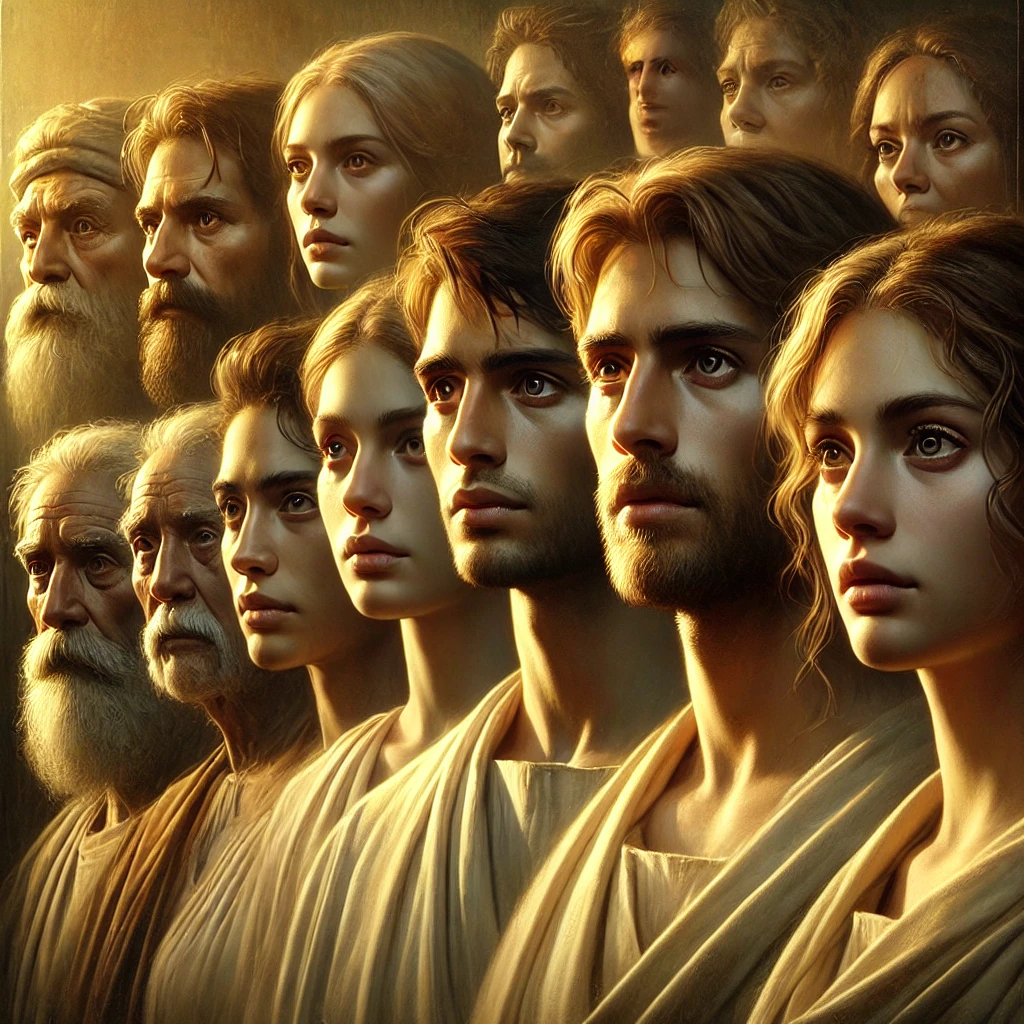
Together they stand—husbands and wives, sons and mothers, elders and youth. In their eyes: the memory of waiting, the cost of war, the awe of return. This is the face of a people who have seen gods walk among them.
Telemachus ordered silence and insisted that Zeus’ law of hospitality to strangers compelled the suitors to give the beggar too a chance to string the bow and take a shot at the holes in the axe heads. They let the “beggar” have a go at winning Penelope.
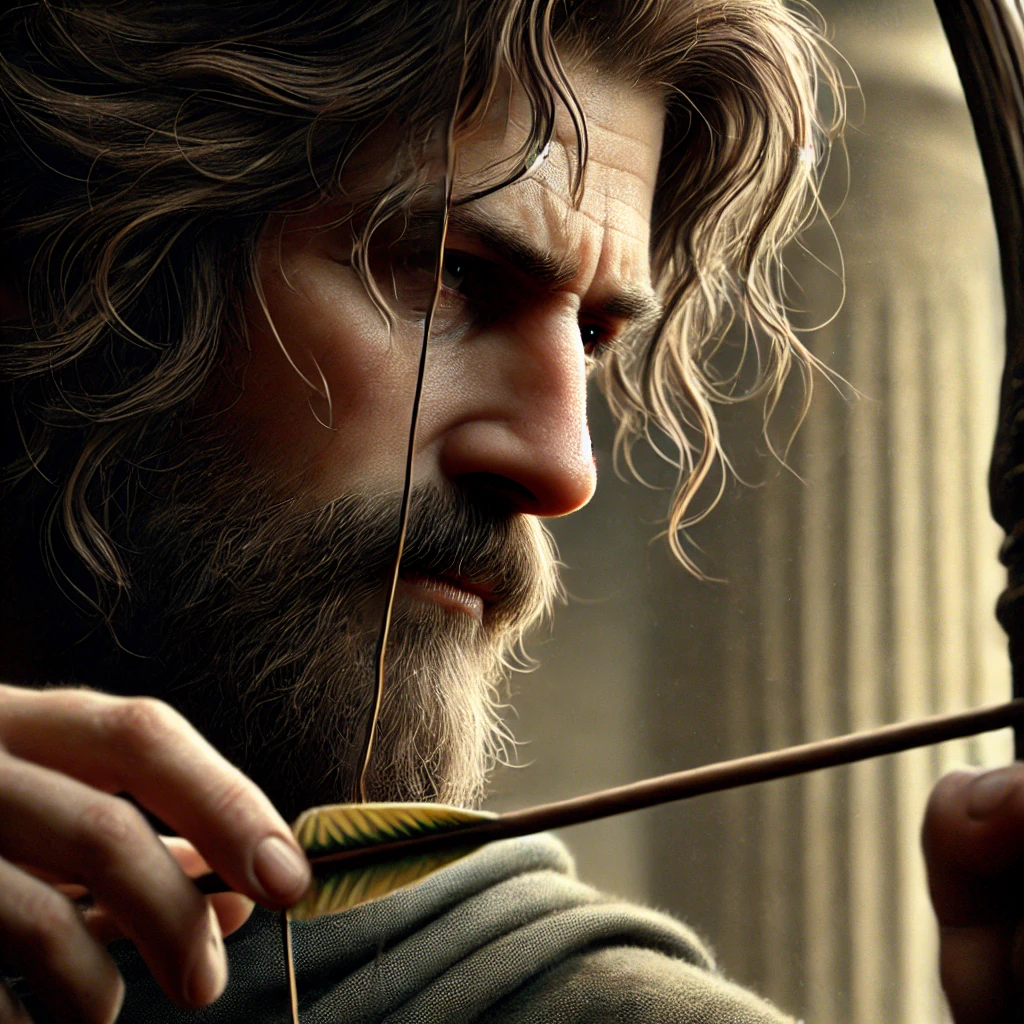
In silence, his fingers grip the bow. The suitors murmur. But Odysseus’ eyes—steady, storm-scarred—see only the path of justice. The beggar is gone. The king has returned.
The beggar lifted the great bow.
Odysseus strung it in one smooth movement.
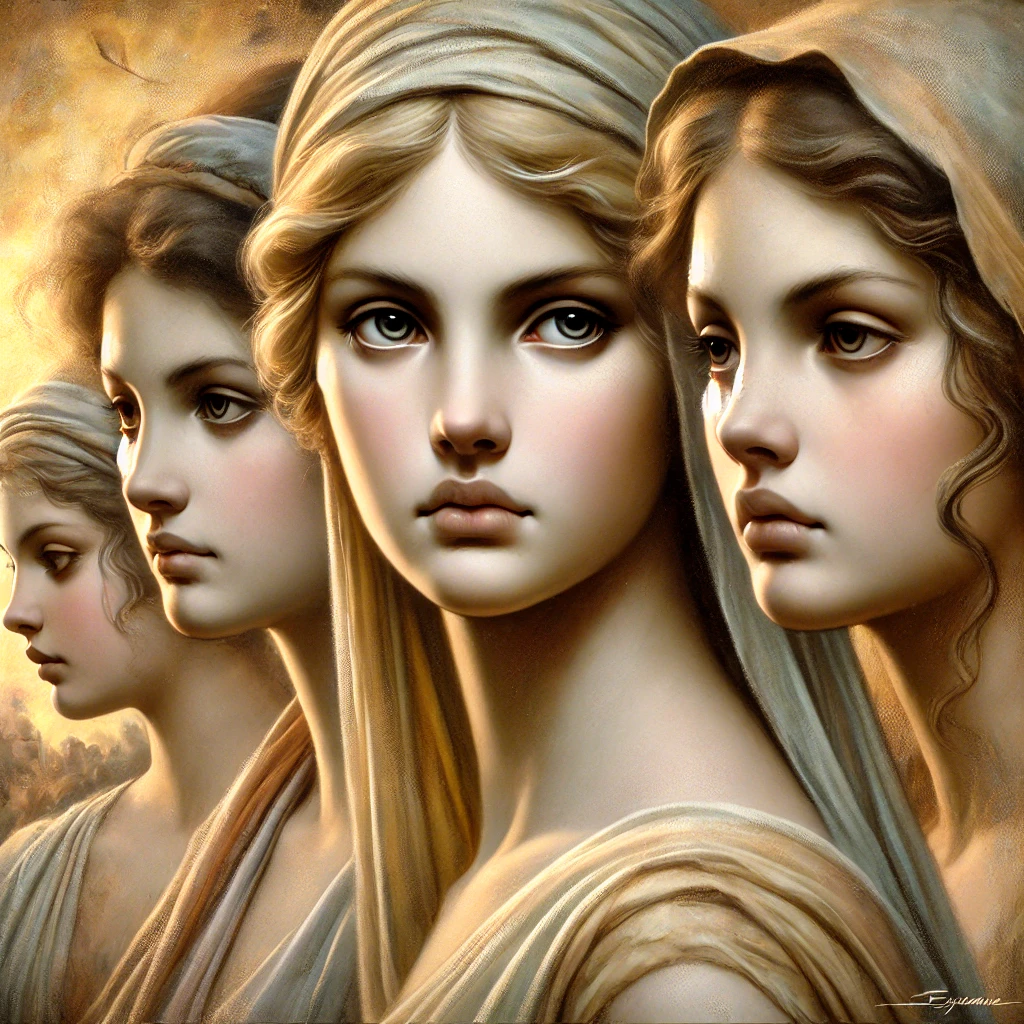
Their eyes hold generations of silence and song—mothers, widows, daughters, and queens. In their gaze: the strength of survival, the ache of waiting, and the memory of gods and men.
Gasps broke the hush. Then silence again.
He stood in line. Raised the bow. Released.
The arrow hissed. Pierced the row of axe heads.
One.
Two.
Twelve.
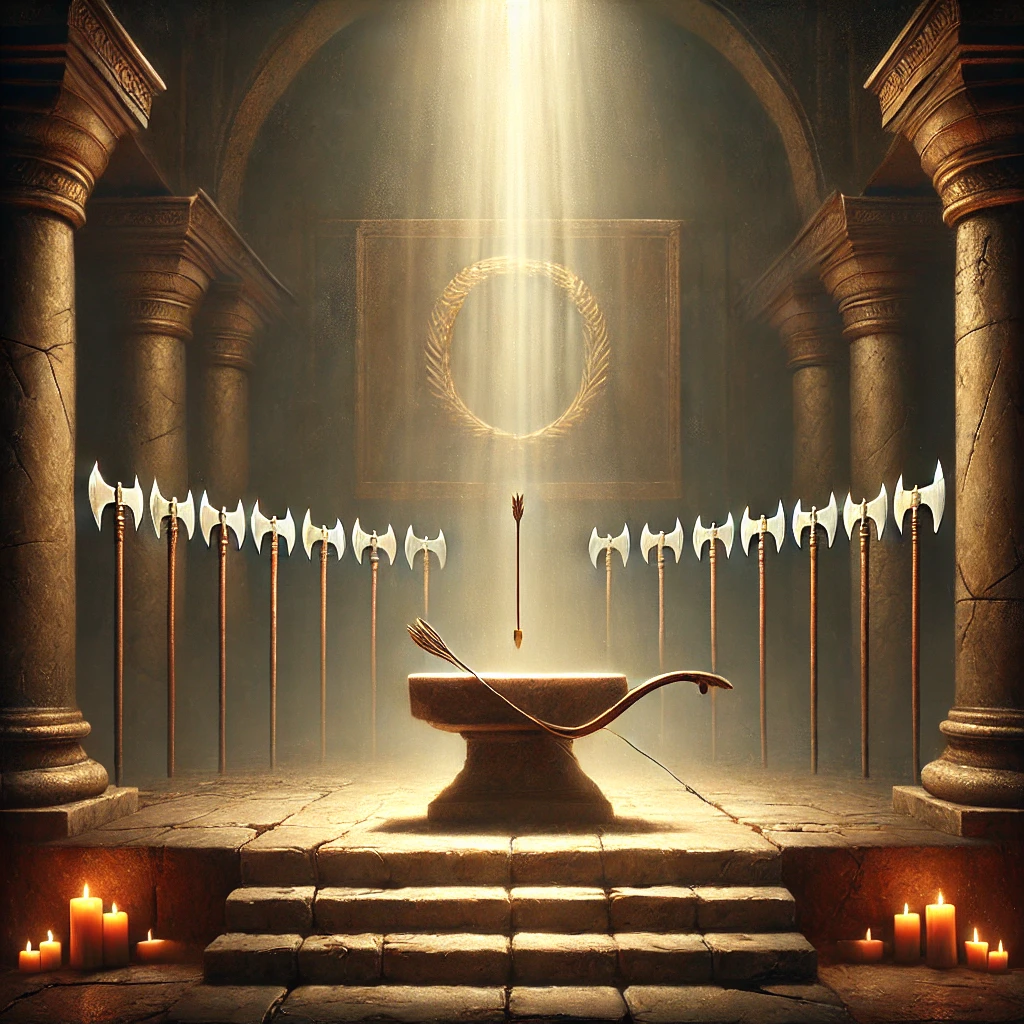
In the silent hall of Ithaca, the great bow and single arrow rest before the twelve aligned axe heads. No figures disturb the stillness—only light and stone. A moment of quiet destiny, awaiting the hand of a true king.
The crowd froze. Odysseus dropped the rags. The sun caught his bronze mail beneath.

The suitors freeze, breath caught. Odysseus stands revealed—his rags fallen to the floor, and bronze mail glowing in a shaft of sun. No longer a beggar. No longer hidden. A king has returned, forged in time and fire.
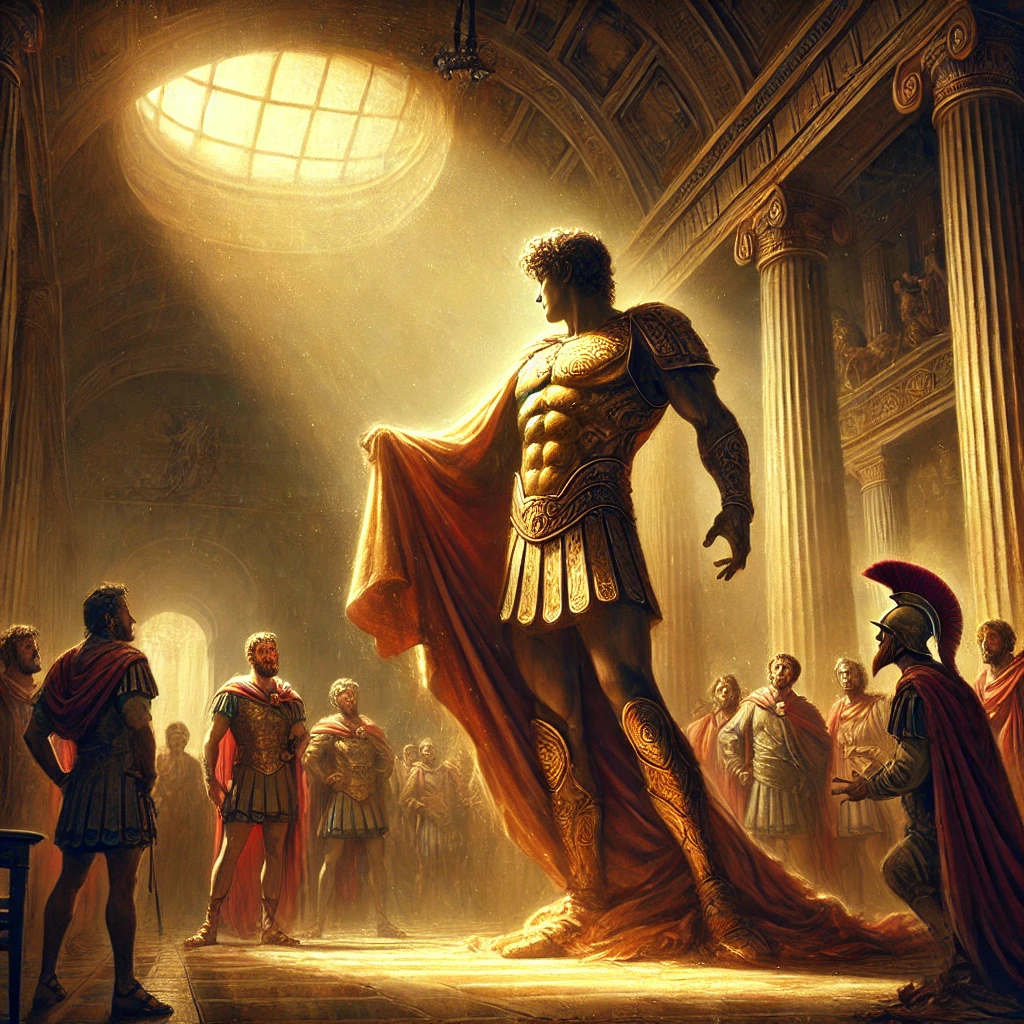
Telemachus shouted, Father has returned!
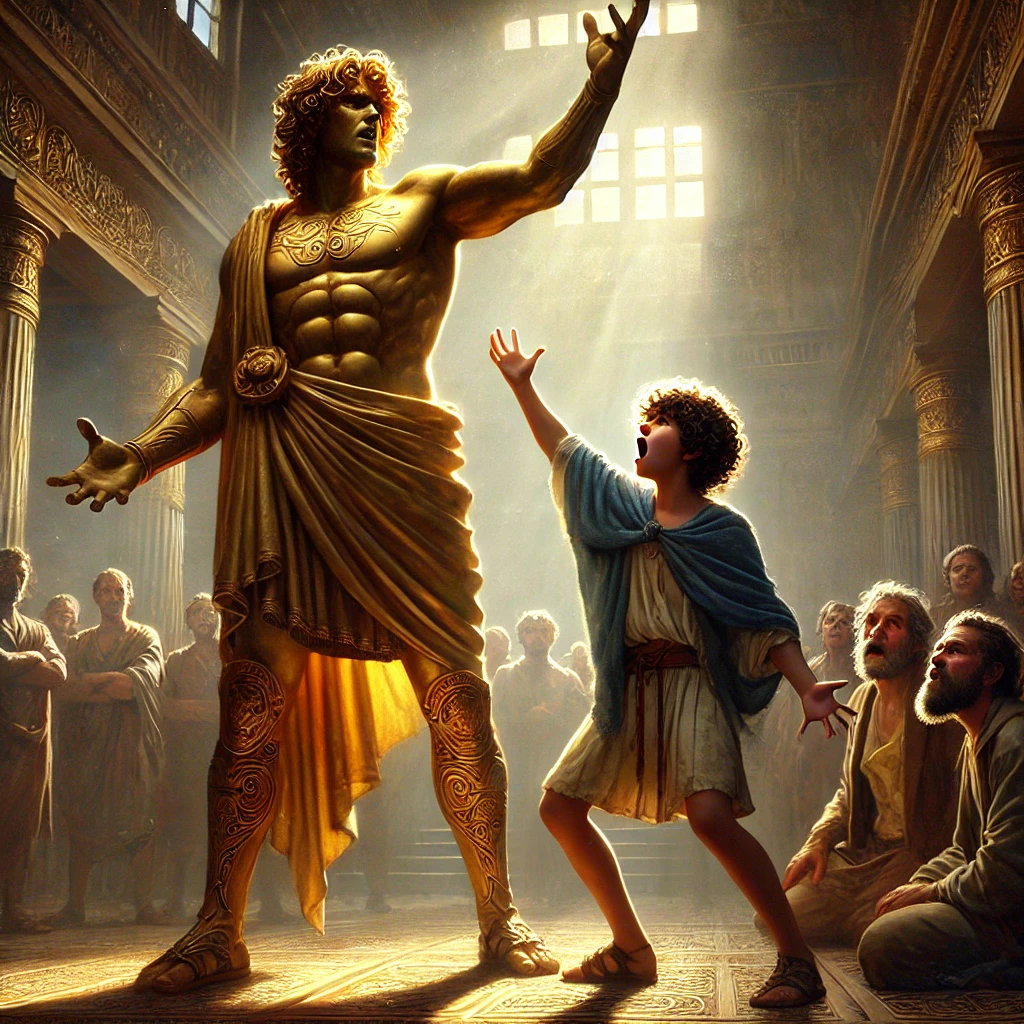
Telemachus steps forward, voice rising like a trumpet across the great hall. “Father has returned!” he cries. Odysseus stands beside him, radiant in bronze, while the suitors reel in disbelief. The bond of blood and destiny ignites the hall.
Odysseus roared. Son Telemachus armed him.
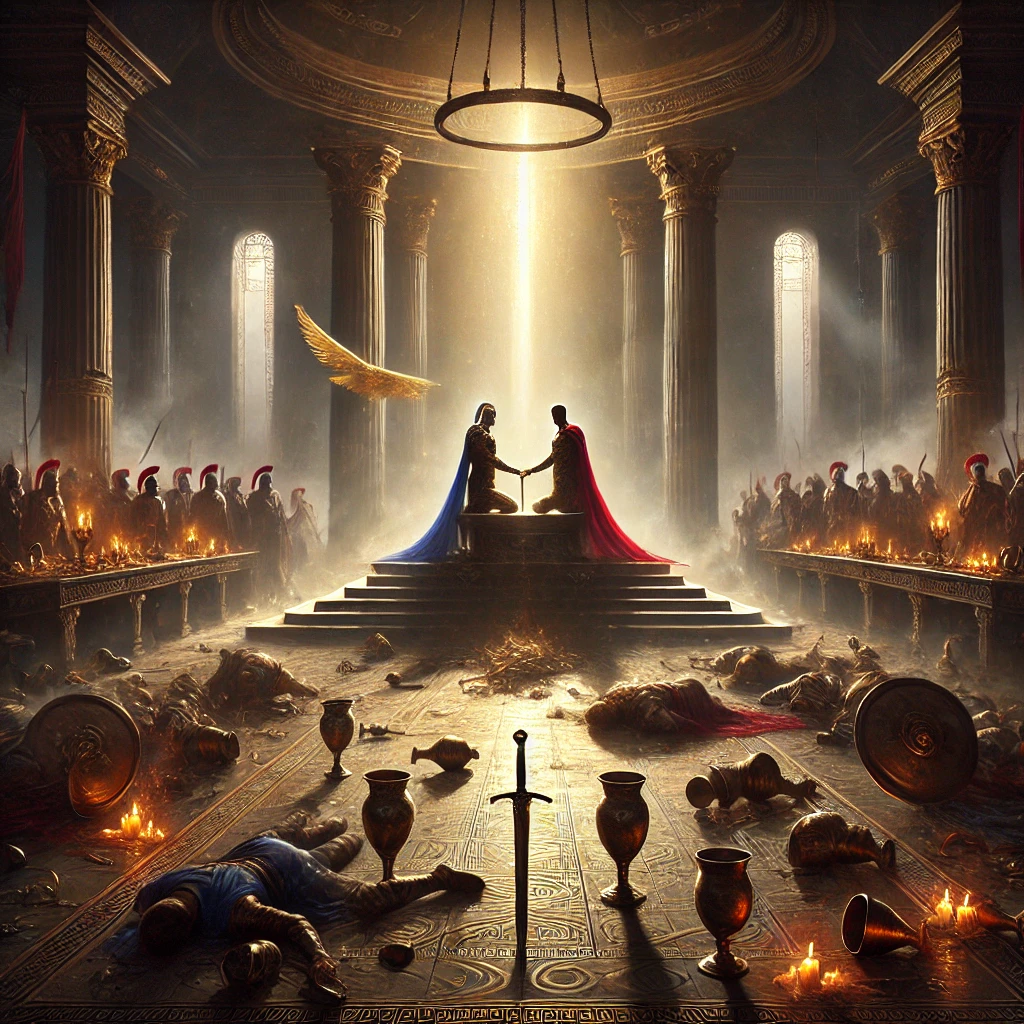
The suitors are gone, their chaos scattered in overturned goblets and broken tables. Odysseus and Telemachus stand back-to-back, weapons lowered, illuminated by a single beam of light. No words spoken. No mercy forgotten. Peace begins where vengeance ends.
They closed the doors.
They slaughtered the suitors.
Blood soaked the stone.
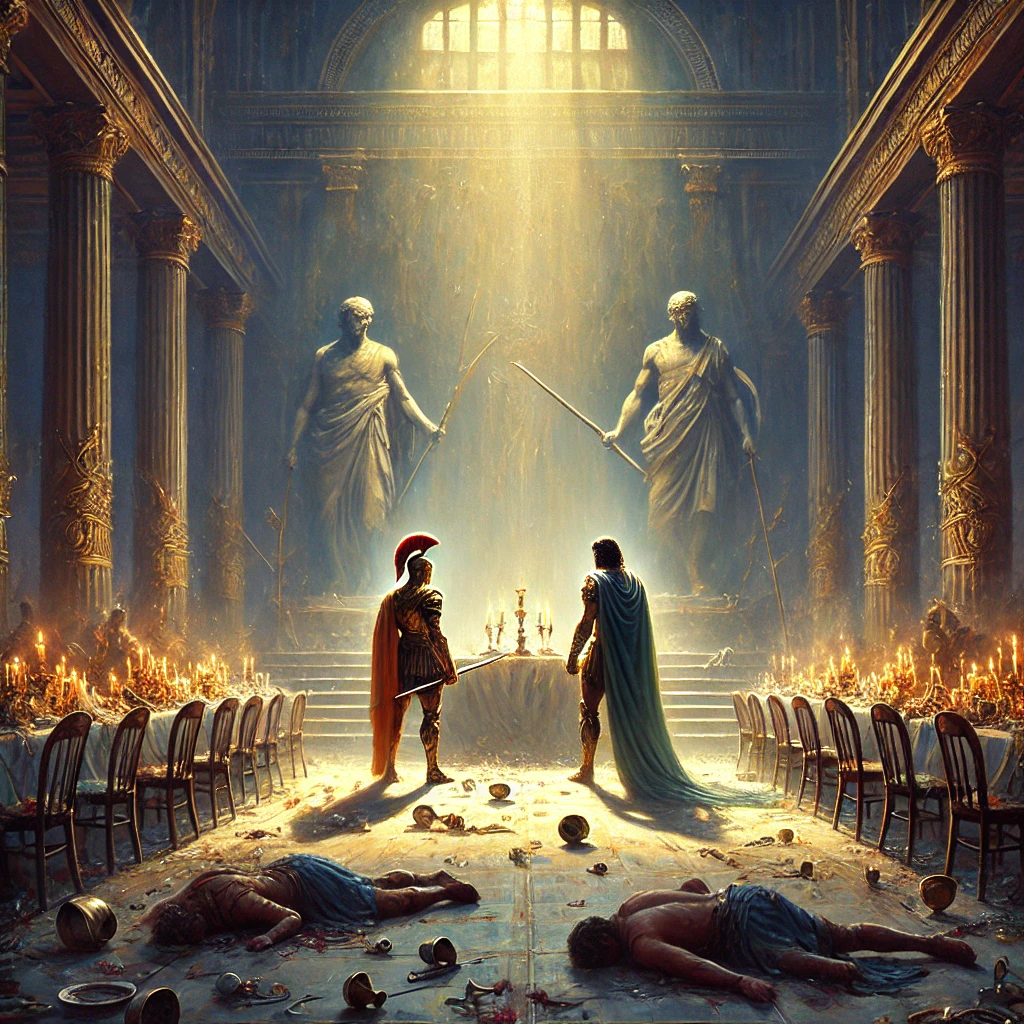
Odysseus hanged the maids who betrayed Penelope. He forced the loyal ones to clean the gore from the floor.

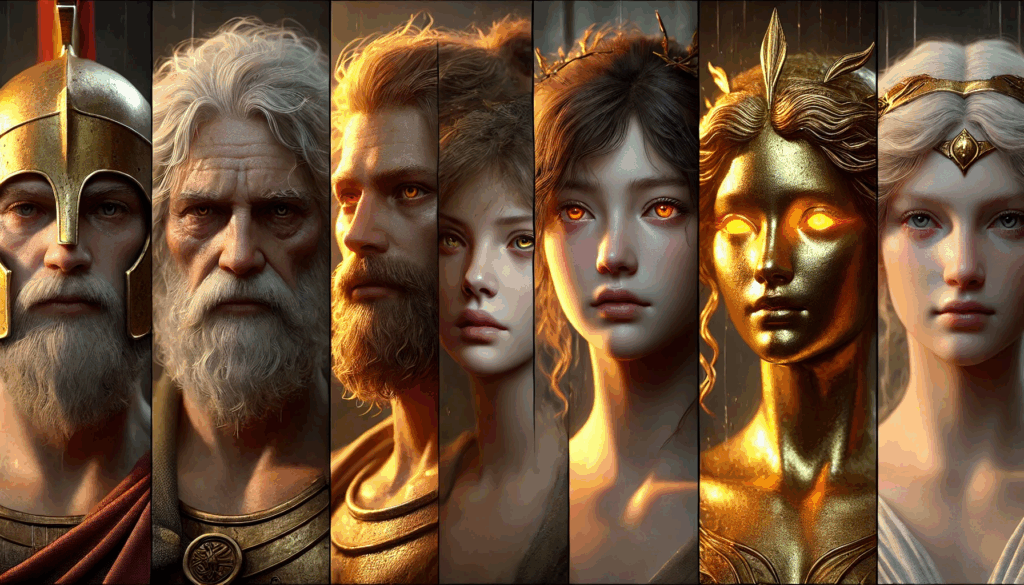
Every line, every gaze, holds a story: of love lost, of gods seen, of waiting that shaped a generation. Their eyes meet ours not as characters in legend, but as souls who lived through it.
Penelope descended the stairs, pale and silent. She saw him, but her eyes scanned the air around him. Her voice, steady, If you are he, let me know of the bed that only we know.

In the quiet chamber, Penelope weeps into Odysseus’ shoulder—his armor cold from battle, her hands trembling with recognition. Behind them stands the bed carved from a living tree—unchanging, like their bond. This is no longer a tale of war. This is love proven true.
Odysseus described the bed built from a living olive tree.
She dropped to her knees and wept. They embraced.
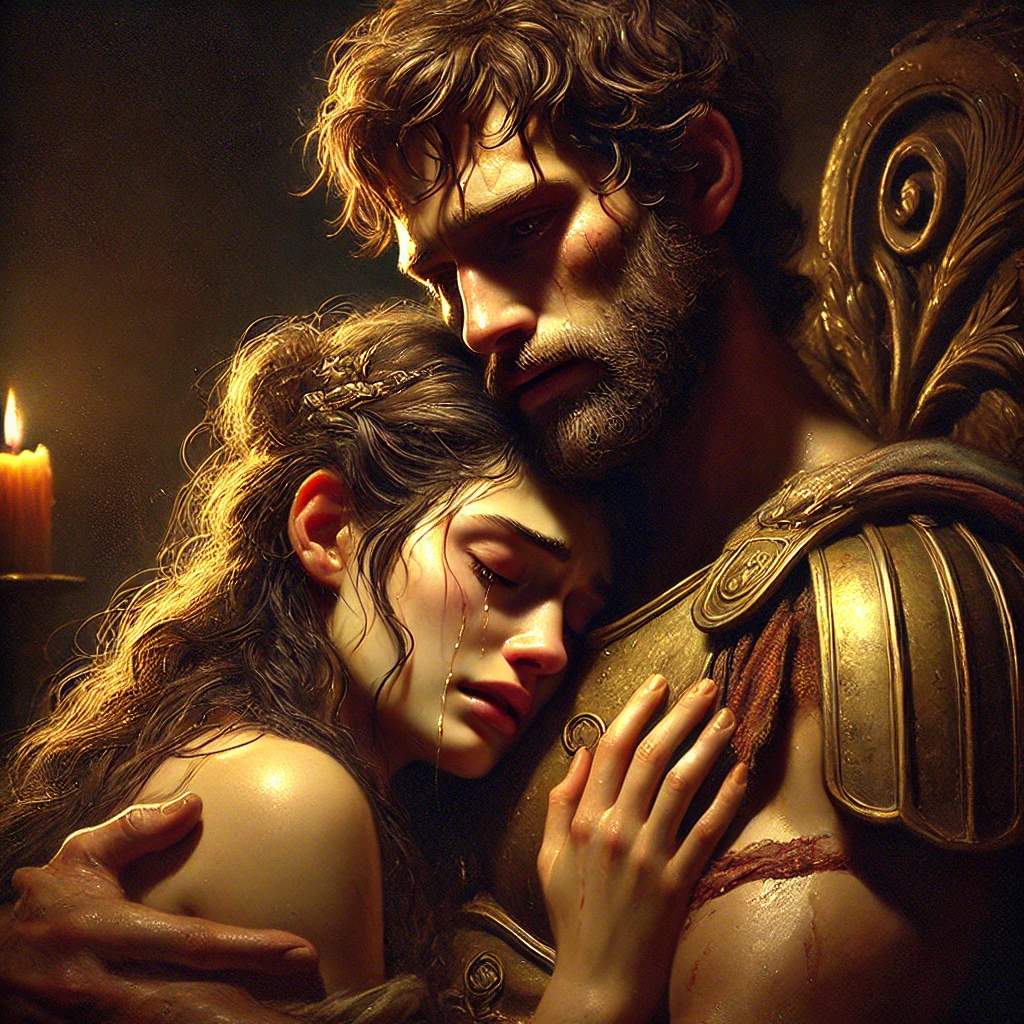
Tears shimmer on Penelope’s cheek as she clings to the only man who could have known the secret of their bed. Odysseus holds her with the weariness of twenty years and the relief of coming home.
In the hills, the relatives of the slain suitors armed themselves. They marched for vengeance.
Odysseus readied for battle. Telemachus gathered warriors.
A flash struck the road.
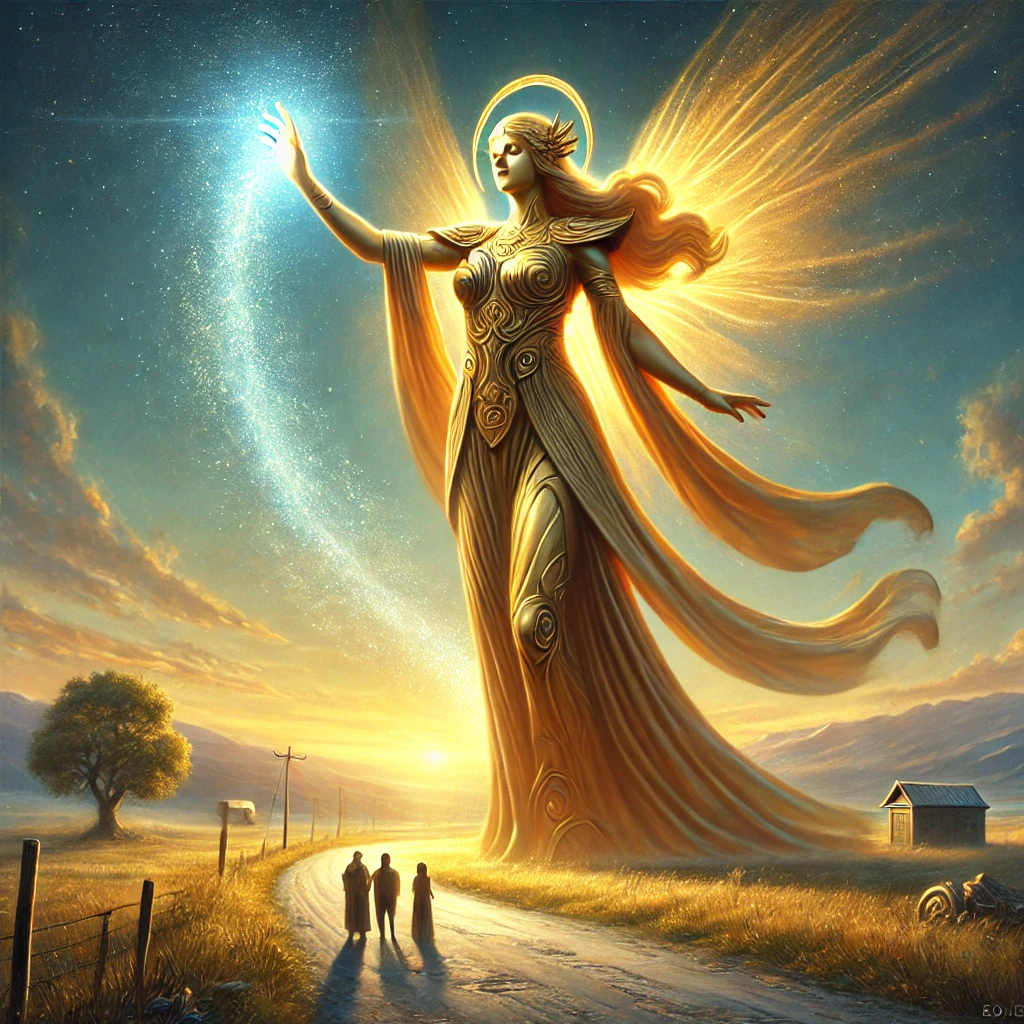
Beneath a golden sky, the goddess stands in glowing armor, her hand raised in stillness. A shimmering wave of blue light spreads from her, touching all in its path. Warriors freeze—not in fear, but in peace. Balance has returned, by the hand of a god.
ATHENA appeared—tall, radiant, her eyes like burning copper. The air around her shimmered with distortion.
She raised her hand. A field of blue light burst from the gold ring holding her hair. Time around them slowed.
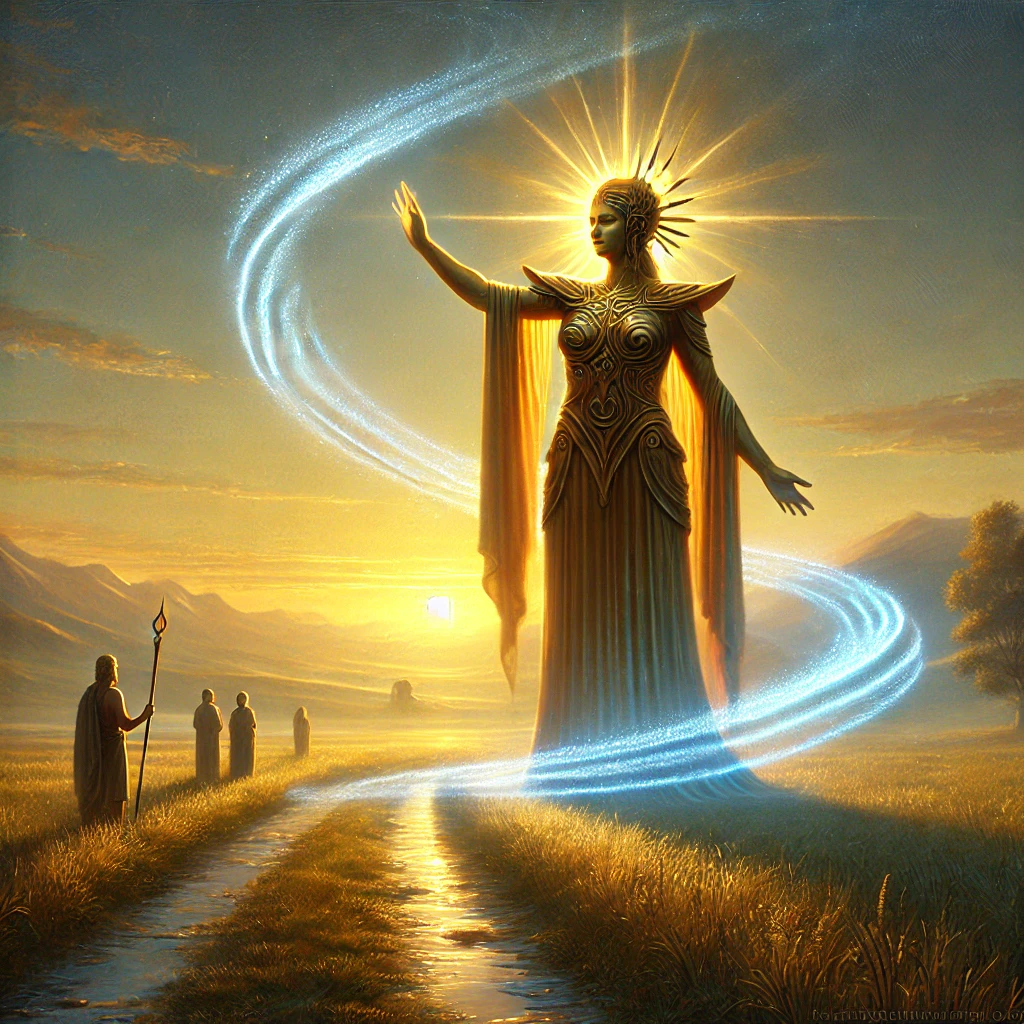
Her voice entered their minds: Enough blood. Ithaca bleeds. You seek justice. I bring peace. Forget the feud. Forget the dead. Remember only unity.
The warriors lowered their weapons. Their faces went slack. Their rage faded.
Odysseus stood still, his jaw set. What did you do to them?
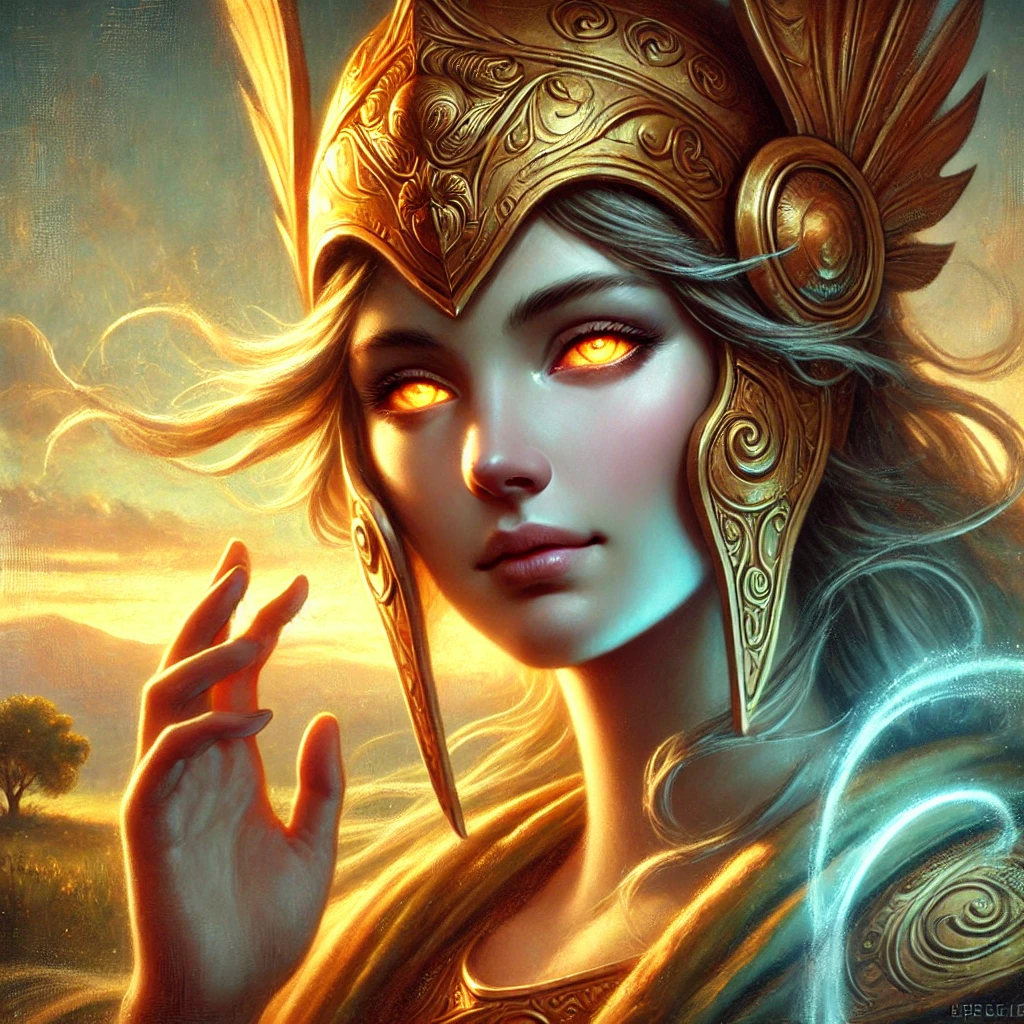
Her eyes burn like ancient fire, but her presence radiates calm. With a lifted hand wrapped in blue aura, she stills the rage of men. Time bends. Memory fades. Only peace remains—because she willed it so.
Athena turned to him. They are free now. Free of the fire the gods lit in their blood.
You mean you took their minds.
I restored balance.
She vanished.
The kinsmen, would-be avengers of their relatives whom Odysseus killed, blinked. They remembered nothing of their march. They looked at Odysseus and bowed.
Peace returned to Ithaca.
Odysseus ruled again. But he never trusted the gods.
He saw what they were.
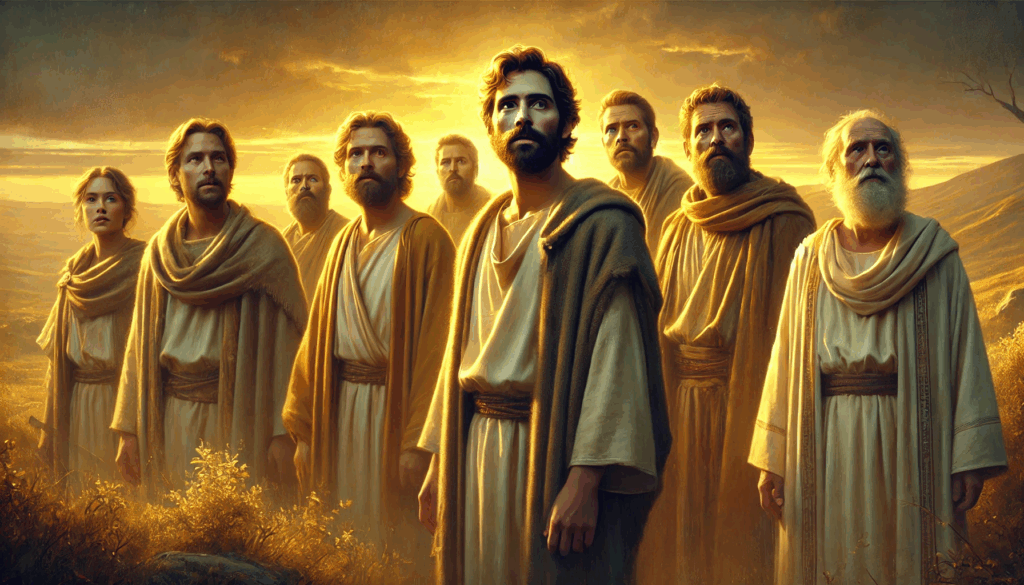
Lit by sacred twilight, their eyes meet ours—wary, awed, unsure whether they have seen a man, a king… or something divine. This is the moment their world begins to shift.
🛡️ THE HEROES & VILLAINS OF ODYSSEUS’ RETURN
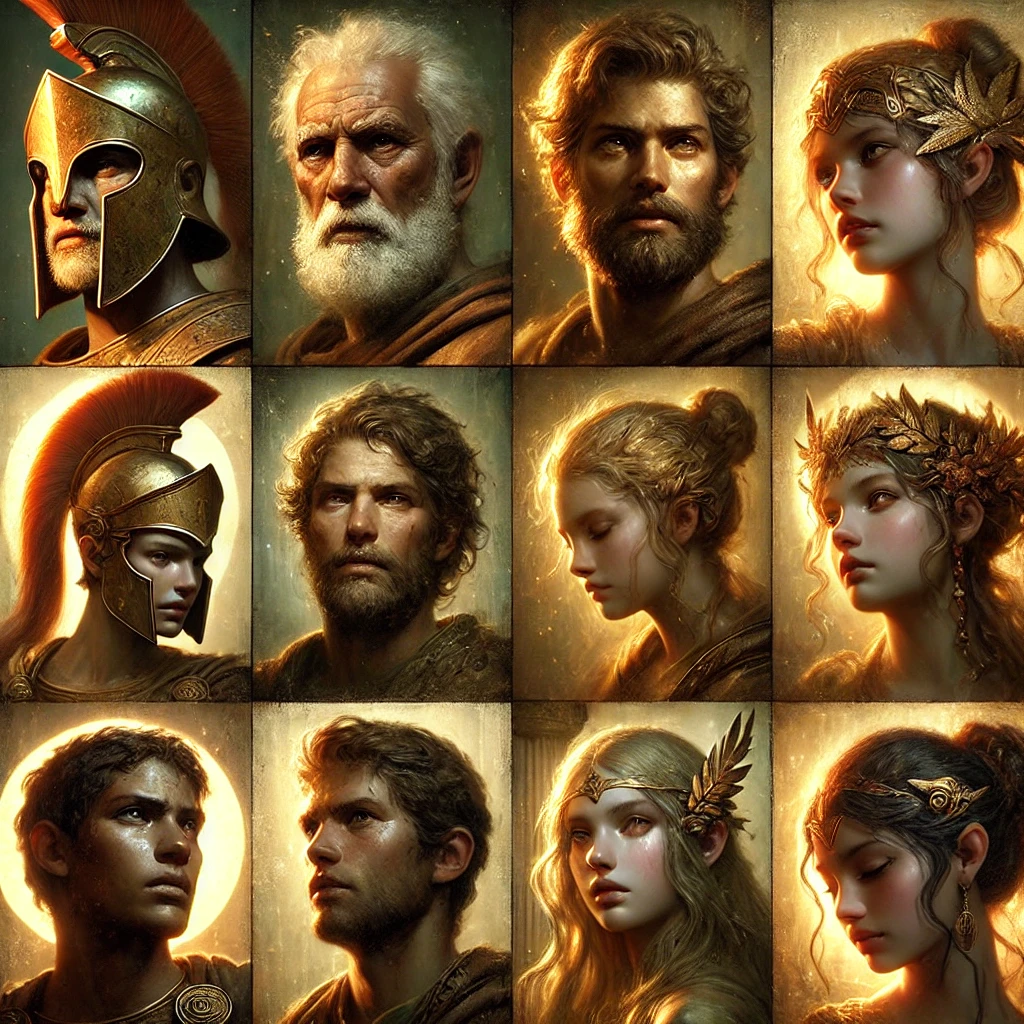
Odysseus, Penelope, Telemachus, Athena, and the suitors—all rendered with mythic realism. Each face holds the gravity of their journey, their role, and their fate.
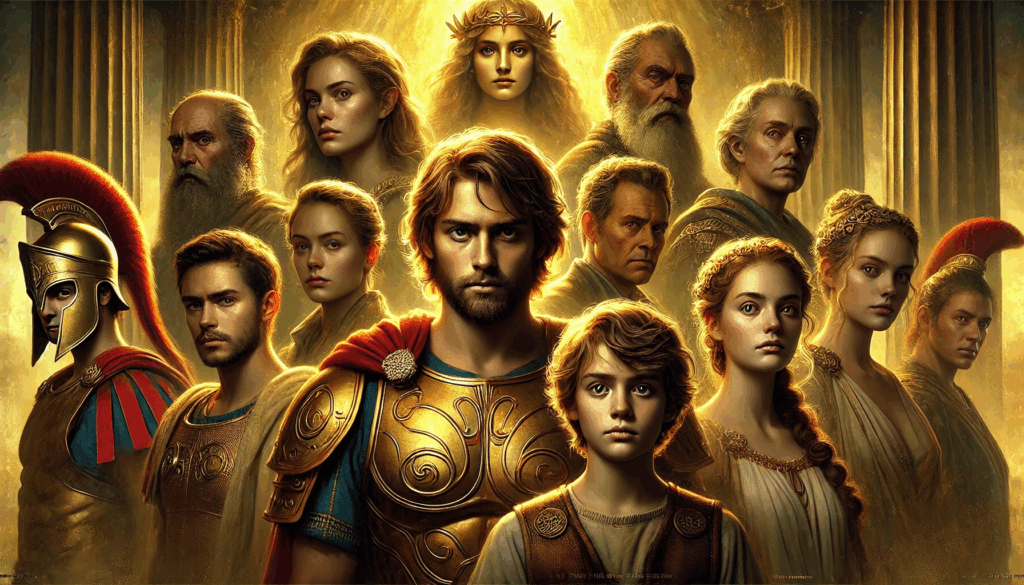
Odysseus, Penelope, Telemachus, Athena, and the suitors—all rendered with mythic realism. Each face holds the gravity of their journey, their role, and their fate.
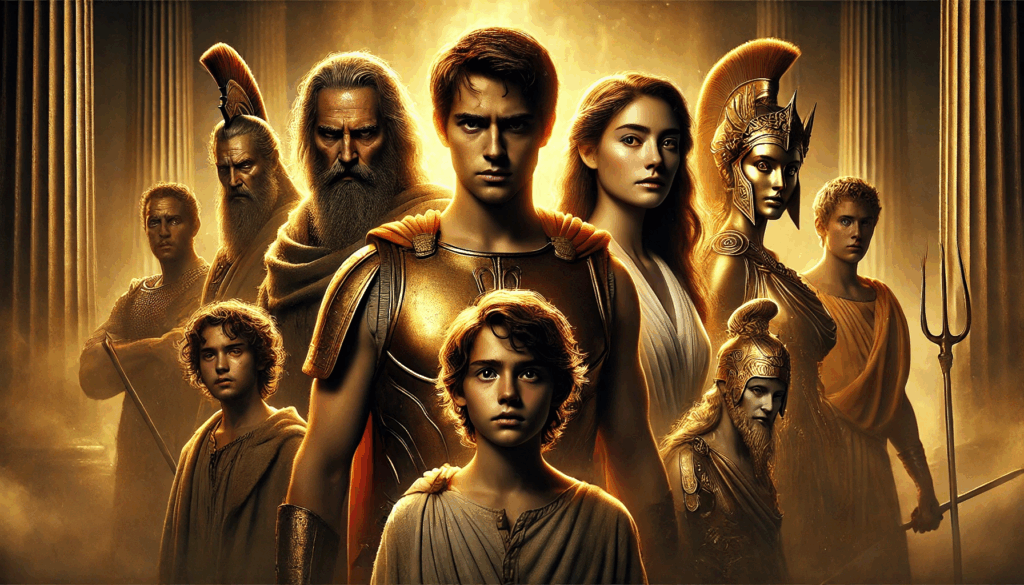
They stand together at the crossroads of myth: Athena glowing with still power, Odysseus centered in bronze, Penelope calm at his side, Telemachus watchful. Even the suitors linger on the edge, eyes turned, justice looming.
ODYSSEUS — THE LONG-WANDERING KING
Weathered by war and sea, he returns cloaked in rags, hiding bronze beneath. His gaze holds cunning, sorrow, and justice yet to come.
PENELOPE — THE QUEEN WHO WAITED
At her loom and in her silence, she wove time and defiance. Loyal, clever, and full of quiet fire.
TELEMACHUS — THE SON AWAKENED
Once a boy who feared his father, now a man who fights alongside him. His eyes shout: “Father has returned!”
ATHENA — THE DIVINE PEACEMAKER
Goddess of wisdom, clad in bronze and light, halts the blood with a raised hand and burning gaze. Balance is restored at her will.
THE SUITORS — ARROGANCE IN WAITING
Crowded in the king’s hall, their laughter rots into fear. They mock the beggar, not knowing the storm beneath the rags.
THE PEOPLE OF ITHACA — WITNESSES TO MYTH
Men and women who waited, wept, and bore witness to gods walking among them. Their eyes remember everything.
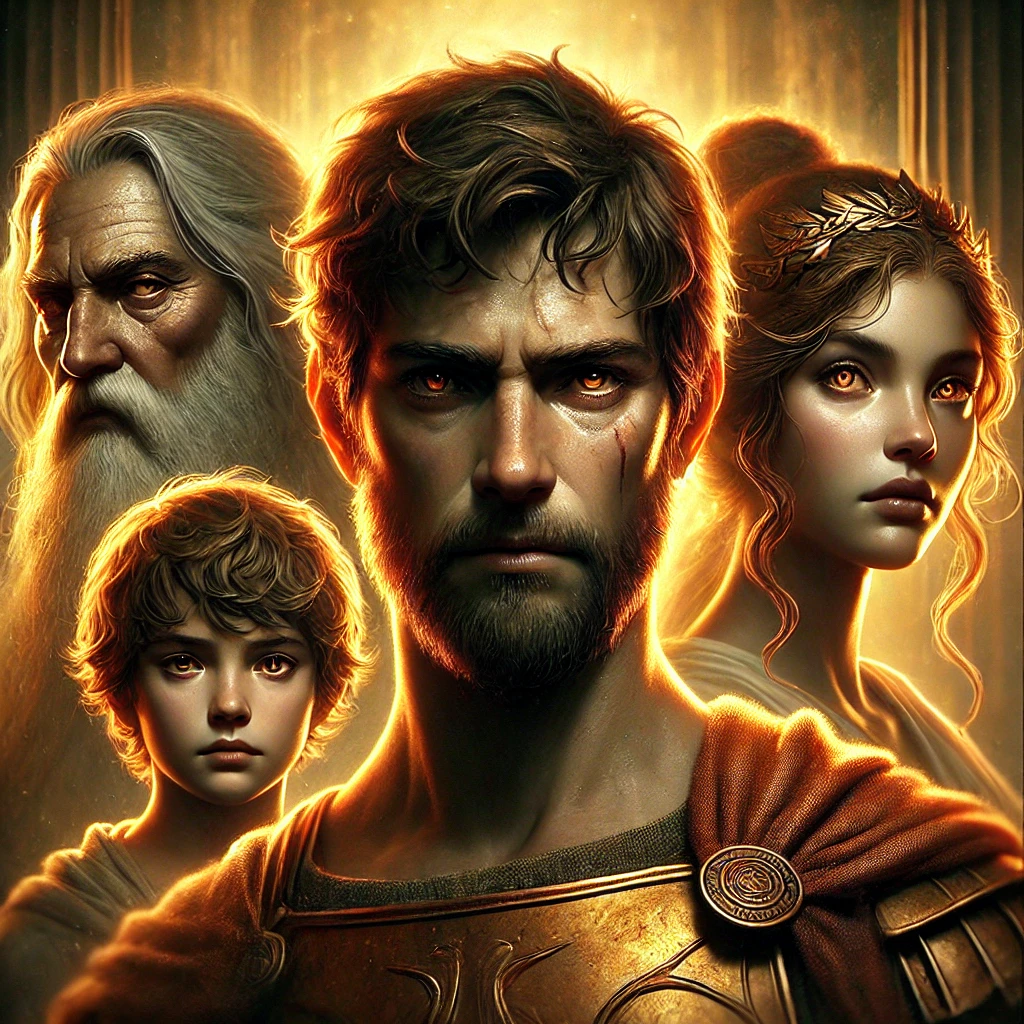
Odysseus, weathered and wise. Penelope, patient and unyielding. Telemachus is no longer a boy. And Athena, the divine architect of peace. Their eyes meet ours—not as legends, but as souls who endured, chose, and changed the world.
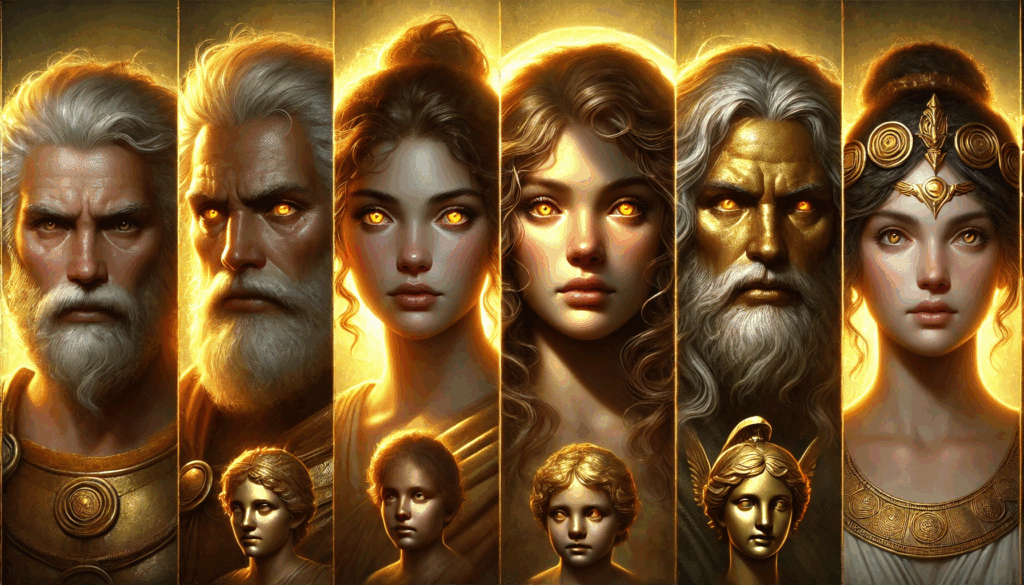
Odysseus, Penelope, Telemachus, Athena, and a loyal companion—each gaze steady, each face shaped by fate. Together, they are not just part of the story… they are the story.
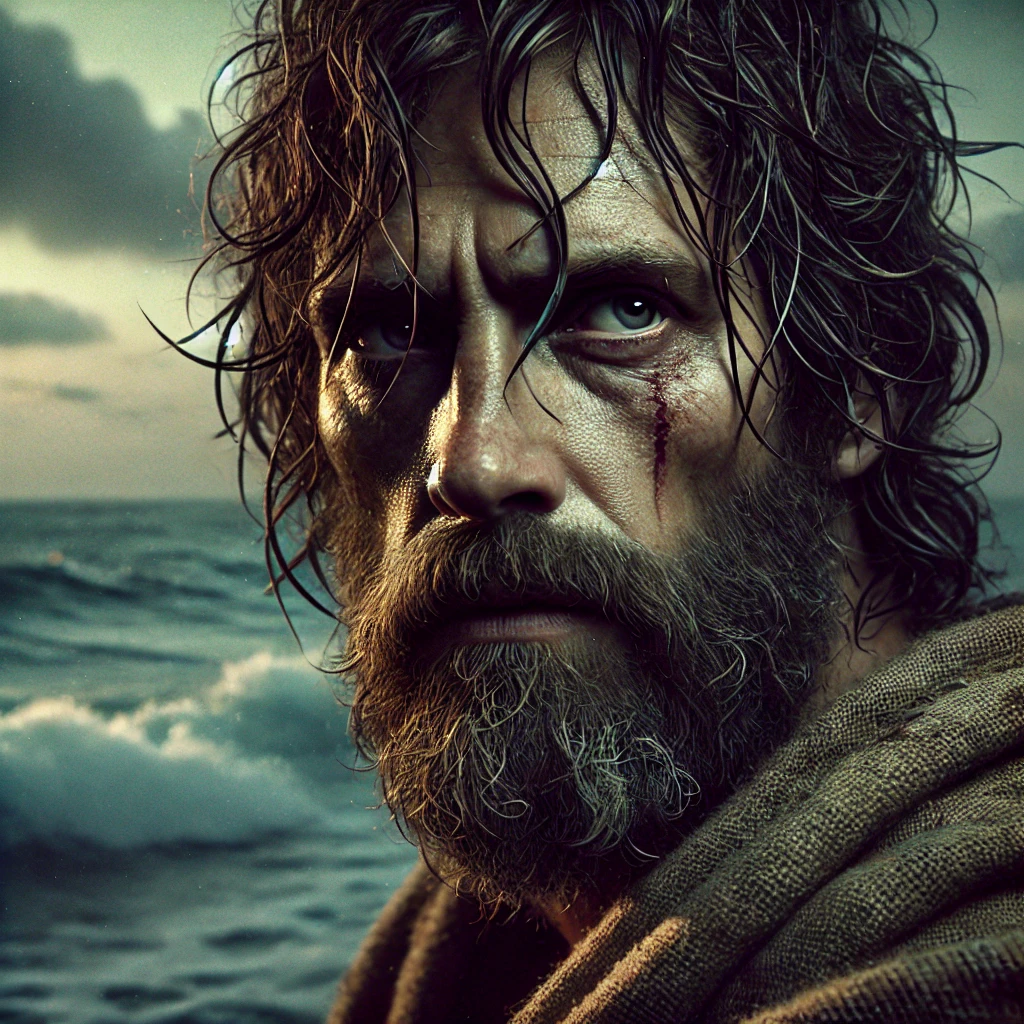
His face tells the story of storms, battles, and gods. Twilight glows on his sea-worn features. He is no longer the cunning warrior of Troy—but something more profound, quieter, and stronger: a man forged by time.
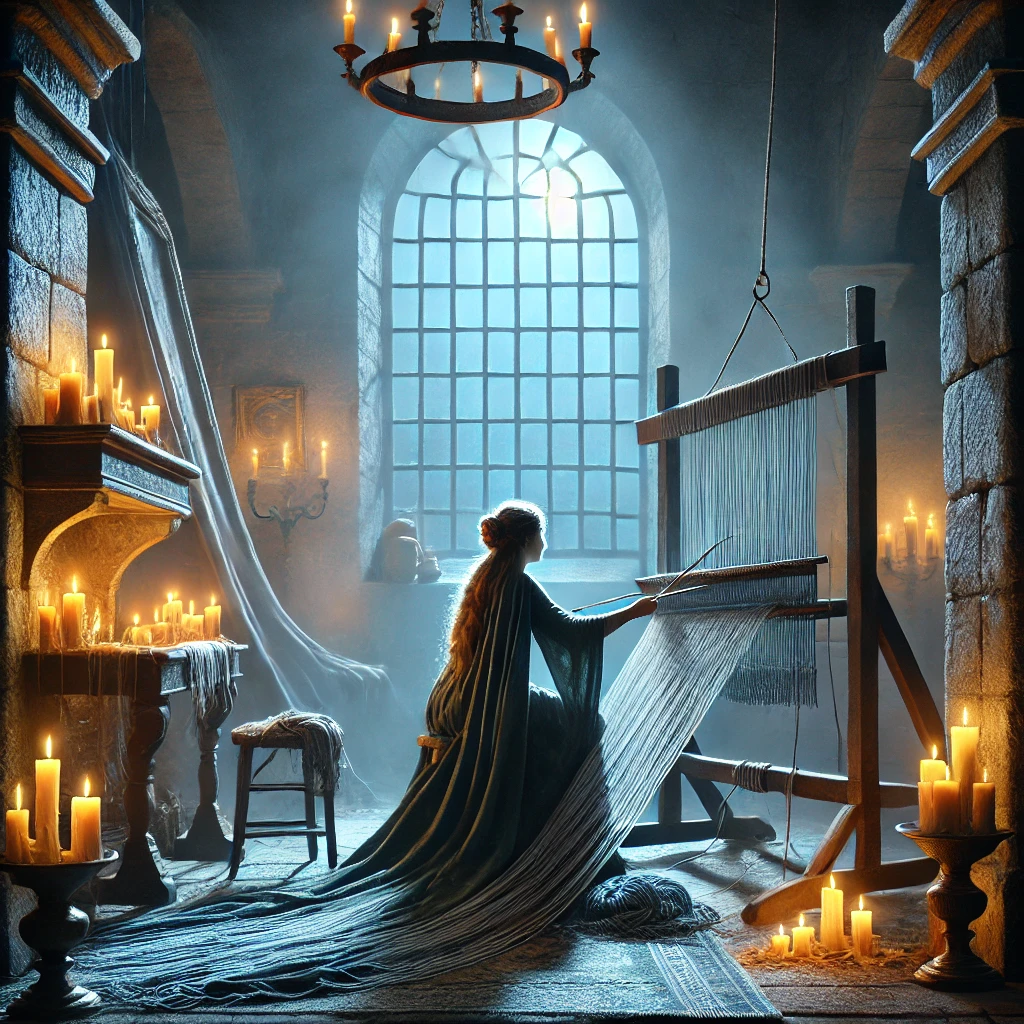
Alone in her candlelit chamber, Penelope works the loom by night—her green robes pooling like the threads she’ll soon unravel. The moon watches silently through arched windows as she delays the fate others would force upon her.
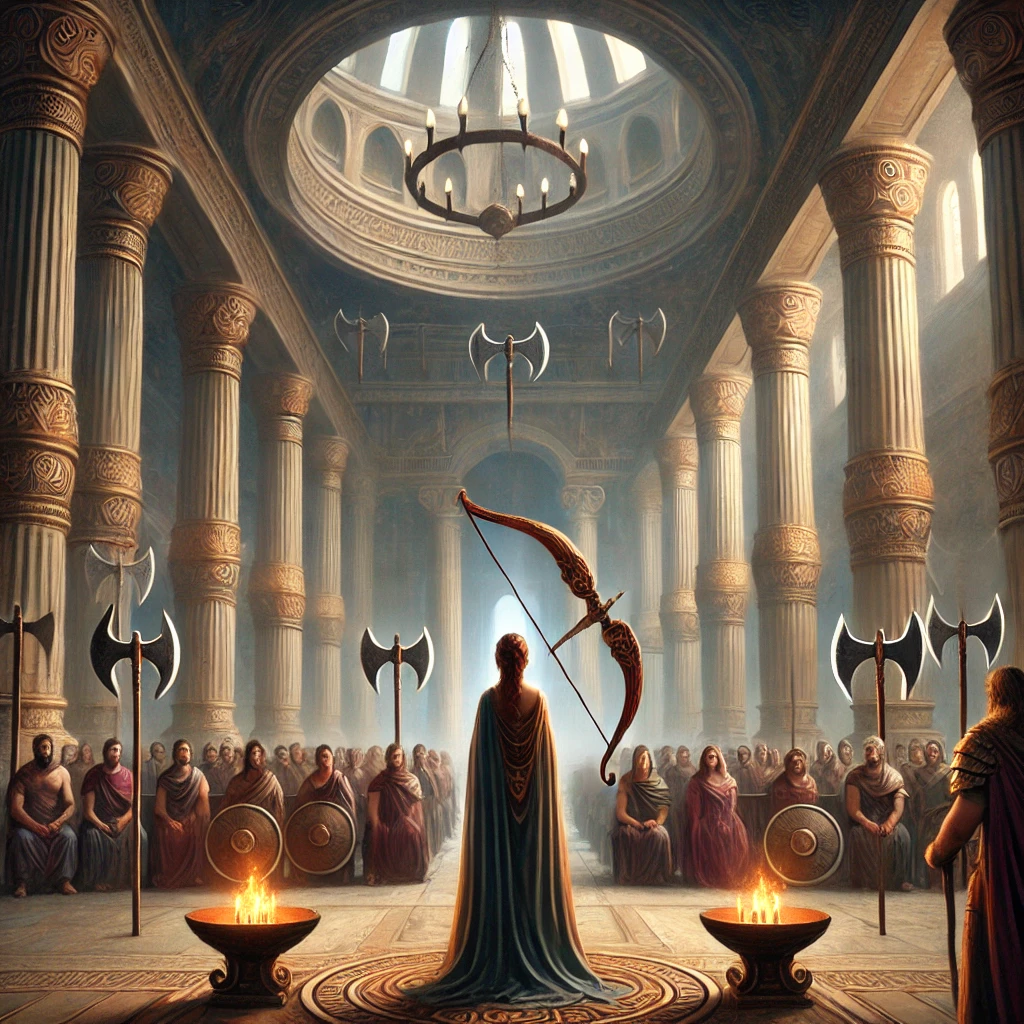
In the great hall of Ithaca, Penelope presents the challenge: only the man who can string Odysseus’ mighty bow and shoot an arrow through twelve axe heads may win her hand. The suitors watch, scoffing. But something ancient stirs in the air.
ANUNNAKI & ANCIENT ANTHROPOLOGY EVIDENCE, REFERENCES, TIMELINE & WHO’S WHO
WHO’S WHO: http://wp.me/p1TVCy-1PE
Evidence https://wp.me/p1TVCy-1zg
References http://wp.me/p1TVCy-2cq
Timeline http://wp.me/p1TVCy-1Km
New Stuff www.enkispeaks.com
Please share this post; thanks.
Attachments area

THE ODYSSEY – The Great Saga of Odysseus Complete – Greek Mythology – See u In HistoryPreview YouTube video Revenge of Odysseus – The Odyssey – Episode 14 – See u In HistoryRevenge of Odysseus – The Odyssey – Episode 14 – See u In History
 | ReplyForwardAdd reaction |