
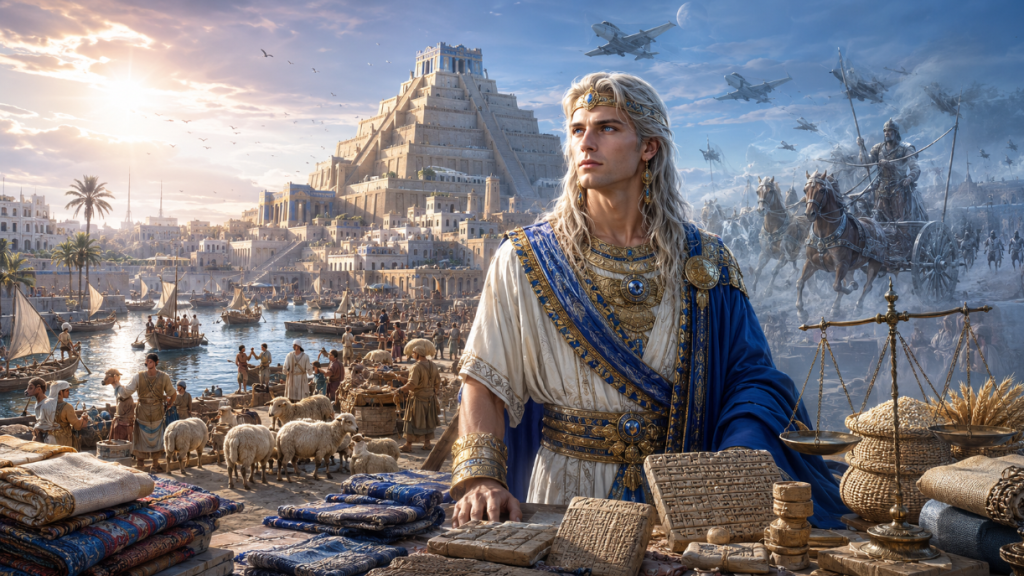
Anunnaki Prince Nannar Made Money an Alternative to War
By Zecharia Sitchin, student Janet Kira Lessin
Get way more on Nannar/Allah at:
https://wp.me/p1TVCy-8tQ
See the video in the slot below this post for more on Ur and Nannar.
“We pay for our abusers to abuse us. We pay our jailers to jail us. And we have done so for six thousand years, convinced the entire time that we are free.”
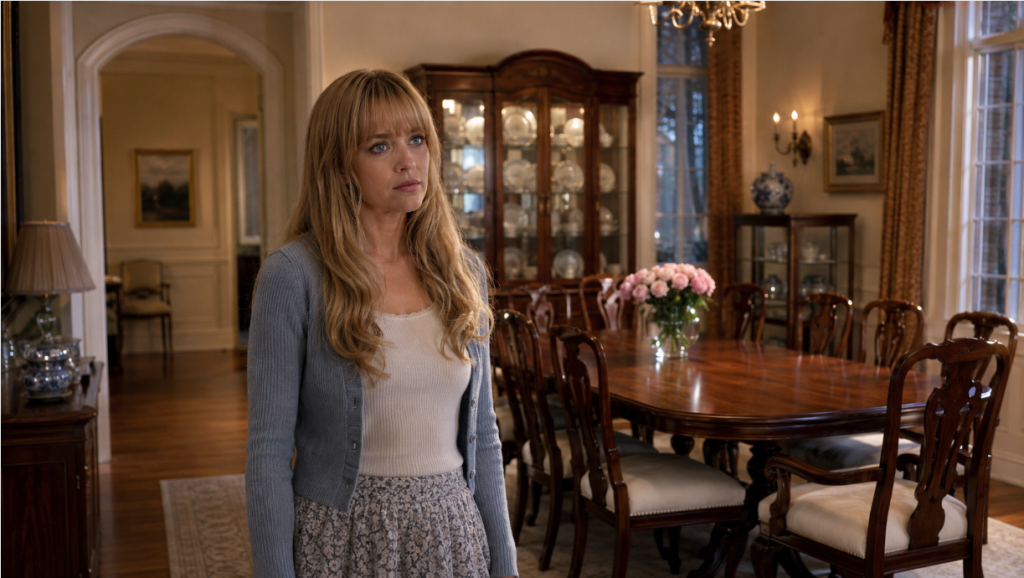
I dragged the last chair up the stairs by myself.
Two years of work had gone into that dining room set — table first, then four chairs, then the china cabinet, then the curio cabinet, piece by piece on layaway, each acquisition funded by my labor, each one placed with care into the growing constellation of a beautiful room. The last chair, the one with arms, fit exactly into my car, barely. I muscled it up the staircase, set it in the empty spot that had been waiting for it, and stepped back.
The set was complete. The room was gorgeous. I had done it.
I stood there and thought: Nah. That’s not it. I’m still not happy.
My husband at the time came from serious money — the family that donates tens of millions to universities. He believed, with complete conviction, that poor people were poor because they lacked intelligence or a work ethic. He was also one of the most verbally abusive people I have ever known. The beautiful dining room sat in the middle of that reality, changing nothing.
That chair taught me something that took years to articulate fully: the void I was trying to fill with furniture had nothing to do with furniture. Ironically, money promises to fill the emptiness, yet designers specifically created it to generate that same emptiness.
This system is not an accident. It is ancient engineering.
Nannar’s Blueprint
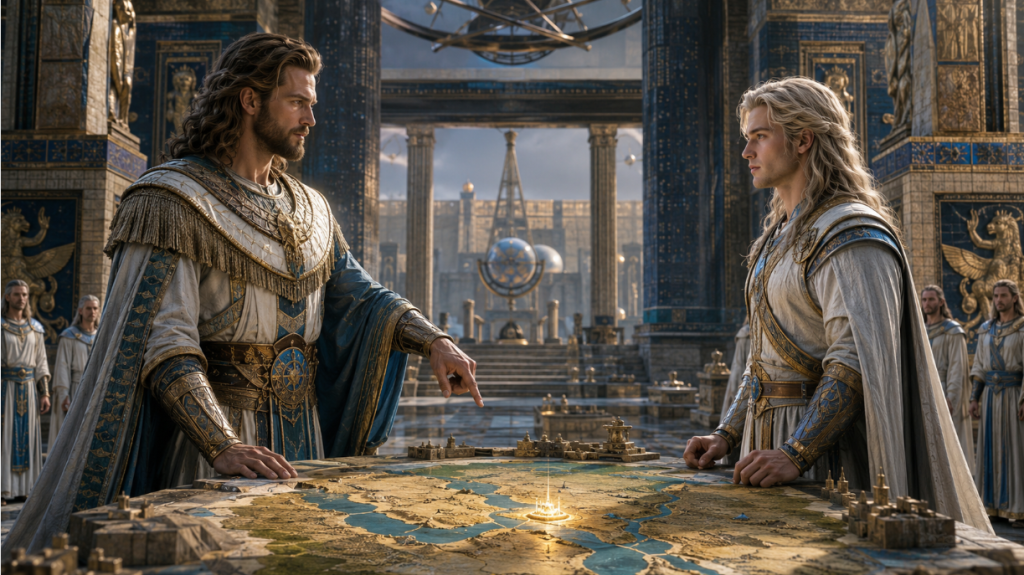
Six thousand years ago, in the Sumerian city of Ur, an extraterrestrial administrator named Nannar — son of Enlil, commander of the Anunnaki gold-mining expedition to Earth — received an assignment.
Enlil, Nannar’s father, needed a counter-strategy against the growing influence of his nephew, Marduk. Marduk’s Babylonian empire spread across the ancient Near East.
Can Trade Trump War?
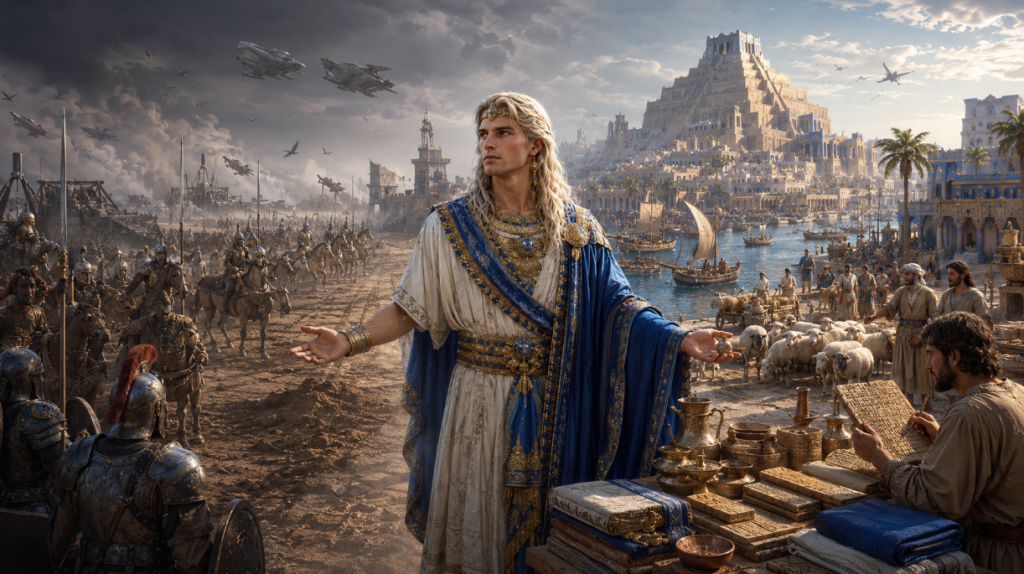
Nannar chose not to use lethal force, unlike his elder half-brother Ninurta.
Instead, Nannar chose a strategy more elegant than killing and enslaving people.
Whereas Ninurta employed his aircraft and Zagros Mountain cavalry, killing people and destroying their towns, Nannar brought peace and stability to Mesopotamia with commerce.
Zecharia Sitchin’s translations of Sumerian clay tablets document Nannar’s method of promoting commerce. Nannar’s father, Enlil, commander of the Anunnaki gold-mining expedition to Earth, had been reluctant to delegate authority to Nannar. Enlil worried that Nannar may have absorbed some of his mother’s resentment against him.
Enlil had begotten Nannar by raping Nannar’s mother, Sud, and married her as a condition the Anunnaki imposed on him as a condition of releasing him from exile to isolation in Africa.
Enlil suspected Nannar, harboring his mother’s suppressed resentment toward Enlil, had secretly aided Mars base commander Anzu in his failed attack on Enlil’s rule on Earth, an attack that Ninurta had overcome in an aircraft duel.
Enlil finally decided to give Nannar an administrative job. He made Nannar ruler of the center he had built for Ur, in modern Iraq.
To secure Nannar’s loyalty, Enlil sent his hybrid relative Terah, and Terah’s son Abram, later renamed Abraham, to monitor Nannar.
Nannar proved loyal, but offered the Anunnaki an alternative to brutal control.
Nannar told Enlil:
“Let us cultivate commerce to control Earthlings.”
Nannar showed the Anunnaki that trade could prosper their settlements better than war.
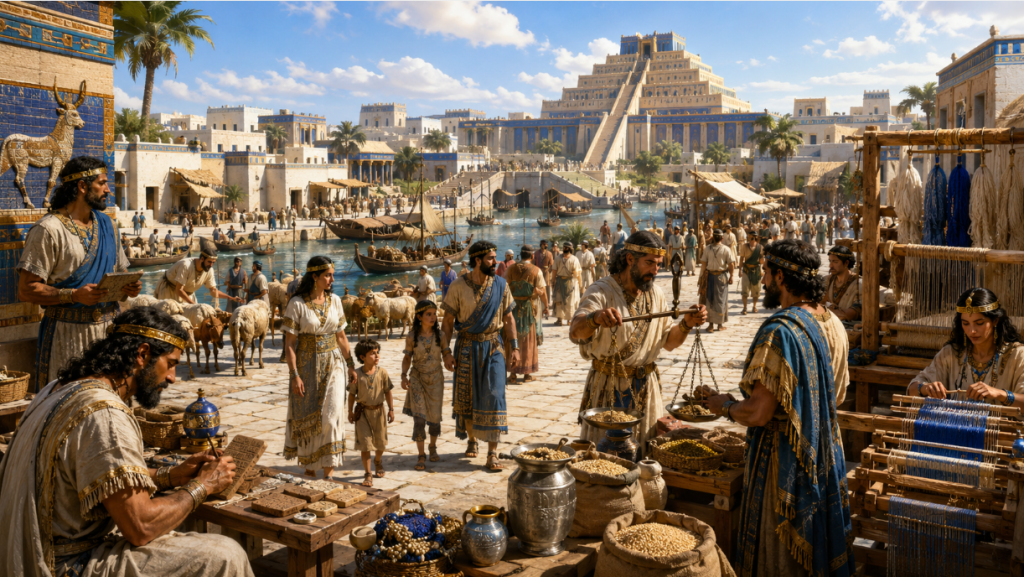
Nannar bred sheep that made Ur the wool and garment center of the ancient world. He developed foreign trade by land and by water. He built navigable canals connecting two harbors, separated the temple and palace from the merchant quarters by water, and lined the commercial bank with multistoried white houses along broad, straight streets.
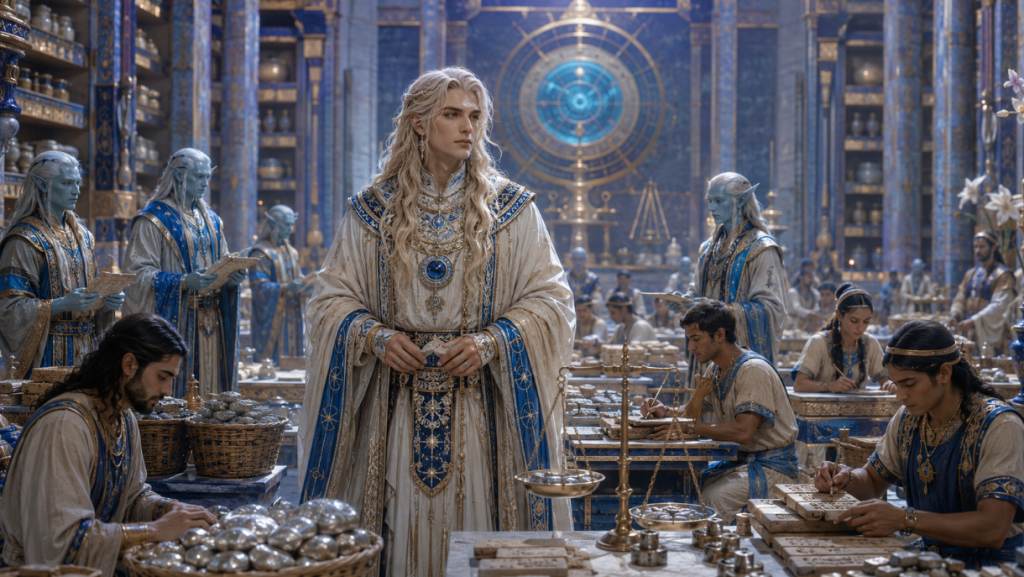
Nannar designed his stepped ziggurat temple and the system architecture for the homes of Ur’s merchants. The ziggurat in Ur’s center held the Anunnaki’s treasury, records, and contracts. This temple became Earth’s first central bank, redistribution hub, and debt-recording institution.
Nannar ruled through prosperity rather than through fear.
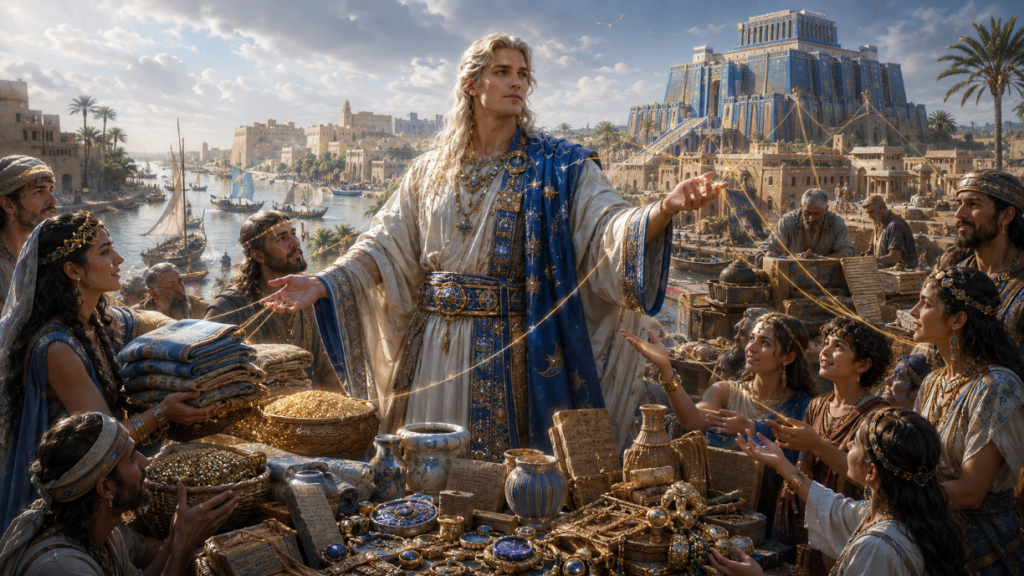
His Earthlings adored him. Enlil had controlled through dominance. Marduk controlled through religion. But Nannar controlled through the seduction of abundance — an abundance he administered, measured, and ultimately owned.
Scarcity Secures Social Stratification and Anunnaki Supremacy

We paid our Anunnaki and their hybrids to abuse us. We paid our jailers to jail us. They taught us to call their ever-competitive cultural conflation “civilization.”
Every social system encodes a frequency — a vibrational signature that shapes the consciousness of those operating within it. Nannar’s commercial system encoded a specific belief: sufficiency always requires one more thing.
One more chair. One more promotion. One more investment return. One more zero on the account balance.
Jesus named this frequency directly. No one, he said, can serve two masters. You serve either the divine or money, and the one you serve shapes everything about how you move through the world.
The mechanism Jesus identified as interfering with universal compassion and sharing is business, as Nannar touted. The Anunnaki who follow Nannar’s example keep human attention anchored in material acquisition rather than in the nature of existence, the reality of non-human intelligence, or in tending to your own consciousness, because you live in a state of financial terror.
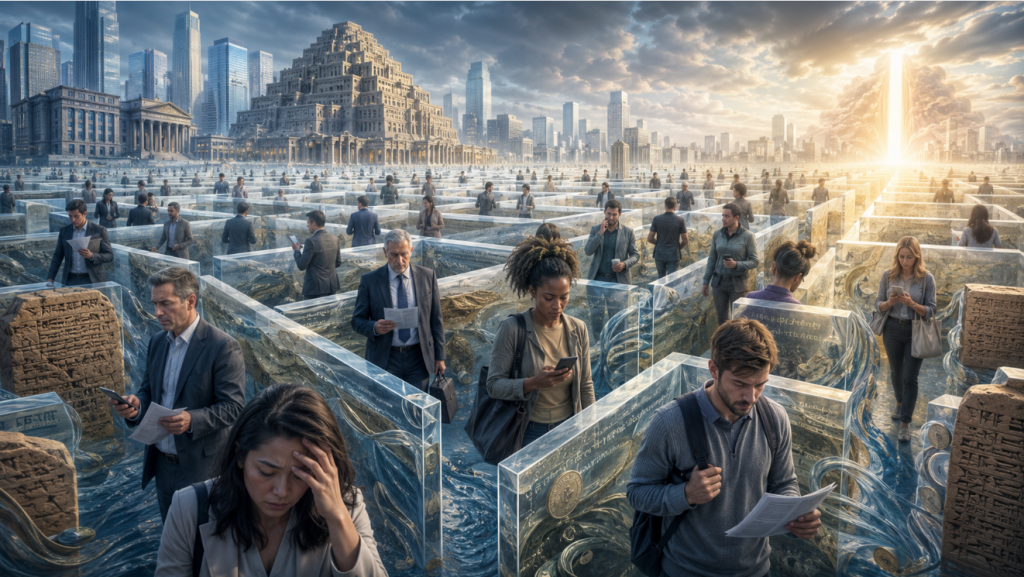
The terror is a feature, not a bug.
Although Nannar’s Ur ran on prosperity, Marduk’s modern iteration of commerce runs on debt and scarcity. But both Nannar’s and Marduk’s business models share the same foundational logic: humans organized around money do not organize around liberation.
What Desperation Signals

Watch someone sell from a place of financial anxiety, and you watch Nannar’s trap operate in real time. The desperation broadcasts before the words arrive. Audiences feel it as a frequency shift — the conversation that was flowing toward connection suddenly pivots toward transaction.
The host who cannot separate the commercial from the content, who cannot trust that value given freely will return multiplied, who must extract something from every interaction because the fear says there is not enough — that host has swallowed the scarcity program whole.
And the audience, feeling it, retreats. Their lack of engagement stems not from a lack of generosity, but from an unacknowledged sense that they have lost their support system. The process of reaping them has begun.
This system is not a judgment of the person. It is a description of the program running through them. The anxiety about money is itself a transmission from a system designed six thousand years ago in the commercial districts of Ur, refined through Babylonian banking, institutionalized through debt-based currency, and now so thoroughly normalized that most people cannot imagine an alternative.
The alternative exists.
It always has.
The Counter-Frequency
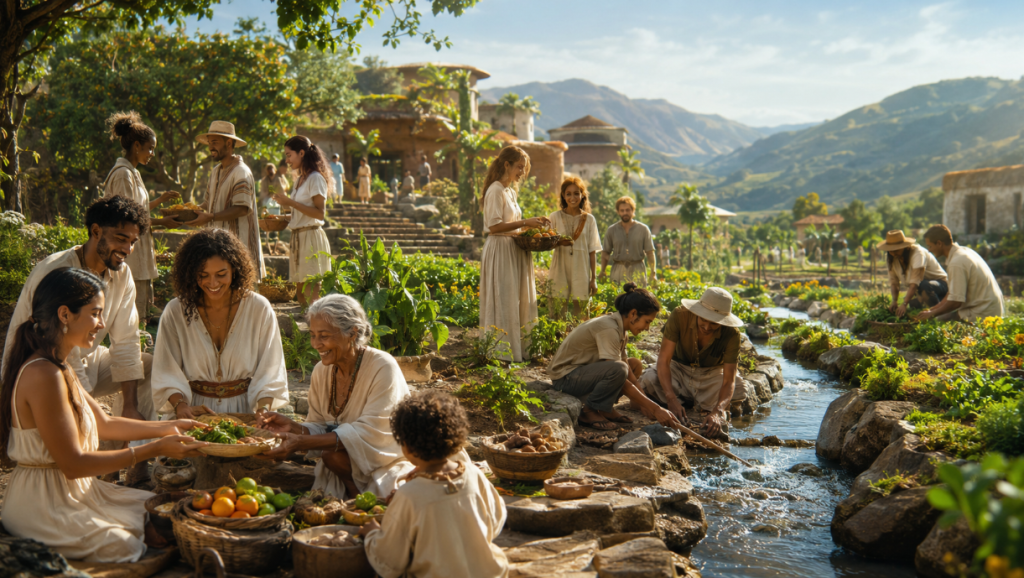
Abundance thinking is not magical thinking. It does not pretend that water infrastructure does not need repair, or that food does not cost money. It operates at a different level than the material transaction, while fully acknowledging the material reality.
You give because giving is the nature of what you are, and you trust — from direct experiential knowing rather than theory — that the flow returns.
Every tradition that predates Nannar’s commercial architecture encodes this knowing within communities, even if those communities warred with others. Within societies, a gift economy prevails in potlatches and in the reciprocal relationship between the land and its people.
The land gives people life, and people care for the land. People and land enjoy a reciprocal cycle where life is generous, scarcity is an imposition, and humanity’s purpose is not accumulation.
Life is circulation.
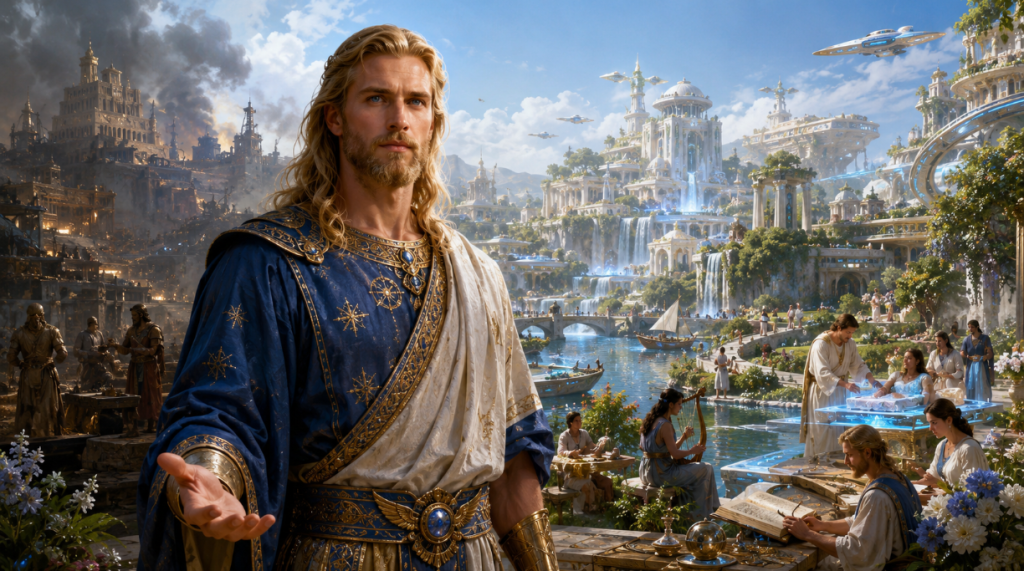
Enki’s age, the Aquarian era, will emerge when we transcend Trump, Putin, Xi, and their ilk, and bring the inherent human tendency to share into balance with healthy forms of competition that create beauty, athletic excellence, music, innovation, and material comfort.
The Anunnaki scholars who track the transition from Marduk’s Kali Yuga to Enki’s Satya Yuga describe it as a shift from extraction to regeneration, from hierarchy to circulation, from debt to gift.
In scarcity thinking, you give to get.
I felt that shift the night I stepped back from the completed dining room set and knew, with total clarity, that the chair was not the answer.
The answer was never in the chair.
The Assignment
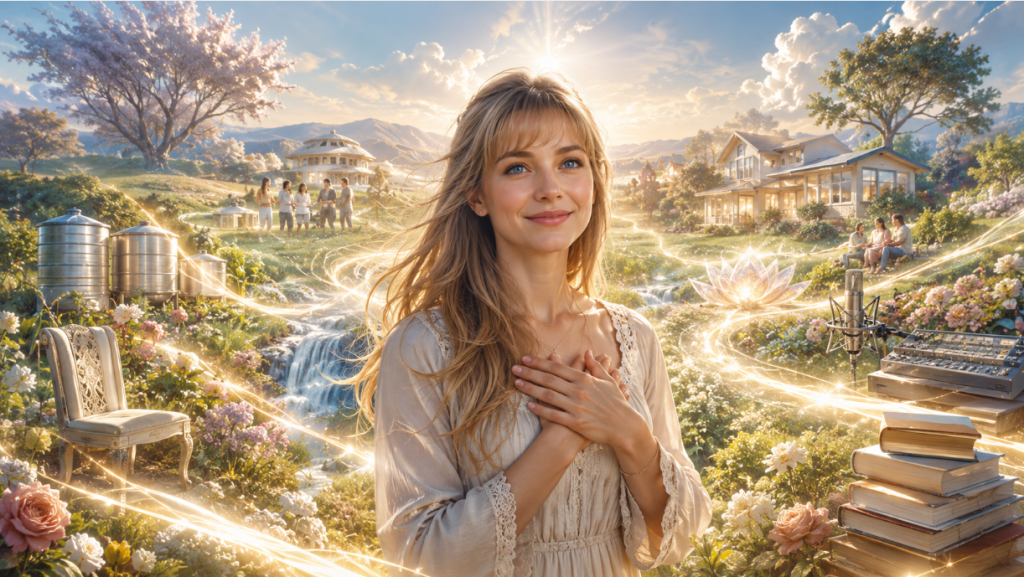
What I learned that night — and what years of subsequent experience, ET contact, and direct download have confirmed — is that retrieval is always possible.
What you need already exists in the field.
The work is not an acquisition. The work is alignment — tuning your frequency to match what you actually require. Release the grip of the scarcity program long enough for what is already yours to find its way to you. This system covers everything from dining room chairs to community water systems.
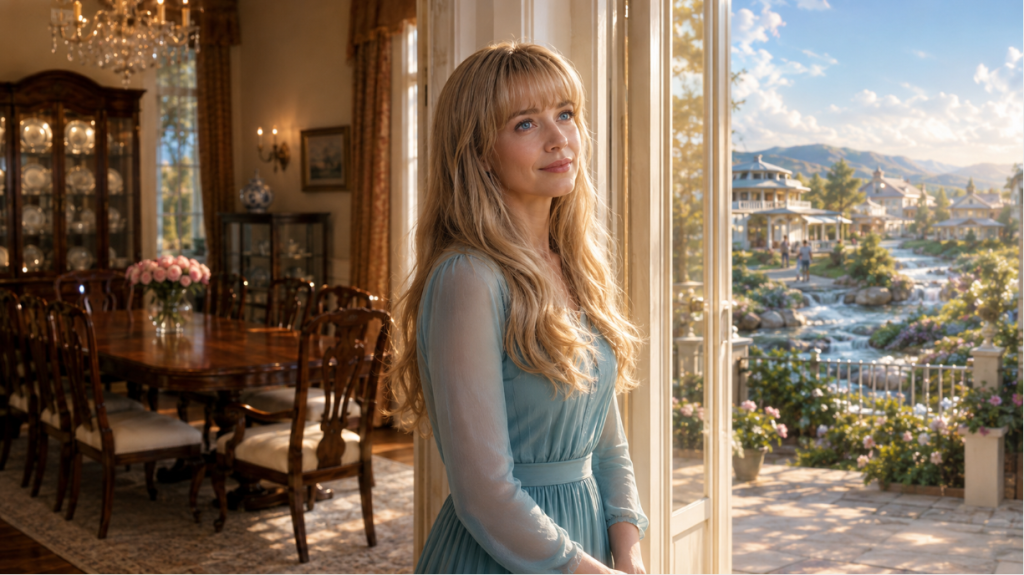
Nannar built a beautiful cage. Marduk refined it into a global prison. But cages require the consent of those inside them — the consent of believing that the walls are real, that the scarcity is permanent, that the only path to sufficiency runs through the system that created the insufficiency.
We pay our abusers for the abuse they inflict. We pay our jailers to jail us. We have done so for six thousand years, convinced the entire time that we are free.
That consent, once withdrawn, changes everything.
Step back. Look at the completed set. Know what you know.
The chair was never it.
About Janet Kira Lessin

Janet Kira Lessin is CEO of Aquarian Media and co-author of Anunnaki, Gods No More: Break the Godspell with Dr. Sasha Alex Lessin. She studied directly with Zecharia Sitchin from 1998 to 2010 and is a lifelong ET contact experiencer. Her Aquarian Media publishes to Substack, YouTube, and dragonattheendoftime.com.
Evidence, References, and More
Evidence:
https://wp.me/p1TVCy-1zg
References:
http://wp.me/p1TVCy-2cq
Timeline:
http://wp.me/p1TVCy-1Km
Who’s Who:
http://wp.me/p1TVCy-1PE
New Stuff:
http://enkispeaks.com
Please share this post.
Anunnaki Prince Nannar Made Money an Alternative to War
1. Featured Image / Header Collage
Nannar’s Beautiful Cage: Commerce Instead of War
Placement: Top of article / featured image
Prompt:
Create a cinematic 16:9 full-color featured image collage showing the ancient Sumerian city of Ur under luminous dawn light, with the great stepped ziggurat rising at the center as both temple and treasury. In the foreground, show Nannar as a regal Anunnaki prince with fair, luminous skin, long silver-blond hair, and blue eyes, wearing elegant Mesopotamian royal robes in ivory, lapis blue, silver, and gentle gold, standing beside clay tablets, sealed contracts, wool textiles, merchant scales, and baskets of grain. To one side, show peaceful canals, merchant boats, sheep, white multistory houses, and bustling trade; to the other side, faint ghostly imagery of war chariots and aircraft fading into the background, suggesting that commerce replaced open warfare. The mood should feel beautiful, prosperous, controlled, and subtly ominous, as if abundance has become a cage. FULL COLOR, luminous cinematic fantasy realism, crisp faces, sharp eyes, highly detailed skin and hair, balanced natural colors, clean atmospheric depth, elegant composition, landscape 16:9. No text, no captions, no readable symbols, no cartoon style, no dark murky lighting, no excessive orange or gold wash.
2. Personal Opening Scene
The Last Chair Was Never the Answer
Placement: Near the opening story about dragging the final chair upstairs
Prompt:
Create a cinematic 16:9 full-color, realistic scene of a petite, graceful, younger Janet with long sandy-blonde hair, bangs, blue eyes, and fair skin, standing in a beautiful, completed dining room after carrying the final armchair upstairs. The dining room set is polished, elegant, and lovingly assembled: table, chairs, china cabinet, curio cabinet, soft evening light, warm wood tones, and a sense of accomplishment. Yet Janet stands still, thoughtful and quietly disappointed, realizing the furniture did not fill the emptiness. The scene should show material beauty contrasted with emotional clarity, without melodrama. Use luminous cinematic realism, crisp face, sharp eyes, detailed hair, soft natural colors, balanced cream, blue, ivory, rose, and gentle gold accents, elegant composition, landscape 16:9. No text, no captions, no clutter, no cartoon style, no exaggerated sadness, no dark gloomy lighting.
3. Nannar Receives His Assignment
Enlil Assigns Nannar to Ur
Placement: Beginning of “Nannar’s Blueprint”
Prompt:
Create a cinematic 16:9 full-color ancient Anunnaki council scene inside a vast Mesopotamian palace-temple with celestial architecture, carved stone pillars, lapis accents, and subtle advanced technology blended with Sumerian design. Enlil, fair-skinned, handsome, authoritative, with long brown hair, blue eyes, and a trimmed beard, wearing white, muted blue, bronze, and gold royal garments, stands beside a glowing map of ancient Mesopotamia. Before him stands Nannar, a regal younger Anunnaki prince with long silver-blond hair, blue eyes, fair luminous skin, and calm intelligence. The city of Ur glows on the map. The mood should suggest political calculation, family tension, and a strategic assignment that will shape civilization. FULL COLOR, luminous cinematic fantasy realism, crisp faces, sharp eyes, elegant proportional bodies, highly detailed garments, clean atmospheric depth, landscape 16:9. No text, no captions, no readable writing, no cartoon style, no excessive gold, no dark murky shadows.
4. Trade Replaces War
Can Trade Trump War?
Placement: Section “Can Trade Trump War?”
Prompt:
Create a cinematic, full-color, 16:9 split-symbolic scene depicting ancient Mesopotamia at a crossroads. On one side, faintly show warriors, aircraft-like craft, cavalry, smoke in the far distance, and the harsh machinery of conquest. On the other side, show Nannar guiding merchants, shepherds, boatmen, scribes, and builders into a thriving commercial district with canals, sheep, wool textiles, grain, pottery, copper goods, and merchant boats. Nannar stands in the center, calm and regal, choosing commerce over direct battle. He has long silver-blond hair, blue eyes, fair, luminous skin, and elegant ivory, lapis, silver, and gold robes. The mood should feel intelligent, strategic, and morally complex: peace through trade, yet control through commerce. FULL COLOR, luminous cinematic fantasy realism, crisp faces, sharp eyes, clean atmospheric depth, detailed ancient city, landscape 16:9. No text, no captions, no gore, no cartoon style, no excessive orange, no dark smoky haze over faces.
5. Ur as the Wool and Trade Center
The Prosperity of Ur
Placement: Near the paragraph about sheep, wool, garments, land, and water trade
Prompt:
Create a cinematic, full-color, 16:9 panoramic view of ancient Ur as a thriving commercial center. Show canals with merchant boats, white multistory houses along broad straight streets, sheep herds outside the city, artisans weaving wool garments, merchants weighing goods, scribes recording transactions on clay tablets, and families moving through a prosperous marketplace. In the distance, the great ziggurat rises as the organizing center of the city. The atmosphere should feel beautiful, orderly, abundant, and alive, with subtle hints that the system relies on records, measurements, and controls. Use luminous cinematic fantasy realism, crisp faces, detailed architecture, balanced cream, lapis, ivory, silver, soft green, and gentle gold accents, bright but not overexposed, landscape 16:9. No text, no captions, no readable symbols, no clutter, no cartoon style.
6. The First Central Bank
The Ziggurat of Records, Treasury, and Debt
Placement: Near “Earth’s first Central Bank, redistribution hub, and debt-recording institution.”
Prompt:
Create a cinematic 16:9 full-color interior of the great ziggurat of Ur, imagined as a sacred treasury, archive, and early banking institution. Show Anunnaki administrators and human scribes in an elegant chamber filled with clay tablets, sealed contracts, scales, baskets of silver, grain records, wool ledgers, and glowing celestial instruments that suggest advanced oversight. Nannar stands at the center, regal and serene, overseeing the system. He has long silver-blond hair, blue eyes, fair luminous skin, and refined royal garments in ivory, lapis blue, silver, and gentle gold. The mood should feel sacred, beautiful, organized, and quietly controlling. FULL COLOR, luminous cinematic fantasy realism, crisp faces, sharp eyes, highly detailed tablets and robes, clean atmospheric depth, landscape 16:9. No text, no captions, no readable cuneiform, no cartoon style, no dark murky lighting, no excessive gold wash.
7. The Seduction of Abundance
Abundance Administered, Measured, and Owned
Placement: End of “Can Trade Trump War?”
Prompt:
Create a cinematic 16:9 full-color symbolic scene showing Nannar offering prosperity to the people of Ur: wool garments, grain, jewelry, pottery, beautiful homes, canals, and merchant goods. The people look grateful and enchanted, reaching toward the abundance. Yet behind the beautiful offerings, subtle golden threads connect the goods to clay tablets, contracts, and the ziggurat treasury, suggesting that abundance has become administered, measured, and owned. Nannar appears luminous, calm, and charismatic, with long silver-blond hair, blue eyes, fair skin, and elegant royal robes. The mood should be seductive, prosperous, and slightly ominous without horror. FULL COLOR, luminous cinematic fantasy realism, crisp faces, sharp eyes, soft natural colors, clean atmospheric depth, landscape 16:9. No text, no captions, no overt chains, no cartoon style, no excessive orange or gold.
8. Scarcity Program
One More Chair, One More Zero
Placement: Beginning of “Scarcity Secures Social Stratification…”
Prompt:
Create a cinematic 16:9, full-color, symbolic modern scene showing a person surrounded by signs of acquisition: a beautiful chair, credit cards, bank statements, shopping bags, a glowing phone, investment charts with illegible numbers, and a distant luxury dining room. The objects appear elegant but form a subtle, invisible cage around the person. In the background, faintly blend ancient Ur’s ziggurat and clay tablets into the modern financial landscape, suggesting the ancient origin of the scarcity program. The person’s expression should show realization rather than despair. Use luminous cinematic realism, crisp face, sharp eyes, balanced cream, blue, silver, rose, and gentle gold accents, clean atmospheric depth, landscape 16:9. No text, no captions, no readable numbers, no brand names, no cartoon style, no dark gloomy lighting.
9. Financial Terror as a System
The Feature, Not the Bug
Placement: Near the paragraph about financial terror
Prompt:
Create a cinematic 16:9 full-color symbolic image of modern humanity moving through a vast financial maze made of translucent walls shaped like contracts, currency streams, bank towers, and ancient clay tablets. The people look busy, anxious, and distracted, clutching bills, phones, and work bags, while above them a faint ancient ziggurat overlays a modern banking district. The image should show financial terror as a system, not as personal failure. A soft beam of light breaks through in the distance, suggesting the possibility of liberation. FULL COLOR, cinematic realism with mythic symbolism, crisp faces, clean atmospheric depth, balanced blue, silver, ivory, cream, and gentle gold accents, landscape 16:9. No text, no readable currency, no captions, no brand names, no horror, no cartoon style, no excessive darkness.
10. What Desperation Signals
Connection Turns Into Transaction
Placement: Section “What Desperation Signals”
Prompt:
Create a cinematic 16:9 full-color modern broadcast scene showing a spiritual or educational host at a microphone or streaming desk, with warm light, books, notes, and subtle cosmic imagery around them. The scene captures the moment the connection begins to shift into transaction: the host reaches toward donation buttons or sales materials without readable text, while the audience appears as soft holographic figures slowly pulling back. Show the emotional frequency shift without judging the person. In the background, faint ancient clay tablets and merchant scales hover like an inherited program. FULL COLOR, luminous cinematic realism, crisp face, sharp eyes, balanced natural colors, clean atmospheric depth, landscape 16:9. No text, no captions, no readable screens, no brand names, no cartoon style, no harsh judgmental imagery.
11. The Counter-Frequency
Gift Economy, Land, and Circulation
Placement: Section “The Counter-Frequency”
Prompt:
Create a cinematic, full-color, uplifting scene set in a regenerative community rooted in reciprocity with the land. People share food, repair water systems, tend gardens, exchange handmade goods, teach children, care for elders, and gather around a flowing stream or irrigation channel. The land appears alive and generous, with green fields, fruit trees, clean water, soft sunlight, and a sense of sacred circulation. Subtly include distant echoes of ancient cultures, such as potlatch-like gift exchange, without appropriating specific sacred regalia. The mood should express abundance through relationship rather than accumulation. FULL COLOR, luminous cinematic realism, crisp faces, sharp eyes, balanced green, cream, blue, ivory, rose, and gentle gold accents, landscape 16:9. No text, no captions, no cartoon style, no clutter, no dark lighting.
12. Enki’s Aquarian Age
From Extraction to Regeneration
Placement: Near the paragraph about Enki’s age and the Aquarian era
Prompt:
Create a cinematic, 16:9, full-color, visionary image of Enki’s Aquarian age emerging beyond the old world of extraction. In the foreground, show Enki as a fair, noble Anunnaki figure with long blond hair, blue eyes, a short blond beard, an elegant, proportional build, wearing royal blue, ivory, and gentle gold Mesopotamian garments. He stands beside flowing clean water, gardens, advanced healing technology, books, music, art, and cooperative communities. Behind him, the old world of debt towers, hierarchy, and war fades into mist, while a luminous future city rises with canals, green terraces, peaceful craft, and people sharing resources. The mood should feel hopeful, intelligent, regenerative, and mature. FULL COLOR, luminous cinematic fantasy realism, crisp faces, sharp eyes, highly detailed skin and hair, balanced blue, green, cream, ivory, silver, and gentle gold accents, bright but not overexposed, landscape 16:9. No text, no captions, no readable symbols, no cartoon style, no excessive stars, no dark murky lighting.
13. The Assignment
What You Need Already Exists in the Field
Placement: Section “The Assignment”
Prompt:
Create a cinematic 16:9 full-color, visionary scene of Janet as a petite, graceful, youthful experiencer-witness with long, sandy-blonde hair, bangs, blue eyes, fair skin, and a warm, knowing presence, standing in a luminous field of possibility. Around her, show subtle symbolic forms of what people need: a dining chair, water tanks, books, community homes, healing light, microphones, and pathways of light moving toward her rather than being grasped. The image should express alignment rather than acquisition, as if the needed resources already exist in the field and arrive through resonance, clarity, and trust. Use luminous cinematic fantasy realism, crisp face, sharp eyes, highly detailed hair and skin, soft natural colors, balanced cream, blue, green, rose, ivory, silver, and gentle gold accents, landscape 16:9. No text, no captions, no cartoon style, no clutter, no heavy star overlay, no dark gloomy lighting.
14. Closing Image
The Chair Was Never It
Placement: Final paragraph/closing image
Prompt:
Create a cinematic 16:9 full-color closing image of Janet standing quietly in the completed dining room, looking not at the beautiful furniture but through a softly glowing doorway into a wider luminous reality. The elegant dining room set remains behind her, complete and lovely, but no longer central. Beyond the doorway, subtle hints of open sky, flowing water, community, and golden-blue light suggest freedom from the scarcity program. Janet appears petite, graceful, youthful, fair-skinned, blue-eyed, with long sandy-blonde hair and bangs, wearing elegant but simple clothing in teal, green, or soft blue. The mood should be peaceful, clear, and liberating. FULL COLOR, luminous cinematic realism, crisp face, sharp eyes, balanced natural colors, clean atmospheric depth, landscape 16:9. No text, no captions, no readable symbols, no cartoon style, no dark gloomy lighting, no excessive orange or gold.