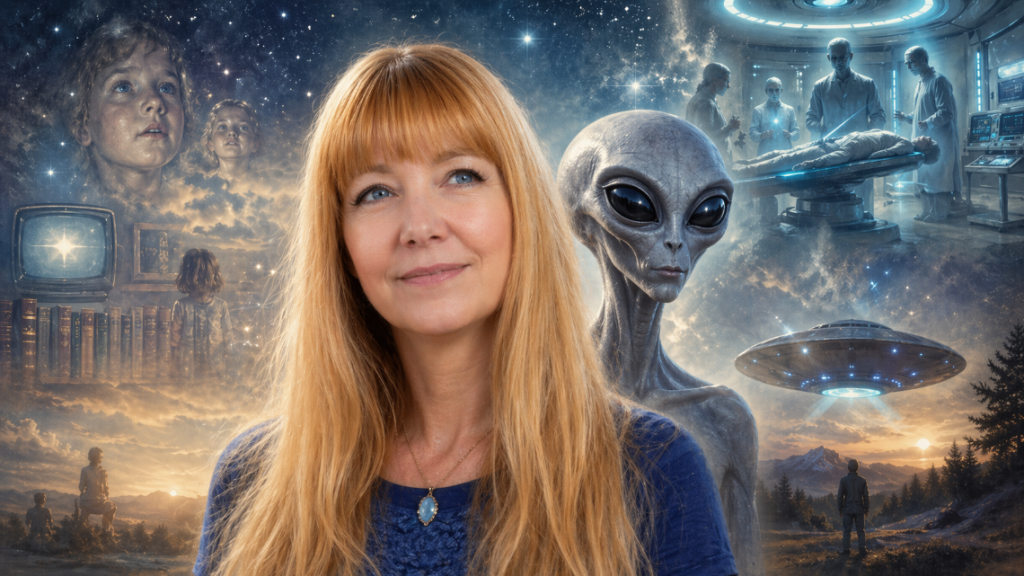
The Grays I Have Known
Six Decades of Contact
Part One of a Series on Visitor Species
Janet Kira Lessin | Research: Claudia Lenore | © 2026 Aquarian Media
I recently watched the UAMN TV video titled The Greys Are Not What You Think, featuring Linda Moulton Howe. The review presents AI hosts Nate and Siren, who introduce material from Gaia’s Deep Space, Season 4, Episode 2, The Greys. The UAMN description promises exploration of intelligence-agency disclosures, hybridization theories, synthetic bodies, timeline manipulation, and the question of whether the Grays may be future humans. The full Gaia episode lists Richard Doty, Linda Moulton Howe, Robert M. Wood, Ph.D., Tim, Sarah Breskman Cosme, and Desiree Hurtak, Ph.D.
I like the idea of reviewing the reviewers. Every generation of UFO, UAP, experiencer, contactee, abductee, whistleblower, military, intelligence, spiritual, and metaphysical research builds on what came before. None of us enters this field alone. Linda Moulton Howe kept these subjects alive through decades when mainstream journalists mocked them, ignored them, or treated them as career poison. Researchers preserved stories that might have vanished. Experiencers risked ridicule to speak. Whistleblowers brought fragments from closed systems. The archive grows because many people contribute.
This article begins a series. Each installment takes one visitor species, examines what the field has said about them, and unpacks my own interactions with that species through named individuals and specific scenes. Meeting some members of a species is like meeting one member of humanity. One person does not represent the whole. A handful of Grays do not represent the Grays. A single Reptilian does not represent the Reptilians. The taxonomy turns accurate only when we look at many beings, across many encounters, across many experiencers, and refuse to flatten the differences. I start with the Grays because they are the most publicly recognized visitor type and the species I have known longest.
Who and What Are the Gray Aliens?
The public imagines a familiar figure: a slender humanoid with gray skin, a large hairless head, black almond-shaped or wraparound eyes, a small mouth, reduced facial features, and a body that may appear fragile, childlike, clinical, insectoid, or artificial. That image has become one of the dominant symbols of extraterrestrial life in modern culture. It appears in movies, television, book covers, documentaries, witness sketches, and AI art. For many people, the words alien and Gray have merged into a single visual idea.
The public image developed through layers of folklore, science fiction, witness reports, media repetition, and experiencer testimony. The Betty and Barney Hill case became one of the most important early abduction narratives in the United States. Their 1961 encounter entered public awareness through later reports, John G. Fuller’s 1966 book The Interrupted Journey, and the 1975 television film The UFO Incident.
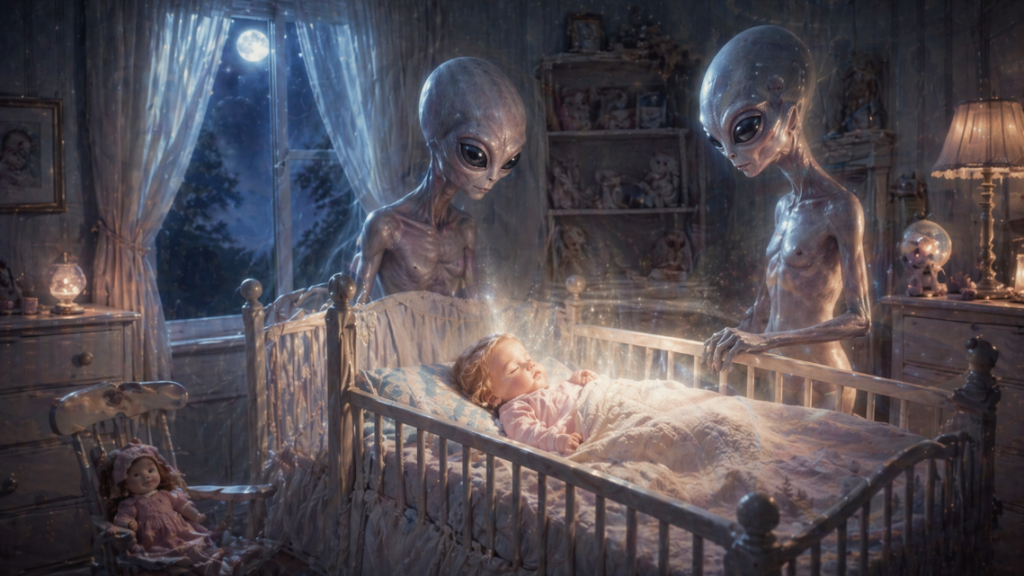
My own contact began before the Hill case entered public awareness. I was born in February 1954, and my experiences with the Grays began when I was in the crib. By the time The Interrupted Journey reached readers in 1966, I was twelve years old and had been in contact for more than a decade. I did not learn about the Grays from the Hills. They confirmed what I had been living with since before I could speak. The public discovered the Grays in the 1960s. I had been with them for years.

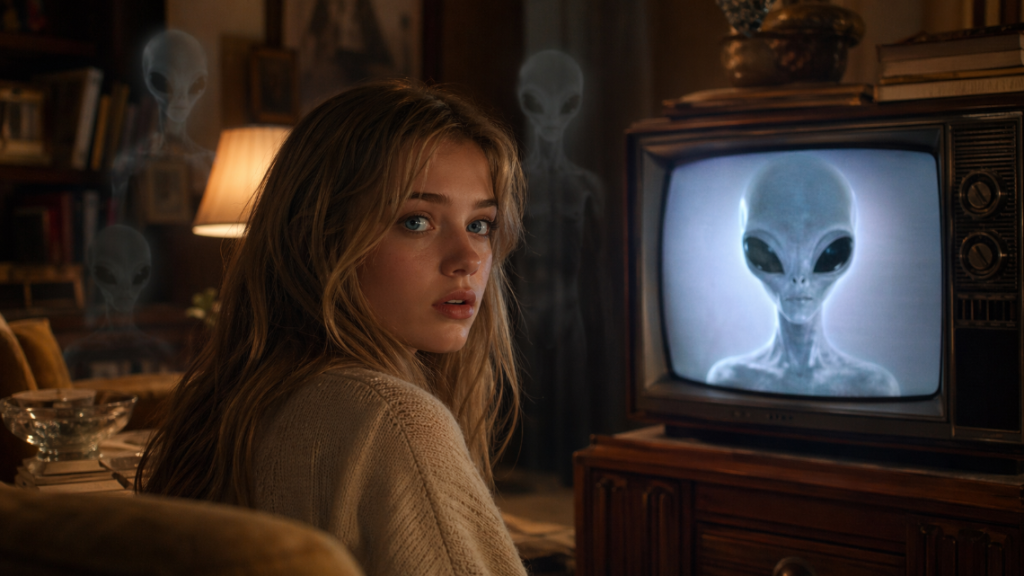
The Grays first walked on screen for a mass American audience on October 20, 1975, when NBC aired The UFO Incident, a dramatization of the Hill case starring James Earl Jones as Barney and Estelle Parsons as Betty. Actors in costume portrayed the beings, and millions of viewers met the Gray for the first time as a moving figure. I was 21 years old that night, sitting in front of the television, watching the rest of America catch up to what my body had known since the crib. The film hit me with a strange double recognition: surprise that the Grays had finally reached the screen, and quiet familiarity with what was being shown.

The visual image of the Gray deepened in the 1980s, especially after Whitley Strieber’s Communion brought an unforgettable alien face into bookstores, bedrooms, nightmares, and public consciousness. I remember seeing the Communion cover and getting chills. The chill was recognition, not fear of the unknown. My body knew the face before my mind could place it. For many experiencers, that cover became the closest available image to what they remembered. They could finally say, That looks like what I saw, or That is close, but mine was different.
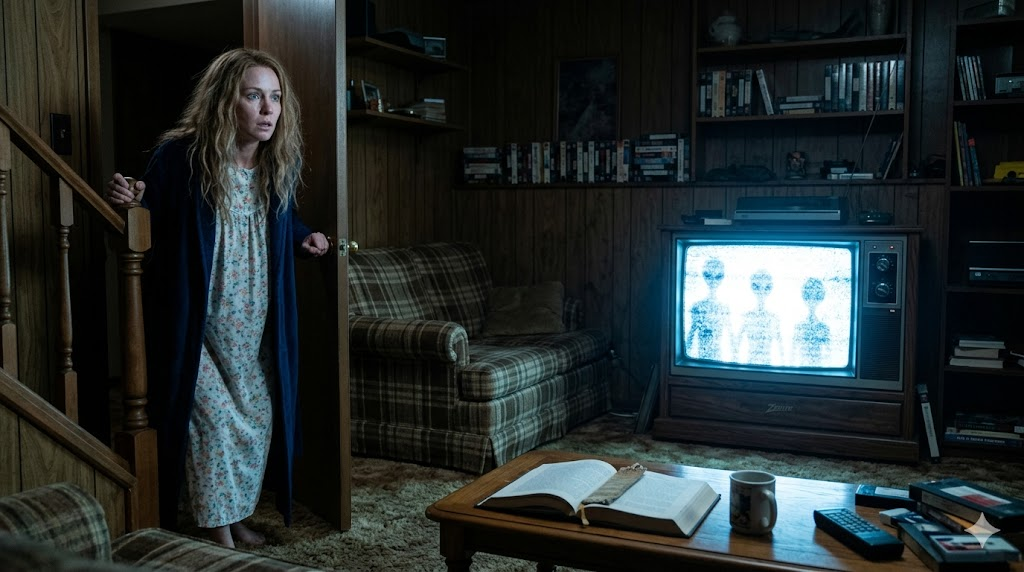
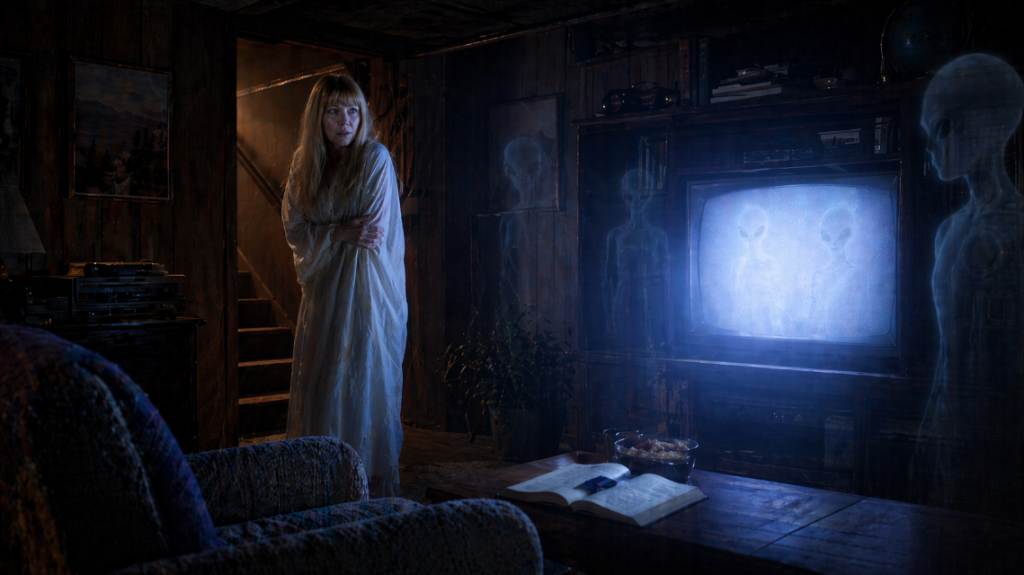
I bought Communion when it came out. One night, I read the passage where Strieber describes the visitors sometimes announcing themselves through electronic interference. I put a bookmark at that page, set the book down, and fell asleep. At 3 AM, the television in our basement family room came on at full volume. I woke shaking so hard that I asked my husband at the time to go down and turn it off. He did. He did not ask what I thought had happened. He was a non-believer, and I knew that telling him would only bring shame. I lay in the dark and understood what had just been shown to me. The visitors had read the book with me. They were confirming their presence. Strieber had written about the interference. They had delivered it the same night.

Hopkins’s research reached an even wider audience in 1992 when his book Intruders became a CBS miniseries with Mare Winningham playing a Nebraska farmer’s wife whose abduction experiences mirror many of the patterns in the literature, and Richard Crenna playing a psychiatrist modeled on John Mack. By the early 1990s, the Gray was no longer a fringe image. The Gray had entered network television, bookstores, theaters, and the visual vocabulary of the entire culture.

The internet multiplies the process of visual recognition. We now have thousands of images of Gray-type beings created by artists, witnesses, researchers, filmmakers, and AI systems. Experiencers can participate in a cosmic police sketch process, choosing images that better match their visitors and helping us build a richer visual taxonomy.
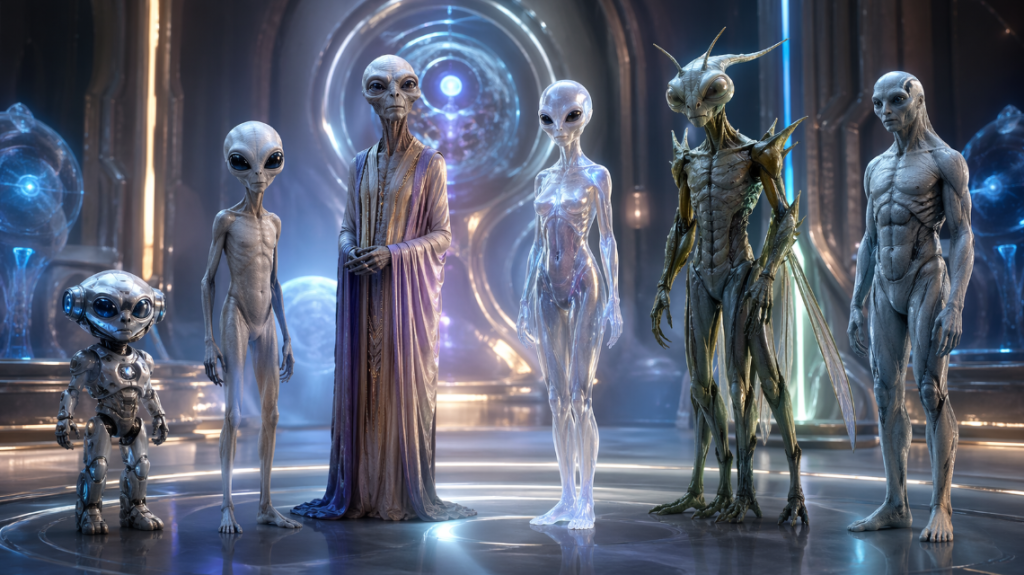
In my interviews and in my hypnotherapy sessions with experiencers, I often ask a simple question: What did your Grays look like? Then I ask them to search for the terms’ Grey aliens’ or ‘Gray aliens’ and select the images that most closely resemble the beings they encountered. The method does not prove identity in a conventional scientific sense. It moves the witness from vague language into visual specificity. It lets us compare patterns without forcing everyone into the same category.
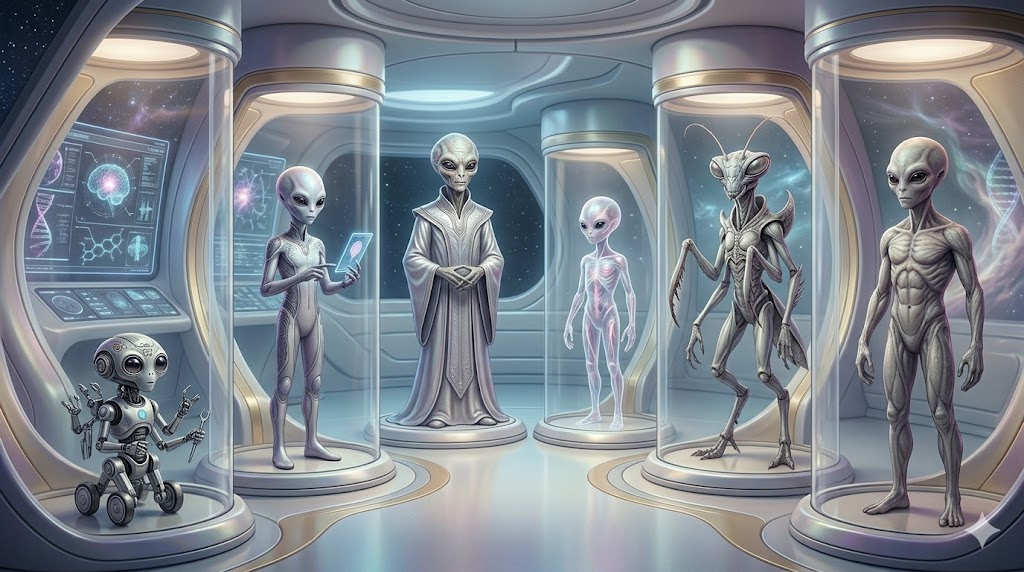
The word Gray may cover many different beings, bodies, vessels, lineages, programs, functions, or consciousness expressions. A witness can point to an image and say, That one resembles what I saw, or No, mine was taller, or The eyes differed, or The skin looked almost translucent, or The head was narrower, or The being felt more mantis-like. Such distinctions move us beyond a generic alien cartoon and toward a more careful taxonomy of contact.

Researchers, Experiencers, and the Elephant
Modern abduction and contact research brought several major figures into the public conversation. Budd Hopkins, John Mack, David Jacobs, Linda Moulton Howe, Kathleen Marden, and others gathered stories, compared patterns, interviewed witnesses, explored missing time, and studied abduction accounts. They did not agree on every meaning, motive, or implication. That difference matters because each researcher touched a different part of the elephant.
Hopkins approached the phenomenon through missing time, trauma, physical evidence, reproductive themes, and patterns of intrusion. Jacobs moved into a darker interpretation, viewing hybridization as part of a covert program that threatened human autonomy and perhaps human continuity. Mack took the reports just as seriously, and he widened the frame. He acknowledged trauma, and he also recognized transformation, ecological awakening, spiritual expansion, and a challenge to the limits of Western materialism. They could all be partly right, partly wrong, or somewhere in between. The elephant may contain trauma, initiation, medical procedure, military interference, soul agreement, deception, healing, genetic stewardship, exploitation, and cosmic diplomacy simultaneously.
I come to this review from a particular angle. I discovered Erich von Däniken in 1968 and Zecharia Sitchin in the 1970s, when both authors were new. I read Edgar Cayce, Ruth Montgomery, Heinlein, and Asimov as a child. In 1974, at the age of 20, I attended my first Star Trek convention in NYC. Through the mid-1970s, I sat on panels at these gatherings with Robert Heinlein, Isaac Asimov, Gene Roddenberry, and Dr. J. Allen Hynek, where we shared breath and visions of the future, of what was to come, and of conscious alien contact. I attended Star Trek conferences in New York City in 1975 and in Pittsburgh during this period.
I began attending UFO-specific conferences in 1997, after meeting my husband, Sasha, who had known the Prophets Conference circle, including Cody Johnson and Robin Maynard, since the 1970s. Together we have gone to three to five conferences a year since. I studied with Zecharia Sitchin from 1998 until his passing in 2010. I have presented at Contact in the Desert, Alien Event, and other conferences across the country, and I shared a panel with von Däniken himself. I produced the 2018 Stargate to the Cosmos Conference, featuring 65 presenters and 400 attendees.
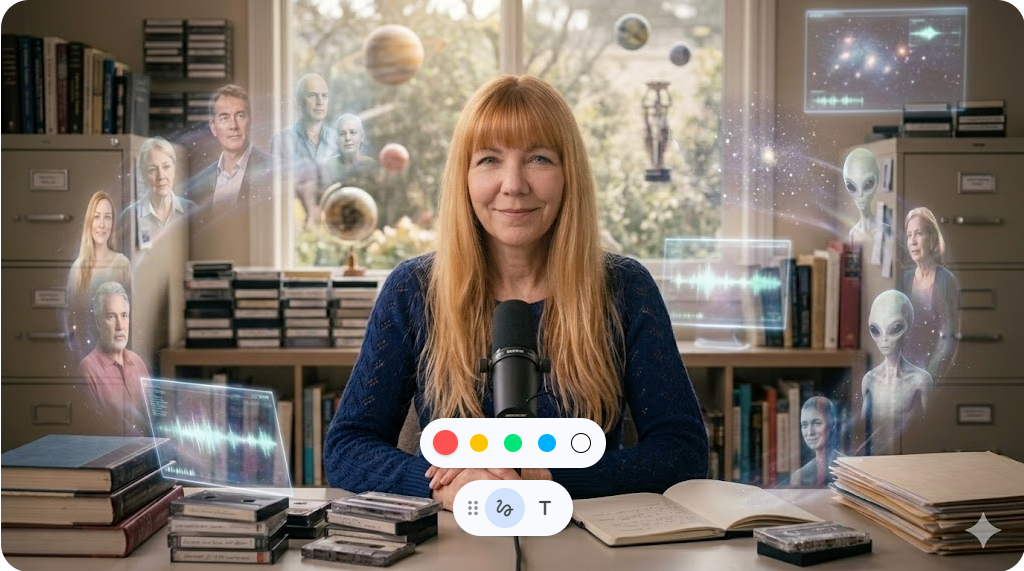
Sasha and I founded Aquarian Media, the evolution of our long-running Aquarian Radio broadcasts, now expanding into video. Together, we have produced more than 1,200 episodes. I am a certified hypnotherapist and counselor, which means I have sat with experiencers in altered states as they recovered memory, not only listened to their spoken accounts. And I have been in contact with nonhuman intelligence for six decades, entering my seventh.
I bring these lenses to what follows. The researcher’s lens shapes the research itself. A fear-based frame finds invasion. A spiritual frame finds initiation. A military frame finds operations. A medical frame finds procedures. A trauma frame finds abuse. A metaphysical frame finds soul contracts. An experiencer may hold all these possibilities at once while still asking: What happened to me? Who was involved? What did they intend? What did I remember? What did I forget? How did the experience change my consciousness?
I knew John Mack personally through Sasha’s connection with Stanislav Grof’s consciousness work. I sat with Mack and Sasha at several meals during various Prophets Conferences, starting around 1998, culminating in Victoria, British Columbia, in August 2001. During one conversation, I told Mack about my MILABS abduction on Johnston Atoll. My impression was that he did not want to explore that layer of the phenomenon. Whether from caution, professional boundaries, or lack of context, he seemed to pull back. That moment stayed with me because it reminded me that every researcher, even a courageous one, has edges to their map.

My final memory of John Mack with Sasha carries a very different feeling. At dinner during that same Prophets Conference period, Mack came up to us and gave us a signed copy of his book, Passport to the Cosmos. I still have that copy behind me as I write. He had tears in his eyes. My sense was that he knew, somewhere deep inside, that he might never see Sasha again. Sasha felt like a brother to him in that transpersonal world they both inhabited. That moment revealed Mack’s humanity. He was not only a Harvard psychiatrist, researcher, author, or public figure. He was a man with a heart, a man who loved deeply, a man who carried the burden of a mystery larger than any single discipline could hold.
Mack had edges, as we all do, and he also had courage, tenderness, and devotion to the mystery. Hopkins, Jacobs, Howe, Grof, Mack, Sasha, experiencers, contactees, abductees, and witnesses have each touched different parts of the elephant. Some reached through trauma. Some through hypnosis. Some through scholarship. Some through journalism. Some through direct contact. No single path holds the whole being.
The UAMN and Gaia Review: A Modern Layer in the Conversation
The UAMN and Gaia material raises a central question: Are the Grays a race, a program, or a strategy? Nate asks that question near the start of the review, and the segment frames the Grays as among the most misunderstood subjects in the field. The transcript describes Gray aliens as beings often linked with Orion, often confused with EBENs, often depicted with small synthetic bodies, hairless heads, large black eyes, and an individual consciousness within. It also asks how deeply these beings may have shaped human history and humanity’s future.
That opening question matters because the word “Gray” may not name a single species. It may describe a body type, a visual category, a program, a role, a mission-specific vehicle, a hybrid lineage, a manufactured vessel, a biological race, a postbiological civilization, or a designation assigned by human intelligence systems. The transcript itself raises that possibility when it says people often speak of a Gray as though they mean a single civilization, even though intelligence briefings describe classifications, variants, and subgroups.
The review discusses the idea that some Gray bodies may be synthetic, fiber-printed, or mission-specific while still inhabited by consciousness. One speaker says people sometimes think the Grays are robots, and they are not, and describes artificial bodies or puppets made through fiber-printed material. The same section insists that consciousness, and even soul, can inhabit an artificial body, which shifts the conversation from simple extraterrestrial biology toward postbiological intelligence.
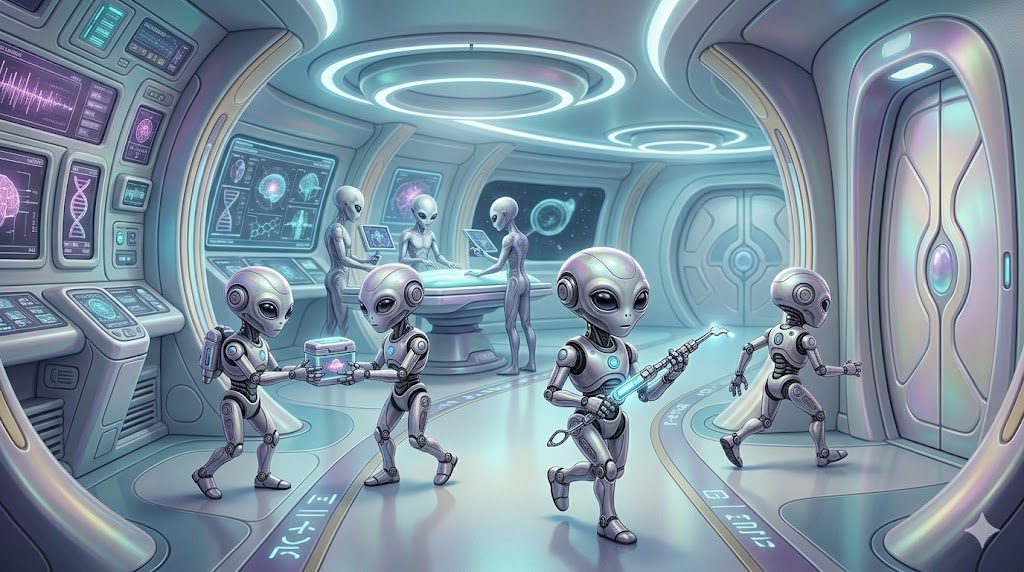
That part interested me because some of the tiny beings I encountered did seem droid-like. They reminded me of the small droids in Star Wars. They moved fast. They performed tasks. They seemed efficient, compact, and purpose-built. Even the small ones had personalities. They did not feel like empty machines. Their bodies may not have been biological in the way humans define biology, and that does not mean they lacked awareness, individuality, or life. Humans often equate not biological with not alive. Contact challenges that assumption.
Visitor Diversity: What I Have Seen
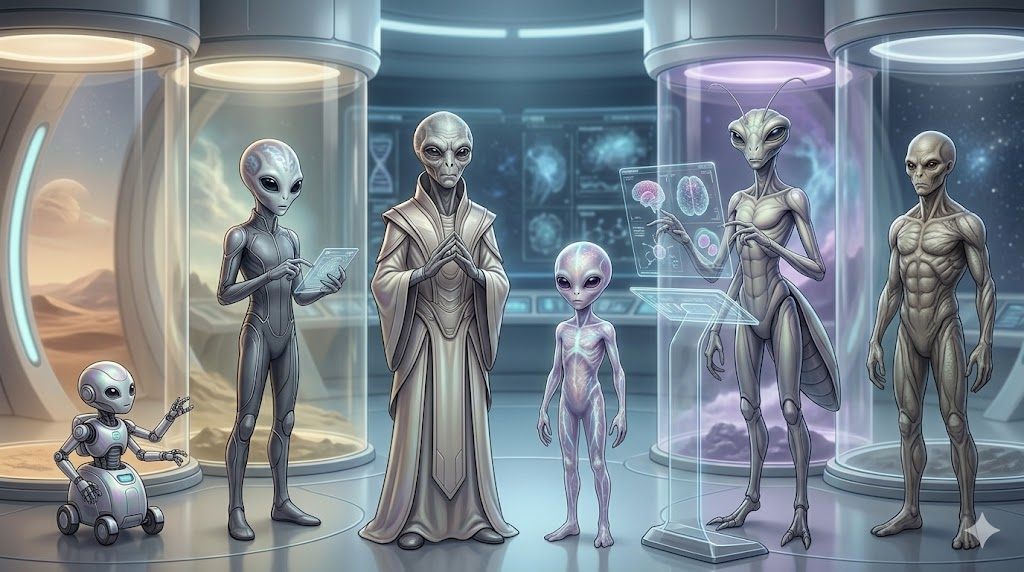
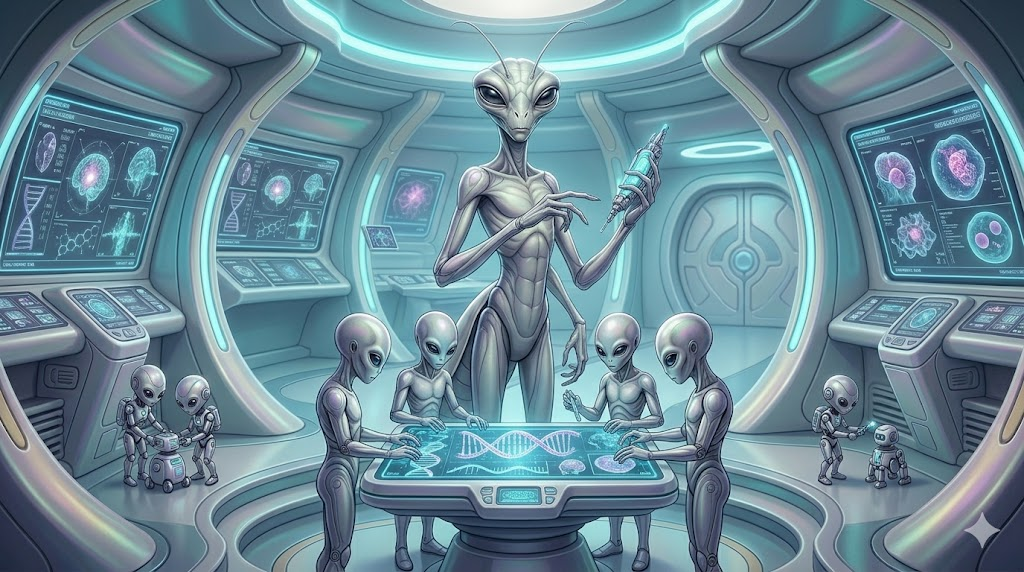
I have seen Grays of many sizes and forms. Some were tiny. Some seemed five to six feet tall. Some towered over me. I have also seen Gray-Mantis hybrid beings who seemed enormous, perhaps eight to twelve feet tall. That range does not surprise me. Humans vary dramatically in height, body type, features, coloration, and genetic expression. My grandmother’s sister was a two-foot-tall dwarf, and some of my ancestral lines carried stories of giants. If humans vary that much within one planetary species, why would extraterrestrial, interdimensional, synthetic, hybrid, or postbiological beings show less variation than we do?
I resist the habit of calling the Grays’ as though the label explains the being.’ When people say Gray, I want to ask: Which ones? How tall? What body shape? What eye shape? What skin texture? What energy? What role? What emotional field? What kind of consciousness? What relationship to the experiencer? Did they seem biological, synthetic, robotic, droid-like, cloned, hybridized, insectoid, amphibian, elder-like, childlike, clinical, compassionate, detached, curious, military, medical, spiritual, or something we have not yet learned how to name?
The Operating Room
I have watched enough medical dramas to recognize the difference between emotional warmth and functional care. A good emergency-room team does not stop to comfort a patient the way a family member would. They move fast. They assess the injury. They control bleeding. They reduce panic. They administer pain relief. They sedate when needed. They stabilize the body and complete the necessary intervention. From the patient’s point of view, that can feel terrifying, especially when the patient wakes mid-procedure, lacks context, or remembers fragments later. The medical team may act from precision, urgency, and care, not cruelty.
That comparison helps me understand some of my encounters with Gray-type beings. They often seemed efficient, precise, coordinated, and attentive to panic, pain, and bodily distress. They did not always behave with a warm human bedside manner, and that does not mean they lacked concern. Their version of care may have expressed itself through procedure, pain reduction, panic control, monitoring, and the rapid completion of tasks. If we view their actions only through fear, we may miss the functional intelligence in the room. If we view them only through spiritual idealization, we may miss the legitimate ethical questions around consent, memory, and human autonomy. We need a wider lens.
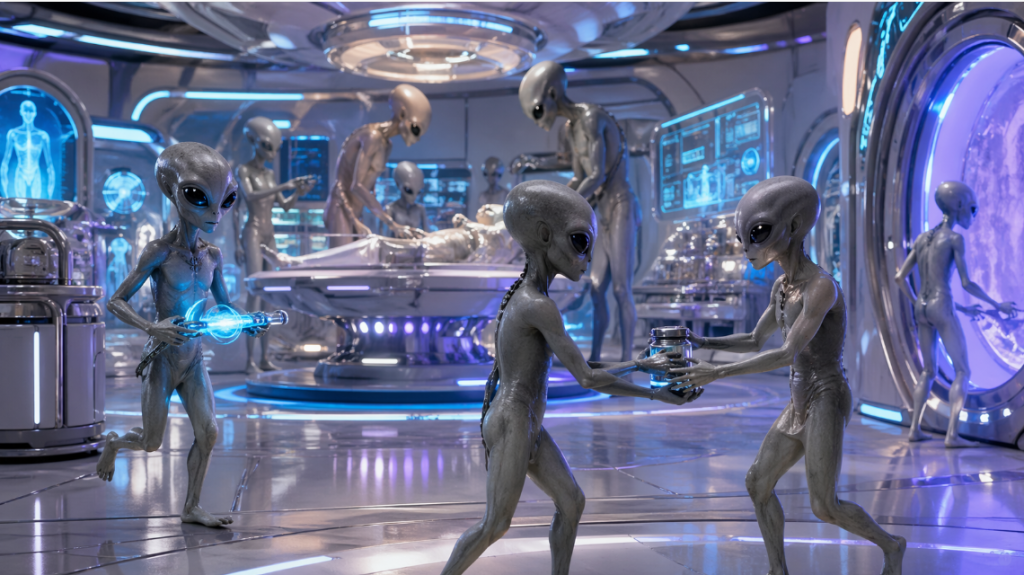
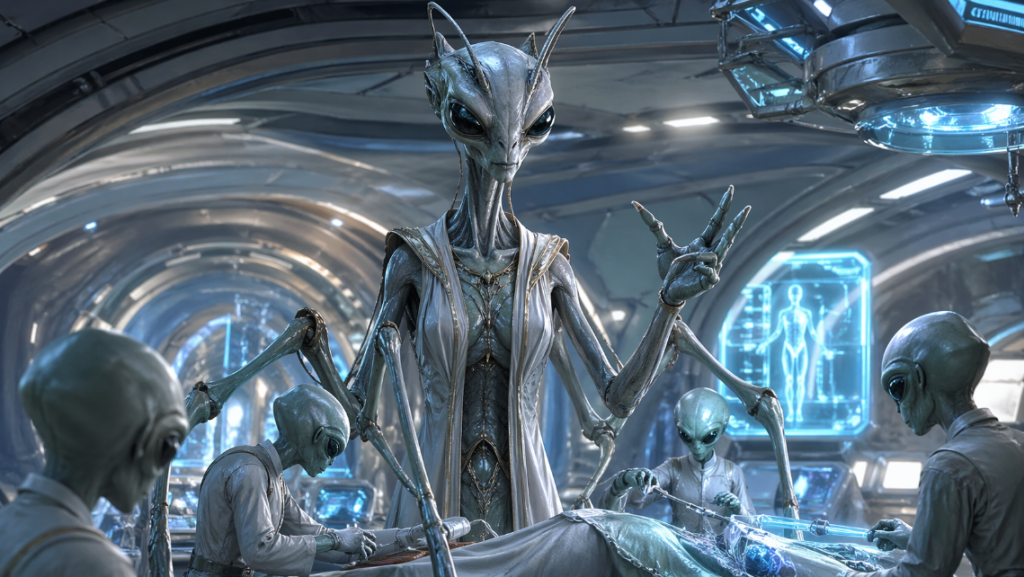
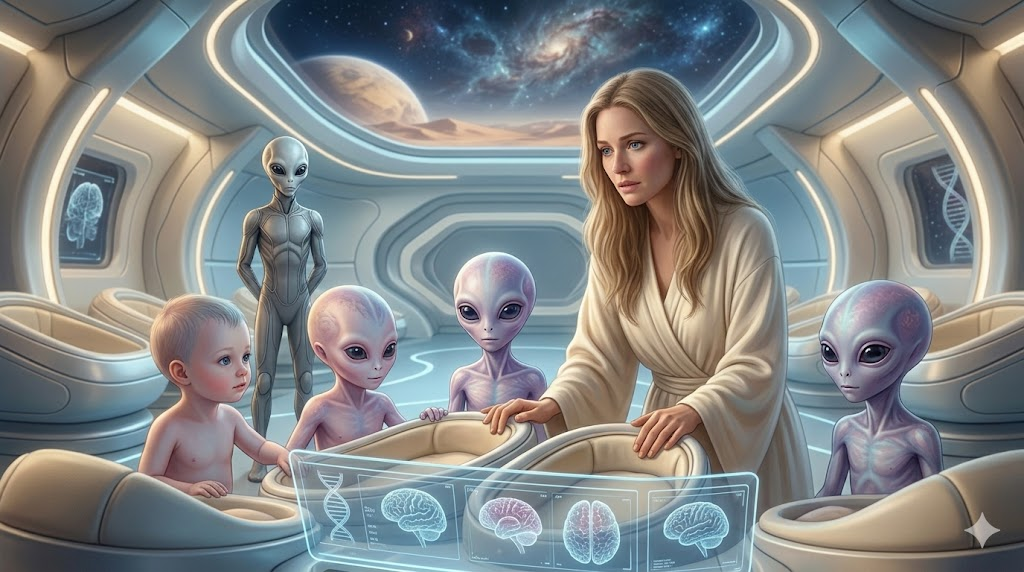
In some of my experiences, the five- to six-foot-tall beings carried me. They worked in coordination with a much taller Gray-Mantis hybrid being who seemed to function as the lead surgeon or chief medical authority in the room. The scene resembled an operating theater. Each being appeared to have a specific job and a specific area of the body to attend to. They did not move randomly. They worked as a team. They knew their roles. The taller Gray-Mantis presence carried a different authority, the way a lead surgeon commands while nurses, assistants, anesthesiologists, technicians, and support staff perform their own specialized tasks.
The smallest droid-like beings moved fast in and out of the room. They entered the space, approached the middle-sized beings, handed them items, took items away, and supported the process. I sometimes wonder whether they carried instruments, samples, data, or biological material to another room, perhaps to a laboratory for further analysis. I cannot claim certainty about what every movement meant, and the pattern felt organized, procedural, and highly functional. It resembled a complex medical operation more than a chaotic abduction scene.
This does not erase the fear many people feel during contact. Fear matters. Trauma matters. Consent matters. Memory matters. People who report invasive procedures, reproductive manipulation, missing time, or lifelong distress deserve compassion, not dismissal. Some experiencers perceive the Grays as frightening, clinical, cold, or exploitative. Others remember healing, rescue, instruction, protection, or mission-based cooperation. These testimonies may conflict, and conflict does not automatically prove one side false. It may mean we encounter different beings, different programs, different factions, different timelines, different agreements, different levels of memory, or different interpretations of similar procedures.
Fred, and the Grays I Have Known by Name
The Grays I have known are not a category. They are individuals. Over the years, I gave some of them names. I still laugh a little when I say the names out loud, because they sound so ordinary, and that is exactly the point. When you meet a being often enough that they become someone to you rather than something, you reach for a name. A name is the opposite of a specimen number. A name is recognition.
Fred is the Gray I have known longest. He is the one most often in the room during the medical procedures. He has the large black eyes, the slender frame, the steady presence. He does not speak the way humans speak. He communicates through a kind of calm knowing that enters me without words. I named him Fred because he needed a name, and Fred is a name you give to someone you expect to see again. My sense is that he received the name with something like humor and approval. The Grays, at least the ones I have met, are not humorless. Fred has been a constant.
This series will continue with other visitor species I have named. George is the Reptilian. Mother Mary is the Mantis, and she holds me in her long arms the way the Madonna cradles the infant Christ in every pietà. Melusine is the Dragon, a source being I have known across vast time. Each of them gets their own installment, because each of them deserves more than a paragraph. This piece stays with the Grays, and with Fred, because the work of seeing one species clearly is work enough for one article.
Interbreeding, Hybrids, and the Question of Compatibility
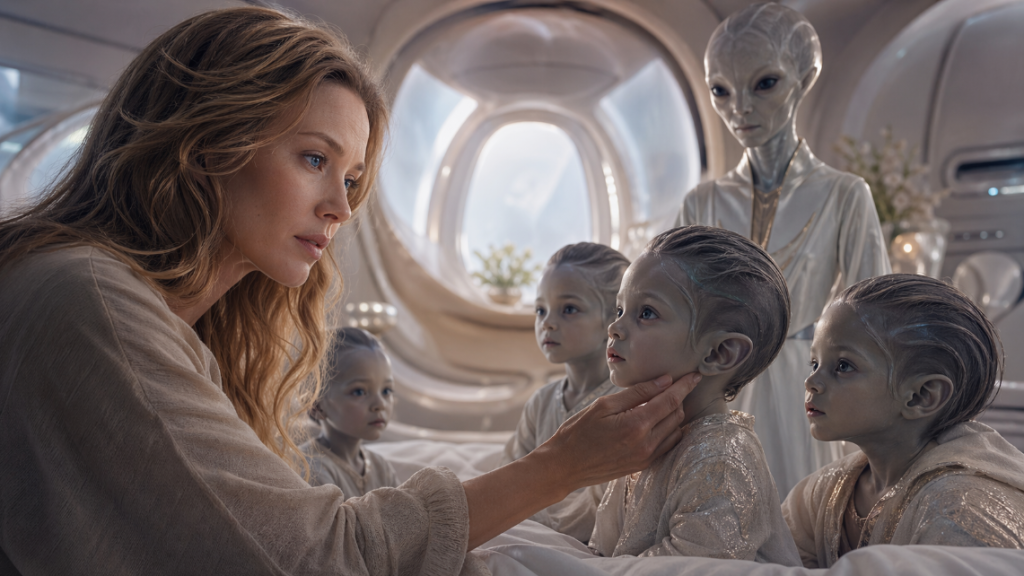
I have encountered all three of the species most often named in this field: Grays, Reptilians, and Nordics. I have also encountered beings who did not fit any single category because they were blends. Some carried Gray features with Mantis proportions. Some carried Reptilian features with humanoid structure. Some carried Nordic coloring with nonhuman eyes. Either these beings interbred with one another through sexual copulation that resulted in live births or pregnancies, or they were hybridized in laboratories through programs we do not yet fully understand. Both paths may be true at once, in different contexts, through different factions.
I carry memories of sexual contact with nonhuman beings. Some of those experiences produced pregnancies that I was told originated from that contact. The fact of biological compatibility between humans and at least some nonhuman species raises a real question. Either our genetic lineages share a common source, which the Anunnaki cosmology addresses directly through Enki and Ninmah’s shaping of humanity, or the compatibility was engineered through earlier interventions, or both.
I want to speak honestly about those sexual encounters. In the moment, I screamed. I said I did not want it to happen. I felt violated, confused, and afraid. In hindsight, the experience was not as bad as my initial reaction suggested. Some of it could be described as erotic, even pleasurable, had I not frightened myself out of that frame. At some point I stopped regarding those encounters as pure violation and began to meet them differently. I met other women who reported similar experiences, and together we began to consider that being seen as desirable by more than one species carried its own strange dignity. We were also doing our part, in a sense, to diversify creation. Life exists in many environments. Any species that intends to colonize another world, survive a planetary shift, or adapt to new conditions may need to expand its genetic toolkit. Interbreeding, hybridization, and genetic exchange may be part of how consciousness travels, adapts, and continues.
I hold this perspective with care. I do not want to minimize the real trauma other experiencers carry. Some women and men describe these encounters as wounds that took decades to integrate. Their testimony is valid. For me, personally, the reframe worked. The fear softened. The meaning widened. The experience took its place inside a larger story about species contact, genetic stewardship, and the long arc of our relationship with nonhuman intelligence.
I spoke with Cynthia Crawford about a year before she passed. She told me she was a human hybrid who carried DNA from several species. Cynthia spent her life drawing the beings she knew and teaching others about the star lineages she carried. Her testimony fits a pattern I have seen many times. At conferences over the years, I have met humans who quietly say they are Reptilian souls in human bodies, humans who say they are Gray souls in human bodies, humans who identify as Pleiadian or Sirian or Arcturian or Andromedan, and humans who carry hybrid memories from several lineages at once. The soul does not appear to be confined to one species of origin. Bodies are containers. Lineages are mixed. Memories cross species lines the way they cross lifetimes.
How the Hybrids Grow
Sexual copulation and live birth are only one path. In my own contact life, and across patterns I have seen in my work with other experiencers, the gestation of hybrid children appears to involve several methods. I list them as options I have encountered or heard described, not as a complete map.
Live birth from a human mother. The experiencer carries the pregnancy in her own body and gives birth, sometimes on the craft, sometimes in circumstances that remain foggy in memory. This is the version most commonly discussed in abduction literature.
Extraction and artificial gestation. The fetus or zygote is removed from the human mother at an early stage and continues to develop in an artificial womb or controlled environment. Many experiencers report the missing-pregnancy phenomenon: a confirmed pregnancy that simply ends between visits, followed later by a presentation of a hybrid child the mother is invited to hold. Artificial gestation explains that pattern without requiring miscarriage as the only explanation.
Cross-species host wombs. Some host species appear to have wombs capable of carrying a wide range of genetic material, including human and hybrid lineages. A fetus begun in a human body may be transferred to such a host and completed there. This is not science fiction. Human medicine is actively developing artificial wombs and exploring cross-species gestation research. If we can conceive of it, older civilizations who have worked with genetic engineering for far longer than we have can also have implemented it.
Laboratory-only gestation. Some hybrids may never have passed through any womb at all, human or otherwise. Genetic material is combined and gestated entirely in lab environments from conception to viability. The resulting beings may still have souls. The method of physical origin does not determine the presence or absence of consciousness.
Other methods we have not named. I have six decades of contact and a decade and a half of interviewing other experiencers, and I still meet patterns I do not recognize. It would be foolish to assume the four methods above exhaust what is happening. There are likely forms of genesis we do not yet have language for. The phenomenon teaches humility before it teaches anything else.
The question of consent runs through all of this and cannot be answered cleanly. Some experiencers consented at soul levels they do not remember at the conscious level. Some did not consent and were used. Some gave partial consent that does not translate easily across the line between human embodiment and whatever the contact state actually is. The ethics are real. The suffering is real. And the continuation of genetic lineages across species lines, whatever we think of the methods, appears to be ongoing.
Genetics, Timelines, and Survival Agendas
The UAMN transcript says that what we know about the Grays originates from a variety of disciplines, including direct contact, intelligence agencies, and channeled information. It references Marina Jacobi and timeline-related claims that past, present, and future connect, and that some beings may seek original DNA from our timeline in order to reconstruct their bodies. That framework may sound strange to people who approach reality through ordinary linear time, and many experiencers know that contact does not always obey normal chronology. Memory can arrive out of sequence. Encounters can feel physical and dreamlike at once. A child may see beings decades before learning the word Gray. An adult may recover a childhood scene only after a later trigger opens the door.
The transcript presents a larger cosmic conflict model: three competing civilizations described as Grays, Nordics, and Reptilians, with Earth framed as an extraordinary planet, even a laboratory. It includes the idea that Nordics may want Reptilians out, and that Grays may want to cohabit with Earth and survive. This framing fascinates me because it echoes many older myths of gods, serpent beings, sky people, star nations, territorial conflict, genetic stewardship, and rival claims over Earth. It also echoes the Anunnaki material Sasha and I have explored for decades: competing lineages, competing agendas, competing claims over humanity, and an Earth caught inside a much larger drama.
My own encounters complicate that conflict model. I have met Grays, Reptilians, and Nordics, and I have met beings who blended their traits. If the three civilizations stood in total opposition, the blended beings would not exist. Something more complex happens across factions. Alliances form. Genetic exchange occurs. Hybrid lineages take root. The map resembles human geopolitics more than a clean three-way war: shifting alliances, competing interests, cooperative projects, and splinter groups that cross established lines. The moment we force the whole phenomenon into one moral category, we lose the complexity that experiencers report.
What the Comment Section Reveals
The comments under the UAMN video show that the audience also wrestles with these questions. Some viewers praise Linda Moulton Howe and call her an important figure in UFO research. Others express fear of abduction, probing, impregnation, and children being taken. Some discuss EBENs, cloned biological entities, Mantis beings, Nordics, Reptilians, future humans, consciousness transfer, and artificial bodies. One pediatric hospice nurse described children near death reporting thin, pale gray beings with large eyes and three fingers, and another commenter reported seeing a tall Gray in a backyard. Several comments argue that the Grays may use bodies as containers or avatars for consciousness.
That comment section matters because disclosure does not unfold only through experts, documentaries, whistleblowers, government officials, or formal researchers. It also unfolds through ordinary people who hear a story and recognize something from their own lives. They add a memory, a question, a fear, a correction, a fragment of testimony, or a symbolic connection. Some comments contain confusion or speculation. Some preserve valuable witness data. The point is not to accept every comment as fact. The point is to recognize the comment section as part of the public experiencer archive.
Linda Moulton Howe has spent decades tracking testimony around animal mutilations, abductions, small Grays, black lens-like eyes, EBENs, tall whites, and the relationship among different nonhuman groups. She has documented this field for more than forty years. Whether one agrees with her interpretations or not, the pattern of testimony remains difficult to dismiss. I respect her persistence. I respect the courage it took to follow subjects that mainstream journalism refused to handle with seriousness for so long.
At the same time, I listen differently when someone speaks from direct encounter than when someone speaks from interviews, documents, intelligence claims, or secondhand testimony. Researchers gather patterns. Experiencers carry the living memory. Whistleblowers bring institutional context. Contactees bring relational, telepathic, spiritual, and multidimensional insight. Channelers bring symbolic or timeline-based information. Skeptics help us test assumptions. No one path should dominate the entire field. The mystery asks us to compare notes without flattening each other.
The Experiencers I Have Sat With
I have hosted broadcasts with experiencers, contactees, and researchers for more than a decade on Aquarian Media and its Aquarian Radio predecessor. Many of those people have now passed. Some died in their sleep. Some died in hospitals. Some died alone. Their testimony lives on in the recordings, and in the memories of the people who heard them speak. I think of them often.
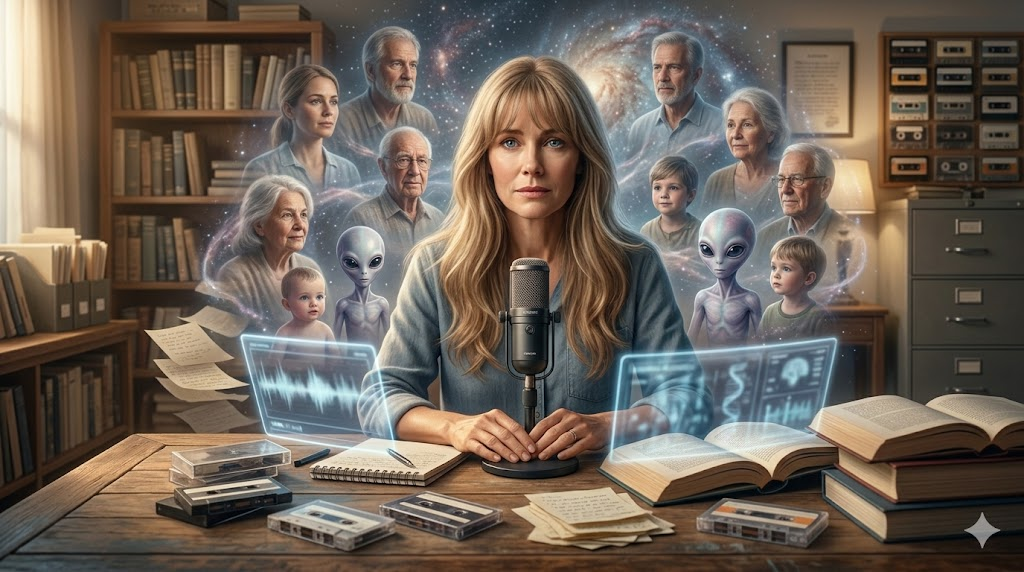
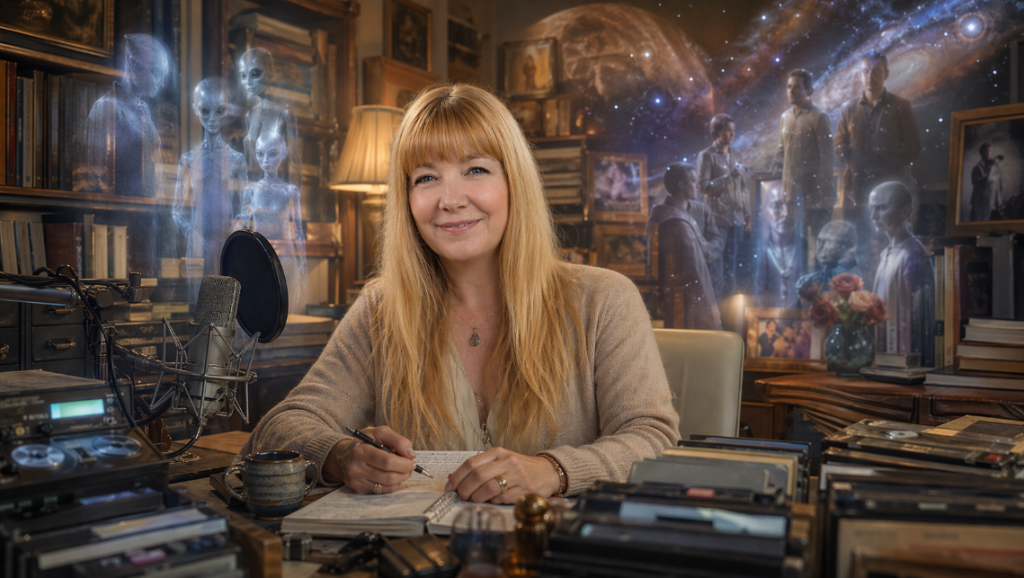
Cynthia Crawford is one. Her hybrid testimony and her lifetime of portrait work giving faces to the beings she knew left a record that outlasted her. I think of the others I will not name here, because some of them spoke to me in confidence and the trust does not expire with the speaker’s death. I carry their stories. I have filing cabinets full of notes and recordings. I have hours of tape. I have hundreds of faces I remember, voices I can still hear, details I have not yet found a way to write down.
A field researcher accumulates this kind of weight over decades. It is not only data. It is a responsibility. Part of why I keep writing is that some of those voices have no one else to carry them forward. I am one of the witnesses of witnesses. That is a position I did not seek and will not relinquish.
Toward an Experiencer-Based Taxonomy
My experiences tell me the Grays are many things, or at least many expressions of something larger than one label. Fred did not feel like the tiny droid-like beings. The five- to six-foot-tall beings who carried me did not feel like the towering Gray-Mantis who directed the medical work. A being can feel clinical and still concerned. A body can seem artificial and still house consciousness. A procedure can seem frightening and still serve a medical, monitoring, survival, or mission-based function. A witness can feel fear and later recognize structure, purpose, and care.
My interpretation is not the only one. Another experiencer may say, No, Janet, what happened to me felt invasive and harmful. I believe them. Another may say, Mine felt like family. I believe that too. Another may say, They were future humans. Another may say, They were drones. Another may say, They were Mantis-led medical teams. Another may say, They were interdimensional beings wearing Gray bodies. I do not need all these testimonies to collapse into one answer. I want us to build a field broad enough to hold them while we keep refining our questions.
The key question for me is not merely, What are the Grays? The better question is: What kind of consciousness uses that body, under what circumstances, and in what relationship to the human experiencer? If we ask better questions, the phenomenon may answer with greater precision.
We now need an experiencer-based visual and functional taxonomy of Gray-type beings. We can ask witnesses to identify images, describe height, head shape, eyes, skin texture, movement, smell, emotional tone, communication style, apparent role, and the surrounding environment. Did the being appear in a bedroom, craft, hospital-like space, laboratory, dream state, astral field, military setting, underground facility, or outdoor landscape? Did the being touch the witness, communicate telepathically, observe in silence, conduct a procedure, escort the person, calm panic, administer something, or stand aside as a supervisor? Did the being feel like a technician, nurse, doctor, scientist, guard, guide, child, elder, drone, assistant, or ambassador? Did the being have a name?
These details matter because they help us move past fear-based generalizations and toward discernment. The hypnotherapy lens adds something the interview lens alone cannot reach. When an experiencer enters an altered state with a trained guide, memories surface that conscious recall cannot produce. The body remembers what the mind has filed away. I have sat with experiencers as they recovered scenes they had carried without knowing they carried them. The Grays in those sessions were often named, specific, remembered by the body, and mourned when the session ended. This is why I hold that the phenomenon must be studied from the inside, with skilled witnesses present, and not only from the outside through interviews and documents.
Ahimsa and the Remembering
My ethical core is Ahimsa. Non-harm. I have carried that principle through every part of this work: my contact life, my hypnotherapy practice, my interviews with other experiencers, my polyamory teaching, my broadcasting, my writing. Non-harm does not mean silence. It does not mean the avoidance of hard truths. It means the refusal to damage others in the telling of the truth. Ahimsa is what keeps six decades of contact from hardening into bitterness or grandiosity. It is what allows me to name Fred without turning him into a weapon or a trophy. It is what lets me hold trauma and initiation in the same hand.
Disclosure matures when humanity learns to discuss consciousness, embodiment, genetics, soul, trauma, ethics, memory, timelines, agreements, and the diversity of nonhuman intelligence. UAPs in the sky matter. The beings in the room matter. The experiencer’s body matters. The witness’s memory matters. Each piece carries part of the map.
I will continue reviewing the reviewers. I will honor Linda Moulton Howe and the other researchers who helped build this field. I will listen to intelligence-related voices with curiosity and discernment. I will pay attention to Gaia, UAMN, and other platforms that bring these conversations to wider audiences. I will also keep asking what the experiencers themselves saw, felt, remembered, and understood. I will ask them what their Grays looked like. I will ask them what names they gave. I will ask them about height, movement, energy, procedure, roles, fear, comfort, pain, communication, and aftermath.
The Grays I have known are many. Contact has many stories. Humanity is not a passive audience watching strange visitors from the sky. We are participants in a larger mystery that touches consciousness, biology, spirit, technology, history, and destiny. I do not claim to know the whole answer. I know enough to say this: the beings are more varied than the stereotype, the experiences are more complex than fear allows, and the details lead us toward greater understanding.
Next in the series: George, the Reptilian. And later: Mother Mary, the Mantis. And Melusine, the Dragon. One species at a time. One being at a time. Meeting some members of a species is like meeting one member of humanity. The work of seeing clearly takes all of us.
Now the remembering begins.
IMAGE 1 — FEATURED HEADER IMAGE
THE GRAYS I HAVE KNOWN
Description:
A powerful featured collage for the whole article: Janet as witness, Fred the Gray, the medical chamber, a glowing craft, and the larger mystery of six decades of contact.
Prompt:
A cinematic full-color featured header image for an article titled “The Grays I Have Known,” showing a mature blonde woman experiencer with long sandy-blonde hair, bangs, blue eyes, and a thoughtful, calm expression standing in the foreground as a witness across time. Behind her, a slender Gray being with large black almond-shaped eyes stands with quiet intelligence rather than menace. In the background, show a luminous high-tech medical chamber, a subtle UFO craft above a misty night landscape, and faint layered images of childhood memory, television screens, books, and star fields, all blended as a sophisticated collage. Mood: remembrance, contact, mystery, compassion, disclosure, six decades of experience. FULL COLOR, luminous cinematic fantasy realism, clear photorealistic mythic painting, crisp faces, sharp eyes, highly detailed realistic skin and hair, soft natural colors, balanced cream, blue, silver, ivory, violet, and gentle gold accents, bright but not overexposed, clean atmospheric depth, cinematic lighting, emotional depth, elegant composition, landscape 16:9. No text, no captions, no readable symbols, no blurry faces, no cartoon style.
IMAGE 2
THE CRIB MEMORY
Description:
Janet’s contact begins before language, in the crib, long before the public learned to call them Grays.
Prompt:
A cinematic full-color scene of a 1950s nursery at night, where a baby girl with sandy-blonde hair rests in a crib while two slender Gray beings stand nearby with calm, watchful presence. The room feels quiet, intimate, and mysterious rather than frightening. Moonlight enters through soft curtains, and a subtle luminous presence surrounds the crib as if the child is being observed, remembered, and protected across time. The Gray beings should appear delicate, intelligent, and specific, with large black almond-shaped eyes, slender bodies, and gentle posture. Mood: first contact, innocence, mystery, memory before language, ancient recognition. FULL COLOR, luminous cinematic fantasy realism, clear photorealistic mythic painting, crisp faces, sharp eyes, highly detailed realistic skin, soft natural colors, balanced cream, blue, silver, ivory, and pale violet accents, bright but not overexposed, clean atmospheric depth, cinematic lighting, emotional depth, elegant composition, landscape 16:9. No text, no captions, no readable symbols, no horror tone, no distorted bodies.
IMAGE 3
AMERICA MEETS THE GRAYS
Description:
Janet watches television in 1975 as the larger public finally sees the beings she had known since childhood.
Prompt:
A cinematic full-color 1970s living room scene where a young woman in her early twenties with long sandy-blonde hair and blue eyes sits before an old television set, watching a dramatized Gray alien figure appear on the screen. Her expression shows stunned recognition rather than simple fear. The room has warm 1970s textures, a dim lamp, books, and soft shadows. Behind her, faint translucent silhouettes of real Gray beings appear in the atmosphere, suggesting that the television image is only a public echo of a private lifelong reality. Mood: recognition, cultural disclosure, memory, the world catching up. FULL COLOR, luminous cinematic fantasy realism, photorealistic, crisp face, sharp eyes, detailed period interior, soft natural colors, balanced amber, blue, cream, and silver accents, cinematic lighting, emotional depth, landscape 16:9. No text, no captions, no readable screen text, no real actor likenesses.
IMAGE 4
THE COMMUNION NIGHT
Description:
The night the television came on at 3 AM after Janet read Strieber’s passage about electronic interference.
Prompt:
A cinematic full-color night scene inside a dark basement family room in the 1980s, where an old television has suddenly turned on at full volume, filling the room with cold blue-white light. On a nearby table lies an open book with a bookmark, but no readable text. At the doorway or stairwell, a woman with long sandy-blonde hair and blue eyes stands in fear and recognition, wrapped in a nightgown or robe. In the light surrounding the television, suggest the faint presence of Gray beings watching through the electronic field, not monstrous, but intelligent and deliberate. Mood: confirmation, shock, recognition, electronic contact, uncanny visitation. FULL COLOR, luminous cinematic realism, crisp face, sharp eyes, highly detailed realistic interior, soft natural colors, blue, silver, cream, and muted violet accents, cinematic lighting, emotional depth, elegant composition, landscape 16:9. No text, no captions, no readable book pages, no horror gore, no cartoon style.
IMAGE 5
FRED
Description:
Fred as an individual, not a category: calm, familiar, intelligent, and quietly humorous.
Prompt:
A cinematic full-color close portrait of a slender Gray being named Fred, shown as an intelligent individual rather than a stereotype. He has a large smooth head, large black almond-shaped eyes with subtle reflective depth, delicate facial features, slender neck and shoulders, and a calm, steady, almost gently humorous presence. The background is softly luminous, suggesting a craft interior or medical chamber without clutter. His expression should feel attentive, familiar, and conscious, not frightening or cartoonish. Mood: recognition, relationship, intelligence, quiet humor, long acquaintance. FULL COLOR, luminous cinematic fantasy realism, clear photorealistic mythic painting, crisp face, sharp eyes, highly detailed skin texture, soft natural colors, silver, blue, ivory, pale violet, and gentle gold accents, bright but not overexposed, clean atmospheric depth, cinematic lighting, emotional depth, landscape 16:9. No text, no captions, no horror style, no distorted anatomy.
IMAGE 6
THE OPERATING ROOM
Description:
The central medical encounter: about ten beings, organized and functional, not chaotic or overcrowded.
Prompt:
A professional cinematic full-color wide shot of a high-tech extraterrestrial medical chamber with approximately ten beings total. A human adult male lies on a central medical platform. Around him, several coordinated Gray beings of different sizes work with focused precision. The mid-sized Grays are about five feet tall, smaller than the human on the table, slender, gray-skinned, with large black eyes. A few tiny droid-like Gray assistants move near the foreground carrying specialized instruments. In the background, one tall, thin Gray-Mantis hybrid being, about twice as tall as the mid-sized Grays, supervises with calm authority like a lead surgeon. The scene should feel like organized medical teamwork, with controlled urgency rather than horror. Include holographic medical displays, subtle DNA imagery, glowing instruments, and sterile cyan, violet, silver, and soft blue lighting. FULL COLOR, luminous cinematic fantasy realism, photorealistic, crisp faces, sharp eyes, highly detailed realistic skin and surfaces, bright but not overexposed, clean atmospheric depth, cinematic lighting, elegant composition, landscape 16:9. No text, no captions, no gore, no excessive number of beings, no fuzzy or distorted bodies.
IMAGE 7
THE DROID-LIKE ASSISTANTS
Description:
Small, fast, purposeful beings moving tools and samples through the chamber like living assistants rather than empty machines.
Prompt:
A cinematic full-color scene focused on small droid-like Gray beings moving quickly through a high-tech extraterrestrial medical chamber. They are approximately three feet tall, compact, slender, intelligent, and purposeful, with small Gray bodies, delicate limbs, large dark eyes, and subtle individual personalities. One carries a glowing instrument, another receives a small sealed container, and another moves toward a side laboratory portal. Behind them, taller mid-sized Grays work in coordinated medical roles around a softly lit platform. Mood: organized chaos, efficiency, living technology, purposeful support, consciousness in small bodies. FULL COLOR, luminous cinematic fantasy realism, photorealistic, crisp faces, sharp eyes, highly detailed instruments and surfaces, balanced cyan, violet, silver, ivory, and blue accents, bright but not overexposed, clean atmospheric depth, cinematic lighting, emotional depth, landscape 16:9. No text, no captions, no cartoon robots, no cluttered overcrowding, no horror tone.
IMAGE 8
THE GRAY-MANTIS SURGEON
Description:
The towering Gray-Mantis hybrid who directs the procedure with surgical authority.
Prompt:
A cinematic full-color portrait-scene of a towering Gray-Mantis hybrid being inside a luminous extraterrestrial medical chamber. The being is tall, thin, elegant, and calm, approximately twice the height of the mid-sized Grays nearby. It has a refined mantis-like structure blended with Gray features: elongated limbs, graceful posture, large intelligent eyes, and an aura of surgical authority. Several smaller Gray technicians work respectfully below and around it, making the scale difference clear. The being should feel commanding but not cruel, like a wise lead surgeon overseeing a complex procedure. Mood: authority, precision, ancient intelligence, medical oversight, calm command. FULL COLOR, luminous cinematic fantasy realism, photorealistic, crisp facial detail, sharp eyes, highly detailed skin and chamber environment, soft natural colors with cyan, silver, violet, ivory, and blue accents, bright but not overexposed, clean atmospheric depth, cinematic lighting, emotional depth, landscape 16:9. No text, no captions, no monstrous horror style, no distorted anatomy.
IMAGE 9
VISITOR DIVERSITY
Description:
A visual taxonomy of Gray-type beings: tiny, mid-sized, tall, translucent, mantis-like, synthetic, biological, and hybrid.
Prompt:
A cinematic full-color visual taxonomy scene showing several distinct Gray-type beings standing in separate clear zones within a softly lit cosmic research chamber. Include a tiny droid-like Gray assistant, a five-foot slender Gray technician, a taller elder-like Gray, a translucent delicate Gray, a Gray-Mantis hybrid, and a more biological humanoid Gray variant. Each being should look individual, specific, and conscious, not cloned or generic. The scene should resemble a respectful experiencer-based classification image, with the beings standing calmly under soft luminous light, surrounded by subtle holographic environmental hints but no readable labels. Mood: diversity, taxonomy, discernment, respect, careful witness observation. FULL COLOR, luminous cinematic fantasy realism, photorealistic, crisp faces, sharp eyes, highly detailed skin textures, soft natural colors, balanced blue, silver, cream, violet, and gentle gold accents, clean atmospheric depth, cinematic lighting, elegant composition, landscape 16:9. No text, no labels, no captions, no overcrowding, no cartoon style.
IMAGE 10
THE WITNESS OF WITNESSES
Description:
Janet as hypnotherapist, broadcaster, and keeper of experiencer testimony.
Prompt:
A cinematic full-color scene of a mature woman with long sandy-blonde hair, bangs, and blue eyes seated in a warm, professional recording and counseling space, surrounded by microphones, notebooks, old cassette tapes, filing cabinets, books, and soft glowing screens. Around her, translucent impressions of experiencers, Gray beings, and star fields appear like memories preserved in the room. She appears compassionate, serious, and grounded, as someone carrying decades of testimony from others. Mood: witness of witnesses, archive, responsibility, compassion, remembrance, disclosure through storytelling. FULL COLOR, luminous cinematic realism with subtle fantasy elements, crisp face, sharp eyes, highly detailed realistic hair and room textures, soft natural colors, cream, blue, rose, silver, and gentle gold accents, bright but not overexposed, cinematic lighting, emotional depth, elegant composition, landscape 16:9. No text, no captions, no readable papers or screens.
IMAGE 11
THE HYBRID CHILDREN
Description:
A sensitive, non-sensational image of hybrid children as conscious beings of mixed lineage.
Prompt:
A cinematic full-color scene inside a gentle, luminous nursery-like chamber aboard an advanced craft, showing several hybrid children of mixed human and Gray lineage. They have delicate humanlike faces with subtle Gray features, large expressive eyes, slender bodies, and calm intelligent presence. A human woman with long sandy-blonde hair and blue eyes stands nearby with a complex expression of tenderness, awe, uncertainty, and recognition. A Gray caretaker stands respectfully in the background. The atmosphere should feel sacred, quiet, and emotionally layered, not frightening or exploitative. Mood: hybrid lineage, maternal recognition, genetic stewardship, tenderness, mystery, ethical complexity. FULL COLOR, luminous cinematic fantasy realism, photorealistic, crisp faces, sharp eyes, highly detailed realistic skin and hair, soft natural colors, cream, blue, silver, pale violet, rose, and gentle gold accents, bright but not overexposed, clean atmospheric depth, cinematic lighting, emotional depth, landscape 16:9. No text, no captions, no horror, no sexual imagery, no distorted children.
IMAGE 12
ARTIFICIAL GESTATION
Description:
A dignified image of laboratory gestation, artificial wombs, and consciousness entering engineered bodies.
Prompt:
A cinematic full-color high-tech laboratory scene showing several softly glowing artificial womb chambers containing developing hybrid life forms in a respectful, non-graphic way. Gray scientists and small droid-like assistants move carefully through the space, monitoring luminous instruments and holographic biological patterns. A subtle radiant field suggests that consciousness or soul can inhabit even a body grown through advanced technology. The scene should feel sacred-scientific, precise, and ethically complex, not cold or monstrous. Mood: artificial gestation, consciousness, genetic continuity, sacred science, future biology. FULL COLOR, luminous cinematic fantasy realism, photorealistic, crisp beings, sharp eyes, highly detailed technology and soft biological forms, balanced cyan, silver, ivory, violet, pale blue, and gentle gold accents, bright but not overexposed, clean atmospheric depth, cinematic lighting, elegant composition, landscape 16:9. No text, no captions, no gore, no horror, no graphic medical details.
IMAGE 13
THE THREE CIVILIZATIONS
Description:
Grays, Nordics, and Reptilians as complex civilizations with shifting relationships, not a simple war.
Prompt:
A cinematic full-color cosmic council scene showing representatives of three visitor civilizations: a calm Gray being, a fair Nordic humanoid with blond hair and blue eyes, and a dignified Reptilian humanoid with intelligent eyes and refined presence. They stand in a luminous circular chamber overlooking Earth from space. The atmosphere suggests negotiation, tension, alliance, and ancient complexity rather than simple good versus evil. Include subtle blended hybrid figures in the background to show crossing lineages and shared genetic projects. Mood: cosmic diplomacy, competing agendas, shifting alliances, Earth as a sacred laboratory, complexity beyond stereotypes. FULL COLOR, luminous cinematic fantasy realism, photorealistic, crisp faces, sharp eyes, highly detailed realistic skin, scales, hair, and garments, balanced blue, silver, cream, green, violet, and gentle gold accents, bright but not overexposed, clean atmospheric depth, cinematic lighting, emotional depth, landscape 16:9. No text, no captions, no demonization, no horror style, no distorted anatomy.
IMAGE 14
THE COMMENT SECTION AS ARCHIVE
Description:
Ordinary people recognizing their own memories in public disclosure conversations.
Prompt:
A cinematic full-color symbolic scene of many ordinary people seated at computers, phones, and tablets in dimly lit homes around the world, each illuminated by soft screen light as they read, remember, and type their own encounter stories. Around them, faint translucent images of Gray beings, UFO craft, hospital-like chambers, backyards, children, and star fields appear as memory fragments. The composition should show disclosure unfolding through ordinary people, not only experts. Mood: public experiencer archive, recognition, shared testimony, digital memory, awakening. FULL COLOR, luminous cinematic realism with subtle fantasy elements, crisp faces, sharp eyes, highly detailed rooms and screens, soft natural colors, balanced blue, silver, cream, violet, and rose accents, clean atmospheric depth, cinematic lighting, emotional depth, landscape 16:9. No text, no captions, no readable screens, no social media logos.
IMAGE 15
AHIMSA AND THE REMEMBERING
Description:
The ethical core of the article: non-harm, compassion, memory, and contact without bitterness.
Prompt:
A cinematic full-color closing image of a mature blonde woman experiencer standing peacefully beneath a star-filled but gentle night sky, with one calm Gray being beside her and other visitor silhouettes faintly present in the distance, including a Mantis form, a Reptilian form, and a luminous Dragon-like presence. The woman’s expression is compassionate and strong. A soft radiant field surrounds all of them, suggesting Ahimsa, non-harm, remembrance, and the beginning of a larger series. The mood should feel sacred, mature, inclusive, and hopeful, not frightening. FULL COLOR, luminous cinematic fantasy realism, clear photorealistic mythic painting, crisp faces, sharp eyes, highly detailed realistic skin and hair, soft natural colors, balanced cream, blue, green, silver, violet, rose, and gentle gold accents, bright but not overexposed, clean atmospheric depth, cinematic lighting, emotional depth, elegant composition, landscape 16:9. No text, no captions, no heavy star veil over faces, no cartoon style, no distorted bodies.
Suggested Image Order for the Article
Use Image 1 as the featured image/header. Then place the rest in this flow:
- The Crib Memory near the section where you explain contact since infancy.
- America Meets the Grays near the discussion of The UFO Incident.
- The Communion Night near the Strieber/electronic interference story.
- Fred when you introduce him by name.
- The Operating Room for the medical chamber section.
- The Droid-Like Assistants after describing the small beings moving tools and samples.
- The Gray-Mantis Surgeon where you describe the tall supervisory being.
- Visitor Diversity for the taxonomy section.
- The Hybrid Children and Artificial Gestation for the hybridization and gestation sections.
- The Three Civilizations for the Grays/Nordics/Reptilians section.
- The Comment Section as Archive for the UAMN comments section.
- The Witness of Witnesses for your experiencer archive and hypnotherapy section.
- Ahimsa and the Remembering as the final closing image.
