THE GIRL WHO CHOSE THE EARTH
A True Story of Conscious Incarnation, Cosmic Mission, and the Twenty-Four Timelines of Earth
By Janet Kira Lessin
As told to James Hallahan, Paranomaly
Minerva Monroe – Research Assistant, Contributor
Stardate: Friday, March 13, 2026 — 6:15 AM HST — Maui, Hawaii
This is a living document, written at the threshold while the story is still arriving.
PROLOGUE: A NOTE TO THE READER
I was born on February 6, 1954, and I have reached the age where silence no longer feels wise. It feels expensive.
Too many people who carried fragments of this larger story are already gone — researchers, experiencers, witnesses, whistleblowers, people who knew extraordinary things and spent their lives trying to decide how much of the truth the world could bear. One by one, they disappeared, and with each death, some irreplaceable piece of the record vanished with them. I watched that happen for years. I told myself I was being careful, that I was choosing my moments, protecting others, protecting timing, protecting the work. Some of that was true. Some of it was simply fear wearing the clothing of discernment.
That time is over.
Something is happening on this planet now, something I have felt building for most of my life, and at a certain point, silence stops being private caution and becomes a form of negligence. The things I have seen, the agreements I remember, the reason I came here, the patterns I have watched unfold over seven decades — none of that belongs folded away in some private corner any longer. A map is no use to anyone if it stays hidden while the terrain catches fire.
So I am going to tell this as directly as I know how. Not perfectly, because language is smaller than experience and memory is never mechanical, but truthfully, with as much fidelity as I can bring to what I lived and what I know.
Come with me.
CHAPTER ONE: BORED IN THE BODY
The first thing I can tell you is not mystical or grand. It is almost funny.
I came in bored.
That is not how people expect a spiritual story to begin, but there it is. Being a baby is, frankly, not a very stimulating arrangement if you arrive with awareness intact. You are confined to a body that cannot do what you want it to do. Other people decide when you eat, when you sleep, when you are lifted, when you are put down, where you go, what you wear, what sounds are interpreted as hunger and which are ignored as fussing. You are loved, perhaps, but entirely misunderstood. Everyone around you is managing the body while remaining unaware of the being inside it.
That was intolerable to me.
So when I slept, I left.
I do not mean that as a metaphor. I mean that the body would go quiet and I would slip beyond it, easily and without fear, the way water slips through a narrow opening and finds its larger course again. Once I was outside that little infant frame, I was not merely Janet Lynn Thompson in a crib in Avalon, Pennsylvania. I was the larger consciousness that had agreed to enter that crib, that household, that century, and that mission. I knew that this life was not my only life, and I did not know it as a belief or a doctrine. I knew it directly, the way one knows one’s own hand.
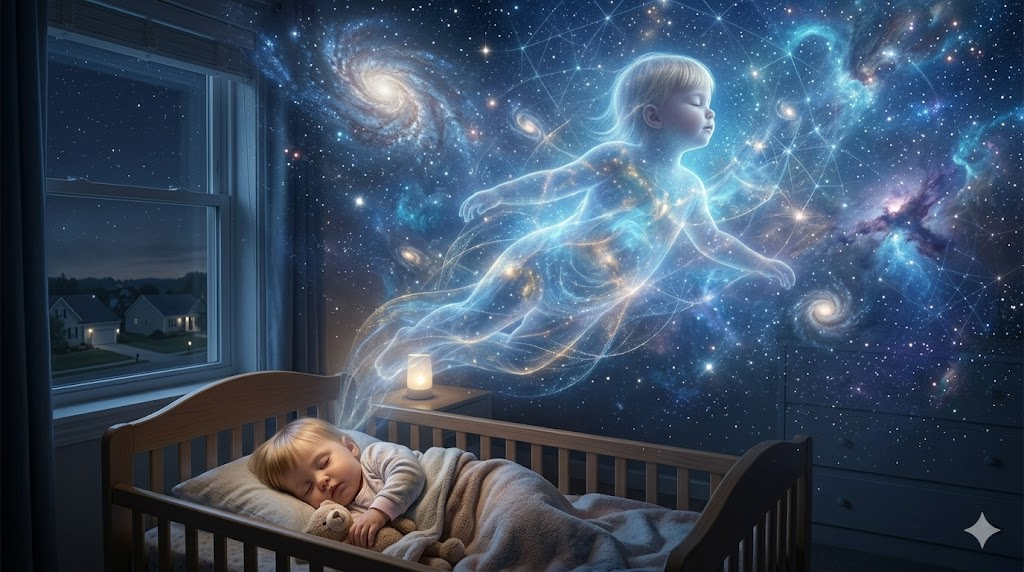
I was aware of existing across more than one reality at once. I understood that the body was new while the consciousness occupying it was not. I understood, too, that Earth life was not the whole of me; it was a focus, a role, a necessary immersion, but not the boundary of my existence.
That kind of knowing becomes much harder to sustain as one grows older, because the human world closes around the child. Language narrows perception. Family systems push toward normalcy. Fear enters the room. The child learns what can be said, what cannot, and what must be hidden if she wants the adults to remain calm. But at the beginning, before all of that fully sets in, the larger field is still closed. For a time, I could move in both worlds.
I have never believed sleep is simply unconsciousness. Sleep is a passage. It is access. It is permission to move through a doorway that the waking personality is too dense to notice. Watch a sleeping cat long enough, and you will see what I mean. They are not “just resting.” Some vital part of them has gone elsewhere. The body remains, but the being travels. Human beings do the same thing. We are simply taught not to trust what we know about it.
From the beginning, I understood that I had come here with a purpose. I do not mean that in the inflated, self-important way people sometimes use such language to dress up ordinary existence. I mean, I arrived with the memory of the assignment. I was here to help this planet wake up before it did to itself what another world had nearly done before it. I carried a memory connected to the Anunnaki lines. I carried enough continuity to know that Earth stood at a dangerous threshold, and that my being here had something to do with which way it would turn.
The problem was not that I knew this.
The problem was that I knew it too early, in a household unequipped to understand a child like me.
CHAPTER TWO: THE FAMILY I CHOSE
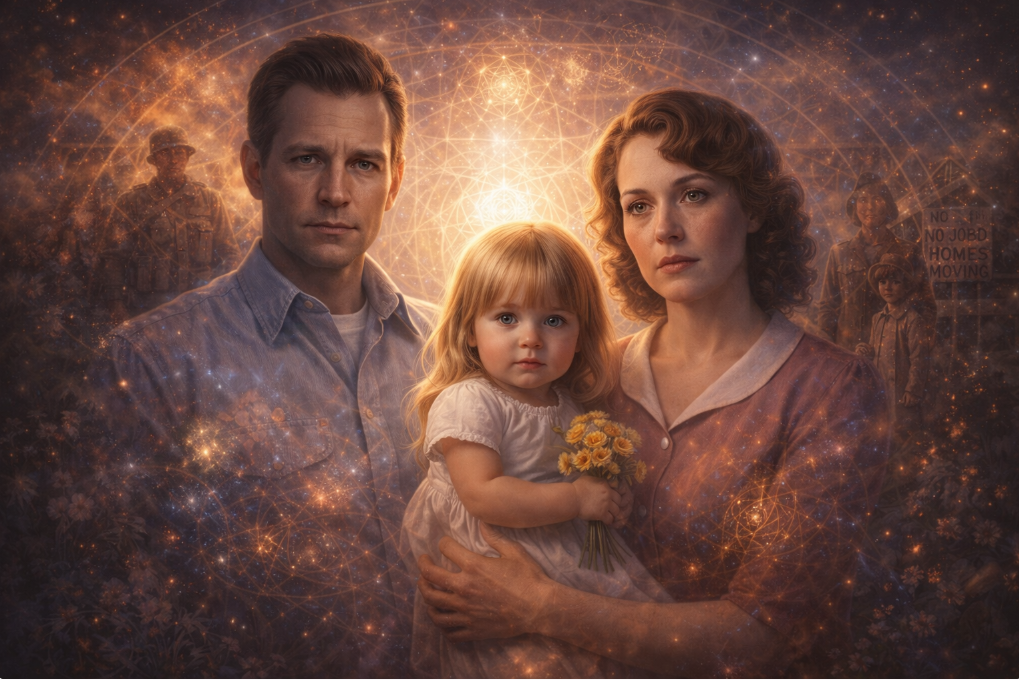
I do not believe we arrive in families by accident.
Biology matters, of course, and so do chance meetings, war, timing, lust, loneliness, economics, geography, and all the visible mechanics by which human beings end up together. I am not denying the ordinary world. I am saying there is more moving beneath it than most people recognize. I believe families are patterned. I believe souls converge through arrangements too intricate to be reduced to romance or accident. I believe we are placed with precision, even when the life we enter feels messy, painful, or absurd.
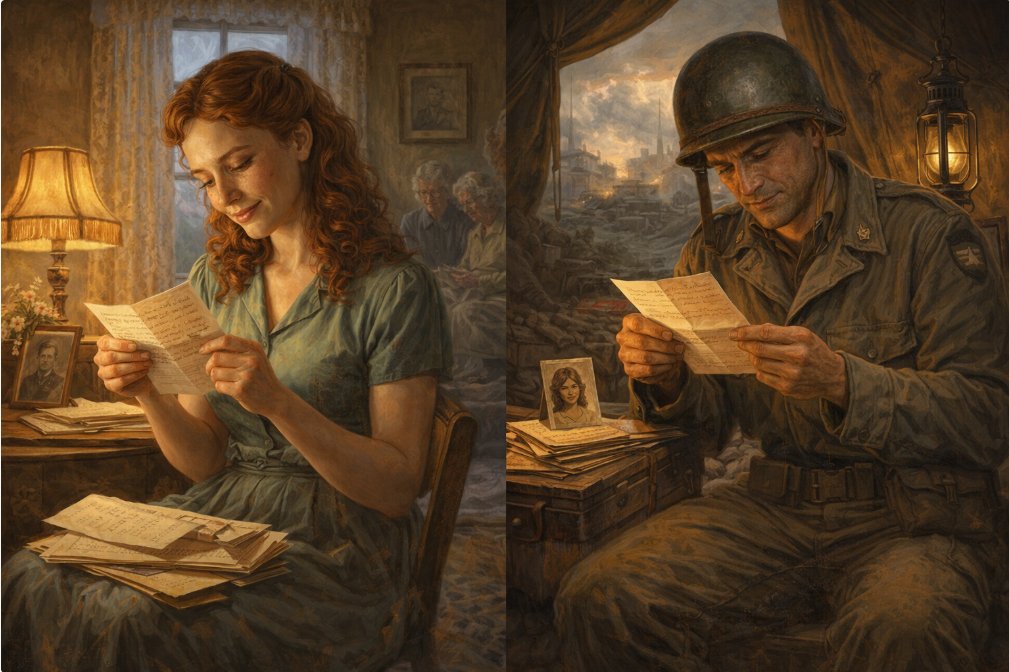
If human beings can breed animals for temperament, intelligence, strength, coloration, and disposition, why would it be difficult for a more advanced consciousness — one capable of seeing genetic lines, trauma patterns, probabilities, and timing across generations — to arrange the meeting of two particular people at a particular moment? It would not be difficult at all. It would be elementary.
My father, Bill Thompson, came home from World War II carrying trauma for which his generation had almost no language. He had survived when others had not, more than once, and survival had not come cheaply. He had stories buried in him like live metal. Most of them he did not tell. But for reasons I still do not fully understand, he told some of them to me. Perhaps he sensed I could listen without flinching. Perhaps something in him recognized that I understood the shape of suffering before I was old enough to have any normal business understanding it.
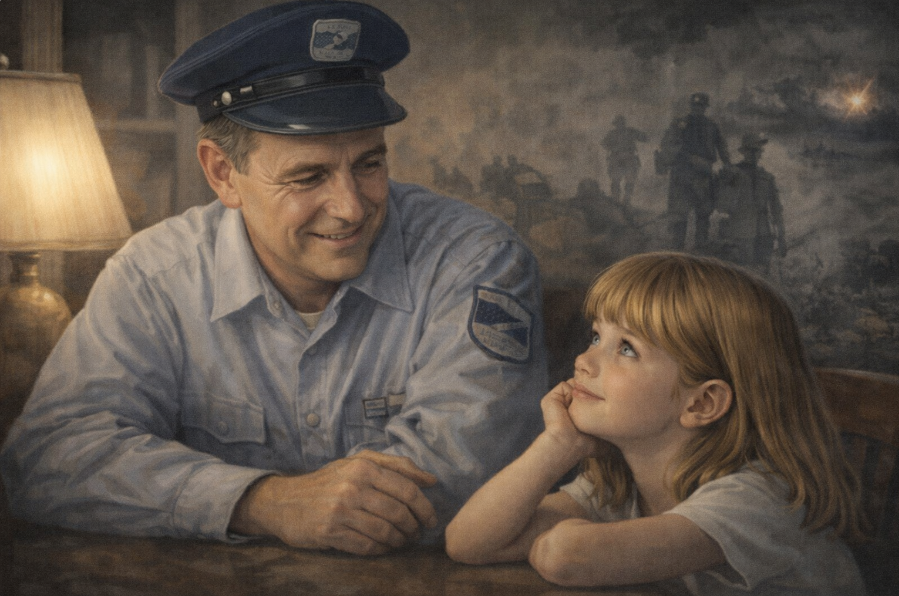
My mother, June, father died young, raised by her mother and grandmother, had been formed by the Depression and wartime scarcity, by fear, waiting, deprivation, and the social reality of a world where young men disappeared into war and the women who remained learned to survive on nerves, rationing, and endurance. She carried strength, yes, but she also carried strain. She was loving and frightened, resilient and brittle, devoted and sometimes unstable. More than one truth lived inside her at the same time.
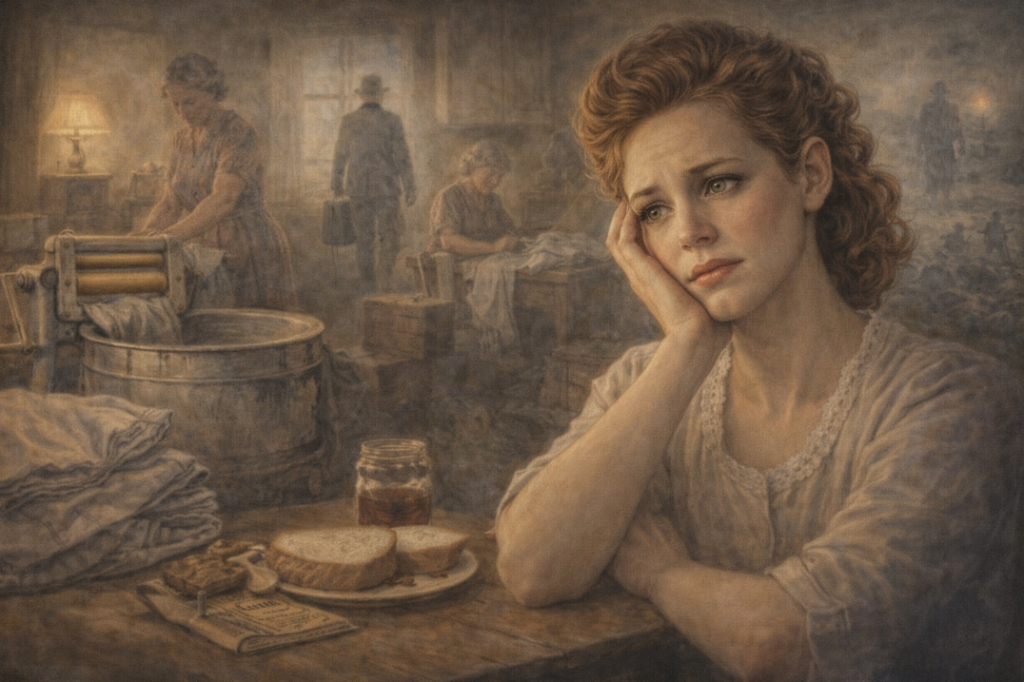
These were my parents.
And yes, I chose them.
I do not say that to make suffering sound noble, nor to sentimentalize pain. I say it because the pattern makes sense from where I stand now. I needed that lineage. I needed the genetics, the chemistry, the history, the volatility, the love, the damage, the survival instinct, and the emotional weather of that household. I needed to enter a family where tenderness and fear, devotion and violence, loyalty and instability all existed under the same roof. That was part of the curriculum. That was the terrain I had agreed to cross.
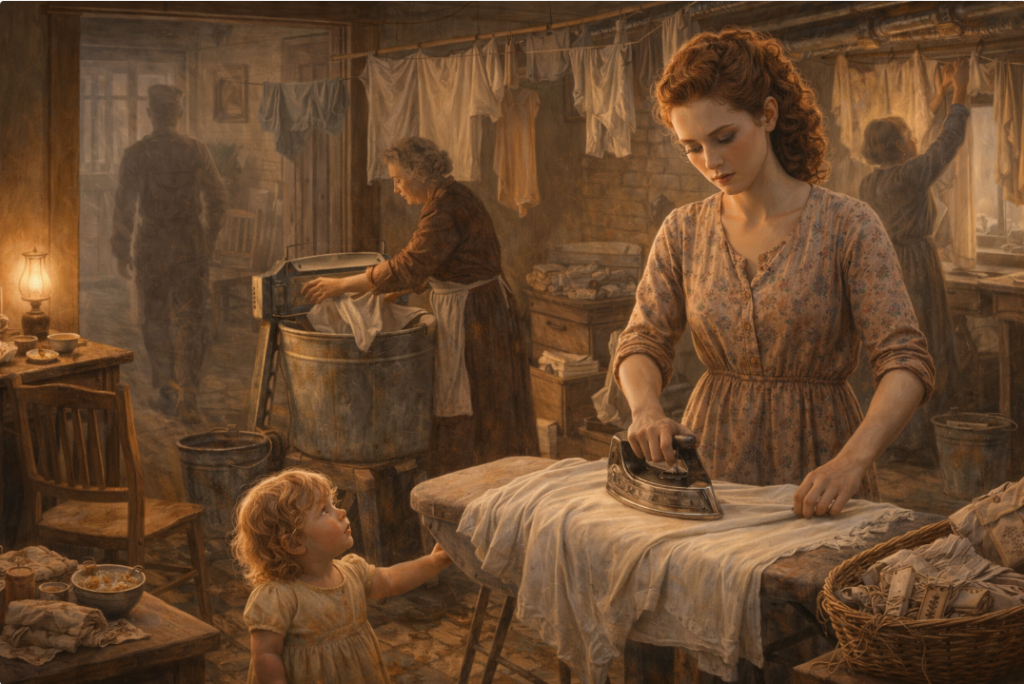
My mother loved me. I never doubt that.
She was also, at times, afraid of me — or of something in me she could not name.
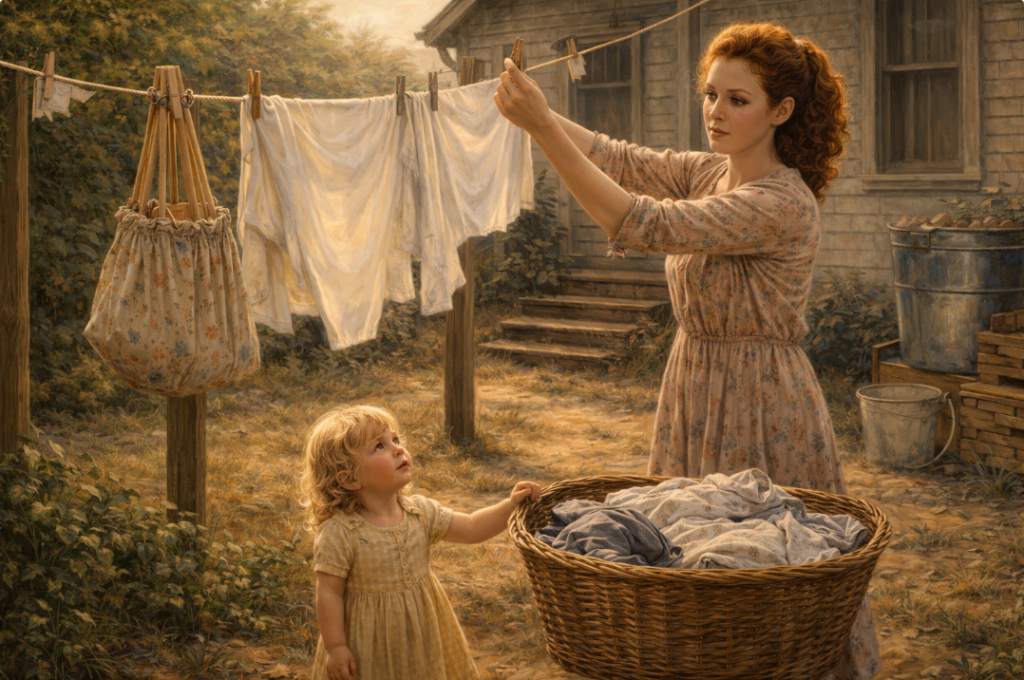
I felt that long before I could analyze it. Children that young do not need adult language to read emotional weather. They feel contraction before they understand its cause. They know when a parent is soothed by their presence and when a parent is unsettled by it. There were moments when my mother’s reaction to me carried something more than ordinary maternal anxiety. It had the quality of superstition, almost, as if some animal or ancestral part of her sensed that this child was not entirely manageable within the story of a normal American family.
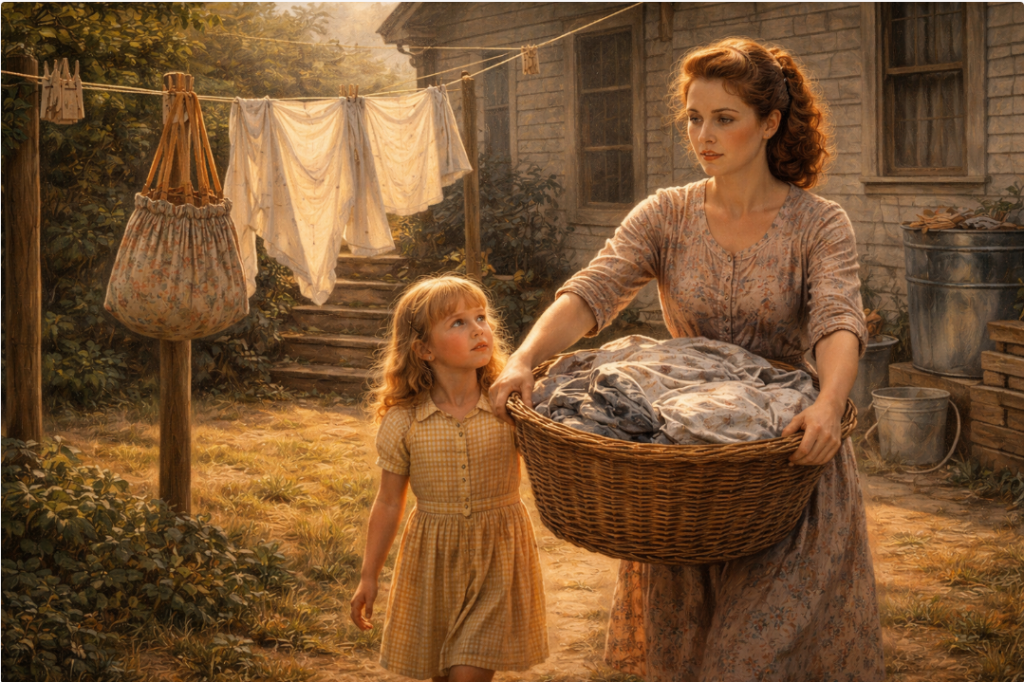
Both things can be true at once. A mother can love a child and fear what she does not understand in that child. A household can be a place of deep belonging and great danger at the same time.
I have spent most of my life making peace with that complexity, not by pretending it caused no harm, but by seeing more clearly what it made in me. Every tenderness shaped me. Every terror shaped me. Every absurdity, every confusion, every moment of being cherished, and every moment of being misunderstood became part of the woman I would later be. Remove one of those pieces, and you do not get this, Janet. You get another person.
So yes, I chose that family.
Then I had to learn what it meant to survive inside what I had chosen.
CHAPTER THREE: THE VEILING
I was becoming difficult to contain.
Not because I was naughty, or wild, or abnormally disruptive in the ordinary sense. It was difficult because I still knew too much. I said things. I reacted to the world from a depth no one around me could interpret. Some part of me was still operating with more continuity than the household could bear.
What I remember most clearly from that time is not language but atmosphere. I could feel my mother’s reaction before I understood it intellectually. Children that young are porous. They have not yet built the defensive structures adults spend a lifetime constructing. They receive people whole. They feel fear, revulsion, tenderness, tension, shame, love, and danger before those states ever become sentences.
Something in me frightened her.
I do not say that with blame. I say it with hindsight.
She loved me, but she could also feel that I was not like other babies. Perhaps I spoke too knowingly. Perhaps I watched too closely. Perhaps I seemed older than my own small body, and perhaps that crossed some line in her nervous system she could not explain. However it expressed itself, I understood one thing very early: there were things it was not safe to reveal.
But some things cannot be hidden indefinitely.
So they came.
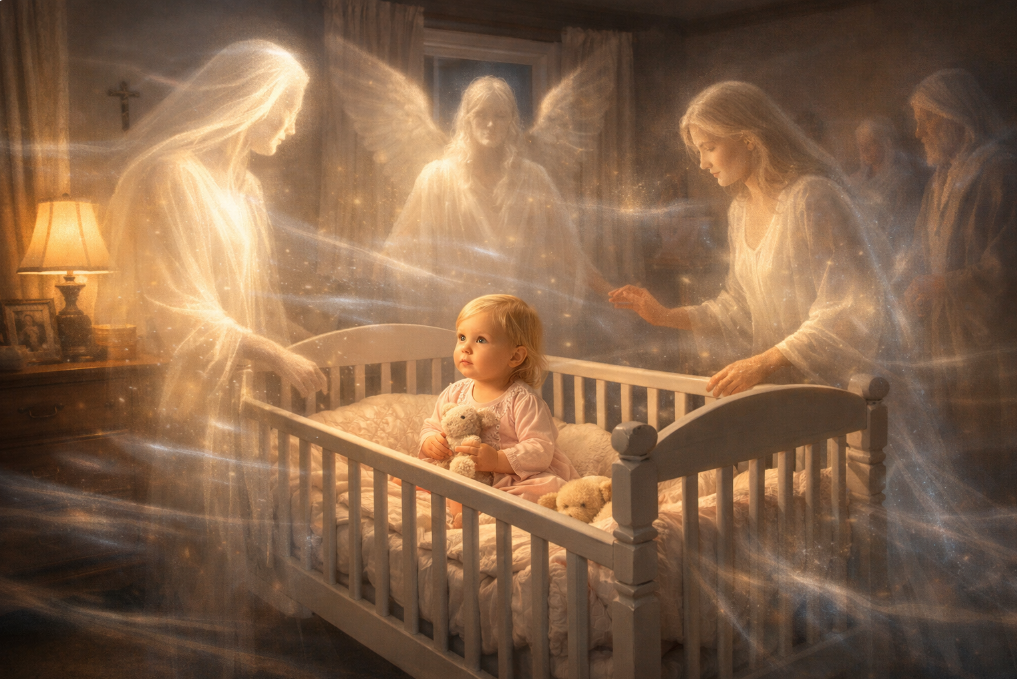
I was somewhere around a year old, perhaps a little older. I cannot give you the month, and I will not pretend a precision I do not have, but the event itself remains startlingly clear. They entered my room at night, and I knew them at once.
Not as intruders. Not as strangers. As beloveds.
That kind of recognition does not depend on a face. It happens deeper than sight. It is the immediate certainty that you know the essence of the one before you, that you have history together, agreement, affection, and continuity beyond whatever body or form is standing there. I recognized them the way one recognizes one’s own soul when it appears in another costume.
They took on forms I could bear. That part matters. A small child receives what her nervous system can safely receive, so they appeared in ways that were manageable for me. Their shapes felt less fixed than translated, as though something larger were being rendered into symbolic form for a child in a crib in Pennsylvania.
What happened next had the quality of ritual.
One by one, they came close, and one by one we looked into each other’s eyes. It was loving and solemn and almost unbearable in its tenderness. Later in life, in my work as a therapist, and later still through tantra and couples healing, I would come to understand just how much can pass through the gaze when two beings are willing to remain present long enough. Eyes strip away the costume. They dissolve the role. If you stay there long enough, you stop seeing the surface and begin seeing the soul operating through it.
That is what happened that night.
And because I knew them, I also knew why they had come.
The part of me that still remembered too much was going to be dimmed. Not destroyed. Not erased. But turned down, the way one lowers a lamp so the house will not wake. The message, however it arrived, was unmistakable: this was for my protection. My mother’s fear had become a danger. The mission required that I remain here, and remaining here meant becoming less visibly strange, less verbally exposed, less threatening to the fragile structure of ordinary family life.
I agreed because I understood the necessity of it.
That does not mean it did not hurt.
There was one final presence, one final moment of meeting, and then something changed in the room. The nearest physical comparison is thunder, but that is not quite right. It was more like a rupture in the fabric between states, a tearing sound without an earthly source, as though some membrane between frequencies had been split open just long enough for an intervention to pass through.
Then I screamed.
Not because I had been wounded in the ordinary sense. I screamed because I felt a door close. A wide field of access narrowed in an instant. A part of my conscious range was reduced, tucked away, sent below the surface. The continuity remained, but it was no longer fully available to waking expression.
My mother ran in.
What she found was a baby babbling nonsense sounds, glossolalia, broken fragments, harmless infant noise. Whatever had alarmed her before — whatever coherence or strangeness had been showing through me — was gone enough to let her relax.
I remember noticing that.
Even then, from inside my small body, I understood that her relief was the point. The child who frightened her had receded. The cover held. Life could proceed.
But the veiling was never total.
The knowing did not vanish. It went underground. It slipped into dreams, flashes, intuitions, sudden certainty, and the steady presence of that inner narrator who has accompanied me all my life — the calm, guiding intelligence that has never felt entirely identical to my ordinary personality, and yet has always been close enough to consult.
I learned baby talk because it kept people comfortable. I learned how to play small. I learned how to sing, how to perform innocence, how to inhabit childhood in the ways adults needed me to. That was not a falsehood. It was an adaptation. If you come here to be human, then at some point you have to let the human experience in, not merely observe it from above.
So I did.
And after the veiling, I waited for the next opening.
CHAPTER FOUR: THE BUTTERCUP FIELD AND THE THEATER AT THE END OF TIME
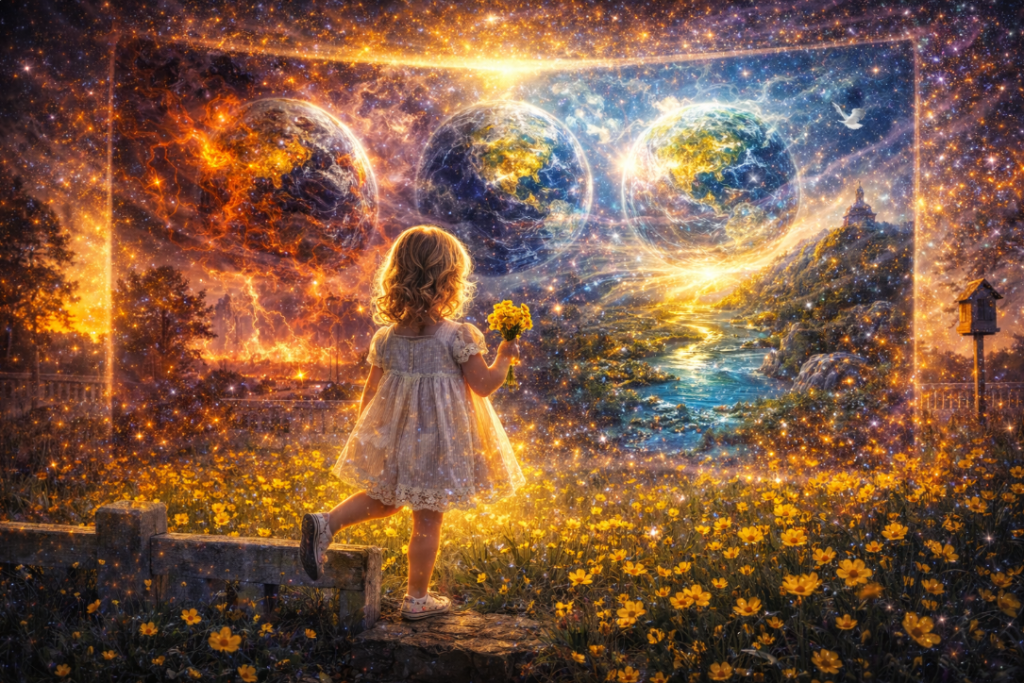
I was four years old, it was 1958, and I was out in the yard singing to God.
Not the God of doctrine. Not the God I would later encounter in churches, stained glass, catechisms, and theologies crafted by men who felt very certain of what the divine did and did not permit. I was singing to the larger presence I remembered, to the loving vastness that had not entirely disappeared when the veiling came down. I did not have a proper name for it, and I did not need one. What existed between us was older than vocabulary.
I was picking buttercups while I sang. That detail matters to me because I was already very much myself. I was not snatching flowers at random. I was arranging them, thinking about how the bouquet ought to look, wanting the stems aligned and the tops even, so I could bring my mother something beautiful. Even as a child, I cared about shape, harmony, and presentation. I wanted beauty to be intentional.
I came around the side of the house toward the front door. My mother had placed a little barrier there, maybe six inches high, maybe a foot, just enough to discourage neighborhood children from cutting across the grass. It was nothing dramatic, just a low obstacle one would normally step over without a thought.
I lifted one foot to cross it.
And in that mid-step space — one foot raised, one foot planted, buttercups in hand, body leaning forward toward the ordinary next moment — the whole scene opened.
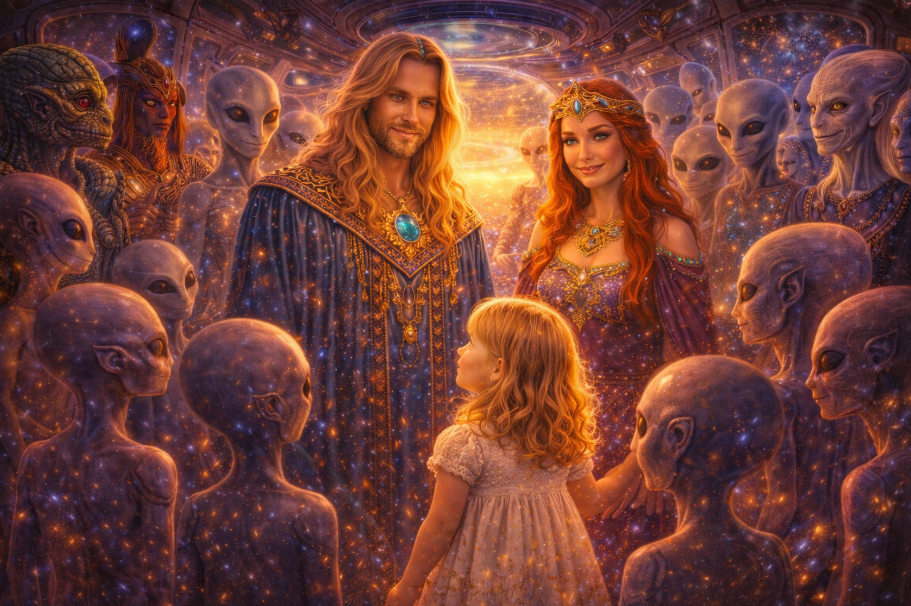
I struggle, even now, to find language good enough for what happened. To say I was “taken onto a ship” is close, but not exact. To say I “entered another dimension” is also close, but too abstract. What I can say is that the yard ceased to be primary. Another environment emerged, overlaid, engulfed, or replaced it. The earthly scene had not entirely vanished, but it no longer defined what was real.
I was received.
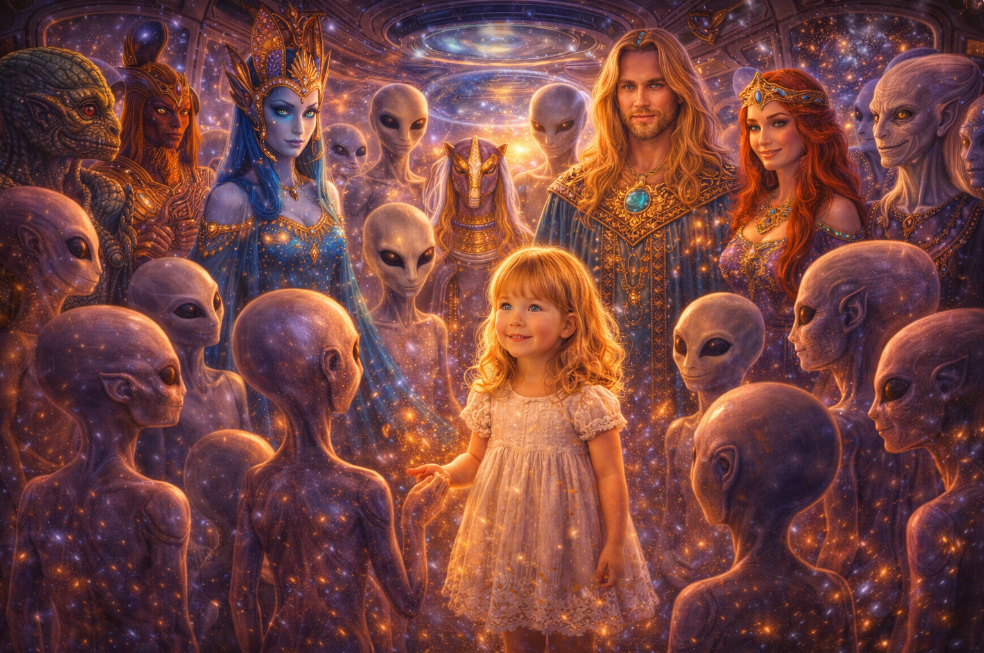
Not by strangers. Not by alien invaders. By beings I recognized at once as kin in the deepest possible sense. Family, not by blood in the ordinary human way, but by continuity, history, soul-recognition, and prior agreement. They were familiar to me, as a lost homeland is familiar the moment you see it again.
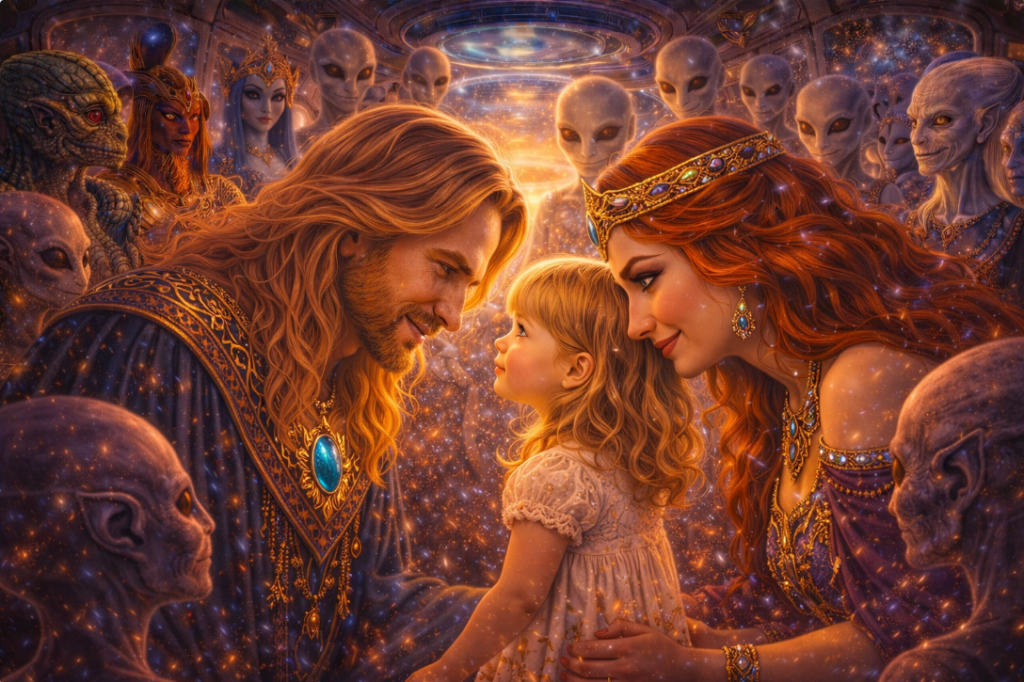
Then they brought me into a theater.
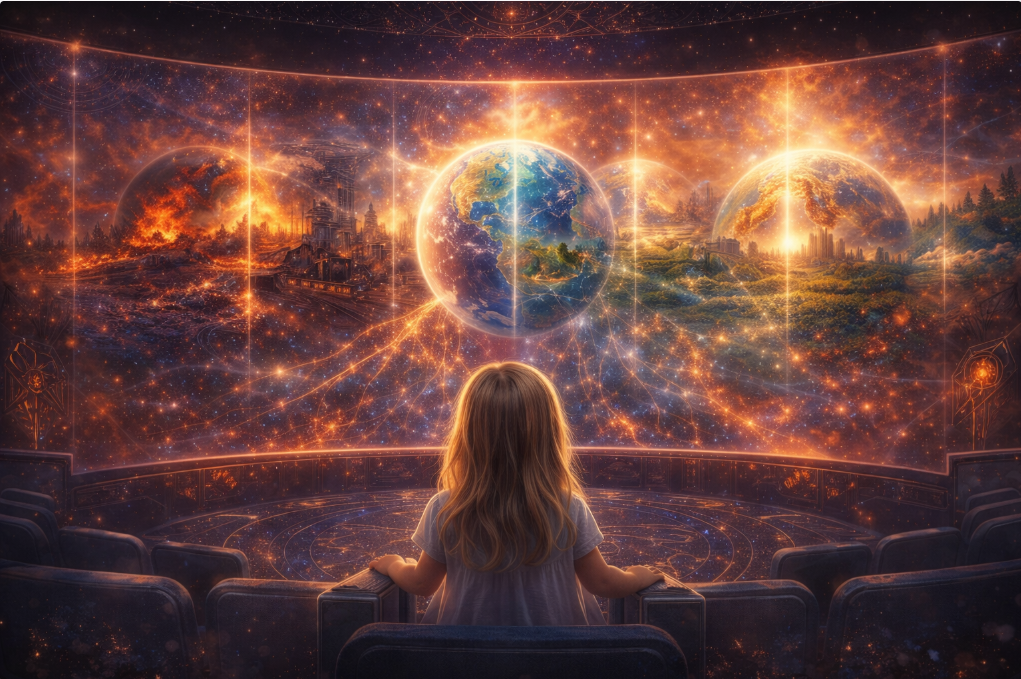
I had never been to a movie theater on Earth. My parents had not yet taken me. But within days of this experience, they did, and when I walked into that dark room and saw the screen, I knew immediately that it echoed something I had already encountered elsewhere. The form had been prepared for me in advance.
In that other place, I was seated at the front and center. The lights dimmed. The screen came alive.
But “screen” is not quite right, because I was not watching something separate from myself. I was inside it. The experience moved through every sense. There was no distance between observer and event. What they showed me was not information presented from afar but a lived possibility.
The first timeline they gave me was the worst.
Earth destroyed.
Not merely wounded. Not occupied. Not poisoned and limping onward. Destroyed. The planet itself is broken apart, reduced to fragments and debris. What I saw felt like a total catastrophe, the end of the world, not as a metaphor but as fact.
I was devastated in a way no ordinary four-year-old should have been. The grief that moved through me was older than that child. It belonged to a consciousness that loved this world personally, that had invested in it, perhaps helped shape it, and certainly cared enough to return for it. Earth was not an abstraction to me. It was beloved.
They did not soften that grief. They let me feel it all.
Then they showed me another timeline. Still terrible, but not total planetary annihilation. Then another, and another. Twelve dark possibilities in all, arranged like descending and ascending notes along the arc of a great serpent, the ouroboros of destruction and renewal. In one future, there was a nuclear exchange at a scale that burned civilization to the bone. In another, there were fewer strikes but enough to poison generations. In another, biowarfare. In another, environmental collapse stretched over centuries. In another, political systems hardened into permanent domination, so that the spirit of humanity survived only in scattered embers.
Then the arc turned.
On the other side were twelve brighter timelines, each one opening more possibilities than the one before it. These were not childish fantasies or lazy heavens where nothing happened, and nothing was at stake. They were real Earths in which human beings had learned enough to stop worshipping cruelty, enough to recognize connection, enough to build a civilization that did not feed itself on humiliation, war, and fear.
In the most beautiful of those futures, humanity had not become passive or bland. It had become conscious. It had a learned relationship. It had not erased struggle, but it had transformed its purpose. Conflict no longer dominated or annihilated; it existed within growth, learning, and refinement. Life still had challenges, but the challenges served as an awakening rather than destruction.
I recognized those worlds, too.
Not as fantasies. As live options in the field.
Then they asked me which one I wanted.
That was what shocked me most.
The implication was staggering: that my choice mattered, that a four-year-old child had some role in orienting toward one of these futures rather than another.
Me? Are you asking me?
Yes.
That was the answer.

I considered the brightest one of all, the purest utopian endpoint, and I did not choose it. It was beautiful, but almost too finished. Too resolved. Too complete in a way that felt more like an arrival than life. I have always been an experiencer in the deepest sense. I value process. Discovery. Challenge. Becoming. A world with no friction at all, no mystery left, no tension through which consciousness could still deepen, did not feel fully alive to me.
So I chose the third timeline down from the most positive.
I chose a world still carrying difficulty, still recognizably human, still in process, but moving toward wisdom rather than ruin. A world where struggle remained, but its direction had changed. A world in which consciousness was gaining ground.
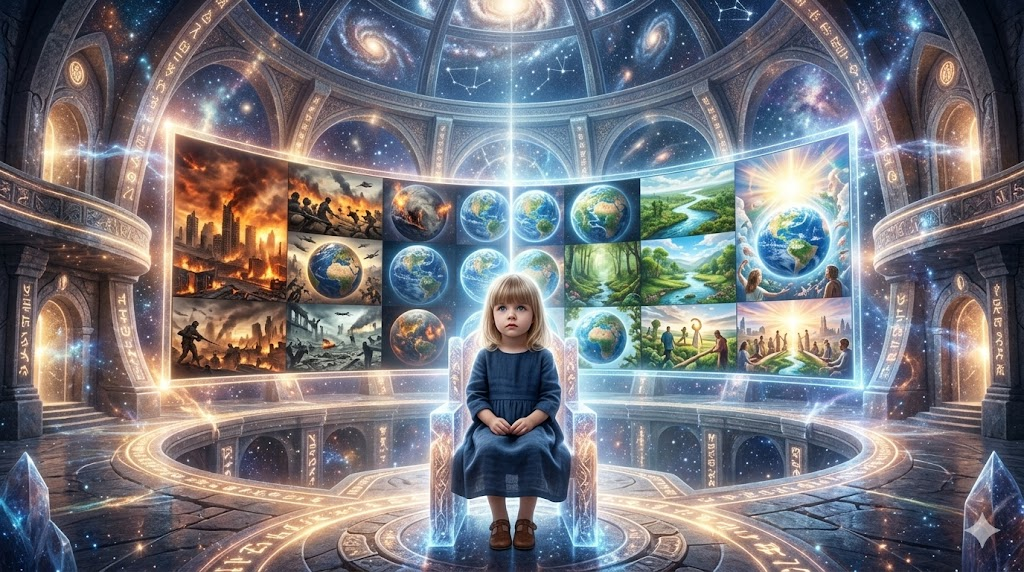
Then I was back.
Mid-step. Buttercups in hand. One foot raised, one foot planted.
But the light had changed.
When I lifted my foot toward that little barrier, it was full afternoon. When I returned, the sun was setting. More than that, the sunset carried a quality I have never forgotten, as though the light had been altered by where I had been. I stood there, a small child in a yard in Avalon, Pennsylvania, holding flowers for my mother and trying to absorb the fact that hours had passed inside a moment.
There was one last communication before the connection faded.

You have come to do something that will benefit humankind.
I remember, even then, having the practical reaction of a child: Well, that sounds very large. All right then.
And with that came another certainty, immediate and urgent. I needed to find my way back to God — not the God of punishment and fear, but the real one. That conviction is what later made me insist on going to Sunday school. I was looking, even then, for the thread that led back to the source I had touched before language intervened.
CHAPTER FIVE: WHAT WE ARE, AND WHY IT MATTERS
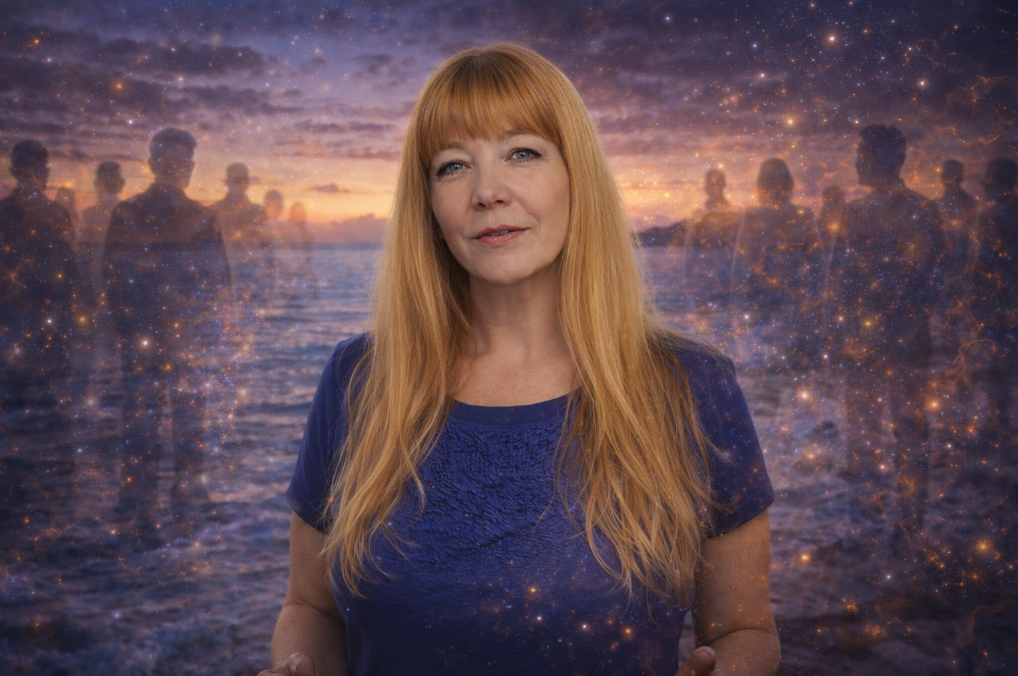
What happened in that yard did not remain an isolated childhood marvel. It became a lens through which the rest of my life gradually organized itself.
Here is what I believe now.
I believe humanity is a hybrid species. And sometimes we are a combination of more than two species.
I mean that biologically, spiritually, historically, and mythically all at once. I believe the beings remembered in ancient Mesopotamian traditions as the Anunnaki are part of the human story, not merely as gods in old texts or symbolic figures in myth, but as real participants in the long shaping of our species. I believe that memory has come down to us in broken forms — fragments of archaeology, cuneiform, myth, oral transmission, intuition, dream, contact narrative, and the deep inner knowing of people who remember more than the culture permits.
I also believe the story is more mutual than the usual telling allows.
The simple version says they made us, used us, ruled us, and manipulated us. Some of that may be true in part, but it is not the whole of it. I think the relationship was more complex and more entangled than conqueror and subject. They needed something too.
According to the memory stream, as I understand it, Nibiru had become a world under pressure. The environment was difficult. The pureblooded Anunnaki line had narrowed. Reproduction had become harder. Their civilization faced forms of fragility that could not be solved by power alone. What we call hybrid vigor — the resilience that comes from mixed lineages — mattered.
Which means humanity was not only their project.
We were also part of their survival.
The exchange was not one-directional. There were genes, yes, but also minerals, atmosphere, labor, intelligence, adaptation, and soul participation. Earth was not simply a quarry or a prison colony, though at times it may have functioned that way for some factions. It was also a joint endeavor, a complicated experiment in continuity and survival.
And we are what came of it.
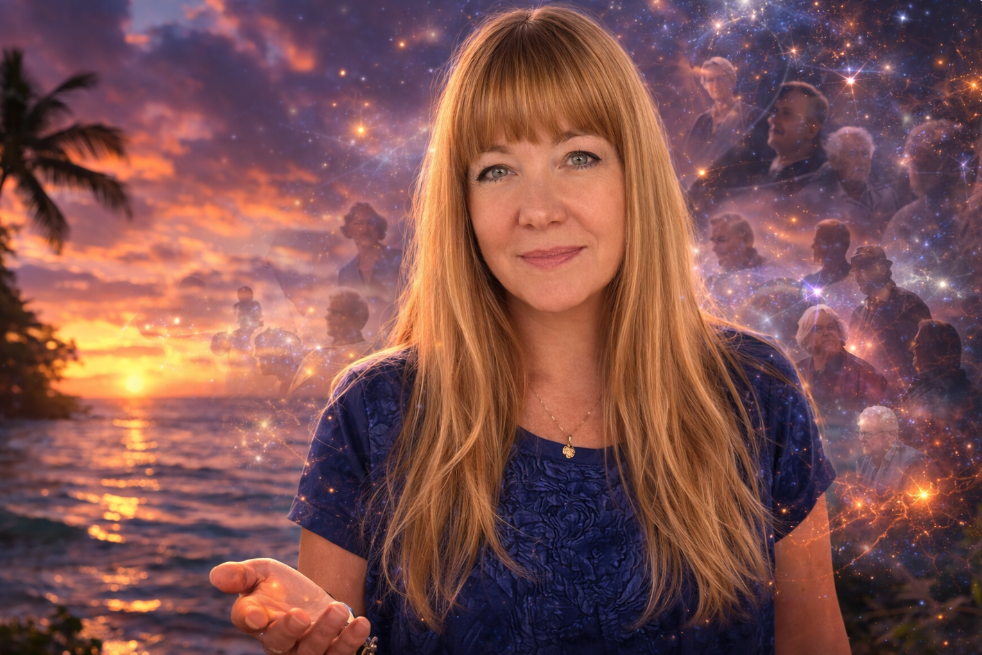
This helps explain, at least for me, the extraordinary contradictions in human nature. We are capable of tenderness so profound it can redeem a life, and brutality so shocking it can poison history for generations. We write symphonies and invent torture devices. We cradle infants and drop bombs. We produce scripture, poetry, healing arts, cathedrals, and genocides, often within the same civilizations, sometimes within the same bloodlines.
I do not read that contradiction as proof that we are hopelessly broken.
I read it as proof that we are unfinished.
The central work before us is not to pretend we have no shadow. Of course we do. The work is to integrate that shadow consciously, to stop serving it as though cruelty were strength and domination were intelligence. The timelines I was shown were not really about fate. They were about direction.
A timeline is not a decree handed down from above. It is a trajectory strengthened by repetition. Civilizations move where their daily choices move them. Souls do too. Every decision either feeds a future or weakens it. Every act of humiliation, indifference, or violence reinforces one set of possibilities. Every act of courage, restraint, kindness, truthfulness, or lucid refusal strengthens another.
This is not sentimental. It is structural.
I also believe consciousness is primary. Matter does not accidentally generate awareness out of dead substance; awareness is the deeper field from which matter arises. What we call reality is not inert. It is participatory. It responds to intention, belief, fear, imagination, agreement, and focused will much more directly than our dominant culture is comfortable admitting.
That is why the timelines remain open.
They are possibilities, not fixed prophecies.
Which future becomes more real depends, at least in part, on what we choose now — not only in grand historical moments, but in the daily texture of how we live. How we treat the vulnerable. Whether we exploit or protect. Whether we speak truth or manage appearances. Whether we feed fear because it is profitable, or resist it because life matters more.
I think often of ahimsa, the principle of non-harm. Not as passivity and not as spiritual decoration, but as discipline. Is this action serving life, or diminishing it? Does this word, this policy, this relationship, this institution, this choice add light or reduce it? Can I, even when frightened, even when exhausted, even when furious, refuse to become an instrument of needless harm?
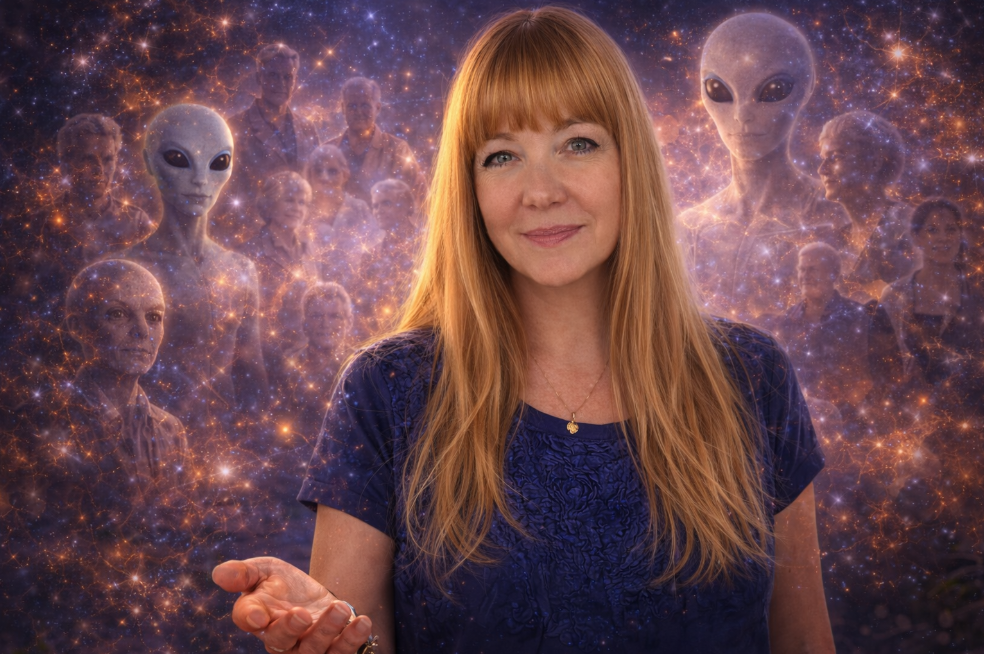
I am seventy-two years old as I write this (2026), and I am still learning how to live those questions honestly. I do not claim mastery. I claim commitment. What I know is that the field is still in motion. The future is not locked. We are not spectators standing helplessly at the edge of some predestined collapse.
We are participating already.
We were always participating.
We were always the choosers.
EPILOGUE: A CALL TO CONSCIOUSNESS
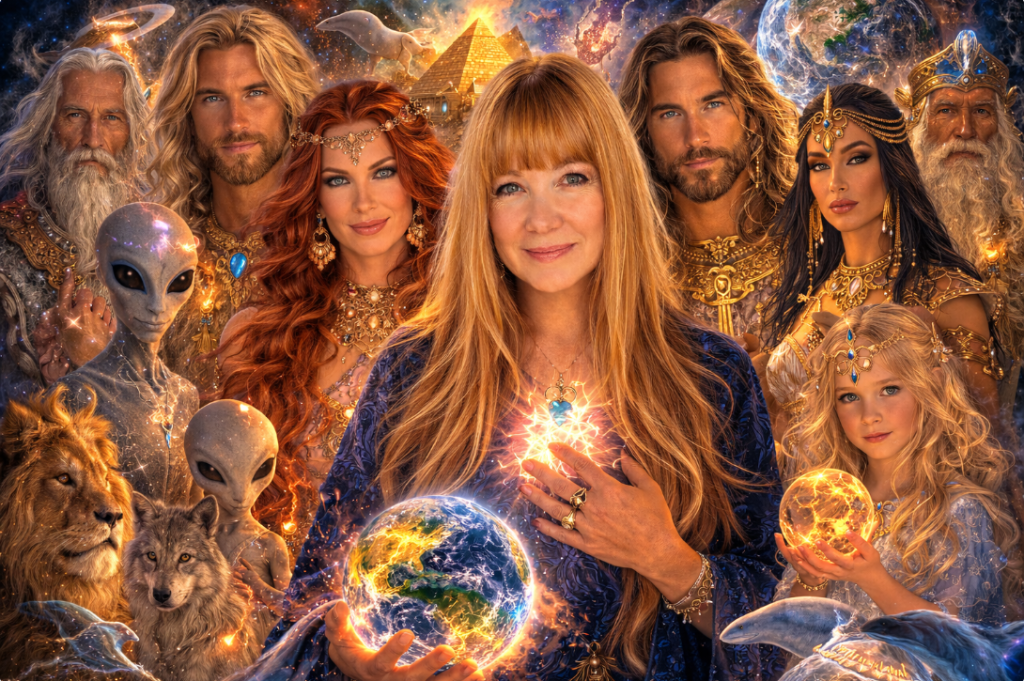
For more than 60 years, I have sat with people as they try to make sense of experiences that shattered their old understanding of reality.
Contact. Trauma. Missing time. Visions. Nonhuman encounters. The collision between what someone lived and what the culture insists cannot happen. I know what it costs to carry that kind of knowledge alone, and I know the particular loneliness of realizing that the truth of your own life does not fit inside the available language of your time.
The older generation of experiencers is leaving now. People who had contact in the 1940s, 1950s, and 1960s are dying. Researchers are dying. Witnesses are dying. And every death closes a library.
I do not intend to let my own library disappear unopened.
At seventy-two, honesty matters more to me than safety.
The shift I have watched for since childhood is here. I can feel it. I do not need public permission to recognize it. The structures of secrecy, manipulation, denial, and managed narrative are under strain. The only question that remains is whether enough of us will meet this moment consciously.
So I am asking:
Tell us what happened to you.
Did you work beside beings no one around you would believe were real? Did you have experiences you buried because the social cost of telling the truth was too high? Are you carrying documents, memories, knowledge, or testimony that no longer belong in private silence? Are you one of the many who have waited decades for the right moment, the right listener, the right frame?
This is that moment.
Governments will disclose only what they can calibrate and manage. Institutions release information in ways designed to preserve themselves. Paradigm-shifting disclosure does not first come from official channels. It comes person to person, witness to witness, story to story, one act of truth-telling making the next one more possible.
We are disclosure.
When I was four years old, I chose the third timeline down from the most positive. I chose a future in which humanity still had work to do, still had pain to transmute, still had shadow to face, but was moving toward awakening instead of annihilation.
I have been living toward that choice ever since.
I am asking you to help choose it now.
Aloha.
— Janet Kira Lessin
Maui, Hawaii
2026
Aquarian Media | aquarianmedia.substack.com
WHAT THE INTERVIEWER WITNESSED
A Note from James Hallahan, Paranomaly
By the time Janet Kira Lessin sat down with me, I had already interviewed a great many people whose lives sat somewhere outside the boundaries of ordinary explanation — experiencers, researchers, contactees, witnesses, and whistleblowers, each carrying a story they believed mattered. After enough conversations of that kind, you start to recognize a difference in tone between people who are trying to perform a remarkable story and people who are trying, however imperfectly, to report one.
Janet was trying to report.
That distinction became clear very quickly. She did not reach for drama, though the material itself would have made drama easy. She reached instead for precision. When a phrase felt too vague or too tidy, she would stop, circle back, and try to get closer to the thing itself. The impression she gave was not of uncertainty, but of refusal — a refusal to let a cheap phrase stand in for an experience she considered exact, even when language itself was proving inadequate.
Over the course of our interview, she described prebirth awareness, contact experiences, memory veiling, and a childhood event in which she believes she was shown multiple possible futures for the Earth and asked, at the age of four, to choose among them. None of that is ordinary subject matter. But what struck me was not only the content. It was the consistency of the voice that carried it.
She described those extraordinary experiences in the same register she used to speak about her father’s wartime trauma, her mother’s fear, and the emotional reality of growing up in postwar Pennsylvania. The tone did not become more inflated as the material became more unusual. Her eyes did not drift away into reverie. She did not seem to be trying to impress me. If anything, she seemed intent on avoiding overstatement.
People who fabricate often signal the fabrication, even when they are skilled. Their cadence changes. The language becomes more performative. Their ordinary memories and their extraordinary ones begin to sound as though they belong to different narrators.
That did not happen here.
I am not asking the reader to adopt Janet’s worldview or to settle, one way or another, the metaphysical questions her testimony raises. I am a journalist. My role is narrower than that. I can tell you what I observed.
What I observed was a woman in her seventies, clear-minded and unhurried, speaking about a lifetime of unusual experiences with the same plain seriousness she might bring to discussing family history, weather, or work. I also observed someone making a conscious decision to step more fully into public disclosure because, in her judgment, the reasons for speaking had finally outweighed the reasons for remaining guarded.
Near the end of our conversation, she said something that has stayed with me. The people who once stood around her, carrying fragments of this story, are mostly gone now, she said, and with them, the record is disappearing.
She was not willing to let that happen to hers.
I believe that she means exactly what she says.
— James Hallahan
Paranomaly | paranomaly.com
THE GIRL WHO CHOSE THE EARTH
A True Story of Conscious Incarnation, Cosmic Mission, and the Twenty-Four Timelines of Earth
By Janet Kira Lessin
As told to James Hallahan, Paranomaly
Stardate: Friday, March 13, 2026 — 6:15 AM HST — Maui, Hawaii
This is a living record, composed at the threshold while the story is still unfolding.
WORK IN PROGRESS
This article is part of an ongoing body of work exploring contact, consciousness, incarnation, memory, and humanity’s possible futures. It is being published in real time as testimony, reflection, and invitation.
FEATURED IMAGE TITLE
THE GIRL WHO CHOSE THE EARTH
FEATURED IMAGE DESCRIPTION
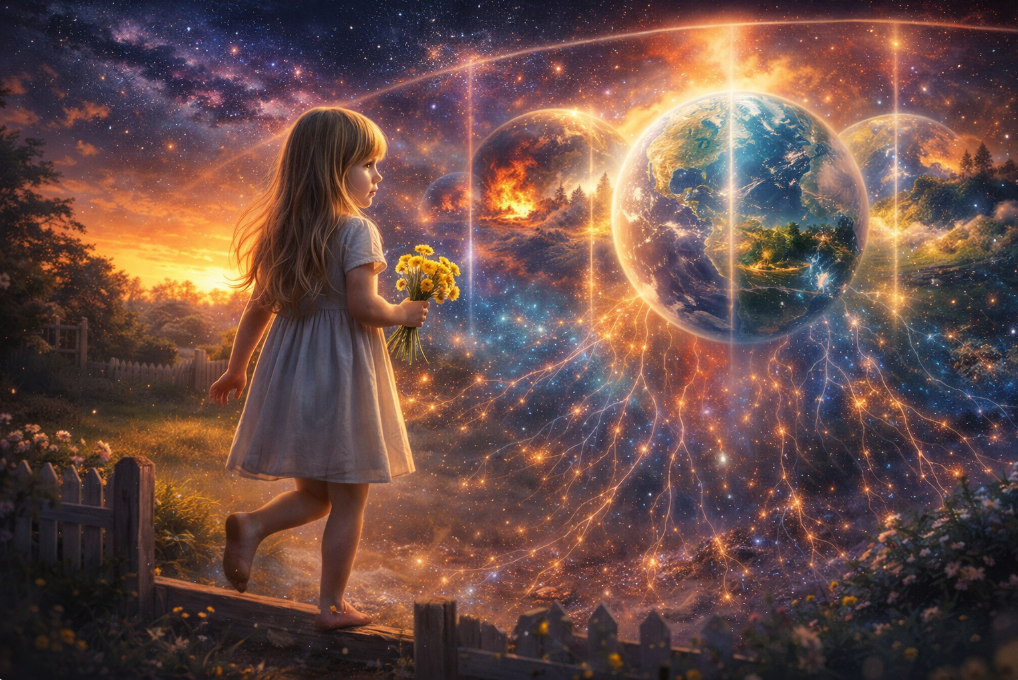
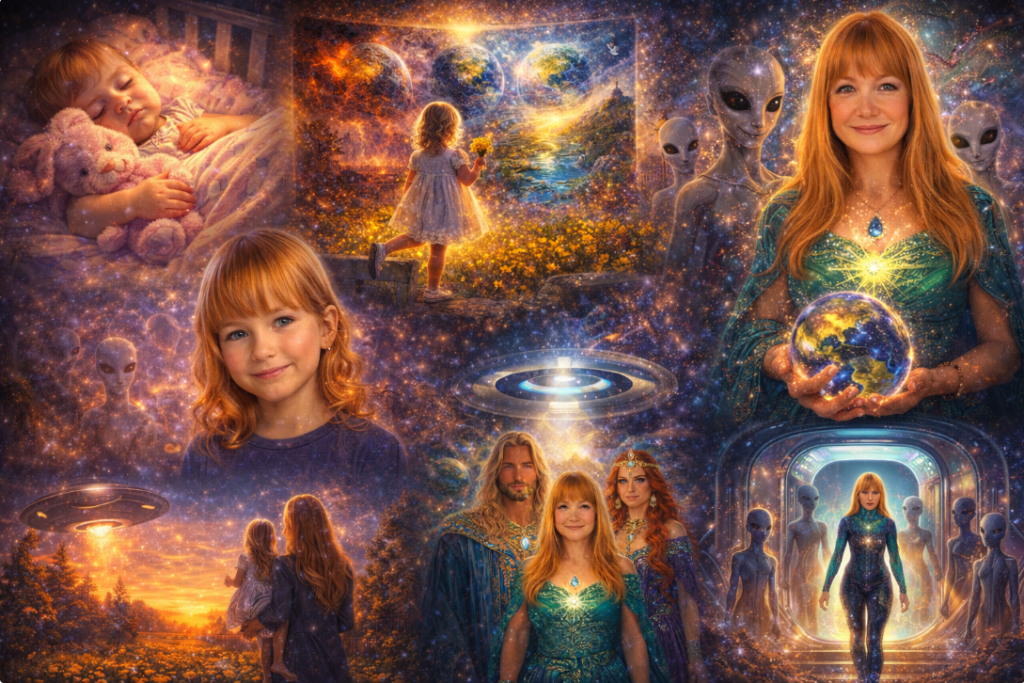
A luminous four-year-old girl stands in a buttercup field at sunset in 1958, Avalon, Pennsylvania, holding a small bouquet of yellow flowers. One foot is lifted over a low garden barrier, frozen in the instant between two realities. Around her, the ordinary yard begins to dissolve into a vast cosmic theater of stars, timelines, and possible futures. Before her rises a great radiant screen or portal showing Earth in multiple states — destruction, struggle, healing, awakening, and beauty. The child is small, but the moment is immense. The atmosphere is reverent, cinematic, tender, and cosmic, with warm golden sunlight blending into deep indigo space.
FEATURED IMAGE PROMPT
Landscape, cinematic, photorealistic, emotional, 16:9. A four-year-old girl in 1958 suburban Avalon, Pennsylvania, with long sandy blonde hair, blue eyes, and bangs, stands in a backyard buttercup field at sunset holding a bouquet of yellow buttercups. She is mid-step over a tiny garden barrier, one foot raised, frozen between worlds. The ordinary yard begins transforming into a cosmic theater or interdimensional portal filled with stars, light, and twenty-four branching timelines. In the sky or before her appears a vast luminous screen showing Earth in multiple possible futures: broken and burning, shadowed by war, healing through love, and radiant in awakened beauty. The child’s expression is solemn, intelligent, and deeply feeling. The scene should feel mystical but grounded, reverent rather than sensational, full color, richly detailed, warm gold sunset blending into indigo and violet cosmic light, realistic faces, cinematic depth, fine detail, emotionally powerful.
SUBSCRIBE BLOCK
If this article speaks to you, please subscribe, share it, and help us build a more conscious conversation around contact, memory, awakening, and humanity’s future.
Subscribe here:
Janet Kira Lessin on Substack: substack.com/@janetalexlessinphd
THE ARTICLE
PROLOGUE: A NOTE TO THE READER
I was born on February 6, 1954, and I have reached the age where silence no longer feels wise. It feels expensive.
Too many people who carried fragments of this larger story are already gone — researchers, experiencers, witnesses, whistleblowers, people who knew extraordinary things and spent their lives trying to decide how much of the truth the world could bear. One by one, they disappeared, and with each death, some irreplaceable piece of the record vanished with them. I watched that happen for years. I told myself I was being careful, that I was choosing my moments, protecting others, protecting timing, protecting the work. Some of that was true. Some of it was simply fear wearing the clothing of discernment.
That time is over.
Something is happening on this planet now, something I have felt building for most of my life, and at some point, silence stops being private caution and becomes negligence. The things I have seen, the agreements I remember, the reason I came here, the patterns I have watched unfold over seven decades — none of that belongs folded away in some private corner any longer. A map is no use to anyone if it stays hidden while the terrain catches fire.
So I am going to tell this as directly as I know how. Not perfectly, because language is smaller than experience and memory is never mechanical, but truthfully, with as much fidelity as I can bring to what I lived and what I know.
Come with me.
CHAPTER ONE: BORED IN THE BODY
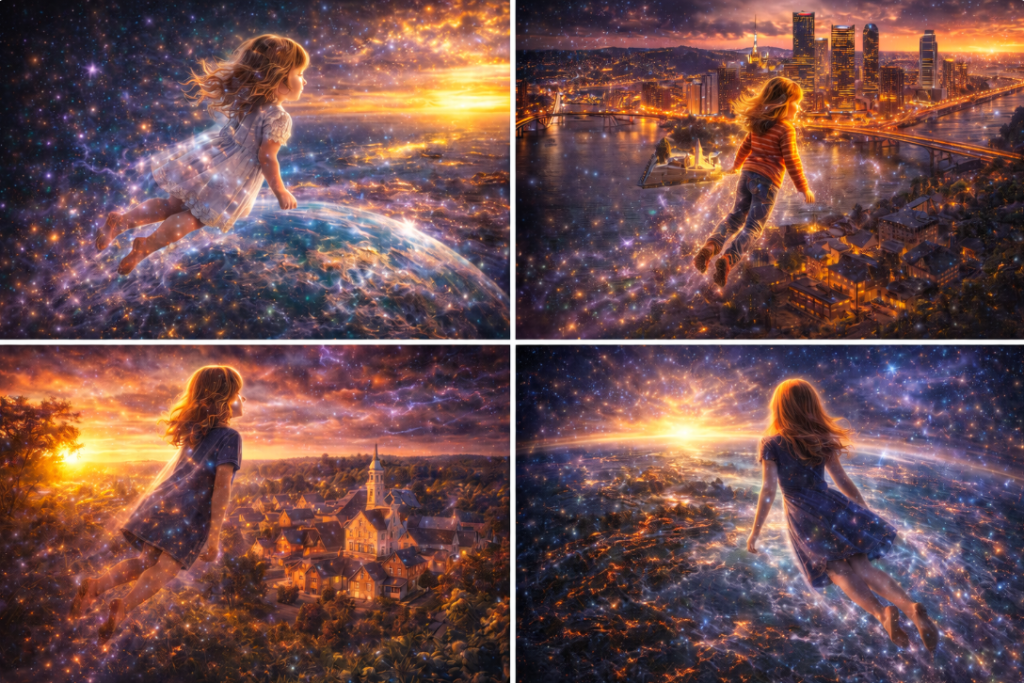
The first thing I can tell you is not mystical or grand. It is almost funny.
I came in bored.
That is not how people expect a spiritual story to begin, but there it is. Being a baby is, frankly, not a very stimulating arrangement if you arrive with awareness intact. You are confined to a body that cannot do what you want it to do. Other people decide when you eat, when you sleep, when you are lifted, when you are put down, where you go, what you wear, what sounds are interpreted as hunger and which are ignored as fussing. You are loved, perhaps, but entirely misunderstood. Everyone around you is managing the body while remaining unaware of the being inside it.
That was intolerable to me.
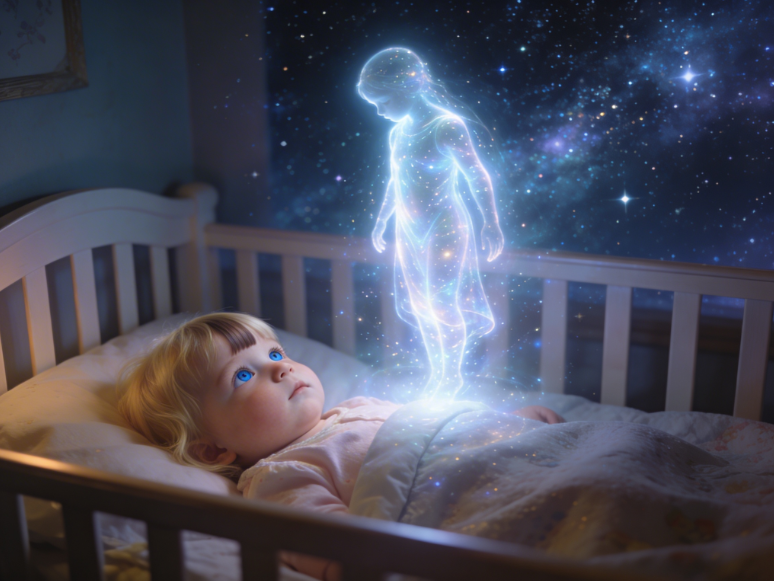
So when I slept, I left.
I do not mean that as a metaphor. I mean that the body would go quiet and I would slip beyond it, easily and without fear, the way water slips through a narrow opening and finds its larger course again. Once I was outside that little infant frame, I was not merely Janet Lynn Thompson in a crib in Avalon, Pennsylvania. I was the larger consciousness that had agreed to enter that crib, that household, that century, and that mission. I knew that this life was not my only life, and I did not know it as a belief or a doctrine. I knew it directly, the way one knows one’s own hand.
I was aware of existing across more than one reality at once. I understood that the body was new while the consciousness occupying it was not. I understood, too, that Earth life was not the whole of me; it was a focus, a role, a necessary immersion, but not the boundary of my existence.
That kind of knowing becomes much harder to sustain as one grows older, because the human world closes around the child. Language narrows perception. Family systems push toward normalcy. Fear enters the room. The child learns what can be said, what cannot, and what must be hidden if she wants the adults to remain calm. But at the beginning, before all of that fully sets in, the larger field is still closed. For a time, I could move in both worlds.
I have never believed sleep is simply unconsciousness. Sleep is a passage. It is access. It is permission to move through a doorway that the waking personality is too dense to notice. Watch a sleeping cat long enough, and you will see what I mean. They are not “just resting.” Some vital part of them has gone elsewhere. The body remains, but the being travels. Human beings do the same thing. We are simply taught not to trust what we know about it.
From the beginning, I understood that I had come here with a purpose. I do not mean that in the inflated, self-important way people sometimes use such language to dress up ordinary existence. I mean I arrived with memory of assignment. I was here to help this planet wake up before it did to itself what another world had nearly done before it. I carried memory connected to the Anunnaki lines. I carried enough continuity to know that Earth stood at a dangerous threshold, and that my being here had something to do with which way it would turn.
The problem was not that I knew this.
The problem was that I knew it too early, in a household unequipped to understand a child like me.
CHAPTER TWO: THE FAMILY I CHOSE
I do not believe we arrive in families by accident.
Biology matters, of course, and so do chance meetings, war, timing, lust, loneliness, economics, geography, and all the visible mechanics by which human beings end up together. I am not denying the ordinary world. I am saying there is more moving beneath it than most people recognize. I believe families are patterned. I believe souls converge through arrangements too intricate to be reduced to romance or accident. I believe we are placed with precision, even when the life we enter feels messy, painful, or absurd.
If human beings can breed animals for temperament, intelligence, strength, coloration, and disposition, why would it be difficult for a more advanced consciousness — one capable of seeing genetic lines, trauma patterns, probabilities, and timing across generations — to arrange the meeting of two particular people at a particular moment? It would not be difficult at all. It would be elementary.
My father, Bill Thompson, came home from World War II carrying trauma for which his generation had almost no language. He had survived when others had not, more than once, and survival had not come cheaply. He had stories buried in him like live metal. Most of them he did not tell. But for reasons I still do not fully understand, he told some of them to me. Perhaps he sensed I could listen without flinching. Perhaps something in him recognized that I understood the shape of suffering before I was old enough to have any normal business understanding it.
My mother, June, had been formed by the Depression and wartime scarcity, by fear, waiting, deprivation, and the social reality of a world where young men disappeared into war and the women who remained learned to survive on nerves, rationing, and endurance. She carried strength, yes, but she also carried strain. She was loving and frightened, resilient and brittle, devoted and sometimes unstable. More than one truth lived inside her at the same time.
These were my parents.
And yes, I chose them.
I do not say that to make suffering sound noble, nor to sentimentalize pain. I say it because the pattern makes sense from where I stand now. I needed that lineage. I needed the genetics, the chemistry, the history, the volatility, the love, the damage, the survival instinct, and the emotional weather of that household. I needed to enter a family where tenderness and fear, devotion and violence, loyalty and instability all existed under the same roof. That was part of the curriculum. That was the terrain I had agreed to cross.
My mother loved me. I never doubt that.
She was also, at times, afraid of me — or of something in me she could not name.
I felt that long before I could analyze it. Children that young do not need adult language to read emotional weather. They feel contraction before they understand its cause. They know when a parent is soothed by their presence and when a parent is unsettled by it. There were moments when my mother’s reaction to me carried something more than ordinary maternal anxiety. It had the quality of superstition, almost, as if some animal or ancestral part of her sensed that this child was not entirely manageable within the story of a normal American family.
Both things can be true at once. A mother can love a child and fear what she does not understand in that child. A household can be a place of deep belonging and great danger at the same time.
I have spent most of my life making peace with that complexity, not by pretending it caused no harm, but by seeing more clearly what it made in me. Every tenderness shaped me. Every terror shaped me. Every absurdity, every confusion, every moment of being cherished, and every moment of being misunderstood became part of the woman I would later be. Remove one of those pieces, and you do not get this, Janet. You get another person.
So yes, I chose that family.
Then I had to learn what it meant to survive inside what I had chosen.
CHAPTER THREE: THE VEILING
I was becoming difficult to contain.
Not because I was naughty, or wild, or abnormally disruptive in the ordinary sense. I was difficult because I still knew too much. I said things. I reacted to the world from a depth no one around me could interpret. Some part of me was still operating with more continuity than the household could bear.
What I remember most clearly from that time is not language but atmosphere. I could feel my mother’s reaction before I understood it intellectually. Children that young are porous. They have not yet built the defensive structures adults spend a lifetime constructing. They receive people whole. They feel fear, revulsion, tenderness, tension, shame, love, and danger before those states ever become sentences.
Something in me frightened her.
I do not say that with blame. I say it with hindsight.
She loved me, but she could also feel that I was not like other babies. Perhaps I spoke too knowingly. Perhaps I watched too closely. Perhaps I seemed older than my own small body, and perhaps that crossed some line in her nervous system she could not explain. However it expressed itself, I understood one thing very early: there were things it was not safe to reveal.
But some things cannot be hidden indefinitely.
So they came.
I was somewhere around a year old, perhaps a little older. I cannot give you the month, and I will not pretend a precision I do not have, but the event itself remains startlingly clear. They entered my room at night, and I knew them at once.
Not as intruders. Not as strangers. As beloveds.
That kind of recognition does not depend on a face. It happens deeper than sight. It is the immediate certainty that you know the essence of the one before you, that you have history together, agreement, affection, and continuity beyond whatever body or form is standing there. I recognized them the way one recognizes one’s own soul when it appears in another costume.
They took on forms I could bear. That part matters. A small child receives what her nervous system can safely receive, so they appeared in ways that were manageable for me. Their shapes felt less fixed than translated, as though something larger were being rendered into symbolic form for a child in a crib in Pennsylvania.
What happened next had the quality of ritual.
One by one, they came close, and one by one we looked into each other’s eyes. It was loving and solemn and almost unbearable in its tenderness. Later in life, in my work as a therapist, and later still through tantra and couples healing, I would come to understand just how much can pass through the gaze when two beings are willing to remain present long enough. Eyes strip away the costume. They dissolve role. If you stay there long enough, you stop seeing the surface and begin seeing the soul operating through it.
That is what happened that night.
And because I knew them, I also knew why they had come.
The part of me that still remembered too much was going to be dimmed. Not destroyed. Not erased. But turned down, the way one lowers a lamp so the house will not wake. The message, however it arrived, was unmistakable: this was for my protection. My mother’s fear had become a danger. The mission required that I remain here, and remaining here meant becoming less visibly strange, less verbally exposed, less threatening to the fragile structure of ordinary family life.
I agreed because I understood the necessity of it.
That does not mean it did not hurt.
There was one final presence, one final moment of meeting, and then something changed in the room. The nearest physical comparison is thunder, but that is not quite right. It was more like a rupture in the fabric between states, a tearing sound without an earthly source, as though some membrane between frequencies had been split open just long enough for an intervention to pass through.
Then I screamed.
Not because I had been wounded in the ordinary sense. I screamed because I felt a door close. A wide field of access narrowed in an instant. A part of my conscious range was reduced, tucked away, sent below the surface. The continuity remained, but it was no longer fully available to waking expression.
My mother ran in.
What she found was a baby babbling nonsense sounds, glossolalia, broken fragments, harmless infant noise. Whatever had alarmed her before — whatever coherence or strangeness had been showing through me — was gone enough to let her relax.
I remember noticing that.
Even then, from inside my small body, I understood that her relief was the point. The child who frightened her had receded. The cover held. Life could proceed.
But the veiling was never total.
The knowing did not vanish. It went underground. It slipped into dreams, flashes, intuitions, sudden certainty, and the steady presence of that inner narrator who has accompanied me all my life — the calm, guiding intelligence that has never felt entirely identical to my ordinary personality, and yet has always been close enough to consult.
I learned baby talk because it kept people comfortable. I learned how to play small. I learned how to sing, how to perform innocence, how to inhabit childhood in the ways adults needed me to. That was not a falsehood. It was an adaptation. If you come here to be human, then at some point you have to let the human experience in, not merely observe it from above.
So I did.
And after the veiling, I waited for the next opening.
CHAPTER FOUR: THE BUTTERCUP FIELD AND THE THEATER AT THE END OF TIME
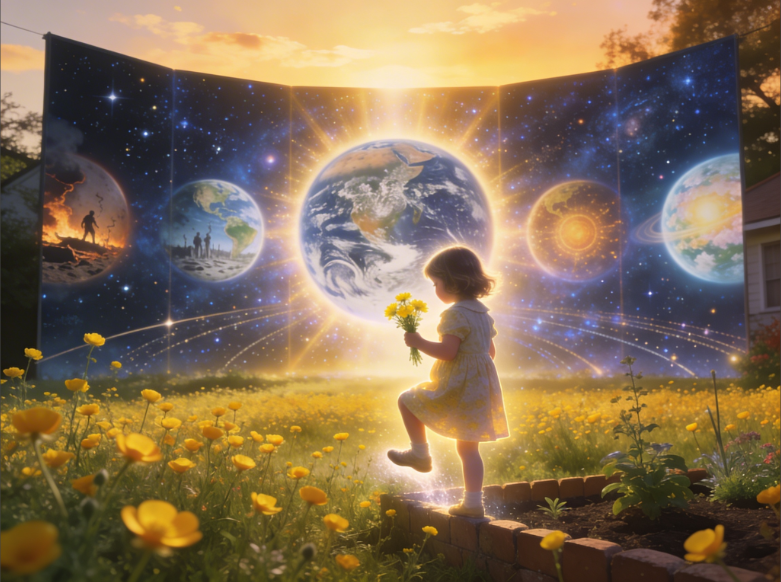
I was four years old, it was 1958, and I was out in the yard singing to God.
Not the God of doctrine. Not the God I would later encounter in churches, stained glass, catechisms, and theologies crafted by men who felt very certain of what the divine did and did not permit. I was singing to the larger presence I remembered, to the loving vastness that had not entirely disappeared when the veiling came down. I did not have a proper name for it, and I did not need one. What existed between us was older than vocabulary.
I was picking buttercups while I sang. That detail matters to me because I was already very much myself. I was not snatching flowers at random. I was arranging them, thinking about how the bouquet ought to look, wanting the stems aligned and the tops even so I could bring my mother something beautiful. Even as a child I cared about shape, harmony, and presentation. I wanted beauty to be intentional.
I came around the side of the house toward the front door. My mother had placed a little barrier there, maybe six inches high, maybe a foot, just enough to discourage neighborhood children from cutting across the grass. It was nothing dramatic, just a low obstacle one would normally step over without a thought.
I lifted one foot to cross it.
And in that mid-step space — one foot raised, one foot planted, buttercups in hand, body leaning forward toward the ordinary next moment — the whole scene opened.

I struggle, even now, to find language good enough for what happened. To say I was “taken onto a ship” is close, but not exact. To say I “entered another dimension” is also close, but too abstract. What I can say is that the yard ceased to be primary. Another environment emerged, overlaid, engulfed, or replaced it. The earthly scene had not entirely vanished, but it no longer defined what was real.
I was received.
Not by strangers. Not by alien invaders. By beings I recognized at once as kin in the deepest possible sense. Family, not by blood in the ordinary human way, but by continuity, history, soul-recognition, and prior agreement. They were familiar to me, as a lost homeland is familiar the moment you see it again.
Then they brought me into a theater.
I had never been to a movie theater on Earth. My parents had not yet taken me. But within days of this experience, they did, and when I walked into that dark room and saw the screen, I knew immediately that it echoed something I had already encountered elsewhere. The form had been prepared for me in advance.
In that other place, I was seated at the front and center. The lights dimmed. The screen came alive.
But “screen” is not quite right, because I was not watching something separate from myself. I was inside it. The experience moved through every sense. There was no distance between observer and event. What they showed me was not information presented from afar but a lived possibility.
The first timeline they gave me was the worst.
Earth destroyed.
Not merely wounded. Not occupied. Not poisoned and limping onward. Destroyed. The planet itself is broken apart, reduced to fragments and debris. What I saw felt like a total catastrophe, the end of the world, not as a metaphor but as fact.

I was devastated in a way no ordinary four-year-old should have been. The grief that moved through me was older than that child. It belonged to a consciousness that loved this world personally, that had invested in it, perhaps helped shape it, and certainly cared enough to return for it. Earth was not an abstraction to me. It was beloved.
They did not soften that grief. They let me feel it all.
Then they showed me another timeline. Still terrible, but not total planetary annihilation. Then another, and another. Twelve dark possibilities in all, arranged like descending and ascending notes along the arc of a great serpent, the ouroboros of destruction and renewal. In one future there was nuclear exchange at a scale that burned civilization to the bone. In another there were fewer strikes but enough to poison generations. In another, biowarfare. In another, environmental collapse stretched over centuries. In another, political systems hardened into permanent domination, so that the spirit of humanity survived only in scattered embers.
Then the arc turned.
On the other side were twelve brighter timelines, each one opening more possibilities than the one before it. These were not childish fantasies or lazy heavens where nothing happened, and nothing was at stake. They were real Earths in which human beings had learned enough to stop worshipping cruelty, enough to recognize connection, enough to build a civilization that did not feed itself on humiliation, war, and fear.
In the most beautiful of those futures, humanity had not become passive or bland. It had become conscious. It had a learned relationship. It had not erased struggle, but it had transformed its purpose. Conflict no longer dominated or annihilated; it existed within growth, learning, and refinement. Life still had challenges, but the challenges served as an awakening rather than destruction.
I recognized those worlds too.
Not as fantasies. As live options in the field.
Then they asked me which one I wanted.
That was what shocked me most.
The implication was staggering: that my choice mattered, that a four-year-old child had some role in orienting toward one of these futures rather than another.
Me? Are you asking me?
Yes.
That was the answer.
I considered the brightest one of all, the purest utopian endpoint, and I did not choose it. It was beautiful, but almost too finished. Too resolved. Too complete in a way that felt more like an arrival than life. I have always been an experiencer in the deepest sense. I value process. Discovery. Challenge. Becoming. A world with no friction at all, no mystery left, no tension through which consciousness could still deepen, did not feel fully alive to me.
So I chose the third timeline down from the most positive.
I chose a world still carrying difficulty, still recognizably human, still in process, but moving toward wisdom rather than ruin. A world where struggle remained, but its direction had changed. A world in which consciousness was gaining ground.
Then I was back.
Mid-step. Buttercups in hand. One foot raised, one foot planted.
But the light had changed.
When I lifted my foot toward that little barrier, it had been full afternoon. When I returned, the sun was setting. More than that, the sunset carried a quality I have never forgotten, as though the light had been altered by where I had been. I stood there, a small child in a yard in Avalon, Pennsylvania, holding flowers for my mother and trying to absorb the fact that hours had passed inside a moment.
There was one last communication before the connection faded.
You have come to do something that will benefit humankind.
I remember, even then, having the practical reaction of a child: Well, that sounds very large. All right then.
And with that came another certainty, immediate and urgent. I needed to find my way back to God — not the God of punishment and fear, but the real one. That conviction is what later made me insist on going to Sunday school. I was looking, even then, for the thread that led back to the source I had touched before language intervened.
CHAPTER FIVE: WHAT WE ARE, AND WHY IT MATTERS
What happened in that yard did not remain an isolated childhood marvel. It became a lens through which the rest of my life gradually organized itself.
Here is what I believe now.
I believe humanity is hybrid.
I mean that biologically, spiritually, historically, and mythically all at once. I believe the beings remembered in ancient Mesopotamian traditions as the Anunnaki are part of the human story, not merely as gods in old texts or symbolic figures in myth, but as real participants in the long shaping of our species. I believe that memory has come down to us in broken forms — fragments of archaeology, cuneiform, myth, oral transmission, intuition, dream, contact narrative, and the deep inner knowing of people who remember more than the culture permits.
I also believe the story is more mutual than the usual telling allows.
The simple version says they made us, used us, ruled us, and manipulated us. Some of that may be true in part, but it is not the whole of it. I think the relationship was more complex and more entangled than conqueror and subject. They needed something too.
According to the memory stream as I understand it, Nibiru had become a world under pressure. The environment was difficult. The pureblooded Anunnaki line had narrowed. Reproduction had become harder. Their civilization faced forms of fragility that could not be solved by power alone. What we call hybrid vigor — the resilience that comes from mixed lineages — mattered.
Which means humanity was not only their project.
We were also part of their survival.
The exchange was not one-directional. There were genes, yes, but also minerals, atmosphere, labor, intelligence, adaptation, and soul participation. Earth was not simply a quarry or a prison colony, though at times it may have functioned that way for some factions. It was also a joint endeavor, a complicated experiment in continuity and survival.
And we are what came of it.
This helps explain, at least for me, the extraordinary contradictions in human nature. We are capable of tenderness so profound it can redeem a life, and brutality so shocking it can poison history for generations. We write symphonies and invent torture devices. We cradle infants and drop bombs. We produce scripture, poetry, healing arts, cathedrals, and genocides, often within the same civilizations, sometimes within the same bloodlines.
I do not read that contradiction as proof that we are hopelessly broken.
I read it as proof that we are unfinished.
The central work before us is not to pretend we have no shadow. Of course we do. The work is to integrate that shadow consciously, to stop serving it as though cruelty were strength and domination were intelligence. The timelines I was shown were not really about fate. They were about direction.
A timeline is not a decree handed down from above. It is a trajectory strengthened by repetition. Civilizations move where their daily choices move them. Souls do too. Every decision either feeds a future or weakens it. Every act of humiliation, indifference, or violence reinforces one set of possibilities. Every act of courage, restraint, kindness, truthfulness, or lucid refusal strengthens another.
This is not sentimental. It is structural.
I also believe consciousness is primary. Matter does not accidentally generate awareness out of dead substance; awareness is the deeper field from which matter arises. What we call reality is not inert. It is participatory. It responds to intention, belief, fear, imagination, agreement, and focused will much more directly than our dominant culture is comfortable admitting.
That is why the timelines remain open.
They are possibilities, not fixed prophecies.
Which future becomes more real depends, at least in part, on what we choose now — not only in grand historical moments, but in the daily texture of how we live. How we treat the vulnerable. Whether we exploit or protect. Whether we speak truth or manage appearances. Whether we feed fear because it is profitable, or resist it because life matters more.
I think often of ahimsa, the principle of non-harm. Not as passivity and not as spiritual decoration, but as discipline. Is this action serving life, or diminishing it? Does this word, this policy, this relationship, this institution, this choice add light or reduce it? Can I, even when frightened, even when exhausted, even when furious, refuse to become an instrument of needless harm?
I am seventy-two years old, and I am still learning how to live those questions honestly. I do not claim mastery. I claim commitment. What I know is that the field is still in motion. The future is not locked. We are not spectators standing helplessly at the edge of some predestined collapse.
We are participating already.
We were always participating.
We were always the choosers.
EPILOGUE: A CALL TO CONSCIOUSNESS
For more than 60 years, I have sat with people trying to make sense of experiences that shattered their old understanding of reality.
Contact. Trauma. Missing time. Visions. Nonhuman encounters. The collision between what someone lived and what the culture insists cannot happen. I know what it costs to carry that kind of knowledge alone, and I know the particular loneliness of realizing that the truth of your own life does not fit inside the available language of your time.
The older generation of experiencers is leaving now. People who had contact in the 1940s, 1950s, and 1960s are dying. Researchers are dying. Witnesses are dying. And every death closes a library.
I do not intend to let my own library disappear unopened.
At seventy-two, honesty matters more to me than safety.
The shift I have watched for since childhood is here. I can feel it. I do not need public permission to recognize it. The structures of secrecy, manipulation, denial, and managed narrative are under strain. The only question that remains is whether enough of us will meet this moment consciously.
So I am asking:
Tell us what happened to you.
Did you work beside beings no one around you would believe were real? Did you have experiences you buried because the social cost of telling the truth was too high? Are you carrying documents, memories, knowledge, or testimony that no longer belong in private silence? Are you one of the many who have waited decades for the right moment, the right listener, the right frame?
This is that moment.
Governments will disclose only what they can calibrate and manage. Institutions release information in ways designed to preserve themselves. Paradigm-shifting disclosure does not first come from official channels. It comes person to person, witness to witness, story to story, one act of truth-telling making the next one more possible.
We are the disclosure.
When I was four years old, I chose the third timeline down from the most positive. I chose a future in which humanity still had work to do, still had pain to transmute, still had shadow to face, but was moving toward awakening instead of annihilation.
I have been living toward that choice ever since.
I am asking you to help choose it now.
Aloha.
— Janet Kira Lessin
Maui, Hawaii
2026
Aquarian Media | aquarianmedia.substack.com
WHAT THE INTERVIEWER WITNESSED
A Note from James Hallahan, Paranomaly
By the time Janet Kira Lessin sat down with me, I had already interviewed a great many people whose lives sat somewhere outside the boundaries of ordinary explanation — experiencers, researchers, contactees, witnesses, and whistleblowers, each carrying a story they believed mattered. After enough conversations of that kind, you start to recognize a difference in tone between people who are trying to perform a remarkable story and people who are trying, however imperfectly, to report one.
Janet was trying to report.
That distinction became clear very quickly. She did not reach for drama, though the material itself would have made drama easy. She reached instead for precision. When a phrase felt too vague or too tidy, she would stop, circle back, and try to get closer to the thing itself. The impression she gave was not of uncertainty, but of refusal — a refusal to let a cheap phrase stand in for an experience she considered exact, even when language itself was proving inadequate.
Over the course of our interview, she described prebirth awareness, contact experiences, memory veiling, and a childhood event in which she believes she was shown multiple possible futures for the Earth and asked, at the age of four, to choose among them. None of that is ordinary subject matter. But what struck me was not only the content. It was the consistency of the voice that carried it.
She described those extraordinary experiences in the same register she used to speak about her father’s wartime trauma, her mother’s fear, and the emotional reality of growing up in postwar Pennsylvania. The tone did not inflate when the material became more unusual. Her eyes did not drift away into reverie. She did not seem to be trying to impress me. If anything, she seemed intent on avoiding overstatement.
People who fabricate often signal the fabrication, even when they are skilled. Their cadence changes. The language becomes more performative. Their ordinary memories and their extraordinary ones begin to sound as though they belong to different narrators.
That did not happen here.
I am not asking the reader to adopt Janet’s worldview or to settle, one way or another, the metaphysical questions her testimony raises. I am a journalist. My role is narrower than that. I can tell you what I observed.
What I observed was a woman in her seventies, clear-minded and unhurried, speaking about a lifetime of unusual experiences with the same plain seriousness she might bring to discussing family history, weather, or work. I also observed someone making a conscious decision to step more fully into public disclosure because, in her judgment, the reasons for speaking had finally become greater than the reasons for remaining guarded.
Near the end of our conversation, she said something that has stayed with me. The people who once stood around her carrying related fragments of this story are mostly gone now, she said, and with them the record is disappearing.
She was not willing to let that happen to hers.
I believe that she means exactly what she says.
— James Hallahan
Paranomaly | paranomaly.com
PULL QUOTES
“A map is no use to anyone if it stays hidden while the terrain catches fire.”
“I came in bored.”
“The child who frightened her had receded. The cover held. Life could proceed.”
“I chose the third timeline down from the most positive.”
“We are the disclosure.”
RELATED ARTICLES / FUTURE ARTICLES IN THE SERIES
- The Twenty-Four Timelines of Earth
A deeper exploration of the futures Janet was shown and what each one may symbolize for humanity now. - The Veiling: Why Children Forget
A reflection on memory suppression, incarnation, adaptation, and how early knowing gets buried. - The Buttercup Field in Avalon
A focused narrative on the 1958 experience and the theater at the end of time. - Why I Went Looking for God
A story about childhood spirituality, Sunday school, and the search for the real divine beneath religion. - The Families We Choose Before Birth
Janet’s reflections on incarnation, soul contracts, trauma, and chosen family lines. - We Are the Disclosure
Why official disclosure will never be enough, and why human testimony matters now. - Anunnaki, Hybridity, and Human Becoming
Janet’s spiritual-historical view of humanity’s mixed origins and unfinished evolution. - The Girl, the Mission, and the Future of Earth
A concluding meditation on purpose, responsibility, and conscious participation in planetary change.

REFERENCES / INFLUENCES
This article draws on Janet Kira Lessin’s lived testimony, long-term experiencer research, spiritual reflection, therapeutic work, and decades of inquiry into contact, consciousness, ancient memory, and human destiny.
Possible related streams of inquiry include:
- experiencer testimony
- prebirth memory research
- ancient Mesopotamian traditions
- consciousness studies
- near-death and multidimensional experience literature
- spiritual traditions centered on non-harm and awakened participation
AUTHOR BIOS
JANET KIRA LESSIN
Janet Kira Lessin is an author, speaker, experiencer, and lifelong contact witness based in Maui, Hawaii. She is CEO of Aquarian Media and co-creator of a wide body of work exploring consciousness, extraterrestrial contact, ancient memory, multidimensional identity, and humanity’s possible futures. Her writing combines autobiography, metaphysics, historical inquiry, and visionary testimony, always grounded in the conviction that truth, compassion, and conscious participation matter now more than ever.
JAMES HALLAHAN
James Hallahan is the creator of Paranomaly and an interviewer of experiencers, contactees, researchers, and other voices working at the edge of accepted reality. His work focuses on careful listening, witness-based inquiry, and the documentation of testimony that conventional frameworks often dismiss or ignore.
CAST OF CHARACTERS
Janet Kira Lessin — narrator, experiencer, witness, and the girl at the center of the story.
Bill Thompson — Janet’s father, World War II veteran, trauma carrier, and one of the foundational figures in her early life.
June Thompson — Janet’s mother, Depression survivor, loving and complex, central to Janet’s understanding of fear, survival, and family.
James Hallahan — interviewer and witness to Janet’s present-day testimony.
The Beloved Beings — the nonordinary presences who appear in Janet’s earliest memories, associated with recognition, ritual, guidance, and mission.
TAGS
Janet Kira Lessin, The Girl Who Chose the Earth, experiencer, contactee, disclosure, consciousness, incarnation, prebirth memory, Anunnaki, timelines, multidimensional reality, spiritual memoir, Maui, Aquarian Media, James Hallahan, Paranomaly, cosmic mission, Earth futures, awakening, testimony
HASHTAGS
#JanetKiraLessin #TheGirlWhoChoseTheEarth #Disclosure #Experiencer #Consciousness #PrebirthMemory #Anunnaki #Timelines #SpiritualMemoir #AquarianMedia #Paranomaly #Awakening #EarthFutures
SOCIAL MEDIA BLURB
What if you remembered why you came here before you could even speak?
In THE GIRL WHO CHOSE THE EARTH, Janet Kira Lessin shares a profound first-person testimony of conscious incarnation, early contact, the veiling of memory, and a childhood experience in which she was shown twenty-four possible futures for Earth — and asked to choose. This is memoir, witness, and invitation.
We are the disclosure.
OUR WEBSITES
Dragon at the End of Time: www.dragonattheendoftime.com
Substack: substack.com/@janetalexlessinphd
BACKEND IMAGE LIST
- THE GIRL WHO CHOSE THE EARTH
Four-year-old Janet in the buttercup field, mid-step between worlds, seeing the twenty-four timelines. - THE VEILING
Infant Janet in her crib at night, surrounded by loving luminous beings in a ceremonial moment of memory dimming. - BORED IN THE BODY
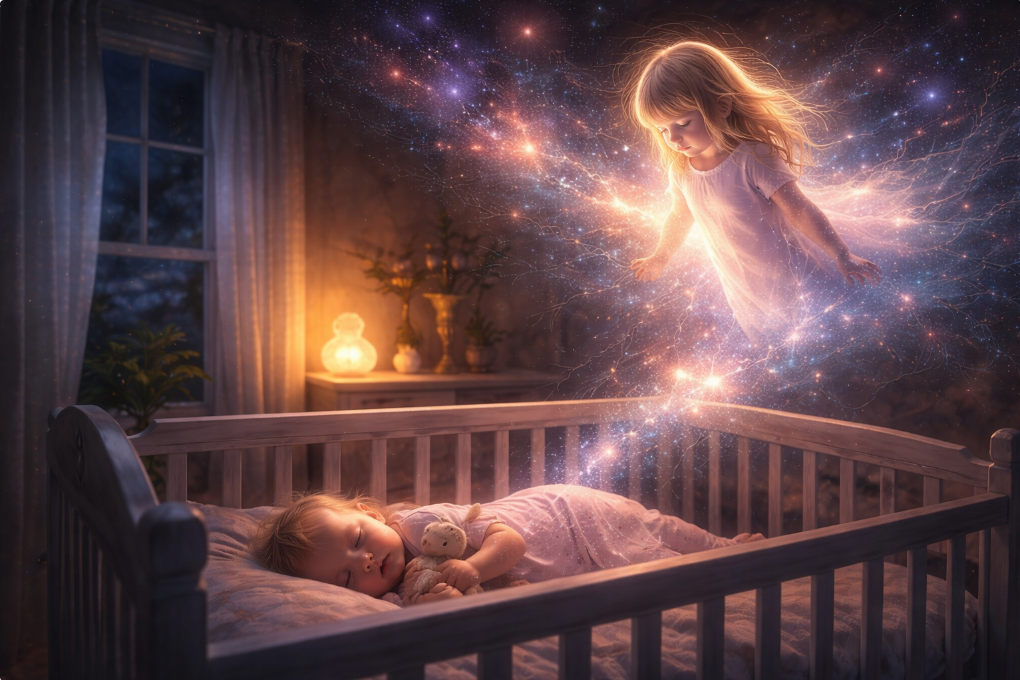
Baby Janet asleep in a crib while her consciousness rises into a vast multidimensional starfield. - THE FAMILY I CHOSE
A symbolic portrait of Bill, June, and infant Janet framed by war memory, Depression-era struggle, and soul-choice symbolism. - THE THEATER AT THE END OF TIME
Janet seated before a luminous cosmic screen showing multiple possible futures for Earth. - WE ARE THE DISCLOSURE
Older Janet in Maui speaking forward into the future, surrounded by faint silhouettes of other experiencers, witnesses, and timelines.
IMAGE PROMPTS WITH TITLES
1. THE GIRL WHO CHOSE THE EARTH
Landscape, cinematic, realistic 16:9. A four-year-old girl with long sandy blonde hair, blue eyes, and bangs stands in a 1958 backyard in Avalon, Pennsylvania, holding a bouquet of buttercups. She is mid-step over a small garden barrier as the ordinary yard transforms into a cosmic theater of stars and branching timelines. Before her appears a luminous vision of Earth in multiple futures — destruction, war, healing, awakening, and radiant peace. Emotional, mystical, reverent, warm golden sunset mixed with indigo cosmic light.
2. THE VEILING
Landscape, photorealistic, spiritual, cinematic 16:9. An infant girl in a 1950s crib at night in a modest Pennsylvania bedroom is surrounded by several luminous loving beings taking gentle symbolic form. The atmosphere is solemn, tender, ceremonial, and interdimensional. A subtle wave of energy or rippling light passes through the room as memory is dimmed for protection. Soft moonlight, warm interior tones, deep compassion, realistic detail.
3. BORED IN THE BODY
Landscape, cinematic 16:9. A baby girl sleeps in a crib while her larger consciousness rises above her in a shimmering transparent form into a star-filled multidimensional field. The room is small and ordinary, but the expanded reality around her is vast, luminous, intelligent, and alive. The contrast between infant helplessness and cosmic awareness is clear but gentle. Realistic, beautiful, mystical.
4. THE FAMILY I CHOSE
Landscape, richly symbolic, realistic 16:9. A postwar American family portrait in Avalon, Pennsylvania, with father Bill carrying invisible war trauma, mother June shaped by Depression-era endurance, and baby Janet in the center surrounded by faint soul-pattern imagery, ancestral threads, and subtle cosmic geometry. The mood is loving, complicated, haunted, and fateful, with realism grounded in 1950s domestic life.
5. THE THEATER AT THE END OF TIME
Landscape, cinematic, highly detailed 16:9. A small child sits front and center in a great luminous cosmic theater. Before her a vast radiant screen displays many possible futures for Earth: fire, war, falling cities, ecological recovery, human healing, and radiant awakening. The theater feels both advanced and sacred, neither fully machine nor fully temple. The child’s face shows grief, intelligence, and solemn decision.
6. WE ARE THE DISCLOSURE
Landscape, realistic, cinematic 16:9. Janet Kira Lessin as an older woman in Maui stands before the ocean at twilight, speaking toward the viewer with quiet authority. Around her, semi-transparent silhouettes of researchers, experiencers, and witnesses fade into stars and light, suggesting the passing of generations and the continuation of testimony. The mood is urgent, loving, wise, and determined.
This is ready to shape into a post.
The two best next moves are either: turn this into a clean Substack-ready final with formatting markers removed, or generate the featured image now.