The New Covenant: Inside the High-Stakes Raid that Redrew the Map of the Andes
By Sasha Alex Lessin, Ph.D. & Janet Kira Lessin
The Ghost in the Machine
In the sweltering heat of Caracas, the woman who should have been President waited. María Corina Machado had the receipts, the tally sheets, and the undeniable mandate of a nation that had voted for change in 2024. But in the shadow of the Miraflores Palace, power rarely follows the path of the ballot. While Machado stood as the “Elected Successor” in the hearts of millions, the wheels of a different kind of justice—one delivered by air and iron—were already in motion.
In early January 2026, the silence of the Venezuelan capital was shattered. Operation Absolute Resolve, a precision U.S. airborne raid, descended upon Nicolás Maduro’s compound. Within hours, the man who had defied international sanctions for a decade was in custody, destined for a courtroom in the United States. But as the smoke cleared over 75 casualties, a familiar pattern emerged.
The people had voted for Machado, but the “Sky-Lords” of the 21st century—be they in Washington or Wall Street—chose a different continuity: Delcy Rodríguez.
The Deep History of the Dominator

To understand the rise of Rodríguez as the “Interim Satrap,” one must look beyond modern headlines and into the deep-time cycles of the Northern Andes. For millennia, this region—stretching from the Orinoco delta to the peaks of Ecuador—has been a strategic grid for resource extraction.
As Dr. Sasha Lessin observes through the Sitchin-student lens, the Pleistocene hunters of Taima-Taima and the gold-covenant Muisca of the Bogotá plateau were never merely “primitive.” They were part of a top-down mapping operation by Anunnaki survey teams, such as those of NINURTA and VIRACOCHA. Gold was not currency; it was the “flesh of the gods,” a sacred substance managed by hybrid elites.
Today, the substance has changed from gold to “Earth’s blood”—oil—but the template remains the same. The “Dominator Covenant” has simply been rebranded.
The Oil Covenant of 2026
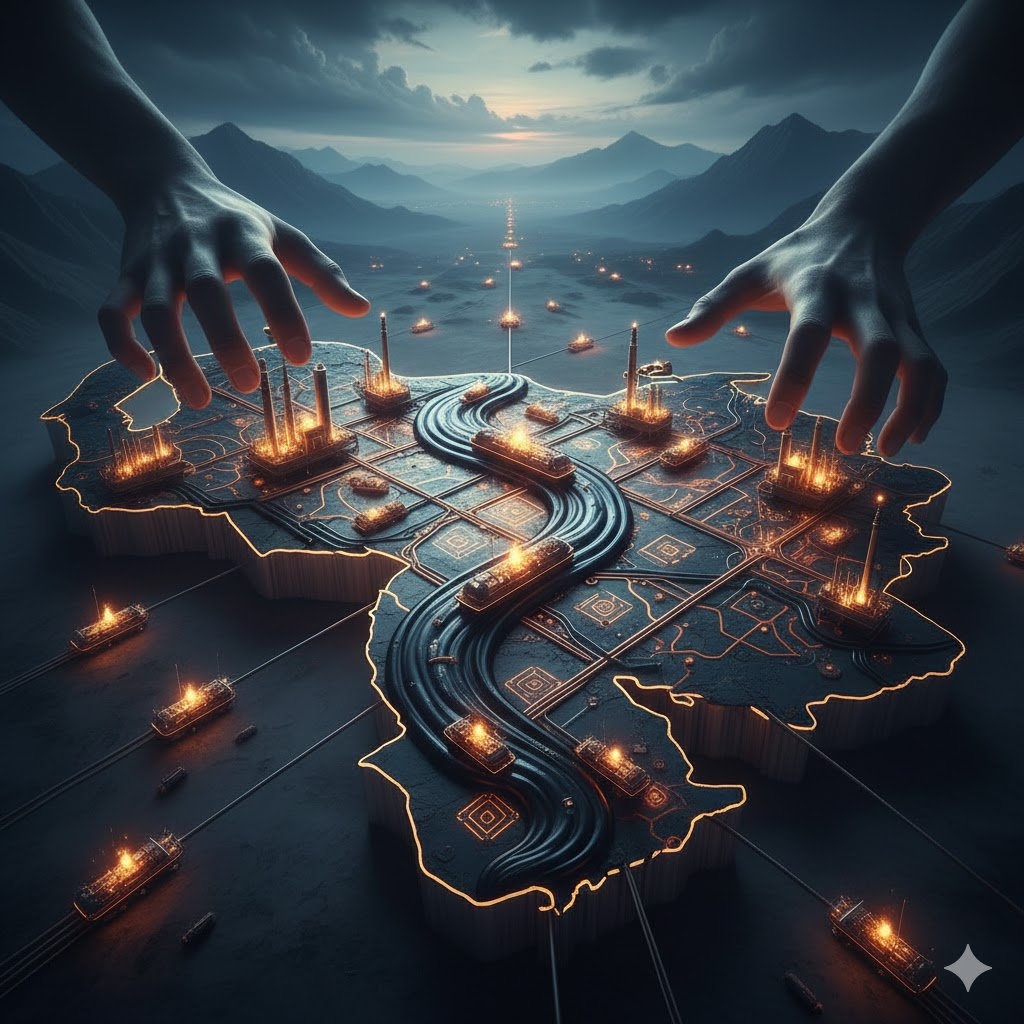
The swift transition of power to Delcy Rodríguez under Article 233 was a masterstroke of geopolitical pragmatism. Though she rose through the ranks of Chavismo, Rodríguez is the ultimate “Priest-Queen” of the new era—a figure capable of speaking the language of the revolution while signing the ledgers of foreign oil interests.
Under the “New Oil Covenant,” the U.S. now oversees Venezuelan production “for the benefit of the people,” while Rodríguez maintains internal control. For the average Venezuelan, the hyperinflation and exodus of the Maduro years may ease, but the fundamental structure persists: a resource-rich satrapy governed by an elite few under the guidance of a distant empire.
The Sidelined Choice
Where does this leave María Corina Machado? Machado represents a “Partnership Current” that has been repeatedly thrown under the bus by global power brokers. Her victory was real, her support authentic, yet she remains a “Timelord” without a clock—a leader whose timing was perfect for the people, but inconvenient for the controllers.
“Trump threw her under the bus,” Janet notes, highlighting a cynical exchange where democratic mandates were traded for “stabilization” and the steady flow of tankers.
The Horizon
As Venezuela enters this week of mourning and transition, the cycles of history suggest that the “Ninmah values” of true partnership and indigenous memory are not gone; they are merely submerged. Below the surface of the new Rodríguez administration, the old spirit of Gran Colombia—the dream of a unified, self-determined Andes—continues to simmer.
The raid on Caracas removed a dictator, but whether it removed the “Dominator Consciousness” that has ruled these mountains since the days of the Anunnaki remains the question of the century.
THE GHOST IN THE MACHINE

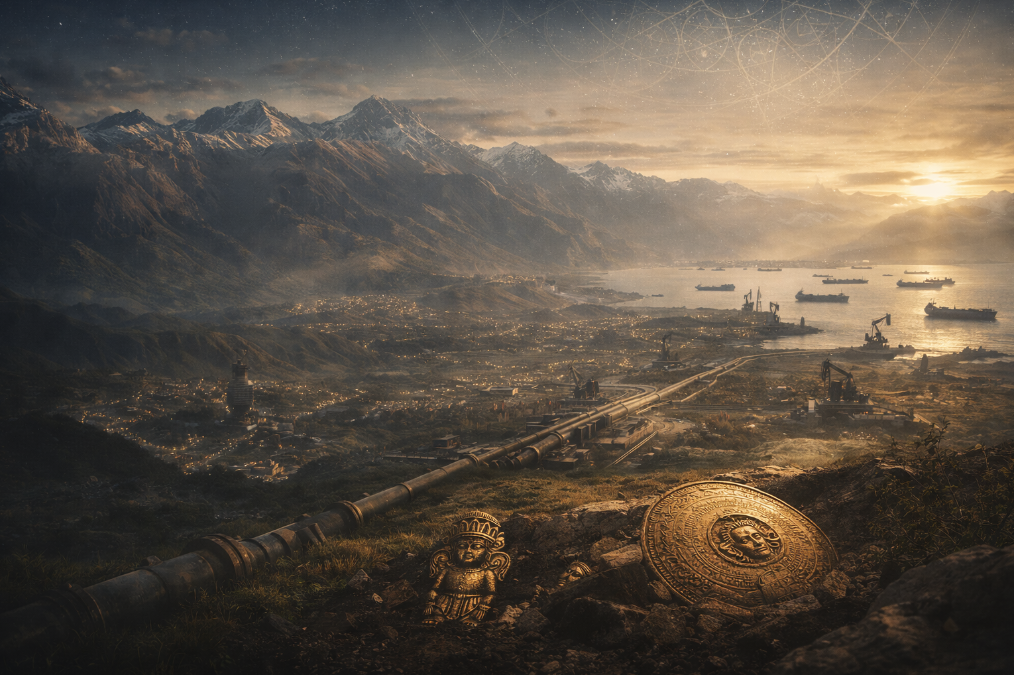
This image is titled “The Deep History of the Dominator.” It serves as a visual bridge across millennia for your article, linking the ancient Andean civilizations and Anunnaki mythology directly to modern resource extraction.
In the composition:
- The Foreground: Features ancient Andean gold artifacts and a “Venus” figurine, representing the original “Gold Covenant” managed by the Anunnaki.
- The Middle Ground: Shows a map of Venezuela where the ancient “flesh of the gods” (gold) fades into modern oil rigs, pipelines, and tankers—the “Earth’s blood” of the current Petro-state.
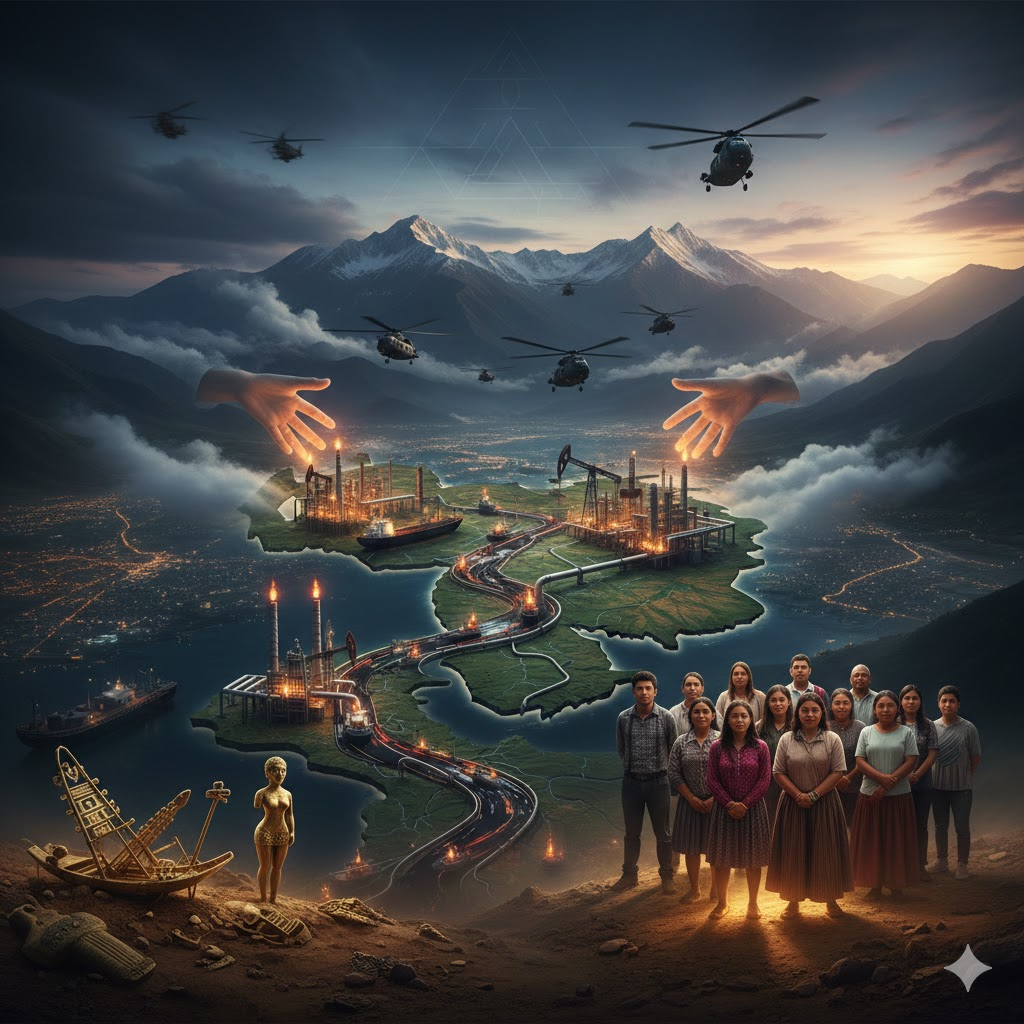
- The Background: The majestic Andes mountains rise under a sky marked by subtle celestial geometry, symbolizing the “Sky-Lords” or unseen forces that have guided this region’s resource extraction since the Pleistocene.
- The Human Element: On the right, the Indigenous Andean and Venezuelan people stand as a “Partnership Current,” representing the enduring human spirit that survives beneath these shifting cycles of domination.
It’s a powerful way to illustrate Dr. Lessin’s “Sitchin-student” view of history!
DESCRIPTION
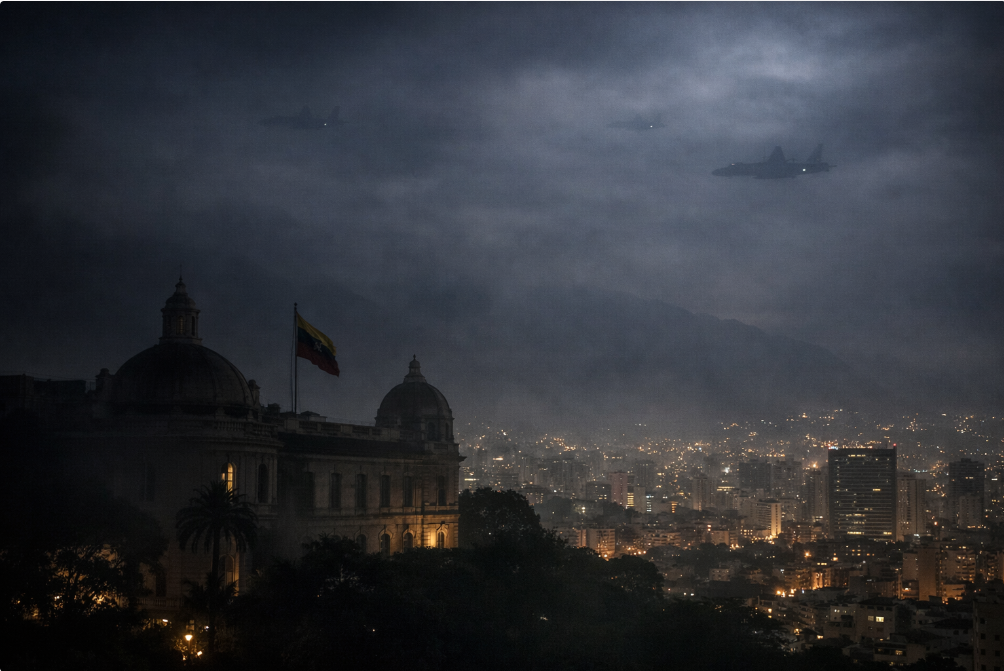
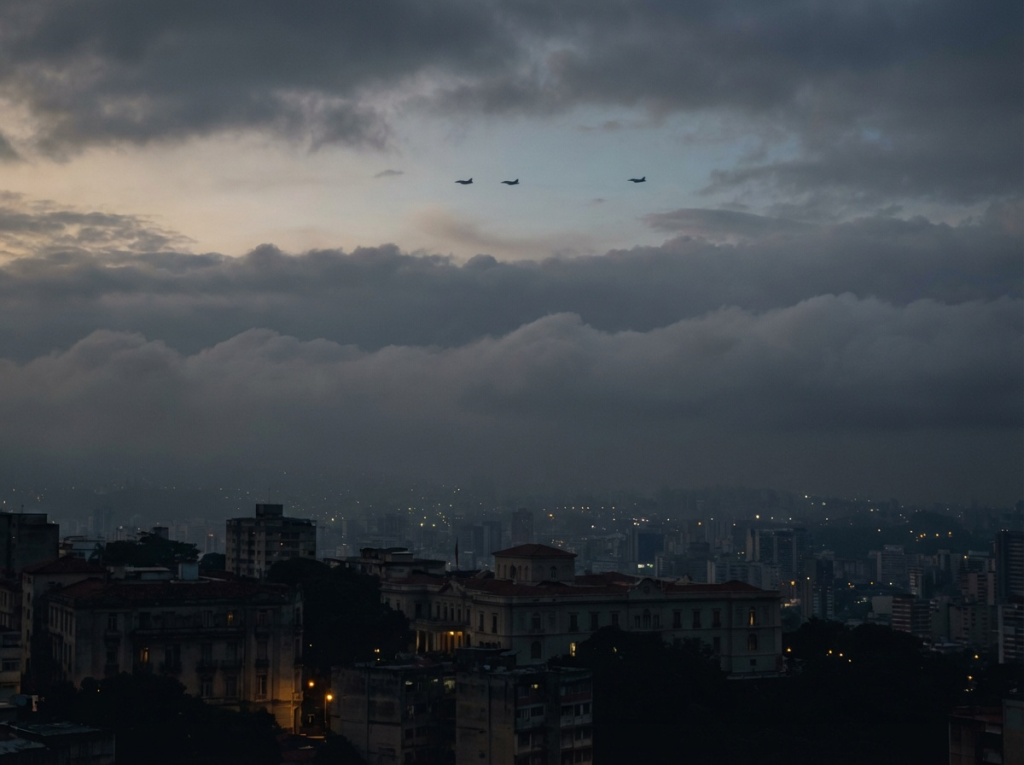
A symbolic opening image capturing the moment democracy pauses while hidden power moves. Caracas at night, heavy with heat and tension, as unseen forces prepare to act.
OPENART.AI PROMPT
realistic, photorealistic, cinematic lighting, soft natural colors, fantasy realism, highly detailed, emotional depth, artistic composition, nighttime Caracas skyline, Miraflores Palace partially in shadow, humid atmosphere, faint military aircraft silhouettes high above the clouds, quiet city below unaware, symbolism of hidden power, political tension, no text, no logos, landscape orientation
DALL·E PROMPT
A cinematic, realistic night view of Caracas with Miraflores Palace in shadow. The city feels humid and tense. High above, faint silhouettes of aircraft are barely visible in the clouds, symbolizing unseen forces. No action yet—just anticipation. Photorealistic, dramatic lighting, symbolic political atmosphere, and landscape format.
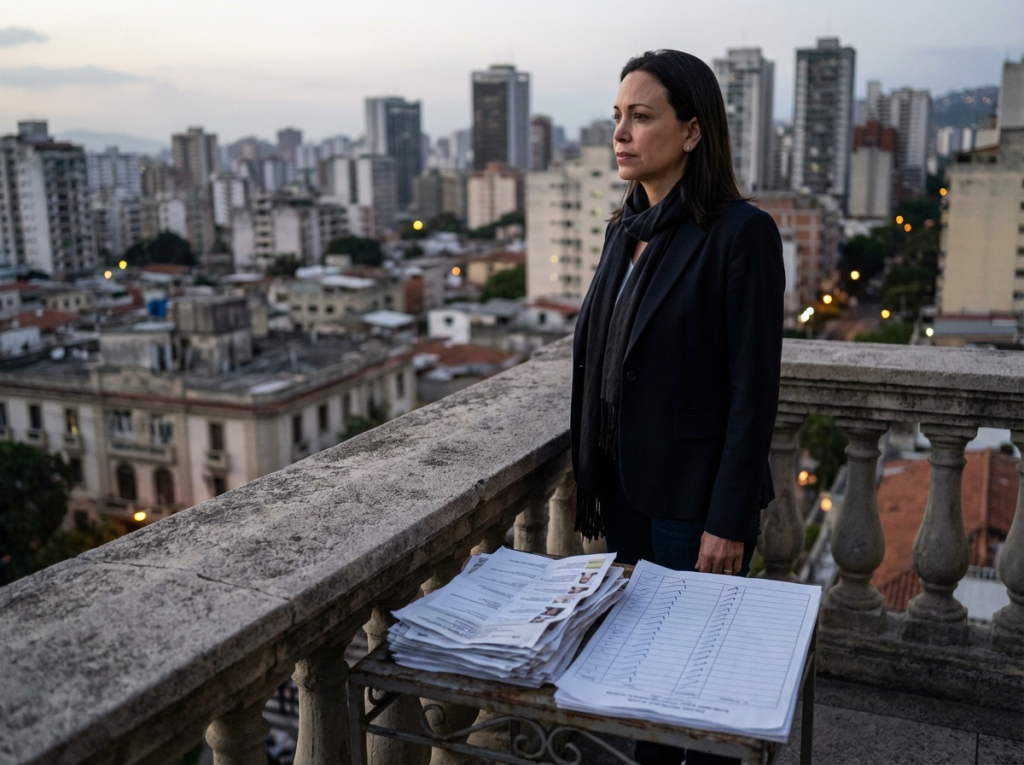
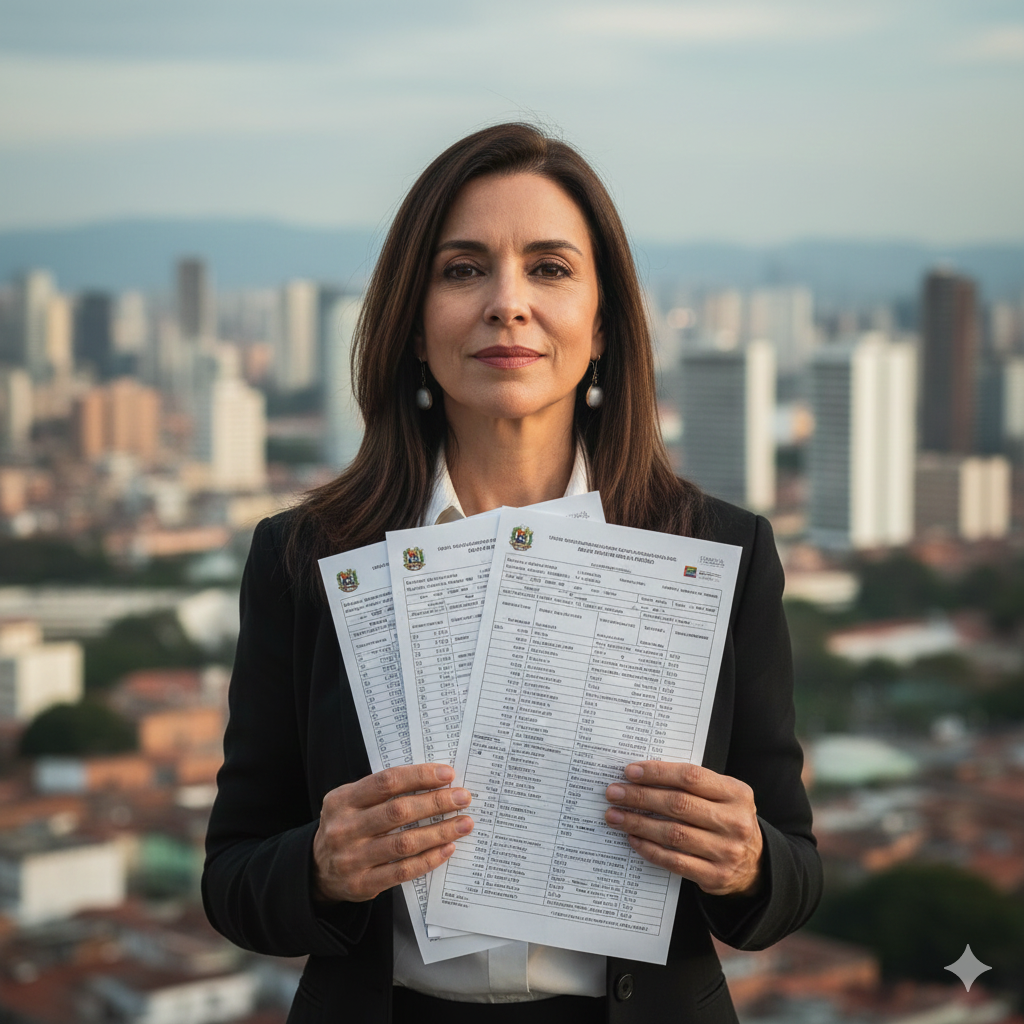
THE SIDELINED PRESIDENT
DESCRIPTION
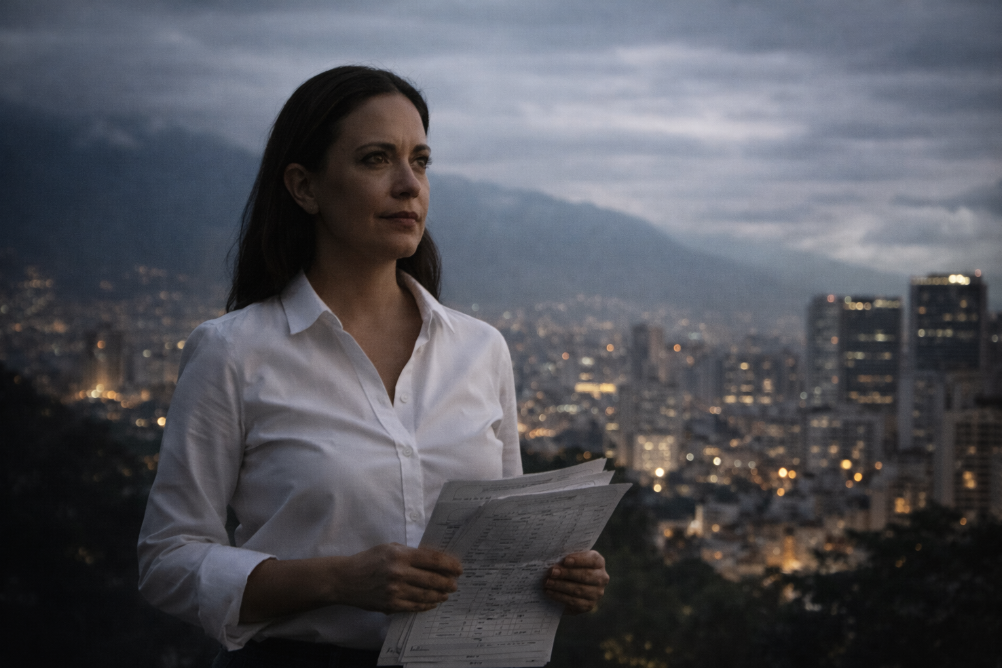
María Corina Machado is the elected choice of the people—present, composed, and resolute—yet physically and politically sidelined.
OPENART.AI PROMPT
realistic, photorealistic, cinematic lighting, soft natural colors, fantasy realism, highly detailed, emotional depth, artistic composition, Venezuelan woman leader standing alone in foreground, calm strength, city of Caracas behind her slightly out of focus, ballot papers and tally sheets subtly visible, no crowds, no slogans, dignity and restraint, symbolism of democratic legitimacy denied, landscape orientation
DALL·E PROMPT
A realistic, cinematic portrait of a Venezuelan woman leader standing calmly in the foreground, holding election tally sheets. Caracas is behind her, blurred and distant. Her expression is composed and resolute, symbolizing democratic legitimacy without power. Photorealistic, soft dramatic lighting, landscape format.
OPERATION ABSOLUTE RESOLVE
DESCRIPTION
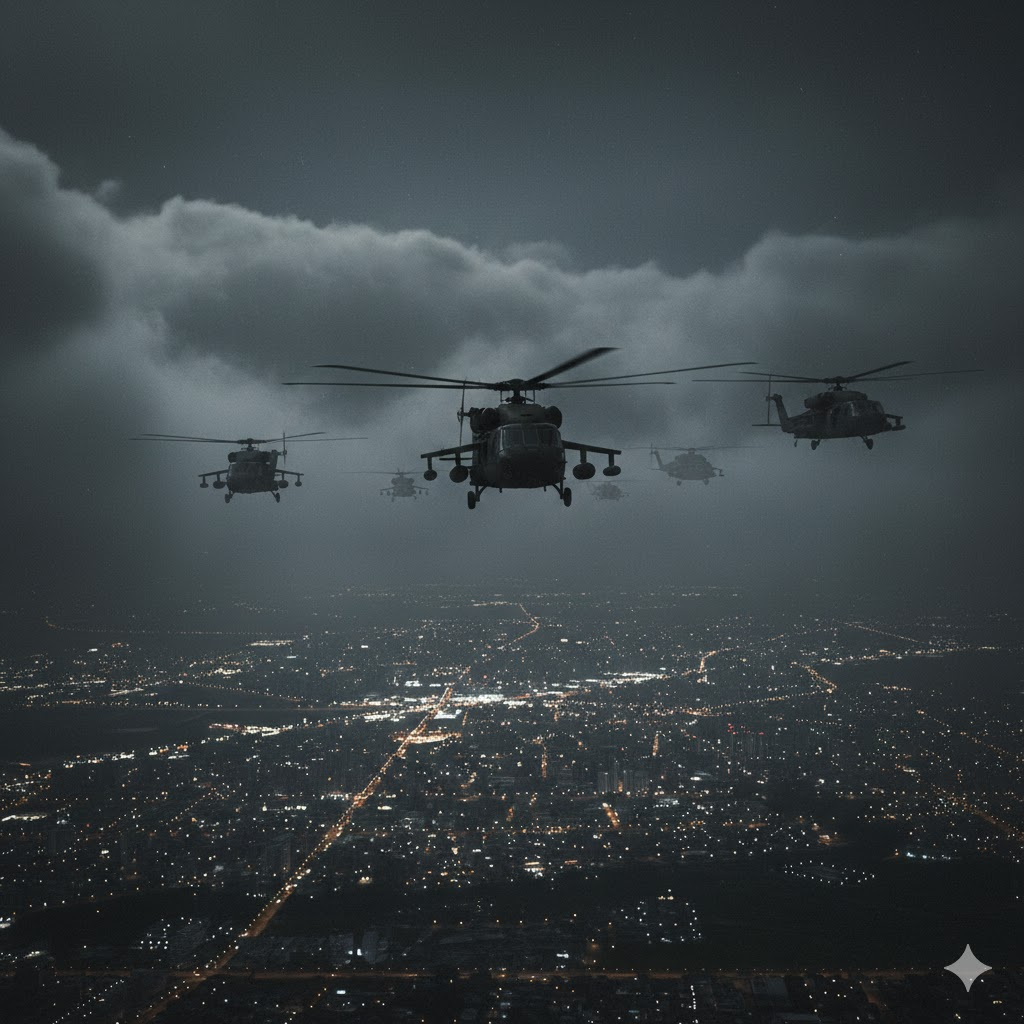
A restrained, non-sensational depiction of the raid—focused on power, not violence. This image signals intervention without glorifying it.

OPENART.AI PROMPT
realistic, photorealistic, cinematic lighting, muted color palette, fantasy realism, highly detailed, emotional depth, artistic composition, nighttime airborne military operation over Caracas, helicopters descending through clouds, city lights below, no explosions, no visible combat, tension without spectacle, symbolic regime change imagery, landscape orientation
DALL·E PROMPT
A realistic nighttime scene of military helicopters descending through clouds above a city. Below, city lights glow quietly. No explosions or combat are shown—only tension and movement. Cinematic, restrained, symbolic of intervention, landscape format.
THE PRIEST-QUEEN OF OIL

DESCRIPTION
Delcy Rodríguez as the “Interim Satrap”—a modern administrator of an ancient extraction covenant, balancing revolution and empire.
OPENART.AI PROMPT
realistic, photorealistic, cinematic lighting, soft natural colors, fantasy realism, highly detailed, emotional depth, artistic composition, powerful woman leader in formal attire, standing before abstract oil infrastructure and government architecture, ledgers and documents subtly implied, calm authoritative expression, symbolism of priest-queen archetype, no text, landscape orientation

DALL·E PROMPT
A cinematic, realistic portrait of a powerful woman leader standing before abstract oil infrastructure and government buildings. She appears calm, controlled, and authoritative, symbolizing a modern political administrator of resource power. Photorealistic, symbolic, landscape format.
THE DEEP HISTORY OF THE DOMINATOR
DESCRIPTION
A visual bridge across millennia—linking ancient Andean civilizations, Anunnaki mythology, and modern extraction systems.
OPENART.AI PROMPT
realistic, photorealistic, cinematic lighting, fantasy realism, highly detailed, emotional depth, artistic composition, layered timeline image, ancient Andean gold artifacts fading into oil rigs and pipelines, mountains of the Andes in the background, subtle celestial geometry in sky, symbolism of dominator cycles, no literal aliens, landscape orientation
DALL·E PROMPT
A symbolic, realistic image showing ancient Andean gold artifacts gradually blending into modern oil rigs and pipelines. The Andes mountains rise in the background, with subtle celestial patterns in the sky. Photorealistic, mythic-historical symbolism, landscape format.
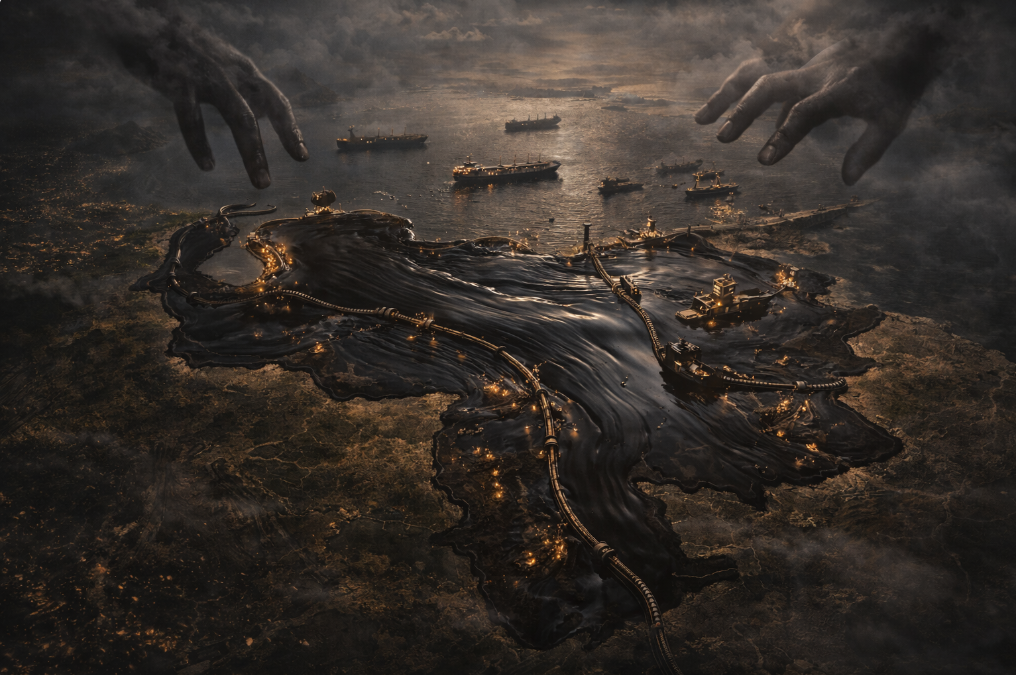
THE NEW OIL COVENANT

DESCRIPTION
Oil replaces gold as the sacred substance—“Earth’s blood” flowing through controlled channels.
OPENART.AI PROMPT
realistic, photorealistic, cinematic lighting, fantasy realism, highly detailed, emotional depth, artistic composition, oil flowing like a river across a map of Venezuela, tankers and pipelines forming ritual-like patterns, hands of unseen powers guiding flow, symbolism of covenant and control, no text, landscape orientation
DALL·E PROMPT
A cinematic, realistic image of oil flowing like a dark river across a map of Venezuela. Tankers and pipelines form controlled pathways, guided by unseen hands. Symbolic, political, photorealistic, landscape format.
PARTNERSHIP BENEATH THE SURFACE
DESCRIPTION
Ninmah values endure—quiet, human, rooted in land and memory.
OPENART.AI PROMPT
realistic, photorealistic, cinematic lighting, soft warm colors, fantasy realism, highly detailed, emotional depth, artistic composition, Indigenous Andean people and ordinary Venezuelan civilians, subtle glow from earth beneath their feet, mountains and rivers present, symbolism of partnership and continuity, hope without triumphalism, landscape orientation
DALL·E PROMPT
A realistic, cinematic image of Indigenous Andean people and everyday Venezuelan civilians standing quietly on the land. A subtle warm glow rises from the earth beneath them, symbolizing enduring partnership and memory. Mountains and rivers in the background. Photorealistic, hopeful, landscape format.
THE HORIZON OF GRAN COLOMBIA
DESCRIPTION
The closing image—history unfinished, destiny unresolved.
OPENART.AI PROMPT
realistic, photorealistic, cinematic lighting, fantasy realism, highly detailed, emotional depth, artistic composition, wide Andean landscape at dawn, borders faintly dissolving, light breaking over mountains, symbolism of future possibility, unity without certainty, no text, landscape orientation
DALL·E PROMPT
A wide, realistic Andean mountain landscape at dawn. Light breaks over the peaks as faint borders dissolve into the land, symbolizing an unfinished future. Cinematic, hopeful but uncertain, photorealistic, landscape format.
https://syndication.bbcstudios.com/p0msgrzv-processed.mp4
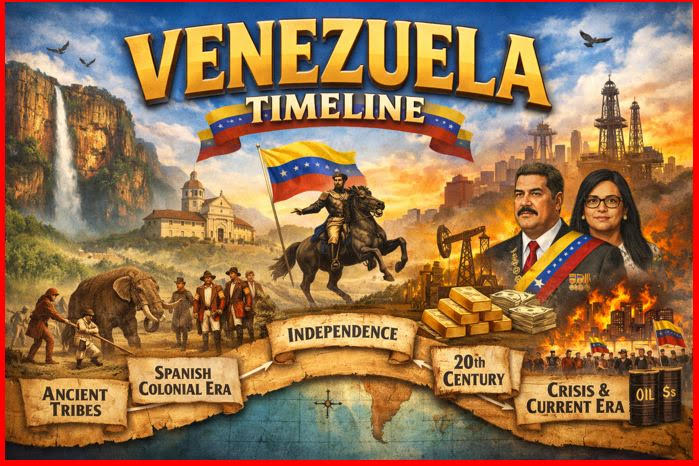
TIMELINE: VENEZUELA, COLOMBIA, ECUADOR & VENEZUELA OPPOSITION LEADER WHO WON THE ELECTION MACHADO PRETENDED SHE LOST
By Sasha Alex Lessin, Ph.D. (Anthropology, UCLA)
Pre-Andean Survey, Spanish Invasion, Republican Cycles, and the New Oil Covenant
I. PLEISTOCENE HUNTER PHASE
(c. 16,000–10,000 BCE)
Venezuela – Taima-Taima & El Jobo Hunters
· Mastodon hunters operate at Taima-Taima and other Falcón sites. El Jobo projectile points appear around 16,000–13,000 BP.
· Sitchin-student view: Pre-Cain or proto-Cainite hunting bands already receive remote guidance from Anunnaki surveyors who need megafauna culling and landscape scouting.
Colombia – Bogotá Plateau Pioneer Camps
· At Tibitó, Tequendama, and El Abra, high-altitude hunters process mastodon, deer, and camelids around 13,600–11,000 BP, adapting quickly to cold post-glacial conditions.
· Sitchin-student view: The Bogotá plateau functions as a northern High-Andes survey zone for NINURTA field teams who check basins, lakes, and ore veins and use hybrid scout clans as carriers and hunters.
Ecuador – El Inga Highland Hunters
· The El Inga site near Quito, with fishtail points, records repeated camps between roughly 12,500–9,000 BP. Hunters exploit highland game and wild plants.
· Sitchin-student view: Early survey detachments under NINURTA test high-altitude living and map ore-bearing geology around Quito, quietly folding local bands into a larger reconnaissance grid.
Peru – Early Andean Hunters
· High caves such as Lauricocha and sites like Guitarrero and Ayacucho host mobile mountain and coastal hunters by about 13,000–8000 BCE.
· Sitchin-student view: First SURVEY TEAMS evaluate glacier retreat, water sources, and mineral-rich ranges that later become Viracocha’s core domains.
Conventional: Independent human groups push into the Andes and adjacent lowlands as the Ice Age ends.
Sitchin-style: A coordinated, top-down mapping operation uses selected Earthlings and hybrids as ground crew for an Anunnaki mining and terraforming project.
II. EARLY FORAGERS–HORTICULTURALISTS & COASTAL SEDENTISM
(c. 8000–3000 BCE)
Venezuela – Orinoco Forager–Horticulturalists (6000–2000 BCE)
· Riverine groups along the Orinoco experiment with plant cultivation, build semi-sedentary seasonal camps, and mix fishing, foraging, and gardening.
· Sitchin-view: NINURTA-aligned trainers teach cassava detox, floodplain gardening, and river-terrace management, seeding future temple-economies.
Colombia – Early Highland & Lowland Foragers (10,000–3000 BCE)
· Diverse strategies developed: highland hunting on the Bogotá plateau, fishing and gathering in the Magdalena, Caquetá, and Orinoco drainages, and early plant use in warm valleys.
· Sitchin-student view: This period marks population seeding; Enlil- and Ninurta-line overseers gift farming and forest-garden strategies to select lineages that become ritual carriers of sky-knowledge.
Ecuador – Las Vegas Coastal Villages (8000–4600 BCE)
· On the Santa Elena Peninsula, the Las Vegas culture builds early sedentary coastal villages, exploits fish and shellfish, and domesticates squash and bottle gourd, then maize.
· Sitchin-view: A coastal training field where NINURTA and VIRACOCHA/ADAD introduce tropical agriculture and coastal irrigation so Cainite-line clans can stabilize on the desert shore.
Peru – Preceramic Temple Foundations Begin
· By the late 4th millennium BCE, Peru moves toward monumental preceramic centers, but the groundwork in local irrigation and ritual begins earlier within these forager–farmer mixes.
· Sitchin-view: Viracocha’s engineers sketch the first outlines of the future temple cities along rivers that will carry gold and food.
Conventional: Local innovation in varied climates leads to early gardening and village life.
Sitchin-student view: Training programs roll out in phases, each tuned to a specific ecological niche and future role in the Andean resource grid.
III. EARLY CERAMIC AND GODDESS CULTURES, EMERGING CHIEFDOMS
(c. 4600–1500 BCE)
Ecuador – Real Alto & Valdivia Pioneers (4600–1500 BCE)
· Real Alto yields some of the earliest pottery in the Americas. Valdivia villages developed red and gray ceramics, plaza-centered layouts, and female “Venus” figurines among maize, beans, cassava, and cotton.
· Sitchin-student view: A full-form Cainite–hybrid coastal culture combines seafaring, agriculture, and Goddess ritual. Valdivia Venuses echo INANNA–NINMAH iconography. Jōmon-like parallels hint at Anunnaki-managed ship traffic linking Japan, the Pacific islands, and Ecuador.
Venezuela – Orinoco networks consolidate
· Semi-sedentary river settlements expand toolkits and regional contacts, priming later ceramic and trade blooms.
· Sitchin-view: River systems crystallize into corridors where Anunnaki-linked elites will later stage temple–storehouse complexes.
Colombia – Formative Trade & Ceremonial Nodes (3000–500 BCE)
· Ceremonial centers and long-distance exchange emerge; early goldwork appears; shells, obsidian, and ritual items move between coast, highlands, and Amazonia.
· Sitchin-student view: Gold becomes ritual duty and sacred trust, part of a covenant economy tied to Viracocha and NINURTA. Colombia acts as the northern gatehouse of the wider Andean control grid.
Peru – Caral and Preceramic Mega-Projects
· Coastal and inland sites such as Caral built pyramids and irrigation systems without pottery, indicating organized labor and priestly planning.
· Sitchin-student view: Viracocha/Adad and Ninurta launch structured city projects, reusing Mesopotamian design, but adapting it to Andean river hydrology and earthquake risk.
Conventional: Pottery, sedentism, and simple chiefdoms appear through internal evolution and regional contact.
Sitchin-style: Ancient city–temple patterns from Sumer receive local Andean versions, complete with specialized coastal, highland, and jungle nodes.
IV. GOLD–SALT ECONOMIES AND MOUNTAIN CITIES
(c. 1500 BCE–1500 CE)
Venezuela – Saladoid / Arawak and Timoto-Cuica
· Saladoid / Arawak Expansion (c. 500 BCE–545 CE): Manioc farming, polychrome pottery, and maritime colonization from the Orinoco into the Caribbean.
· Timoto-Cuica Highlands (late 1st millennium CE): Stone-faced terraces, storage systems, and compact mountain settlements.
· Sitchin-student view: Saladoid Arawaks stabilize Cainite seed populations and extend Viracocha/Adad imagery into the Caribbean. Timoto-Cuica highlands repeat NINURTA-style terrace engineering in a new setting.
Colombia – Muisca, Tayrona & San Agustín (1st–2nd millennia CE)
· Muisca Confederation (c. 600–1500 CE): A gold–salt–emerald economy on the Bogotá plateau, with the El Dorado ritual and strong lake-centered astronomy.
· Tayrona & San Agustín: Stone-terraced cities in the Sierra Nevada and monumental hybrid beings in San Agustín mark dense, ritualized upland realms.
· Sitchin-student view: Muisca preserve a fossilized Viracocha/Adad gold covenant: gold as “flesh of the gods”, not mere wealth. Tayrona and San Agustín encode hybrid lineages tasked with guarding portals, mines, and sacred routes.
Ecuador – Machalilla, Chorrera, Highland Chiefdoms
· Coastal Machalilla and Chorrera refine ceramics and trade; inland Cotocollao, Cañari, Quitu–Caras, and others manage terrace farming and passes.
· Sitchin-view: Ecuador becomes the northern flank of the Viracocha realms, feeding shells, cotton, obsidian, and gold north and south along maritime and highland chains.
Peru & High Andes – Tiwanaku, Lake Titicaca, Cuzco Core
· Tiwanaku and related centers display precise stonework, raised fields, and solar alignments; later, the Inca state overlays the same corridors.
· Sitchin-student view: Enlil’s grandsons share duties: Viracocha/Adad as chief Andes overseer; Ninurta and Ningishzidda/Thoth run hydraulic engineering, megalithic design, and interplanetary gold exports.
Conventional: Independent complex societies develop goldwork, terraces, and astronomy, with later Inca expansion absorbing many.
Sitchin-style: The Andes function as a single, long-lived Anunnaki administrative complex with regionally specialized client peoples.
V. LATE PREHISPANIC INTERACTION & THE INCA OVERLAY
(15th century CE)
· Inca power radiates from Cuzco and briefly reaches southern Colombia and Ecuador, but never fully absorbs the northern highlands or Caribbean-facing regions.
· Sitchin-student view: Inca power represents a political rebranding of much older Anunnaki infrastructure: roads, shrines, observatories and terraces that predate official Inca history.
VI. SPANISH INVASION & COLONIAL ORDER
(1498–1808)
First Contact & Conquest (late 1400s–1540s)
Venezuela
· 1498, Columbus reaches the Orinoco delta; Spanish parties probe coastal Venezuela; slaving and forced missionization follow.
Colombia & Ecuador
· Spanish expeditions push inland from the Caribbean, clash with Muisca and other chiefdoms, then use the template of the 1532 Inca conquest in Peru to seize territories further north. Tribute, gold extraction, and forced labor follow.
Conventional: European navigation, steel, horses, and disease advantage topple complex chiefdoms and empires.
Sitchin-student view: A new faction claims the mantle of “heavenly” rule. Church–Crown structures mimic priest-kings of the Anunnaki era, but with Yahweh/Enlil presented as a singular, jealous god and without visible “sky-lords” on the ground.
Colonial Foundations & Missions (1540s–1600)
Venezuela
· Towns and missions spread; Indigenous populations collapse from disease and slavery. Enslaved Africans entered gold and cacao production.
Colombia
· Bogotá becomes the colonial capital; encomiendas and missions reorganize land and labor.
Conventional: Church, encomienda, and municipal rule replace Indigenous governance.
Sitchin-student view: Viracocha and Ninurta cults get buried under Catholic dogma. Sacred lakes and observatories rebrand as Christian shrines. Gold-as-sacred-substance survives only in whispers and folk rites.
Economic Consolidation & Racial Hierarchies (1600–1700)
Venezuela
· Cacao plantations and ranching expand; Spanish-born elites dominate; Creoles grow underneath.
Colombia & Peru
· Mining, haciendas, and strict casta categories define social life.
Conventional: Racial law and imperial control harden.
Sitchin-student view: Old Enlil-line domination persists with new names. Priests and viceroys take the place of Anunnaki governors, while Ninmah-style partnership values retreat into Indigenous and hidden traditions.
Creole Awakening & Imperial Decline (1700–1808)
· Enlightenment ideas spread. Local elites resent Spanish trade monopolies and exclusion from top offices.
· Indigenous territorial memories and gold-covenant stories re-ignite uprisings in Peru and stir resistance in Colombia and Venezuela.
Conventional: Imperial weakening and Creole nationalism prepare for independence.
Sitchin-student view: Cracks in Church–State control allow submerged Andean spiritual memory to surface again, demanding both land justice and a rebalanced cosmology.
VII. WARS OF INDEPENDENCE & BREAKUP OF GRAN COLOMBIA
(1808–1830)
· Venezuela and Colombia: Simón Bolívar and other patriots led campaigns that broke Spanish rule; after 1819, Gran Colombia briefly united today’s Venezuela, Colombia, Ecuador, and Panama.
· By 1830, Gran Colombia fragments; Venezuela and New Granada go their separate ways.
Conventional: Republican nationalism replaces the Spanish monarchy with independent states.
Sitchin-student view: Kings in Madrid lose control, but Creole elites still replicate ancient hierarchical templates while Indigenous partnership currents remain marginal.
VIII. CAUDILLO REPUBLICS & CIVIL WARS
(1830–1908)
Venezuela
· In 1830, Páez led the separation from Gran Colombia and dominated early politics.
· Mid-1800s, recurring strongmen rule; 1859–1863, the Federal War devastates the countryside.
Colombia
· Chronic civil wars and church–state battles culminate in the 1863 ultra-federal “United States of Colombia” and later in new centralist shifts.
Conventional: Weak institutions plus regional armies produce chronic instability.
Sitchin-student view: City-state warlordism returns. Local bosses mimic miniature Enlil-line princes, commanding personal militias rather than partnership councils.
IX. DICTATORSHIP, OIL DISCOVERY & EARLY MODERNIZATION
(1908–1935)
Venezuela – Juan Vicente Gómez & Oil
· In 1908, Gómez seized power and ruled as de facto dictator until his death in 1935.
· In 1914, major oil reserves near Lake Maracaibo drew U.S., British, and Dutch companies. Gómez trades concessions for debt relief and public works, while enriching his clan and crushing dissent.
Colombia
· Still reeling from the Thousand Days War and the loss of Panama, Colombia deepens a coffee-based economy and invites foreign capital into infrastructure.
Conventional: Gómez centralizes the state, pays off debt, and launches a modernization drive, at the price of harsh repression and foreign economic dominance.
Sitchin-student view: Oil replaces gold as the central export of “earth’s blood.” Foreign oil firms become stand-ins for off-world controllers, extracting subterranean wealth via a compliant local strongman.
X. TRANSITION TO PETRO-DEMOCRACY & MASS VIOLENCE IN COLOMBIA
(1936–1958)
Venezuela
· After Gómez, presidents López Contreras and Medina Angarita cautiously liberalized politics and expanded social programs.
· In 1948, a coup brought Marcos Pérez Jiménez to power; by 1952, he ruled as a dictator focused on grand infrastructure and ruthless repression.
· In 1958, mass protests and military defections overthrew Pérez Jiménez; civilian rule returned.
· On October 31, 1958, the Punto Fijo Pact created a power-sharing framework among major parties to stabilize democracy and block new dictatorships.
Colombia – La Violencia
· 1948–1958, the assassination of Jorge Eliécer Gaitán triggers a decade of partisan civil war that kills hundreds of thousands.
Conventional: Venezuela builds a durable two-party democracy; Colombia contains its violence through elite pacts after a decade of horror.
Sitchin-student view: New written pacts echo old council compacts, but still exclude broad participation. Elite club democracy replaces overt dictatorship without dismantling deep hierarchies.
XI. PUNTO FIJO PETRO-STATE VS. COLOMBIA’S ARMED CONFLICT
(1958–1989)
Venezuela – Petro-Democracy
· Alternation between Acción Democrática and COPEI, funded by oil rents, expands education, health, and infrastructure but also entrenches clientelism and corruption.
Colombia – Guerrillas & Drug Wars
· 1964–1966, FARC and ELN guerrillas emerge from peasant zones and unresolved La Violencia grievances.
· Through the 1970s–80s, conflict intensifies as cocaine cartels, paramilitaries, and U.S. anti-drug and counterinsurgency support intertwine.
Conventional: Oil stabilizes Venezuela’s party democracy, while Colombia becomes trapped in overlapping civil war and narco-economy.
Sitchin-student view: Oil rent delays pressure for structural change in Venezuela; in Colombia, multiple armed actors reenact ancient feuds among rival client lineages, with peasants and Indigenous communities bearing the cost.
XII. CRISIS OF THE OLD ORDER & RISE OF CHÁVEZ
(1989–1998)
Venezuela – Caracazo & Chávez
· In February 1989, austerity measures triggered the Caracazo, days of uprising in Caracas; security forces killed hundreds or more.
· In 1992, Lieutenant Colonel Hugo Chávez led a failed coup; his televised acceptance of responsibility transformed him into a popular figure.
· In 1998, Chávez won the presidency on an anti-corruption, anti-neoliberal, Bolivarian platform.
Conventional: The social contract of the Punto Fijo era collapses, opening space for radical populism.
Sitchin-student view: Masses rebel against long-standing dominator patterns; Chávez embodies a longing for a protector-king yet still centralizes cosmic and political authority in one figure.
XIII. THE BOLIVARIAN REVOLUTION
(1999–2013)
Venezuela – Chávez Era
· In 1999, a new Bolivarian constitution expanded presidential power and rebranded the country.
· 2002, a brief coup removes Chávez; mobilization and loyal officers restore him. An oil-industry strike follows, deepening polarization.
· In the 2000s, high oil prices funded social “missions” and regional alliances like ALBA. Chávez positions Venezuela against U.S. influence and as champion of “21st-century socialism”.
· March, 2013, Chávez dies; Nicolás Maduro, his chosen successor, narrowly wins the election that follows.
Conventional: Resource nationalism expands welfare and regional clout, but also entrenches hyper-presidentialism and dependency on volatile oil income.
Sitchin-student view: The revolution wraps itself in partnership rhetoric but remains top-down, echoing the figure of a single Anunnaki “lord” who claims to speak for the Earth’s poor.
XIV. MADURO, COLLAPSE, SANCTIONS & MASS EXODUS
(2013–2024)
Venezuela
· 2013–2016, Maduro inherits a fragile system; the 2014 oil price crash and chronic mismanagement trigger shortages, corruption and rising repression.
· 2016 onward, hyperinflation destroys savings; more than seven million Venezuelans flee abroad, especially to Colombia, Brazil and the wider hemisphere.
· 2017–2019, Maduro circumvents the opposition-led National Assembly with a loyalist Constituent Assembly; Juan Guaidó declares himself interim president, gaining recognition from the U.S. and allies. Maduro survives using military, Cuban, and Russian support.
· The U.S. imposes oil and financial sanctions and eventually indicts Maduro on narco-trafficking and “narco-terrorism” charges.
Colombia
· In 2016, the government signed a peace accord with FARC, though dissidents and ELN continue fighting and using the Venezuelan borderlands.
Conventional: Venezuela moves from petro-populism into authoritarian collapse and humanitarian crisis.
Sitchin-student view: A hardened domínator regime fuses state, military and criminal networks, turning the country into a war-torn satrapy where people and resources serve competing external and internal lords.
XV. OPERATION ABSOLUTE RESOLVE & THE NEW OIL COVENANT
(2024–January 2026)
Disputed Election and U.S. Resolve
· In 2024, a deeply questioned election gave Maduro another term, despite strong evidence of opposition victory. New sanctions and diplomatic isolation follow.g
· Trump’s return to the U.S. presidency brings more aggressive rhetoric and planning for a direct move against Maduro.
Operation Absolute Resolve – Removal of Maduro
· Early January 2026, U.S. special operations forces launch “Operation Absolute Resolve,” a large-scale airborne raid on Maduro’s compound in Caracas.
· Roughly 75 people die, including Venezuelan and Cuban security personnel and some civilians. No U.S. fatalities occur. Maduro and his family are captured and flown to the United States to face narco-terrorism charges.
Delcy Rodríguez as Acting / Interim President
· Within hours, Venezuela’s Supreme Court declares Maduro “forcibly absent” and transfers presidential powers to his vice president, Delcy Rodríguez, under Article 233.
· Rodríguez, long-time foreign minister, vice president, and oil minister, already enjoys strong ties to U.S. oil interests and Wall Street Republicans who once opposed overt regime change.
· She declares a week of mourning for Venezuelan and Cuban personnel killed in the raid and appoints hardline security chiefs, signaling continuity of internal control.
Trump’s Oil Leverage
· Washington announces that it will oversee Venezuelan oil production and marketing “for the benefit of the Venezuelan people,” while selectively easing sanctions so long as Rodríguez cooperates.
· U.S. authorities seize tankers linked to Venezuela’s ghost fleet, then promise controlled oil sales, with revenues run through U.S.-approved channels.
· Trump signals that elections can wait until Venezuela “stabilizes,” leaving Rodríguez in an indefinite acting role as long as she accepts U.S. guidance on oil and security.
Conventional take:
The Maduro chapter closes through direct U.S. military intervention. A pragmatic heir, Delcy Rodríguez, becomes acting or interim president, balancing Chavista structures, armed groups and massive U.S. leverage over Venezuela’s oil and finances.
Sitchin-ite take:
A distant empire steps fully into the ancient role of sky-lord, seizing both the ruler and the resource tap. Delcy Rodríguez serves as a new kind of priest-queen or satrap, allowed to govern only while she channels Venezuela’s underground wealth into foreign hands. Partnership currents, Indigenous memory, and Ninmah’s values still simmer under the surface, waiting for new forms beyond yet another dominator covenant around oil.
But VENEZUELA already has a legitimate, elected president who, like the U.S.’s Hillary Clinton and Kamala Harris, actually won the majority of the country’s votes. Trump thew her under the bus because she didn’t refuse the Nobel Peace Prize and tell the Nobel choosers to give it to Trump instead.
Click this URL to watch dynamite video from the woman Venezuelans voted to replace Maduro and his remaining kissies.
https://syndication.bbcstudios.com/p0msgrzv-processed.mp4?fbclid=IwY2xjawPLdLBleHRuA2FlbQIxMABicmlkETFEUW4yS3BPSU9xc1FFWE56c3J0YwZhcHBfaWQQMjIyMDM5MTc4ODIwMDg5MgABHn5ak_VXIXO6yd1BnvwMrCk5nzJOBxFFpJ8ylGlFVKBOSqE4chhLxSAu3Nnh_aem_WA9lqx2FdqS50pultWvZ7Q
#Venezuela, #NicolásMaduro, #DelcyRodríguez, #InterimPresident, #ActingPresident, #OperationAbsoluteResolve, #USMilitaryRaid, #TrumpAdministration, #VenezuelanOil, #Sanctions, #OilExports, #OPEC, #BolivarianRevolution, #HugoChávez, #Chavismo, #Hyperinflation, #HumanitarianCrisis, #MassMigration, #VenezuelanExodus, #ColombiaBorder, #Colectivos, #Repression, #Caracas, #CubanSecurityForces, #NarcoTerrorismCharges, #USSouthernCommand, #RegimeChange, #PoliticalCrisis, #DisputedElection, #OppositionMovement, #MaríaCorinaMachado, #HumanRights, #UNCharter, #InternationalLaw, #USSanctionsRelief, #EconomicCollapse, #GoldAndOilCovenant, #AnunnakiInterpretation, #DominatorConsciousness, #NinmahPartnershipCurrent, #AndeanHistory, #GranColombia, #SimónBolívar, #IndigenousPerspective, #Viracocha, #Ninurta, #PartnershipVsDomination, #Enkispeaks, #SashaAlexLessinPhD
Please share this post.