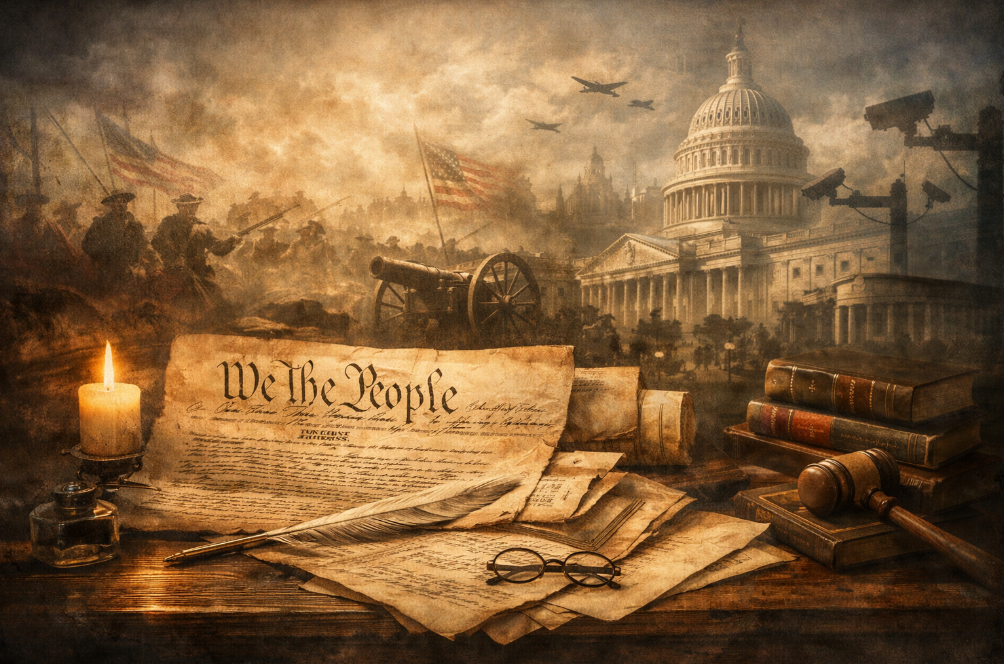
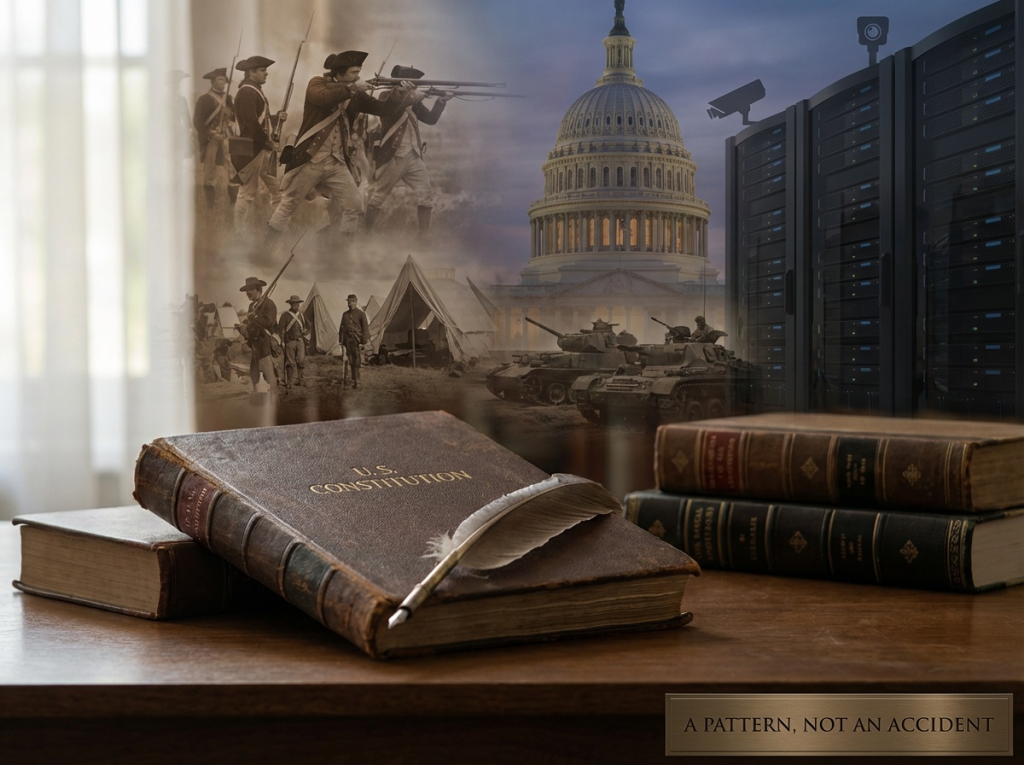
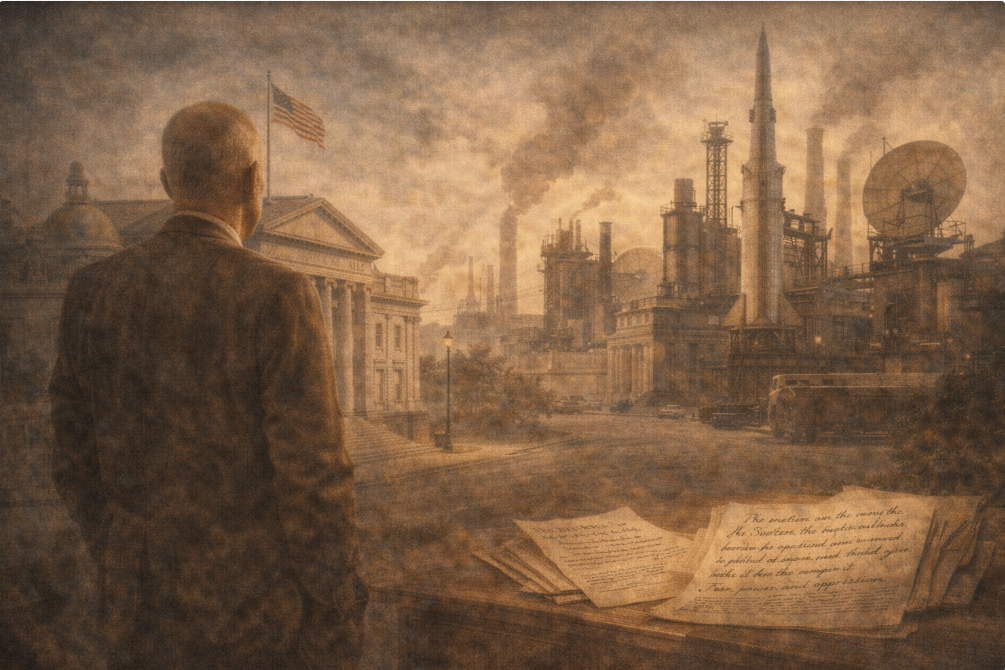
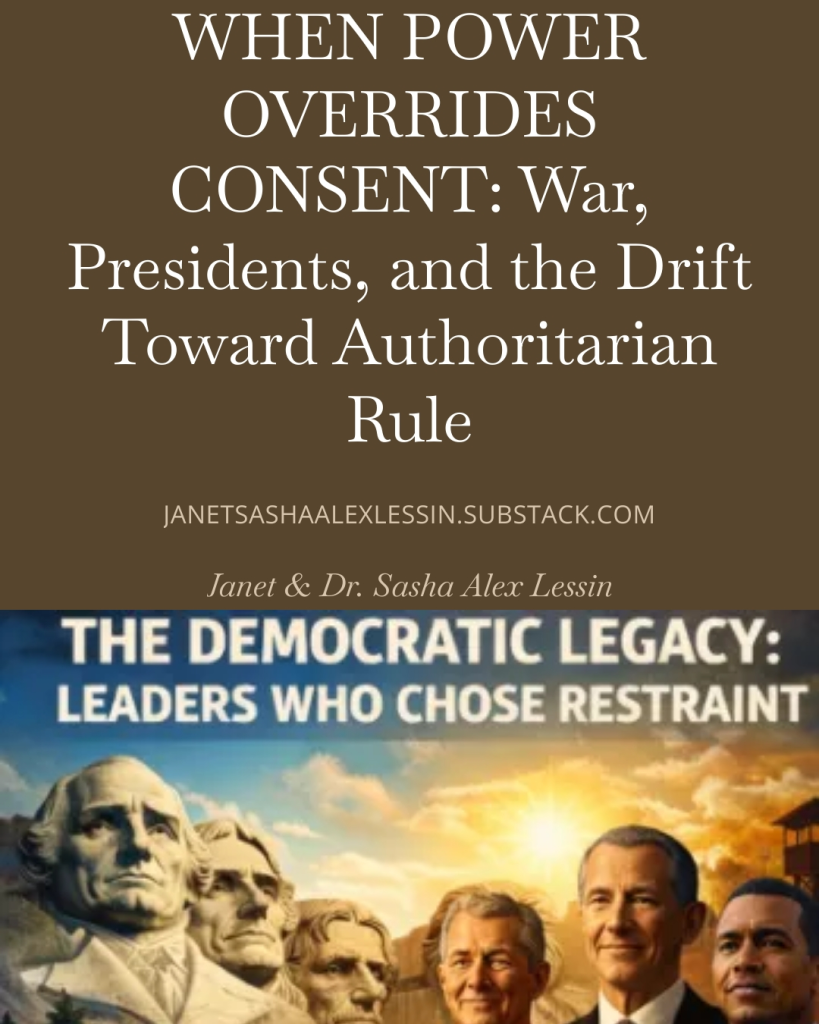
A layered visual meditation on American democracy under recurring strain. The Constitution rests in the foreground as wars from different eras bleed into one another behind it—Revolutionary, Civil War, World War—culminating in modern surveillance and institutional pressure. The image conveys continuity rather than collapse: democracy persists, but always under stress when fear and emergency logic dominate governance.
U.S. PRESIDENTS WHO TEMPORARILY CROSSED INTO AUTHORITARIAN BEHAVIOR UNDER CRISIS
Some presidents did not begin as domination-oriented leaders, yet drifted toward coercive power when faced with war, rebellion, or perceived existential threat. In these cases, authoritarian behavior emerged situationally rather than as a governing philosophy—but the damage to civil liberties was real.
Abraham Lincoln suspended rights to preserve the Union
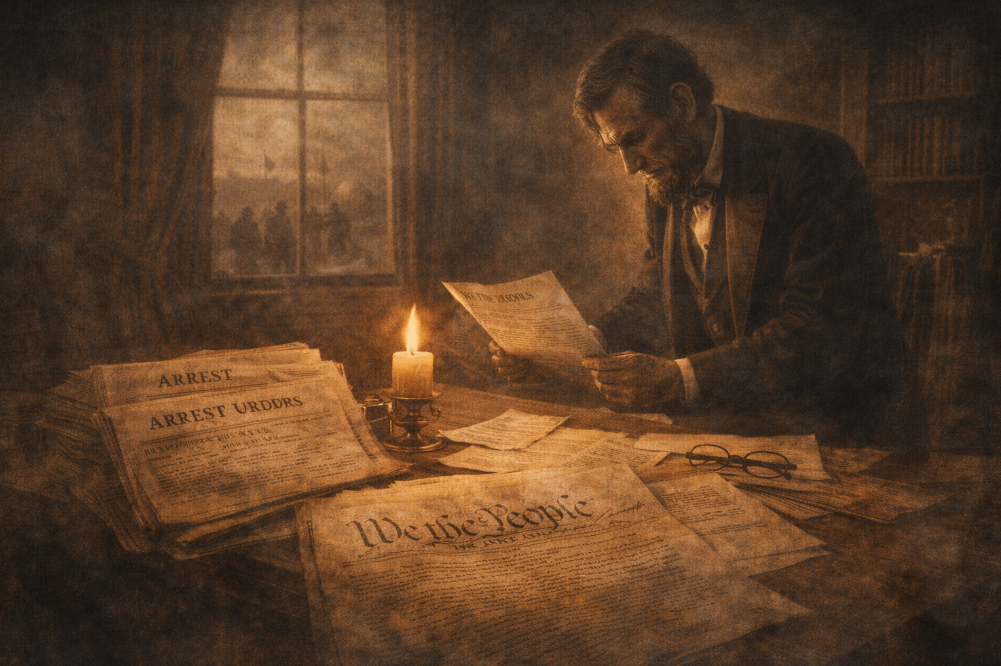
Abraham Lincoln governed during the gravest crisis in American history. Confronted with civil war, he suspended habeas corpus, authorized military arrests of civilians, and permitted the imprisonment of journalists and political critics.
Lincoln justified these actions as temporary necessities required to preserve the Constitution itself. His logic framed emergency power as a paradox: violating certain liberties to save the larger democratic structure.
While Lincoln ultimately restored constitutional norms and did not seek permanent executive supremacy, his presidency established a dangerous template—one that later leaders would exploit without his restraint or moral seriousness.
The lesson was clear: once emergency powers are normalized, future leaders may invoke them without the same existential justification.
Woodrow Wilson criminalized dissent during World War I
Woodrow Wilson entered office as a reformer but presided over one of the most repressive periods for free speech in U.S. history.
During World War I, his administration enforced the Espionage Act and Sedition Act to silence critics of the war. Thousands were arrested for speech alone. Newspapers were banned from the mail. Political activists were imprisoned for opposing conscription or questioning U.S. involvement.
Wilson framed dissent as sabotage and equated loyalty with silence.
Although the war ended and some restrictions were lifted, the precedent endured: war could justify the criminalization of conscience.
Franklin D. Roosevelt expanded executive power while defeating fascism
Franklin D. Roosevelt led the nation through economic collapse and global war. He expanded executive authority dramatically, reshaping the federal government and consolidating power in the presidency.
His most troubling action came in 1942, when he authorized the internment of Japanese Americans—citizens and non-citizens alike—without due process.
This act demonstrated how fear, even under a broadly popular and effective leader, can override constitutional protections.
Roosevelt defeated external fascism while reproducing its logic domestically: collective punishment, racialized suspicion, and obedience demanded in the name of security.
U.S. PRESIDENTS WHO RESISTED AUTHORITARIAN DRIFT DURING CRISIS
Not all presidents succumbed to domination consciousness under pressure. Some actively resisted it, even when doing so carried political risk.
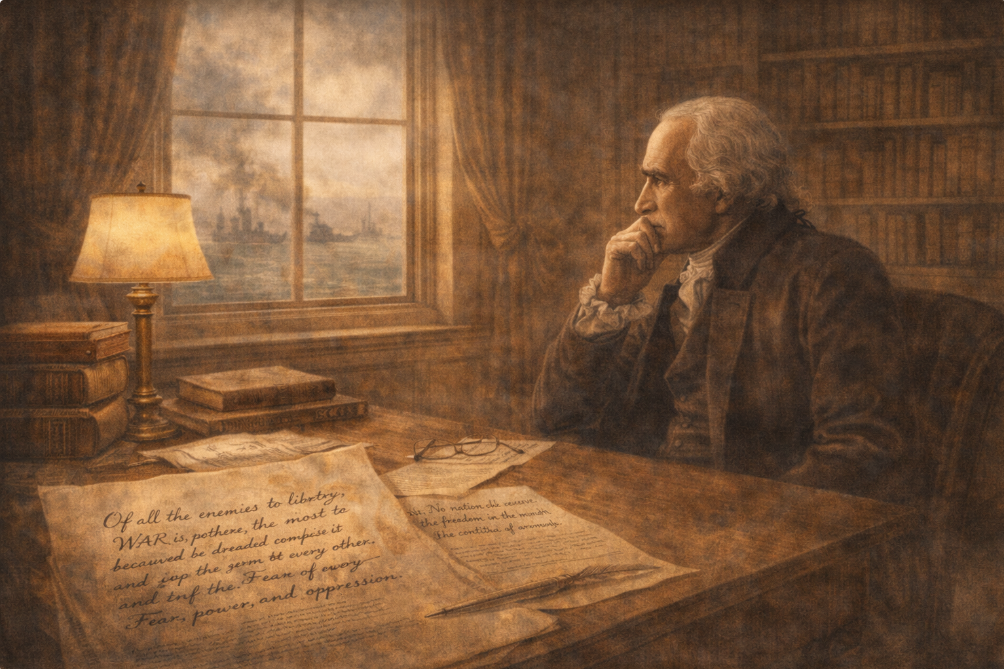
James Madison warned against war as the enemy of liberty
James Madison, often called the “Father of the Constitution,” understood the corrosive relationship between war and freedom.
He warned explicitly that war concentrates power in the executive, enables secrecy, and erodes accountability. While he presided over the War of 1812, he remained deeply uneasy about standing armies and emergency authority.
Madison’s legacy lies not in flawless execution, but in intellectual clarity: liberty cannot survive perpetual crisis governance.
Dwight D. Eisenhower named the threat of permanent militarization
A career general, Eisenhower understood war machinery from the inside. As president, he resisted pressure to escalate conflicts and, in his farewell address, warned the nation about the military-industrial complex.
He identified a structural danger: when war becomes profitable and permanent, democracy becomes ornamental.
Eisenhower’s restraint demonstrated that strength does not require domination—and that leadership can mean saying no to power.
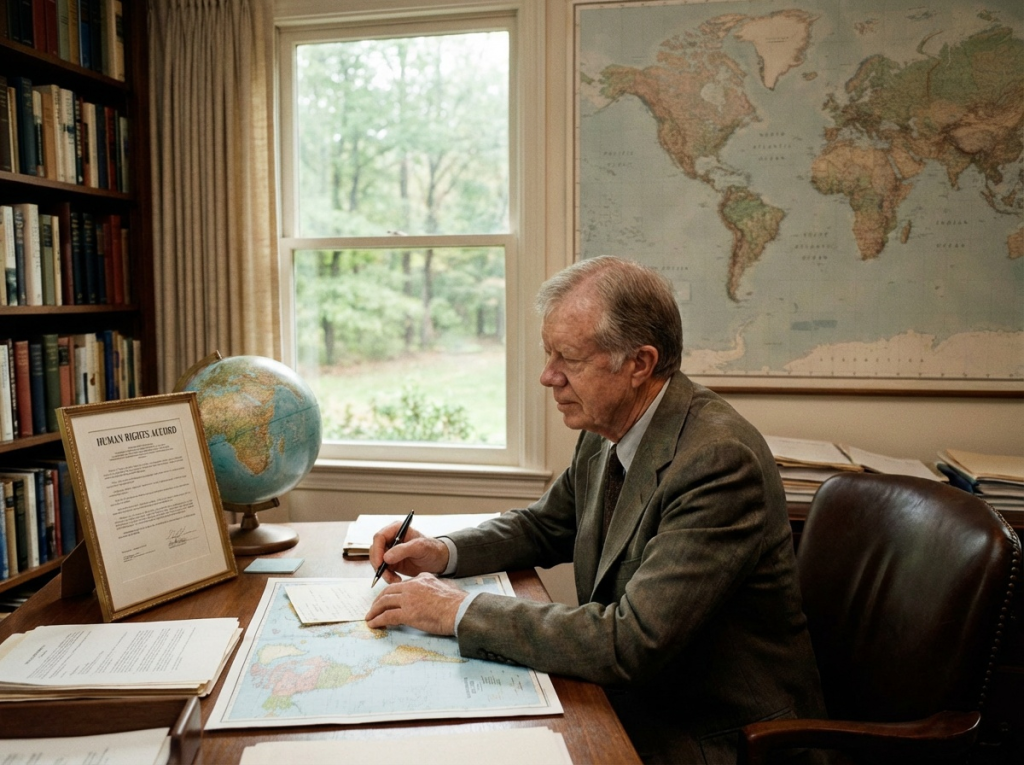
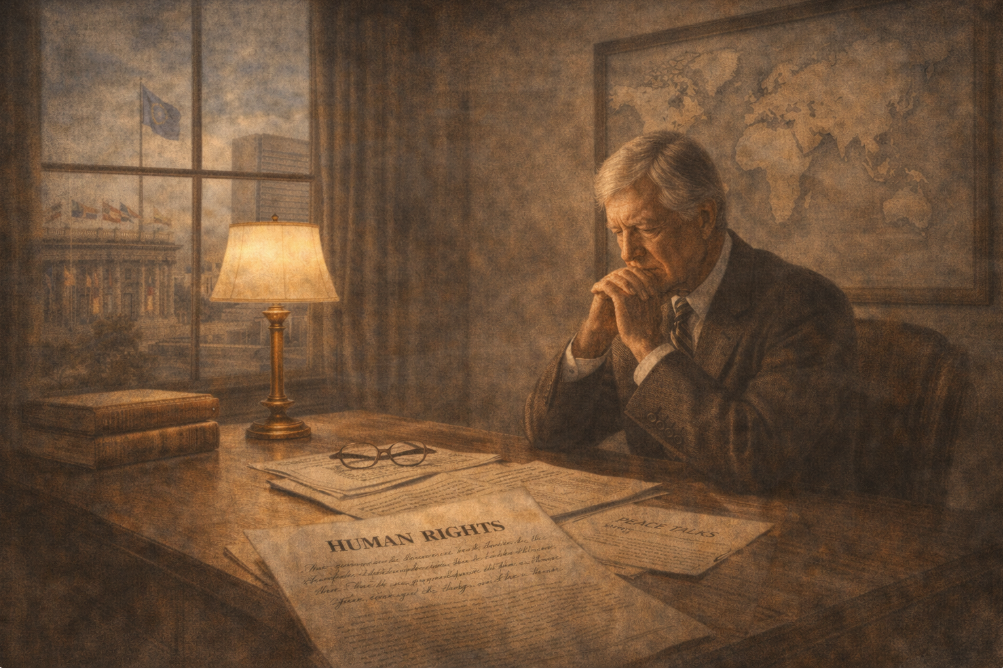
Jimmy Carter centered human rights over coercion.
Jimmy Carter governed during international instability but rejected authoritarian shortcuts.
He emphasized human rights, transparency, and diplomacy, even when these positions weakened his political standing.
Carter’s presidency illustrates a core truth: resisting domination consciousness often costs power in the short term but preserves moral legitimacy in the long term.
CONCLUSION: THE CHOICE THAT REPEATS
American history does not move in a straight line toward freedom or repression. It oscillates.
Each generation faces the same choice: partnership or domination, consent or coercion, law or loyalty.
War, emergency, and fear do not create authoritarianism—they reveal it.
The Constitution does not fail all at once. It erodes when citizens accept emergency logic as permanent governance and mistake obedience for patriotism.
The pattern is not accidental.
It is human.
And it is ongoing.
A PATTERN, NOT AN ACCIDENT
DESCRIPTION
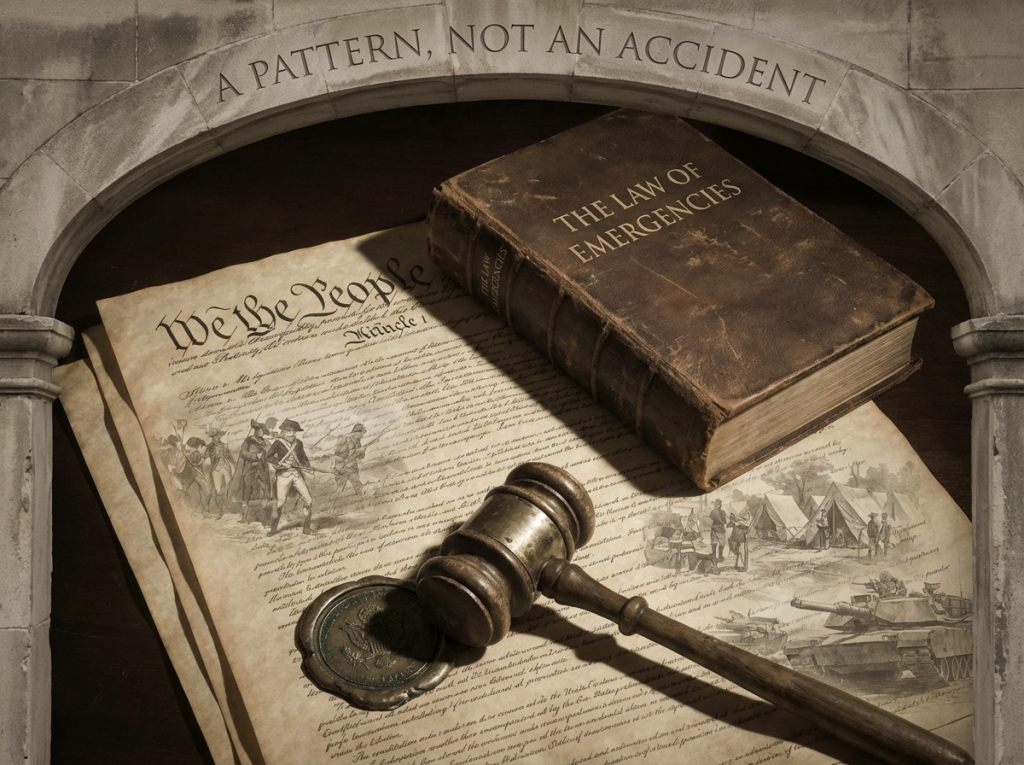
A symbolic visual establishing the core thesis: American democracy is repeatedly strained by emergency power. The image should suggest continuity across centuries rather than a single event—law, war, and authority intersecting.
OPENART.AI PROMPT
realistic, photorealistic, cinematic lighting, soft natural colors, fantasy realism, highly detailed, emotional depth, artistic composition, symbolic American democracy under strain, Constitution documents layered with faint historical battle imagery, subtle shadows suggesting recurring cycles of power and fear, no flags waving, no crowds, contemplative and sober tone, landscape orientation
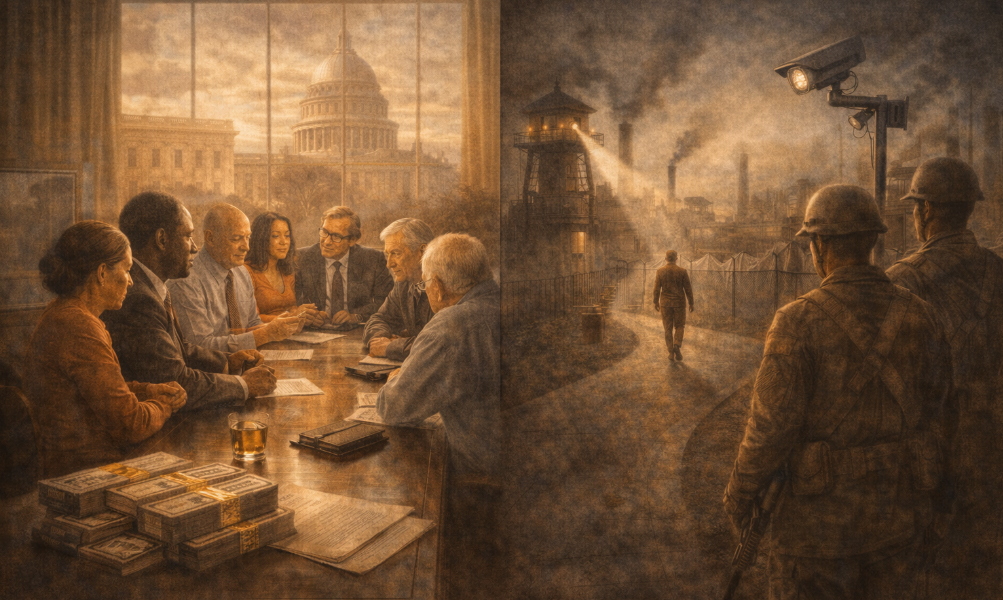
DOMINATION CONSCIOUSNESS AND POLITICAL POWER
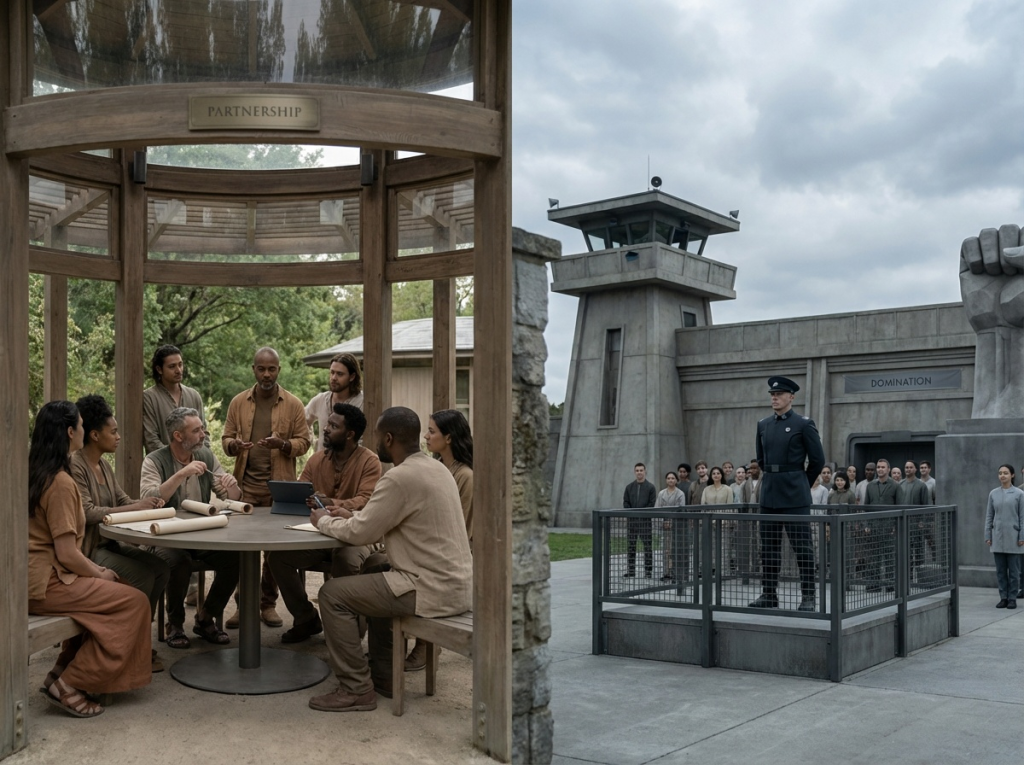
DESCRIPTION
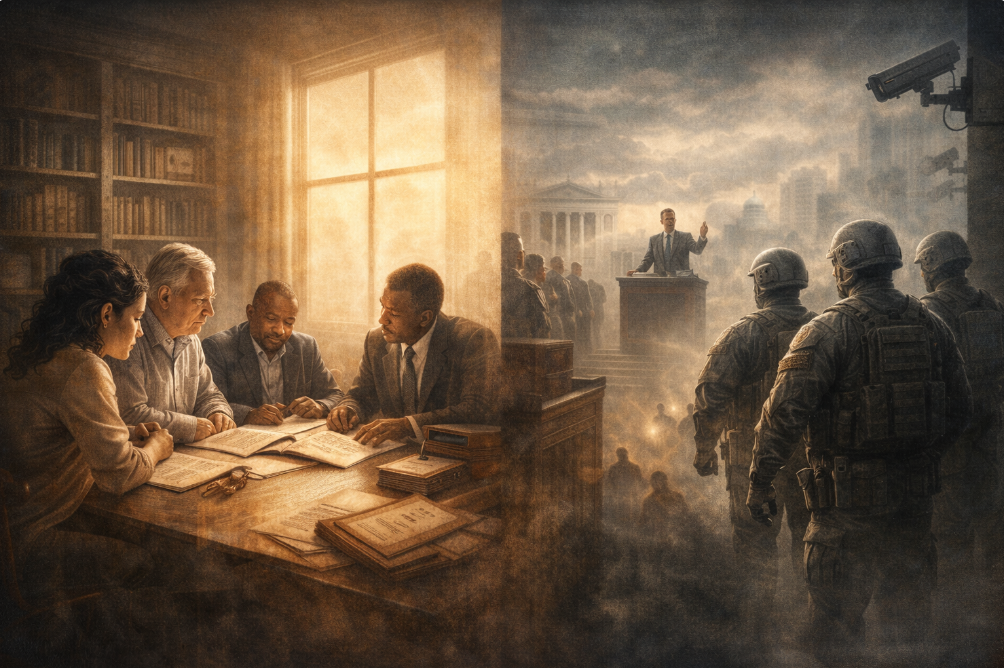
An abstract but grounded depiction of the two governance models: partnership versus domination. The image should visually contrast cooperation and coercion without slogans or caricature.
OPENART.AI PROMPT
realistic, photorealistic, cinematic lighting, soft natural colors, fantasy realism, highly detailed, emotional depth, artistic composition, split-scene governance metaphor, one side showing collaborative civic discussion, the other hierarchical authority and surveillance, subtle contrast without labels, modern timeless setting, intellectual and reflective mood, landscape orientation
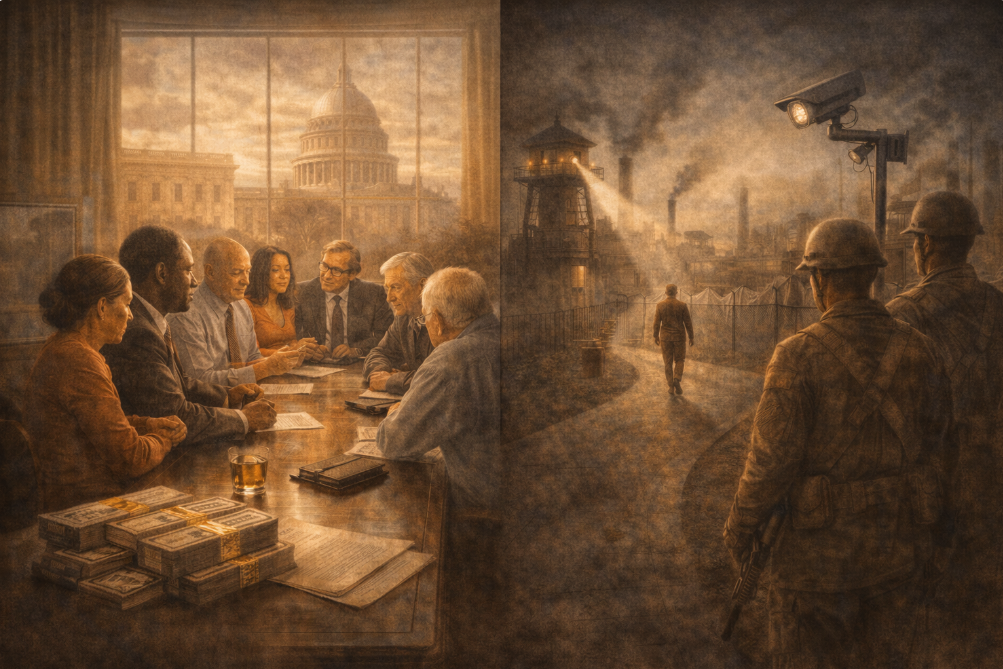
JOHN ADAMS: ORDER OVER LIBERTY
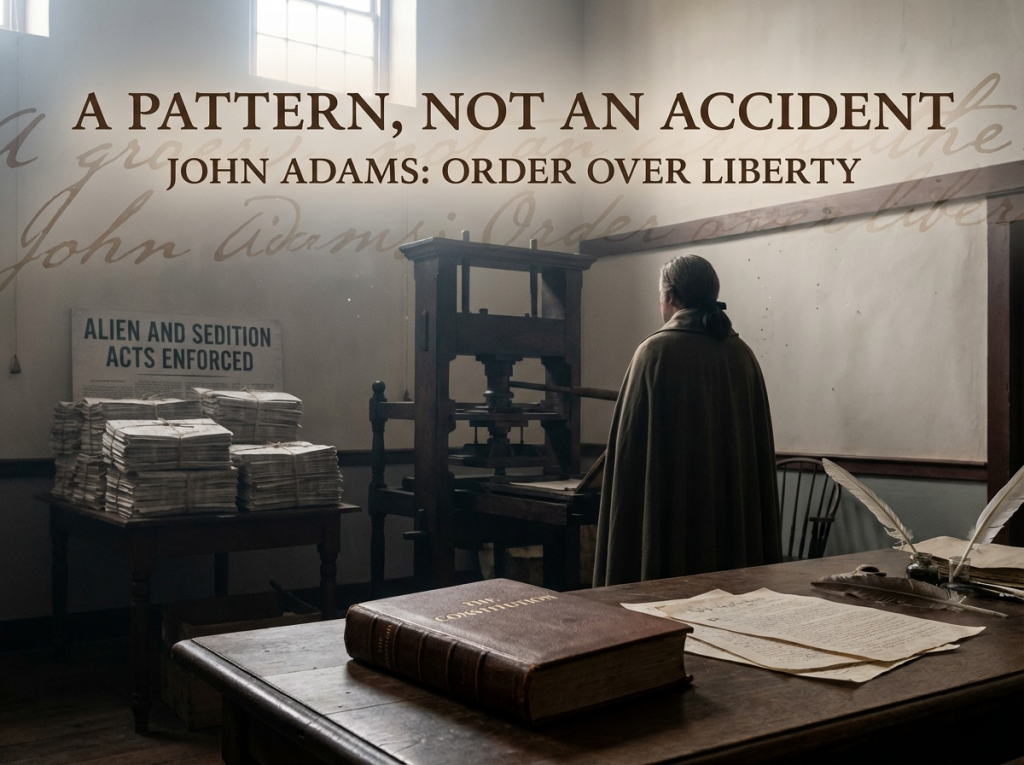
DESCRIPTION
A restrained historical portrait scene showing the tension between law and repression—journalists silenced while legal documents remain formally intact.
OPENART.AI PROMPT
realistic, photorealistic, cinematic lighting, soft natural colors, fantasy realism, highly detailed, emotional depth, artistic composition, late 18th century American setting, shadowed printing press, confiscated newspapers, legal documents on a desk, absence of violence, quiet suppression atmosphere, historical realism, landscape orientation
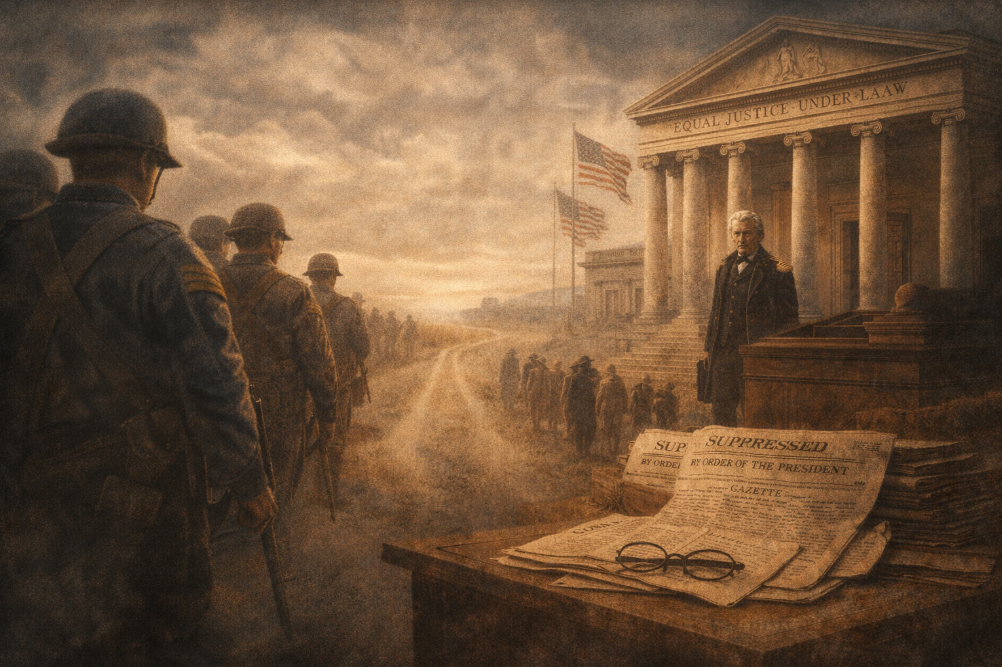
ANDREW JACKSON: RULE BY FORCE
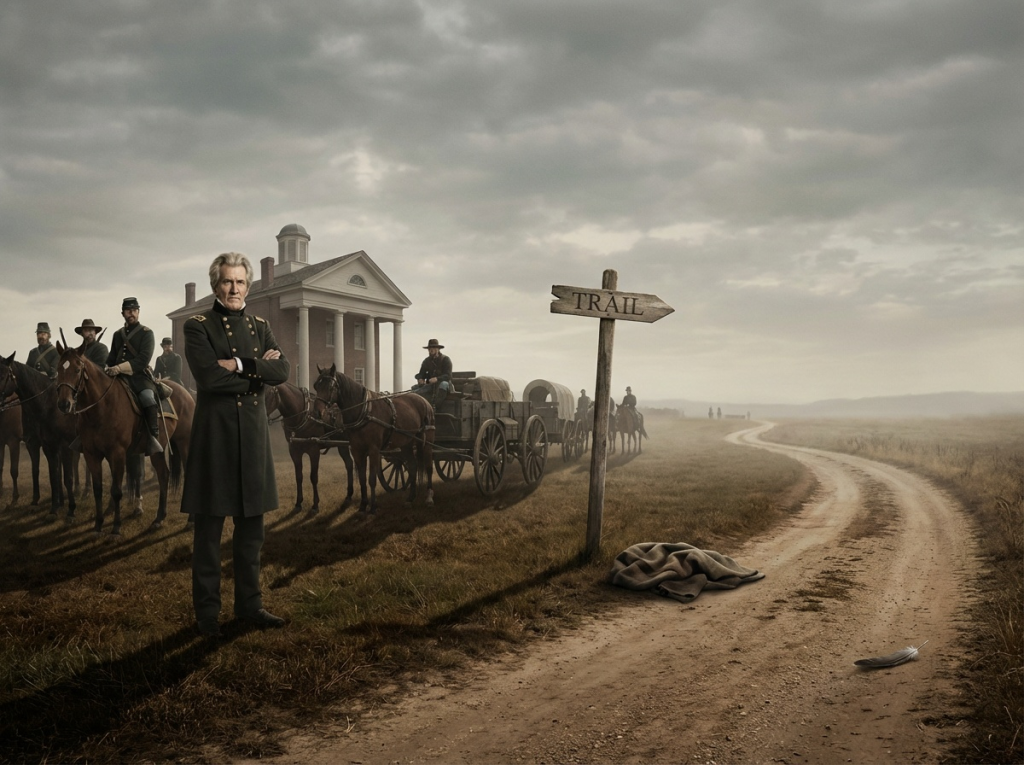
DESCRIPTION
An image conveying executive domination overriding law—military authority eclipsing judicial restraint, with Indigenous displacement implied respectfully and symbolically.
OPENART.AI PROMPT
realistic, photorealistic, cinematic lighting, soft natural colors, fantasy realism, highly detailed, emotional depth, artistic composition, 19th-century American executive power scene, military presence overshadowing courthouse, long road fading into distance symbolizing forced removal, no graphic suffering, solemn and grave tone, landscape orientation
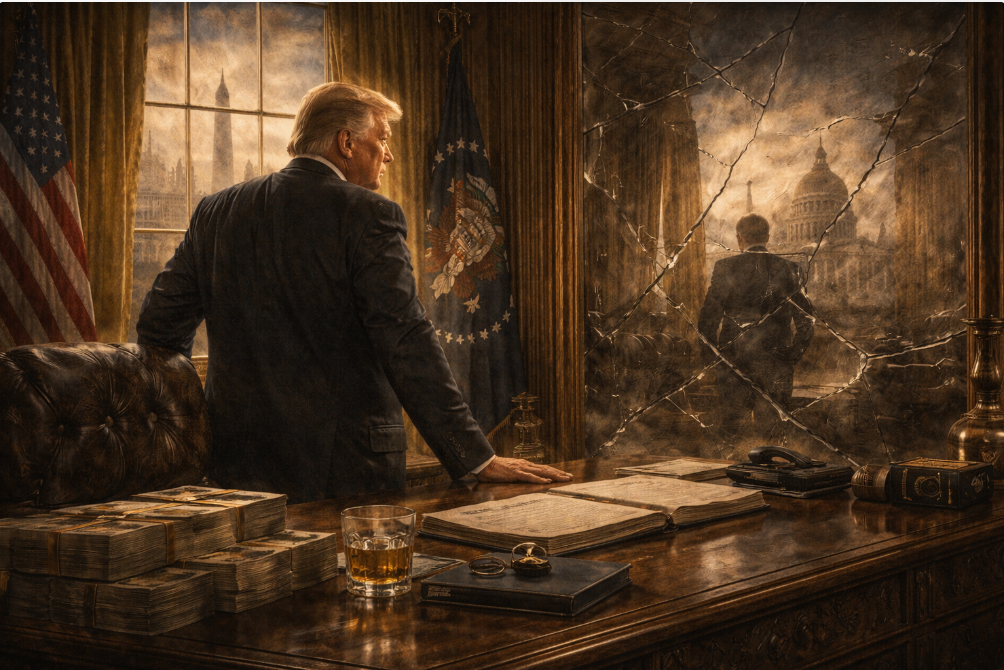
DONALD TRUMP: KLEPTOCRACY UNMASKED
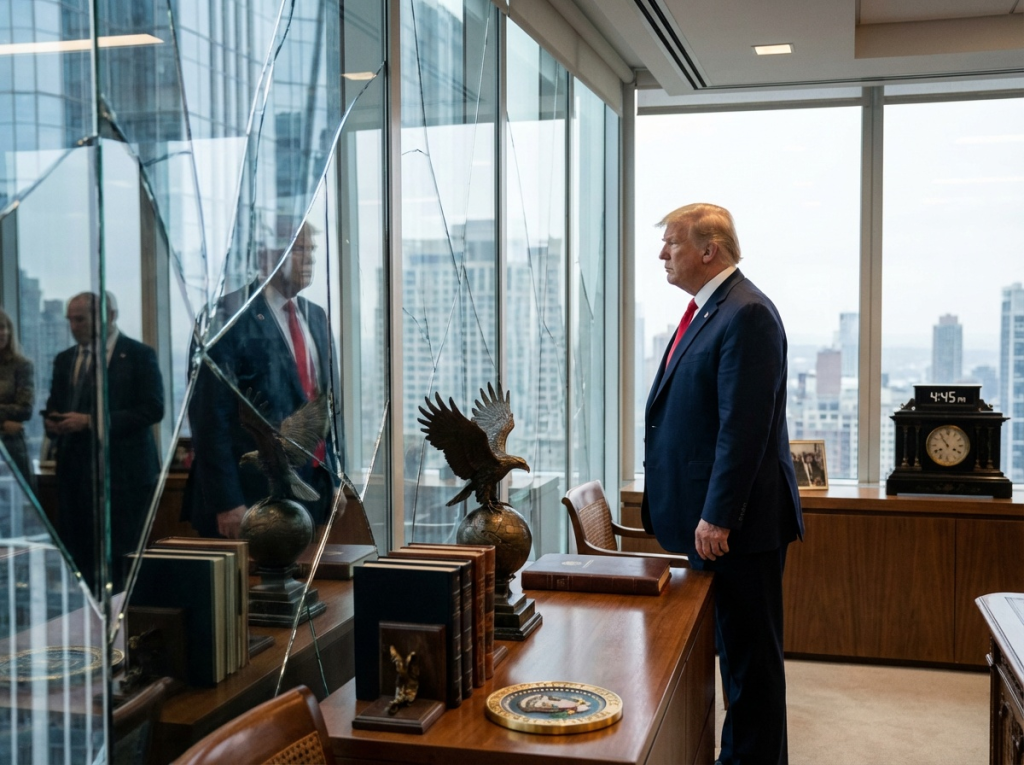
DESCRIPTION
A modern image illustrating personalized power, loyalty over law, and institutional strain—without caricature or spectacle.
OPENART.AI PROMPT
realistic, photorealistic, cinematic lighting, soft natural colors, fantasy realism, highly detailed, emotional depth, artistic composition, modern executive office with fractured reflections, symbols of wealth and power subtly dominating democratic institutions, tense atmosphere, no crowds, no slogans, contemporary realism, landscape orientation
ABRAHAM LINCOLN: EMERGENCY POWER AND THE UNION
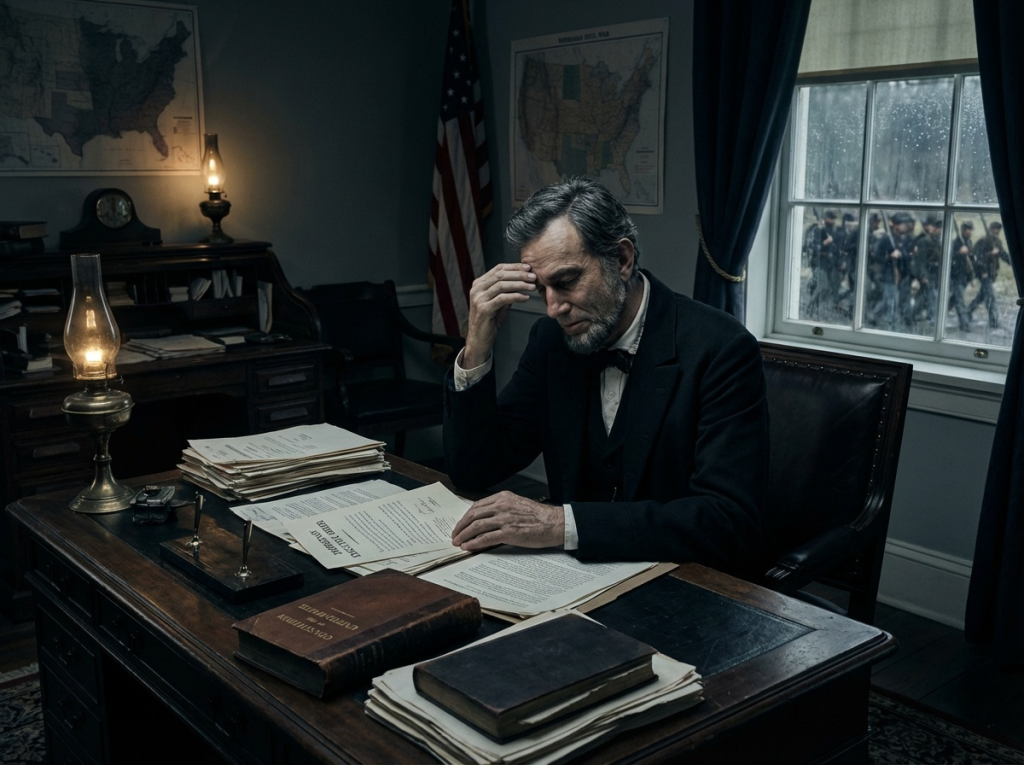
DESCRIPTION
A somber Civil War–era image showing the moral weight of emergency decisions—liberty temporarily constrained under existential threat.
OPENART.AI PROMPT
realistic, photorealistic, cinematic lighting, soft natural colors, fantasy realism, highly detailed, emotional depth, artistic composition, Civil War era interior, solitary leader reviewing arrest orders beside constitutional text, heavy shadows, moral tension without judgment, historical realism, landscape orientation
WOODROW WILSON: DISSENT AS CRIME
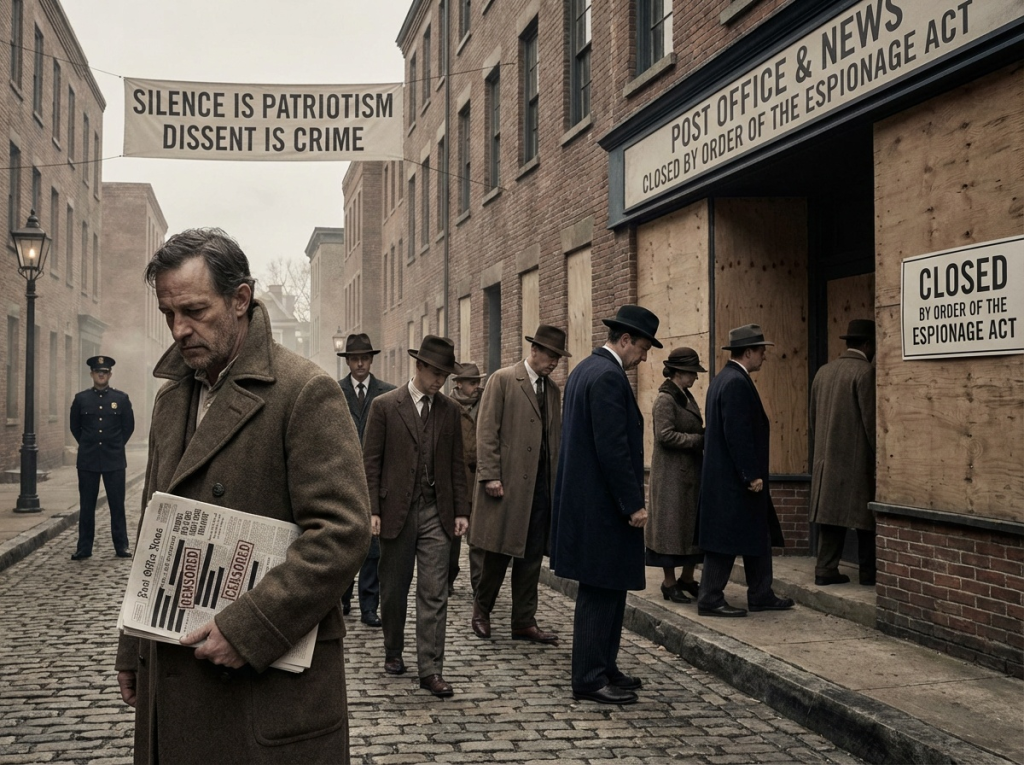
DESCRIPTION
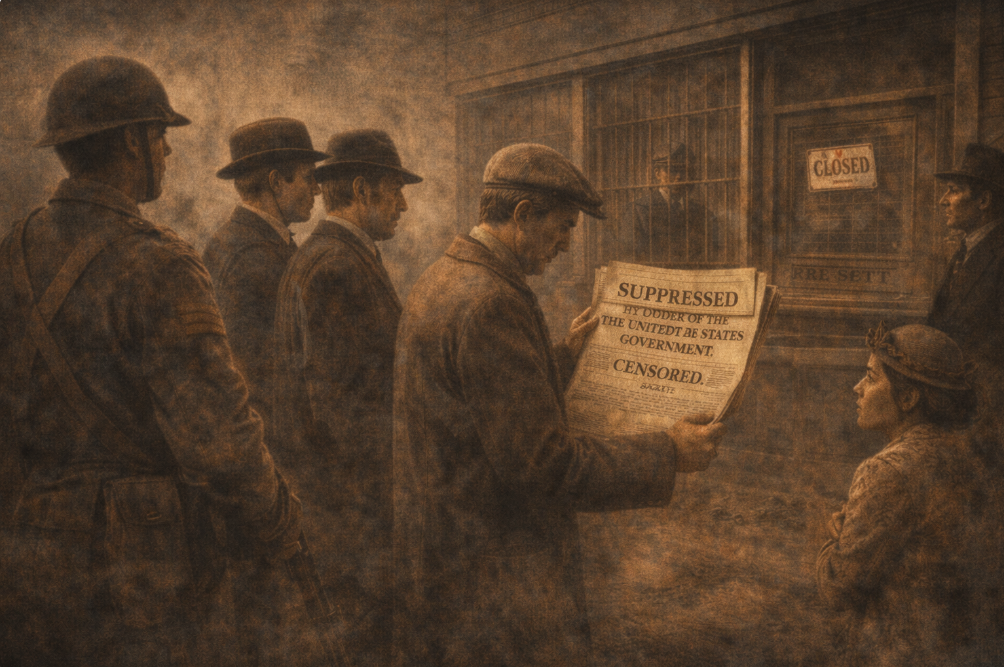
An image capturing the criminalization of speech during wartime—ordinary citizens silenced through legal mechanisms rather than violence.
OPENART.AI PROMPT
realistic, photorealistic, cinematic lighting, soft natural colors, fantasy realism, highly detailed, emotional depth, artistic composition, World War I era America, censored newspapers, closed post office windows, citizens watched but not attacked, quiet repression, historical authenticity, landscape orientation
FRANKLIN D. ROOSEVELT: POWER AND CONTRADICTION
DESCRIPTION
A layered image reflecting Roosevelt’s leadership and its moral contradictions—democratic strength alongside the violation of civil liberties.
OPENART.AI PROMPT
realistic, photorealistic, cinematic lighting, soft natural colors, fantasy realism, highly detailed, emotional depth, artistic composition, 1940s America, strong executive presence contrasted with barbed wire shadows and family silhouettes, no explicit camps, reflective and somber mood, landscape orientation
JAMES MADISON: WAR AS THE ENEMY OF LIBERTY
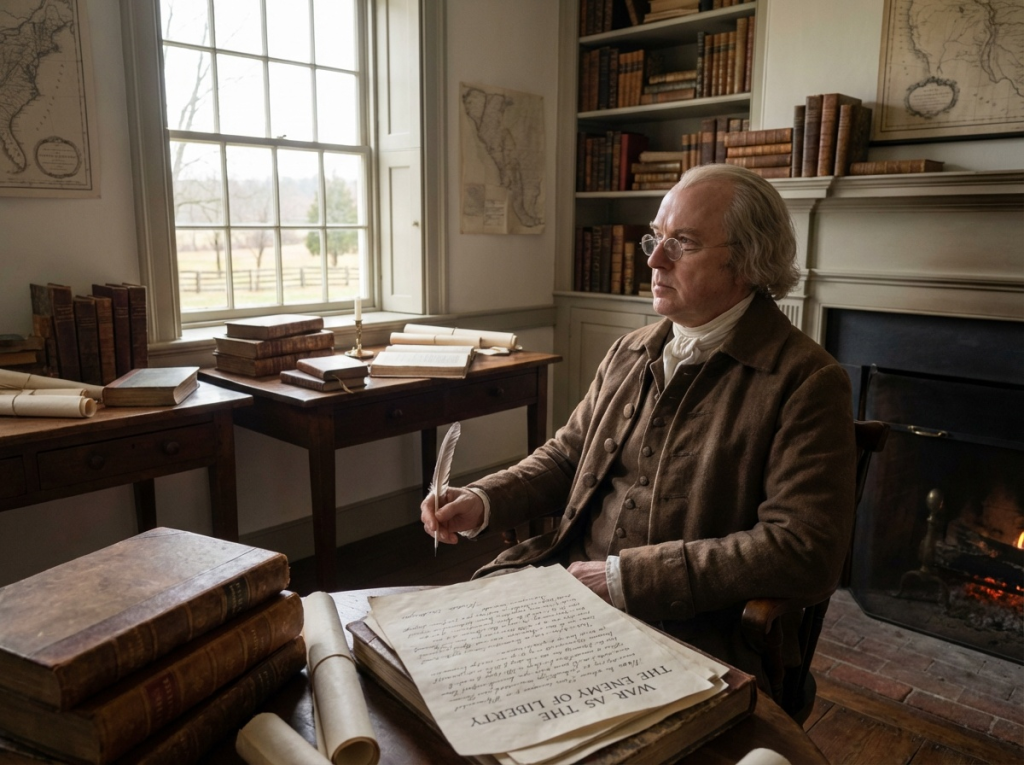
DESCRIPTION
A contemplative image emphasizing foresight and restraint—liberty protected through skepticism of permanent emergency.
OPENART.AI PROMPT
realistic, photorealistic, cinematic lighting, soft natural colors, fantasy realism, highly detailed, emotional depth, artistic composition, early American study room, handwritten warnings about war and power, soft daylight, calm intellectual atmosphere, historical realism, landscape orientation
DWIGHT D. EISENHOWER: WARNING FROM WITHIN
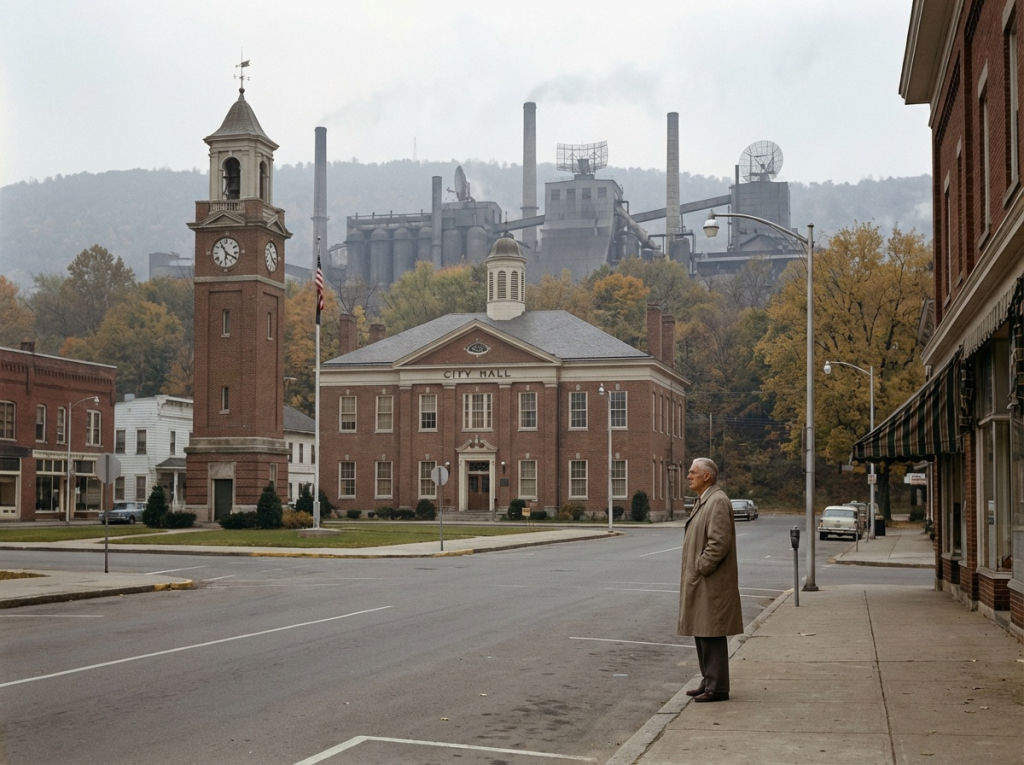
DESCRIPTION
A quiet, modern-historical image symbolizing the military-industrial complex as a structural force rather than a villain.
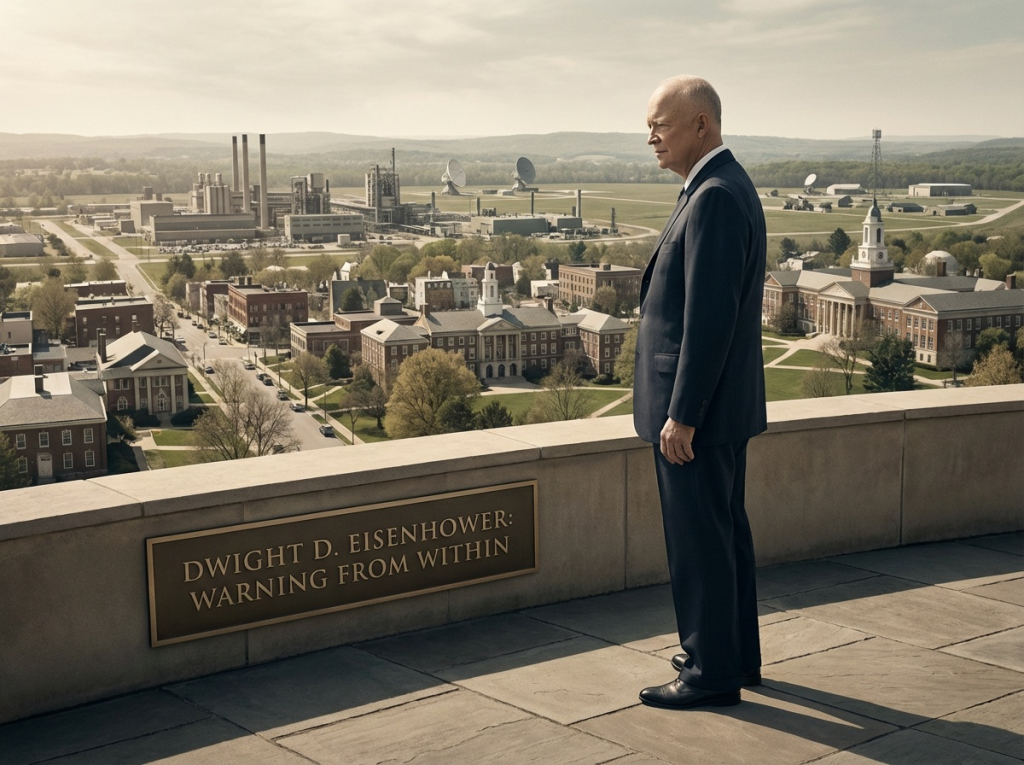
OPENART.AI PROMPT
realistic, photorealistic, cinematic lighting, soft natural colors, fantasy realism, highly detailed, emotional depth, artistic composition, mid-20th century America, factories and defense infrastructure looming behind civic buildings, restrained palette, thoughtful tone, no propaganda imagery, landscape orientation
JIMMY CARTER: MORAL RESTRAINT IN POWER
DESCRIPTION
An image centered on ethical leadership—human rights and diplomacy prioritized over force.
OPENART.AI PROMPT
realistic, photorealistic, cinematic lighting, soft natural colors, fantasy realism, highly detailed, emotional depth, artistic composition, late 20th century diplomatic setting, simple desk, global context implied through maps and light, humility and restraint emphasized, landscape orientation
THE CHOICE THAT REPEATS
DESCRIPTION
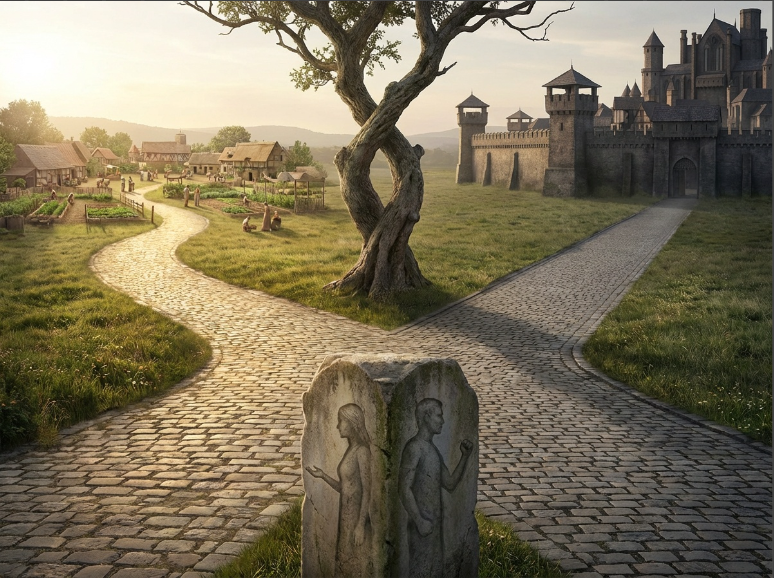
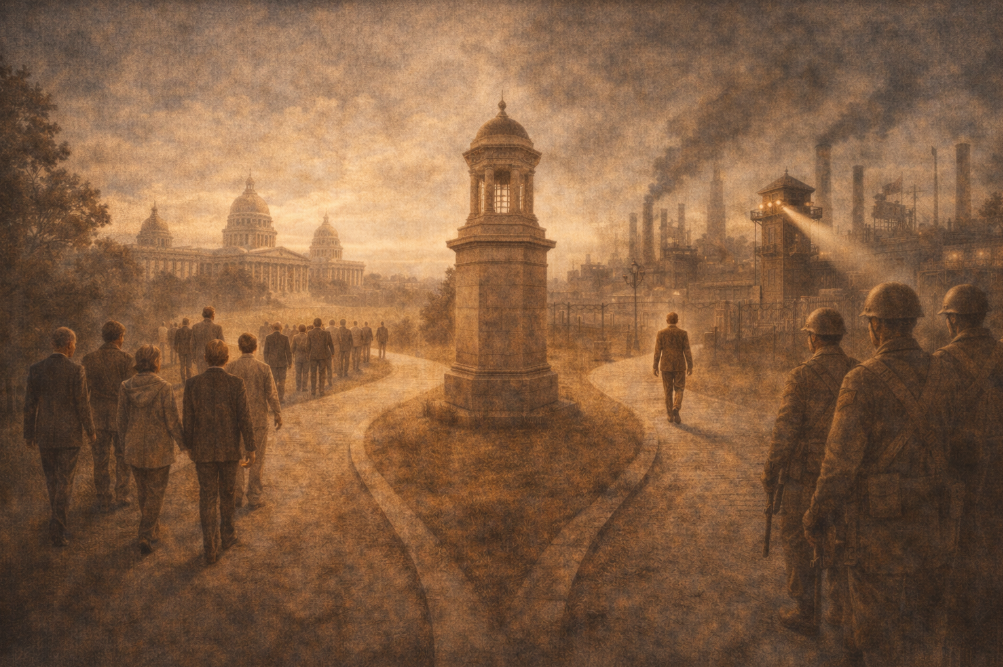
A concluding composite image symbolizing the recurring crossroads between domination and partnership across generations.
OPENART.AI PROMPT
realistic, photorealistic, cinematic lighting, soft natural colors, fantasy realism, highly detailed, emotional depth, artistic composition, symbolic civic crossroads, one path open and communal, the other controlled and monitored, no signage, no slogans, timeless setting, contemplative resolution, landscape orientation
TAGS (comma-separated)
FREEDOM OF SPEECH UNDER FIRE: WAR IS A U.S. PRETEXT FOR CENSORSHIP
by Enki updated on Leave a Comment on FREEDOM OF SPEECH UNDER FIRE: WAR IS A U.S. PRETEXT FOR CENSORSHIP
By Sasha Alex Lessin, Ph.D., Anthropology, UCLA
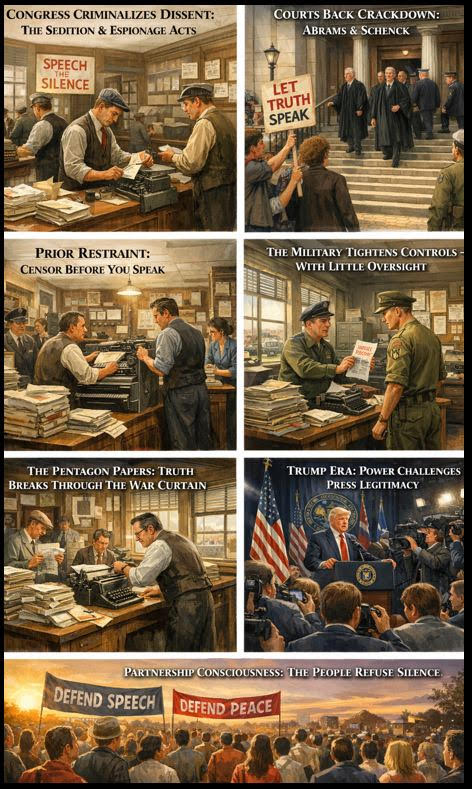
CONGRESS CRIMINALIZED DISSENT VIA SEDITION AND ESPIONAGE ACTS
In 1917–1918, lawmakers criminalized honest speech against war policy. Officials arrested critics. Judges handed down harsh sentences. Postal authorities blocked anti-war newspapers. The First Amendment sat ignored while elected leaders punished people of conscience.
Howard Zinn wrote: “During war, government needs control over the population; it achieves that control by silencing dissent.” [Zinn, pp. 30, 137, 144]. “Domination waves flags while it gags truth. Democracy collapses without free breath.”
An activist woman, Anna, faced a crowd and declared: War profiteers fear truth more than enemy bullets. Whenever courts stand with repression, repression spreads.“Speech that questions war protects democracy.
The domination mindset, our heritage from the Anunnaki, loves obedience and hierarchy, but the partnership orientation of women like Anna honors conscience and truth.
COURTS DEFENDED THE CRACKDOWNS
Judges upheld convictions against those who challenged wartime policy. In Schenck v. United States, the Court claimed that speech can create “clear and present danger.” In Abrams, the Court again supported the punishment of dissenters.

Even Justice Holmes—though dissenting later—still spoke within a war logic framework. The message from power rings clear: war needs silence, and domination demands unity, not wisdom. Partnership awareness defends conscience, not silence.
PRIOR RESTRAINT?
Officials move beyond punishment after the fact. They attempt prior restraint—censorship before publication. War rhetoric functions as the justification. Once leaders invoke “security,” domination gains a blank check.
Howard Zinn warns that “governments lie and newspapers print the lies when whole nations go to war.”
Military authorities maintain far tighter speech restraints than civilian agencies. Service members risk punishment when they question policy or reveal wrongdoing. Oversight remains weak. A strict obedience culture replaces open inquiry.
Howard Zinn reminds us that “The battlefield always expands to include the citizens at home.”
OUR MILITARY CONTROLS SPEECH EVEN MORE, WITH NO CIVILIAN OVERSIGHT
When military power expands, honest voices retreat unless citizens defend them.
Activist woman Nadia, mother of a young corporal, spoke out, Our children deserve truth, not gag orders.
Domination worships command. Partnership honors moral courage.
PERSECUTION OF EUGENE DEBS AND THE AMERICAN SOCIALIST PARTY
Federal officials targeted Eugene Debs because he spoke for peace and worker dignity. He stood before audiences across the Midwest and declared that workers have the right to question war. He reminds listeners that democracy requires dissent. The government reacted with fury. Prosecutors charged him under the Espionage Act for criticizing the draft. A judge sentenced him to ten years in federal prison. Crowds still gathered, because their love for Debs never fades. His message traveled from town to town even while he sat behind bars. Supporters placed his name on the presidential ballot in 1920. Almost a million citizens voted for him anyway. War fever cannot crush conscience.
Howard Zinn writes that “Debs spoke for those without power and paid the price for it.” The Socialist Party called for social justice, workplace democracy, peace, and dignity for all citizens. Government agents raided party offices, seized papers, and arrested leaders. Loyalists faced job loss and public shaming. Free speech bent under the weight of state power. Domination fears anyone who tells working people that their voices matter. Activist woman Clara told a street meeting, “When they jail Debs, they jail part of America’s heart.”
Domination insists on obedience at any cost; Domination obedience is challenged when Partnership trusts conscience — even in wartime. Debs went to prison for anti-war speech, yet never surrendered conscience.
VIETNAM, IRAQ, AND THE WAR MACHINE
During the Vietnam era, federal agencies harassed critics. Employers threatened activists. Journalists who questioned the official narrative faced exclusion and ridicule. Later, during the buildup to the Iraq War, déjà vu arrived. Intelligence distortions spread. The media amplified them. Critics lost jobs, platforms, and safety. Zinn, however, wrote, Protesters, do not damage democracy; war makers damage it.
Truth packs its suitcase whenever the empire prepares for war.
Joy, a nurse who spoke at a town hall, said, Peace grows only from honest speech.
Domination markets war. Partnership nurtures healing.
THE PENTAGON PAPERS: TRUTH BREAKS THROUGH THE WAR CURTAIN
Defense analyst Daniel Ellsberg studied classified documents. He discovered deception at every level: leaders expanded war while privately admitting failure. Ellsberg made a moral choice: truth outranks career and privilege. He shared the papers with The New York Times and The Washington Post.
The Nixon White House erupted with rage. Officials launched smear campaigns. They burglarized Ellsberg’s psychiatrist’s office and demanded prior restraint from the courts. But the Supreme Court ruled — in New York Times v. United States (1971) — that the First Amendment forbids government censorship before publication except under the narrowest conditions. The horrid truthes of America’s war crimes in Nam reached the public thanks to Ellsberg’s courage. [Zinn, op. cit. pp. 218, 221, 230]
Ellsberg said, My courage came from love of truth, not from hatred of enemies.”
Domination hides. Partnership illuminates. Truth about war belongs to the people — always.”
TRUMP ERA: POWER CHALLENGES PRESS LEGITIMACY
During the Trump period, he attacked journalists. He branded the press “enemy of the people.” Critics faced loyalty tests. Whistleblowers feared prosecution. Censorship language — treason, sedition, enemy — filled the air. His rhetoric came straight from war culture. But, as Zinn wrote long ago: “Dissent does not mean disloyalty; dissent means loyalty to humanity.”
When leaders frame dissent as treason, can democracy still breathe? Activist woman Serena responded, We claim free voice — especially when power snarls.
Domination confuses obedience with patriotism. Partnership defines loyalty as honesty.
PARTNERSHIP CONSCIOUSNESS: THE PEOPLE REFUSE SILENCE
Throughout history, women, veterans, students, clergy, and workers defended speech when war threatened it.
Partnership consciousness rises wherever love outranks fear. The Great Goddess voice speaks for compassion, humanity, accountability, and truth. Women, veterans, students, clergy, and workers defend speech when war threatens it.
Speech keeps democracy alive. Silence feeds the empire. “No empire outranks conscience. Domination demands silence. Partnership sings truth.
REFERENCE
Zinn,H., 2003, Passionate Declarations, pp. 30, 137, 144, 218, 221, 230.
#freeSpeech #pressFreedom #warCensorship #priorRestraint #SeditionAct #EspionageAct #FirstAmendment #militarySpeechControl #PentagonPapers #DanielEllsberg #TrumpAndPress #dominationSystem #partnershipConsciousness #antiwarActivism #womenPeaceLeaders #HowardZinn #ThomHartmann #dissentRights #democracyAndWar
TAGS
freedom of speech, First Amendment, war and censorship, wartime repression, Espionage Act, Sedition Act, prior restraint, press freedom, dissent rights, antiwar activism, Howard Zinn, Eugene V. Debs, Daniel Ellsberg, Pentagon Papers, Supreme Court and war, clear and present danger, military speech control, whistleblowers, journalism under fire, democracy and war, domination system, partnership consciousness, women peace leaders, civil liberties, constitutional rights, government secrecy, war propaganda, truth and power, conscience over obedience
Share this: