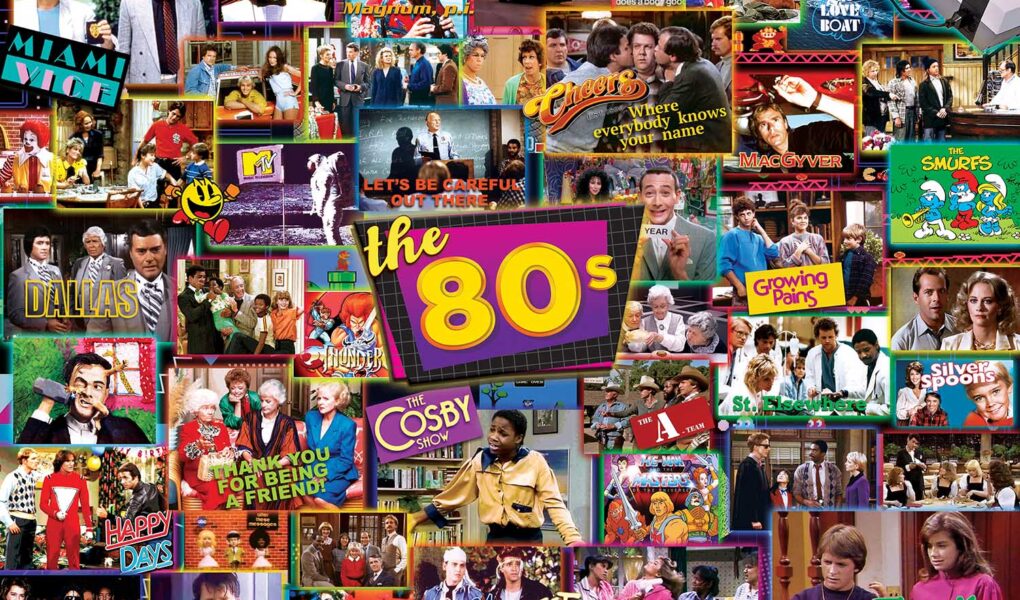
More evidence of the alien presence on Earth began to emerge in books, television, and movies. The government was well aware and continued its soft disclosure strategy by working with Hollywood. Since “the powers that be” control everything, nothing gets out there that they really don’t want us to see. This decade we saw the emergence of major science fiction movies like the continuation of the Star Trek and Star Wars series.
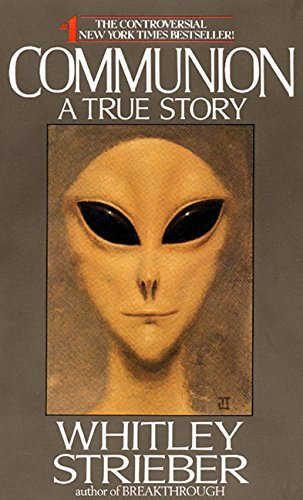
Communion: A True Story by Whitley Strieber (1988-02-01) Paperback
Communion is the iconic classic in which Whitley Strieber describes his 1985 close encounter experiences. This book, which fundamentally changed the way we understand close encounters and alien abductions, is presented here with a new introduction by the author.
The message of Communion, that something unknown is really happening to people but that we have not studied it enough to understand it, remains as timely now as it was in 1987 when the book was first published. And Whitley Strieber’s riveting account of what he experienced, along with his relentless and expert pursuit of the reality behind the experience, is to this day the greatest such account ever published.
Communion Paperback – May 5, 2022
by Whitley Strieber (Author)
Best price
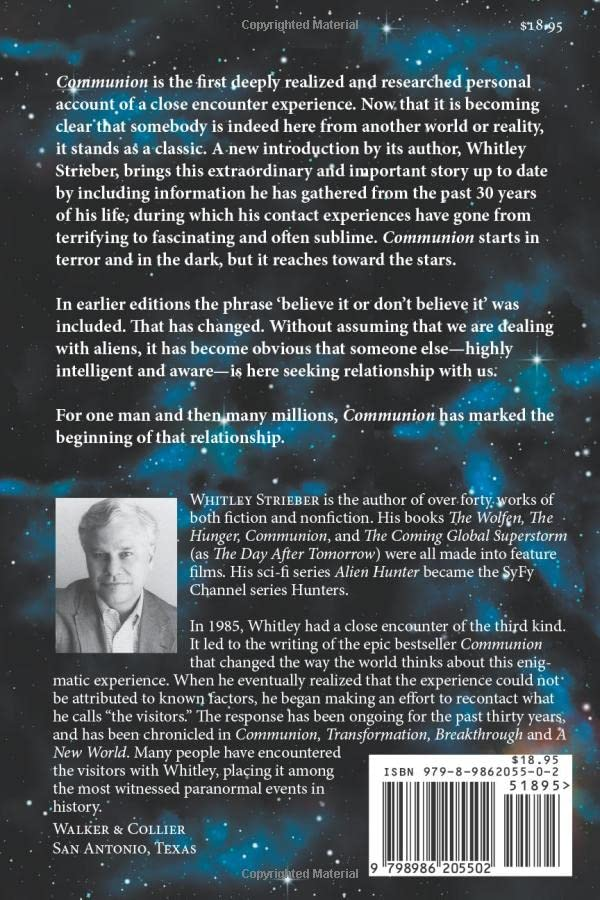
Do not miss this great classic and the powerful introduction that explores the situation as it stands today–even more provocative now, as official sources are admitting that UFOs are real unknowns and that they seem to have something to do with close encounters.
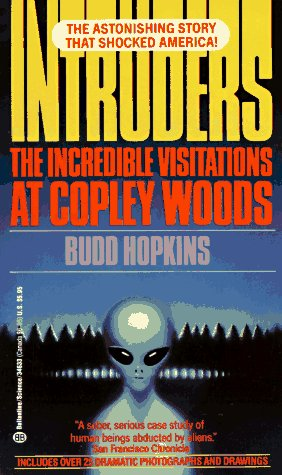
Intruders Mass Market Paperback – Unabridged, December 12, 1987
by Budd Hopkins (Author)
Best price
“One comes to a tender regard for Hopkins’s subjects. Their uniform similarities of the description of their UFO abductions and of the aliens bear a faithful fact that could sway many an ironclad skeptic.”
THE KIRKUS REVIEWS
There have been tens of thousands of verified UFO sightings and landings. But it is the actual temporary abductions that are the most controversial and dramatic stories behind this phenomenon. In the summer of 1983, Kathie Davis was floated out of her room in rural Indianapolis, while she slept, then subjected to a physical examination inside a UFO. The story she told the world afterward, corroborated by specialists and hundreds of other victims all over the country, is not to be missed or dismissed lightly.
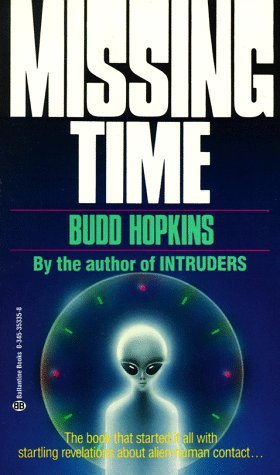
Missing Time Mass Market Paperback – March 12, 1988
by Budd Hopkins (Author)
Best price
The arrival of extraterrestrial visitors is one of the most momentous events of our time. In Intruders Budd Hopkins explored the shocking truth about the contact between earthling and alien: that human beings are temporarily abducted and taken aboard UFOs. But Hopkins could not have told the stories of those victims without first having discovered the one experience common to all who report alien encounters — the phenomenon known as “missing time.”
Missing time tells how the people who have experienced abductions retained no memory of them — all traces of the trauma were effectively erased from their memory. Yet, under hypnosis, many abductees were able to recall in vivid, convincing detail, the harrowing experiments that left mysterious scars on their bodies, the eerie interiors of UFOs where they were held captive, and the astonishing faces of their alien hosts.
The stories of seven victims of these otherworldly intruders are told here — in detail at once dispassionate and dramatic, fully supported by scientific documentation. They are stories that could belong to anyone: your neighbors, your loved ones, even you.
UFOs & Aliens sightings & contact in the 1980s
http://www.ufoevidence.org – An excellent resource
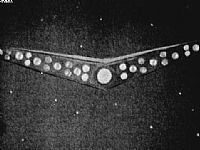
The Hudson Valley Boomerang Sightings 
1981 – Hudson Valley, New York, United States
Between 1982 and 1995, more than seven thousand cases were investigated and documented by a team of investigators led by Philip J. Imbrogno, a high school science teacher and astronomer in Greenwich, Connecticut. The heaviest period was between the end of 1982 and 1986 when more than five thousand people reported seeing the object. View full report
Source: Bob Pratt ID: 1084
Case Type: MajorCase Features: Mass Sighting

The Cash-Landrum Case
December 29, 1980 – Huffman, Texas, United States
A terrifying encounter with a flame-belching UFO on a lonely road near Huffman, Texas, resulted in appalling injuries for the three innocent victims. According to Bob Pratt, “the case remains one of the most important in the history of ufology. It has never been resolved. Someone in the U.S. knows exactly what happened to Betty and Vickie and Colby but they have remained silent despite all the suffering – and ridicule – those three endured.” View full report
Source: NICAP ID: 86
Case Type: MajorCase Features: Physiological Effects, Injury

U.S. Congressman and Presidential candidate Dennis Kucinich sighting of large triangular craft in Washington state
September 1982 – Graham, Washington, United States
Dennis Kucinich saw a large triangular craft over the home of actress Shirley Maclaine in the 1980s. “He looked up, and he saw a gigantic triangular craft, silent, and observing him. It hovered, soundless, for ten minutes or so, and sped away with a speed he couldn’t comprehend.” View full report
Source: Cleveland Plain Dealer (Cleveland, OH), Wall Street Journal, and other sources ID: 1177
Case Type: PressReport Features: Silent, Witness Photo, Famous Person
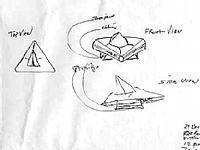
The Rendlesham Forest Incident
December 26, 1980 – Rendlesham Forest, United Kingdom
What has widely considered Britain’s most extraordinary encounter took place between 26 and 28 December 1980. It involved at least a dozen civilians from villages surrounding Rendlesham Forest, a large pine wood in southeast Suffolk eight miles from the large town of Ipswich. However, it also gained a high profile because of its military witnesses, part of a huge USAF contingent at the twin bases of RAF Bentwaters and Woodbridge located beside the forest. View full report
Source: Jenny Randles ID: 279
Case Type: MajorCase Features: Physical Trace, Physiological Effects, Military, Nuclear Facility, Witness Photo, Witness Sketch
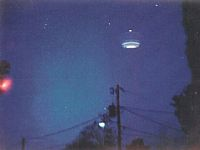
Gulf Breeze Sightings
November 11, 1987 – Gulf Breeze, Florida, United States
“Ed Walters was working in his home office when he noticed a light moving outside, partially obscured by the pine tree in his yard. To get a better look Ed went out of the front door and could see that the light was in fact a glowing bluish-gray craft like none he had seen before… Ed would go on to photograph it many times” View full report
Source: Ed Walters and Frances Walters, The Gulf Breeze Sightings ID: 325
Case Type: MajorCase Features: Photo, Humanoid/Occupant, Polygraph Test, Humming
Go Back in Time With This 1980s History Timeline
https://www.thoughtco.com/1980s-timeline-1779955
:max_bytes(150000):strip_icc():format(webp)/1980s-timeline-1779955_v3-5b47ad29c9e77c00378865b4.png)
- Inventions
- American History
- African American History
- African History
- Ancient History and Culture
- Asian History
- European History
- Genealogy
By
Updated on October 02, 2019
A lot happened during the 1980s—too much to remember, really. Go back in time and relive the era of Reagan and Rubik’s Cubes with this 1980s timeline.
1980
:max_bytes(150000):strip_icc():format(webp)/Pac-Man-589b45ce5f9b5874eef15b58.jpg)
The first year of the decade was memorable for political drama, cable TV, and games we couldn’t keep our hands off of. Arcades were jammed with people playing a new video game called Pac-Man. Some of those early gamers might also be fiddling with a colorful Rubik’s Cube.
Feb. 22: The U.S. Olympic hockey team defeats the Soviet Union in the semifinals at the Winter Olympics in Lake Placid, New York.
April 27: Media tycoon Ted Turner (born 1938) announces the creation of CNN, the first 24-hour cable news network.
April 28: The U.S. makes an abortive attempt to rescue American hostages held in Iran since November 1979.
May 18: In Washington State, Mt. St. Helens erupts, killing more than 50 people.
May 21: “The Empire Strikes Back,” the second movie in what would become the decades-long Star Wars franchise, premieres in movie theaters.
https://en.wikipedia.org/wiki/The_Empire_Strikes_Back
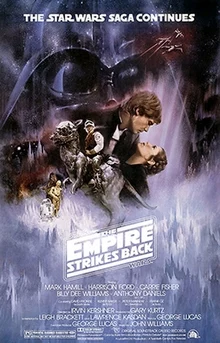
The Empire Strikes Back (also known as Star Wars: Episode V – The Empire Strikes Back) is a 1980 American epic space opera film directed by Irvin Kershner, with a screenplay by Leigh Brackett and Lawrence Kasdan, based on a story by George Lucas. The sequel to Star Wars (1977),[b] it is the second film in the Star Wars film series and the fifth chronological chapter of the “Skywalker Saga“. Set three years after the events of Star Wars, the film recounts the battle between the malevolent Galactic Empire, led by the Emperor, and the Rebel Alliance, led by Princess Leia. Luke Skywalker trains to master the Force so he can confront the powerful Sith lord, Darth Vader. The ensemble cast includes Mark Hamill, Harrison Ford, Carrie Fisher, Billy Dee Williams, Anthony Daniels, David Prowse, Kenny Baker, Peter Mayhew, and Frank Oz.
Following the success of Star Wars, Lucas hired Brackett to write the sequel. Following her death in 1978, he outlined the whole Star Wars saga and wrote the next draft himself, before hiring Raiders of the Lost Ark (1981) writer Kasdan to enhance his work. To avoid the stress he faced directing Star Wars, Lucas handed this responsibility to Kershner and focused on expanding his special effects company Industrial Light & Magic instead. Filmed from March to September 1979 in Finse, Norway, and at Elstree Studios in England, The Empire Strikes Back faced production difficulties, including actor injuries, illnesses, fires, and problems securing additional financing as costs rose. Initially budgeted at $8 million, costs had risen to $30.5 million by the project’s conclusion.
Released on May 21, 1980, the highly anticipated sequel became the highest-grossing film that year, earning approximately $401.5 million worldwide. Unlike its predecessor, Empire was met with mixed reviews from critics and fans conflicted over its darker and more mature themes compared to the light-hearted adventure of Star Wars. Critics praised the puppeteered character Yoda, a diminutive alien who serves as Luke’s teacher, for having expressive features and characterization. The film was nominated for various awards and won two Academy Awards, two Grammy Awards, and a BAFTA, among others. Subsequent releases have raised the film’s worldwide gross to $538–549 million and, adjusted for inflation, it is the thirteenth-highest-grossing film in the United States and Canada.
In the years since its release, The Empire Strikes Back has been critically reassessed and is now often regarded as the best film in the Star Wars series and among the greatest films ever made. It has had a significant impact on filmmaking and popular culture and is considered an example of a sequel superior to its predecessor. The climax, in which Vader reveals he is Luke’s father, is often ranked as one of the greatest plot twists in cinema. The film spawned a variety of merchandise and adaptations, including video games and a radio play. The United States Library of Congress selected it for preservation in the National Film Registry in 2010. Return of the Jedi (1983) followed Empire, concluding the original Star Wars trilogy. Prequel and sequel trilogies that round out the “Skywalker saga” have since been released.
May 22: The Pac-Man video game is released in Japan, followed by its U.S. release in October.
Oct. 21: The Philadelphia Phillies defeat the Kansas City Royals to win the World Series in six games.
Nov. 21: A record 350 million people worldwide watch TV’s “Dallas” to find out who shot character J.R. Ewing.
Dec. 8: Singer John Lennon is assassinated by a deranged gunman in front of his New York City apartment.
1981
:max_bytes(150000):strip_icc():format(webp)/dianawedding-56a48e1b3df78cf77282f138.jpg)
By 1981, homes and offices were beginning to adapt to new technologies. If you had cable TV you probably were watching MTV after it began broadcasting in August. And at work, typewriters began making way for something called a personal computer from IBM.
Jan. 20: Iran releases the 52 U.S. hostages held in Tehran for 444 days.
March 30: A deranged fan makes an unsuccessful assassination attempt on President Ronald Reagan, injuring Reagan, press secretary James Brady (1940–2014), and a policeman.
April 12: The Space Shuttle Columbia is launched for the first time.
May 13: In Vatican City, an assassin shoots Pope John Paul II (1920–2005), wounding him.
June 5: The Center for Disease Control publishes the first official report of men infected with what will be known later as the AIDS (Acquired Immunodeficiency Syndrome) virus.
Aug. 1: Music Television, or MTV, begins broadcasting just after midnight as an endless stream of music videos.
Aug. 12: IBM releases the IBM Model 5150, the first IBM personal computer.
Aug. 19: Sandra Day O’Connor (b. 1930) becomes the first female Justice on the Supreme Court.
July 29: Britain’s Prince Charles weds Diana Spencer in a royal wedding televised live.
Oct. 6: Egyptian President Anwar Sadat (1981–1981) is assassinated in Cairo.
Nov. 12: The Church of England votes to allow women to serve as priests.
1982
:max_bytes(150000):strip_icc():format(webp)/MichaelJackson-56a48cfe5f9b58b7d0d781a2.jpg)
The big news in 1982 literally was the news when USA Today, with its colorful graphics and short articles, made headlines as the first nationwide newspaper.
Jan. 7: The Commodore 64 personal computer is unveiled at the Consumer Electronics Show in Las Vegas. It would become the highest-selling single computer model of all time.
April 2: Argentine forces land on the British-owned Falkland Islands, beginning the Falklands War between the two countries.
May 1: The World’s Fair begins in Knoxville, Tennessee.
June 4: https://en.wikipedia.org/wiki/Star_Trek_II:_The_Wrath_of_Khan
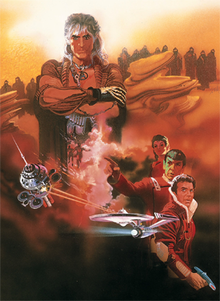
Star Trek II: The Wrath of Khan is a 1982 American science fiction film directed by Nicholas Meyer and based on the television series Star Trek. It is the second film in the Star Trek film series and is a sequel to Star Trek: The Motion Picture (1979). The plot features Admiral James T. Kirk (William Shatner) and the crew of the starship USS Enterprise facing off against the genetically-engineered tyrant Khan Noonien Singh (Ricardo Montalbán), a character who first appeared in the 1967 Star Trek episode “Space Seed“. When Khan escapes from a 15-year exile to exact revenge on Kirk, the crew of the Enterprise must stop him from acquiring a powerful terraforming device named Genesis. The film is the beginning of a three-film story arc that continues with the film Star Trek III: The Search for Spock (1984) and concludes with the film Star Trek IV: The Voyage Home (1986).
After the lackluster critical response to the first film, series creator Gene Roddenberry was forced out of the sequel’s production. Executive producer Harve Bennett wrote the film’s original outline, which Jack B. Sowards developed into a full script. Meyer completed its final script in twelve days, without accepting a writing credit. Meyer’s approach evoked the swashbuckling atmosphere of the original series, a theme reinforced by James Horner‘s musical score. Leonard Nimoy had not intended to have a role in the sequel, but was enticed back on the promise that his character would be given a dramatic death scene. Negative test audience reaction to Spock’s death led to significant revisions of the ending over Meyer’s objections. The production team used various cost-cutting techniques to keep within budget, including utilizing miniature models from past projects and reusing sets, effects footage, and costumes from the first film. The film was the first feature film to contain a sequence created entirely with computer graphics.
Star Trek II: The Wrath of Khan was released in North America on June 4, 1982, by Paramount Pictures. It was a box office success, earning US$97 million worldwide and setting a world record for its first-day box office gross. Critical reaction to the film was positive; reviewers highlighted Khan’s character, Meyer’s direction, improved performances, the film’s pacing, and the character interactions as strong elements. Negative reactions focused on weak special effects and some of the acting. The Wrath of Khan is considered by many to be the best film in the Star Trek series and is often credited with renewing substantial interest in the franchise.
https://en.wikipedia.org/wiki/E.T._the_Extra-Terrestrial
June 11: Director Steven Spielberg’s “E.T. the Extra-Terrestrial,” opens and instantly becomes a blockbuster.

E.T. the Extra-Terrestrial (or simply E.T.) is a 1982 American science fiction film produced and directed by Steven Spielberg and written by Melissa Mathison. It tells the story of Elliott, a boy who befriends an extraterrestrial dubbed E.T., who is left behind on Earth. Along with his friends and family, Elliott must find a way to help E.T. return home while avoiding the government. The film stars Dee Wallace, Henry Thomas, Peter Coyote, Robert MacNaughton, and Drew Barrymore.
The film’s concept was based on an imaginary friend that Spielberg created after his parents’ divorce. In 1980, Spielberg met Mathison and developed a new story from the unrealized project Night Skies. In less than two months, Mathison wrote the first draft of the script, titled E.T. and Me, which went through two rewrites. The project was rejected by Columbia Pictures, who doubted its commercial potential. Universal Pictures eventually purchased the script for $1 million. Filming took place from September to December 1981 on a budget of $10.5 million. Unlike most films, E.T. was shot in rough chronological order to facilitate convincing emotional performances from the young cast. The animatronics for the film were designed by Carlo Rambaldi.
E.T. premiered as the closing film of the Cannes Film Festival on May 26, 1982, and was released in the United States on June 11, 1982. The film was an immediate blockbuster, surpassing Star Wars to become the highest-grossing film of all time, a record it held for eleven years until Spielberg’s own Jurassic Park surpassed it in 1993. E.T. was widely acclaimed by critics and is regarded as one of the greatest films of all time. It received nine nominations at the 55th Academy Awards, winning Best Original Score, Best Visual Effects, Best Sound, and Best Sound Editing, and also won five Saturn Awards and two Golden Globe Awards. The film was re-released in 1985 and again in 2002 to celebrate its 20th anniversary, with altered shots, visual effects and additional scenes. In 1994, the film was added to the United States National Film Registry of the Library of Congress, who deemed it “culturally, historically, or aesthetically significant.”
June 14: Argentina surrenders after two months battle on sea on land in the Falklands.
Sept. 15: Editor Al Neuharth (1924–2013) publishes the first edition of the nation-wide newspaper “USA Today.”
Nov. 13: Architect Maya Lin‘s Vietnam War Memorial is established in Washington DC as a National Memorial.
Nov. 30: 24-year-old pop star Michael Jackson releases his best-selling album “Thriller.”
Oct. 1: The Walt Disney (1901–1966) Company opens the EPCOT Center (Experimental Prototype Community of Tomorrow), its second theme park in Florida after Walt Disney World.
Dec. 2: American heart surgeon William DeVries (born 1943) implants the Jarvik 7, the world’s first permanent artificial heart, into the chest of Seattle dentist Barney Clark—he will survive another 112 days. .
1983
:max_bytes(150000):strip_icc():format(webp)/GettyImages-618766858-58ef7e295f9b582c4d00285b.jpg)
The year that saw the birth of the Internet also saw volcanic eruptions and aircraft tragedies; the first woman in space and that holiday season craze of the Cabbage Patch Kids.
Jan. 1: The Internet is born when ARPAnet adopts TCP/IP protocols which would allow data exchange among a network of different models of computers.
Jan. 2: Mount Kilauea, Hawaii’s youngest volcano, begins the Pu’u ‘Ō’ō eruption which will not stop spewing lava fountains and flows until 2018, the longest and most voluminous outpouring of lava from the volcano’s rift zone.
Feb. 28: After 11 years and 256 episodes, “MASH,” the U.S. television series set during the Korean War, ends, watched by more than 106 million people.
May 25: Spielberg’s third entry in the Star Wars trilogy, “Return of the Jedi” opens in theaters.
June 18: Sally Ride (1951–2012) becomes the first American woman in space when she and four others are on board the second flight of the space shuttle Challenger.
Oct. 23: The U.S. Marine barracks in Beirut, Lebanon, is bombed by terrorist, killing 241 military personnel.
Oct. 25: U.S. troops invade the Caribbean island of Grenada, ordered by Ronald Reagan to counter the Marxist government threats to residential Americans. The conflict lasts one week.
Sept. 1: A Korean Air Lines flight from New York City to Seoul (KAL-007) that had deviated into Soviet airspace, is shot down by a Soviet Su-15 interceptor, killing all aboard, 246 passengers and 23 crew.
Nov. 2: President Ronald Reagan signs legislation making Martin Luther King Jr.’s birthday a federal holiday, effective Jan. 20, 1986.
1984
:max_bytes(150000):strip_icc():format(webp)/IndiraGandhi-56a48cea3df78cf77282ef54.jpg)
The Olympics in Sarajevo, the murder of the prime minister in India, and Michael Jackson moonwalking are among the events marked in 1984.
Jan. 1: AT&T, known as the Bell System, is broken up into a series of regional telephone companies, ending its monopoly.
Feb. 8: The XIV Olympic Winter Games open in Sarajevo, Yugoslavia, the only Olympics so far to be hosted by a Non-Aligned Movement member and a Muslim-majority city.
March 25: Pop singer Michael Jackson moonwalks for the first time at the Pasadena Civic Auditorium, a performance broadcast at the MTV Awards in May.
June 1: https://en.wikipedia.org/wiki/Star_Trek_III:_The_Search_for_Spock
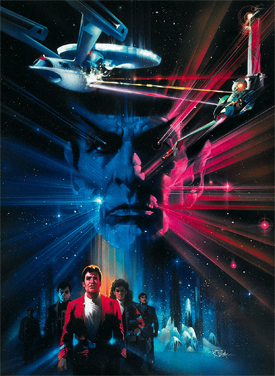
Star Trek III: The Search for Spock is a 1984 American science fiction film, written and produced by Harve Bennett, directed by Leonard Nimoy, and based on the television series Star Trek. It is the third film in the Star Trek franchise, and is the second part of a three-film story arc that begins with Star Trek II: The Wrath of Khan (1982) and concludes with Star Trek IV: The Voyage Home (1986). After the death of Spock (Nimoy), the crew of the USS Enterprise returns to Earth. When James T. Kirk (William Shatner) learns that Spock’s spirit, or katra, is held in the mind of Dr. Leonard “Bones” McCoy (DeForest Kelley), Kirk and company steal the decommissioned USS Enterprise to return Spock’s body to his homeworld. The crew must also contend with hostile Klingons led by Kruge (Christopher Lloyd) who are bent on stealing the secrets of a powerful terraforming device.
Paramount Pictures commissioned the film after the positive critical and commercial reaction to The Wrath of Khan. Nimoy directed the film, becoming the first Star Trek cast member to do so. Producer Harve Bennett wrote the script starting from the end and working back, and intended the destruction of the Enterprise to be a shocking development. Bennett and Nimoy collaborated with effects house Industrial Light & Magic to develop storyboards and new ship designs; ILM also handled the film’s many special effects sequences. Aside from a single day of location shooting, the film was shot entirely on Paramount and ILM soundstages. Composer James Horner returned to expand his themes from the previous film.
The Search for Spock opened on June 1, 1984. In its first week of release, the film grossed over $16 million from almost 2,000 theaters across North America. It went on to gross $76 million at the domestic box office, with a total of $87 million worldwide. Critical reaction to The Search for Spock was generally positive, but notably less so than the previous film. Reviewers generally praised the cast, Nimoy’s direction and characters, while criticism tended to focus on the plot; the special effects were conflictingly received. Roger Ebert called the film a compromise between the tones of the first and second Star Trek films.
June 4: Singer Bruce Springsteen releases his album “Born in the U.S.A.”
July 28: The Summer Olympics open in Los Angeles, California, where Carl Lewis wins four gold medals in track and field.
July 1: The “PG-13” rating for movies is added to existing rating classes used by the Motion Picture Association of America, and first applied to John Milius’s “Red Dawn.”
Sept. 26: Great Britain agrees to hand over control of Hong Kong to China in 1997.
Oct. 31: India’s prime minister Indira Gandhi (1917–1984) is shot and killed by two of her bodyguards, an assassination followed by the four-day-long Anti-Sikh Riots in which thousands of Indians are killed.
Nov. 6: President Ronald Reagan is elected to a second term, defeating Democrat Walter Mondale.
Dec. 2–3: A storage tank at the Union Carbide pesticide plant at Bhopal, India springs a leak and spills methyl isocyanate into the surrounding community, killing between 3,000–6,000 people.
1985
:max_bytes(150000):strip_icc():format(webp)/Gorbachev-56a48df13df78cf77282f0e4.jpg)
Jan. 28: The R&B single written by Michael Jackson and Lionel Richie called “We Are The World” is recorded by more than 45 American singers; it will go on to raise $75 million to feed people in Africa.
March 4: The U.S. Food and Drug Administration approves the first blood test to detect the virus that causes AIDS.
March 11: Mikhail Gorbachev (born 1931) becomes the new leader of the U.S.S.R., and leads the country in a series of new policies including a more consultative government style of glasnost and the economic and political restructuring of perestroika.
April 23: The Coca-Cola Company introduces “New Coke,” a sweeter replacement of the original 99-year-old soda, and it proves a popular failure.
June 14: TWA Flight 847, a flight from Cairo to San Diego, was hijacked by terrorists, who killed one passenger and held others hostage until June 30th.
June 23: Air India Flight 182 is destroyed by a terrorist bomb off the Irish coast. All 329 aboard are killed.
July 3: “Back to the Future,” the first of a sci-fi trilogy about teenager Marty McFly and a time-traveling DeLorean, premieres, and will become the highest grossing film of the year.
Sept. 1: While on a Cold War mission to find two wrecked nuclear submarines, U.S. oceanographer Robert Ballard and colleagues find the wreckage of the “Titanic,” a luxury liner which sank in 1912.
Oct. 18: The Nintendo Entertainment System debuts in the U.S.
1986
:max_bytes(150000):strip_icc():format(webp)/challenger11-58b989965f9b58af5c4c4a9b.jpg)
Jan. 28: On the way for its 9th mission to space, the shuttle Challenger explodes over Cape Canaveral, killing all seven astronauts aboard, including the civilian social studies teacher Christa McAuliffe.
Feb. 9: Halley’s Comet makes its closest approach to the sun on its 76 year periodic visit to our solar system.
Feb. 20: The Soviet Union launches the Mir space station, the first modular space station that will be assembled in orbit for the next decade.
Feb. 25: Philippine President Ferdinand Marcos is forced into exile after 20 years in office.
March 14: Microsoft goes public with an initial public offering of shares on the New York Stock Exchange.
April 26: The deadliest nuclear power plant accident to date occurred outside the Ukrainian city of Chornobyl, scattering radioactive material across Europe.
May 25: Hands Across America attempts to form a human chain from New York to California to raise money to fight hunger and homelessness.
Sept. 8: The syndicated talk Oprah Winfrey Show airs nationally.
Oct. 28: Following extensive renovations, the Statue of Liberty celebrates its centennial.
Nov. 3: A transport ship carrying 50,000 assault rifles is shot down over Nicaragua, the first alert to the American public of the Iran-Contra arms deal. The ensuing scandal will continue for next two years.
November 26, 1986: https://en.wikipedia.org/wiki/Star_Trek_IV:_The_Voyage_Home
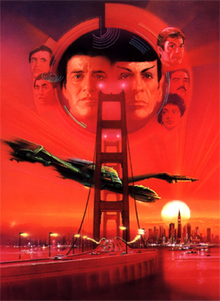
Star Trek IV: The Voyage Home is a 1986 American science fiction film directed by Leonard Nimoy and based on the television series Star Trek. It is the fourth feature installment in the Star Trek franchise, and is a sequel to Star Trek III: The Search for Spock (1984); it completes the story arc begun in Star Trek II: The Wrath of Khan (1982) and continued in The Search for Spock. Intent on returning home to Earth to face trial for their actions in the previous film, the former crew of the USS Enterprise finds the planet in grave danger from an alien probe attempting to contact now-extinct humpback whales. The crew travel to Earth’s past to find whales who can answer the probe’s call.
After directing The Search for Spock, Nimoy was asked to direct the next feature, and given greater freedom regarding the film’s content. Nimoy and producer Harve Bennett conceived a story with an environmental message and no clear-cut villain. Dissatisfied with the first screenplay produced by Steve Meerson and Peter Krikes, Paramount hired The Wrath of Khan writer and director Nicholas Meyer. Meyer and Bennett divided the story between them and wrote different parts of the script, requiring approval from Nimoy, lead actor William Shatner, and executives at Paramount Pictures.
Principal photography commenced on February 24, 1986. Unlike previous Star Trek films, The Voyage Home was shot extensively on location; many real settings and buildings were used as stand-ins for scenes set around and in the city of San Francisco. Special effects firm Industrial Light & Magic assisted in post-production and the film’s special effects. Few of the humpback whales in the film were real: ILM devised full-size animatronics and small motorized models to stand in for the real creatures. The film was dedicated to the crew of the Space Shuttle Challenger, which broke up 73 seconds after takeoff on the morning of January 28, 1986.
The Voyage Home was released on November 26, 1986, in North America by Paramount Pictures, and became the top-grossing film at the weekend box office. The film’s humor, acting, direction, special effects and unconventional story were well received by critics, fans of the series, and the general audience. It was financially successful, earning $133 million worldwide, and earned several awards and four Oscar nominations for cinematography and sound.
1987
:max_bytes(150000):strip_icc():format(webp)/GettyImages-635960167-58ef7eb15f9b582c4d0028a4.jpg)
Jan. 8: The Dow Jones industrial average closes over 2,000 for the first time in its history., and it will continued to set new records for the next 10 months.
Jan. 20: Terry Waite, a special envoy for the Anglican Church, is kidnapped in Beirut, Lebanon. He will be held until 1991.
Feb. 16: The Dow Jones, the second-largest U.S. market index, hits 200 on
March 9: U2 releases its “Joshua Tree” album.
May 11: The jury trial of Nikolaus “Klaus” Barbie (1913–1991), the Nazi “Butcher of Lyon,” begins in Lyon, France.
May 12: “Dirty Dancing,” director Emele Ardolino’s nostalgic return to the 1960s Catskill resorts, premieres at the Cannes Film Festival, and is released in the U.S. on August 21.
May 28: Teen-aged German aviator Mathias Rust (b. 1968) makes headlines for making an illegal landing in Red Square, Moscow.
June 12: President Ronald Reagan visits West Berlin and challenges leader Mikhail Gorbachev to “tear down this wall,” the Berlin Wall which had divided the city since 1961.
July 15: Taiwan ends 38 years of martial law.
Aug. 17: Former Nazi Rudolf Hess commits suicide in his prison cell in Berlin.
Oct.12: British pop singer George Michael releases “Faith,” his debut solo studio album.
Oct.19: On what will come to be called “Black Monday,” the Dow Jones experiences a sudden and largely unexpected drop of 22.6%.
Sept. 28: the first episode of “Star Trek: The Next Generation,” the second sequel to the original series, airs on independent stations throughout the U.S.
September 28: https://en.wikipedia.org/wiki/Star_Trek:_The_Next_Generation

Star Trek: The Next Generation (TNG) is an American science fiction television series created by Gene Roddenberry. It originally aired from September 28, 1987 to May 23, 1994 in syndication, spanning 178 episodes over seven seasons. The third series in the Star Trek franchise, it is the second sequel to Star Trek: The Original Series. Set in the 24th century, when Earth is part of the United Federation of Planets, it follows the adventures of a Starfleet starship, the USS Enterprise (NCC-1701-D), in its exploration of the Milky Way galaxy.
In the 1980s, Roddenberry—who was responsible for the original Star Trek, Star Trek: The Animated Series (1973–1974), and the first of a series of films—was tasked by Paramount Pictures with creating a new series in the franchise. He decided to set it a century after the events of his original series. The Next Generation featured a new crew: Patrick Stewart as Captain Jean-Luc Picard, Jonathan Frakes as William Riker, Brent Spiner as Data, Michael Dorn as Worf, LeVar Burton as Geordi La Forge, Marina Sirtis as Deanna Troi, Denise Crosby as Tasha Yar, Wil Wheaton as Wesley Crusher, Gates McFadden as Dr. Beverly Crusher, and a new Enterprise.
Roddenberry, Maurice Hurley, Rick Berman, Michael Piller, and Jeri Taylor served as executive producers at various times throughout its production. The series was broadcast in first-run syndication with dates and times varying among individual television stations. Stewart’s voice-over introduction during each episode’s opening credits stated the starship’s purpose:
Space: the final frontier. These are the voyages of the starship Enterprise. Its continuing mission: to explore strange new worlds, to seek out new life and new civilizations, to boldly go where no one has gone before.
The show was very popular, reaching almost 12 million viewers in its 5th season, with the series finale in 1994 watched by over 30 million viewers.[3][4] Due to its success, Paramount commissioned Rick Berman and Michael Piller to create a fourth series in the franchise, Star Trek: Deep Space Nine, which launched in 1993. The characters from The Next Generation returned in four films: Star Trek Generations (1994), Star Trek: First Contact (1996), Star Trek: Insurrection (1998), and Star Trek: Nemesis (2002), and in the television series Star Trek: Picard (2020–present). The series is also the setting of numerous novels, comic books, and video games. It received many accolades, including 19 Emmy Awards, two Hugo Awards, five Saturn Awards, and a Peabody Award.
1988
:max_bytes(150000):strip_icc():format(webp)/GettyImages-150329745-58ef7df95f9b582c4d002850.jpg)
Feb. 18: Anthony Kennedy (born 1937 and a Reagan nominee) is sworn in as Associated Justice to the Supreme Court.
May 15: Soviet Troops begin pulling out of Afghanistan after nine years of armed conflict.
July 3: The USS Vincennes shoots down the passenger plane Iran Airlines Flight 655, mistaking it for a F-14 Tomcat and killing all 290 aboard.
Aug. 11: Osama bin Laden (1957–2011) forms Al Qaeda.
Aug. 22: After 8 years and more than 1 million dead, the Iran-Iraq War ends when Iran accepts a U.N.-brokered ceasefire.
Oct. 9: Andrew Lloyd Webber’s “The Phantom of the Opera” opens on Broadway, with Michael Crawford in the title role
Nov. 8: George H. W. Bush (1924–2018) bests the Democratic challenger Michael Dukakis (born 1933) to become the 41st president, the third straight victory for the Republican party.
Dec. 1: The first annual World AIDS Day is held.
Dec. 21: Pan Am flight 103 explodes over Lockerbie, Scotland killing all 259 on board and 11 people on the ground, the result of a terrorist bombing attributed to Libyans.
1989
:max_bytes(150000):strip_icc():format(webp)/berlinwall-56a48c043df78cf77282ede6.jpg)
Jan. 7: Japanese Emperor Hirohito dies, ending a 62-year reign.
Jan. 20: George H. W. Bush is inaugurated as president.
March 24: The Exxon Valdez oil taker runs aground in Alaska’s Prince William Sound, tainting hundreds of miles of Alaskan coastline.
April 18: Students march through Beijing to Tienanmen Square calling for a more democratic government.
June 4: After months of peaceful but increasing protests, Chinese troops fire on civilians and students in Tienanmen Square, killing an unknown number of people and ending the demonstrations.
June 9, 1989: https://en.wikipedia.org/wiki/Star_Trek_V:_The_Final_Frontier

Star Trek V: The Final Frontier is a 1989 American science fiction film directed by William Shatner and based on the television series Star Trek created by Gene Roddenberry. It is the fifth installment in the Star Trek film series, and takes place shortly after the events of Star Trek IV: The Voyage Home (1986). Its plot follows the crew of the USS Enterprise-A as they confront renegade Vulcan Sybok, who is searching for God at the center of the galaxy.
The film was directed by cast member William Shatner, following two films directed by his co-star Leonard Nimoy. Shatner developed the initial storyline, in which Sybok searches for God but instead finds a devil; his primary inspiration was the phenomenon of televangelism and the high potential for fraud among its practitioners. Many involved objected to the script and plot. Series creator Gene Roddenberry disliked the original script, while Nimoy and DeForest Kelley objected to the premise that their characters, Spock and Leonard McCoy, would betray Shatner’s James T. Kirk.
The script went through multiple revisions to please the cast and Paramount Pictures, including cuts in the effects-laden climax of the film. Despite a Writers Guild strike cutting into the film’s pre-production, Paramount commenced filming in October 1988. Many Star Trek veterans assisted in the film’s production; art director Nilo Rodis developed the designs for many of the film’s locales, shots, and characters, while Herman Zimmerman served as its production designer. Production problems plagued the film on set and during location shooting in Yosemite National Park and the Mojave Desert. Because effects house Industrial Light & Magic‘s best crews were busy and would be too expensive, the production used Bran Ferren‘s company for the film’s effects, which had to be revised several times in order to lower production costs. The film’s ending was reworked because of poor test-audience reaction and the failure of some planned special effects. Jerry Goldsmith, composer for Star Trek: The Motion Picture, returned to score The Final Frontier.
The Final Frontier was released in North America on June 9, 1989. It had the highest opening gross of any Star Trek film at that point and was number one in its first week at the box office; however, its grosses quickly dropped in subsequent weeks. The film received generally mixed to negative reviews by critics on release, and, according to its producer, “nearly killed the franchise.” The next entry in the series, Star Trek VI: The Undiscovered Country (1991), received a much more positive reception.
Aug. 10: General Colin Powell is nominated to head the Joint Chiefs of Staff, becoming the first African-American to hold that position.
Aug. 14: The Sega Genesis is released in the U.S.
Nov. 9: The Berlin Wall falls, after an announcement by the East German government that the border checkpoints were open. The impromptu celebration was televised around the world.
Dec. 20: U.S. troops invade Panama in an attempt to oust leader Gen. Manuel Noriega.Cite this Article
Watch Now: 10 Things We Miss About the 80s
1980s
From Wikipedia

From left, clockwise: The first Space Shuttle, Columbia, lifts off in 1981; US president Ronald Reagan and SovietleaderMikhail Gorbachev ease tensions between the two superpowers, leading to the end of the Cold War; The fall of the Berlin Wall in 1989 is considered to be one of the most momentous events of the 1980s; In 1981, the IBM Personal Computer is released; In 1985, the Live Aid concert is held in order to fund relief efforts for the famine in Ethiopia during the time Mengistu Haile Mariam ruled the country; Pollution and ecological problems persisted when the Soviet Union and much of the world is filled with radioactive debris from the 1986 Chornobyl disaster, and in 1984, when thousands of people perished in Bhopal during a gas leak from a pesticide plant ; The Iran–Iraq War leads to over one million dead and $1 trillion spent, while another war between the Soviets and Afghans leaves over 2 million dead.
The 1980s (pronounced “nineteen-eighties”, shortened to “the ’80s“) was a decade of the Gregorian calendar that began on January 1, 1980, and ended on December 31, 1989.
The decade saw major socioeconomic change due to advances in technology and a worldwide move away from planned economies and towards laissez-faire capitalism.
1980s-WikipediaAs economic deconstruction increased in the developed world, multiple multinational corporations associated with the manufacturing industry relocated to Thailand, Mexico, South Korea, Taiwan, and China. Japan and West Germany saw large economic growth during this decade. The AIDS epidemic became recognized in the 1980s and has since killed an estimated 39 million people (as of 2013).[1] Global warming became well known to the scientific and political community in the 1980s.
The United Kingdom and the United States moved closer to supply-side economic policies beginning a trend toward global instability of international trade that would pick up more steam in the following decade as the fall of the USSR made right-wing economic policy more powerful.
The final decade of the Cold War opened with the US-Soviet confrontation continuing largely without any interruption. Superpower tensions escalated rapidly as President Reagan scrapped the policy of détente and adopted a new, much more aggressive stance on the Soviet Union. The world came perilously close to nuclear war for the first time since the Cuban Missile Crisis in 1962, but the second half of the decade saw a dramatic easing of superpower tensions and ultimately the total collapse of Soviet communism.
Developing countries across the world faced economic and social difficulties as they suffered from multiple debt crises in the 1980s, requiring many of these countries to apply for financial assistance from the International Monetary Fund (IMF) and the World Bank. Ethiopia witnessed widespread famine in the mid-1980s during the corrupt rule of Mengistu Haile Mariam, resulting in the country having to depend on foreign aid to provide food to its population and worldwide efforts to address and raise money to help Ethiopians, such as the Live Aid concert in 1985.
Major civil discontent and violence occurred, including the Iran–Iraq War, the Soviet-Afghan War, the 1982 Lebanon War, the First Nagorno-Karabakh War, the Bombing of Libya in 1986, and the First Intifada in the Gaza Strip and the West Bank. Islamism became a powerful political force in the 1980s and many terrorist organizations, including Al Qaeda, started.
By 1986, nationalism was making a comeback in the Eastern Bloc and the desire for democracy in communist-led socialist states combined with economic recession resulted in Mikhail Gorbachev’s glasnost and perestroika, which reduced Communist Party power, legalized dissent, and sanctioned limited forms of capitalism such as joint ventures with Western firms. After newly heated tension for most of the decade, by 1988 relations between the West and East had improved significantly[2] and the Soviet Union was increasingly unwilling to defend its governments in satellite states.
1989 brought the overthrow and attempted overthrow of a number of governments led by communist parties, such as in Hungary, the Tiananmen Square protests of 1989 in China, the Czechoslovak “Velvet Revolution”, Erich Honecker‘s East German regime, Poland’s Soviet-backed government, and the violent overthrow of the Nicolae Ceaușescu regime in Romania. Destruction of the 155-km Berlin Wall, at the end of the decade, signaled a seismic geopolitical shift. The Cold War ended in the early 1990s with the successful Reunification of Germany and the USSR’s demise after the August Coup of 1991.
The 1980s saw great advances in genetic and digital technology. After years of animal experimentation since 1985 the first genetic modification of 10 adult human beings took place in May 1989, a gene tagging experiment[3] which led to the first true gene therapy implementation in September 1990. The first “designer babies“, a pair of female twins were created in a laboratory in late 1989 and born in July 1990 after being sex-selected via the controversial assisted reproductive technology procedure preimplantation genetic diagnosis.[4] Gestational surrogacy was first performed in 1985 with the first birth in 1986, making it possible for a woman to become a biological mother without experiencing pregnancy for the first time in history.[5]
The 1980s was also an era of tremendous population growth around the world, surpassing even the 1970s and 1990s, thus arguably being the largest in human history. Population growth was particularly rapid in a number of African, Middle Eastern, and South Asian countries during this decade, with rates of natural increase close to or exceeding 4% annually.
The 1980s saw the advent of the ongoing practice of sex-selective abortion in China and India as ultrasound technology permitted parents to selectively abort baby girls.[6]
The global Internet took shape in academia by the second half of the 1980s as well as many other computer networks of both academic and commercial use such as USENET, Fidonet and the Bulletin Board System. By 1989 the Internet and the networks linked to it were a global system with extensive transoceanic satellite links and nodes in most rich countries.[7] Based on earlier work from 1980 onwards Tim Berners Lee formalized the concept of the World Wide Web by 1989 and performed its earliest demonstrations in December 1990 and 1991. Television viewing became commonplace in the Third World, with the number of TV sets in China and India increasing by 15 and 10 times respectively.[8]
Video game consoles released in this decade included the continuing popularity of Atari 2600, Intellivision, Vectrex, Colecovision, SG-1000, NES/Famicom, Sega Master System, PC Engine/TurboGrafx-16, Mega Drive/Genesis and Game Boy. Super Mario Bros. and Tetris were the decade’s two best selling and most popular video games. 1980’s Atari VCS port of Space Invaders was the first killer app. Pac-Man was the decade’s highest-grossing arcade game. Home computers in that decade include the Commodore 64, VIC-20, the Apple II series, the Atari 8-bit family, Atari ST, Amiga, ZX Spectrum and MSX. Apple Macintosh, Microsoft Windows and IBM PC compatible were also introduced in that decade and helped popularize personal computers.
Contents
- 1Politics and wars
- 2Disasters
- 3Assassinations and attempts
- 4Technology
- 5Economics
- 6Popular culture
- 7People
- 8See also
- 9References
- 10Further reading
Politics and wars
The world map of military alliances in 1980: NATO & Western allies, Warsaw Pact & other Soviet allies, Non-aligned countries, China and Albania (communist countries, but not aligned with USSR), ××× Armed resistance
Terrorist attacks
Main article: List of terrorist incidents § 1970–present1983 Beirut barracks bombing
The most notable terrorist attacks of the decade include:
- Bologna massacre in Italy on August 2, 1980, three members of the neo-fascist group Nuclei Armati Rivoluzionari detonate a time bomb at Bologna Central Station, killing 85 people.
- El Mozote massacre in El Salvador on December 11, 1981, against civilians, committed by government forces supported by the United States during their anti-guerrilla campaign against Marxist–Leninist rebels.
- The Rome and Vienna airport attacks took place on December 27, 1985, against the Israeli El Al airline. The attack was done by militants loyal to Abu Nidal, backed by the government of Libya.
- The 1983 Beirut barracks bombing – during the Lebanese Civil War two truck bombs struck separate buildings housing United States and French military forces killing 299 American and French servicemen. The organization Islamic Jihad claimed responsibility for the bombing.
- Air India Flight 182 was destroyed on June 23, 1985, by Sikh-Canadian militants. It was the biggest mass murder involving Canadians in Canada’s history.
- On December 21, 1988, Pan Am Flight 103 was blown up over the village of Lockerbie, Scotland, while en route from London’s Heathrow Airport to New York’s JFK. The bombing killed all 259 people on board, 243 passengers and 16 crew members, plus 11 people on the ground, totaling 270 fatalities who were citizens of 21 nationalities. The bombing was and remains the worst terrorist attack on UK soil.
Wars
Main article: List of wars 1945–89 § 1980–1989
The most prominent armed conflicts of the decade include:
International wars
Invasion of Grenada, October 1983
The most notable wars of the decade include:
- The Cold War (1947–1991)
- Soviet–Afghan War (1979–1989) – a war fought between the Soviet Union and the Islamist Mujahideen Resistance in Afghanistan. The mujahideen found other support from a variety of sources including the Central Intelligence Agency of the United States (see Operation Cyclone), as well as Saudi Arabia, Pakistan and other Muslim nations through the context of the Cold War and the regional India–Pakistan conflict.
- Invasion of Grenada (1983) – a 1983 U.S.-led invasion of Grenada, triggered by a military coup which ousted a brief revolutionary government. The successful invasion led to a change of government but was controversial due to charges of American imperialism, Cold War politics, the involvement of Cuba, the unstable state of the Grenadian government, and Grenada’s status as a Commonwealth realm.
- Salvadoran Civil War (1980–1992) – part of the cold war conflicts, reached its peak in the 1980s, 70,000 Salvadorans died.
- Argentina invaded the Falkland Islands, sparking the Falklands War. It occurred from April 2 to July 14, 1982, between the United Kingdom and Argentina as British forces fought to recover the islands. Britain emerged victorious and its stance in international affairs and its long-decaying reputation as a colonial power received an unexpected boost. The military junta of Argentina, on the other hand, was left humiliated by the defeat; and its leader Leopoldo Galtieri was deposed three days after the end of the war. A military investigation known as the Rattenbach report even recommended his execution.
- Arab–Israeli conflict (early 20th century – present)
- 1982 Lebanon War – the Government of Israel ordered the invasion as a response to the assassination attempt against Israel’s ambassador to the United Kingdom, Shlomo Argov, by the Abu Nidal Organization and due to the constant terror attacks on northern Israel made by the terrorist organizations which resided in Lebanon. After attacking the PLO, as well as Syrian, leftist and Muslim Lebanese forces, Israel occupied southern Lebanon and eventually surrounded the PLO in west Beirut and subjected to heavy bombardment, they negotiated passage from Lebanon.
- In October 1985 eight Israeli F-15 Eagles carried out Operation Wooden Leg intending to bomb the PLO‘s new headquarters in Tunis, Tunisia, more than 2,000 km from Israel. The attack cost 270 lives, most of them Tunisian civilians. The attack was later condemned by the United Nations Security Council. The United States is thought to have assisted or known of the attack.
- The Iran–Iraq War took place from 1980 to 1988. Iraq was accused of using illegal chemical weapons to kill Iranian forces and against its own dissident Kurdish populations. Both sides suffered enormous casualties, but the poorly equipped Iranian armies suffered worse for it, being forced to use soldiers as young as 15 in human-wave attacks. Iran finally agreed to an armistice in 1988.
- The United States launched an aerial bombardment of Libya in 1986 in retaliation for Libyan support of terrorism and attacks on US personnel in Germany and Turkey.
- The South African Border War between South Africa and the alliance of Angola, Namibia and Zambia ended in 1989, ending over thirty years of conflict.
- The United States engaged in significant direct and indirect conflict in the decade via alliances with various groups in a number of Central and South American countries claiming that the U.S. was acting to oppose the spread of communism and end illicit drug trade. The U.S. government supported the government of Colombia‘s attempts to destroy its large illicit cocaine-trafficking industry and provided support for right-wing military government in the Salvadoran civil war which became controversial after the El Mozote massacre on December 11, 1981, in which U.S.-trained Salvadoran paramilitaries killed 1000 Salvadoran civilians. The United States, along with members of the Organisation of Eastern Caribbean States, invaded Grenada in 1983. The Iran–Contra affair erupted which involved U.S. interventionism in Nicaragua, resulting in members of the U.S. government being indicted in 1986. U.S. military action began against Panama in December 1989 to overthrow its dictator, Manuel Noriega resulting in 3,500 civilian casualties and the restoration of democratic rule.
- Battle of Cuito Cuanavale took place as part of the Angolan civil war and South African Border War from 1987 to 1988. The battle involved the largest fighting in Africa since World War II between military forces from Angola, Cuba (expeditionary forces) and Namibia versus military forces from South Africa and the dissident Angolan UNITA organization.
- The First Nagorno-Karabakh War between Azerbaijan and the Armenia started in 1988 and lasted six years.
Civil wars and guerrilla wars[edit]
The most notable internal conflicts of the decade include:
- The Tiananmen Square protests of 1989 occurred in the People’s Republic of China in 1989, in which pro-democracy protesters demanded political reform. The protests were crushed by the People’s Liberation Army.
- The First Intifada (First Uprising) in the Gaza Strip and West Bank began in 1987 when Palestinian Arabs mounted large-scale protests against the Israeli military presence in the Gaza Strip and West Bank, largely inhabited by Palestinians. The First Intifada would continue until peace negotiations began between the Palestinian Liberation Organization (PLO) and the Israeli government in 1993.
- Lebanese Civil War (1975–1990) – Throughout the decade, Lebanon was engulfed in civil war between Islamic and Christian factions.
- The Kanak Socialist National Liberation Front began a violent campaign for independence in New Caledonia.
- Greenpeace‘s attempts to monitor French nuclear testing on Mururoa were halted by the sinking of the Rainbow Warrior.
- The Second Sudanese Civil War erupts in 1983 between the Muslim government of Sudan in the north and non-Muslim rebel secessionists in Southern Sudan. The conflict continues through the present day Darfur genocide.
- Internal conflict in Peru: The communist Túpac Amaru Revolutionary Movement starts its fight against the Peruvian state in 1980, that would continue until the end of the 1990s.
- Haitian dictator Jean-Claude Duvalier was overthrown by a popular uprising on February 6, 1986.
- The Troubles in Northern Ireland continued.
Coups[edit]
Main article: List of coups d’état and coup attempts § 1980 – 1989
The most prominent coups d’état of the decade include:
- A military coup is launched in Suriname on February 25, 1980; the country’s politics are dominated by the military until 1991.
- Nigeria suffered multiple military coups in 1983 and 1985.
- Sitiveni Rabuka staged two military coups in Fiji in 1987, and declared the country a republic the same year.
- The “Anti-Bureaucratic Revolution” – a series of interconnected coups d’états – take place in Yugoslavia from 1988 to 1989 through mass protests organized and committed by supporters of Serbian politician Slobodan Milošević overthrow the governments of Serbia’s autonomous provinces of Kosovo and Vojvodina, and the government of Montenegro, and finally the main government of Serbia with Milošević becoming President of Serbia.
Nuclear threats[edit]
The Israeli Air ForceF-16A Netz ‘243’ that was flown by Colonel Ilan Ramon during Operation Opera
- Operation Opera – a 1981 surprise Israeli air strike that destroyed the Iraqi nuclear reactor being constructed near Baghdad. Israeli military intelligence assumed this was for the purpose of plutonium production to further an Iraqi nuclear weapons program. Israeli intelligence also believed that the summer of 1981 would be the last chance to destroy the reactor before it would be loaded with nuclear fuel.
- US President Reagan’s decision to station intermediate-range nuclear missiles in Western Europe provoked mass protests involving more than one million people.
Decolonization and independence[edit]
- In 1982, Canada gained official independence from the United Kingdom with the Canada Act 1982, authorized by the signature by Elizabeth II. This act severed all political dependencies of the United Kingdom in Canada (although the Queen remained the head of state).
- In 1986, Australia gained full independence from the United Kingdom with the Australia Act 1986, which severed the last remaining powers of the British government over the Australian government, including the removal of the privy council as the highest court of appeal. Australia retained the queen as head of state.
- In 1986, New Zealand and the United Kingdom fully separated New Zealand’s governments from the influence of the British Parliament, resulting in New Zealand’s full independence with the Constitution Act 1986 which also reorganised the New Zealand government.
- Independence was granted to Vanuatu from the British/French condominium (1980), Kiribati from joint US-British government (1981) and Palau from the United States (1986).
- Zimbabwe becomes independent from official colonial rule of the United Kingdom in 1980.
- Independence was given to Antigua and Barbuda, Belize (both 1981), and Saint Kitts and Nevis (1983) in the Caribbean; and Brunei in the Far East in 1984
Prominent political events[edit]
Americas[edit]
U.S. President Reagan and Soviet General Secretary Gorbachev signing the INF Treaty, 1987
- Ronald Reagan was elected U.S. president in 1980. In international affairs, Reagan pursued a hardline policy towards preventing the spread of communism, initiating a considerable buildup of U.S. military power to challenge the Soviet Union. He further directly challenged the Iron Curtain by demanding that the Soviet Union dismantle the Berlin Wall.
- The Reagan Administration accelerated the War on Drugs, publicized through anti-drug campaigns including the Just Say No campaign of First Lady Nancy Reagan. Drugs gained attention in the US as a serious problem in the ’80s. Cocaine was relatively popular among celebrities and affluent youth, while crack, a cheaper offshoot of the drug, was linked to high crime rates in inner cities during the American crack epidemic.[citation needed]
- The Professional Air Traffic Controllers Organization (1968) (PATCO) declared a strike on August 3, 1981, seeking better working conditions, better pay, and a 32-hour workweek. The strike caused considerable disruption of the U.S. air transportation system. Resolution came when Ronald Reagan fired over 11,000 striking air traffic controllers who had ignored the order, banning them from federal service for life. After seeking appeals, many of the controllers were re-hired while the FAA attempted to replace much of their air traffic control staffing. The remainder continued to be banned until President Clinton lifted the final aspects in 1993.
- Political unrest in the province of Quebec, which, due to the many differences between the dominant francophone population and the anglophone minority, and also to francophone rights in the predominantly English-speaking Canada, came to a head in 1980 when the provincial government called a public referendum on partial separation from the rest of Canada. The referendum ended with the “no” side winning majority (59.56% no, 40.44% yes).
- Military dictatorships give way to democracy in Argentina (1983), Uruguay (1984–85), Brazil (1985–1988) and Chile (1988–89). This marked the end of the Operation Condor for 30 years.
Europe[edit]
The fall of the Berlin Wall in 1989 marked the beginning of German reunificationFormer president of Finland from 1956 to 1982. Funeral cortege of Urho Kekkonen in Helsinki, 1986
- The European Community‘s enlargement continued with the accession of Greece in 1981 and Spain and Portugal in 1986.
- In 1983, Bettino Craxi became the first socialist to hold the office of Prime Minister of Italy; he remained in power until 1987, becoming one of the longest-serving Prime Ministers in the history of Italian Republic. At the end of his presidency the Mani pulite corruption scandal broke up, causing the collapse of the political system.
- Significant political reforms occurred in a number of communist countries in eastern Europe as the populations of these countries grew increasingly hostile and politically active in opposing communist governments. These reforms included attempts to increase individual liberties and market liberalization, and promises of democratic renewal. The collapse of communism in eastern Europe was generally peaceful, the exception being Romania, whose leader Nicolae Ceaușescu tried to keep the people isolated from the events happening outside the country. While making a speech in Bucharest in December 1989, he was booed and shouted down by the crowd, and then tried to flee the city with his wife Elena. Two days later, they were captured, charged with genocide, and shot on Christmas Day.
- In Yugoslavia, following the death of communist leader Josip Broz Tito in May 1980, the trend of political reform of the communist system occurred along with a trend towards ethnic nationalism and inter-ethnic hostility, especially in Serbia, beginning with the 1986 Memorandum of the Serbian Academy of Sciences and Arts followed by the agenda of Serbian communist leader Slobodan Milošević who aggressively pushed for increased political influence of Serbs in the late 1980s, condemning non-Serb Yugoslav politicians who challenged his agenda as being enemies of Serbs.
- There was continuing civil strife in Northern Ireland, including the adoption of hunger strikes by Irish Republican Army prisoners seeking the reintroduction of political status.
- Mikhail Gorbachev became leader of the Soviet Union in 1985, and initiated major reforms to the Soviet Union’s government through increasing the rights of expressing political dissent and opening elections to opposition candidates (while maintaining legal dominance of the Communist Party). Gorbachev pursued negotiation with the United States to decrease tensions and eventually end the Cold War.
- At the end of the decade, the fall of the Berlin Wall in 1989 would be followed in 1990 by the German reunification. During 1989, most of the communist governments in Eastern Europe collapsed.
- The United Kingdom was governed by the Conservative Party under Prime Minister Margaret Thatcher, the first female leader of a Western country. Under her Premiership, the party introduced widespread economic reforms including the privatisation of industries and the de-regulation of stock markets echoing similar reforms of U.S. President Ronald Reagan. She was also a staunch opponent of communism, earning her the nickname The Iron Lady.
- Poor industrial relations marked the beginning of the decade; the UK miners’ strike (1984–85) was a major industrial action affecting the UK coal industry. The strike by the National Union of Mineworkers (NUM) was led by Arthur Scargill, although some NUM members considered it to be unconstitutional and did not observe it. The BBC has referred to the strike as “the most bitter industrial dispute in British history.”[9] At its height, the strike involved 142,000 mineworkers, making it the biggest since the 1926 General Strike.[10]
- In November 1982, Leonid Brezhnev, who had led the Soviet Union since 1964, died. He was followed in quick succession by Yuri Andropov, the former KGB chief, and Konstantin Chernenko, both of whom were in poor health during their short tenures in office.
Asia[edit]
- South Korean president Chun Doo Hwan came to power at the end of 1979 and ruled as a dictator until his presidential term expired in 1987. He was responsible for the Gwangju Uprising in May 1980 when police and soldiers battled armed protesters. Relations with North Korea showed little sign of improvement during the 1980s. In 1983, when Chun was in Burma, a bomb apparently planted by North Korean agents killed a number of South Korean government officials. After leaving office, he was succeeded by Roh Tae Woo, the first democratic ruler of the country, which saw its international prestige greatly rise with hosting the Olympics in 1988. Roh pursued a policy of normalizing relations with China and the Soviet Union, but had to face militant left-wing student groups who demanded reunification with North Korea and the withdrawal of US troops.
- In the Philippines, after almost 20 years of dictatorship, Philippine president Ferdinand Marcos left the presidency and was replaced by Corazon Aquino through the “People Power Revolution” from February 22 to 25, 1986. This has been considered by some a peaceful revolution despite the fact that the Armed Forces of the Philippines issued an order to disperse the crowds on EDSA (the main thoroughfare in Metro Manila).
- Martial law in Taiwan ended and the first democratic elections in 1987, having lasted 38 and 27 years.
- The 1988 Summer Olympics for the first time, after democratic reforms in Taiwan and South Korea.
Disasters[edit]
Natural disasters[edit]
1980 eruption of Mount St. Helens
- Mount St. Helens erupted in Washington, U.S. on May 18, 1980, killing 57 people.
- On October 17, 1989, the Loma Prieta earthquake struck the San Francisco Bay Area during Game 3 of the 1989 World Series, gaining worldwide attention. Sixty-five people were killed and thousands injured, with major structural damage on freeways and buildings and broken gas-line fires in San Francisco, California. The cost of the damage totaled $13 billion (1989 USD).
- The 1988–89 North American drought decimated the US with many parts of the country affected. This was the worst drought to hit the United States in many years. The drought caused $60 billion in damage (between $80 billion and $120 billion for 2008 USD). The concurrent heat waves killed 5,800 to 17,000 people in the United States.
- Hurricane Allen (1980), Hurricane Alicia (1983), Hurricane Gilbert (1988), Hurricane Joan (1988), and Hurricane Hugo (1989) were some notably destructive Atlantic hurricanes of the 1980s.
- Other natural disasters of the 1980s include the 1982–1983 El Niño which brought destructive weather to most of the world; the 1985 Mexico City earthquake, which registered 8.0 on the moment magnitude scale and devastated Mexico City and other areas throughout central Mexico; the 1985 Nevado del Ruiz lahar in Colombia; the 1986 Lake Nyos limnic eruption in Cameroon; and the 1988 Armenian earthquake, which rocked the Caucasus region of the USSR.
Non-natural disasters[edit]
The space shuttle Challenger disintegrates on January 28, 1986
- On April 25, 1980, Dan-Air Flight 1008 crashed on approach to Tenerife in the Canary Islands. All 146 people on board were killed.
- On August 19, 1980, Saudia Flight 163 caught fire moments after takeoff from the Saudi Arabian capital of Riyadh. The flight quickly returned to the airport, but evacuation of the plane was delayed and all 301 people aboard died.
- On July 9, 1982, Pan Am Flight 759 was forced down by a wind shear microburst, killing 153 people.
- In 1984, the Bhopal disaster resulted from a toxic MIC gas leak at the Union Carbide plant in Bhopal, India, killing 3,000 immediately and ultimately claiming 15,000–20,000 lives.
- On September 1, 1983, Soviet Union fighter jets shot down Korean Air Lines Flight 007, which was carrying 269 people, none of whom survived.
- On August 2, 1985, Delta Air Lines Flight 191 crashed on approach to Dallas/Fort Worth International Airport in Texas. 137 people were killed while 27 survived.
- June 21, 1985, Air India Flight 182, flight from Montreal Canada is blown up over Irish waters by a bomb placed in the luggage compartment. This was the greatest act of terrorism until the September 11 attacks of 2001.
- Japan Airlines Flight 123, carrying 524 people, crashed on August 12, 1985, while on a flight from Tokyo to Osaka killing 520 of the people on board, leaving four survivors. This was, and still is, the worst single-plane crash ever.
- On December 12, 1985, Arrow Air Flight 1285 crashed seconds after lifting off from Gander, Newfoundland. All 256 people on board, many of them U.S. servicemen returning home from duty overseas, perished.
- On January 28, 1986, the NASA Space Shuttle Challenger disintegrated 73 seconds after launch, killing all of the crew on board. This was the first disaster involving the destruction of a NASA space shuttle. A faulty O-ring was the cause of the accident.
- On April 26, 1986, the Chernobyl disaster, a large-scale nuclear meltdown in the Ukrainian SSR, Soviet Union, spread a large amount of radioactive material across Europe, killing 47 people, dooming countless others to future radiation-related cancer, and causing the displacement of 300,000 people.
- On June 14, 1986, Fantasyland’s Mindbender inside West Edmonton Mall, derails and kills 3 people, injuring one, and slams into a concrete post.
- On August 31, 1986, Aeroméxico Flight 498 crashed after colliding with a private Piper Cherokee over Cerritos, California, killing everyone on both airplanes and several others on the ground. On the same day, the Soviet passenger ship Admiral Nakhimov sank after colliding with the bulk carrier Pyotr Vasev in the Black Sea, killing 423 people.
- On September 27, 1986 Cliff Burton died in a bus crash while on tour with his band, Metallica
- On May 9, 1987, an uncontained engine failure on LOT Flight 5055 caused an in-flight fire on board the airliner, which subsequently crashed, killing all 183 passengers and crew.
- On August 16, 1987, Northwest Airlines Flight 255 crashed almost immediately after takeoff from Detroit Wayne Airport in Michigan, killing 156 people.
- On November 28, 1987, a fire broke out on South African Airways Flight 295, eventually causing the aircraft to crash into the Indian Ocean. All 159 aboard were killed.
- On December 7, 1987, 43 people were killed when an irate former USAir employee went on a rampage aboard PSA Flight 1771.
- On December 20, 1987, the Philippine passenger ferry MV Doña Paz burned and sank after colliding with the oil tanker MT Vector. With an estimated death toll of over 4,000, this was and remains the world’s deadliest peacetime maritime disaster.
- On July 3, 1988, Iran Air Flight 655 was shot down by the U.S. missile cruiser USS Vincennes over the Strait of Hormuz, killing all 290 people on the plane. The event is one of the most controversial aviation occurrences of all time, with the true cause disputed between the Americans and the Iranians.
- On December 21, 1988, an American passenger 747 airliner en route from Frankfurt to Detroit (via London and New York) Pan Am Flight 103 was destroyed by a bomb while it was flying over Lockerbie, Scotland, killing the 259 passengers and crew members on board and 11 people on the ground. This was the worst terrorist attack to have occurred on British soil.
- On March 24, 1989, the oil tanker Exxon Valdez ran aground on Bligh Reef in Alaska‘s Prince William Sound spilling an estimated equivalent of 260,000 to 750,000 barrels of crude oil. Although not among the largest oil spills in history, its remote and sensitive location made it one of the most devastating ecological disasters ever. The after effects of the spill continue to be felt to this day.
- On April 15, 1989, The Hillsborough disaster occurs during a FA Cup Semi-Final in Sheffield, England fatally crushing 96 football fans and injuring nearly 1,000 more.
- On July 19, 1989, United Airlines Flight 232, carrying 296 people, suffered an in-flight engine failure and was forced to crash-land at Sioux City, Iowa. 185 survived, while 111 were killed when the plane burst into flames upon touchdown.
Assassinations and attempts
Prominent assassinations, targeted killings, and assassination attempts include:
- On April 12, 1980, William R. Tolbert, Jr., the President of Liberia, is killed during a military coup. His death marks the end of Americo-Liberian rule in Liberia.
- Musician and former member of the Beatles John Lennon was assassinated in New York City on December 8, 1980.
- Ronald Reagan was shot in Washington, D.C. on March 30, 1981, by John Hinckley, a mentally disturbed young man who also stalked actress Jodie Foster. Reagan’s press secretary James Brady was also shot, along with a police officer and a U.S. Secret Service agent. The latter two recovered, along with Reagan himself, but Brady used a wheelchair as a result of brain damage thereafter and would become an advocate of gun control.
- On May 13, 1981, there was an assassination attempt on Pope John Paul II in Saint Peter’s Square. The would-be assassin was a Turkish man named Mehmet Ali Agca, who was subsequently sentenced to life in prison, but would be pardoned in 2000. At the time, it was widely believed that he was an agent of the Soviet Union or Bulgaria, due to the Pope’s vocal anti-communist stance. Agca himself told dozens of conflicting stories over the years, and his motive remains unclear.
- Egyptian president Anwar Sadat was assassinated at a military parade in Cairo on October 6, 1981.
- Philippine Opposition Senator Benigno Aquino Jr. was assassinated in Manila on August 21, 1983.
- American singer-songwriter and musician Marvin Gaye was shot dead by his father at his home in Los Angeles on April 1, 1984.
- Indian prime minister Indira Gandhi was assassinated on October 31, 1984, by her own bodyguards in response to the Indian Army’s attack on Golden Temple to destroy Sikh Militant stronghold in Amritsar earlier in the decade.
- In 1984, there was an assassination attempt on the British Prime Minister, Margaret Thatcher and the Conservative Government by the IRA.
- Swedish Prime Minister Olof Palme was assassinated in February 1986. The assassin has never been identified.
- On October 15, 1987, the President of Burkina Faso, Thomas Sankara, was killed during a coup d’état organised by his former colleague, Blaise Compaoré.
- On December 8, 1980, British musician John Lennon was murdered in front of his house in New York by lone gunman Mark David Chapman
- The attempted assassination of US President Ronald Reagan on March 30, 1981
- On October 6, 1981, Egyptian President Anwar Sadat was assassinated during an annual victory parade held in Cairo by members of the Egyptian Islamic Jihad who participated in the parade wearing military uniform
Technology[edit]
Main article: 1980s in science and technology
Medicine and biology[edit]
The 1980s had many fundamental advances in medicine and biology. The first surrogate pregnancy of an unrelated child took place on April 13, 1986, in Michigan.[5] The first genetically modified crops, tobacco (Nicotiana) plants were grown in China in 1988.[11]
Gene therapy techniques became established by the end of the 1980s, allowing gene tagging and gene therapy to become a possibility, both of which were first performed in human beings in May 1989 and September 1990, respectively.
Electronics and computers[edit]
Arcade and video games had been growing in popularity since the late 1970s, and by 1982 were a major industry. But a variety of factors, including a glut of low-quality games and the rise of home computers, caused a tremendous crash in late 1983. For the next three years, the video game market practically ceased to exist in the US. But in the second half of the decade, it would be revived by Nintendo, whose Famicom console and mascot Mario had been enjoying considerable success in Japan since 1983. Renamed the Nintendo Entertainment System, it would claim 90% of the American video game market by 1989. The 1980s are considered to be the decade when video games achieved massive popularity. In 1980, Pac-Man was introduced to the arcades, and became one of the most popular video games of all time. Also in 1980, Game & Watch was created; it was not one of the most well known game systems, but it facilitated mini-games and was concurrent with the NES. Donkey Kong, released in 1981, was a smash arcade hit and market breakthrough for Nintendo. Super Mario Bros., Super Mario Bros. 2, Super Mario Bros. 3, The Legend of Zelda, and the Mega Man series would become major hits for the console.
- The Nintendo Entertainment System’s Control Deck.
- Atari 7800 System (PAL system with Joypad controller).
- Mega Drive, known as the Genesis in North America, succeeded the Master System.
The personal computer experienced explosive growth in the 1980s, transitioning from a hobbyist’s toy to a full-fledged consumer product. The IBM PC, launched in 1981, became the dominant computer for professional users. Commodore created the most popular home computers of both 8-bit and 16-bit generations. MSX standard was the dominant computer platform in Japan and in most parts of Asia. Apple superseded its Apple II and Lisa models by introducing the first Macintosh computer in 1984. It was the first commercially successful personal computer to use a graphical user interface (GUI) and mouse,[12] which started to become general features in computers after the middle of the decade. Electronics and computers were also at the forefront of the advertising industry, with many commercials like “1984” from Apple achieving acclaim and pop-culture relevance.[13]
- IBM PC (model 5150), the first DOS-compatible PC was released in 1981. The IBM PCs and compatible models from other vendors would become the most widely used computer systems in the world.
- Commodore 64, with sales estimated at more than 17 million units between 1982–1994 became the best-selling computer model of all time.
- The Macintosh 128K, the first commercially successful personal computer to use a graphical user interface, was introduced to the public in 1984.[14]
- The IBM PC Convertible (model 5140; 1986), the first DOS-compatible PC to be a laptop and to use the standard 3 1/2-inch floppy disk drives.
- The Amiga 500, the first “low-end” 16 and 32 bit multimedia home/personal computer, was introduced in October 1987.[15]
Walkman and boomboxes, invented during the late 1970s, became very popular as they were introduced to various countries in the early 1980s, and had a profound impact on the music industry and youth culture. Consumer VCRs and video rental stores became commonplace as VHS won out over the competing Betamax standard. In addition, in the early 1980s various companies began selling compact, modestly priced synthesizers to the public. This, along with the development of Musical Instrument Digital Interface (MIDI), made it easier to integrate and synchronize synthesizers and other electronic instruments, like drum machines, for use in musical composition.
High definition television (HDTV) of both the analog and digital variety were first developed in the 1980s though their use did not become widespread until the mid-2000s.
In 1981, Hayes Microcomputer Products started selling the Smartmodem. The Smartmodem paved the way for the modern modems that exist today, mainly because it was the first modem to transform what had previously required a two-stage process into a process involving only one stage. The Smartmodem contributed to the rise in popularity of BBS systems in the 80s and early 90s, which were the main way to connect to remote computers and perform various social and entertainment activities before the Internet and the World Wide Web finally became popular in the mid-1990s.
- In 1984, the Motorola DynaTAC 8000X becomes the first commercially available mobile phone model
- During the decade the standardization of Group 3 facsimile terminals by the International Telecommunication Union contributed to the significant spread of the fax machine.
- VHS won out over the competing Betamax standard, becoming the leading standard in home video systems
- Hayes‘s Smartmodem
Information technology[edit]
- During the decade Microsoft released the operating systems MS-DOS (1981), Windows 1.0 (1985), and Windows 2.0 (1987).
- The CD – the most basic CD (“Digital Audio Compact Disc”) was released in October 1982 for distribution and listening to digital audio, and at the time contained up to 74 minutes of music.
- TCP/IP: ARPANET officially changed its main protocol from NCP to TCP/IP on January 1, 1983, when the new protocols were activated. The TCP/IP protocol will become the dominant communications protocol from then onwards, and would be used as the foundation on which the Internet would be based.
- The GNU Project (1983). The Free Software Foundation (1985).
- FidoNet – In 1984, FidoNet was launched, enabling BBS users to send private messages (e-mails) and public messages (in the forum) between all BBS systems that were connected to the FidoNet network, in addition to sending files to each other. The rise in popularity and availability of the Internet around the world around the mid-1990s eventually contributed to the irrelevance of FidoNet.
- World Wide Web – In 1989, the British computer scientist Tim Berners-Lee first proposed a project to his employer CERN, based on the concept of hypertext, to facilitate sharing and updating information among researchers. In mid-November 1989 he would develop the first successful communication between a Hypertext Transfer Protocol (HTTP) client and server via the internet. In the coming years Berners-Lee developed the system which would later become the foundation of the World Wide Web.
- In 1981, Microsoft introduced the MS-DOS operating system, which would become the world’s most widely used operating system in the 1980s and first half of the 1990s.
- The most basic CD was first introduced in October 1982 for the purpose of distribution and listening to digital audio
- In 1989, the British computer scientist Tim Berners-Lee first proposed the World Wide Web, which he would develop in the coming years
Space exploration[edit]
The Space Shuttle Columbia seconds after engine ignition, 1981
American interplanetary probes continued in the 1980s, the Voyager duo being the most known. After making a flyby of Jupiter in 1979, they went near Saturn in 1980–1981. Voyager 2 reached Uranus in 1986 (just a few days before the Challenger disaster), and Neptune in 1989 before the probes exited the solar system.
No American probes were launched to Mars in the 1980s, and the Viking probes, launched there in 1975, completed their operations by 1982. The Soviets launched two Mars probes in 1988, but they failed.
The arrival of Halley’s Comet in 1986 was met by a series of Soviet, Japanese and European Space Agency (ESA) probes, namely Halley Armada.
After a six-year hiatus, American space flights with astronauts resumed with the launch of the space shuttle Columbia in April 1981. The shuttle program progressed smoothly from there, with three more orbiters entering service in 1983–1985. But that all came to an end with the tragic loss of the Challenger (STS-51-L) on January 28, 1986, taking with it seven astronauts, including Christa McAuliffe, who was to have been the first teacher in space. In full view of the world, a faulty O-ring on the right solid rocket booster allowed hot gases to burn through the external fuel tank and cause it to explode, destroying the shuttle in the process. Extensive efforts were made to improve NASA‘s increasingly careless management practices, and to make the shuttle safer. Flights resumed with the launch of Discovery in September 1988.
The Soviet program with cosmonauts went well during the decade, experiencing only minor setbacks. The Salyut 6 space station, launched in 1977, was replaced by Salyut 7 in 1982. Then came Mir in 1986, which ended up operating for more than a decade, and was destined to be the last in the line of Soviet space stations that had begun in 1971. One of the Soviet Union’s last “superprojects” was the Buran space shuttle; it was only used once, in 1988.
Automobiles[edit]
The American auto industry began in the 1980s in a thoroughly grim situation, faced with poor quality control, rising import competition, and a severe economic downturn.[16] Chrysler and American Motors (AMC) were near bankruptcy, and Ford was little better off.[17] Only GM continued with business as usual. But the auto makers recovered with the economy by 1983, and in 1985 auto sales in the United States hit a new record. However, the Japanese were now a major presence, and would begin manufacturing cars in the US to get around tariffs. In 1986, Hyundai became the first Korean auto maker to enter the American market. In the same year, the Yugoslavian-built Yugo was brought to the US, but the car was so small and cheap, that it became the subject of jokes. It was sold up to 1991, when economic sanctions against Yugoslavia forced its withdrawal from the American market.
As the decade progressed, cars became smaller and more efficient in design. In 1983, Ford design teams began to incorporate aerodynamic styling to decrease drag while in motion. The Thunderbird was one of the first cars to receive these design changes. In 1985, Ford released the Taurus with a design that was revolutionary among domestic mass market automobiles.
General Motors began suffering significant losses in the late 1980s, partially the result of chairman Roger Smith’s restructuring attempts, and partially because of increasingly dated cars. An example were customers who increasingly purchased European luxury cars rather than Cadillacs. In 1985, GM started Saturn (the first new American make since the Edsel), with the goal of producing high-quality import fighters. Production would not begin until 1990.
Chrysler introduced its new compact, front-wheel drive K-cars in 1981. Under the leadership of Lee Iacocca, the company turned a profit again the following year, and by 1983 paid off its government loans. A succession of models using this automobile platform followed. The most significant were the minivans in 1984. These proved a to be popular and they would dominate the van market for more than a decade. In 1987, Chrysler purchased the Italian makes of Lamborghini and Maserati. In the same year, Chrysler bought AMC from Renault laying to rest the last significant independent U.S. automaker, but acquiring the hugely profitable Jeep line and continuing the Eagle brand until the late 1990s.[18]
The DMC DeLorean was the brainchild of John DeLorean, a flamboyant former GM executive. Production of the gull-winged sports car began in Northern Ireland in 1981. John DeLorean was arrested in October 1982 in a sting operation where he was attempting to sell cocaine to save his struggling company. He was acquitted of all charges in 1984, but too late for the DeLorean Motor Company, which closed down in 1983. The DeLorean gained renewed fame afterward as the time machine in the Back to the Future film trilogy.
The imposition of CAFE fuel-mileage standards in 1979 spelled the end of big-block engines, but performance cars and convertibles reemerged in the 1980s. Turbochargers were widely used to boost the performance of small cars, and technology from fuel injection began to take over from the widely used application of carburetors by the late 1980s. Front-wheel drive also became dominant.
The Eighties marked the decline of European brands in North America by the end of the decade. Renault, Citroen, and Peugeot ceased importation by the end of the decade. Alfa Romeo would continue until 1993. Fiat also ceased imports to North America in the Eighties.
Economics[edit]
- The early 1980s was marked by a severe global economic recession that affected much of the developed world.
- Inflation peaked in the U.S. in April 1980 at 14.76% and subsequently fell to a low of 1.10% in December 1986 but then rebounded to 4.65% at the end of the decade. [19]
- Finland’s economy grew by almost the fastest pace in the world, which eventually culminated in the recession of the 1990s Finnish economy. In Finland, the 1980s were called the “Nousukausi”, or “economic upswing”.
- International debt crisis in developing countries, reliance of these countries on aid from the International Monetary Fund.
- Revival of laissez faire/neoliberal economics in the developed world led by the UK and US governments emphasising reduced government intervention, lower taxes and deregulation of the stock markets associated with an economic revival in the mid- to late ’80s. Consumers became more sophisticated in their tastes (a trend begun in the 1960s), and things such as European cars and designer clothing became fashionable in the US.[citation needed]
- Mexico suffers from a debt crisis starting in 1982. Economic problems worsened in 1985 by resignation of most officials of the Mexican government after a failed response of emergency aid in the Mexico City earthquake (September 19) just after the 175th anniversary of Independence holiday (September 16). In 1988, Carlos Salinas de Gortari won a controversial presidential election amid charges of voter fraud, bribery, corruption and other abuses of power.
- Enactment of the Canada–United States Free Trade Agreement in 1989 to further establish a strong economic bond between the two prosperous neighbor countries of North America.
- In the Soviet Union, the eleventh Five-Year Plan was initiated in 1981 during a period of economic stagnation that began in the late 1970s. The Plan was a near failure, as most of the targets were not met. With the ascent of Mikhail Gorbachev as General Secretary of the Communist Party, the twelfth Five-Year Plan sought to accelerate and restructure the Soviet economy through reforms to decentralize production and distribution systems.
- Under the leadership of Deng Xiaoping, China embarked on extensive reforms in the 1980s, opening the country’s economy to the West and allowing capitalist enterprises to operate in a market socialist system. The corruption of Communist Party leadership was met by dissent from students and workers in the Tiananmen Square protests of 1989 which were suppressed by the People’s Liberation Army.
- The Solidarity movement began in Poland in 1980, involving workers demanding political liberalization and democracy in Poland. Attempts by the Communist government to prevent the rise of the Solidarity movement failed and negotiations between the movement and the government took place. Solidarity would be instrumental in encouraging people in other communist states to demand political reform.
- The financial world and the stock market were glamorized in a way they had not been since the 1920s, and figures like Donald Trump and Michael Milken were widely seen as symbols of the decade. Widespread fear of Japanese economic strength would grip the United States in the ’80s.
- The “Black Monday” stock market crash on October 19, 1987, decreased the value of the Dow Jones Industrial Average by more than 22%, causing widespread secondary drops in world markets.
- During the 1980s, for the first time in world history, transpacific trade (with East Asia, such as China, and Latin America, primarily with Mexico) equaled that of transatlantic trade (with Western Europe or with neighboring Canada),[20] solidifying American economic power.[21]
- The Savings and Loan Scandal.
- The phrase Big Bang, used in reference to the sudden deregulation of financial markets, was coined to describe measures, including abolition of fixed commission charges and of the distinction between stockjobbers and stockbrokers on the London Stock Exchange and change from open-outcry to electronic, screen-based trading, effected by Margaret Thatcher in 1986.
Popular culture[edit]
The most prominent events and trends in popular culture of the decade (particularly in the Anglosphere) include:
Music[edit]
Main article: 1980s in musicMichael Jackson, the best-selling musical artist of the decade, was considered one of the most globally popular and culturally significant male pop and R&B artists of the 1980s.Madonna, one of the most successful female pop artist of the 1980s.
 | This section possibly contains original research. Please improve it by verifying the claims made and adding inline citations. Statements consisting only of original research should be removed. (April 2016) (Learn how and when to remove this template message) |
In the United States, MTV was launched and music videos began to have a larger effect on the record industry. Pop artists such as Michael Jackson, Whitney Houston, Duran Duran, Prince, Cyndi Lauper and Madonna mastered the format and helped turn this new product into a profitable business. New wave and synthpop were developed by many British and American artists, and became popular phenomena throughout the decade, especially in the early and mid 1980s. Music grew fragmented and combined into subgenres such as house, goth, and rap metal.[22]
The advent of numerous new technologies had a significant impact on 1980s music, and led to a distinct production aesthetic that included synthesizer sounds, drum machines and drum reverb.
Michael Jackson was one of the icons of the 1980s and his leather jacket, white glove, and Moonwalk dance were often imitated. Jackson’s 1982 album Thriller became—and currently remains—the best-selling album of all time, with sales estimated by various sources as somewhere between 65 and 110 million copies worldwide. His 1987 album Bad sold over 45 million copies and became the first album to have five number-one singles chart on the Billboard Hot 100. Jackson had the most number-one singles throughout the decade (9), and spent the most weeks at number one (27 weeks). His 1987 Bad World Tour grossed over $125 million worldwide, making it the highest grossing world tour by a solo artist during the decade. Jackson earned numerous awards and titles during the 1980s, the most notable of which were a record eight Grammy Awards and eight American Music Awards in 1984, and the honor of “Artist of the Decade” by U.S. President George H.W. Bush. Jackson was arguably the biggest star during this time, and would eventually sell more than one billion records around the world.
Prince was a popular star of the 1980s and the most successful chart act of the decade. His breakthrough album 1999, released in 1982, produced three top-ten hits and the album itself charted at number nine on the Billboard Hot 100. His sixth studio album Purple Rain was an international success, boosting Prince to superstardom and selling over 25 million copies worldwide. The album produced the US number-one singles, “When Doves Cry” and “Let’s Go Crazy” and sold 13 million copies in the U.S. as of 1996. Prince released an album every year for the rest of the decade, all charting within the top ten, with the exception of Lovesexy. In the 1990s, he infamously changed his name to an unpronounceable symbol in response to a record dispute with Warner Brothers. He went on to sell over 120 million records worldwide and win seven Grammy Awards.
The ’80s were above all a time of international corporatization… [Rock music] was reconceived as intellectual property, as a form of capital itself… The ’80s were when stars replaced artists as bearers of significance… The ’80s took rock sexuality and rock sexism over the top… The ’80s were a time of renewed racial turmoil after ten-plus years of polite resegregation… Technology changed everything in the ’80s. Cable brought us MTV and the triumph of the image. Synthesizers inflected the sounds that remained. Sampling revolutionized rock and roll’s proprietary relationship to its own history. Cassettes made private music portable—and public. Compact discs inflated profitability as they faded into the background of busy lives.
—Robert Christgau in Christgau’s Record Guide: The ’80s (1990)[23]
Madonna and Whitney Houston were groundbreaking female artists of the decade.[citation needed] The keyboard synthesizer and drum machine were among the most popular instruments in music during the 1980s, especially in new wave music. After the 1980s, electronic instruments continued to be the main component of mainstream pop.
Hard rock, heavy metal, and glam metal became some of the most dominant music genres of the decade, peaking with the arrival of such bands as Mötley Crüe, Guns N’ Roses, Metallica, Iron Maiden, Bon Jovi, Def Leppard, Poison, Europe, Megadeth, Slayer, Anthrax, and virtuoso guitarists such as Joe Satriani and Yngwie Malmsteen. The scene also helped 1970s hard rock artists such as AC/DC, Heart, Ozzy Osbourne, Black Sabbath, Aerosmith, Alice Cooper, Blue Öyster Cult, Deep Purple, Queen, Van Halen, KISS, Ronnie James Dio, Rush and Judas Priest reach a new generation of fans.
The 1980s were also known for song parodies becoming more mainstream, a trend led by parodic musician “Weird Al” Yankovic. He was best known for his Michael Jackson parodies “Eat It” and “Fat” as well as other parodies like “Another One Rides The Bus” (parody of “Another One Bites The Dust” by Queen).
By 1989, the hip hop scene had evolved, gaining recognition and exhibiting a stronger influence on the music industry. This time period is also considered part of the golden age of hip hop. The Beastie Boys, Public Enemy, Run-D.M.C., Grandmaster Flash, the Furious Five, Boogie Down Productions, N.W.A, LL Cool J, De La Soul, A Tribe Called Quest, EPMD, Eric B. & Rakim, Ice-T, DJ Jazzy Jeff & The Fresh Prince, 2 Live Crew, Tone Lōc, Biz Markie, the Jungle Brothers, The Sugar Hill Gang and others experienced success in this genre.
Country music catapulted into a new realm of popularity with youth appeal and record-breaking marks. Groundbreaking artists such as Alabama, Hank Williams, Jr., Reba McEntire, George Strait, Ricky Skaggs, Janie Fricke, The Judds, and Randy Travis achieved multiple platinum and award status, foreshadowing the genre’s popularity explosion in the 1990s. Country legends from past decades, however; such as George Jones, Waylon Jennings, Willie Nelson, Conway Twitty, the Oak Ridge Boys, Kenny Rogers, Dolly Parton, Merle Haggard, Don Williams, Crystal Gayle, Ronnie Milsap, Barbara Mandrell, and the Statler Brothers; also continued to score hits throughout the decade.
The techno style of electronic dance music emerged in Detroit, Michigan, during the mid- to late 1980s. The house music style, another form of electronic dance music, emerged in Chicago, Illinois, in the early 1980s. It was initially popularized in mid-1980s discothèques catering to the African-American, Latino and gay communities, first in Chicago, then in New York City and Detroit. It eventually reached Europe before becoming infused in mainstream pop and dance music worldwide.
Punk rock continued to make strides in the musical community. With bands leading the significance of this period such as Black Flag, Bad Brains, Minor Threat, Suicidal Tendencies, D.O.A., Bad Religion, Minutemen, Social Distortion, and Dead Kennedys, it gave birth to many subgenres like hardcore, which has continued to be moderately successful, giving birth in turn to a few counterculture movements, most notably the Straight Edge movement which began in the early era of this decade. College rock caught on in the underground scene of the 1980s in a nationwide movement with a distinct D.I.Y approach. Bands like the Pixies, R.E.M., The Replacements, Sonic Youth, XTC, The Smiths, Echo & the Bunnymen, Hüsker Dü, The Stone Roses, The Jesus and Mary Chain etc. experienced success in this genre. The 1980s also saw the birth of the grunge genre, with the arrival of such bands as Soundgarden, Green River, Melvins, Screaming Trees, Malfunkshun, Skin Yard, The U-Men, Blood Circus, Nirvana, Tad, Mudhoney, Mother Love Bone and Alice in Chains (who formed in 1987, but did not release their first album until three years later).Stage view of the Live Aid concert at Philadelphia‘s JFK Stadium in the United States in 1985. The concert was a major global international effort by musicians and activists to sponsor action to send aid to the people of Ethiopia who were suffering from a major famine.
Several notable musical artists died of unnatural causes in the 1980s: Bon Scott, at the time lead singer of rock band AC/DC, died of acute alcohol poisoning on February 19, 1980; English drummer John Bonham of the rock band Led Zeppelin also died that year in a similar manner; The Beatles member John Lennon was fatally shot outside his home in New York City on the night of December 8, 1980; Tim Hardin died of a heroin overdose on December 29, 1980; Reggae musician Bob Marley died from a lentiginous skin melanoma on May 11, 1981; Harry Chapin died of a car accident on July 16, 1981; Motown singer Marvin Gaye was shot dead by his father at his home in Los Angeles on April 1, 1984, one day before what would’ve been his 45th birthday; Ozzy Osbourne’s guitarist Randy Rhoads died in an airplane crash on March 19, 1982; Karen Carpenter died from heart failure caused by her anorexia condition on February 4, 1983; Metallica bassist Cliff Burton was killed in a bus accident in Sweden on September 27, 1986; and lastly, Andy Gibb died in 1988 as a result of myocarditis.
In 1984, the British supergroup Band Aid was formed to raise aid and awareness of the economic plight of Ethiopia. In 1985’s Live Aid concert, featuring many artists, promoted attention and action to send food aid to Ethiopia whose people were suffering from a major famine.
Film[edit]
Main article: 1980s in filmThe highest-grossing film of the decade was E.T. the Extra-Terrestrial (1982)
- Oscar winners for Best Picture: Ordinary People (1980), Chariots of Fire (1981), Gandhi (1982), Terms of Endearment (1983), Amadeus (1984), Out of Africa (1985), Platoon (1986), The Last Emperor (1987), Rain Man (1988), Driving Miss Daisy (1989).
- The highest-grossing films of the decade are (in order from highest to lowest domestic grossing): E.T. the Extra-Terrestrial, Return of the Jedi, The Empire Strikes Back, Indiana Jones and the Last Crusade, Batman, Rain Man, Raiders of the Lost Ark, Ghostbusters, Back to the Future, Who Framed Roger Rabbit, Top Gun, Indiana Jones and the Temple of Doom, Back to the Future Part II, “Crocodile” Dundee, Fatal Attraction and Beverly Hills Cop.[24]
The 1980s saw the return of studio-driven films, coming from the filmmaker-driven New Hollywood era of the 1970s.[25] The period was when ‘high concept‘ films gained popularity, where movies were to be easily marketable and understandable, and, therefore, they had short cinematic plots that could be summarized in one or two sentences. The modern Hollywood blockbuster is the most popular film format from the 1980s. Producer Don Simpson[26] is usually credited with the creation of the high-concept picture of the modern Hollywood blockbuster. In the mid 1980s, a wave of British directors, including Ridley Scott, Alan Parker, Adrian Lyne and Tony Scott (with the latter directing a number of Don Simpson films) ushered in a new era of blockbusters using the crowd-pleasing skills they had honed in UK television commercials.[27]
The 1980s also saw the golden age of “teen flicks” and also spawned the Brat Pack films, many of which were directed by John Hughes. Films such as Class, The Breakfast Club, Fast Times at Ridgemont High, Mannequin, Porky’s, Pretty in Pink, Sixteen Candles, St. Elmo’s Fire, Ferris Bueller’s Day Off, Weird Science, and Valley Girl were popular teen comedies of the era and launched the careers of several major celebrities such as: Emilio Estevez, Anthony Michael Hall, Forest Whitaker, Jennifer Jason Leigh, Andrew McCarthy, Judd Nelson, Molly Ringwald, Sean Penn, Nicolas Cage and Michael J. Fox. Other popular films included About Last Night…, Bill & Ted’s Excellent Adventure, Dirty Dancing, Flashdance, Footloose, Raging Bull and St. Elmo’s Fire which also launched the careers of high-profile celebrities like Demi Moore, Joe Pesci, Keanu Reeves, Kevin Bacon, Rob Lowe, Patrick Swayze, and River Phoenix.
Horror films were a popular genre during the decade, with several notable horror franchises being born during the 1980s. Among the most popular were the Child’s Play, A Nightmare on Elm Street, Friday the 13th, Hellraiser, and Poltergeist franchises. Aside from these films, the concept of the B horror film gave rise to a plethora of horror films that went on to earn a cult status. An example of such is the 1981 film The Evil Dead, which marked the directorial debut of Sam Raimi. Comedy horror films such as Beetlejuice and Gremlins also gained cult status.
Several action film franchises were also introduced during the 1980s. The most popular of these were the Indiana Jones, Die Hard, Lethal Weapon, and Rambo franchises. Other action films from the decade which are of notable status include The Terminator, Aliens, Escape from New York, Red Dawn, Predator, and RoboCop. These films propelled the careers of modern celebrities such as Arnold Schwarzenegger, Bruce Willis, Sigourney Weaver, Mel Gibson, Danny Glover, and Charlie Sheen to international recognition. On the other side of the globe, Hong Kong action cinema and martial arts films were being revolutionized by a new wave of inventive filmmakers that include Jackie Chan, Tsui Hark, and John Woo, while the American martial arts film movement was being led by actors like Chuck Norris, Jean-Claude Van Damme and Steven Seagal.
Five more James bond films were released, with Roger Moore continuing in the role in For Your Eyes Only, Octopussy, and A View To A Kill, before handing over the role to Timothy Dalton who starred in The Living Daylights and Licence To Kill.
A significant development in the home media business is the establishment of The Criterion Collection in 1984, an American company “dedicated to gathering the greatest films from around the world and publishing them in editions that offer the highest technical quality”. Through their releases, they were able to introduce what is now a standard to home video: letterboxing to retain the original aspect ratio, film commentaries and supplements/special features.[28][29]
Although animated feature films did not gain mainstream popularity until the mid to late-1990s due to public preference of television animation, some important films were produced during the decade. Ater leaving Disney in 1979, Don Bluth formed his own studio and went on direct The Secret of NIMH, An American Tail, The Land Before Time and All Dogs Go To Heaven. At the same time, the Disney studio wasn’t having good times and almost bankrupted after The Black Cauldron bombed at the box office. However, in later years, they slowly recovered with the modest success of Ron Clements and John Musker directed The Great Mouse Detective and eventually regained public confidence following the release of The Little Mermaid. Other animated films from the decade also gained notable status: Films based on popular works include Bon Voyage, Charlie Brown (and Don’t Come Back!!), Heavy Metal, The Adventures of Mark Twain, The Care Bears Movie, The Transformers: The Movie, The Chipmunk Adventure and Daffy Duck’s Quackbusters; while original films include The Last Unicorn, The Plague Dogs, Rock & Rule, Fire and Ice, The Brave Little Toaster and The BFG.
The 1980s also saw a surge of Japanese anime films: Hayao Miyazaki‘s The Castle of Cagliostro and Nausicaä of the Valley of the Wind were extremely successful enough to lead the foundation of Studio Ghibli which would then produce several successful films of the decade including Castle in the Sky, My Neighbor Totoro, Grave of the Fireflies and Kiki’s Delivery Service. Other well-known anime films of that decade include Golgo 13: The Professional, Macross: Do You Remember Love?, Lensman, Vampire Hunter D, Akira, Little Nemo: Adventures in Slumberland and the Urusei Yatsura film series. Additionally, the first-ever theatrical animated franchise: the Doraemon film series (based on the anime and manga series of the same name) began in 1980 with the release of Doraemon: Nobita’s Dinosaur.
Television[edit]
Main article: 1980s in televisionIn 1981, the music video channel MTV was launched, which had a great influence on the way music is marketed and on the rise of many prominent rock stars during the 1980s and 1990s
Music video channel MTV was launched in the United States in 1981 and had a profound impact on the music industry and popular culture further ahead, especially during its early run in the 1980s and early 1990s.
The 1980s was a decade of transformation in television. Cable television became more accessible and therefore, more popular. By the middle of the decade, almost 70% of the U.S. population had cable television and over 85% were paying for cable services such as HBO or Showtime.[30] People who lived in rural areas where cable TV service was not available could still access cable channels through a large (and expensive) satellite dish, which, by the mid-1990s, was phased out in favor of the small rooftop dishes that offer DirecTV and Dish Network services.
The 1980s also saw the debut of prime-time soap operas such as Dallas, its spin-off Knots Landing, Dynasty, Falcon Crest, EastEnders and Neighbours.
During the 1980s, sitcoms were also coming popular, including Bosom Buddies, Too Close for Comfort, Family Ties, Cheers, Newhart, Night Court and Married… With Children, which was the first show to hit the Fox airwaves on launch in 1987.
In 1985, two sitcoms premiered on the same day: The Golden Girls, starring Bea Arthur, Betty White, Rue McClanahan and Estelle Getty, which it lasted for seven seasons and was also the first comedy ever to feature four older women in title TV roles, and 227, which was originally the sitcom vehicle for Marla Gibbs, who previously starred in The Jeffersons, and which also launched Jackée Harry‘s career. Sketch comedy and variety show Saturday Night Live experienced turbulence for much of the 1980s, however, it propelled the successful careers of cast members like Bill Murray, Eddie Murphy, Martin Short, and Julia Louis-Dreyfus.
The year 1986 marked the debut of the legal drama Matlock, which was the comeback vehicle for Andy Griffith, as the title character,[31] which also launched the careers of Nancy Stafford, Clarence Gilyard Jr. and Daniel Roebuck.
TV talk shows expanded in popularity; The Tonight Show Starring Johnny Carson remained popular into its third decade, and some of the most viewed newer shows were hosted by Geraldo Rivera, Arsenio Hall and David Letterman.[32]
TV documentary shows of the 1980s as popular that included Frontline, Michael Palin: Around the World in 80 Days, Unsolved Mysteries with Robert Stack, and Rescue 911 with William Shatner.
The 1980s also was prominent for spawning several popular animated shows such as The Smurfs, ThunderCats, Voltron, The Transformers, Masters of the Universe, G.I. Joe: A Real American Hero, Fist of the North Star, Inspector Gadget, Muppet Babies, Dragon Ball, Teenage Mutant Ninja Turtles, DuckTales, Garfield and Friends, as well as the earliest Simpsons shorts which aired on The Tracey Ullman Show.
Sports[edit]


Larry Bird (left) and Magic Johnson, the two most popular NBA players of the 1980s.
- The 1980 Summer Olympics in Moscow were disrupted by a boycott led by the United States and 64 other countries in protest of the 1979 Soviet invasion of Afghanistan.
- The 1980 Winter Olympics were well remembered for the Miracle on Ice, where a young United States hockey team defeated the heavily favored Soviet Red Army team and went on to win the gold medal.
- The New York Islanders won the Stanley Cup for 4 straight years in 1980, 1981, 1982, and 1983. The Islanders also became the second NHL expansion team after the Philadelphia Flyers to win the Cup. Since their last Cup win in 1983, they were the third NHL team to win 4 consecutive championships and hold the NHL record for most consecutive playoff series’ wins at 19 (stretching from the 1980 Playoffs to the 1984 Playoffs).
- The Edmonton Eskimos of the Canadian Football League win the first three Grey Cup championships of the decade (having won the last two of the previous decade), adding one more in 1987.
- The 1983 Cricket World Cup was won by India while 1987 Cricket World Cup was won by Australia.
- The 1984 Winter Olympics were held in Sarajevo, Yugoslavia (now Sarajevo, Bosnia and Herzegovina). Yugoslavia became the second communist country to host the Olympic Games, but unlike the Soviet Union in 1980, there were no boycotts of the Games by Western countries.
- The 1984 Summer Olympics in Los Angeles were boycotted by the Soviet Union and most of the Communist world (China, Romania, and Yugoslavia participated in the games) in retaliation for the boycott of the 1980 Games in Moscow.
- The Jamaica national bobsled team received major media attention and stunned the world at the 1988 Winter Olympics in Calgary, Alberta, Canada for its unexpected good performance. The events surrounding the Jamaica bobsled team in 1988 would lead to the creation of the Disney movie Cool Runnings five years later.
- The 1988 Summer Olympics were held in Seoul, South Korea. Attempts to include North Korea in the games were unsuccessful and it boycotted along with six other countries, but with 160 nations participating, it had the highest attendance of any Olympics to date.
- FIA bans Group B rallying after a series of deaths and injuries take place in the 1986 season.
- Canadian hockey player Wayne Gretzky‘s rise to fame in the NHL coincided with the Edmonton Oilers‘ first four Stanley Cup championships (1984, 1985, 1987, and 1988) and becoming the second NHL dynasty team of the 1980s.
- On August 9, 1988, in what became the biggest trade in NHL history (also known as “The Trade Of The Century”), Wayne Gretzky was traded along with teammates Marty McSorley and Mike Krushelnyski from Edmonton to the Los Angeles Kings in exchange for Martin Gélinas, Jimmy Carson, three first round draft picks, and US$15 million cash (approximately $18 million CAD in 1988).
- American basketball player Michael Jordan burst onto the scene in the NBA during the 1980s, bringing a surge in popularity for the sport and becoming one of the most beloved sports icons in the United States.
- On June 8, 1986, the Boston Celtics defeat the Houston Rockets in Game 6 of the 1986 NBA Finals to capture a record 16th championship. Larry Bird is named Finals MVP.
- On November 26, 1986, Mike Tyson became the youngest boxing Heavyweight Champion in history at age 20.
- On March 31, 1985, the WWF presented the first WrestleMania at Madison Square Garden in New York City with an attendance of 19,121.
- On March 29, 1987, WrestleMania III had a record attendance of 93,173; the largest recorded attendance for a live indoor sporting event in North America until 2010. This also remained the WrestleMania attendance record until WrestleMania 32 at AT&T Stadium on April 3, 2016, in Arlington, Texas
- West Germany won the 1980 UEFA championship.
- Italy won the 1982 FIFA World Cup in Spain.
- France hosted and won the 1984 UEFA championship.
- Argentina won the 1986 FIFA World Cup in Mexico. Diego Maradona produces the Goal of the Century.
- The Netherlands won the 1988 UEFA championship.
- Hawthorn Football Club dominated Australian football, reaching seven successive VFL Grand Finals and winning the premiership in 1983, 1986, 1988, and 1989
- Liverpool F.C. were the most successful club side of the era, becoming English champions on six occasions (1980, 1982, 1983, 1984, 1986, and 1988) and winning two European Cups (1981, 1984). They also won the FA Cup in 1986, completing the first double in their history, and four consecutive League Cup titles from 1981 to 1984.
- Other highly successful club sides of the 1980s include Juventus (7 major honours won), Real Madrid (ten major honours won), Bayern Munich (nine titles won) PSV Eindhoven (four times Dutch champions and European Cup winners in 1988), and Flamengo (four times Brazilian champions, South American and International Cup winners in 1981).
- In the NFL, the San Francisco 49ers became the dynasty of the decade, winning four Super Bowls under the leadership of Joe Montana; the Chicago Bears won Super Bowl XX in January 1986, in which the team has been widely remembered for their defense; the Washington Redskins also enjoyed success throughout the decade, winning two of their three Super Bowls under the leadership of head coach Joe Gibbs.
- Magic Johnson and Larry Bird became the two most popular NBA players during the decade while even facing against each other in three NBA Finals (1984, 1985, and 1987) continuing the storied Celtics-Lakers rivalry.
- Major League Baseball experienced parity and tense championship moments during the decade as the Philadelphia Phillies won their first World Series championship in 1980, the Kansas City Royals win their first World Series championship in a dramatic manner in 1985, the New York Mets win their second World Series championship in 1986 in a dramatic manner, the Minnesota Twins win their first World Series in 1987, and both the 1988 and 1989 World Series be remembered as Kirk Gibson’s 1988 World Series home run, and the Loma Prieta Earthquake taking place occurring at 5:04 respectively.
- Disc ultimate league play is introduced to Canada in 1980 by Ken Westerfield starting the first disc ultimate league (TUC), in Toronto.
Video gaming[edit]
See also: 1980s in video gamingThe Nintendo Entertainment System (NES) was released in the mid-1980s and became the best-selling gaming console of its time
Popular video games include: Pac-Man, Super Mario Bros., The Legend of Zelda, Metroid, Donkey Kong, Frogger, Digger, Tetris, and Golden Axe. Pac-Man (1980) was the first game to achieve widespread popularity in mainstream culture and the first game character to be popular in his own right. Handheld electronic LCD games was introduced into the youth market segment. The primary gaming computers of the 1980s emerged in 1982: the Commodore 64 and ZX Spectrum. Nintendo finally decided in 1985 to release its Famicom (released in 1983 in Japan) in the United States under the name Nintendo Entertainment System (NES). It was bundled with Super Mario Bros. and it suddenly became a success. The NES dominated the American and Japanese market until the rise of the next generation of consoles in the early 1990s, causing some to call this time the Nintendo era. Sega released its 16-bit console, Mega Drive/Genesis, in 1988 in Japan and in North America in 1989. In 1989, Nintendo released the Game Boy, a monochrome handheld console.
- The game Pac-Man (1980) became immensely popular and an icon of 1980s popular culture
- The popular 1980s arcade game Donkey Kong
- Game & Watch was the popular mobile game during the decade until it was replaced in the early 1990s with more advanced Game Boy.
Fashion[edit]
| This section does not cite any sources. Please help improve this section by adding citations to reliable sources. Unsourced material may be challenged and removed. (February 2016) (Learn how and when to remove this template message) |
Main article: 1980s in fashion A German couple in 1985.
The beginning of the decade saw the continuation of the clothing styles of the late 1970s and evolved into heavy metal fashion by the end. However, fashion became more extravagant during the 1980s. The 1980s included teased and colorfully-dyed hair, ripped jeans, neon clothing, and many colors and different designs which at first were not accepted.
Significant hairstyle trends of the 1980s include the perm, the mullet, the Jheri curl, the hi-top fade, and big hair.
Significant clothing trends of the 1980s include shoulder pads, jean jackets, leather pants, leather aviator jackets, jumpsuits, Members Only jackets, skin-tight acid-washed jeans, Izod Lacoste and “preppy” polo shirts, leggings, and leg warmers (popularized in the film Flashdance), off-the-shoulder shirts, and cut sweatshirts (popularized in the same film). Miniskirts made a dramatic comeback in the mid-1980s after a ten-year absence. Makeup in the 1980s was aggressive, shining and colorful. Women emphasized their lips, eyebrows and cheeks with makeup. They used much blush and eyeliner.
Additional trends of the 1980s include athletic headbands, Ray-Ban Aviator sunglasses (popularized in the film Top Gun), Ray-Ban Wayfarer sunglasses (popularized in the films Risky Business and The Blues Brothers and the TV series Miami Vice), Swatch watches, and the Rubik’s Cube (became a popular fad throughout the decade). Girls and women also wore jelly shoes, large crucifix necklaces, and brassieres all inspired by Madonna’s “Like a Virgin” music video.
- Tom Bailey of the Thompson Twins in 1986 with the trendy Big hair style achieved with liberal applications of mousse and hairspray.
- Ray-Ban sunglasses
- Rubik’s Cube
- Trendy 1980s pleated acid-washed jeans
- Globally popular musician and actress Cher was a prominent fashion icon of the era
People[edit]
Actors & Entertainers[edit]
- Kirstie Alley
- Bea Arthur
- Dan Aykroyd
- Kevin Bacon
- Kim Basinger
- Linda Blair
- Matthew Broderick
- Pierce Brosnan
- Delta Burke
- John Candy
- Johnny Carson
- Dixie Carter
- Chevy Chase
- Andrew Dice Clay
- Glenn Close
- Joan Collins
- Bill Cosby
- Kevin Costner
- Tom Cruise
- Billy Crystal
- Jamie Lee Curtis
- Tyne Daly
- Ted Danson
- Tony Danza
- Robert De Niro
- Danny DeVito
- Michael Douglas
- Patrick Duffy
- Emilio Estevez
- Linda Evans
- Jane Fonda
- Harrison Ford
- John Forsythe
- Michael J. Fox
- Dennis Franz
- Richard Gere
- Estelle Getty
- Mel Gibson
- Sharon Gless
- Whoopi Goldberg
- Linda Gray
- Gene Hackman
- Larry Hagman
- Mark Hamill
- Tom Hanks
- Daryl Hannah
- Woody Harrelson
- David Hasselhoff
- Goldie Hawn
- Marilu Henner
- Judd Hirsch
- Don Johnson
- James Earl Jones
- Andy Kaufman
- Sam Kinison
- Angela Lansbury
- David Letterman
- Judith Light
- Christopher Lloyd
- Heather Locklear
- Shelley Long
- Rob Lowe
- Steve Martin
- Rue McClanahan
- Eddie Murphy
- Bill Murray
- Judd Nelson
- Bob Newhart
- Jack Nicholson
- Chuck Norris
- Al Pacino
- Sean Penn
- Rhea Perlman
- Victoria Principal
- Phylicia Rashad
- John Ratzenberger
- Christopher Reeve
- Molly Ringwald
- Kurt Russell
- Arnold Schwarzenegger
- Tom Selleck
- Charlie Sheen
- Sylvester Stallone
- Patrick Stewart
- Meryl Streep
- Patrick Swayze
- Alan Thicke
- Philip Michael Thomas
- Kathleen Turner
- Sigourney Weaver
- George Wendt
- Betty White
- Robin Williams
- Bruce Willis
- James Woods
- Steven Wright
Athletes[edit]
- Kareem Abdul-Jabbar
- Larry Bird
- Jimmy Connors
- Eric Dickerson
- John Elway
- Julius Erving
- Chris Evert
- Wayne Gretzky
- Hulk Hogan
- Florence Griffith Joyner
- Magic Johnson
- Michael Jordan
- Greg LeMond
- Carl Lewis
- Moses Malone
- Diego Maradona
- Dan Marino
- John McEnroe
- Mark Messier
- Joe Montana
- Martina Navratilova
- Walter Payton
- Kirby Puckett
- Jerry Rice
- Cal Ripken Jr.
- Pete Rose
- Nolan Ryan
- Mike Schmidt
- Michel Platini
- Mike Singletary
- Ozzie Smith
- Marco van Basten
- Lawrence Taylor
- Isiah Thomas
- Mike Tyson
Musicians[edit]
- A-ha
- AC/DC
- Aerosmith
- Air Supply
- Amy Grant
- Anthrax
- Aretha Franklin
- Atlantic Starr
- Bad English
- Bananarama
- The Bangles
- Barbra Streisand
- The Beach Boys
- Belinda Carlisle
- Berlin
- Bette Midler
- Bill Medley
- Billy Idol
- Billy Joel
- Billy Ocean
- Billy Vera
- Blondie
- Bob Seger
- Bobby Brown
- Bobby McFerrin
- Bon Jovi
- Bonnie Tyler
- Boston
- Bruce Hornsby
- Bruce Springsteen
- Bryan Adams
- Captain & Tennille
- Cheap Trick
- Chicago
- Christopher Cross
- Club Nouveau
- Culture Club
- The Cure
- Cutting Crew
- Cyndi Lauper
- David Bowie
- Debbie Gibson
- Def Leppard
- Deniece Williams
- Depeche Mode
- Dexys Midnight Runners
- Diana Ross
- Dionne Warwick
- Dire Straits
- Dolly Parton
- Donna Summer
- Duran Duran
- Eddie Rabbitt
- The Escape Club
- Eurythmics
- Exposé
- Falco
- Fine Young Cannibals
- Foreigner
- The Gap Band
- Genesis
- George Harrison
- George Michael
- Gloria Estefan
- Gregory Abbott
- Guns N’ Roses
- Hall & Oates
- Heart
- Huey Lewis and the News
- The Human League
- INXS
- Irene Cara
- Iron Maiden
- The J. Geils Band
- James Ingram
- Jan Hammer
- Janet Jackson
- Jennifer Warnes
- Joan Jett
- Joe Cocker
- John Mellencamp
- John Parr
- John Waite
- Journey
- Judas Priest
- KC and the Sunshine Band
- Kenny Loggins
- Kenny Rogers
- Kim Carnes
- Kim Wilde
- Kool & the Gang
- Laura Branigan
- Lionel Richie
- Lipps Inc.
- Lisa Lisa and Cult Jam
- Los Lobos
- Luther Vandross
- Madonna
- Marilyn Martin
- Martika
- Megadeth
- Men at Work
- Mentors
- Metallica
- Miami Sound Machine
- Michael Damian
- Michael Jackson
- Michael McDonald
- Michael Sembello
- Mike and the Mechanics
- Milli Vanilli
- Mötley Crüe
- Mr. Mister
- New Kids on the Block
- Olivia Newton-John
- Pat Benatar
- Patti Austin
- Patti LaBelle
- Paul McCartney
- Paul Young
- Paula Abdul
- Pet Shop Boys
- Peter Cetera
- Peter Gabriel
- Phil Collins
- Pink Floyd
- Poison
- The Police
- Prince
- Queen
- Queensrÿche
- Ray Parker Jr.
- Ready for the World
- REO Speedwagon
- The Revolution
- Richard Marx
- Rick Astley
- Rick Springfield
- Robert Palmer
- Roxette
- Run-DMC
- Rupert Holmes
- Rush
- Sheena Easton
- Sheriff
- Siedah Garrett
- Simple Minds
- Simply Red
- Siouxsie and the Banshees
- Slayer
- Stars on 45
- Starship
- Steve Miller Band
- Steve Winwood
- Stevie Wonder
- Sting
- Survivor
- Talking Heads
- Tears for Fears
- Terence Trent D’Arby
- Tiffany Darwish
- Tina Turner
- Toni Basil
- Toto
- U2
- UB40
- Van Halen
- Vangelis
- Venom
- Wham!
- Whitesnake
- Whitney Houston
- Will to Power
- Yes
See also[edit]

- 1980s in fashion
- 1980s in music
- 1980s in television
- 1980s in video gaming
- 1980s in literature
- Hairstyles in the 1980s
Timeline[edit]
The following articles contain brief timelines which list the most prominent events of the decade:
1980 • 1981 • 1982 • 1983 • 1984 • 1985 • 1986 • 1987 • 1988 • 1989
References[edit]
- ^ “Global HIV/AIDS Overview”. aids.gov. Retrieved 16 April 2016.
- ^ Lewis, Flora (May 29, 1988). “FOREIGN AFFAIRS; Cold War Recedes”. The New York Times.
- ^ Recent advances in pediatrics-17. Jaypee Brothers Publishers. 1981. ISBN 978-81-8448-103-7. Retrieved 16 April 2016.
- ^ “Genetic Defect Screened Out; Healthy Twins Born”. latimes. Retrieved 16 April 2016.
- ^ Jump up to:a b “And Baby Makes Four: for the First Time a Surrogate Bears a Child Genetically Not Her Own”. people.com. Archived from the original on 23 April 2016. Retrieved 16 April 2016.
- ^ “Sex-Selective Abortions During Past Three Decades May Explain Absence of Millions of Girls in India”. www.guttmacher.org. 29 September 2011.
- ^ Brown, Ian (2013). Research Handbook on Governance of the Internet. Edward Elgar Publishing. p. 7. ISBN 978-1-84980-504-9.
- ^ Singhal, Arvind; Doshi, J.K.; Rogers, Everett M.; Rahman, S. Adnan (1988). “The Diffusion of Television in India” (PDF). Media Asia. 15 (4): 222–229. doi:10.1080/01296612.1988.11726293. PMID 12342307. Retrieved 2015-04-18.
- ^ “1984: The beginning of the end for British coal”. BBC News. London. Retrieved 20 December 2014.
- ^ Strikes Around the World, 1968–2005: Case-studies of 15 Countries. Amsterdam: Amsterdam University Press. 2007. p. 353. ISBN 978-90-5260-285-1.
- ^ “Archived copy” (PDF). Archived from the original (PDF) on 2014-04-22. Retrieved 2015-10-01.
- ^ Polsson, Ken (2009-07-29). “Chronology of Apple Computer Personal Computers”. Archived from the original on August 21, 2009. Retrieved 2009-08-27. See May 3, 1984.
- ^ “Best 80s Commercials that are Totally Tubular! (VIDEOS)”. Frahm Digital. September 9, 2020.
- ^ Linzmayer, Owen W. (2004). Apple Confidential 2.0. No Starch Press. p. 113. ISBN 1-59327-010-0.
- ^ Knight, Gareth (2002-06-17). “A500 Batman Bundle”. Amigahistory.co.uk. Retrieved 2013-07-24.
- ^ Taylor, Alexander; Redman, Christopher; Seaman, Barrett (1980-09-08). “Detroit’s Uphill Battle”. Time. Archived from the original on November 30, 2007. Retrieved 2015-04-18.
- ^ Taylor, Alexander; Redman, Christopher (1980-12-15). “Detroit’s Road Is Still Rocky”. Time. Archived from the original on November 5, 2012. Retrieved 2015-04-18.
- ^ Holusha, John (1987-03-10). “Chrysler is Buying American Motors; Cost is $1.5 billion”. The New York Times. Retrieved 2015-04-18.
- ^ “Inflation and CPI Consumer Price Index 1980–1989”. InflationData.com. Retrieved 3 January 2015.
- ^ “The Next Hundred Years”, George Friedman, 2009, pg 4
- ^ “The Next Hundred Years”, George Friedman, 2009, pg 45
- ^ Leopold, Todd (2002-08-22). “‘Like, Omigod!’ It’s the return of the ’80s”. The New York Times. Archived from the original on 2013-11-04. Retrieved 2013-03-22.
- ^ Christgau, Robert (1990). “CG 80s: Decade”. robertchristgau.com. Retrieved April 12, 2019.
- ^ “All-Time Worldwide Box Office”. IMDb. Archived from the original on 2011-11-25.
- ^ Ebert, Roger; Bordwell, David (2008). Awake in the Dark: The Best of Roger Ebert (Paperback ed.). Chicago and London: The University of Chicago Press. p. xvii. ISBN 978-0226182018.
In his pluralism, [Roger] Ebert proved a more authentic cinephile than many of his contemporaries. They tied their fortunes to the Film Brats and then suffered the inevitable disappointments of the 1980s return to studio-driven pictures.
- ^ Fleming, Charles (1998). High concept: Don Simpson and the Hollywood culture of excess. Doubleday. ISBN 978-0-385-48694-1.
- ^ Sam, Delaney (August 24, 2007). “Jets, jeans and Hovis”. The Guardian. Retrieved March 13, 2019.
- ^ “About Criterion”. The Criterion Collection. The Criterion Collection. Retrieved 26 February 2016.
- ^ Wadham College (28 October 2014). “Frame by Frame”. Wadham College, University of Oxford. Wadham College, University of Oxford. Retrieved 27 February 2016.
- ^ The Politics and Pop Culture of the 1980s Archived 2009-03-18 at the Wayback Machine The Eighties Club. Retrieved on 2010-03-08
- ^ “Andy Griffith dies”. EW.com. July 3, 2012. Retrieved May 7, 2018.
- ^ An overview on 80s Television Retrieved on 2010-03-08
- ^ “Top Movie Stars of the 1980s”. www.ultimatemovierankings.com. Retrieved December 7, 2020.
- ^ “The Top 70 Best 80’s TV Actors & Actresses”. www.imdb.com. Retrieved December 7, 2020.
Further reading[edit]
 | Wikimedia Commons has media related to 1980s. |
- Batchelor, Bob, and Scott F. Stoddart. The 1980s (American Popular Culture Through History) (2006) excerpt and text search
- Grant, James. Money of the Mind: How the 1980s Got That Way (1994) excerpt and text search
- Grimes, William. ed. The New York Times The Times of the Eighties The Culture, Politics, and Personalities that Shaped the Decade (2013)
- New York Times. New York Times Film Reviews: Best Picture Picks from the 1980s by The New York Times (2013) excerpt and text search
- Sirota, David. Back to Our Future: How the 1980s Explain the World We Live in Now—Our Culture, Our Politics, Our Everything (2011) excerpt and text search
- Stanfill, Sonnet. 80s Fashion: From Club to Catwalk (2013), 160pp
- Stewart, Graham. Bang! A History of Britain in the 1980s (2013) excerpt and text search
- Turner, Alwyn. Rejoice, Rejoice!: Britain in the 1980s (2010)


.jpg)


.JPG)


.jpg)


.jpg)

.jpg)


