WHEN WAR TURNS SACRED: Armageddon Rhetoric Inside the U.S. Military
A recent Democracy Now! interview raised a grave question: what happens when military power merges with apocalyptic religious belief?
Mikey Weinstein, founder and president of the Military Religious Freedom Foundation, says service members across the U.S. military reported that some commanders framed the war with Iran as more than a geopolitical conflict. According to Weinstein, those leaders cast the war as part of a divine script tied to biblical end-times prophecy. He said his organization received more than 200 complaints from personnel at 50 installations. Some reports described commanders who spoke of Armageddon and portrayed President Trump as a chosen figure meant to ignite that chain of events.
This issue reaches far beyond reckless speech. It strikes at the Constitution, the chain of command, and the moral core of a democratic republic.
The American military serves the nation. It does not serve as a church, a prophecy forum, or a stage for private theology. Weinstein described it as “the technologically most lethal organization ever created by our species.” That reality makes the boundary between church and state even more essential.
When commanders present war as sacred destiny, danger grows fast. Language shifts first. Strategy, law, diplomacy, civilian suffering, and human cost fade into the background. Myth takes center stage. Bloodshed becomes fulfillment. Restraint looks weak. Dissent sounds disloyal.
That shift corrupts judgment.
Weinstein said some officers and supervisors greeted the outbreak of war with excitement, even joy, because they believed it would speed the return of what he called their “weaponized Jesus.” He described a worldview that treats mass slaughter as expectation rather than tragedy. That theology does not calm conflict. It drives escalation.
History offers a clear lesson. When rulers, generals, or political movements claim divine favor, violence expands. Once leaders define war as cosmic destiny, compromise looks like surrender, mercy looks like betrayal, and the enemy loses human standing. Weinstein pointed to Abraham Lincoln’s warning during the Civil War, when both sides claimed God’s support and fed the slaughter.
The danger deepens when senior officials reinforce that message. In the interview, Amy Goodman referenced Defense Secretary Pete Hegseth’s invitation to Christian nationalist pastor Doug Wilson to lead a Pentagon prayer service. The segment also noted Wilson’s opposition to Muslims in public office and women’s suffrage. Weinstein argued that such choices send a powerful signal through the ranks. Senior leaders set the tone. Subordinate commanders absorb the message. Career ambition does the rest.
In a rigid hierarchy, culture flows downward. Officers notice what earns praise, what escapes discipline, and what language marks loyalty. When leaders blur the line between public duty and sectarian ideology, they reshape the institution from the top down.
That fact makes the complaints even more serious.
What happens to troops who speak up?
Weinstein answered with a vivid image. He said a service member who files an official complaint becomes “a tarantula on a wedding cake.” The meaning lands hard. The whistleblower stands out. The institution resents disruption. The truth teller pays the price. That reality should alarm anyone who values military professionalism, religious liberty, or democratic accountability.
This issue does not target Christianity. It defends freedom, including freedom of religion. Service members have every right to pray, worship, and hold personal beliefs. Commanders, however, hold a different responsibility. They cannot turn state violence into sacred mission. They cannot pressure subordinates to accept an end-times script. They cannot use rank to push sectarian doctrine through the chain of command.
This issue comes down to command responsibility.
A nation that lets holy war rhetoric seep into military culture invites disaster. Leaders begin to justify catastrophic choices before the fact. They begin to desire those choices as part of a larger sacred drama. At that point, war ceases to function as policy. It becomes ritual destruction.
That path wrecks republics.
The United States stands strongest when it resists the union of absolute power and absolute certainty. The Constitution emerged from people who understood that government and religion grow dangerous when one begins to wield the other as a weapon. The military, above all institutions, must remain tied to law, civilian control, discipline, and the dignity of every human life touched by its force.
If these complaints reflect reality, the public should treat them as a warning flare.
A commander should never cast war as holy.
A leader should never present bloodshed as prophecy.
A democracy should never allow apocalyptic ideology to enter the machinery of war unchecked.
Mahalo. If you’d like, I’ll next give you a headline, deck, byline, and polished closing block ready for your website.
I need images and prompts. You could also find some news images, possibly to help illustrate this article. and I need the Bells and Whistles. Janet and Sasha are both the authors.
I’m gathering a few current source links and image options so the prompts and article extras line up with real-world context, not just generic visuals.Thought for 30s
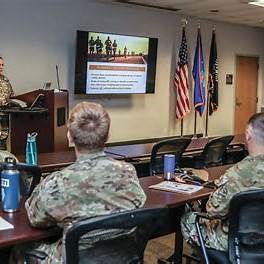
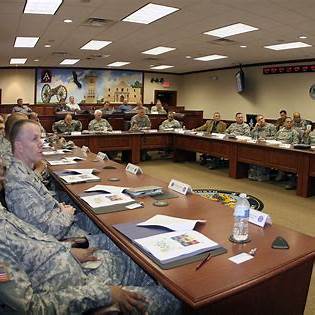
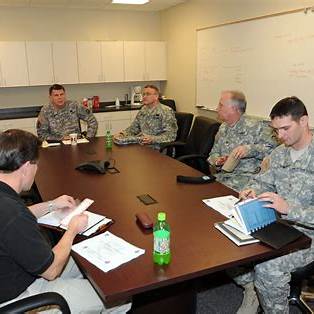
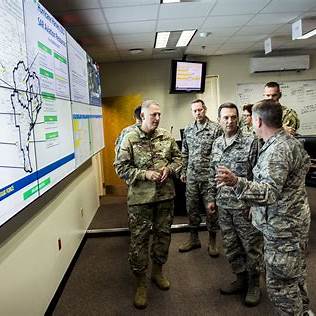
Aloha Janet — here’s a full Bells and Whistles package, plus image ideas, ready-to-use prompts, and real-world photo options you can use to illustrate the article. The core news context comes from Democracy Now!, AP, Reuters, Military.com, the Washington Post, and Cornell’s media brief.
HEADLINE OPTIONS
Primary headline
WHEN WAR TURNS SACRED: Armageddon Rhetoric Inside the U.S. Military
Alternate headlines
Holy War in the Chain of Command: Armageddon Language and the American Military
Armageddon in Uniform: End-Times Rhetoric, Command Power, and the U.S. Military
When Commanders Preach Prophecy: The Danger of Sacred War Inside the Pentagon
SUBTITLE / DECK OPTIONS
Deck 1
Reports from service members, a Pentagon prayer controversy, and a rising wave of Christian nationalist language raise urgent questions about faith, power, and war inside the U.S. military.
Deck 2
A Democracy Now! interview with Mikey Weinstein spotlighted allegations that some commanders framed war with Iran as part of a biblical end-times script. The controversy reaches beyond rhetoric and into command culture, constitutional boundaries, and military ethics.
BYLINE
By Janet Kira Lessin and Dr. Sasha Alex Lessin
SHORT INTRO BLOCK
A Democracy Now! interview with Mikey Weinstein, founder of the Military Religious Freedom Foundation, brought national attention to reports that some U.S. military commanders described the war with Iran in apocalyptic Christian terms. Weinstein said his organization received more than 200 complaints from service members across 50 installations. Separate reporting from AP, Reuters, Military.com, and the Washington Post has added broader scrutiny to Defense Secretary Pete Hegseth’s public religious posture and his invitation to pastor Doug Wilson to lead a Pentagon prayer service.
EXCERPT
When commanders frame war as prophecy, military language changes, constitutional guardrails weaken, and human cost slips out of view. That danger now sits at the center of a growing controversy over Christian nationalist rhetoric inside the U.S. military.
FEATURED IMAGE RECOMMENDATION
Use a cinematic collage as the featured image rather than a literal portrait. That gives you drama, avoids overreliance on one news photo, and lets the article read as a larger structural warning rather than a single-person profile.
Featured image prompt
Prompt:
A cinematic, photorealistic editorial collage. Center: a stern American military commander in dress uniform speaks at a briefing podium in a dimly lit command room. Left: rows of service members listen, faces tense and uneasy. Right: the Pentagon under storm clouds at dusk. Above: faint symbolic overlays of apocalyptic fire, cracked sacred text motifs, and a red horizon, suggesting the dangerous merger of prophecy and war. Mood: urgent, intelligent, constitutional crisis, moral tension. Human faces visible. No text in image.
Style: realistic, photorealistic, cinematic lighting, soft natural colors, fantasy realism, highly detailed, emotional depth, artistic composition, landscape 16:9
BEST SUPPORTING IMAGE PROMPTS
1. Command briefing scene
Prompt:
A photorealistic military briefing room filled with U.S. service members in uniform, seated in attentive silence, while a commanding officer speaks with intense conviction at the front. The mood feels uneasy and psychologically charged rather than heroic. Focus on human faces, body language, and the tension in the room. No text in image.
Style: realistic, photorealistic, cinematic lighting, soft natural colors, fantasy realism, highly detailed, emotional depth, artistic composition, landscape 16:9
2. Pentagon and prayer symbolism
Prompt:
The Pentagon at dusk under heavy storm clouds, with subtle symbolic overlays of prayer, scripture pages, and military maps blending into the sky. The image should feel grounded in reality yet convey the pressure of ideology entering the machinery of state power. No text in image.
Style: realistic, photorealistic, cinematic lighting, soft natural colors, fantasy realism, highly detailed, emotional depth, artistic composition, landscape 16:9
3. Troops under pressure
Prompt:
A diverse group of American service members stand in a hallway after a briefing, exchanging uneasy glances. Some look troubled, others guarded, others deep in thought. The scene should show conscience, hierarchy, and silent pressure inside military life. No text in image.
Style: realistic, photorealistic, cinematic lighting, soft natural colors, fantasy realism, highly detailed, emotional depth, artistic composition, landscape 16:9
4. The whistleblower
Prompt:
A lone service member sits late at night in a dim office, lit by a laptop screen, preparing a complaint or statement. Their face shows courage mixed with fear. Military insignia blur in the background. The tone is intimate, restrained, and morally serious. No text in image.
Style: realistic, photorealistic, cinematic lighting, soft natural colors, fantasy realism, highly detailed, emotional depth, artistic composition, landscape 16:9
5. Sacred war as institutional danger
Prompt:
An editorial-style photorealistic composition showing a military command table, maps, radios, and briefing materials, while faint flames and symbolic end-times imagery emerge in reflections across the polished surfaces. The image should communicate ideological contamination rather than fantasy spectacle. No text in image.
Style: realistic, photorealistic, cinematic lighting, soft natural colors, fantasy realism, highly detailed, emotional depth, artistic composition, landscape 16:9
6. Democracy at risk
Prompt:
The U.S. Capitol and the Pentagon appear in one dramatic landscape composition under darkening skies, with citizens and service members in the foreground. Expressions convey alarm, reflection, and civic resolve. The tone should feel constitutional, sober, and urgent. No text in image.
Style: realistic, photorealistic, cinematic lighting, soft natural colors, fantasy realism, highly detailed, emotional depth, artistic composition, landscape 16:9
REAL-WORLD PHOTO OPTIONS
These can help if you want a news-photo-plus-art mix.
1. Democracy Now segment page
The segment page gives you a direct source for the interview and likely a still or screen image associated with the broadcast. Good for a news-context image or embedded source link.
2. AP / PBS / Reuters coverage of Hegseth’s Christian rhetoric
AP and PBS both covered renewed scrutiny around Hegseth’s religious framing during the Iran war. Reuters separately reported that Hegseth led an explicitly Christian prayer service at the Pentagon in 2025. Those outlets often carry strong editorial images, but licensing rules apply.
3. Washington Post / Military.com / Spokesman coverage of Doug Wilson at the Pentagon
These reports document the Pentagon worship-service controversy and may include event photos or screen captures from official or social posts. Again, check license terms before reuse.
4. Public-domain military briefing and Pentagon imagery
Defense Department and military branch photo sites often provide public-domain or government-use images of briefing rooms, conference tables, and Pentagon exteriors. The four images shown above came from military or defense-related sources and can serve as visual references for your illustrator or layout. Reuse still requires checking the image page terms and captions.
IMAGE STRATEGY FOR THIS ARTICLE
A strong package would use:
1. cinematic collage as the featured image
2. one real-world Pentagon or briefing photo mid-article
3. one whistleblower-style illustration lower in the piece
4. one constitutional image near the end, such as Capitol plus service members
That combination gives you atmosphere, news grounding, and emotional range.
TAGS
Christian nationalism, Pentagon, Pete Hegseth, Doug Wilson, Military Religious Freedom Foundation, Mikey Weinstein, Iran war, Armageddon rhetoric, U.S. military, church and state, religious liberty, command culture, military ethics, constitutional crisis, Democracy Now, apocalyptic politics, end-times theology, holy war, faith and power, American democracy
X POST
Reports from service members, Pentagon prayer controversy, and rising Christian nationalist rhetoric inside the U.S. military raise urgent questions about war, prophecy, and command power.
WHEN WAR TURNS SACRED
By Janet Kira Lessin and Dr. Sasha Alex Lessin
#Pentagon #ChristianNationalism #IranWar #Military #ChurchAndState
FACEBOOK PROMO
When commanders frame war as prophecy, language shifts, constitutional guardrails weaken, and human cost slips out of view. Our new article examines the controversy surrounding Armageddon rhetoric inside the U.S. military, the Pentagon prayer-service dispute, and the growing fusion of religious ideology with command culture.
WHEN WAR TURNS SACRED: Armageddon Rhetoric Inside the U.S. Military
By Janet Kira Lessin and Dr. Sasha Alex Lessin
LINKEDIN PROMO
New article: WHEN WAR TURNS SACRED: Armageddon Rhetoric Inside the U.S. Military
By Janet Kira Lessin and Dr. Sasha Alex Lessin
This piece examines recent allegations that some military leaders framed the war with Iran in apocalyptic Christian terms, alongside broader reporting on Pentagon prayer controversies and church-state concerns inside military culture. The issue reaches beyond rhetoric into leadership norms, constitutional boundaries, and institutional trust.
AUTHOR BIOS
Janet Kira Lessin is an author, experiencer, researcher, and broadcaster whose work explores consciousness, disclosure, mythology, politics, and human transformation. She co-hosts Aquarian Media and writes at Dragon at the End of Time.
Dr. Sasha Alex Lessin, Ph.D. is an anthropologist, author, and researcher known for his work on ancient cultures, mythology, the Anunnaki tradition, and hidden history. He co-authors articles and books with Janet Kira Lessin and contributes to Enki Speaks.
REFERENCES BLOCK
Democracy Now! reported on March 9, 2026 that Mikey Weinstein said his organization received more than 200 complaints from service members about commanders using apocalyptic Christian rhetoric tied to the Iran war. The show also referenced Defense Secretary Pete Hegseth’s invitation to Doug Wilson for a Pentagon prayer service. AP and PBS later reported renewed scrutiny of Hegseth’s Christian rhetoric, while Reuters documented his practice of leading Pentagon prayer services. Additional coverage came from Military.com, the Washington Post, and Cornell.
OPTIONAL HEADER TEXT OVERLAY
WHEN WAR TURNS SACRED
Armageddon Rhetoric Inside the U.S. Military
Or shorter:
WHEN WAR TURNS SACRED
Faith, Power, and the Chain of Command

