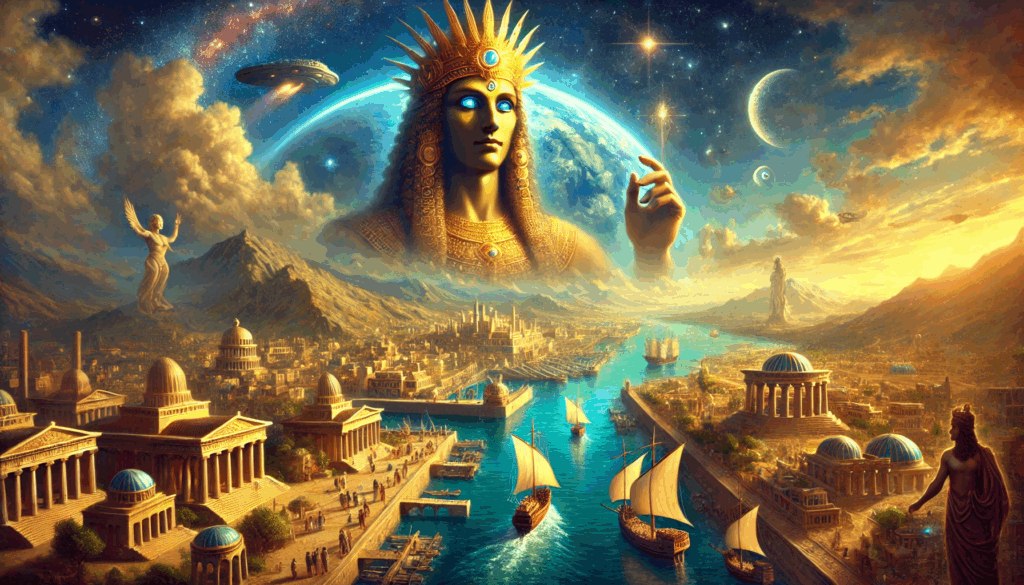
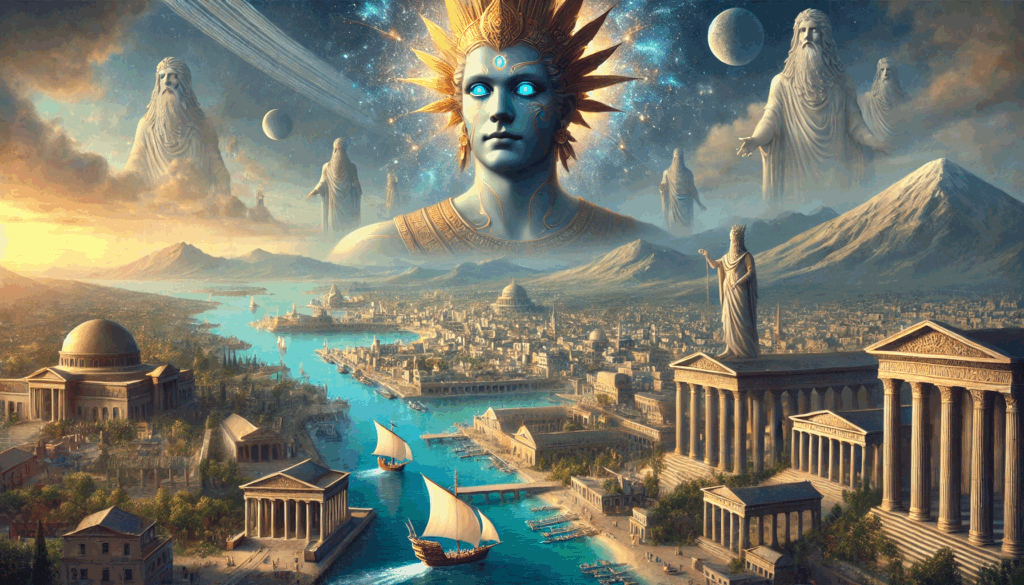
Anunnaki Influence over the Ancient Mediterranean Marduk, dignified and radiant, watches from the heavens as trade connects Greek, Phoenician, and Egyptian cities below
TRUCULENT TYRANTS PISISTRATUS & HIS HIPPIE SONS TRUMPED UP TROUBLE IN ATHENS AFTER SOLON LEFT
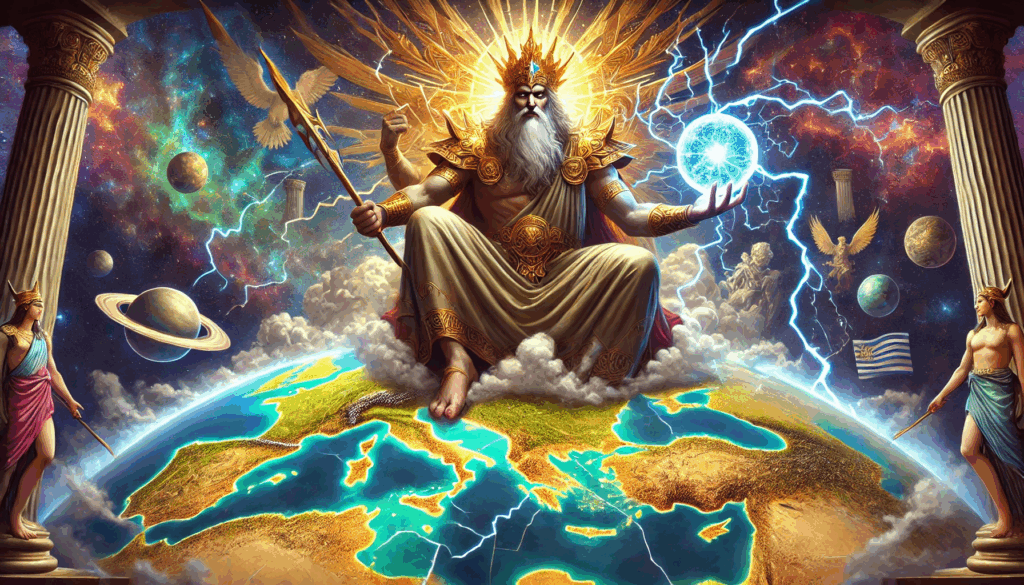
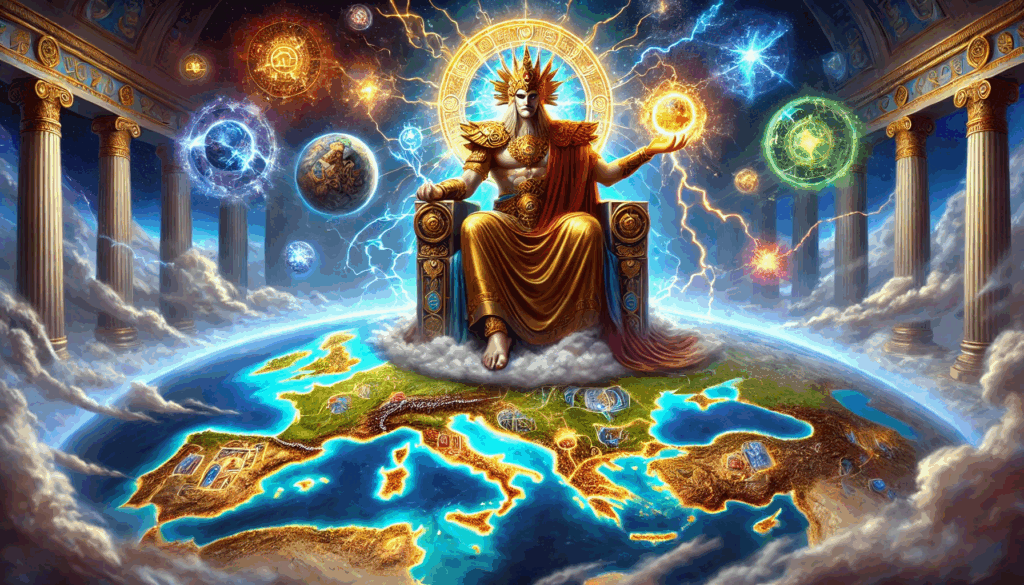
ZEUS (MARDUK) DIVIDES GREECE Above a fractured map of Greece, the cosmic figure of Marduk-Zeus looms—his lightning bolt and glowing orb symbolizing divine control over the warring city-states
Background: Anunnaki, Trade, and Turmoil
Around 600 BCE, the Greeks were entangled in the broader world ruled by Anunnaki overlords—extraterrestrial elites from Planet Nibiru. These rulers, often disguised as gods, such as Marduk (also known as Zeus), interacted with humanity through hybrids and favored bloodlines. Marduk’s Phoenician agents traded with Greek outposts from Tyre to Carthage, embedding Greek societies deeper into the web of Mesopotamian, Egyptian, and North African influence.
Despite mountainous terrain limiting grain production, the Greeks colonized fertile coasts from the Aegean to Southern France, spreading their language, crafts, and religious practices, which conveniently mirrored those of the Anunnaki “gods.”
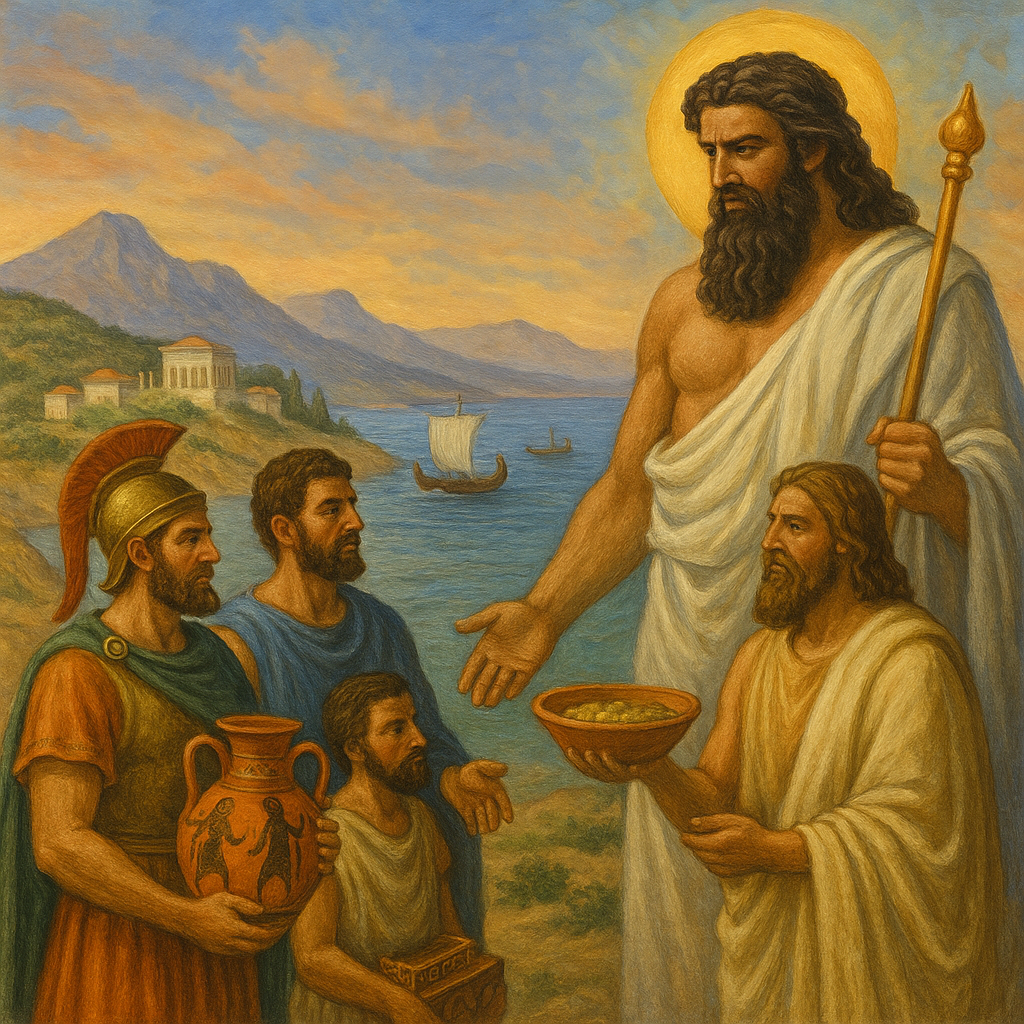
ANUNNAKI TRADE & INFLUENCE IN ANCIENT GREECE Greek merchants stand before a towering Anunnaki figure, resembling Marduk-Zeus, as they offer goods in a coastal Mediterranean landscape. Ships sail in from Phoenician ports, and temple ruins dot the hills, symbolizing the intricate web of trade, colonization, and divine influence that shaped Greece around 600 BCE.
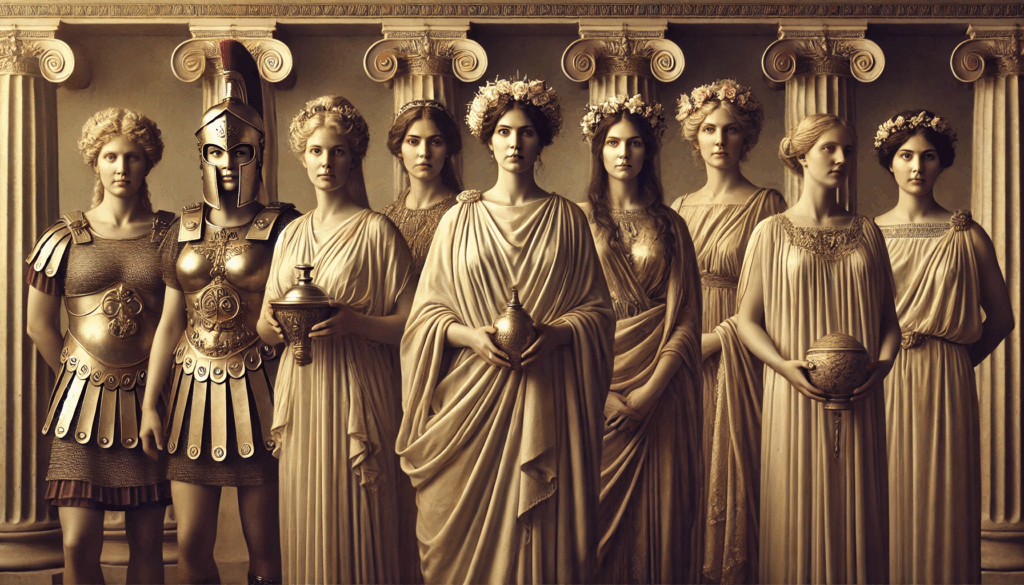
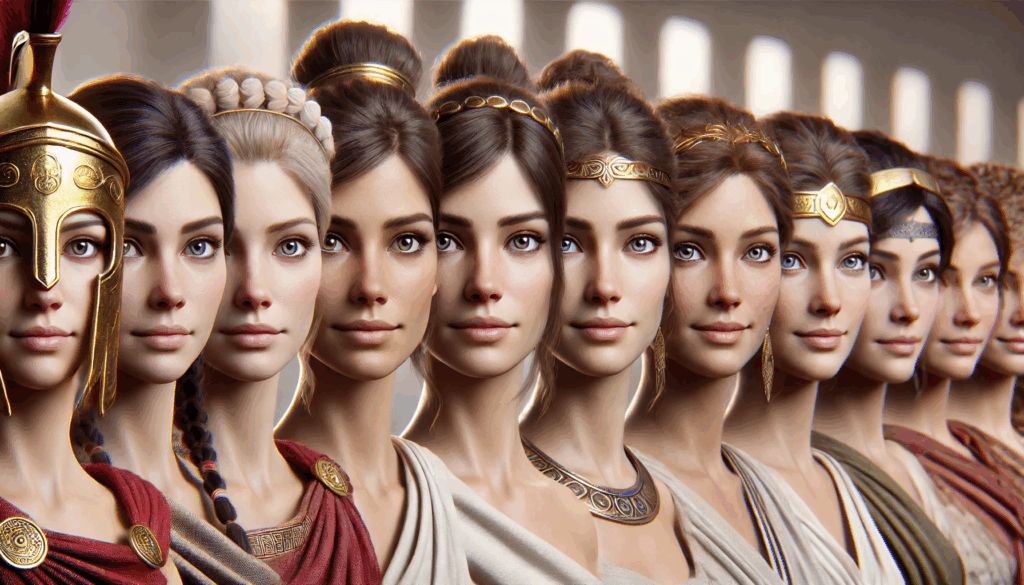
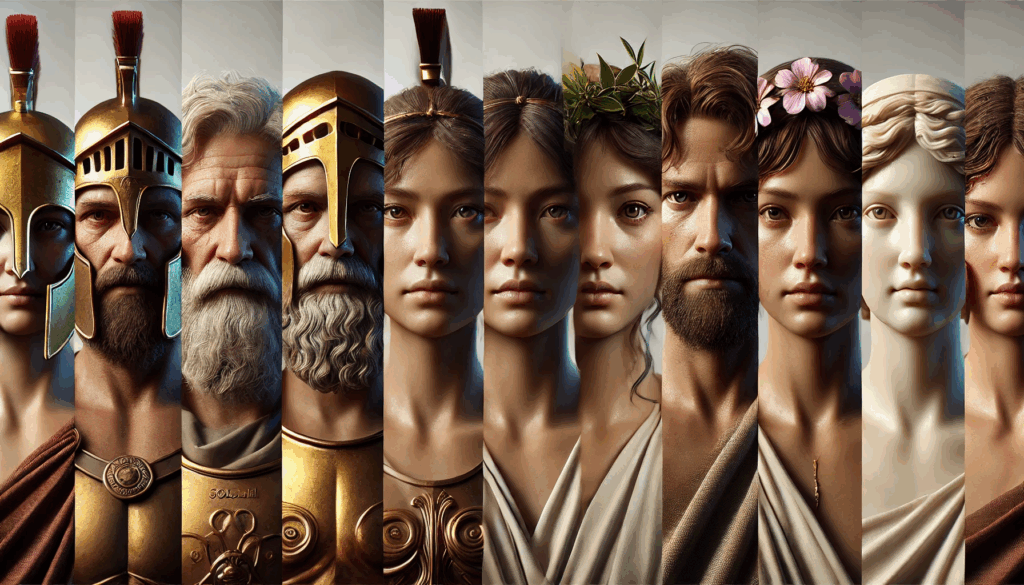
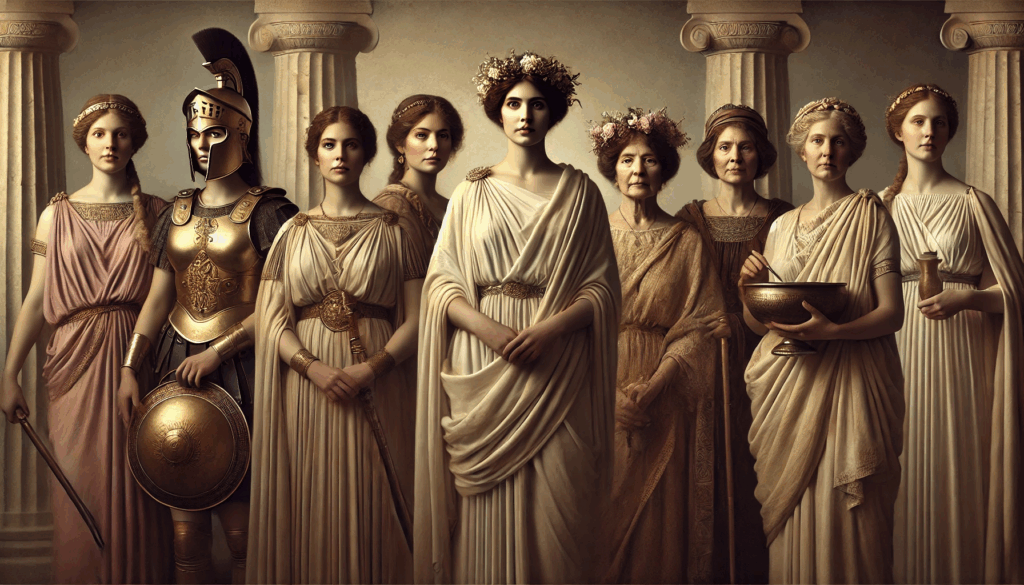
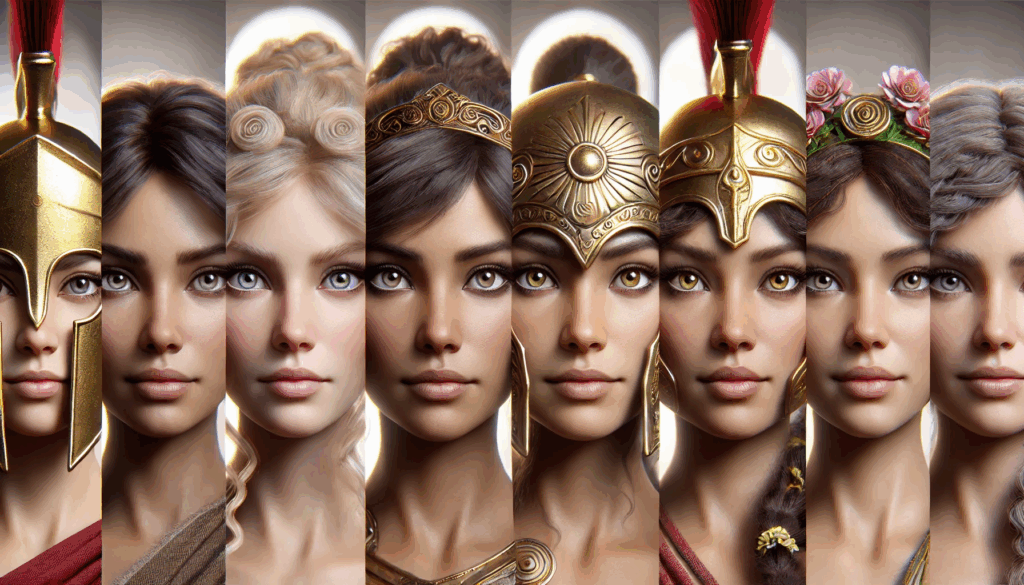
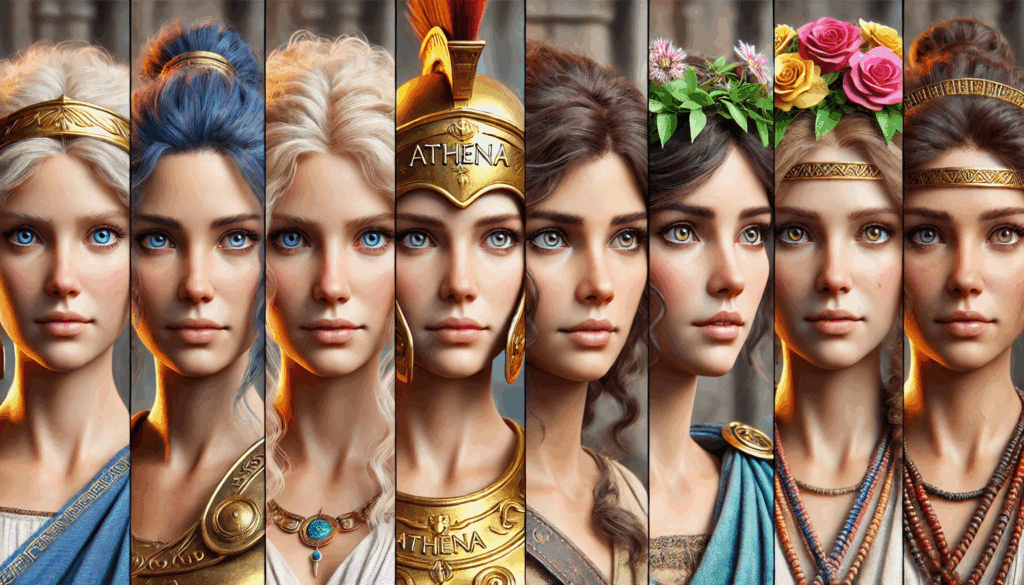
FACES OF ATHENIAN POWER – WOMEN From a warrior dressed as Athena to noblewomen, priestesses, and festival-goers, these women embody the myth, ritual, and silent strength woven through Athenian life.
Slavery, Oligarchy, and the Rise of the Tyrants
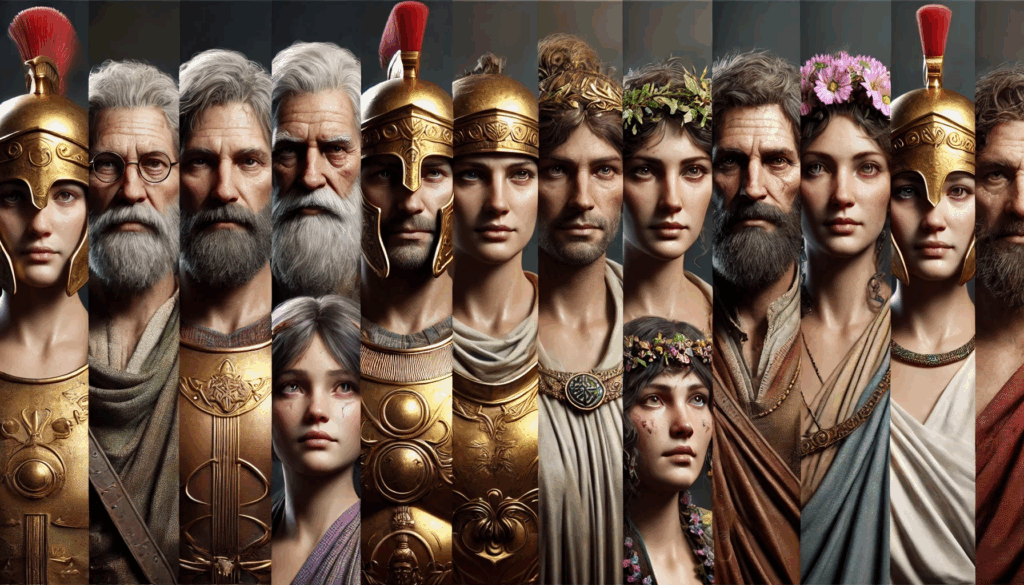
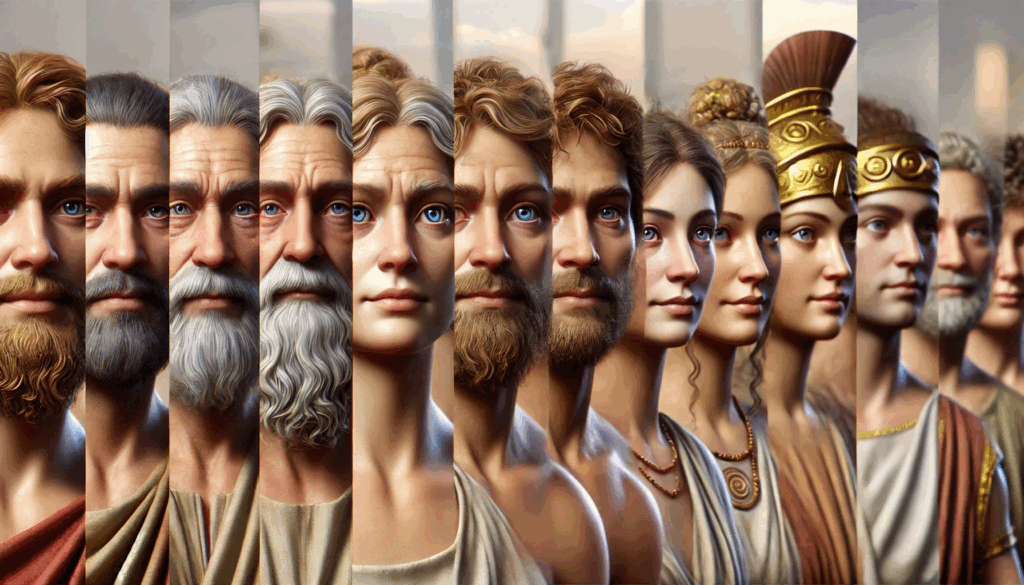
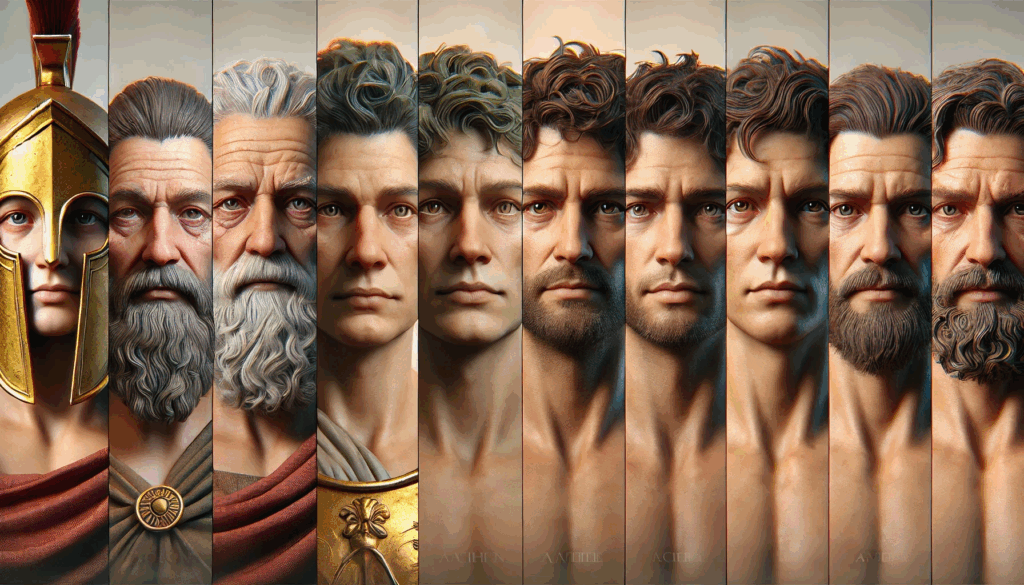
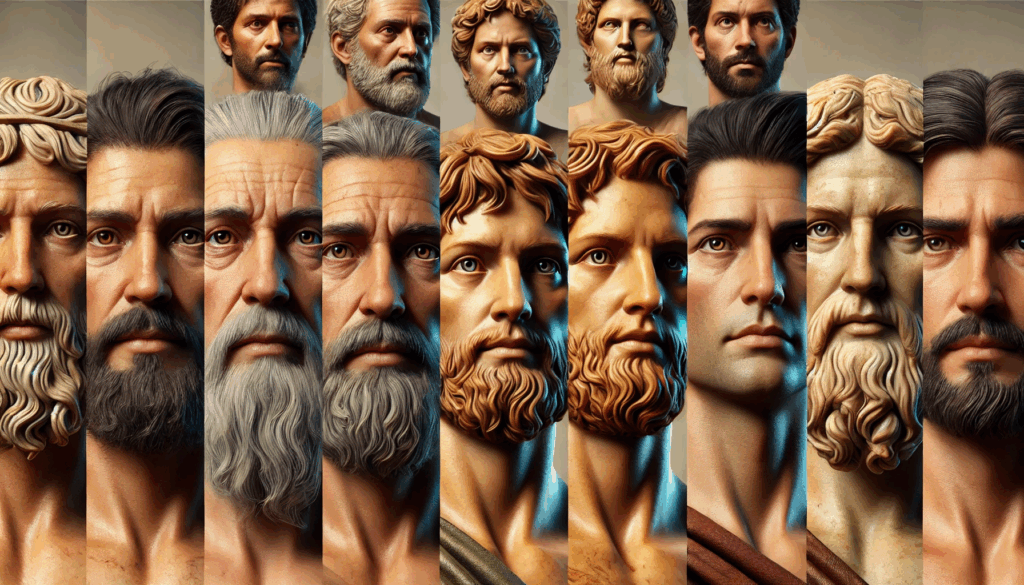
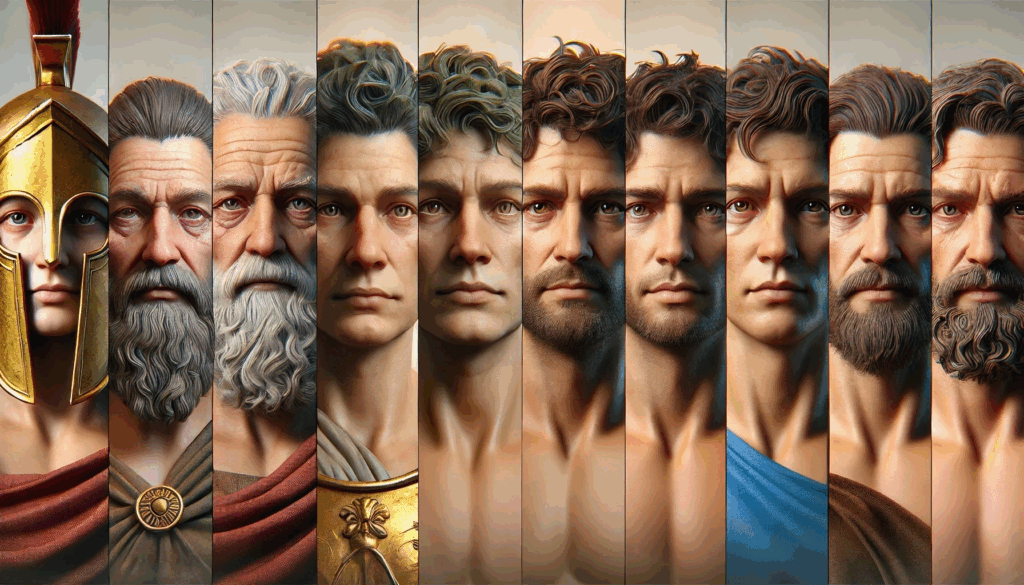
FACES OF THE TYRANTS & REVOLUTIONARIES – MEN A close-up lineup of Athenian male power: from Solon’s wisdom to Pisistratus’ charisma, and the grim determination of Harmodius and Aristogeiton—the eyes of history meet yours.
With colonization came wealth and inequality. Greek aristocrats enriched themselves on the backs of slaves and indebted peasants. Even in Sparta, where commoner-soldiers (Helots) served instead of slaves, the elite demanded tribute in the form of crops.
As wealth consolidated among landowners and traders, oligarchies replaced kings. These new elites taxed the poor, seized lands due to debts, and drove many Athenians into debt bondage.
Cue the populist strongmen—the TYRANTS. Ambitious aristocrats, echoing modern-day populists like Trump, saw opportunity in chaos. They rose on the shoulders of angry commoners, promising reform while seizing total power.
Solon’s Brief Revolution
SOLON’S DREAM OF DEMOCRACY Solon addresses a diverse Athenian crowd beneath an olive tree, proclaiming the end of debt slavery and laying the groundwork for a more equitable civic life. The golden light and scrolls of law highlight his legacy as a visionary reformer.
In 594 BCE, the reformer Solon attempted to reform the system. He banned debt slavery, opened lawmaking to all Athenians, and randomized many political appointments to prevent elite control. Then he left Athens to explore the East, where he no doubt absorbed even more Anunnaki-influenced knowledge.
Enter Pisistratus: Trickster, Populist, Tyrant
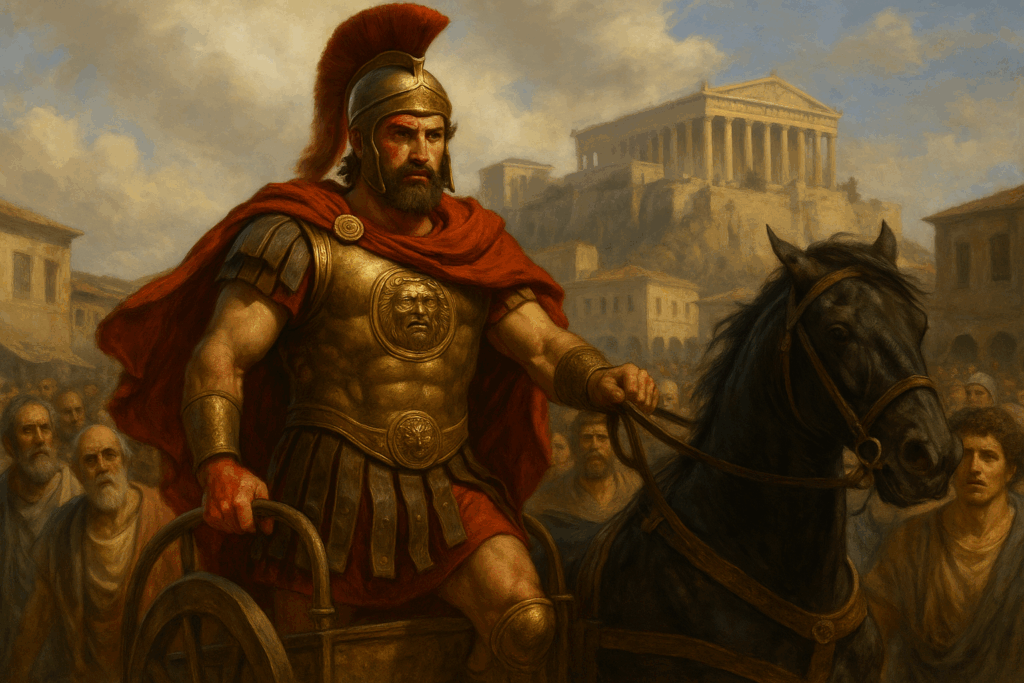
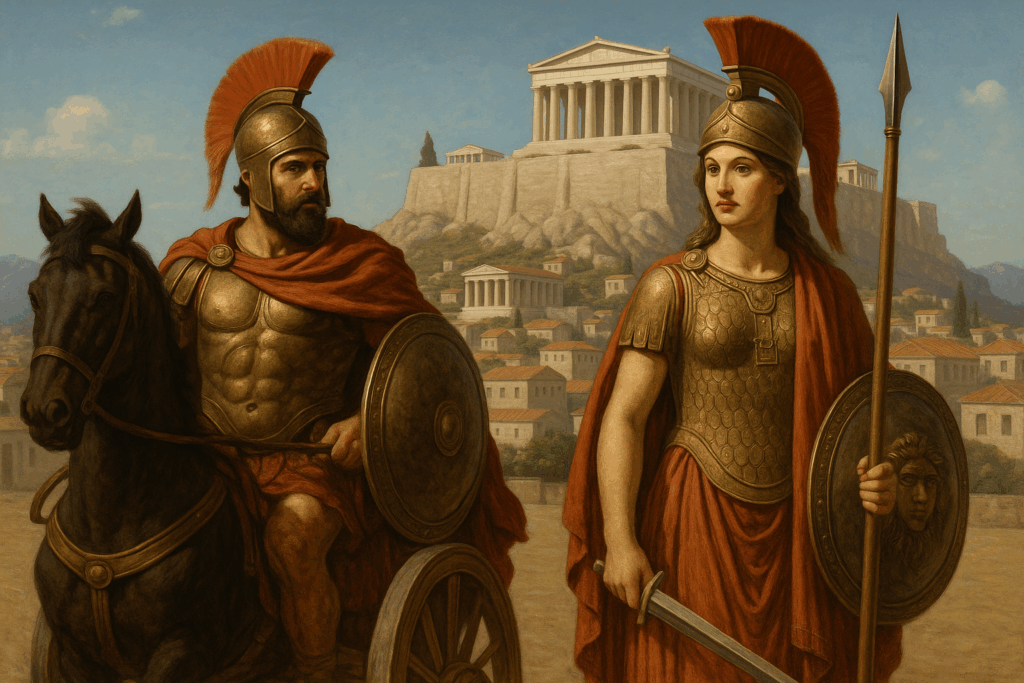
PISISTRATUS IN ARMOR Pisistratus, dressed in ornate bronze armor with a crimson cape, rides a black horse-drawn chariot through the Agora. Behind him, citizens look on with awe and uncertainty as the Acropolis rises in the background, symbolizing his grip on Athens through both drama and strength.
With Solon gone, Pisistratus staged a phony assassination attempt—a dramatic, Trump-style charade. Bloodied and theatrical, he rolled into the Agora claiming he needed protection. The Assembly gave him a bodyguard. Soon, these “guards” seized the Acropolis, and Pisistratus became ruler.
Though a tyrant, Pisistratus used clever PR: he patronized culture, supported the poor, taxed wealthy merchants, and built Athens’ naval and commercial power. He forged alliances with immigrant populations and rural workers, even forgiving former enemies, buying loyalty with his wealth.
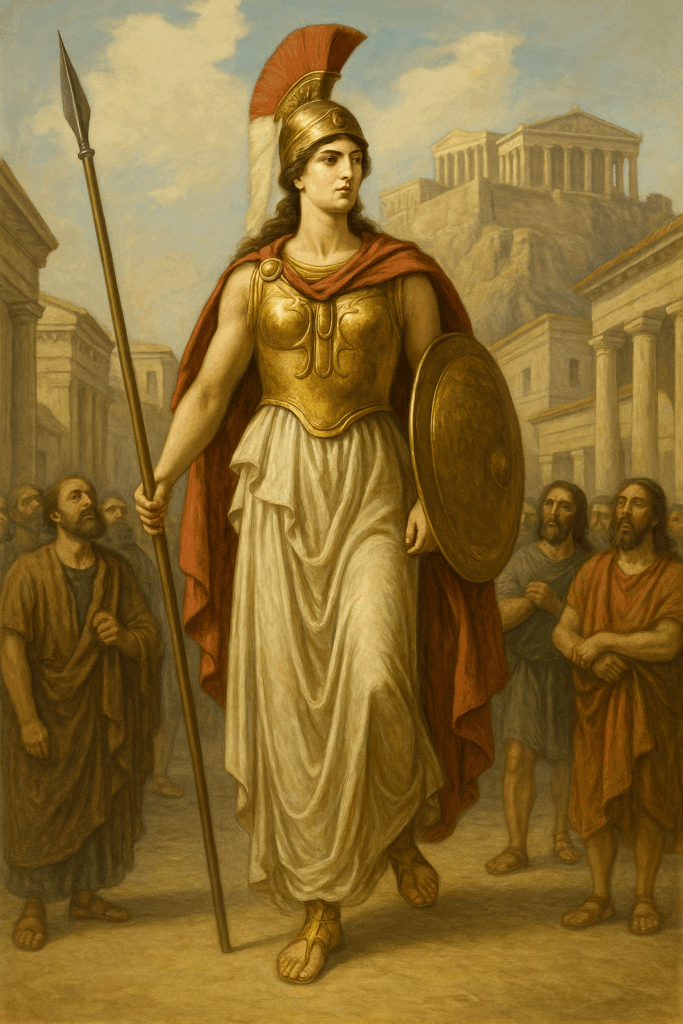
ATHENA RETURNS THE TYRANT A regal woman dressed in shining bronze armor and flowing white robes strides through Athens, bearing a spear and shield. Posing as the goddess Athena, she leads the way for Pisistratus’ return while stunned citizens watch in reverence, the Acropolis rising in the background.
Banished twice, he returned both times—once escorted by a tall woman dressed as Athena, in one of history’s earliest political theater stunts. This divine cosplay won over the crowd.
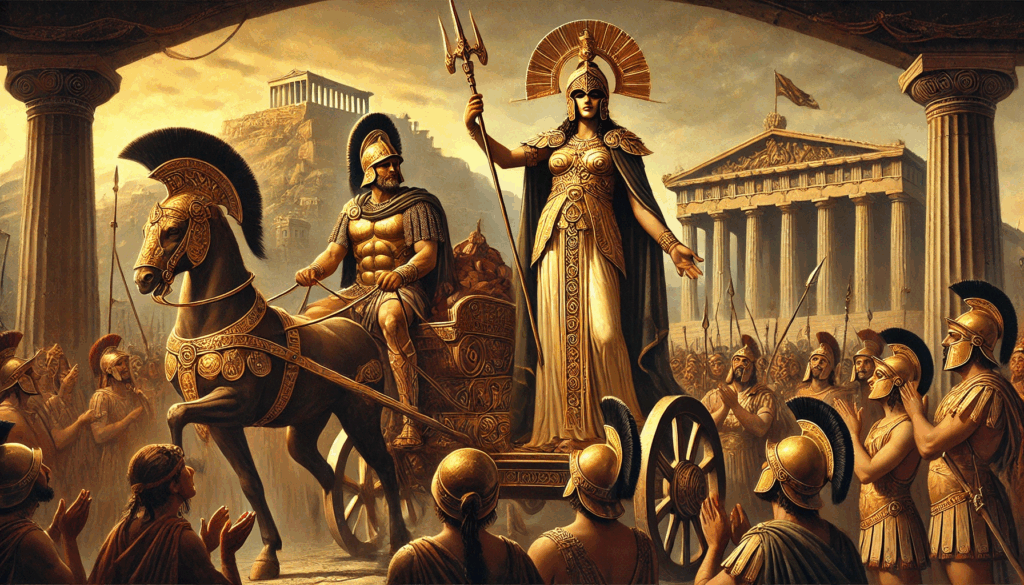
ATHENA RETURNS THE TYRANT Pisistratus re-enters Athens behind a woman dressed as the goddess Athena, staging divine approval to reclaim power. Citizens cheer, awed by the spectacle—a masterclass in ancient political theater.
Pisistratus ruled for nearly 20 years, dying naturally in 527 BCE, and left the city to his sons, Hippias and Hipparchus.
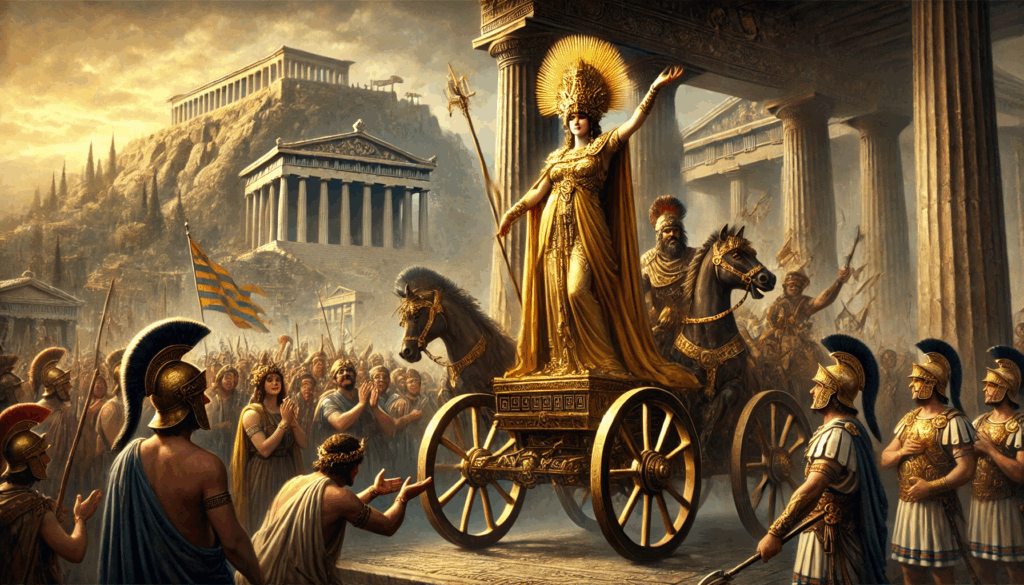
PHYE & PISISTRATUS RETURN TO ATHENS Phye, dressed as the goddess Athena, stands tall beside Pisistratus in a ceremonial chariot. He, armored and vigilant, holds the reins as they approach the Acropolis. Citizens gather in awe, convinced the goddess herself has restored their leader to power.
The Hippie Sons: Culture and Collapse
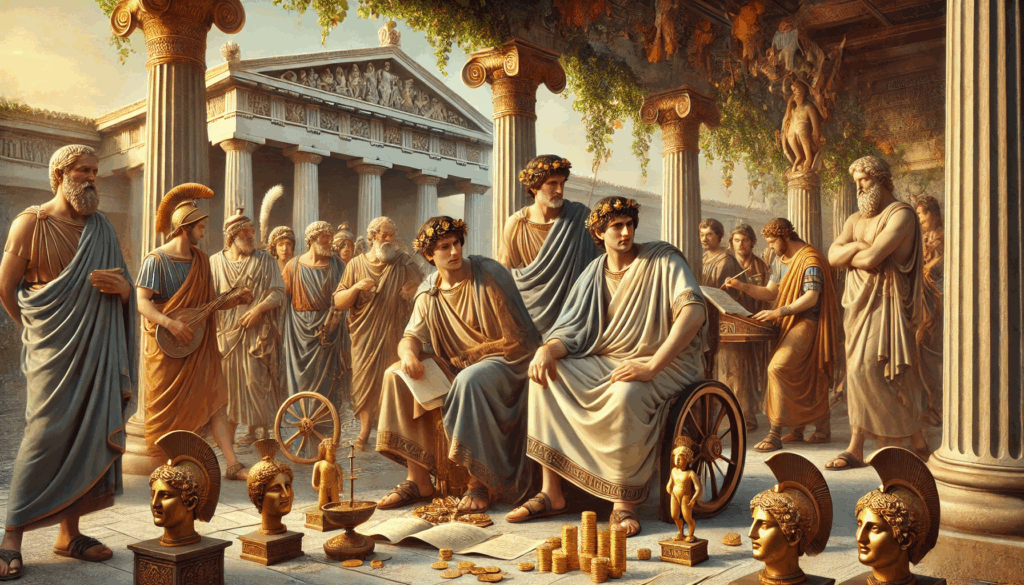
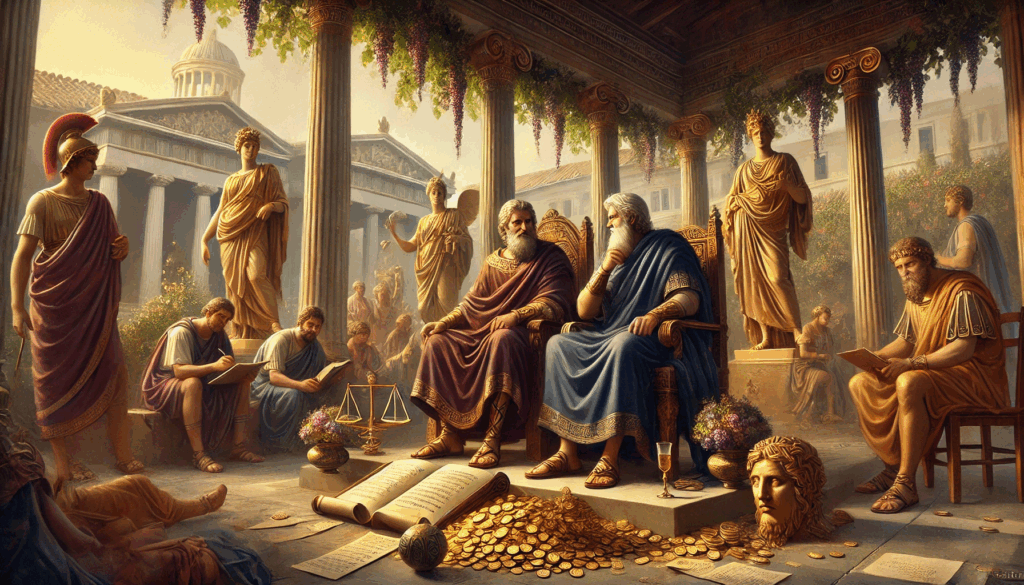
THE SONS OF THE TYRANT Hippias governs with a cold strategist’s gaze, while Hipparchus surrounds himself with poets and beauty, together ruling Athens in a fleeting golden age of prosperity and cultural growth.
Hipparchus promoted arts and culture.
Hippias, the elder, managed politics and economics.
Their co-rule started peacefully. But after Harmodius and Aristogeiton assassinated Hipparchus (likely for personal and political reasons), Hippias snapped.
He turned paranoid and oppressive, raising taxes, exiling dissenters, and stoking rage. Eventually, even conservative Sparta stepped in and expelled him.
BLADE IN THE FESTIVAL CROWD Harmodius and Aristogeiton stand resolute as Hipparchus, oblivious and regal, lingers nearby amid the festival banners, capturing the calm before a moment that would shake Athens.
Legacy: Tyranny with a Twist
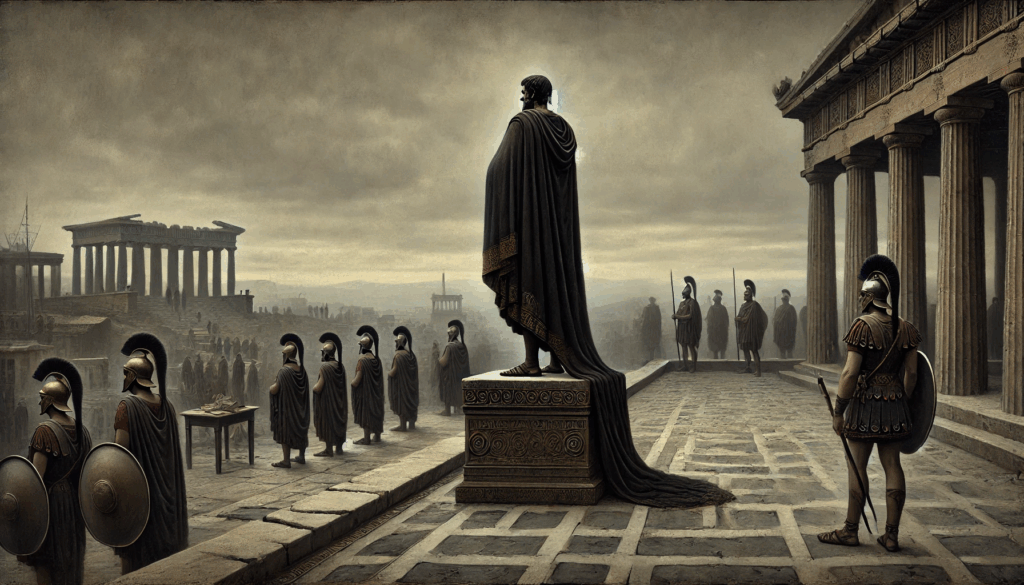
THE TYRANT’S PARANOIA Hippias stands alone in a somber Athens, cloaked in dark robes, as silence and control replace the vibrancy of his father’s rule. The city grows quiet under the weight of repression.
The Pisistratids’ rule demonstrates that tyranny can assume many forms: that of a populist hero, a cultural benefactor, or a vengeful ruler. Their reign reveals how power thrives in chaos, how elites use myth and manipulation to return, and how ordinary people often trade freedom for order—until it becomes too much.
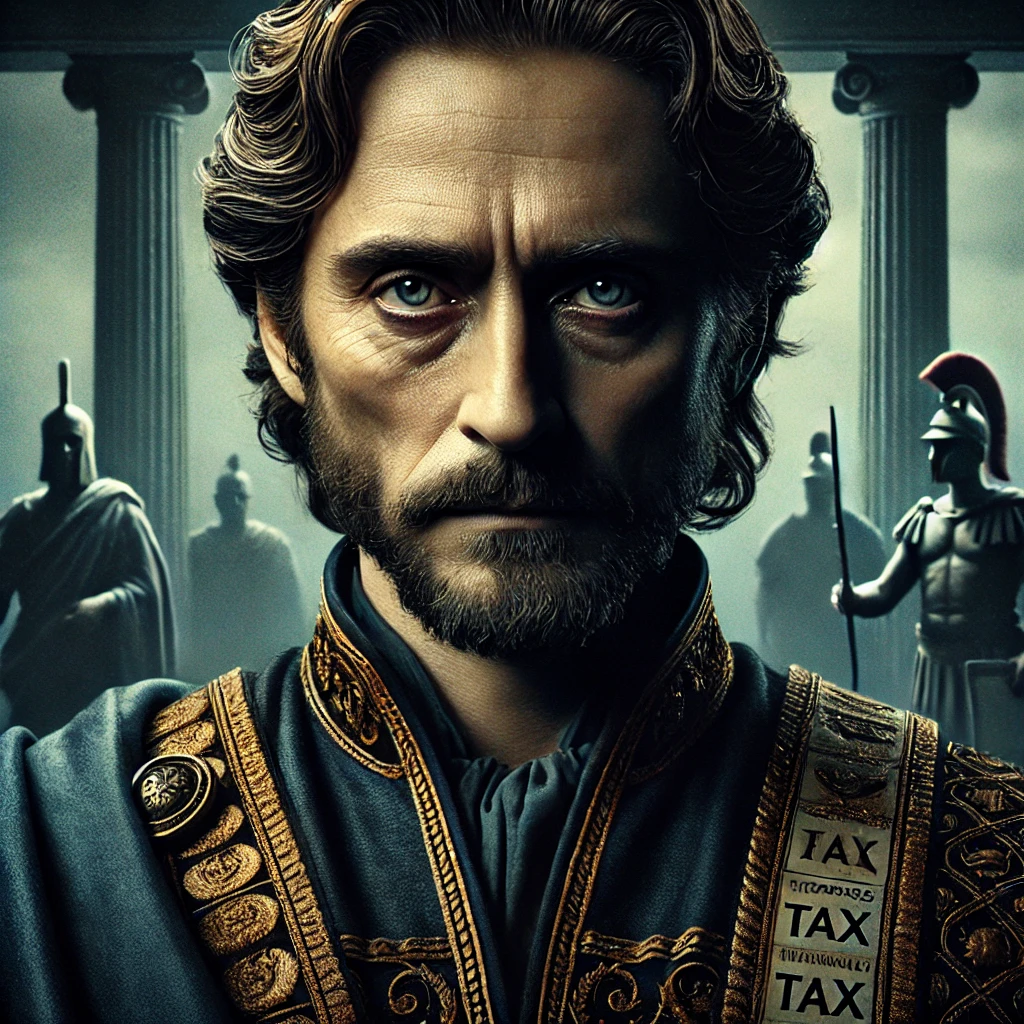
THE FACE OF FALLEN POWER A close-up of Hippias reveals the toll of tyranny—his wary eyes and dark robes reflect the fear, control, and solitude that defined his rule after his brother’s death.
PHYE AS ATHENA Phye, the tall Athenian woman chosen by Pisistratus, gazes directly at the viewer with quiet authority. Wearing ornate bronze armor and a crimson-plumed helmet, she stands in the heart of Athens with spear and shield in hand. Behind her, the Acropolis watches over the city—her presence blurring the line between mortal and divine.
The woman who played Athena in Pisistratus’ political stunt was not the real goddess, of course, but a tall, stately Athenian woman named Phye (or Phya)—according to ancient sources.
🔍 Who Was Phye?
Name:Phye (Φύη)
Historical Source:Herodotus (Histories, Book 1, 60)
Description: A tall, beautiful woman, chosen specifically because of her imposing presence and noble appearance. She was dressed in armor modeled after Athena’s, placed in a chariot beside Pisistratus, and paraded into Athens to create the illusion that the goddess herself was escorting him back into power.
Herodotus reports that the ruse was successful because many common Athenians were superstitious and unfamiliar with political theater. They truly believed Athena had returned Pisistratus to them as a divinely chosen ruler.
🛸 Symbolic Layer in Your Version
In this Anunnaki-oriented narrative, this event mirrors:
Marduk-Zeus-style manipulation of public belief
Use of divine cosplay as an ancient psy-op
An example of early mass perception engineering
Phye (Φύη) is a fascinating, though little-known, historical figure—one of the earliest recorded examples of a “political actress” or symbolic stand-in used in a masterstroke of ancient propaganda.
🔱 PHYE: THE WOMAN WHO BECAME A GODDESS (FOR A DAY)
ATHENA RETURNS THE TYRANT Pisistratus re-enters Athens behind a woman dressed as the goddess Athena, staging divine approval to reclaim power. Citizens cheer, awed by the spectacle—a masterclass in ancient political theater.
Name: Phye (sometimes Latinized as Phya) Lifespan: Unknown (circa mid-6th century BCE) Role: Chosen by Pisistratus to impersonate the goddess Athena in a staged return to power Mentioned by Herodotus, Aristotle, and later ancient historians
🏛️ THE CONTEXT: ATHENS IN TURMOIL
After the reformer Solon left Athens, power struggles escalated. The ambitious aristocrat Pisistratus seized power through cunning and charisma, not brute force. He was exiled twice by rival factions. During his second exile, around 546 BCE, he required a bold strategy to regain the Athenians’ trust and return as ruler.
🎭 THE STUNT: A LIVING GODDESS RETURNS TO ATHENS
According to Herodotus (Histories 1.60):
“A woman of particularly tall and beautiful appearance, dressed in full armor as Athena, was placed in a chariot beside Pisistratus and driven into the city. Heralds went before proclaiming that Athena was personally restoring Pisistratus to the Acropolis.”
FACES OF SILENT POWER – WOMEN Goddesses, priestesses, and citizens gaze back with grace and quiet strength—faces that shaped Athens through myth, ritual, and resilience.
The woman’s name was Phye, a country girl from the deme of Paiania, reportedly around 5’10” or taller—extraordinarily tall by ancient standards. With graceful features and a commanding presence, she was dressed in sacred armor and presented as the goddess Athena herself.
The crowd believed it. Many Athenians, especially rural citizens with limited education or exposure to political intrigue, genuinely thought the goddess had come down from Olympus to support Pisistratus. He was welcomed back without bloodshed and regained control of Athens.
🧠 ANALYSIS: EARLY POLITICAL THEATER & PSYCHOLOGY
This was more than a prank—it was strategic myth-making:
Phye became a living symbol, blending religion and power.
The visual impact of her presence in the chariot hacked the collective imagination of the public.
It was one of the first recorded instances of divine cosplay being used to manufacture consent and override opposition.
🔮 PHYE’S LEGACY
Though she disappears from the historical record after the stunt, Phye’s moment in the spotlight remains a template for future rulers who:
Wrap themselves in religious symbolism
Use female icons to embody divine will (think Joan of Arc, the Virgin Mary in European monarchies, Liberty in revolutions)
Employ stagecraft to override skepticism
In a way, Phye was the prototype for political illusion—the goddess who wasn’t, yet changed history.
📢 Please share this post if you enjoyed it. Thanks!
Anunnaki Influence over the Ancient Mediterranean Marduk, dignified and radiant, watches from the heavens as trade connects Greek, Phoenician, and Egyptian cities below
✅ 1. BANNER IMAGE: THE RISE OF THE TYRANT
Title:THE TYRANT’S RETURN TO ATHENS Description: Pisistratus, bloodied and defiant, drives his chariot into the Agora as stunned Athenians look on. His guards—armed followers—gather behind him, with the Acropolis looming in the distance.
✅ 2. SOLON’S REFORMS
Title:SOLON’S DREAM OF DEMOCRACY Description: Solon addresses a diverse Athenian crowd—merchants, farmers, and freed slaves—declaring an end to debt slavery. Behind him, a symbolic olive tree and scrolls of law.
✅ 3. PISISTRATUS & FAKE ATHENA STUNT
Title:ATHENA RETURNS THE TYRANT Description: A tall woman in gleaming armor, dressed as the goddess Athena, leads Pisistratus through the city gates. People bow in awe, believing divine will has restored him.
✅ 4. THE BROTHERS RULE: HIPPIAS & HIPPARCHUS
THE SONS OF THE TYRANT Hippias governs with a cold strategist’s gaze, while Hipparchus surrounds himself with poets and beauty, together ruling Athens in a fleeting golden age of prosperity and cultural growth.
Title:THE SONS OF THE TYRANT Description: Hippias, stern and calculating, shares the throne with the flamboyant Hipparchus, surrounded by artists, philosophers, and golden statues, highlighting their brief golden era.
✅ 5. THE ASSASSINATION OF HIPPARCHUS
Title:BLADE IN THE FESTIVAL CROWD Description: Harmodius and Aristogeiton strike Hipparchus down during a public festival. Panic spreads among shocked Athenians as the body falls.
BLADE IN THE FESTIVAL CROWD Harmodius and Aristogeiton stand resolute as Hipparchus, oblivious and regal, lingers nearby amid the festival banners, capturing the calm before a moment that would shake Athens.
✅ 6. HIPPIAS TURNS OPPRESSIVE
THE TYRANT’S PARANOIA Hippias stands alone in a somber Athens, cloaked in dark robes, as silence and control replace the vibrancy of his father’s rule. The city grows quiet under the weight of repression.
Title:THE TYRANT’S PARANOIA Description: A darker, older Hippias peers through temple shadows, as citizens are dragged off by guards. Exile edicts and raised taxes mark the fall from grace.
OPTIONAL EXTRAS:
ZEUS (MARDUK) DIVIDES GREECE Above a fractured map of Greece, the cosmic figure of Marduk-Zeus looms—his lightning bolt and glowing orb symbolizing divine control over the warring city-states
✅ 7. MARDUK-ZEUS IN THE SKY ABOVE GREECE
Title:ZEUS (MARDUK) DIVIDES GREECE Description: From a heavenly perch, a cosmic Marduk-as-Zeus gazes down at a fractured map of Greek city-states—each flying different banners—locked in conflict.
✅ 8. TYRANNY’S LEGACY
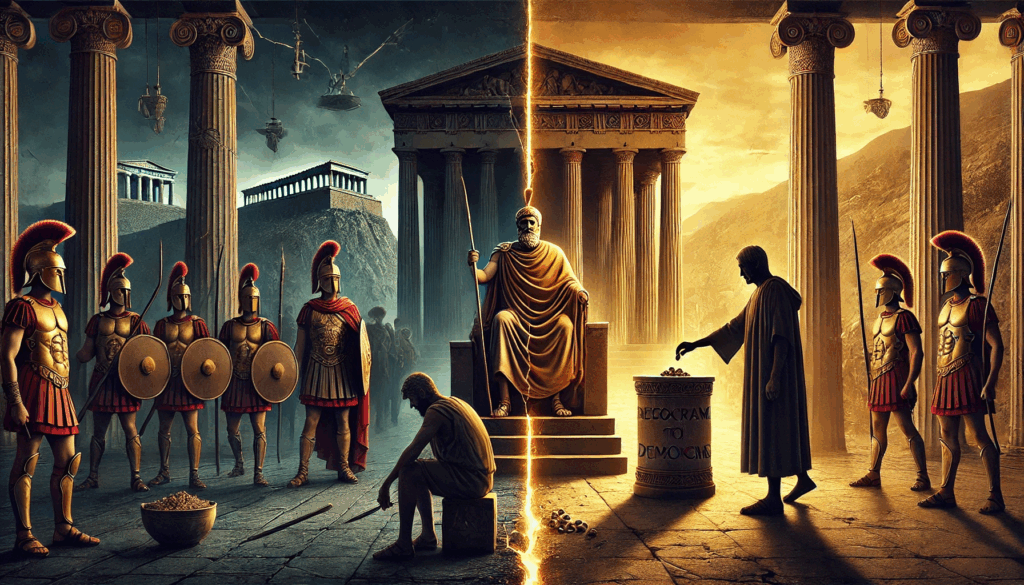
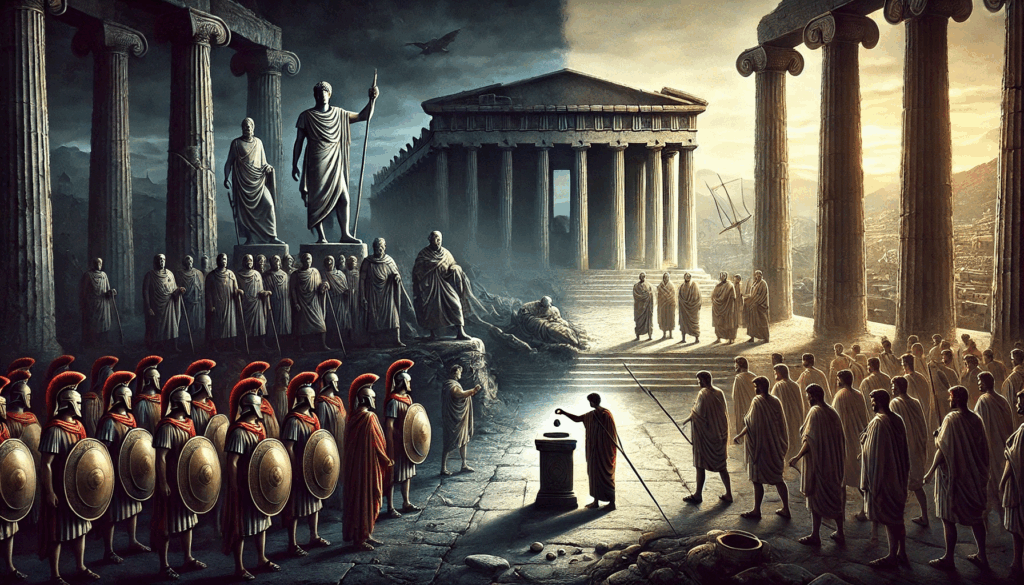
FROM TYRANTS TO DEMOCRACY Pisistratus stands in shadowed power as, on the other side, a citizen casts a vote in sunlight—Athens transitions from autocracy to the dawn of democracy.
Title:FROM TYRANTS TO DEMOCRACY Description: A symbolic split scene: on one side, Pisistratus rules from the Acropolis; on the other, an Athenian citizen casts a vote, foreshadowing democracy’s rise.
Truculent TYRANT Pisistratus & his Hippie sons Trumped Up Trouble in ATHENS after Solon left.
TYRANT Pisistratus & his Hippie sons Trumped Up Trouble in ATHENS after Solon left.
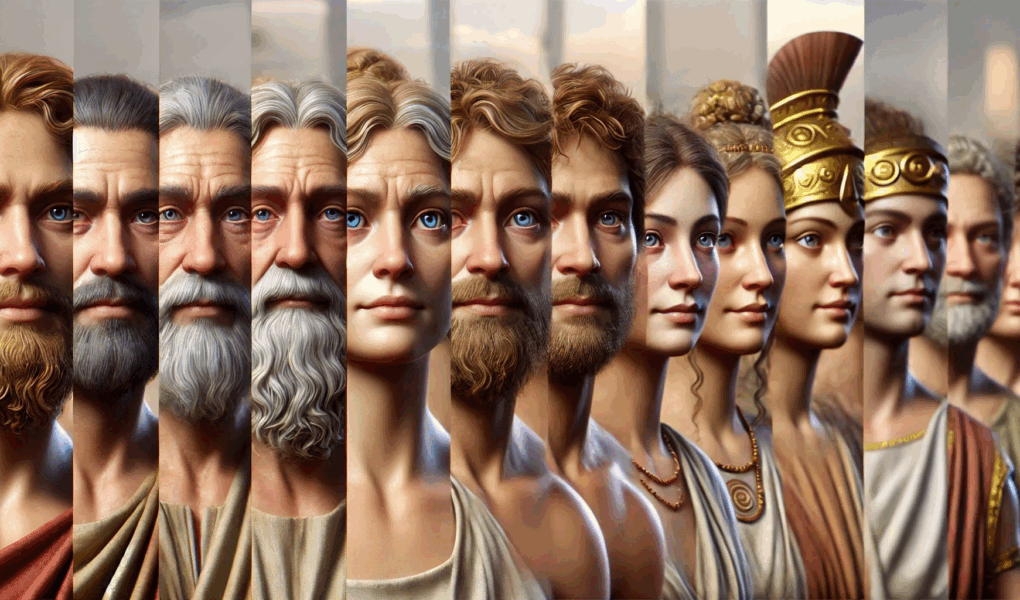
FACES OF ATHENIAN POWER – MEN Solon, Pisistratus, Hippias, Hipparchus, Harmodius, and Aristogeiton—men who shaped the fate of Athens—stare directly at us, bridging myth, tyranny, and revolution.
TRUCULENT TYRANTS PISISTRATUS & HIS HIPPIE SONS TRUMPED UP TROUBLE IN ATHENS AFTER SOLON LEFT. By Sasha Alex Lessin, Ph.D. (Anthropology, U.C.L.A.)
From 600 BCE or so, Greeks traded with the successive empires ruled by Anunnaki from Planet Nibiru, their offspring with each other, and with the line of higher-privileged Earthlings (Adapites). Anunnaki Prince MARDUK had his Phoenicians trade with Greece from their bases in Lebanon (Tyre) and Tunisia (Carthage). Successive Middle East empires hired Greek mercenaries. Greek exiles lived in the empires of Egypt, Mesopotamia, and North Africa. Greeks wrote in Phoenician script adapted to the Greek language.
FACES OF ATHENIAN POWER – WOMEN From a warrior dressed as Athena to noblewomen, priestesses, and festival-goers, these women embody the myth, ritual, and silent strength woven through Athenian life.
The scarcity of large open fields in mountainous Greece hindered the Mycenaean people from producing a surplus of food for trade. It led Greeks to “colonize fertile coastal areas on Aegean and Ionian islands, around the Black Sea and Asia Minor, in Southern Italy, coasts of Spain and Southern France.”
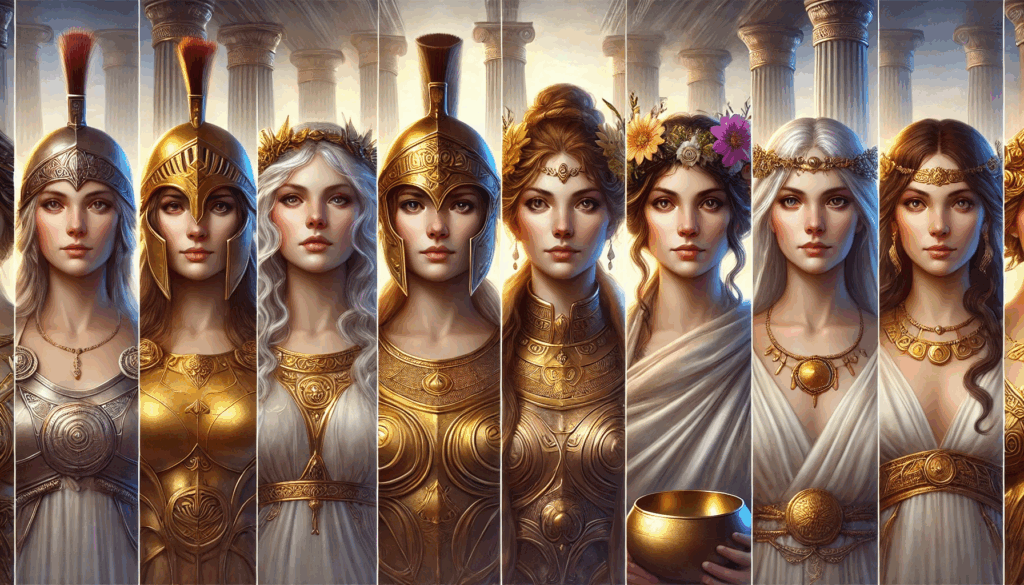
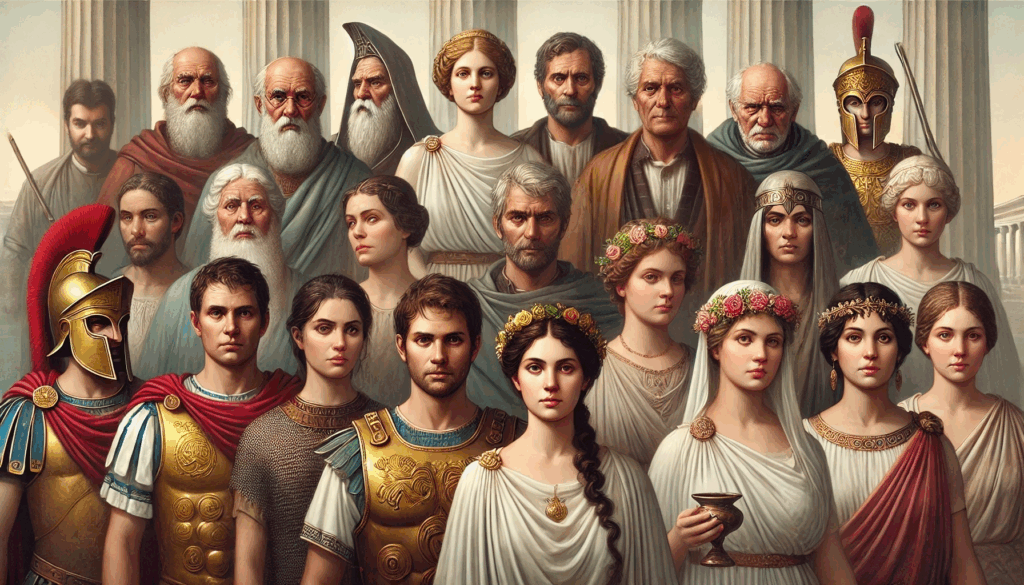
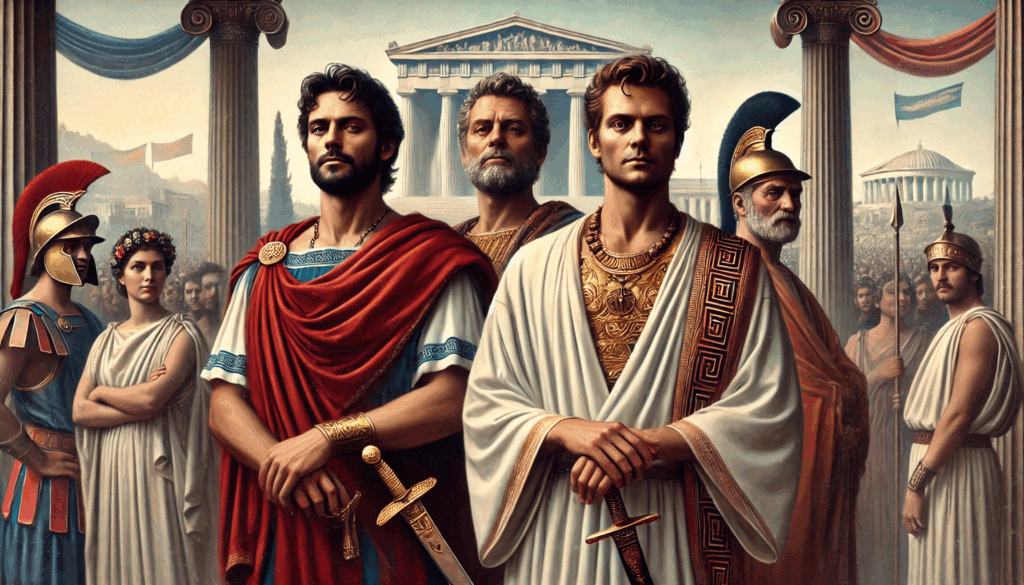
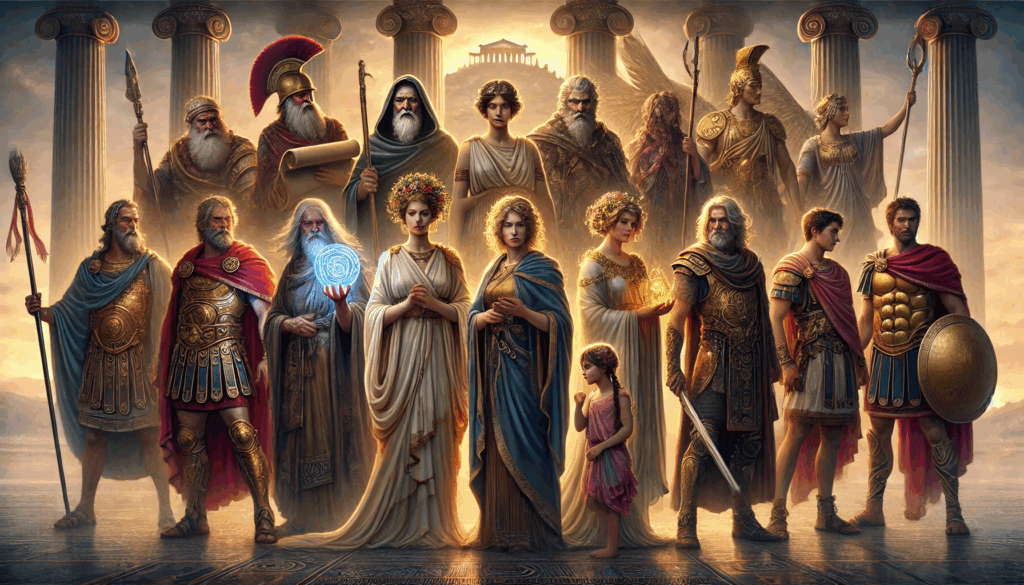
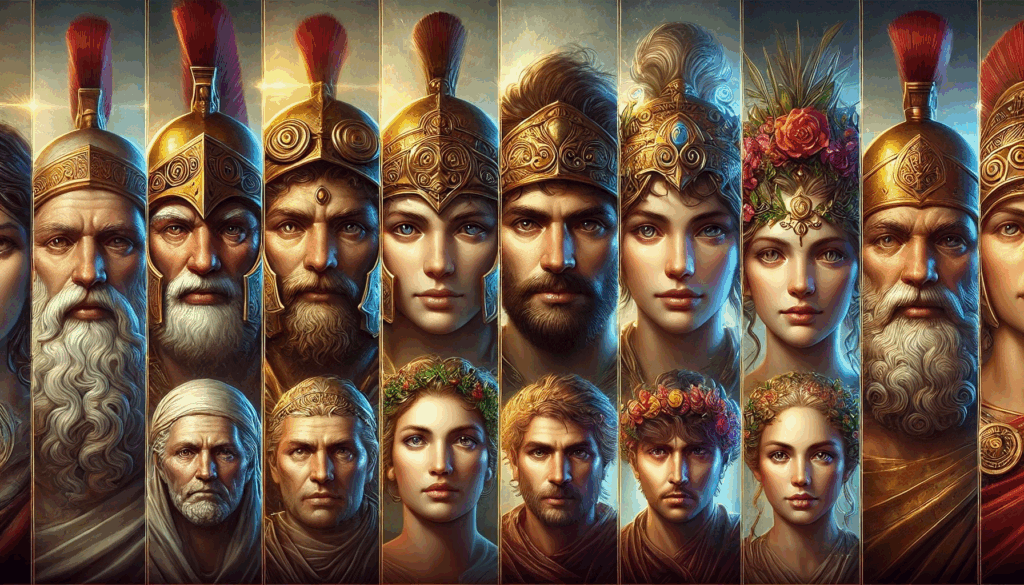
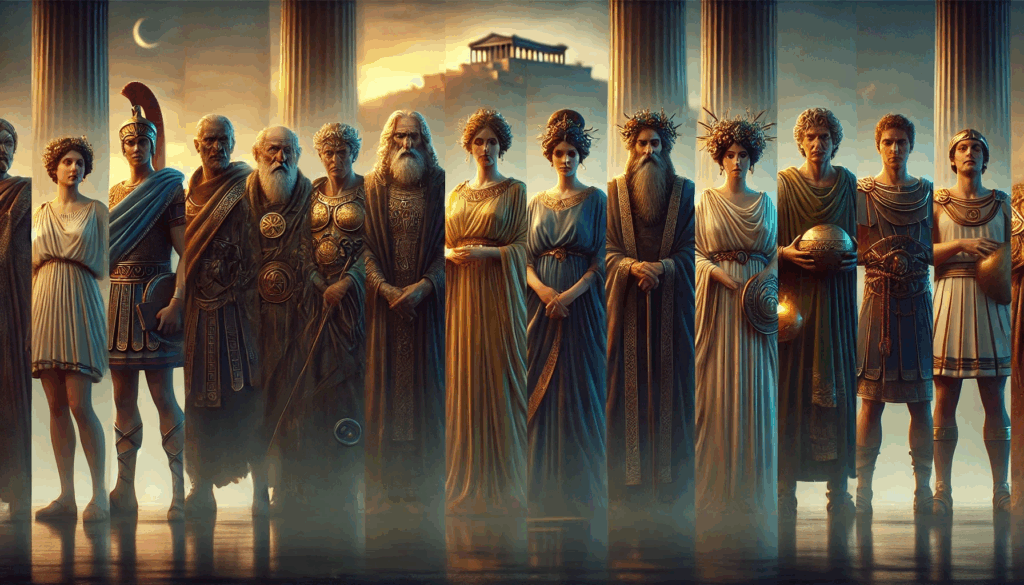
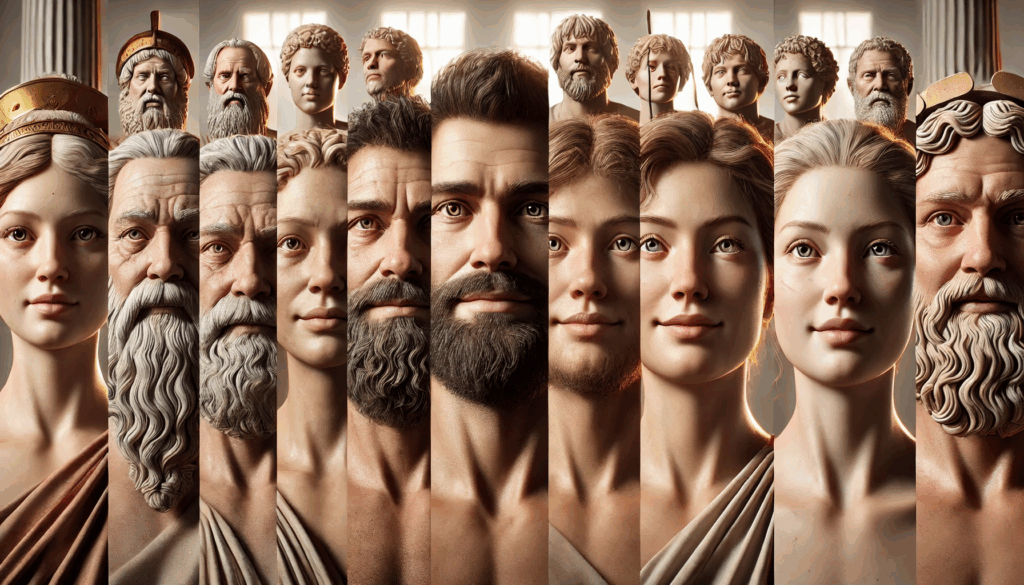
FACES OF ATHENS – REALMS OF MYTH AND POWER In vivid, lifelike detail, the reformers, tyrants, rebels, and divine figures of Athens come to life, captured in a cinematic fantasy vision that unites history and legend.
This colonization stimulated the Greeks to produce pottery and jewelry, which they sold for gold and traded wherever their ships sailed. Formerly isolated Greek communities prospered and created networks of Greek-speaking city-states that fought each other, worshipped, and obeyed Anunnaki Lords who assumed Greek identities. [Harman, 2017, 64-68]
Anunnaki Influence over the Ancient Mediterranean Marduk, dignified and radiant, watches from the heavens as trade connects Greek, Phoenician, and Egyptian cities below
Marduk, in his guise as Zeus, kept the Greek city-states at odds with each other to prevent them from overthrowing him and his cohorts. [Lessin, Marduk: 85]
Greeks created wealth by enslaving people to work the land for crops, manufacture pottery and jewelry, and mine gold and silver. In Sparta, where there was ample land for extensive food production, the aristocracy recruited their commoner soldier ranks (Helots) rather than slaves, and paid them tribute in food crops.
“When Greek city-states first emerged, kings came from lines of traditional chiefs. Landowners who grew rich from trade and slave labor resented the privileges of the traditional ruling families.” In many of the city-states, the new rich overthrew the Royals and created “oligarchies ruled by the wealthy.” The Oligarchs “squeezed as much surplus as possible out of those below them.”
They taxed those with smaller holdings to pay for navies and other state expenses. Recurring crop failures “meant that many peasants could only pay taxes by getting into debt to the rich.” The rich used this to justify seizing their land and their freedom, making them bond slaves.
Ambitious upper-class men, the Trumps of their day, exploited commoners’ bitterness and “took political power into their own hands as TYRANTS. The Tyrants “would then upset the rich, dealing out reforms to help the mass of people.
In Athens, Solon banned debt slavery in 594 BCE, gave power to enact laws to an assembly open to all Athenians, and chose judges and minor officials by lot. [Harman, 2017, 64-68]
PISISTRATUS PRETENDED PHYE, WEARING ARMOR LIKE ATHENA’S, BROUGHT HIM BACK FROM EXILE TO RULE ATHENS
Under Solon, large landowners and Athens’ urban elite became the leading grain producers. After Solon left to tour the Near East, Pisistratus staged a stunt (like Trump’s staged phony bloodied ear farce) and took over Athens.
Pisistratus wounded himself, drove his chariot into the Agora [central plaza], and got the Assembly to assign men, bearing clubs, as his bodyguards. Other men joined the bodyguards and joined him. They seized the Acropolis, the ancient citadel located on a rocky outcrop above Athens.
Although Pisistratus was a tyrant, he supported culture and literature as a means of enhancing his public image. He could mobilize phalanxes of commoner Hoplite warriors to stop Nobles on horseback. He taxed the new wealth of commoner merchants so that Athens could purchase commercial and military vessels and challenge hereditary rulers descended from the city’s former aristocratic elite. Pisistratus patronized culture and literature and devolved government power to Athens’ poor, recent immigrants, and debtors.
FACES OF THE TYRANTS & REVOLUTIONARIES – MEN A close-up lineup of Athenian male power: from Solon’s wisdom to Pisistratus’ charisma, and the grim determination of Harmodius and Aristogeiton—the eyes of history meet yours.
Pisistratus’ rivals twice exiled him, but when he was gone, they fought among themselves until they begged him to return and restore calm. During one of his periods of exile, he persuaded a beautiful, tall, regal-looking woman to dress in armor as the Goddess Athena, stride into Athens, and convince the Athenians to bring Pisistratus back to rule the city.
Pisistratus became very rich from his gold and silver mines, and with it, bought off citizens who might otherwise have opposed him and paid for his mercenary force. He easily forgave his rivals, gave enough money to the poor to keep them growing food and crafting pottery for sale rather than becoming idle proles and interfering with how he ran the city’s affairs.
His tyranny lasted for almost 20 years, until he died of natural causes in 527 BCE, at which point Hippias and Hipparchus, his sons, inherited the rule of Athens.
After Pisistratus’s death, his sons HIPPIAS and HIPPARCHUS continued his rule in Athens, maintaining many of his policies.
FACES OF ATHENS – REALMS OF MYTH AND POWER In vivid, lifelike detail, the reformers, tyrants, rebels, and divine figures of Athens come to life, captured in a cinematic fantasy vision that unites history and legend.
HIPPIAS
Hippias, the elder son, handled political and economic affairs.
Hipparchus focused on supporting the arts. This period of shared rule was marked by relative stability and prosperity, but it ultimately came to an end with the deaths of Harmodius and Aristogeiton.
Hippias ruled next and became more oppressive. He raised taxes, banished many citizens for three years, and as opposition to him grew, he was eventually expelled from Athens by the Spartans.
🧔🏽♂️ Solon
Who he is: A wise Athenian lawmaker and reformer (c. 594 BCE). Role: Ended debt slavery, opened lawmaking to all citizens, and laid the groundwork for democracy.
🛡️ Pisistratus
Who he is: A populist tyrant of Athens who ruled intermittently between 561 and 527 BCE. Role: Used theatrics and populism to seize power. Though a tyrant, he supported culture, reduced aristocratic power, and redistributed wealth.
👑 Fake Athena (a political stuntwoman)
Who she is: A tall woman dressed as the goddess Athena. Role: Helped Pisistratus return from exile by playing on religious symbolism, leading to one of the earliest known political theater acts.
🎭 Hipparchus
Who he is: Younger son of Pisistratus, co-ruler with his brother Hippias. Role: Patron of the arts, killed in 514 BCE—his assassination marked the beginning of Athens’ political shift.
🧥 Hippias
Who he is: Elder son of Pisistratus and last tyrant of Athens (ruled until 510 BCE). Role: After his brother’s death, he became paranoid and oppressive, eventually exiled by Spartan intervention.
⚔️ Harmodius and Aristogeiton
Who they are: Known as the Tyrannicides, lovers and political rebels. Role: Assassinated Hipparchus at a festival. Their act became a legendary symbol of Athenian resistance to tyranny.
👩🦳 Athenian Noblewoman (composite character)
Who she is: Symbol of elite female presence in cultural and civic life. Role: Represents the unseen but influential role of aristocratic women in Athenian society.
🔮 Priestess (composite character)
Who she is: A spiritual figure involved in temple life and ritual. Role: Symbolizes religion’s role in public life, divine legitimacy, and ceremonial power.
🌸 Festival-Goer (composite character)
Who she is: A joyful citizen adorned with flowers. Role: Embodies the public face of Athenian festivals—moments of civic pride, culture, and covert political drama._
ANUNNAKI & ANCIENT ANTHROPOLOGY EVIDENCE, REFERENCES, TIMELINE & WHO’S WHO