10 Stages in the Treatment of Narcissistic Disorders
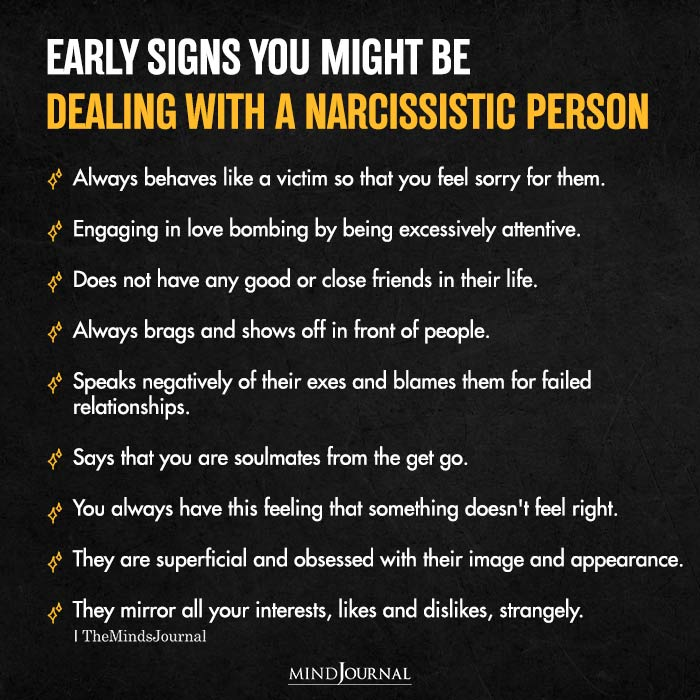
Signs Of A Narcissist To Look Out For
By
Administrator
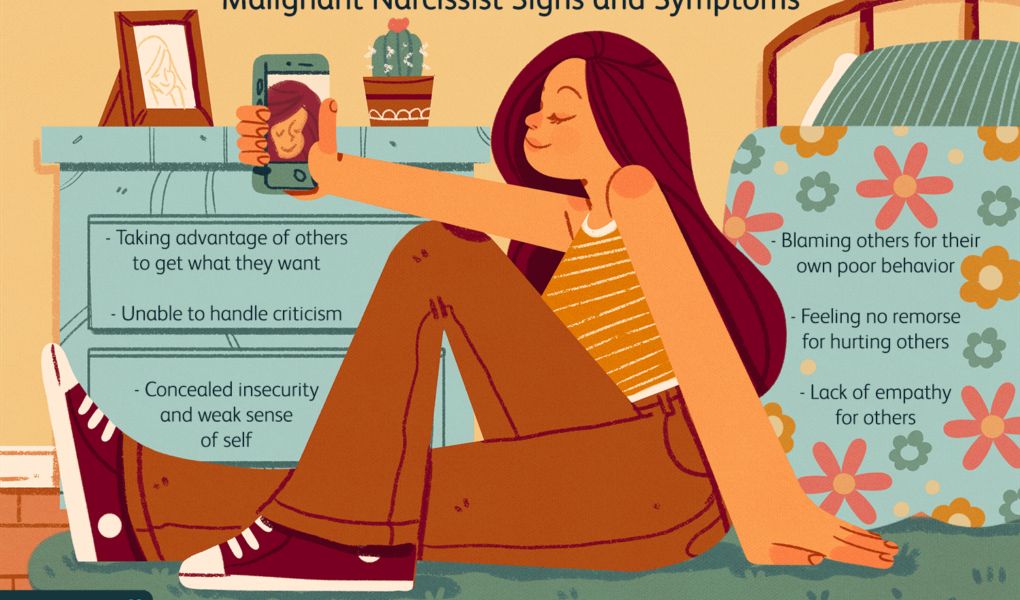
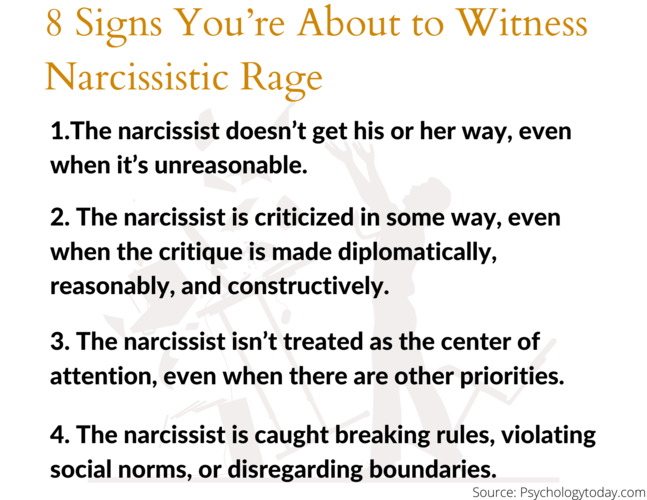
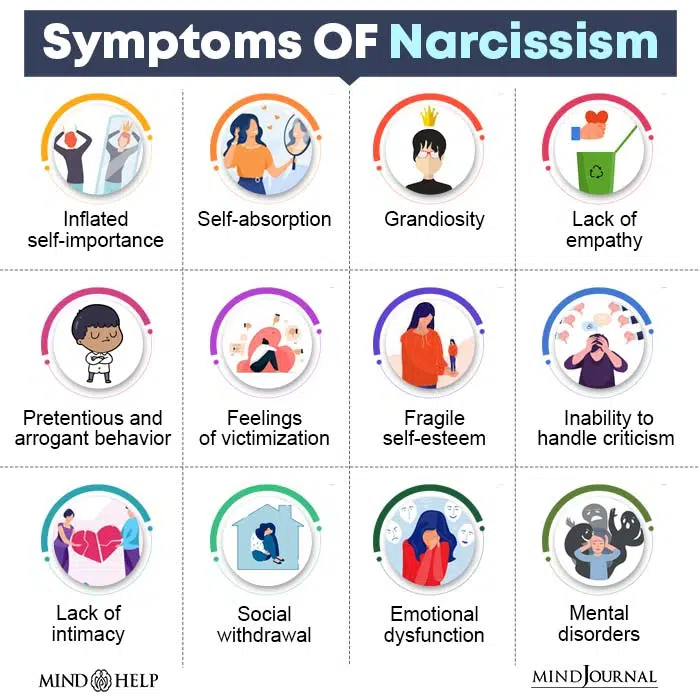
There are some individuals out there who are all but impossible to get along with. Their arrogance causes them to see themselves as all but infallible while everyone else deserves to be criticized intensely. These individuals are known as narcissists, and it’s very likely you know at least one. Narcissists are manipulative and can learn to cover up their nature when someone is first getting to know them, though over time, they will often reveal their true selves. Should you feel like someone is emotionally abusing you or is unable to take any criticism, you might be dealing with a narcissist. These are some signs of a narcissist.
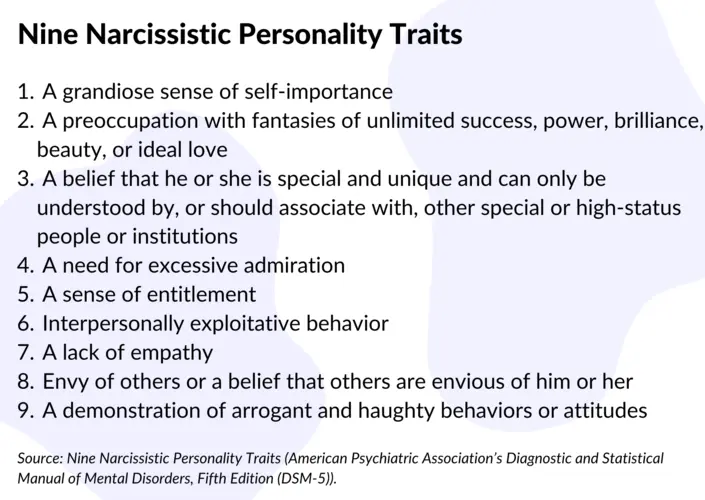
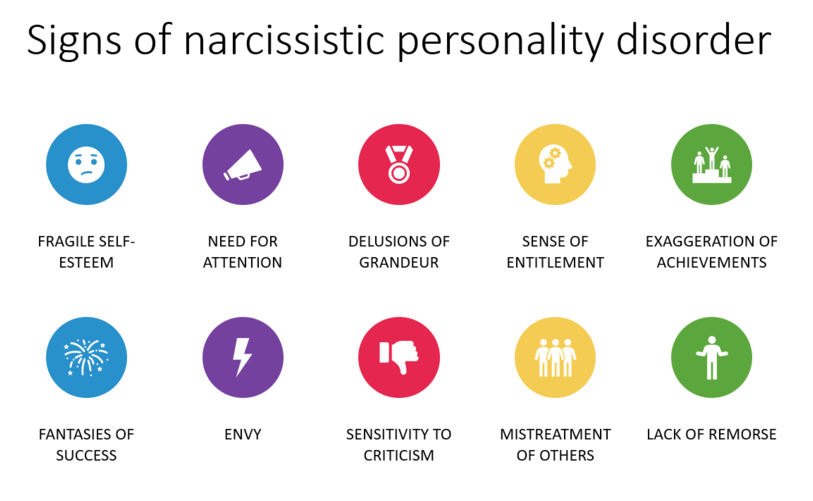
They Have A Sense Of Entitlement
A key aspect of narcissists is they have a sense of entitlement. Everyone deserves things like equal protection under the law, but narcissists are particularly entitled. If they don’t get their way, they become upset, because, in a narcissist’s mind, the world is supposed to revolve around them. Positive moments in life are positive because they’re entitled to them. Negative moments aren’t supposed to happen to them. The world isn’t going to be fair for everyone, but narcissists can believe this is a personal slight against them and not just a matter of bad luck or unfortunate circumstances. When one can’t begin to understand the concept of rolling with the punches, they’re likely a narcissist.
They Expect To Be Admired
Narcissists don’t just want to be admired; they expect to be admired. Compliments don’t just make them feel good. They also fuel them. If a narcissist isn’t being showered with praise, they can become agitated. Their existence is implied to be some sort of immaculate gift others must recognize.
Conversely, their need for admiration means they will reject criticism outright. Narcissists are incredibly concerned with their self-image, but they won’t accept any kind of advice. Bitter feelings grow larger until they consume the narcissist entirely. To a narcissist, they are not the ones who need to change, but the rest of the world is.
They Exaggerate Their Life
To give narcissists some credit, they’re excellent dramatists, and they can turn the most mundane details of their lives into the most outrageous, unbelievable stories. These are often too good to be true, because they’re actually lies. Their need to impress causes narcissists to stretch the truth or omit facts to fit their narrative better. It’s a defense mechanism that makes it difficult for narcissists to form trustworthy relationships. Real friends don’t judge you based on your failures, but narcissists will think their self-worth is determined by their ability to recount successes. It can work for them too, until they get caught in a lie and have to explain themselves. The more narcissists exaggerate their life, the weaker the grasp they have on reality is.
They Believe They Are Superior
Confidence is a quality everyone should strive towards. However, there is a difference between having faith in yourself and knowing your strengths and believing you are number one at everything. Narcissists let their egos get the best of them, and they always believe they are superior. Their superiority complex causes them to think anyone who dares criticize or challenge them is delusional. If a narcissist faces any obstacles, they’ll try to find faults with the system. Getting through to narcissists can be difficult because they are convinced their supposed superiority protects them from criticism. Narcissists view themselves as immortal, while everyone else is merely human.
They Take Advantage Of Others And Lack Empathy
Narcissists are a danger to others as well as themselves. Getting to know a narcissist can be difficult as they take advantage of others and lack empathy. Shows of kindness will be preyed upon, as narcissists see generosity as something they can exploit. A relationship with a narcissist doesn’t follow what a healthy relationship is supposed to be. Narcissists believe relationships are a matter of power, and if they feel their power is being thwarted, they’ll become hostile. Empathy is a challenge for narcissists because they have a hard time putting themselves in another individual’s shoes (or even cannot do so). To a narcissist, everything must be catered to their demands and be based on their perspective.
They Live In A Fantasy World
To put it simply, many individuals who have narcissistic tendencies or have been diagnosed with narcissistic personality disorder are typically delusional and choose to live in their own fantasy world rather than in reality, since real life does not support their grandiose view of themselves. This fantasy world of theirs tends to revolve around distortion of the truth, self-deception, and magical thinking as they believe in these self-glorifying illusions they have about themselves involving success, wealth, power, attractiveness, intelligence, and love that makes them feel in control and special. Unfortunately, these fantasies are just a mask to protect the narcissist from their feelings of inner emptiness and shame, therefore, any facts or opinions that contradict them are either ignored or rationalized to meet their perspective on things. Anything that threatens to destroy their fantasy bubble is often met with rage and defensiveness as well, which can turn into violence if the narcissist feels threatened enough.
Demeans, Intimidates & Bullies Others
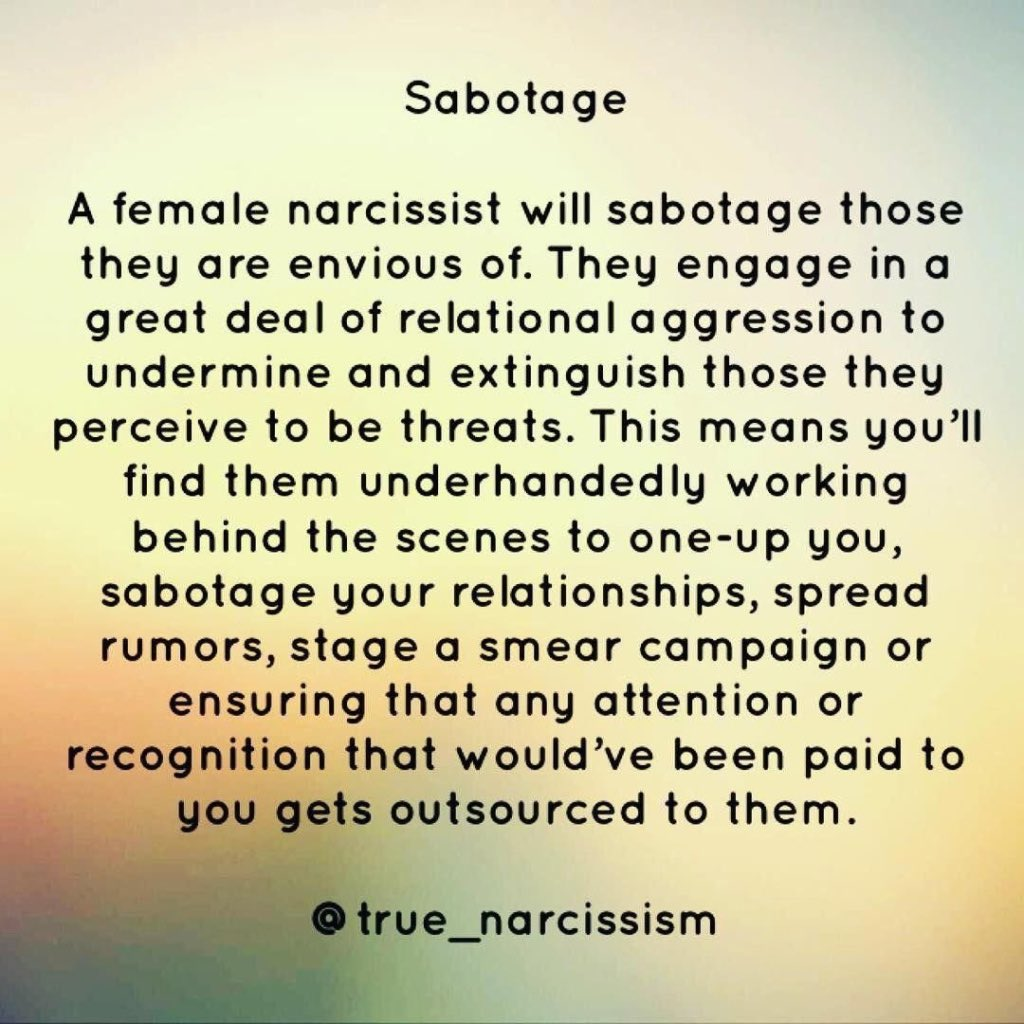
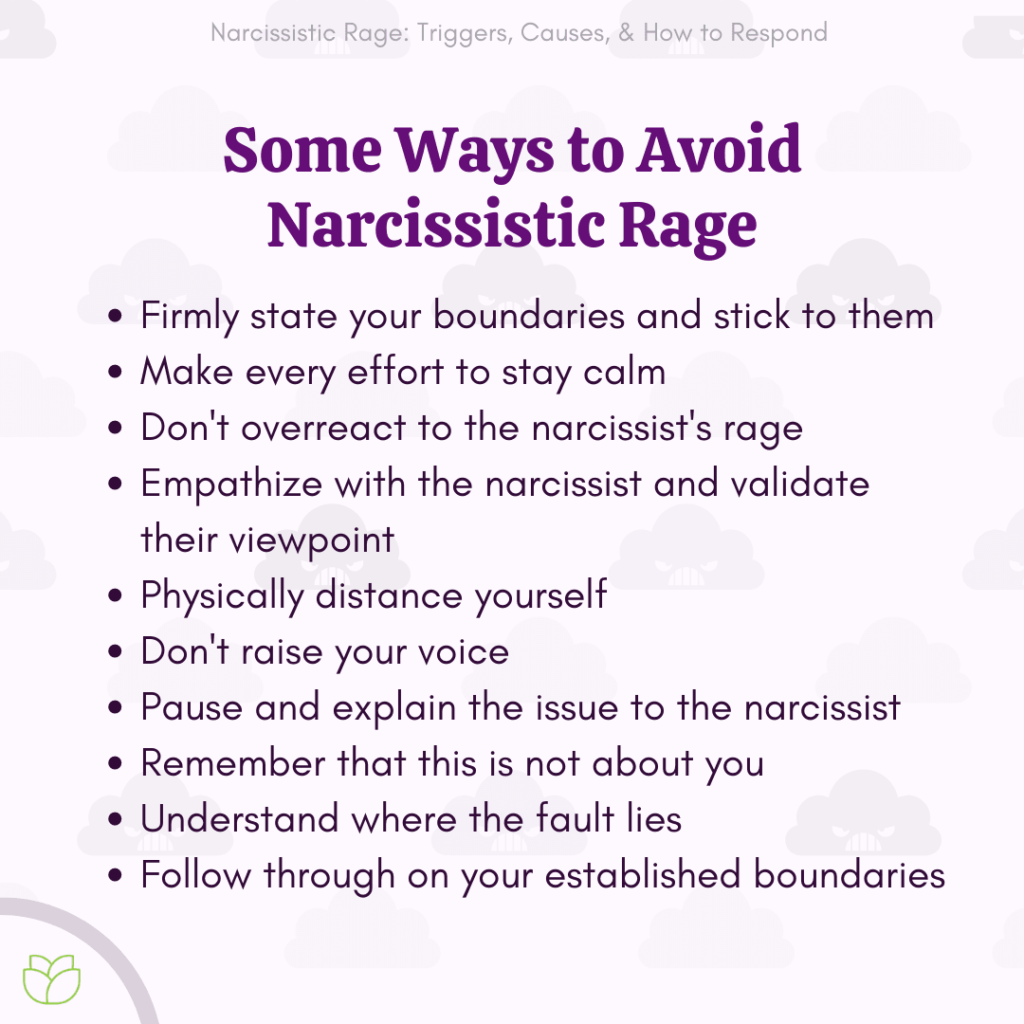
When a narcissist feels threatened, such as when their views about themselves, others, and the world do not match their made-up fantasies, or they encounter someone who appears to have a quality they lack, such as real confidence and popularity, they tend to demean and bully the other person. Narcissists will also belittle anyone who challenges them or won’t submit to their will as well, causing the narcissist to use cruel tactics like bullying and intimidation to get what they want.
The only way they know how to neutralize a threat and to improve their diminishing ego is to bully and demean the other individual into submission. They may do this in a dismissive or patronizing manner to prove the individual means nothing to them (which is often not true) or they might attack with insults, name-calling, bullying, and threaten the other person to back off and know their place. Do these tactics work? Not always, especially if a non-narcissist can outwit the narcissist or are aware of these signs and can act accordingly to handle the situation in an appropriate manner.
The Need To Be Controlling
Considering narcissists tend to be continually disappointed when life unfolds imperfectly and not the way they want it to, they want to do as much as possible to control any situation life throws at them and mold it to their liking. Not only do narcissists want to be in control but they tend to demand to be in control of things as their strong sense of entitlement makes it appear to be logical that they should be in control of everything and everyone around them. For instance, narcissists tend to have a storyline in mind for each individual or ‘character’ in their life when it comes to what others say and do.
But, when others do not behave the way the narcissist wants them to, they become unsettled and easily upset as they do not know what to expect next as others and things are not going according to their plan. A textbook narcissist demands others say or do whatever they want so they can reach their delusional goals, as other people are simply characters in their play, as they often will not consider others a real human being with thoughts and feelings. Be mindful of this when dealing with a narcissist, as it will make handling their controlling nature easier!
They Strive For Perfection
In relation to their controlling personality, a narcissist often has an extremely high need and expectation for everything in their life, from work to people, to be perfect. They believe they should be perfect in all aspects, and as a result of these high expectations, they want those in their lives to be perfect, and events should happen as expected, with life perfectly unfolding for them. Unfortunately, life does not happen that way. Not only is this an inconceivable and impossible demand, these expectations often leave a narcissist feeling dissatisfied and miserable majority of the time. This often results in them becoming irritable and constantly complaining about their woes rather than coping with the unexpected and putting a positive spin on life as they lack the mental capacity and tools to do so as those who do not have this disorder do.
They Lack Accountability And Blame Others
A classic sign of narcissism and probably one of the most difficult to deal with is a narcissist’s lack of accountability and how they blame others for their problems or faults. Although a narcissist generally wants to be in control, ironically, they never want the responsibility that comes with this role, the results and consequences for their actions, unless, of course, everything goes their way. However, when things do not go according to their plan or they feel criticized, a narcissist will place the responsibility and blame on others who are involved, as it always has to be someone else’s fault when things are not perfect. In some situations, the blame is generalized, such as all bosses, teachers, coworkers, friends, family, politicians and professionals, and so on, are to blame.
In other cases, the narcissist may specifically target an individual or rule to blame for their faults rather than owning up to their mistake and correcting it. Sadly, most often a narcissist will target and blame the individual closest to them; the most emotionally attached, the most loyal, and loving person in their life, most often their significant other, best friend, or parent. Again, to maintain this facade of perfection, a narcissist will always have to blame others or things for their mistakes, and often those closest to them are the easiest to blame because they are the least likely to reject or leave them. Stand your ground and hold them accountable, as not only is it the right thing to do, but the only way for you to come out of a potentially messy situation unscathed.
They Lack Boundaries
Another classic sign that is easily spottable is narcissists tend to lack boundaries with anyone in their lives as they cannot accurately see where they end and where another individual begins. For instance, they believe everything belongs to them, everyone thinks, feels, and acts as they do, and everyone has similar goals as they do, which is all not true. Essentially, they do not share and do not know how to as their perspective in this respect, is incredibly similar to a toddler. Everyone is different and will act, say, and feel what is true to them. Hence, a narcissist is shocked and highly insulted when they are told no or to do something that does not line up with their desires. If a narcissist wants something from someone, they will go to great lengths to figure out and conjure up a plan to get it with manipulation tactics, threats, or simply a temper tantrum. When a narcissist begins to overstep their boundaries, again, stand your ground and keep them in their place by expressing your needs and not letting them get away with their selfish behavior.
Expect Attention And Validation
One of the classic signs of a narcissist is they expect attention and validation. It’s important to note wanting or expecting validation isn’t necessarily an automatic sign of narcissism. In fact, it’s healthy to expect others will offer support and validation when it’s needed. The problem is when this goes to an unhealthy level. For example, an individual expecting constant attention from those who aren’t close to them is sometimes a sign of entitlement. In addition, it’s not healthy to expect individuals to provide attention at the cost of their own well-being, or to expect attention without providing any reciprocal support. Humans need validation and attention to thrive, but narcissists tend to expect it because they believe they’re entitled to the energy of others. They may become agitated when they aren’t shown attention, and they may refuse to accept contradicting points of view or potential conflict.
Driven By Hidden Fears
A narcissist will often be driven by hidden fears. Though they may seem self-obsessed and entitled, these behaviors can often hide a deep sense of insecurity and lack of satisfaction. It’s important to remember narcissistic personality disorder causes deep distress to the individual who has it as well as those surrounding them. Narcissists may have deep-seated fears of being abandoned or rejected, which are often informed by experiences they’ve had with others. They may be afraid of being proved wrong or having to acknowledge their own flaws. Their seeming sense of self-importance might be a defense mechanism to keep them from needing to acknowledge their own imperfections.
Unable to Truly Be Vulnerable
A narcissist is often unable to truly be vulnerable, which can lead to serious problems with emotional intimacy. Narcissists may view vulnerability as a form of weakness, or they may be afraid vulnerability will cause them to be abandoned or hurt. Some narcissists may also dislike vulnerability in others and be unable to show emotional support. This can also make it difficult for narcissists to seek treatment. They’re unlikely to express they’re experiencing true distress in their day-to-day lives, since this opens them to vulnerability. Instead, they might throw shallow temper tantrums when they don’t get the attention they’re looking for.
Talks Over And Interrupts Others
One classic sign of a narcissist is someone who talks over and interrupts others. In close familial and romantic relationships, friendships, or work relationships, you might encounter these behaviors. A narcissist will often interrupt others or talk over them because they don’t consider the input of others valuable. They struggle to listen to what others say, especially if it conflicts with their opinions or views. Another element contributing to this is a sense of attention-seeking. Narcissists may interrupt others because they believe their own voice and point of view is more important. They want to be the center of attention and to be acknowledged, rather than waiting for their turn to speak.
Can Be Quite Charming And Persuasive
In many cases, narcissists can be pretty charming and persuasive. They may be good at consciously or subconsciously manipulating others. A narcissist likes to get attention by being the ‘life of the party.’ They may exaggerate their own life experiences, tell outlandish stories, and be loud and overly friendly. Many narcissists seem passionate and charming at the start of a relationship, but when the relationship progresses, their inability to connect on a fundamental level becomes apparent. A manipulative narcissist may be able to convince others to do things they don’t want to do or to provide attention at the cost of their own well-being.
Narcissists can slowly change with appropriate therapy and a lot of effort

THE BASICS

The internet is full of sites by non-mental health professionals that say that narcissistic personality disorder cannot be treated. They also say that narcissists are master manipulators who can fool even experienced psychotherapists and what appears to be progress is just a temporary behavior change. Or, else they claim that narcissists twist the truth and somehow manage to convince experienced psychotherapists that they are blameless and the real problem is someone else.
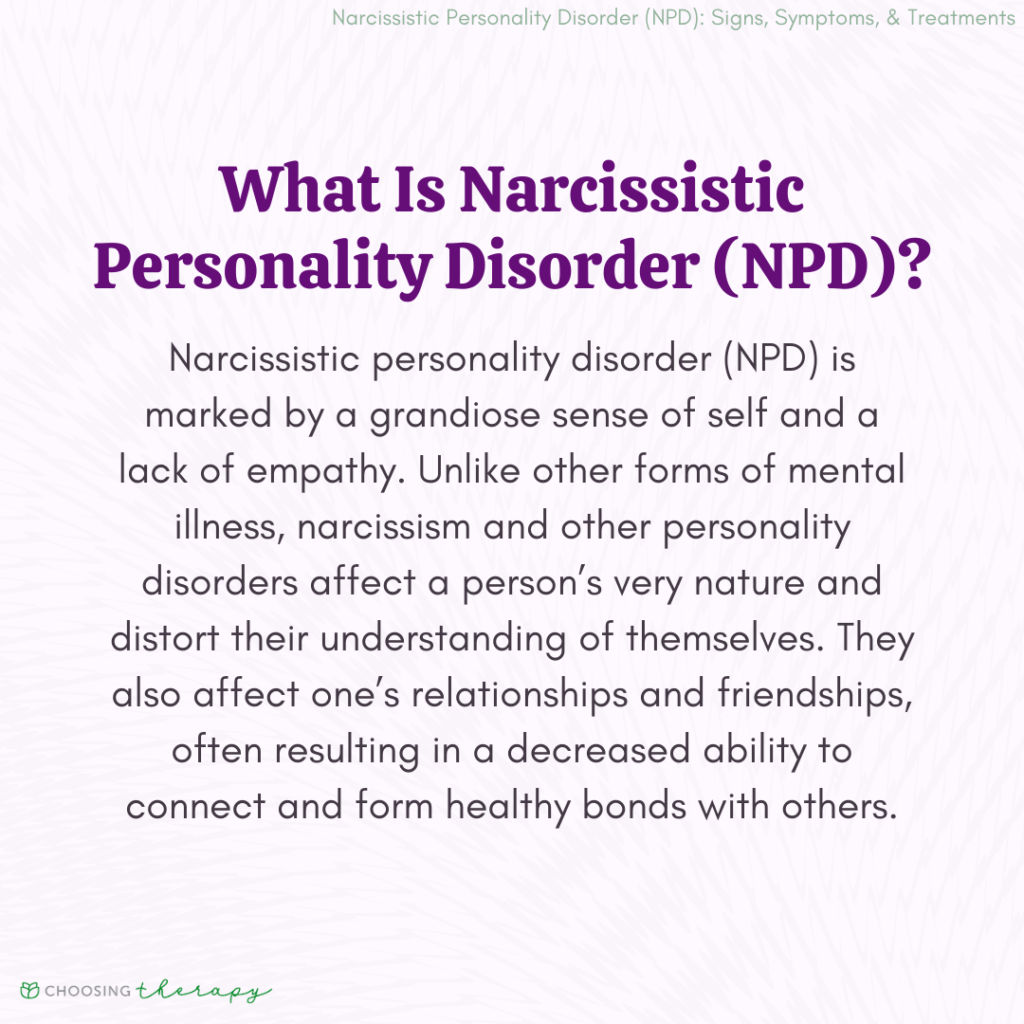
I would like to set the record straight: None of the above is true. There are effective treatments for narcissistic personality disorder. Change is difficult, but possible. Everyone has the capacity to grow and evolve and this includes people with NPD.
Note: In this article, I am using the terms “narcissist,” “narcissistic,” and “NPD” as shorthand to describe people who qualify for a diagnosis of narcissistic personality disorder.
So why do so many people believe that NPD cannot be treated by psychotherapy?
There are three basic reasons that we do not hear about the successful treatment of narcissistic personality disorder:
- There are very few psychotherapy training institutes that focus on teaching the diagnosis and treatment of NPD. Most psychotherapy training programs are designed to turn out general practitioners, not specialists.
- This is a complex, expensive, and time-consuming specialty to learn correctly. At least three years of advanced training are necessary to become competent.
- Most narcissists avoid psychotherapy or quit prematurely when they feel threatened or uncomfortable.

In summary, There are not enough psychotherapists available who are properly trained in the diagnosis and treatment of narcissistic personality disorder. Not many people with NPD want psychotherapy. And many who do want psychotherapy do not realize that their underlying problem is narcissism.
Their ignorance about the fundamental nature of their issues leads them to choose the wrong type of therapist. This means that most narcissists who enter therapy end up with psychotherapists who may not recognize that they have a narcissistic personality disorder, or if they do, they have no idea how to treat narcissistic issues.
Further adding to the difficulty, most narcissists quit therapy prematurely, even when they have a good therapist. This is usually because they find self-reflection incredibly painful. It involves dropping defenses and facing underlying shame and low self-esteem.
What is the Therapy of Narcissistic Personality Disorder Actually Like?
All psychotherapy takes longer than most clients expect. There is no ten-session cure for complex problems. A complete psychotherapy of NPD generally takes at least 5-10 years. It is a long, slow, and complex process. It proceeds in stages. Clients can stop at any point. How far they get in therapy depends on how many stages they complete and how impaired they are.
High-functioning narcissists who are self-reflective and cope with most parts of their lives well are likely to do better in therapy than lower-functioning narcissists who cannot keep a job and have no friends.

The 10 Stages of Therapy for Narcissistic Disorders
Here is a very abbreviated look at the process. In reality, it may not be this neat or linear. Please remember that different forms of therapy for NPD exist, and each may see the therapy process somewhat differently than I do. I am describing what my experience treating people with NPD for over 40 years has taught me.

Stage 1: Symptom Relief or Appeasement. Most clients with NPD do not enter therapy to reflect or change. They usually come to get relief from unpleasant feelings and symptoms or to please someone important to them. Some leave as soon as they feel better or the person is appeased.
Stage 2: Avoid Future Pain. Some clients with NPD find therapy more attractive than they expected. If they are capable of self-reflection, they may continue long enough to understand their triggers and develop a plan to help them avoid future pain. It is still all about them, without any desire to understand or change their impact on others. It is about understanding other people’s impact on them.
Stage 3: Identify their Coping Mechanisms. I am helping people understand and identify their primary defense patterns in this stage. It may involve looking at their childhood situation and how they learned to cope. This is still reasonably easy because it can be explored (in many cases) without them feeling judged.
Stage 4: Create New Coping Mechanisms. Now that the person knows what they do and why they do it, the old narcissistic strategies do not simply disappear. If you are holding on to the edge of a cliff with both hands so as not to fall, you do not just let go because your climbing technique is inefficient or painful. So, we start discussing other ways that they can meet their needs that are more constructive. Eventually, they will identify new methods.

Stage 5: Form New Habits. Most narcissistic coping mechanisms are habits encoded in the brain through neuronal connections. The primary goal now is (1) to Inhibit the old, automatic narcissistic habits and (2) to Substitute the new, more desirable patterns.
If this is done a few hundred times, the new method eventually gets encoded in the brain. The older narcissistic pattern of neuronal connections weakens through lack of use, and now, the new coping mechanisms become the automatic default pattern.
Suppose you want to know more about what happens at the neuronal level when you try to change a habit. In that case, I suggest you check out the work of the Nobel Prize-winning biologist Gerald Edelman (1929-2014), especially his 1987 book: Neural Darwinism.

Stage 6: Impact on Other People. Most of the time, clients with narcissistic defensive coping patterns cannot seriously consider their impact on others until they have newer coping patterns. They will feel too much shame.
Their success in understanding themselves and forming new habits creates some realistic pride. This gives them less incentive to be grandiose and more ability to tolerate the idea that it might improve their life if they considered other people’s needs. This is not about having more emotional empathy. We are still looking at everything through how it benefits them.
Stage 7: Focus on Childhood Pain. The clients are calmer at this stage, and their life is generally calmer. They have learned what types of things trigger them and have developed more productive coping methods.
Now that some of their defenses against shame are less necessary, painful traumas from the past start to take center stage in the therapy, if this goes well, some healing takes place, and in the process, they develop some emotional empathy for themselves as a child.
They also develop the capacity to form a stable, realistic, and integrated image of themselves (Whole Object Relations). This allows them to start to see other people in a more integrated way—neither all-good nor all-bad.
Stage 8: Update the Inner Voice. Most people with NPD need to empathize with themselves before they can develop emotional empathy for other people. Quite early in the therapy—at almost any stage—I start talking about how children automatically internalize their understanding of how their caregivers saw them, their caregivers’ ideas about right and wrong, and also their ideas about what deserves praise and blame.
I point out that we update our cell phones, computers, and apps, but most of us are still running our lives based on the inner “software” that a very young child programmed. I suggest that they examine how their inner guiding voice talks to them and pay attention to the following things:
- Do you like the tone of your inner voice?
- Is it sweet, loving, harsh, or scary?
- Is it fair?
- Is it a reliable guide through life?
- Does it reward you when you do well?
- Can you please do it?
- Does it punish you with shame or guilt when you need to be reined in?
- Is the punishment overly harsh?
- Do you require such harshness to get the message?
Once they are aware of the tone and content of their inner voice, and understand that the way they speak to themselves can be changed, we explore what changes they might like to make.
Making the changes takes awareness and a willingness to challenge and inhibit the inner voice. Sometimes, all that is needed is a firm “Stop that!” when the voice is overly harsh. Then clients practice talking to themselves in the new way they have decided would be preferable. As with changing the coping mechanisms, this can take vigilance and many repetitions.
Note: You can usually tell how harsh someone is with themselves from listening to how harsh they are with others. Inner harshness is proportionate to outer harshness. Blaming and judging others is a way to redirect the harsh inner critic outward. This buys them some inner peace at other people’s expense.
Stage 9: Empathy for Other People. Once they understand their own pain and have their harsh, devaluing inner voice more under control, they can start to look outward at other people. Generally, their first real emotional empathy for other people is evoked by someone who meets the following conditions:
- They are no threat to the narcissist.
- The other person reminds them of themselves.
- This person is being traumatized or was traumatized in a way that is very similar to what the narcissist experienced.
If all goes well, some of these clients will continue to slowly expand their capacity for emotional empathy.

Stage 10: Authenticity. My consistent and nonjudgmental interest in them and their dropping of their defenses improves our relationship. It can be a reparative emotional experience. They feel trust that they can be authentic with me because I have seen their “bad side,” and nothing terrible has happened to either of us.
They take baby steps forward and try to be more authentic with other people. If this goes well, their reliance on their old “false self” defenses diminishes, and they become more spontaneous and joyful.
The above is a highly abbreviated sketch of therapy for narcissistic personality disorder. It is complex, involves many stages, and will likely take a long time. There is a lot of ground to cover. Sometimes people do not want to do all of this or cannot do it all. Everyone who keeps plugging away at evolving eventually improves. How much depends on their willingness to keep working on themselves.
This article was based on a Quora post (6/28/19).
Movies About Narcissism And Narcissistic Personality Disorder
https://narcissistabusesupport.com/movies-narcissism-narcissistic-personality-disorder/

I am often asked if I have seen any movies that show narcissistic personality disorder in action. The list is growing, but here are some to look up and watch. I have found that there are great benefits to watching a movie now that I have my Narc-glasses on. I see things differently and it helped me understand the pure evil they can be.
I am sure there are so many other movies that should be on this list. Please email us any ideas because together we heal.