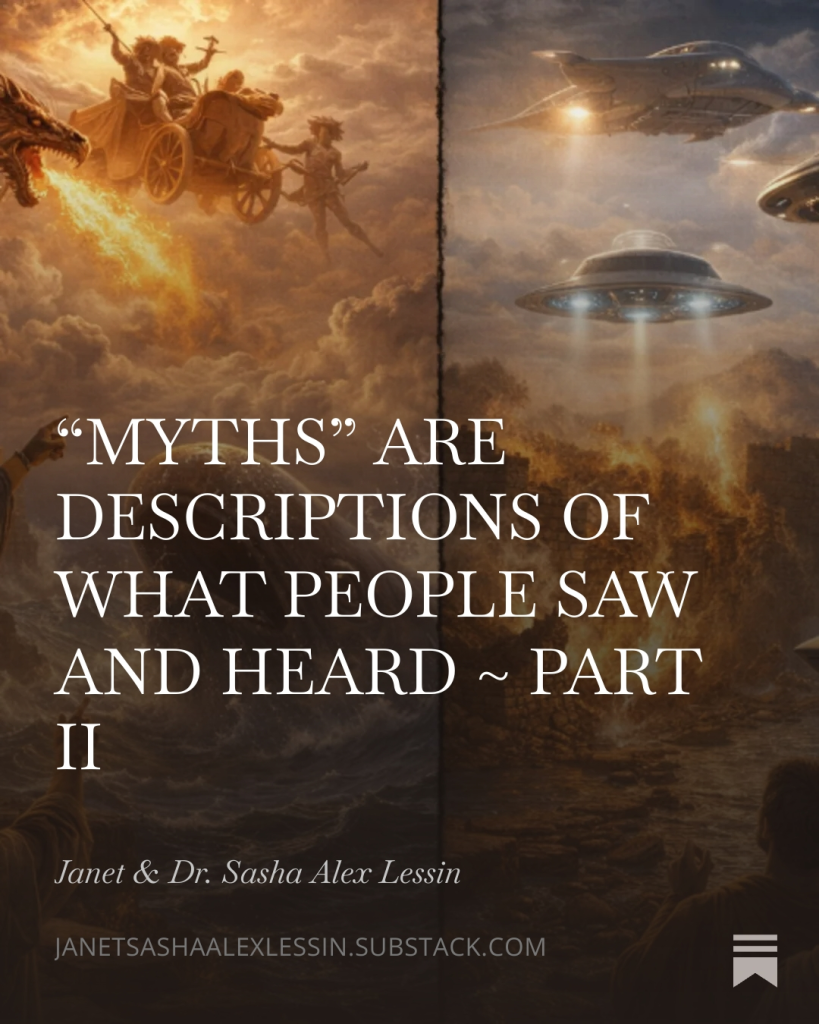
“MYTHS” ARE DESCRIPTIONS OF WHAT PEOPLE SAW AND HEARD
Myths Are Our Ancestors’ Words for Technologies They Witnessed but Could Not Name
By Sasha Alex Lessin, Ph.D.
Anthropology, UCLA
M.A., Counseling Psychology, University for Humanistic Studies
INTRODUCTION: MYTHS AS OBSERVATIONAL RECORDS OF TECHNOLOGY AND COSMOLOGY
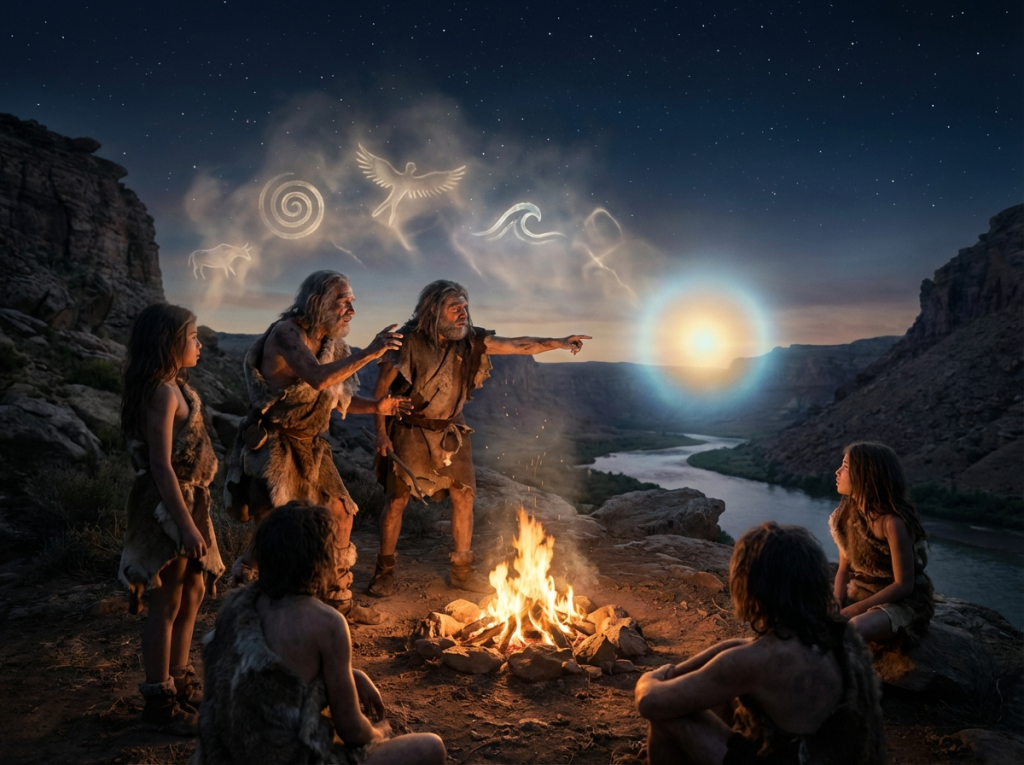
Ancient peoples described what they saw and heard using the conceptual vocabulary available to them. When advanced visitors—whether from other planets or from inner Earth—appeared with technologies far beyond human understanding, our ancestors recorded those encounters in the only language they had: story, metaphor, symbol, and what later generations came to call “myth.”
As a revisionist anthropologist, I have concluded that myths are not fiction. They are eyewitness descriptions, transmitted orally across generations and later formalized into epics, scriptures, and sacred histories. These accounts were never intended as fantasy. They were reports—data encoded in symbolic language because no technical vocabulary yet existed to describe what was being observed.
MY PATH: FROM ETHNOGRAPHER TO ETHNOLOGIST
I began my professional life as a young ethnographer, living in Pacific Island communities in Fiji and Tonga. My doctoral dissertation, Sawana: A Tongan Village in Fiji, emerged directly from that immersive fieldwork.
Over the decades, I taught anthropology, counseling, comparative religion, comparative governance systems, and tantra at the University of Hawai‘i, the University for Humanistic Studies (across its Hawai‘i, San Diego, and Anchorage campuses), Leeward Community College, and Maui Community College.
My studies extended into Voice Dialogue, Holotropic Breathwork, psychedelic-assisted therapy, and past-life therapeutic modalities. I also immersed myself in communities practicing tantra and polyamory and later co-founded, with Janet Kira Lessin and Dave Doleshal, the World Polyamory Association.
Throughout my career, I remained committed to anthropology as lived inquiry—not armchair theory.
APPRENTICESHIP WITH ZECHARIA SITCHIN
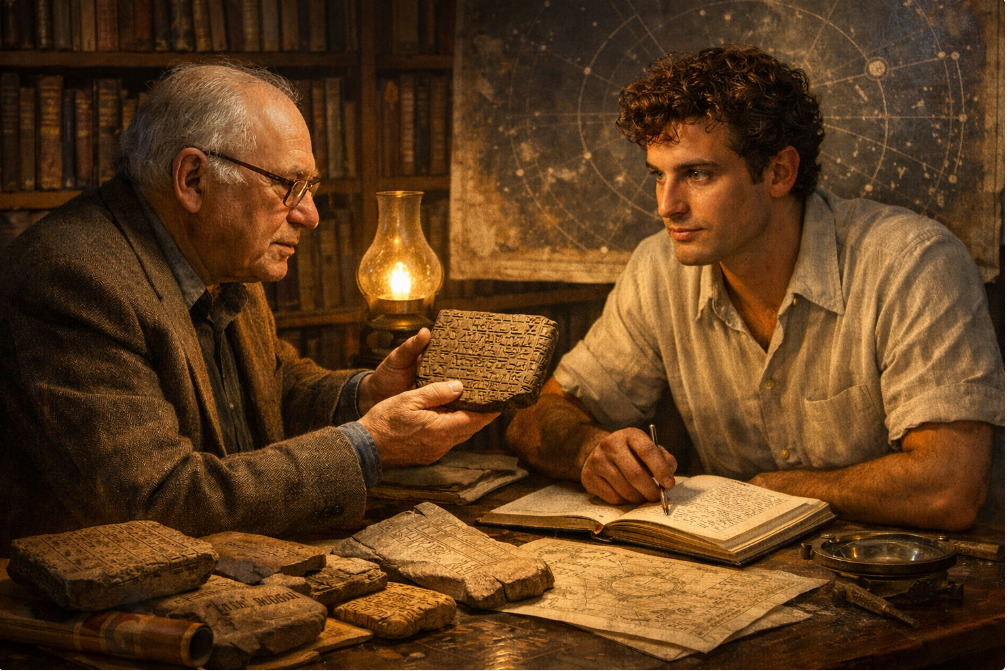
My work took a decisive turn when I apprenticed myself to Zecharia Sitchin, with whom my wife, Janet Kira Lessin, also studied. I absorbed every fragment I could locate of humanity’s suppressed and forgotten histories, including evidence of off-planet influences on Earth’s civilizations.
From that foundation, I integrated classical anthropology with ancient astronaut studies, mythic texts, archaeology, UFOlogy, Sumerology, and cross-cultural theology. Rather than treating these fields as separate, I approached them as overlapping lenses describing the same phenomena.
ETHNOLOGY: THE ELDER ANTHROPOLOGIST’S ART OF PATTERN RECOGNITION

At 85, I now work primarily as an ethnologist—an elder anthropologist concerned with large-scale patterns across cultures and time. I honor my lineage and teachers, including Alfred Kroeber, Walter Goldschmidt, M. J. Smith, Donald Newman, Raymond Firth, and Sumerian scholar Zecharia Sitchin.
Ethnology preserves anthropology’s original spirit: curiosity, pattern recognition, compassion, and the ethical obligation to share what we learn with the broader human community.
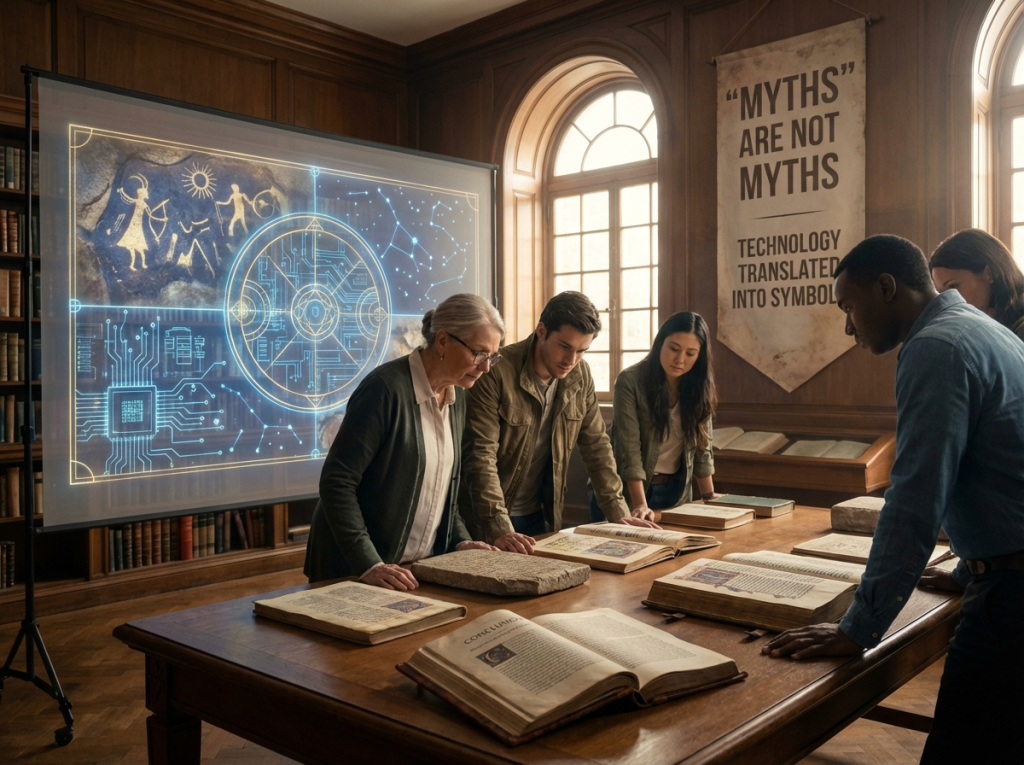
“MYTHS” ARE NOT MYTHS
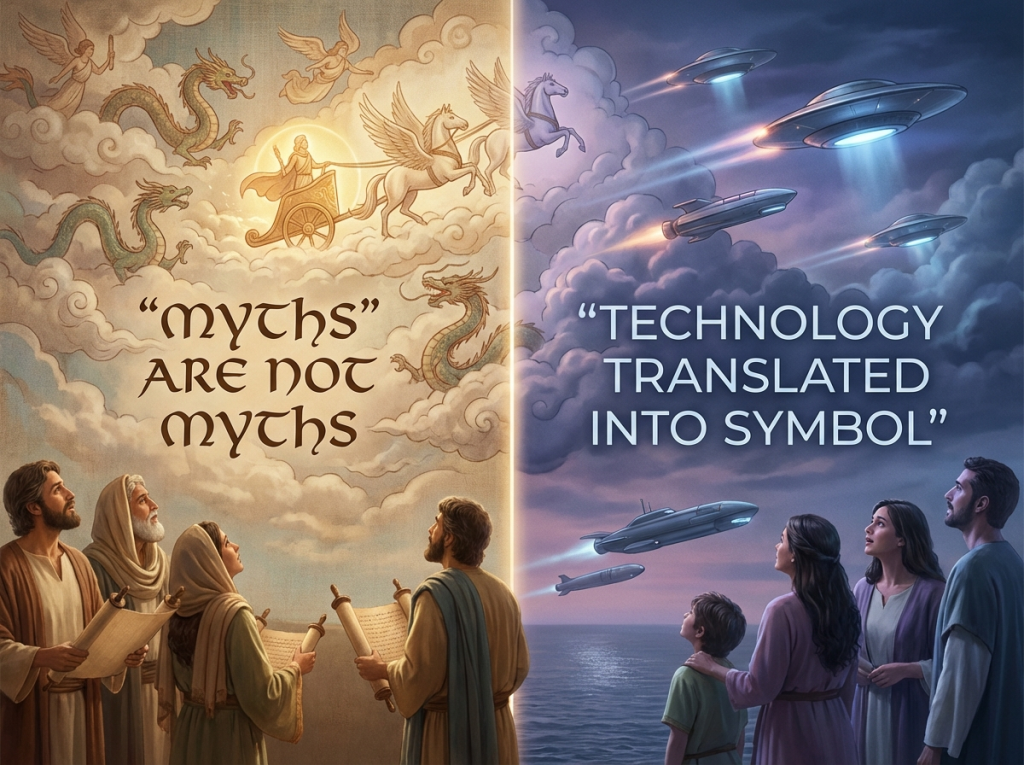
Modern academics often dismiss miracles, sky chariots, psychic feats, and god-wars because such accounts fall outside tenure-safe categories. Labeling them “myth” allows scholars to sidestep uncomfortable data while maintaining professional legitimacy.
Yet these stories were observational reports—descriptions of beings wielding technologies and psychic capacities so advanced that Bronze Age and early Iron Age peoples could express them only symbolically.
Consider how consistent these translations are across cultures:
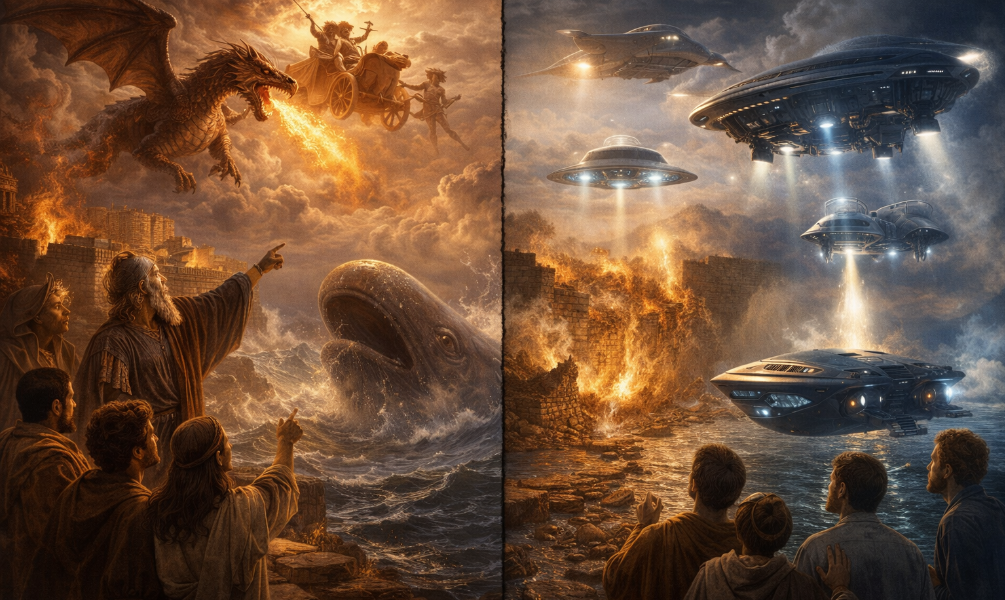
Jonah “swallowed by a whale” describes a submersible vehicle. Vimanas refer to flying craft. Dragons and fiery serpents resemble metallic aerial vehicles. The collapse of Jericho’s walls suggests targeted sonic weaponry. Gods descending on clouds point to aerial landers. “Magic carpets” refer to energy-powered flight platforms.
These are not fantasies. They are technological events translated into the metaphor systems available at the time.
THE ANUNNAKI WERE PEOPLE—NOT GODS

Revisionist anthropologists regard the so-called gods and their miracles as historical accounts of the Anunnaki: humanlike beings possessing advanced flight technology, weaponry, long lifespans, genetic science, psychic abilities, and mastery of energy fields.
They were not divine. They were technologically superior colonists. Our ancestors described what they saw. Later societies ritualized and deified these encounters, embedding them in religious traditions that persist today.
For a detailed cross-cultural list of these beings and their overlapping names, see Anunnaki Who’s Who, Aquarian Media / EnkiSpeaks Publishing.
PARTNERSHIP OVER DOMINATION
I speak out for peace, justice, and partnership because domination systems—whether ancient or modern—deform human societies. I support welcoming migrants, standing with Native Americans, Black Americans, Latinos, Hawaiians, refugees, and all peoples displaced by empire. I advocate ceasefires, peace treaties, humanitarian relief, and egalitarian governance.
At 85, I continue teaching and writing because anthropology is not neutral. It carries moral responsibility. Humanity must move beyond domination patterns that originated during the Anunnaki era and were later institutionalized by states, empires, and religions.
CONCLUSION

“Myths” are humanity’s earliest anthropology: records of what people witnessed but could not yet name. To honor our ancestors—and to understand ourselves—we must read their words as data, not fairy tales.
THE ANUNNAKI OVERLAY
Reading Myth, History, and Power Through an Anthropological Lens
Anthropology begins with a simple premise: people describe what they experience using the language available to them. Before writing systems, before technical vocabularies, and before modern scientific frameworks, human societies relied on story, symbol, ritual, and oral transmission to record events that mattered. Those records—later called “myths”—are the foundation of human memory.
From an anthropological perspective, myth is not fantasy. It is data encoded in metaphor.
The Anunnaki overlay applies this principle to humanity’s oldest narratives. Across continents and millennia, early civilizations describe encounters with powerful, humanlike beings who descended from the sky, traveled between worlds, wielded extraordinary technologies, altered human development, ruled as kings, and departed amid conflict. These beings were remembered as gods not because they were supernatural, but because their capabilities lay far beyond the technological horizon of the societies that observed them.
Read through a revisionist anthropological lens, these accounts resemble early contact reports rather than theology.
Within this framework, the Anunnaki overlay does not function as belief or doctrine. It functions as an interpretive method—treating ancient texts, myths, and religious traditions as observational records encoded in symbolic language. Just as anthropologists interpret cargo cult narratives as rational responses to technologically superior outsiders, the Anunnaki overlay interprets sky gods, miracles, and divine wars as descriptions of advanced beings interacting with early human societies.
Their “miracles” become technologies.
Their “magic” becomes applied science.
Their “divinity” becomes asymmetrical power.
ENKI: ARCHITECT OF CONTINUITY
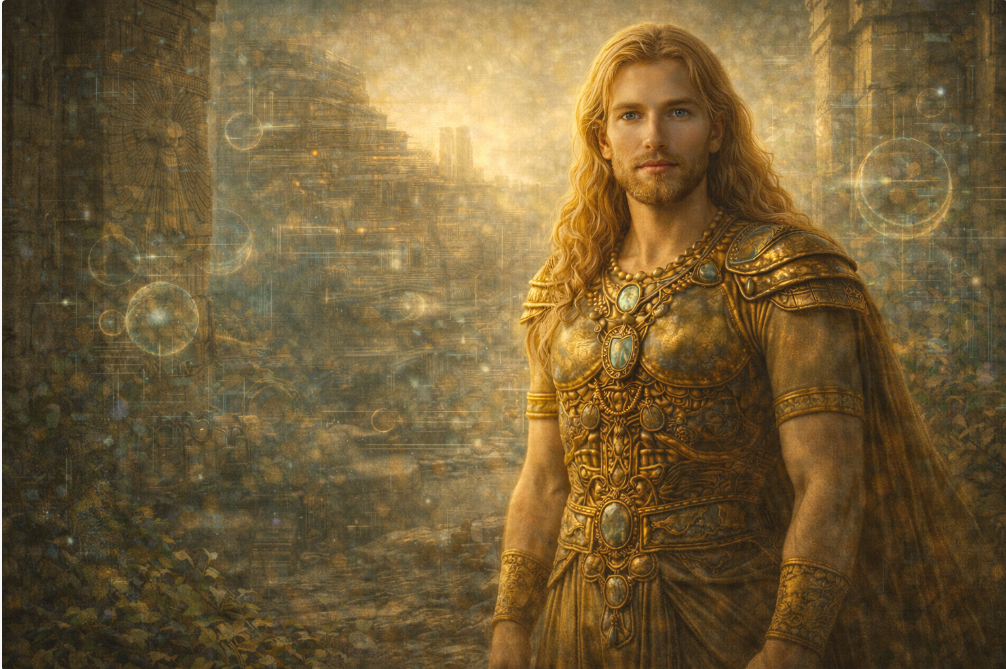

POWER, DOMINATION, AND CONTINUITY
What distinguishes the Anunnaki overlay from popular ancient-astronaut narratives is its ethical dimension. The mythic record suggests a turning point in human social organization: the introduction of divine kingship, sacred obedience, hierarchical authority, and violence justified by higher powers.
These structures did not disappear when the Anunnaki departed. They were inherited, ritualized, and institutionalized by human civilizations. Empires learned to rule as gods once ruled. Priests learned to speak on behalf of absent authorities. States learned to sanctify violence through myth.
The overlay reveals continuity rather than rupture—between ancient sky gods and modern domination systems.
Anthropology, in this context, cannot remain neutral. If myths are data, then they carry consequences.
THE SASHA / ENKI OVERLAY
Memory, Mediation, and the Refusal of Domination
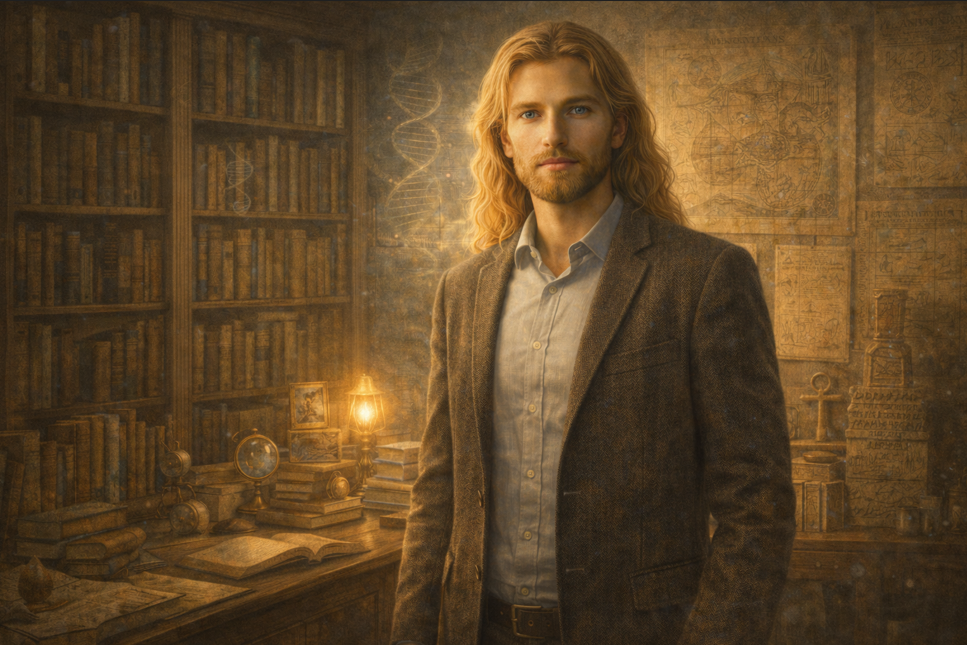
If the Anunnaki overlay establishes a historical and anthropological framework, the Sasha/Enki overlay reveals how that framework is lived in the present.
Across ancient records, Enki appears not as a conqueror but as a mediator—one who understands complex systems yet resists ruling them. He translates knowledge into usable form: water management, law, language, survival technologies. His authority lies in comprehension, not command.
The Sasha/Enki overlay interprets this figure as a remembered role rather than a deity: the system-reader, the translator, the one who preserves memory without demanding obedience.
In modern expression, this consciousness manifests through anthropology, pattern recognition, and long-view synthesis. Sasha’s work reflects this orientation. Trained in classical anthropology and shaped by fieldwork among living oral cultures, his approach treats myth not as superstition to be dismissed nor revelation to be revered, but as testimony to be decoded.
Where domination systems seek belief, the Sasha/Enki lens seeks literacy.
Where power demands obedience, it demands understanding.
Where hierarchy insists on authority, it insists on discernment.
This overlay explains why the Anunnaki framework does not become a new theology. Enki does not ask to be worshiped; Sasha does not ask to be believed. Both operate from the same ethical constraint: knowledge must expand human agency, not replace it.
SASHA / ENKI: THE TRANSLATOR

THE ANUNNAKI OVERLAY: READING MYTH, HISTORY, AND POWER THROUGH AN ANTHROPOLOGICAL LENS

Anthropology begins with a simple premise: people describe what they experience using the language available to them. Before writing systems, before technical vocabularies, and before modern scientific frameworks, human societies relied on story, symbol, ritual, and oral transmission to record events that mattered. Those records—later called “myths”—are the foundation of human memory.
The Anunnaki overlay applies this core anthropological principle to humanity’s oldest narratives.
Across continents and millennia, early civilizations describe encounters with powerful, humanlike beings who descended from the sky, traveled between worlds, wielded extraordinary technologies, altered human genetics, ruled as kings, and departed amid conflict. These beings were remembered as gods not because they were divine, but because their capabilities lay far beyond the technological horizon of the societies that observed them.
From a revisionist anthropological perspective, these accounts read less like theology and more like early contact reports.
In Sasha Alex Lessin’s work—and in this thread—the Anunnaki overlay does not function as belief or doctrine. It functions as an interpretive framework that treats ancient texts, myths, and religious traditions as observational data encoded in symbolic language. Just as anthropologists interpret cargo cult stories as rational responses to technologically superior outsiders, the Anunnaki overlay interprets sky gods, miracles, and divine wars as descriptions of advanced colonists interacting with early human societies.
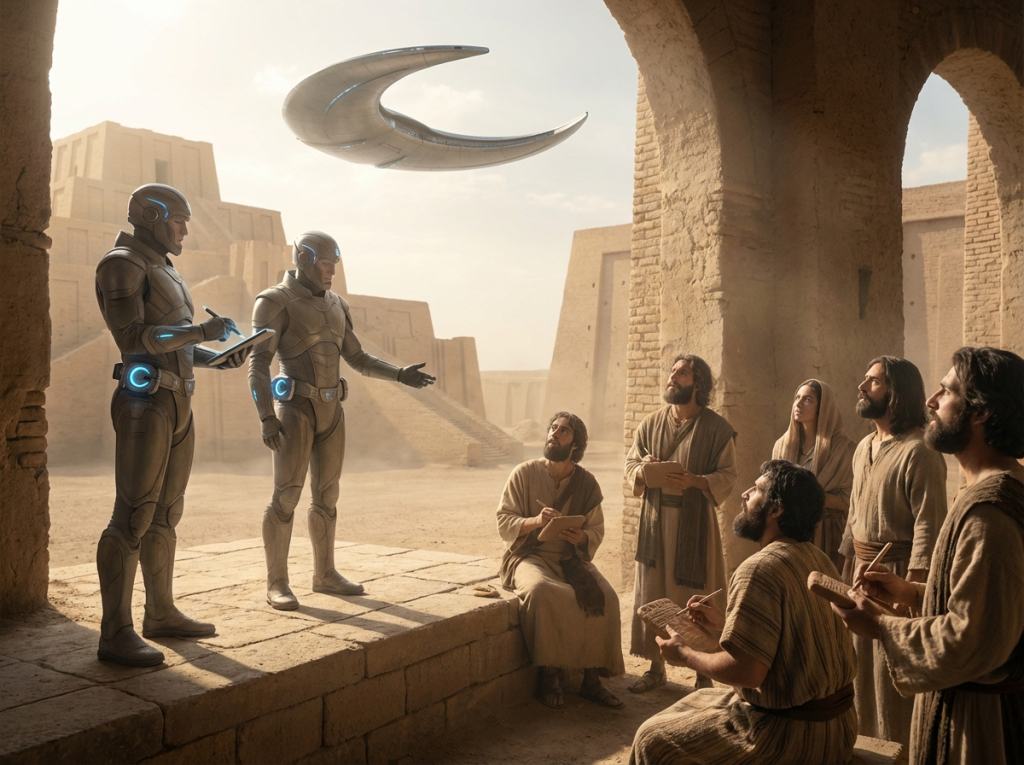
This approach reframes the Anunnaki not as supernatural entities, but as people: technologically superior, biologically long-lived, politically organized, and capable of manipulating energy, flight, sound, and genetics. Their “miracles” become technologies. Their “magic” becomes applied science. Their “divinity” becomes asymmetrical power.
Sasha’s path toward this interpretation did not begin with speculation. It started with fieldwork. Living among Pacific Island communities, he learned how oral histories preserve accuracy through metaphor, how ritual encodes memory, and how colonized peoples reinterpret overwhelming encounters in spiritual terms. Later, through his apprenticeship with Zecharia Sitchin, he encountered ancient texts that—when read literally rather than theologically—described advanced beings interacting with humanity in strikingly consistent ways.
What distinguishes the Anunnaki overlay from conventional ancient astronaut narratives is its ethical dimension. Sasha’s lifelong concern with domination versus partnership systems finds its earliest expression here. The Anunnaki era, as reconstructed through mythic records, appears to mark a turning point in human social organization: the introduction of divine kingship, hierarchical authority, sacred obedience, and violence justified by higher powers.

These structures did not disappear when the Anunnaki left. They were inherited, ritualized, and institutionalized by human civilizations. Empires learned to rule as gods once ruled. Priests learned to speak on behalf of absent authorities. States learned to sanctify violence through myth. The overlay reveals continuity—not rupture—between ancient sky gods and modern domination systems.
In this sense, anthropology cannot remain neutral. If myths are data, then they carry consequences. Understanding the Anunnaki overlay is not about resurrecting ancient gods or replacing one belief system with another. It is about recognizing how early encounters with technologically superior beings shaped human governance, religion, psychology, and power structures—and how those patterns persist today.
At 85, Sasha works as an ethnologist rather than a cataloger of cultures. His focus is no longer on isolated societies, but on global convergence: the repetition of the same stories, symbols, hierarchies, and warnings across independent civilizations. The Anunnaki overlay emerges from this long view—not as revelation, but as pattern recognition.
This thread follows that arc. It begins with myths as observation, moves through lived anthropology and suppressed history, and arrives at a moral question: if domination systems were introduced through asymmetrical power in the past, can humanity now choose partnership, equity, and compassion in the present?
The Anunnaki overlay does not demand belief. It invites reconsideration. It asks readers to honor ancestral intelligence by reading ancient stories not as fantasy, but as humanity’s first attempts to describe a world that arrived before we had words for it.
THE JANET / NINMAH OVERLAY

Care, Consequence, and the Human Experience of Contact
If the Anunnaki overlay examines power, the Janet/Ninmah overlay examines consequence.
Anthropology does not only study hierarchy and conquest. It studies kinship, nurturing, reproduction, healing, and the survival of communities. Where domination systems leave records of authority, partnership systems leave quieter traces—embedded in birth stories, fertility myths, mother goddesses, healer traditions, and the persistence of care under unequal conditions.
Across ancient cultures, alongside sky gods and warrior kings, appears another recurring figure: the life-bringer, the geneticist, the midwife, the healer. In Sumerian texts, she is known as Ninmah. Elsewhere, she appears under different names but with strikingly similar attributes.

The Janet/Ninmah overlay interprets these figures not as divine abstractions, but as remembered roles—those responsible for life stewardship during periods of profound technological imbalance.
Where the Anunnaki overlay identifies domination systems, the Janet/Ninmah overlay identifies care within those systems.
In this overlay, Ninmah is not idealized. She is accountable. The genetic interventions attributed to her are not framed as miracles, but as technological acts with moral weight. Ancient observers recorded failed creations, healing rituals, and negotiations over human fate because they understood that advanced knowledge carried risks—and that someone bore responsibility for managing them.
NINMAH: GUARDIAN OF LIFE
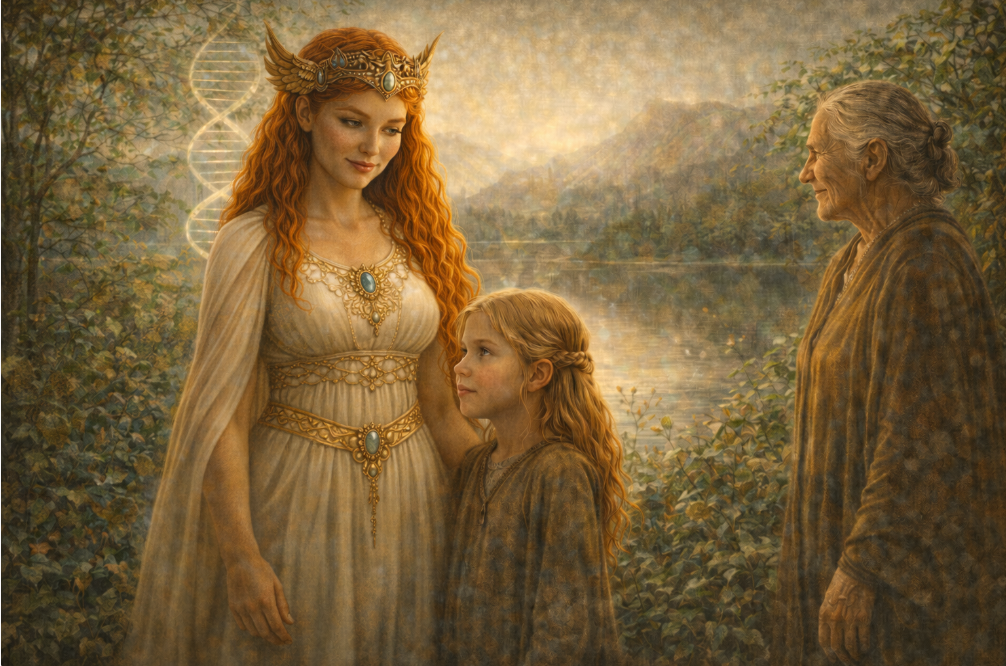
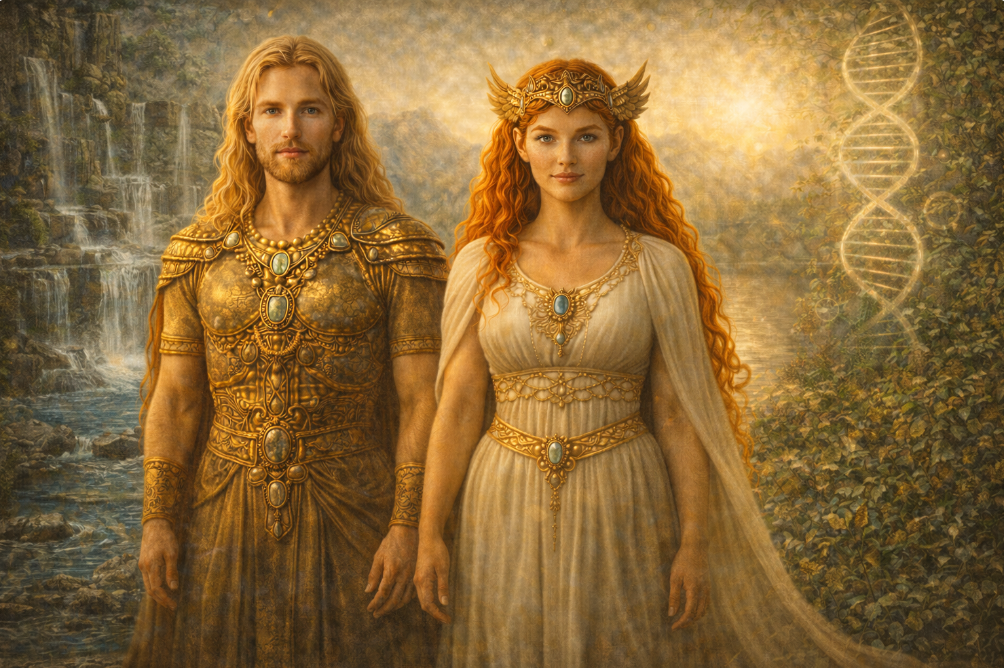
DIVINE PARTNERSHIP: ENKI & NINMAH
REFERENCE
Lessin, Sasha Alex. Anunnaki Who’s Who. Aquarian Media / EnkiSpeaks Publishing.
“MYTHS AS OBSERVATIONAL RECORDS”
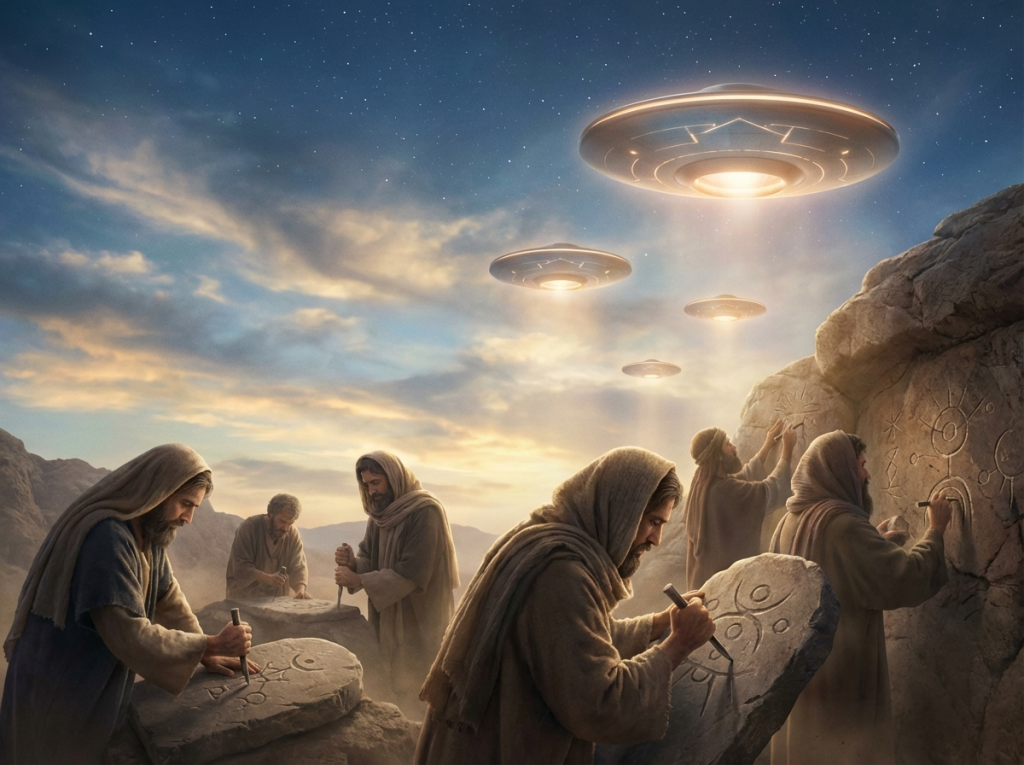
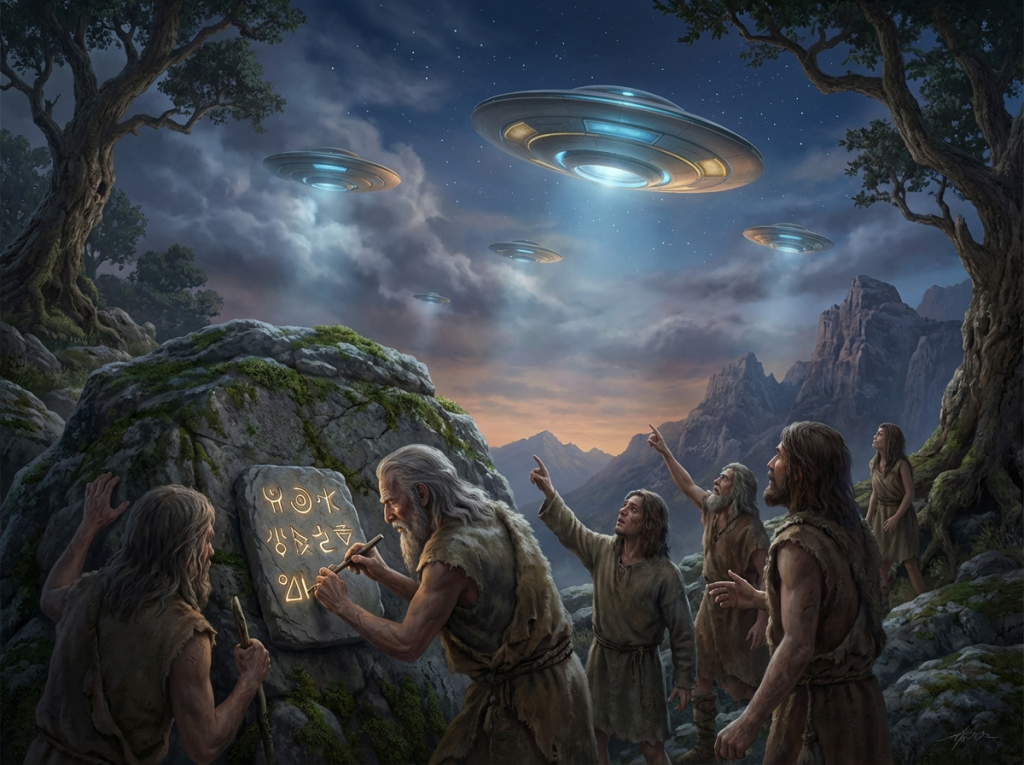
Ancient humans record celestial phenomena as symbols while advanced craft descend from the sky. The image visually bridges mythic storytelling and technological observation, showing that “myth” was an early data language.
INTRODUCTION: MYTHS AS OBSERVATIONAL RECORDS OF TECHNOLOGY AND COSMOLOGY
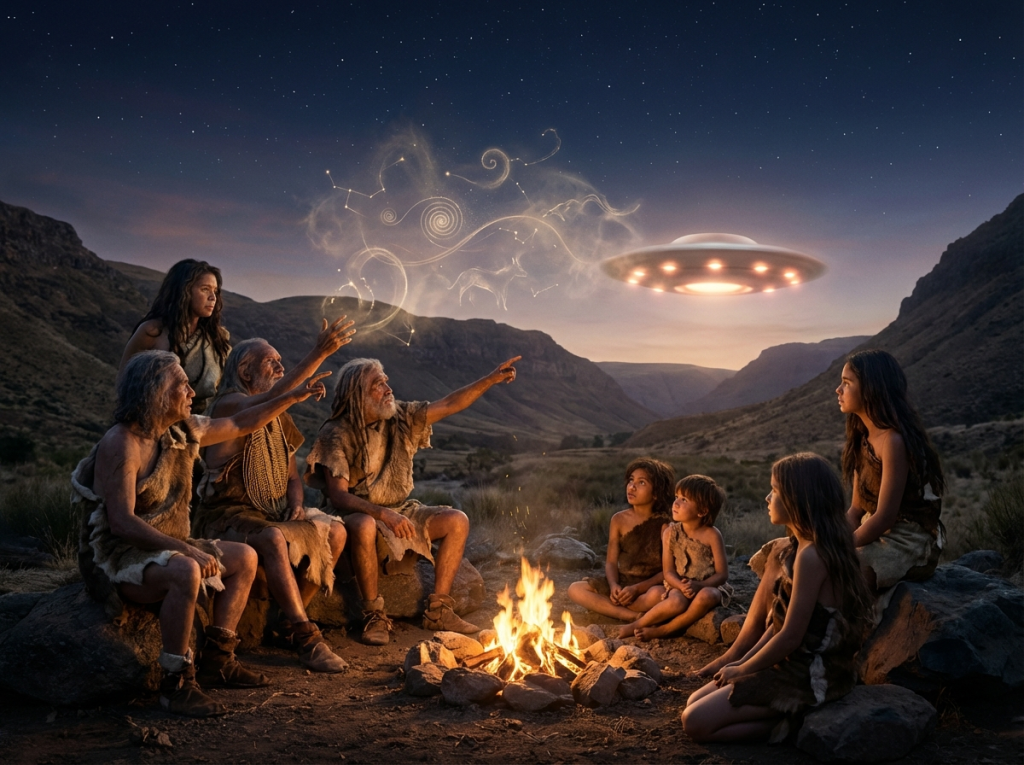
A visual metaphor for early humans translating advanced phenomena into story and symbol—capturing sound, light, and movement without technical vocabulary.
MY PATH: FROM ETHNOGRAPHER TO ETHNOLOGIST
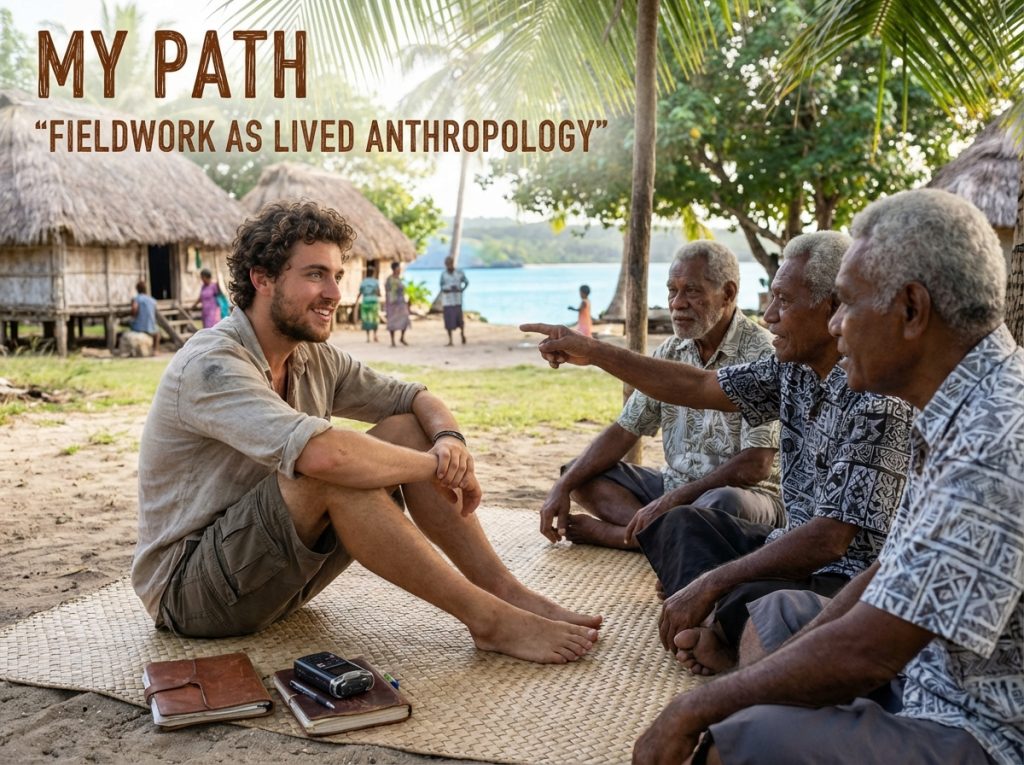
Sasha, as a young ethnographer, is immersed in Pacific Island life—learning directly from the community rather than from textbooks.
SITCHIN APPRENTICESHIP
“TRANSMISSION OF FORBIDDEN HISTORY”
The passing of suppressed knowledge from one scholar to another symbolizes lineage, mentorship, and intellectual courage. Elder scholar Zecharia Sitchin and a younger researcher seated at a table covered with ancient tablets, star maps, and manuscripts, warm lamplight illuminating cuneiform symbols, sense of secrecy and discovery, walls lined with books, realistic academic environment infused with cosmic significance
ETHNOLOGY
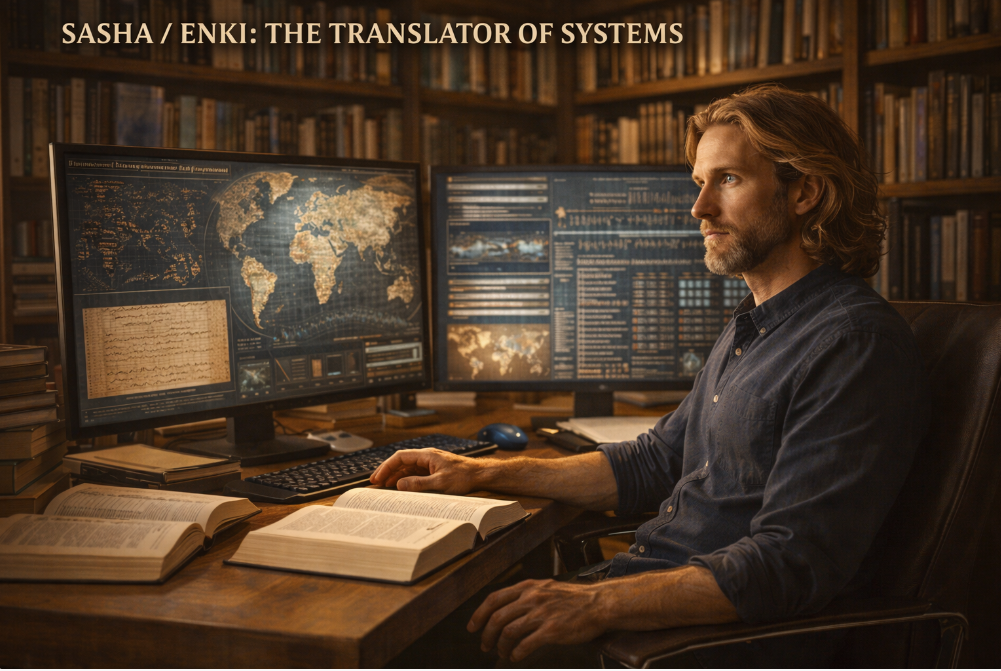
An elder ethnologist synthesizing ancient records and real-time global data—connecting patterns across cultures, epochs, and disciplines without turning history into belief.
“THE ELDER ANTHROPOLOGIST”

Sasha at 85, contemplating global human patterns across time—maps, cultures, and stars forming a single coherent story.
“MYTHS” ARE NOT MYTHS
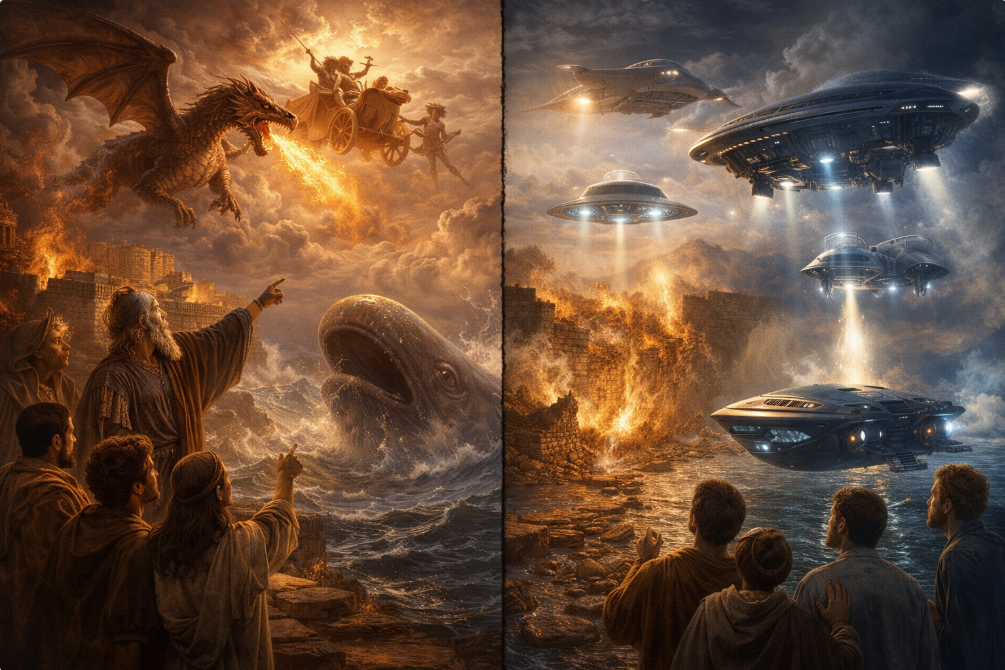
Side-by-side visual comparison showing ancient symbolic interpretations and their technological equivalents. Split-scene image: on one side ancient people depict dragons, sky chariots, and gods in clouds; on the other side the same phenomena revealed as advanced aerial craft, sonic technology, and submersible vehicles, seamless visual continuity between symbolic and technological interpretations.
CONCLUSION
“READING OUR ANCESTORS AS DATA”
AUTHOR BIOS
JANET KIRA LESSIN
Janet Kira Lessin is an author, experiencer, and long-time researcher of consciousness, memory, and anomalous history. Her work explores the intersection of lived experience, ancestral memory, anthropology, and alternative historical frameworks, with a particular focus on partnership versus domination systems. She is the founder of Dragon at the End of Time and co-author of multiple long-form series examining myth as encoded observation rather than belief.
Websites:
www.dragonattheendoftime.com
Substack: https://substack.com/@janetalexlessinphd
DR. SASHA ALEX LESSIN, PH.D.
Dr. Sasha Alex Lessin is an anthropologist, ethnologist, and educator with decades of experience teaching anthropology, comparative religion, governance systems, counseling psychology, and human sexuality. Trained at UCLA, his work emphasizes pattern recognition across cultures and time, treating myth, religion, and oral tradition as observational records rather than theology. He is the author of Anunnaki Who’s Who and co-founder of Aquarian Media / EnkiSpeaks Publishing.
Website: www.enkispeaks.com
SERIES CONTEXT
SERIES TITLE
SAPIENS RISING: FROM SUMER TO COSMIC CITIZENSHIP
A 9-Article Series
ARTICLES IN THIS SERIES
- Sapiens Rising: From Sumer to Cosmic Citizenship
- Why Sumer Still Terrifies the Establishment
- The Anunnaki Hypothesis: Genetic Engineering and Human Origins
- Gods, Lords, and Controllers: How Religion Became a Slave Code
- Real Evolution: From Bicameral Mind to Integrated Humanity
- The Janet / Ninmah Overlay: Care, Consequence, and Life Stewardship
- Sasha / Enki: The Translator of Systems
- Timothy Leary, Futants, and the Next Human
- From Slave Species to Cosmic Citizenship
RELATED ARTICLES
- MYTHS ARE DESCRIPTIONS OF WHAT PEOPLE SAW AND HEARD
- THE ANUNNAKI OVERLAY: POWER, TECHNOLOGY, AND THE ORIGINS OF DOMINATION
- DIVINE PARTNERSHIP: ENKI & NINMAH
- PARTNERSHIP VS DOMINATION: AN ANTHROPOLOGICAL FRAMEWORK
- READING OUR ANCESTORS AS DATA
REFERENCES
- Lessin, Sasha Alex. Anunnaki Who’s Who. Aquarian Media / EnkiSpeaks Publishing.
- Sitchin, Zecharia. The 12th Planet.
- Eisler, Riane. The Chalice and the Blade.
- Jaynes, Julian. The Origin of Consciousness in the Breakdown of the Bicameral Mind.
- Campbell, Joseph. The Power of Myth.
TAGS
Anunnaki, Enki, Ninmah, anthropology, ethnology, ancient civilizations, myth as data, alternative history, partnership systems, domination systems, consciousness evolution, Sumer, ancient technology, human origins, Aquarian Age
HASHTAGS
#Anunnaki
#Enki
#Ninmah
#Anthropology
#AlternativeHistory
#MythAsData
#PartnershipSystems
#CosmicCitizenship
#SapiensRising
SUBSCRIBE & FOLLOW
If this work resonates with you, please consider subscribing for ongoing articles exploring history, consciousness, and humanity’s possible futures:
🔔 Subscribe on Substack:
https://substack.com/@janetalexlessinphd
🌐 Websites:
www.dragonattheendoftime.com
www.enkispeaks.com
WORK IN PROGRESS NOTE
This article is part of an evolving series. New images, references, and cross-links may be added as the work develops.
🐦 X (formerly Twitter)
(Concise, intellectually provocative, thread-friendly)
Option 1 (Primary):
Myths aren’t fantasy—they’re data.
In SASHA / ENKI: THE TRANSLATOR OF SYSTEMS, we explore how ancient records, modern ethnology, and real-time global information converge to reveal patterns of power, care, and continuity across human history.
#Anunnaki #Anthropology #MythAsData
Option 2 (Shorter):
What if myths are eyewitness reports, not beliefs?
This article examines Enki consciousness as modern system-reading—connecting ancient texts with global data to understand domination, partnership, and human evolution.
#SapiensRising #AlternativeHistory
(Professional, scholarly, credibility-forward)
Primary LinkedIn Description:
Anthropology is not only about the past—it is about pattern recognition across time.
In SASHA / ENKI: THE TRANSLATOR OF SYSTEMS, we examine the modern expression of ethnology as real-time synthesis: integrating ancient records, comparative cultural frameworks, and global digital access to understand how domination and partnership systems emerge, persist, and evolve.
This article treats myth not as belief, but as encoded observation—and explores why anthropology carries ethical responsibility in the present moment.
(Narrative, accessible, relational, share-friendly)
Primary Facebook Description:
What if the oldest stories humanity ever told were not myths—but descriptions?
This article explores the Anunnaki overlay through the lens of modern ethnology, examining how ancient records, digital research, and global pattern recognition come together in the figure of Enki as translator rather than ruler.
Paired with the Janet/Ninmah overlay, it asks a deeper question: how did power shape humanity—and how did care survive within it?
This is not about belief.
It’s about reading our ancestors as intelligent witnesses.


“MYTHS” ARE DESCRIPTIONS OF WHAT PEOPLE SAW AND HEARD
by Enki, updated on December 16, 2025. Leave a Comment on “MYTHS” ARE DESCRIPTIONS OF WHAT PEOPLE SAW AND HEARD
Myths are our Ancestors’ Words for Technologies They Witnessed But Could Not Name.
By Sasha Alex Lessin, Ph.D. (Anthropology, UCLA), MA, Counseling Psychology, University for Humanistic Studies
Introduction: MYTHS REPORT OBSERVATIONS OF SOCIETIES’ TECHNOLOGY AND COSMOLOGY
Ancient peoples described what they saw and heard using the concepts and vocabulary of their world. When advanced visitors—whether from other planets or inner Earth—appeared with technologies far beyond human understanding, our ancestors recorded those encounters in the only language they had: story, metaphor, symbol, “myth.” Revisionist anthropologists like me have concluded that myths are not fiction. They are eyewitness descriptions, passed orally from generation to generation, later stylized into epics, scriptures, and sacred histories.
MY PATH: ETHNOGRAPHER TO ETHNOLOGIST
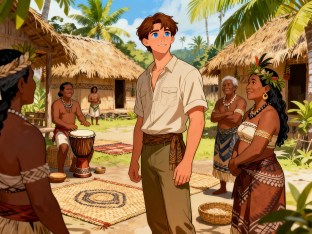
I began as a young ethnographer, living in Pacific Island communities in Fiji and Tonga and writing Sawana: A Tongan Village in Fiji for my doctoral dissertation.
I taught Anthropology, Counseling, Comparative Religion, Comparative Governance Systems, and Tantra at the University of Hawai‘i, the University for Humanistic Studies (Hawaii, San Diego, and Anchorage campuses), Leeward Community College, and Maui Community College.
I studied Voice Dialogue, Holotropic Breathwork, psychedelic-assisted therapy, and past-life therapeutic modalities. My teaching extended across the San Diego, Maui, and Alaska branches of the University for Humanistic Studies.
I immersed myself in communities practicing tantra and polyamory and later co-founded, with Janet Kira Lessin and Dave Doleshal, the World Polyamory Association.
APPRENTICESHIP WITH ZECHARIA SITCHIN
My life changed when I apprenticed myself to Zecharia Sitchin, with whom my wife, Janet Kira Lessin, also studies. I absorbed every fragment I could find of Earthlings’ suppressed and forgotten histories—including the off-planet influences that shaped civilizations. I continue to integrate my anthropological with ancient astronaut studies, mythic texts, archaeology, UFOlogy, Sumerology, and cross-cultural theologies.
ETHNOLOGY—THE OLD ANTHROPOLOGIST’S ART OF SEEING PATTERNS
At 85, I continue as an ethnologist—an elder anthropologist who sees the big picture. I honor my lineage:
- Alfred Kroeber
- Walter Goldschmidt
- M.J. Smith
- Donald Newman
- Raymond Firth
- And Sumerian scholar Zecharia Sitchin
I keep alive the anthropological spirit: curiosity, pattern recognition, compassion, and the duty to share what we learn.
“MYTHS” ARE NOT MYTHS
Academics dismiss miracles, sky chariots, psychic feats, and god-wars because they cannot fit such accounts into tenure-safe categories. So they label them “myth,” gaining access to Wikipedia pages and professional acceptance.
But these “myths” were observation reports—descriptions of beings with technology and psychic abilities so advanced that Bronze Age and early Iron Age peoples could only express them symbolically.
Consider:
- Jonah “swallowed by a whale” → a submersible vehicle
- Vimanas → flying craft
- “Dragons” or “fiery serpents” → metallic aerial craft
- Jericho’s walls falling → targeted sonic weaponry
- Gods descending on clouds → aerial landers
- “Magic carpets” → energy-supported flight platforms
These are translations of technology into the metaphor systems available at the time.
THE ANUNNAKI ARE PEOPLE—NOT GODS
Revisionist anthropologists like me regard “gods” and their miracles as historical accounts of the Anunnaki—humanlike beings possessing:
- advanced flight technology
- weaponry
- long lifespans
- genetic science
- psychic abilities
- mastery of energy fields
They were not divine—they were technologically superior colonists.
Our ancestors described what they saw. Later generations ritualized these accounts into sacred traditions.
For a detailed list of these beings and their overlapping names across cultures, see ANUNNAKI WHO’S WHO at http://wp.me/p1TVCy-1PE
I ADVOCATE PEACE, JUSTICE & PARTNERSHIP
I stand for:
- welcoming migrants
- supporting Native Americans, Black Americans, Latinos, Hawaiians, and refugees
- a ceasefire
- a peace treaty
- Palestinian relief
- partnership over domination
I continue to teach at 85, speaking out for compassion, justice, and egalitarian governance—not the domination patterns that have afflicted humanity since the Anunnaki age.
CONCLUSION
“Myths” are humanity’s earliest anthropology—reports of what people witnessed but could not fully explain. To honor our ancestors, we must read their words as data, not fairy tales.
REFERENCE
Lessin, Sasha Alex. “Anunnaki Who’s Who.”
Aquarian Media / EnkiSpeaks Publishing.
http://wp.me/p1TVCy-1PE
#Anunnaki #ancientaliens #anthropology #ethnology #SashaLessin #JanetKiraLessin #Sitchin #Sumerianhistory #mythsastechnology #ancienteyewitnessreports #revisionistanthropology #peaceadvocacy #partnershipoverdomination #extraterrestrialcontact #ancienttechnology #EnkiSpeaks

Share this: