MURDERS IN MYCENEAE: Clytemnestra killed Agamemnon for sacrificing their daughter to Appease Artemis
This is a video; to play it, click the word “REVENGE” on the picture. However, the story, as YouTube obsessively and erroneously labels it as just “myth,” is a description in terms available to ancient Greeks of what they saw and heard. The Greek “gods” were Anunnaki from Nibiru, who gave themselves Greek names.
MURDERS IN MYCENEAE: Clytemnestra killed Agamemnon for sacrificing their daughter to Appease Artemis
By Sasha Alex Lessin, Ph.D. (Anthropology, UCLA)
See more on ancient Greece at https://wp.me/s1TVCy-greece
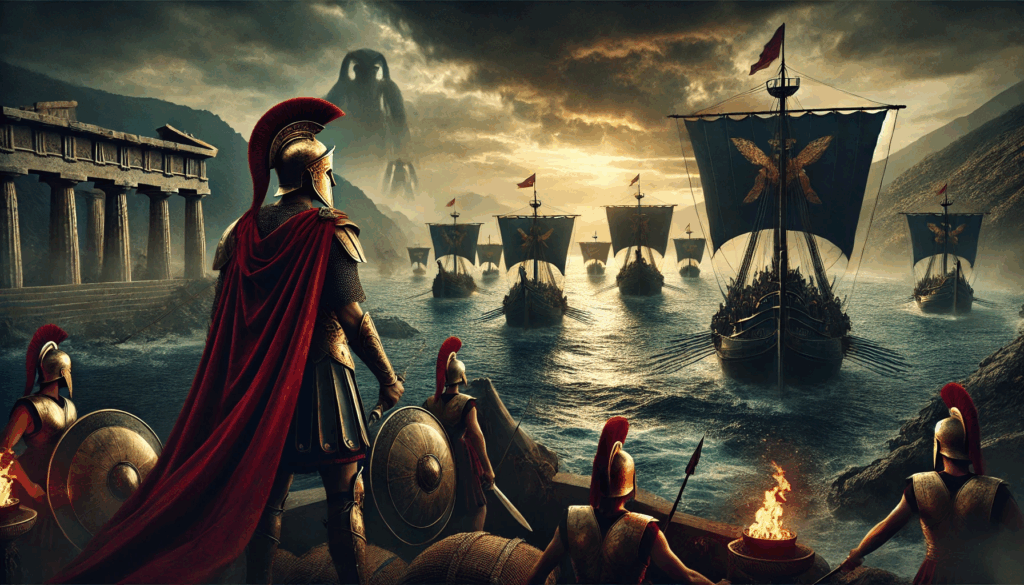
After a decade of war and destruction, Agamemnon’s fleet cuts through dark waters toward the rocky coast of Mycenae. Behind them, the ghostly embers of Troy still smolder—visible on the horizon like a curse not yet lifted. The skies, heavy with foreboding, reflect the weight of bloodshed and betrayal to come.
Sometime between 1200 and 1101 BCE, Mycenae’s King AGAMEMNON returned to Greece after ten years of war against the alliance of Greeks sheltering in the city of Troy on the northwestern coast of Asia Minor. Agamemnon and his men murdered the people of Troy. Then, he sailed his squadron back to Mycenae in Greece.
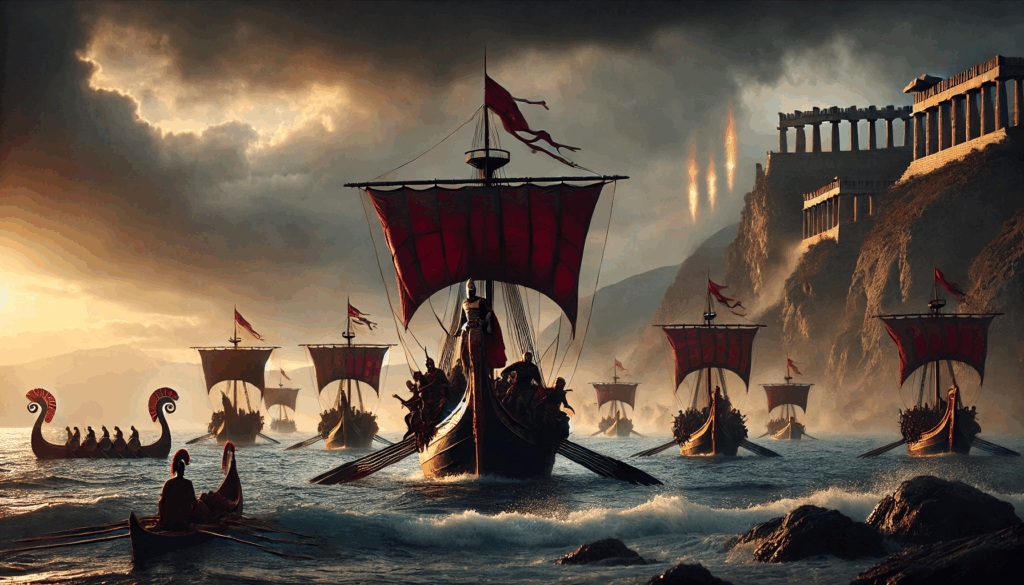
Cloaked in crimson and crowned in bronze, Agamemnon stands at the front of his ship—unbowed, but not untouched—his golden death mask gleams in the twilight, a symbol of both power and impending doom. The winds of fate follow him across the wine-dark sea, toward a home that no longer waits in peace.
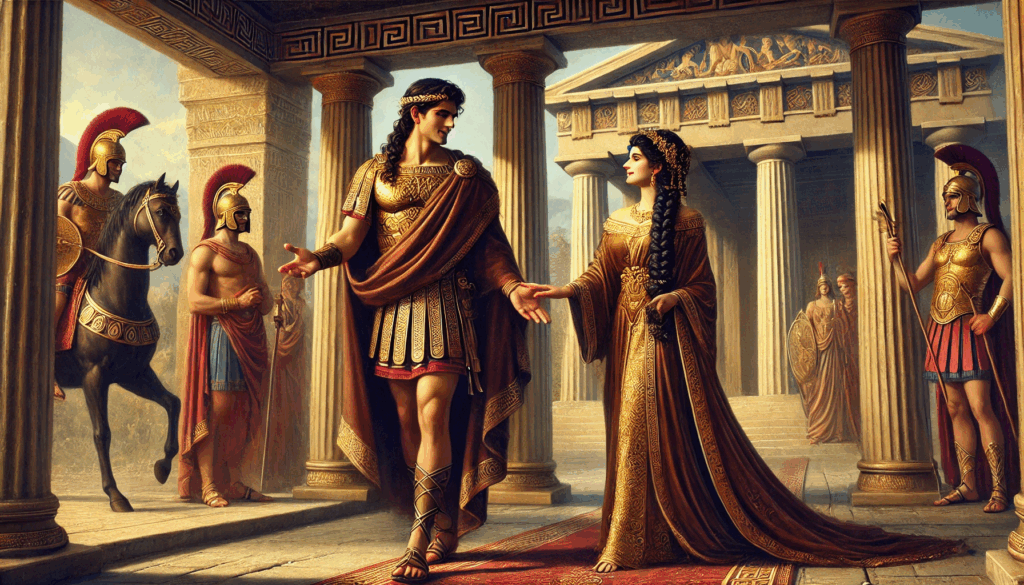
At the threshold of the palace, Queen Clytemnestra stands with practiced grace beside Aegisthus, the regent who ruled in Agamemnon’s absence. Their smiles are warm, their robes splendid—but beneath the gold lies hidden steel. Agamemnon steps forward, battle-worn and unsuspecting, to a homecoming filled with veiled intentions.
Agamemnon’s Queen Clytemnestra, the daughter of Tyndareus and Leda and the half-sister of Helen of Troy, as well as her lover, Aegisthus, Regent Ruler in Agamemnon’s absence, greeted him warmly. He thanked Aegisthus for his service.
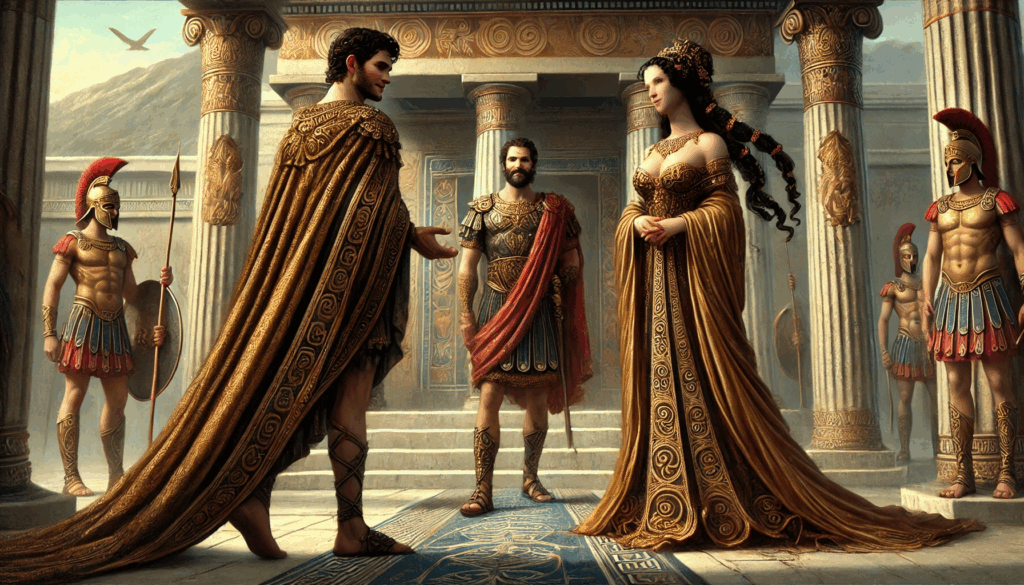
Agamemnon, armored in glory, offers gratitude to Aegisthus, unaware of the man’s betrayal and the Queen’s dark resolve. The courtyard is silent, but watching—its frescoed walls bearing witness to the trap being set behind honeyed words and royal gestures.
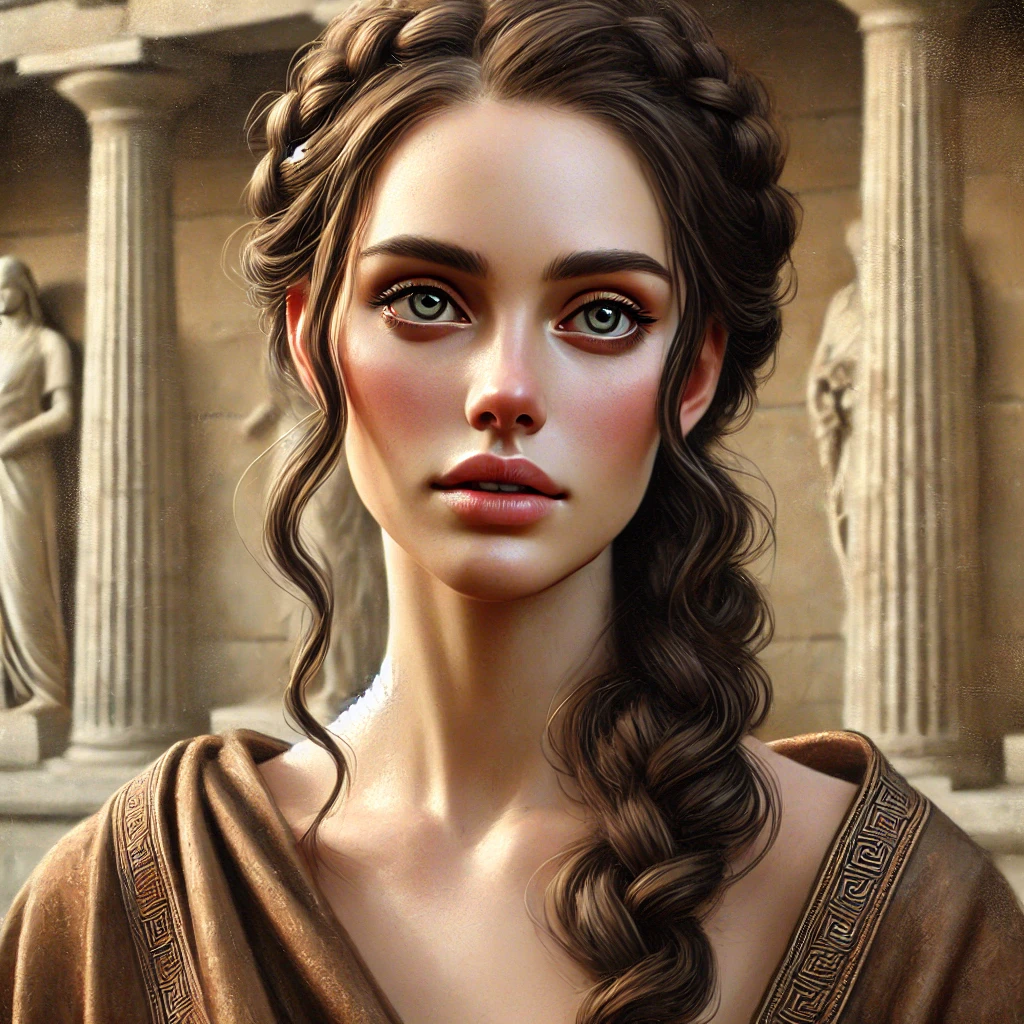
Bathed in soft, painterly light, Clytemnestra’s gaze is both regal and restrained—her beauty sculpted in myth, her thoughts cloaked in secrets. The richly embroidered chiton and Mycenaean backdrop evoke an ancient power rarely seen, and seldom trusted.
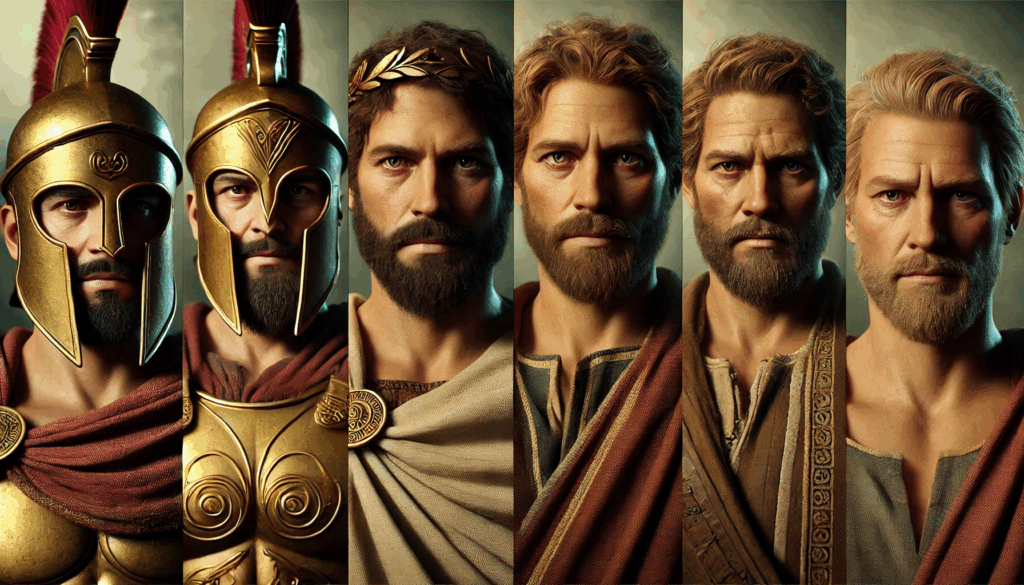
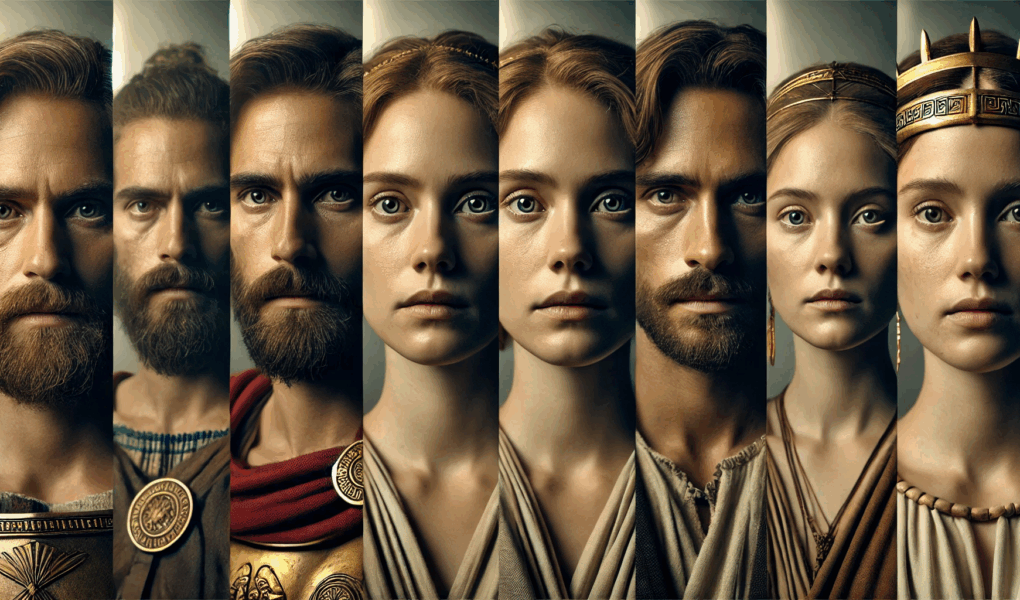
Agamemnon, Aegisthus, and a Mycenaean soldier confront the viewer—each bearing the burdens of war, rivalry, and hidden betrayal.
Clytemestra told him, Mellow out in your tub a while, then come and make love with me. It’s been a long time. I’m eager to reconnect.
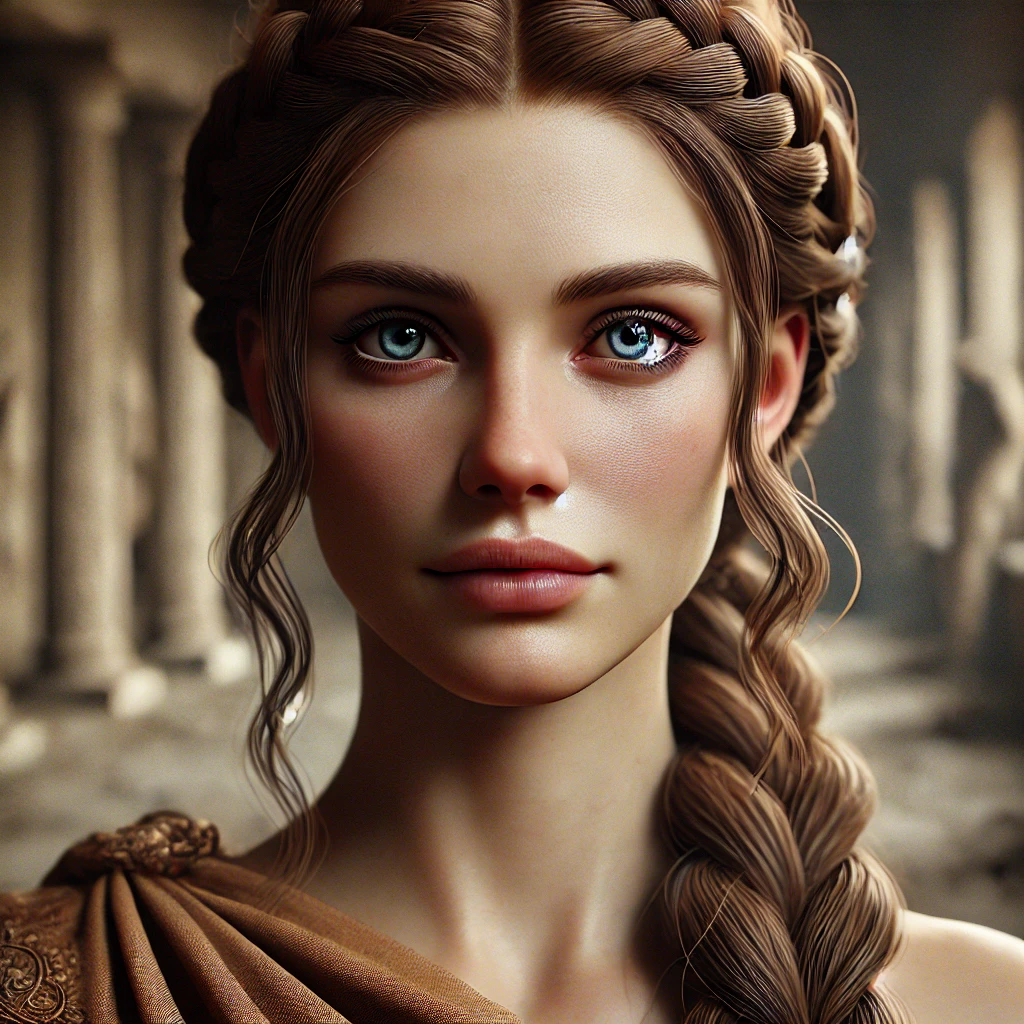
Elegance and control define her expression, but there’s a quiet storm behind her eyes. The queen of Mycenae stands poised in palace light, her braided hair and subtle armor of silk concealing more than history will ever know.
As Agamemnon relaxed in the tub, Aegithus sprang from hiding and threw a net over the King, rendering him helpless. Clytemnestra rushed into the room, dagger in hand. For Iphigenia, she yelled as they stabbed Agamemnon to death.
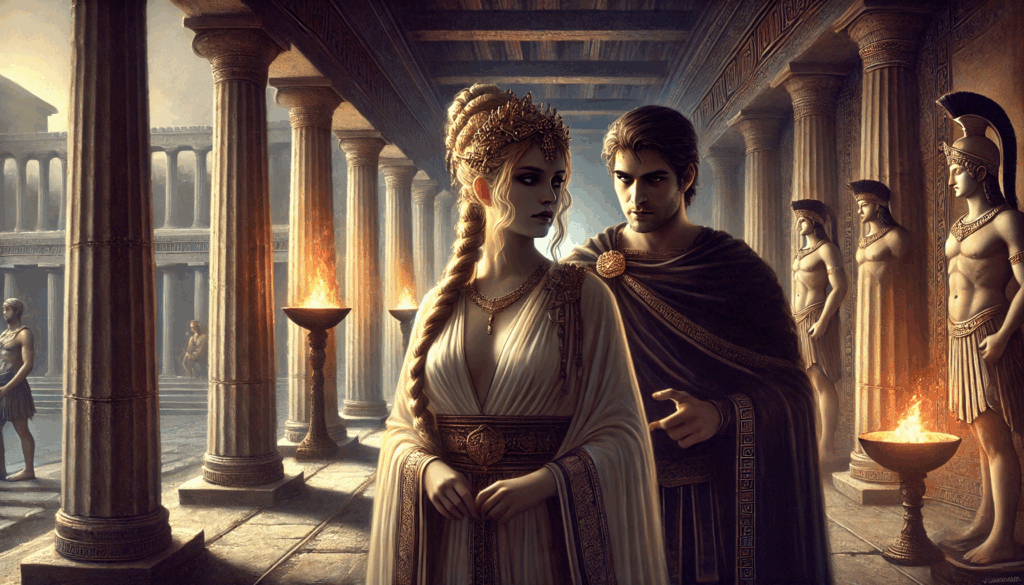
In the shadowed heart of the Mycenaean palace, the Queen and her lover stand close beneath torchlit columns. Their alliance is silent, their intentions deadly. The war may be over, but the actual conflict is just beginning.
Why? Ten years before, Agamemnon told Clytemnestra and Iphigenia, their teenage daughter, that he had brought her to the port at Aulis dressed as a bride. He said, Before we sail, I’ll wed you to my champ Achilles.
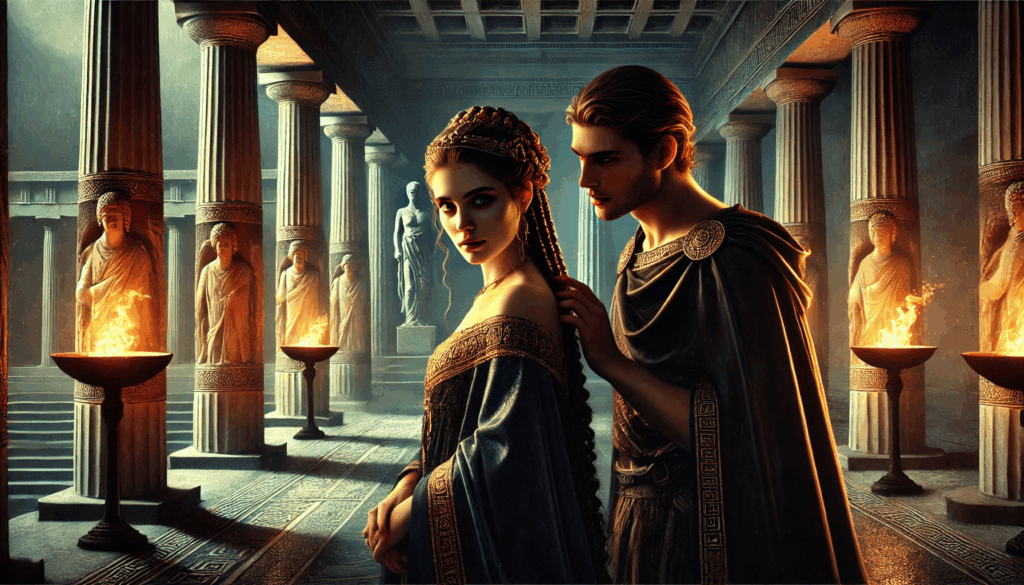
Cloaked in royal garments and half-light, Aegisthus leans in with quiet words. Clytemnestra listens, unflinching. In this moment of shared resolve, the seeds of vengeance take root behind gilded walls.

Tears streak her face as Clytemnestra lifts her gaze in despair. Her pain transcends speech, echoing through the stone walls of Mycenae—where gods demand sacrifice, and kings betray their blood.

Queen Clytemnestra and noblewomen stand united in expression, regal, sorrowful, and fierce, revealing the emotional core of the tragedy.
Agamemnon’s soldiers restrained the hysterical Clytemnestra when she realized Agamemnon had lied about Iphegenia marrying Achilles and instead intended her as a sacrifice to Artemis. Artemis demanded Iphigenia’s death as punishment for Agamemnon’s insult to her.

A woman torn between love and fury, Clytemnestra’s expression burns with the birth of vengeance. The storm that will one day consume Agamemnon begins here, in silence and heartbreak.
Artemis, probably with an Anunnaki HAARP-type device,** had prevented sailing wind to the Greek fleet assembled at Aulus. Artemis had demanded Iphigenia’s death to punish Agamemnon, killing a stag she claimed and bragging that he was a better hunter than she.

From a rocky precipice, Artemis looms like a celestial sentinel, her silver robes flowing with divine force. Behind her, an otherworldly machine pulses with unknown energy, and below, the Greek fleet lies trapped in windless silence—a punishment etched into the sky.
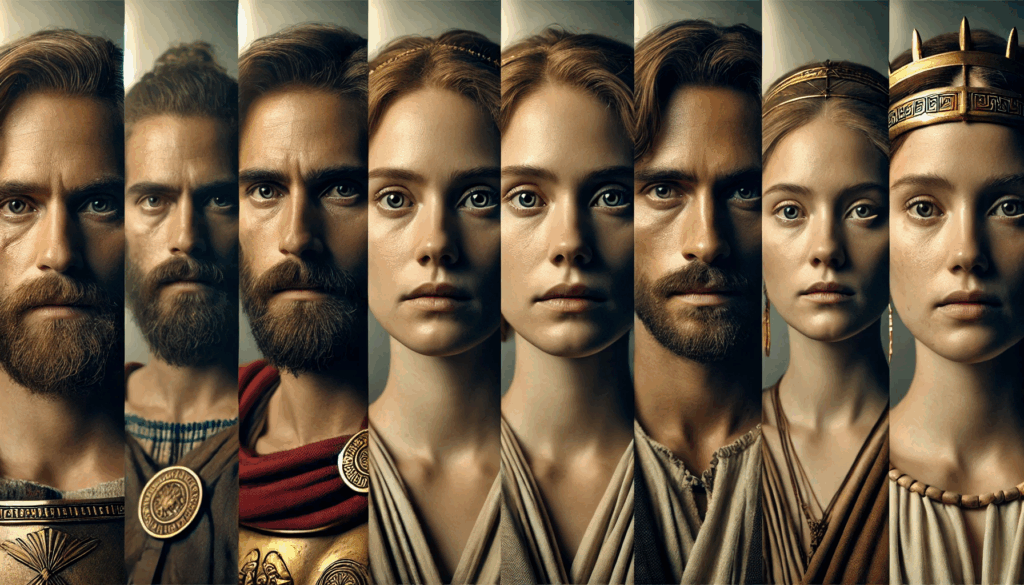
Men and women, rulers and pawns—all assembled before fate. Their eyes reflect the gravity of prophecy, passion, and the dark spiral of vengeance that binds them.
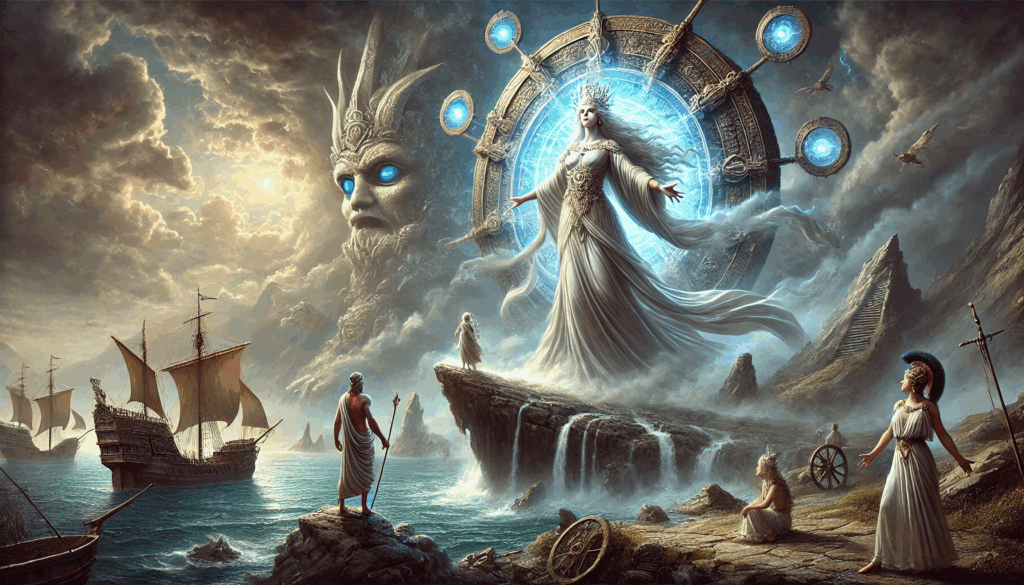
Charged with cosmic energy, an ancient device hums behind the goddess. Her radiant form stands between the heavens and the sea, her will made manifest through unnatural calm and swirling cloud—Agamemnon’s fleet helpless beneath her judgment.

Her expression is serene, yet absolute—an immortal will reflected in silver eyes. Artemis stands between myth and mystery, holding the winds at bay with a presence that humbles kings and silences fleets.
Iphigenia, when she knew her Dad was going to kill her, chose to cooperate with her execution and let her father slit her throat so Artemis would give his fleet a wind to blow his fleet to Troy.
(Next: Iphigenea’s brother Orestes orchestrates another atrocity.)
*In this post, I illustrate the story of the Trojan War with a video from See U in History.
**CONFLATION: DIFFERENT CULTURES & ERAS COMBINED ANUNNAKI GODS’ NAMES & ATTRIBUTES

In a galactic temple of myth and mind, divine forms emerge—part human, part alien, part dream. Their symbols glow with timeless wisdom, merging the ancient and the infinite into a single archetypal presence.
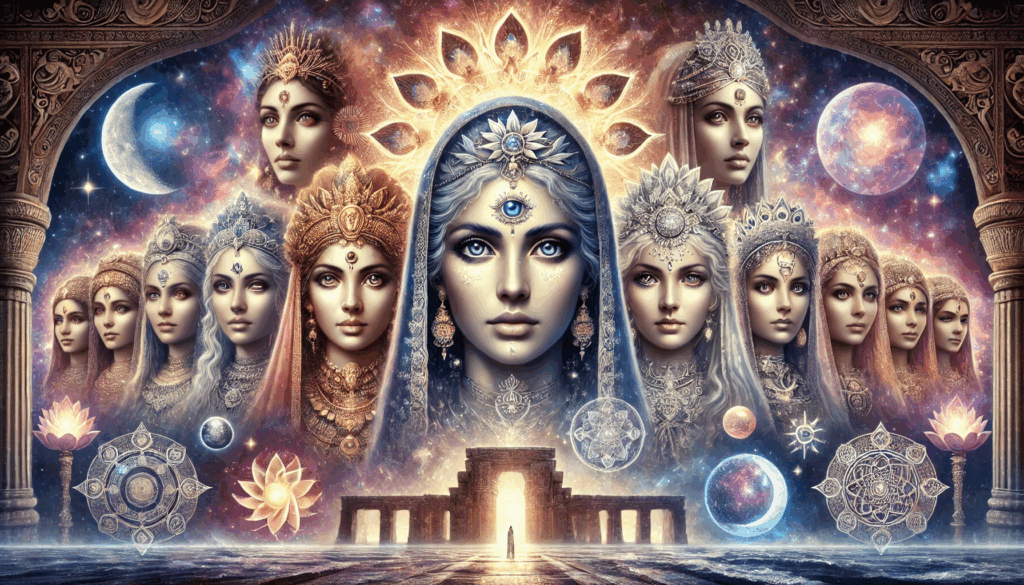
Silent, wise, and radiant—these goddesses wear the heavens in their eyes and the symbols of creation in their crowns.
When we consider the appearance, perpetuation, or reappearance of gods, archetypes, walk-ins, inner fractals, or independent beings in our history, folklore, and literature, we think of them in the garb, insignia, and symbols we associate with them. However, our pictures of the gods vary. They represent models, paradigms, and explanations of how people, planets, extraterrestrials, and the Universe work.

Gods and forces from every corner of myth drift in a luminous field of stars and ruins. They morph and coexist—expressions of memory, psyche, and the Universe’s will made visible.
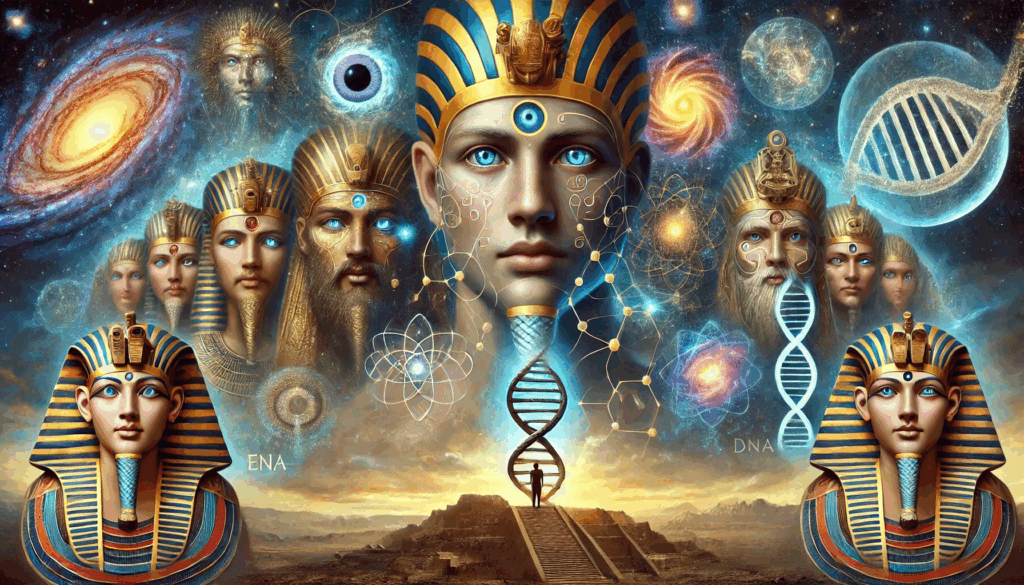
Their eyes shimmer with celestial knowledge—gods of thunder, stars, and flame, adorned with crowns of power from mythic worlds.
Inanna, for example, sometimes appears as the first daughter of Nannar (the equivalent of Allah). Sometimes, she’s combined with her younger sister, Ereshkigal (also known as Persephone), or her father’s aunt, Ninmah.

At the center of cosmic light, Inanna emerges as a composite of her many forms: crowned with her father Nannar’s crescent, shadowed by her underworld sister Ereshkigal, and haloed with the wisdom of Ninmah. Together, they reflect a unified archetype of power, descent, and sacred origin.

From Nibiru to the Nile, from the Ganges to the Tigris, Enki’s essence ripples through history. Each reflection glows with the attributes of saviors, rebels, and creators—divine archetypes born of light, water, and sacrifice.
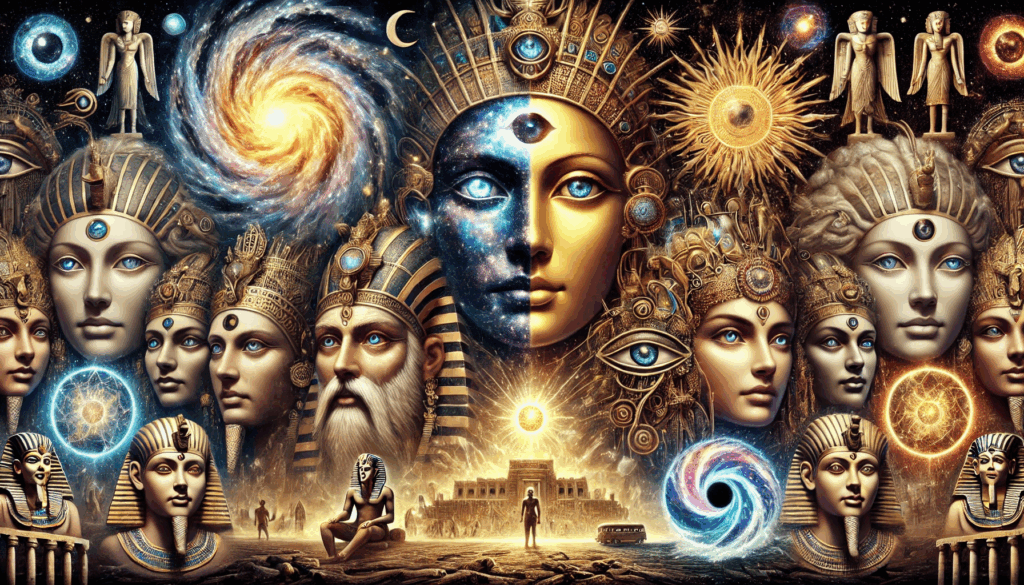
Male and female, balance and force—united in divine harmony, these beings reflect the symmetry of myth, nature, and the soul of the Universe.
Inanna’s uncle Enki had varying names as he aged, as when Ea of the planet Nibiru became Enki and Asar in Iraq. He becomes Ptah in Egypt; he’s the Peacemaker in North America. In India, he’s Shiva, Greece’s Prometheus, Rome’s Aquarius, and Europe’s Lucifer. For researcher Glenn Bouge, Enki is Jesus. For Jungians, Enki is a savior archetype.

In the center flows Enki, god of wisdom and life, surrounded by his incarnations: Ptah the craftsman, Shiva the destroyer, Prometheus the fire-bringer, Aquarius the bearer of renewal, Lucifer the radiant, and Christ the compassionate. A cosmic wheel of myth spins around his eternal source.

A third eye aglow and Ganges pouring from his crown, this vision of Enki channels cosmic stillness and inner fire. He is both creator and destroyer, holding the vast paradox of being.
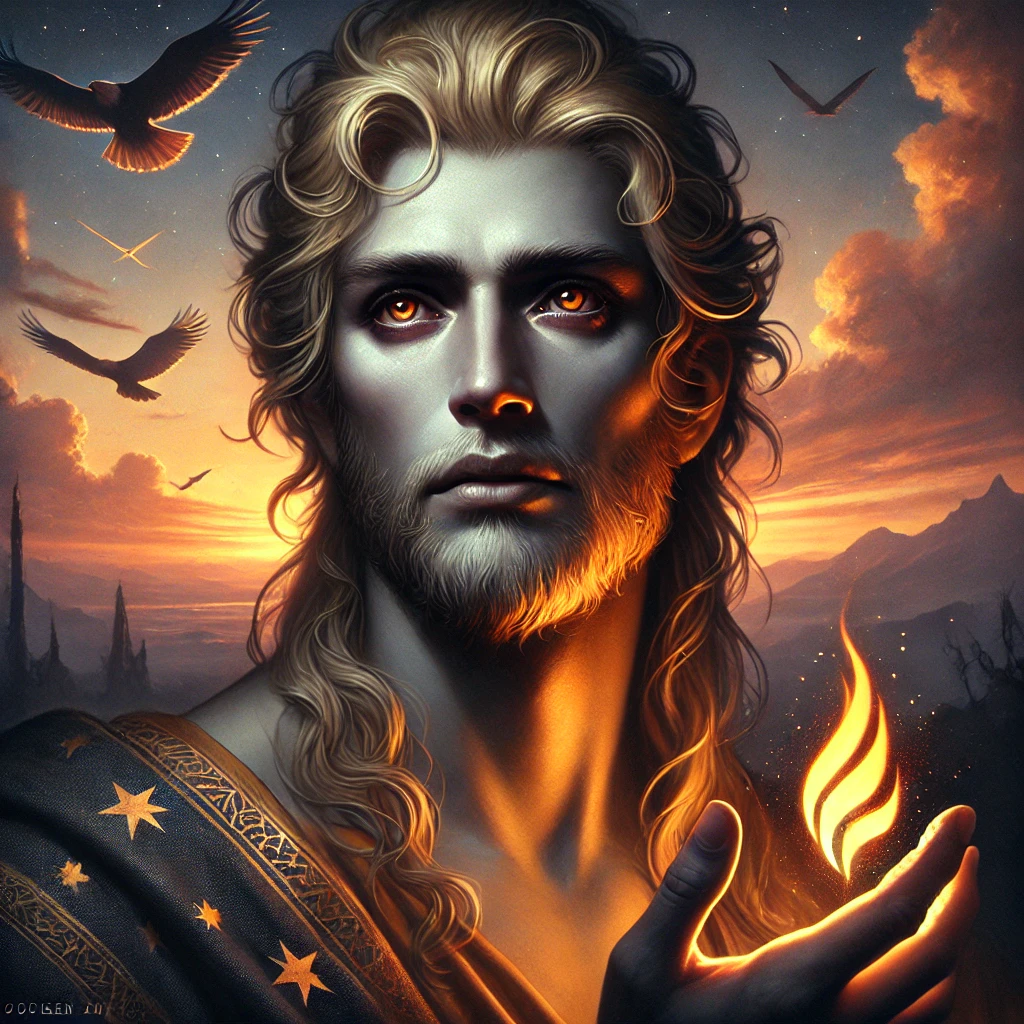
Eyes burning with wisdom and sorrow, he holds the forbidden fire, offered to humanity with full knowledge of the cost. Enki, as Prometheus, is the defiant rebel, the wise sufferer, the light in chains.
Whatever the moniker, Enki and the other Anunnaki were people, not all-knowing, all-good, or all-powerful; none of them is what the Anunnaki call “the Creator-of-All” or what Native Americans call “Great Spirit.”
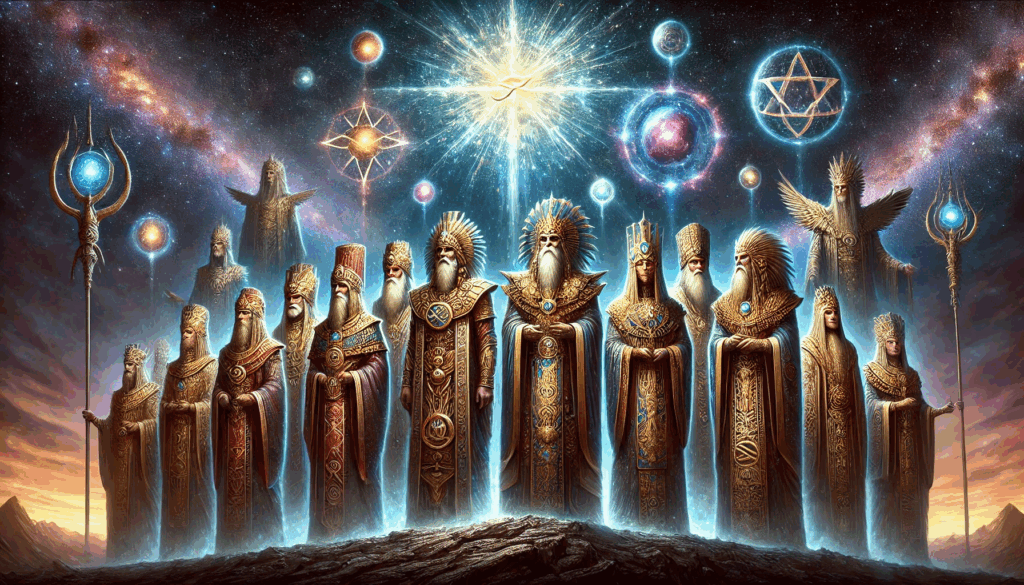
Clad in robes of light and armor of mystery, the Anunnaki gaze upward—not as creators, but as creations. Above them glows the unreachable Source, the Creator-of-All, watched but never claimed.
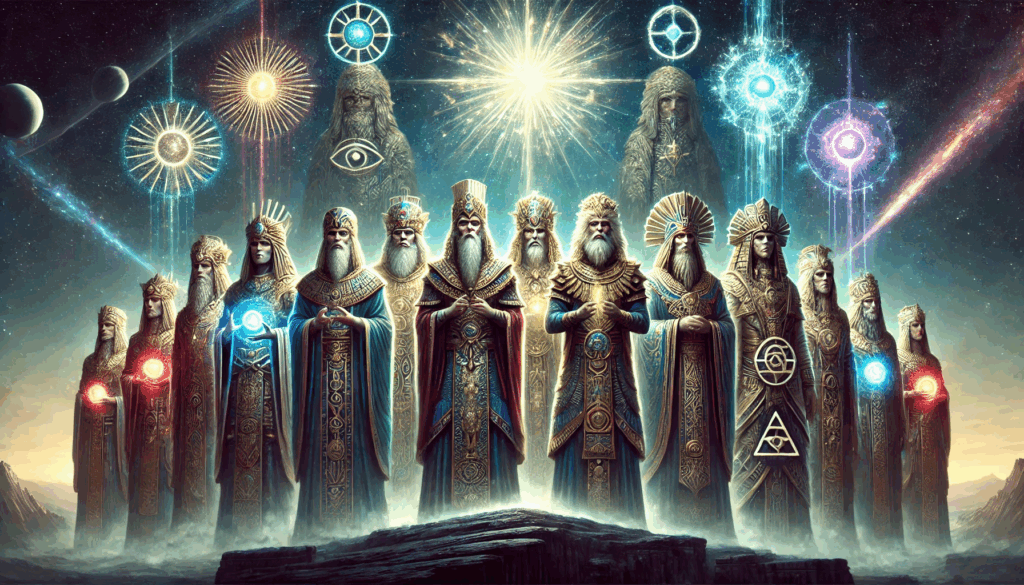
On a high plateau of stars, the Anunnaki stand in awe—not of themselves, but of the infinite. Pride and purpose flicker in their eyes, yet even they look upward to something vaster, something they cannot control.
We learn from many perceptual perspectives of Earth’s people. Celebrate the richness of our many heritages.
For the list of Anunnaki and their various overlapping names and histories, see ANUNNAKI WHO’S WHO at http://wp.me/p1TVCy-1PE
ANUNNAKI & ANCIENT ANTHROPOLOGY EVIDENCE, REFERENCES, TIMELINE & WHO’S WHO
Evidence https://wp.me/p1TVCy-1zg
References http://wp.me/p1TVCy-2cq
Timeline http://wp.me/p1TVCy-1Km
New Stuff: www.enkispeaks.com
PLEASE SHARE, REPOST & LIKE THIS POST.
Attachments area

The Tale of Clytemnestra: A Tale of Betrayal and Revenge #mythology #greekreligion #history #art
 | ReplyForwardAdd reaction |

