The Sleeping Prophet: A Vision of the Builder and the Mender
Chapter 1: The Builder’s Rise and the Prophet’s Warning
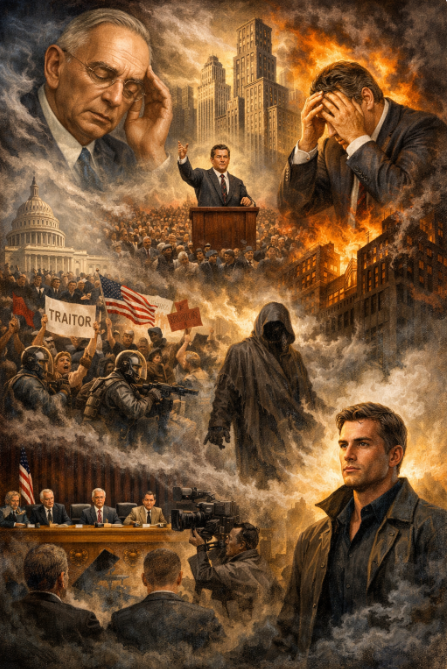
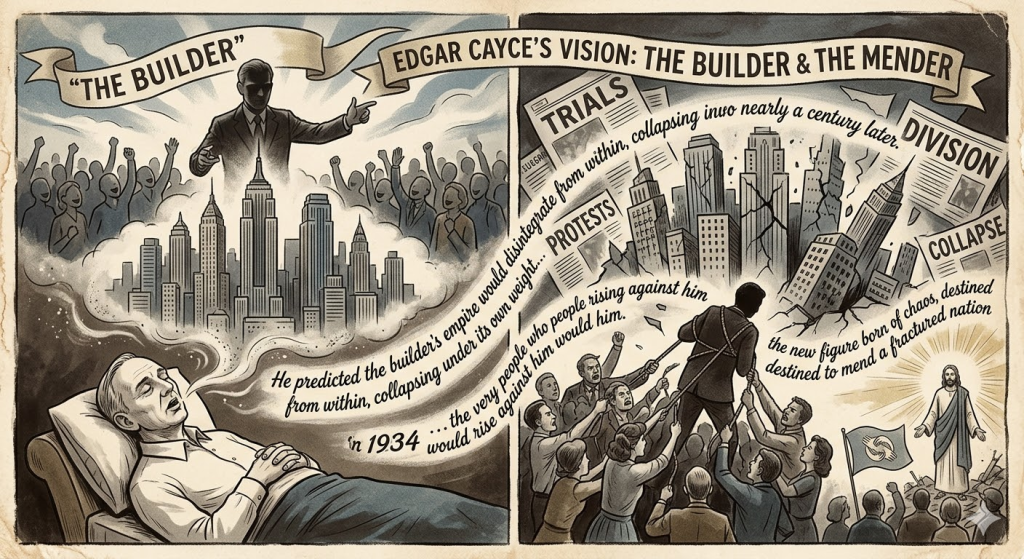
In 1934, the enigmatic “Sleeping Prophet” Edgar Cayce uttered words shrouded in mystery. He spoke of the emergence and eventual downfall of a formidable leader—a visionary constructing towering edifices. This man of extraordinary ambition would captivate millions, yet driven by forces beyond his own comprehension. Cayce forewarned that this influential builder would rise to the pinnacle of power through the collective voice and will of the people, rather than through warfare or inheritance.
However, Cayce issued a grave warning: the builder’s empire would disintegrate from within, collapsing under its own weight. Cayce murmured in his trance-like state that the very people who elevated him would rise against him. Nearly a century later, these prophecies reverberate through current headlines, public hearings, and societal divisions, transforming from mere warnings into reflections of present reality. Following this fall, Cayce foresaw a new figure born of chaos, destined to mend a fractured nation.
Chapter 2: The Builder of Towers
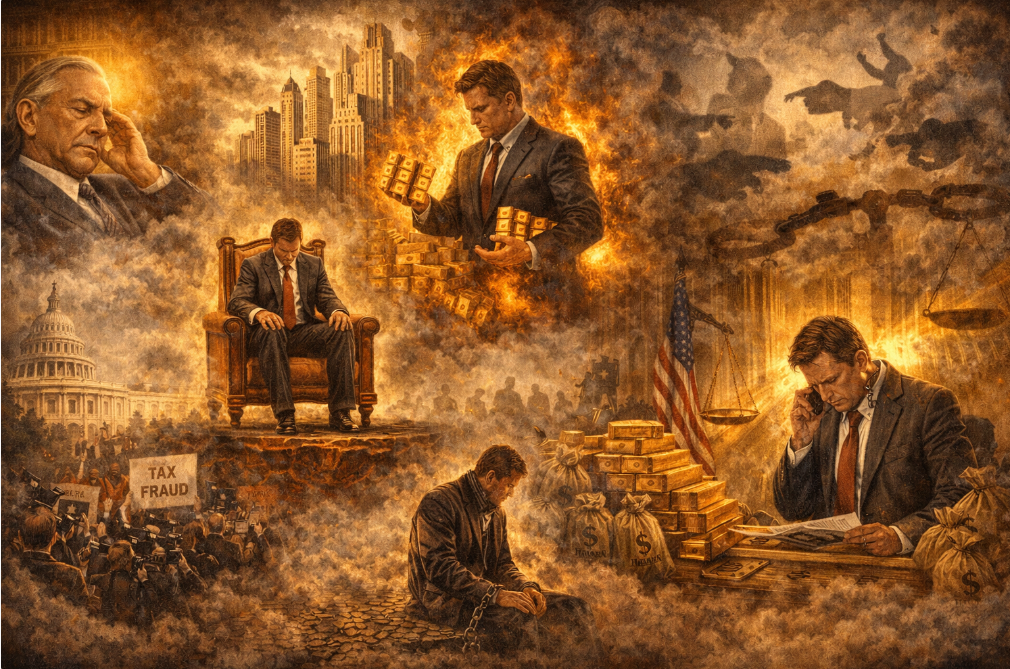
During the uncertainty of 1934, Cayce entered a profound trance in his Virginia Beach study. His devoted stenographer, Gladys Davis, recorded his shifting, otherworldly voice. Cayce perceived a “builder of towers,” a man surrounded by the glow of gold and the flicker of flame. While this man rises above his peers to build a legacy, his foundation is shifting, unstable sand.
Cayce predicted this builder would inspire both adoration and contempt, dividing hearts and becoming a topic of endless debate. When the reckoning arrives, his seat of power will tremble under the immense weight of truth as secrets emerge. Cayce described him not as a king, but as a merchant dealing in commerce and influence. Though claiming to speak for the overlooked, he loses sight of spiritual truths in pursuit of material success. Ultimately, the law of karma brings him to answer for his actions.
Chapter 3: The Mender Foretold
Cayce spoke of a house long divided where unity had been lost. He prophesied the emergence of “The Mender,” a leader whose purpose involves healing and restoration rather than dominance. These words remained hidden in unpublished notes until a researcher uncovered the prophecy’s relevance to the modern era.
The notes describe a woman destined to rise when the collective spirit is worn thin and the people long for guidance. Amidst widespread confusion and the unraveling of old allegiances, this extraordinary woman arrives. She acts not as a conqueror with empty promises, but as a healer working to repair the social fabric. While established leaders might ridicule her, the weary will find hope in her compassion and empathy.
Chapter 4: The Age of Reckoning
Cayce envisioned an “Age of Reckoning” marked by profound unrest. Before the new leader emerges, physical disturbances and a deep stirring of the human conscience shake the world. Structures built on pride fracture, and material wealth reduces to dust. Society becomes fragmented, with families tested by suspicion and anger.
He described a world where technology allows instant communication through “waves of energy,” yet humanity struggles to hear the inner voice of the spirit amidst the noise. Nature reflects this sorrow through overflowing rivers and storms. In this desperation, people seek charismatic figures, but Cayce warned that true wisdom resides in the shadows, waiting for those willing to search their own hearts.
Chapter 5: The Woman of Light
From the faintest whisper of hope, the “Woman of Light” emerges. Born into hardship rather than luxury, she develops resilience and compassion that shape her character. Her scars become a symbol of her wisdom. Having experienced loss and conflict firsthand, she develops deep empathy for all sides. Her words possess the power to calm turbulent storms and rekindle a sense of unity.
Cayce insisted this era marks the end of absolute rulers and the dawn of a new age of kinship and mutual respect. He urged seekers to look for this quiet, steady flame rather than thunderous displays of power.
Chapter 6: The Age of Renewal
The period following the Mender’s emergence is the “Age of Renewal.” As she steps into her role, the heavy shadows enveloping the world dissipate. Humanity undergoes a collective awakening, viewing neighbors with empathy rather than fear. This shift occurs as ignorance loses its grip, making it harder for destruction to take root.
Old institutions built on arrogance tremble, making way for new spaces dedicated to service and cooperation. Leadership is entrusted to those who earn community trust. The language of separation—”mine and yours”—dissolves into a spirit of “ours.” Barriers transform into bridges, and the natural world begins to heal as exploitation ceases.
Chapter 7: The Spirit Reawakens
Cayce envisioned celestial signs heralding a shift in human consciousness. In this age, individuals balance the material and spiritual, becoming channels for healing and inspiration. Science and faith reconcile, with researchers and spiritual seekers recognizing they seek the same truth.
The Mender serves as a humble vessel for this higher purpose. Her leadership, marked by selflessness, leaves a lasting legacy that illuminates the path for future generations. This seed of hope inspires empathy and solidarity, turning fractured nations toward a beacon of compassion and unity.
Chapter 8: The Eternal Lesson
Cayce’s vision reminds us that the essence of humanity is an eternal force. Through both the Builder and the Mender, a divine presence interlaces the end of one era with the beginning of another. The Age of Renewal begins in the quiet moment when a single heart chooses peace over pride. Every victory and defeat serves the evolution of the human soul. The stories reveal that destruction and creation, united by wisdom, provide the foundation for the spirit’s ongoing journey.
Chapter 9: The Crossroads of Now
At its core, Cayce’s message calls for an awakening from divisions—political, cultural, or personal. He foresaw a crossroads at which humanity must choose between continued conflict and a rebirth of the spirit. This moment of decision arrives in our own era. The responsibility for the future rests not with a single authority, but with every soul. We must decide whether to help rebuild the world with empathy or repeat the mistakes of pride and hubris.
Chapter 10: The Choice Is Ours
The Age of Renewal takes root in the stillness when a heart chooses compassion over resentment. This transformative moment unfolds in the present through our daily choices. Cayce’s forgotten prophecies suggest that the seeds of a better future are already planted, requiring only the courage of ordinary people to choose unity together.