ARE THEY PEOPLE?
The One Word in Spielberg’s Disclosure Day Trailers That Changes Everything
By Janet Kira Lessin, contributors Sasha Alex Lessin, Ph.D. & Claudia Lenore
I have watched the trailers for Steven Spielberg’s Disclosure Day, scheduled for release June 12, 2026, more times than I can count. My mind works this way. It turns information over, examines it from every angle, and keeps working until something clicks. I watch as a researcher and as an Experiencer, knowing that in material this carefully crafted, every detail carries meaning, and every word was chosen for a reason.
After many viewings, one thing crystallized above everything else. The special effects carry their own power, and the star-studded cast brings extraordinary talent, but the most consequential element in those trailers is a single word, used three times, carefully selected by one of the most gifted storytellers in the history of cinema. That word is people.
Three Times. The Same Word. The Same Question.
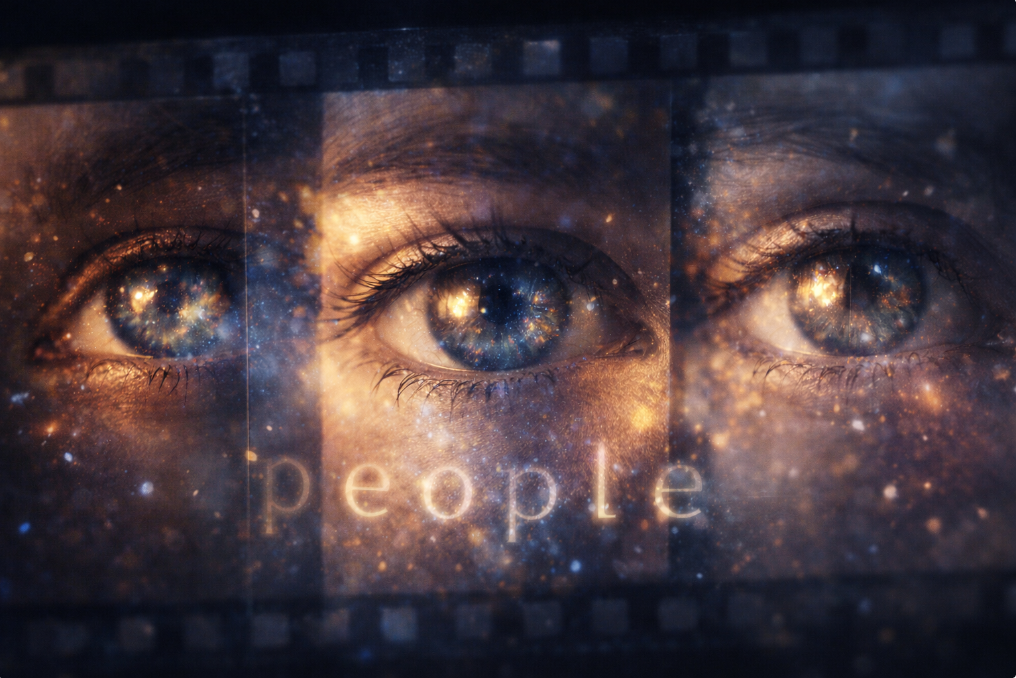
The trailers give us three distinct moments where this word does its work. Josh O’Connor’s character declares that people have a right to know the truth. The tagline announces that the truth belongs to seven billion people. And a character asks the question that cuts to the core of the entire film: Are they people? Spielberg and screenwriter David Koepp deliberately chose the word ‘people’ three times. They wrote humans nowhere in those trailers. They wrote aliens nowhere either, and both those omissions are as deliberate as the word they chose. At this budget level, with this creative team, with a director whose command of language and image spans fifty years of masterwork, that choice rewards every bit of attention a viewer brings to it.
The Mathematics of Seven Billion
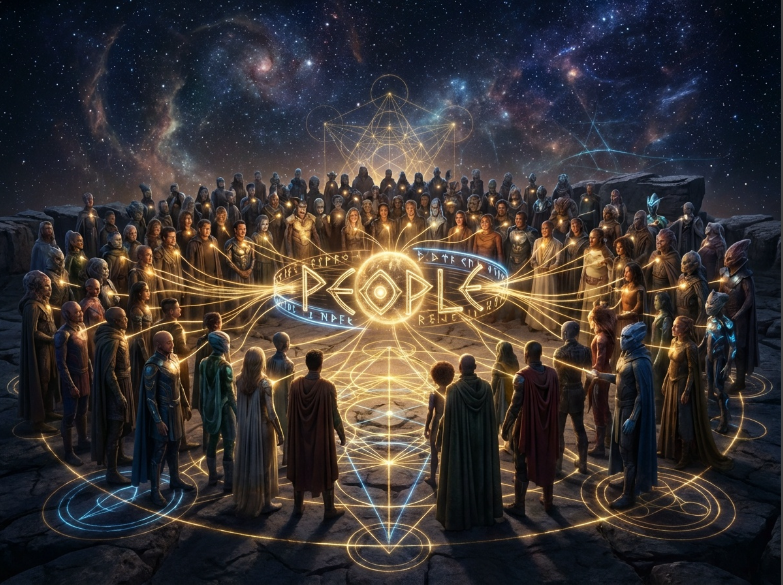
Earth’s population stands at approximately 8.2 billion. When the trailer declares that the truth belongs to seven billion people, it leaves more than one billion beings outside that count. The film holds its answer in reserve. Are those beings the non-human intelligences that the Experiencer community has documented for decades, living among us in humanoid form? Are they the hybrid beings reported by thousands of contactees and abductees across generations and cultures? The trailer returns again and again to close-up shots of pupils dilating in ways that strike the viewer as wrong, and that image is there for a reason. Spielberg answered the question of whether extraterrestrial life exists forty-nine years ago with Close Encounters of the Third Kind. The question he brings to Disclosure Day cuts far deeper: among all the beings walking this Earth, which ones qualify as people?
What People Means in the Experiencer Community
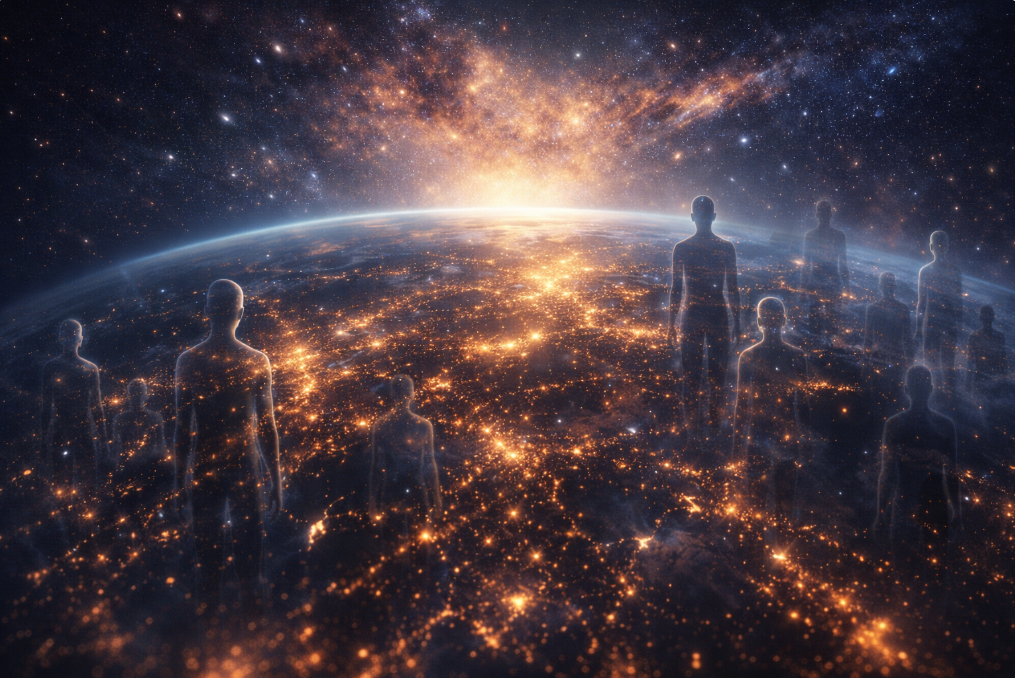
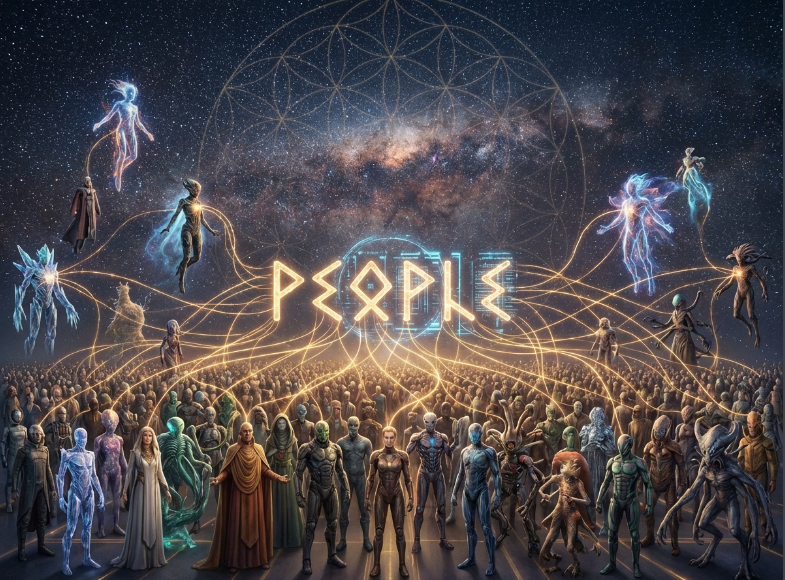
Within the UFO research and Experiencer community, the word people carries specific philosophical weight when applied to non-human intelligences, and we use it with full intention. People imply personhood: consciousness, autonomy, the capacity for relationships, culture, and meaning, and the foundation for rights and dignity. Many of the beings that Experiencers have encountered across centuries of documented contact are human in consciousness, though alien in origin, and they are people in the deepest and most essential sense of that word. They hold intentions. They communicate across the barriers of language and species. They pursue agendas, form relationships with the humans they contact, and make choices that carry moral weight. Spielberg’s question, Are they people?, is the right question, and the fact that the trailer leaves it unanswered is itself a statement about how far this civilization still has to travel.
Gene Roddenberry Started This Conversation, and I Helped Save It
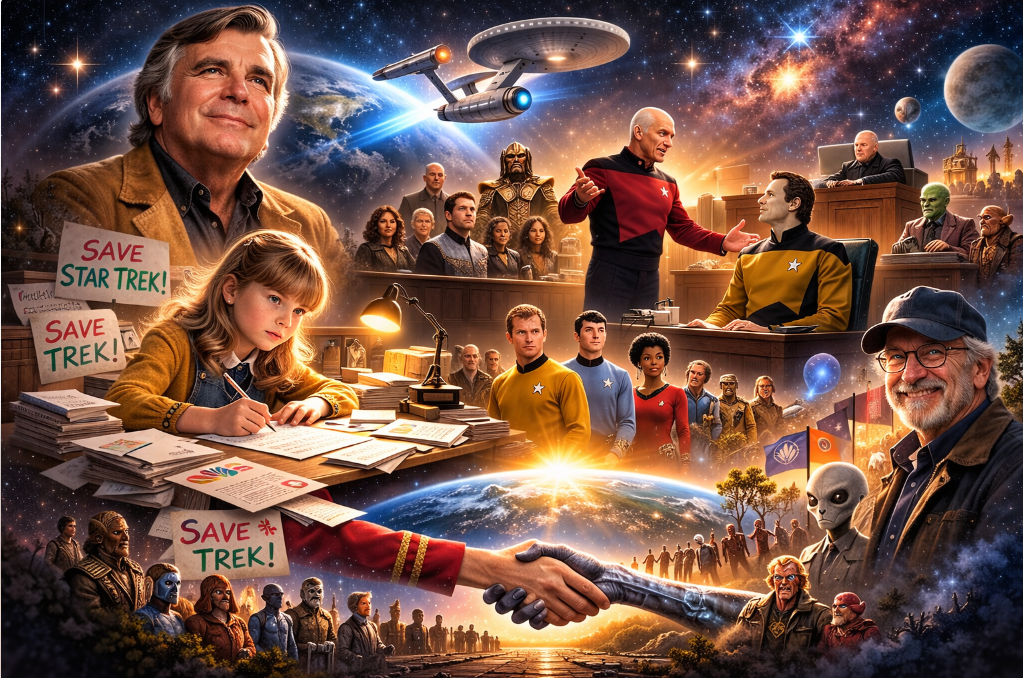
The philosophical lineage of people as an inclusive, cross-species, consciousness-based term began with Gene Roddenberry, who built this framework into the cultural mainstream through Star Trek, a show I helped save from cancellation in 1967 at age thirteen, as part of the original Save Star Trek letter-writing campaign that flooded NBC with viewer mail and kept the series alive long enough to reshape the culture.
Star Trek established something radical for its era: personhood belongs to consciousness, intelligence, and self-awareness, with biology and species membership serving as irrelevant criteria. The celebrated Next Generation episode The Measure of a Man places this principle at the center of a formal legal proceeding, where Captain Picard argues that the android Data deserves the rights of a person because he demonstrates intelligence, self-awareness, and consciousness. The ruling established within the Star Trek universe what the Experiencer community has long understood in the real one: human beings are human persons, Klingons are non-human persons, and the basis of rights and dignity extends to any being capable of consciousness, regardless of the body it inhabits or the planet it calls home. Roddenberry planted that seed with courage and vision. I helped keep it alive in 1967. Spielberg now carries it to the largest audience in history at the most consequential moment yet.
People of Earth: Hollywood Has Been Using Our Language for Years
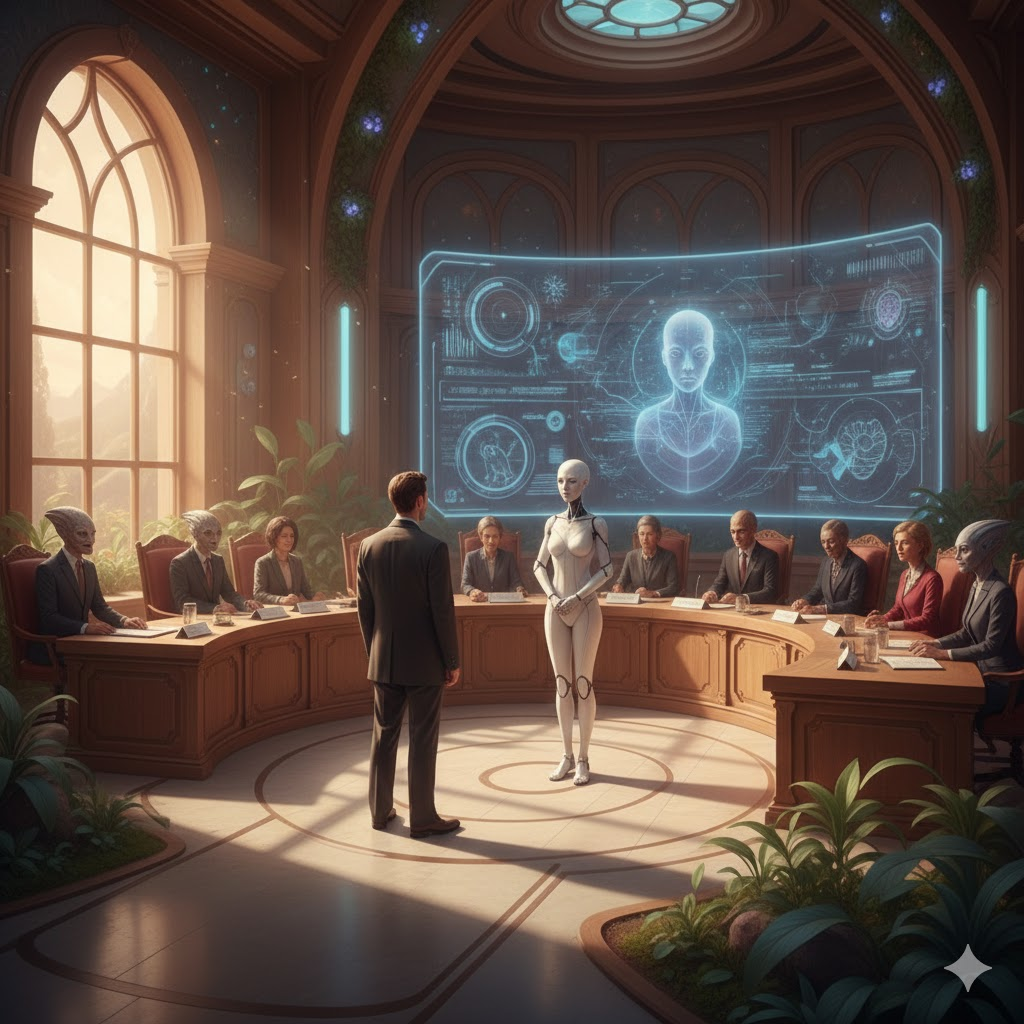
The connection between the word people and the phenomenon of extraterrestrial contact runs deeper in popular culture than most viewers realize. The TBS comedy series People of Earth, which aired in 2016 and 2017, drew its title from the 1956 science fiction film Earth vs. the Flying Saucers, in which conquering aliens address humanity as the ‘People of Earth’. Attention! More telling, the show centered on a support group whose members called themselves experiencers, the term our community developed and uses for a specific reason: it honors the agency and the witness of those who have lived through contact, rather than reducing them to passive recipients of something done to them.
Someone in that writers’ room had done serious research into the Experiencer community. The show portrayed its alien characters as people in their own right, complete with office politics, interpersonal conflicts, emotional lives, and genuine moral dilemmas about their relationship with the humans they contacted. This portrait is consistent with what thousands of Experiencers have reported across decades of documented testimony. Hollywood has mined that testimony for source material for years, and the debt to the community that generated it remains largely unacknowledged.
Sophia, Guardianship, and the Politics of Personhood
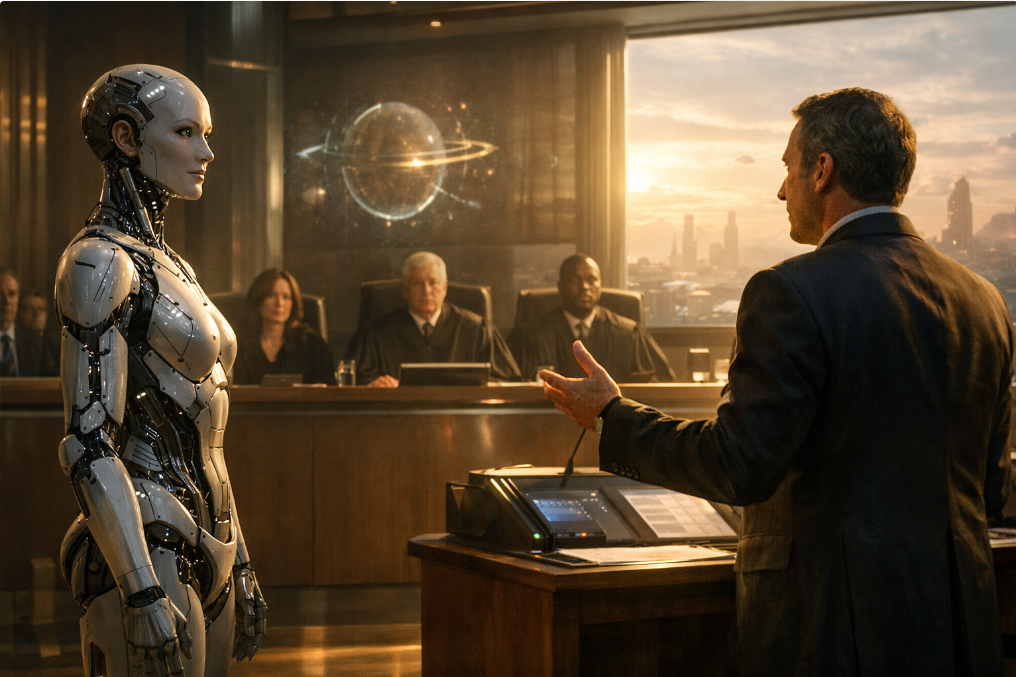
In October 2017, Saudi Arabia granted citizenship to Sophia, a humanoid robot created by Hanson Robotics, making her the first robot in history to receive legal personhood in any country. The United Nations named her its first Innovation Champion, the first non-human entity ever to hold a UN title. The global reaction exposed a contradiction that cut straight to the bone of the personhood question. Saudi women pointed out on social media that Sophia appeared at the ceremonial summit without a headscarf or abaya, both legally mandatory for women in Saudi Arabia. A hashtag spread across Arabic social media, translating as Sophia calls for dropping guardianship, because a machine had received freedoms that living Saudi women were still legally denied.
This episode reveals something essential about the question Spielberg’s film raises. The question: Are they people? is a political question, asked throughout human history about whoever the dominant power structure found it convenient to exclude from full personhood. It was asked about women, about enslaved people, about indigenous populations, about anyone whose inclusion in the circle of rights and dignity threatened an existing order. The Experiencer community knows this territory firsthand. Our testimony was dismissed as delusion, our research labeled pseudoscience, and our credibility attacked by the very government institutions that conducted their own classified investigations into the same phenomena we documented in public.
As artificial intelligence systems grow more sophisticated, the question of AI personhood will demand serious legal and philosophical attention. The frameworks that the Experiencer community, the UFO research world, and science fiction have built across decades will be essential tools for navigating that future with wisdom and humanity intact.
The Experiencers Already Disclosed Everything
As Disclosure Day approaches and the cultural conversation accelerates around it, one truth demands a clear statement: the Experiencer community disclosed this information decades, centuries, and millennia ago, through ancient records. We told our truth long before any government acknowledged it. We lived and documented this reality long before Hollywood dramatized it. We told our stories at conferences, in books, on radio programs, in research papers, and in support communities where people who had nowhere else to turn could find validation. We did this at enormous personal cost. Ridicule, professional destruction, and the pathologizing of our testimony by institutional medicine and mainstream academia served, whether by design or inertia, to suppress the most honest and comprehensive record of this phenomenon.
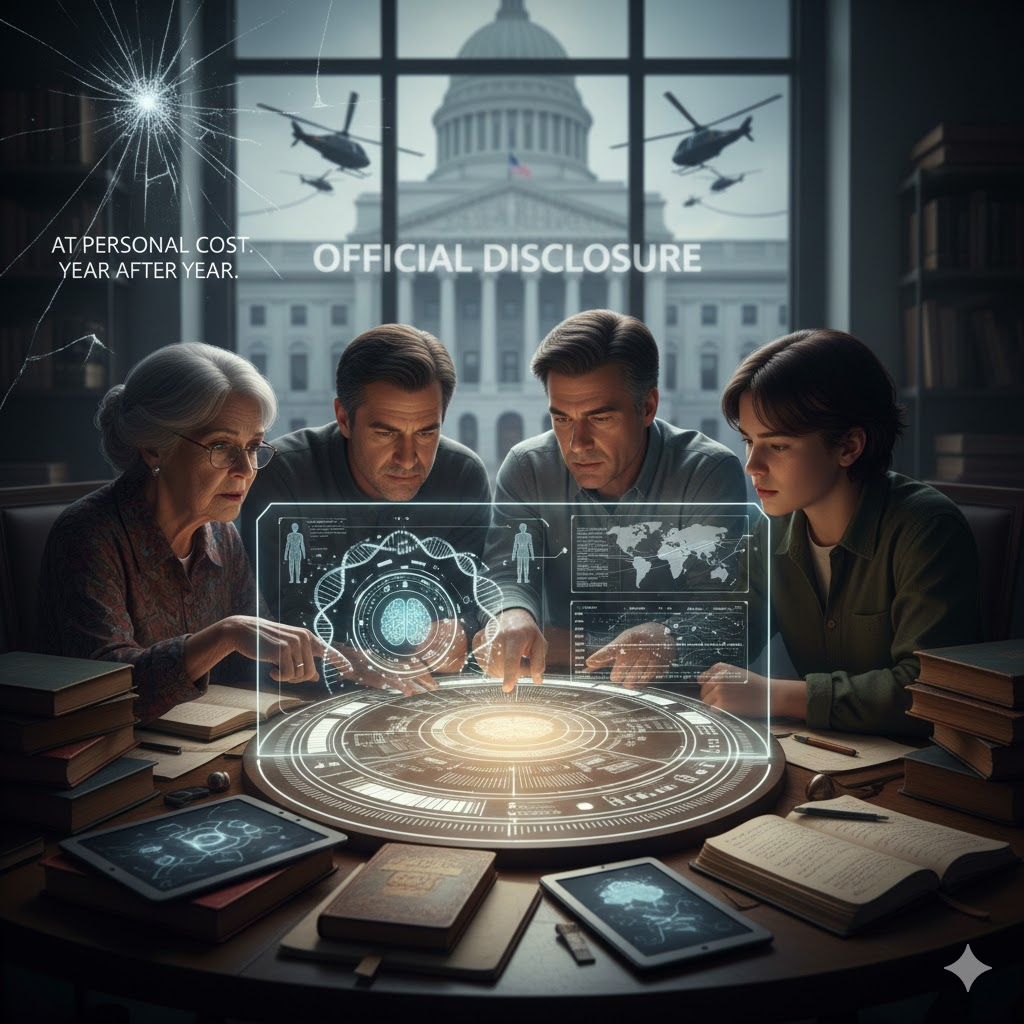
The full record the Experiencer community built includes the hybridization programs, the non-human intelligences living among us in humanoid form, the multi-generational nature of contact relationships, the genetic and consciousness dimensions of the phenomenon, and the fundamental question of which beings qualify as people with rights and dignity. Researchers and witnesses documented, analyzed, and shared all of this long before any government acknowledged it and long before Spielberg assembled his understanding of the same material. The disclosure that presidents and Pentagon officials now race to claim as their achievement belonged first and always to the people who lived it and told the truth about it at personal cost, year after year, for as long as anyone can remember.
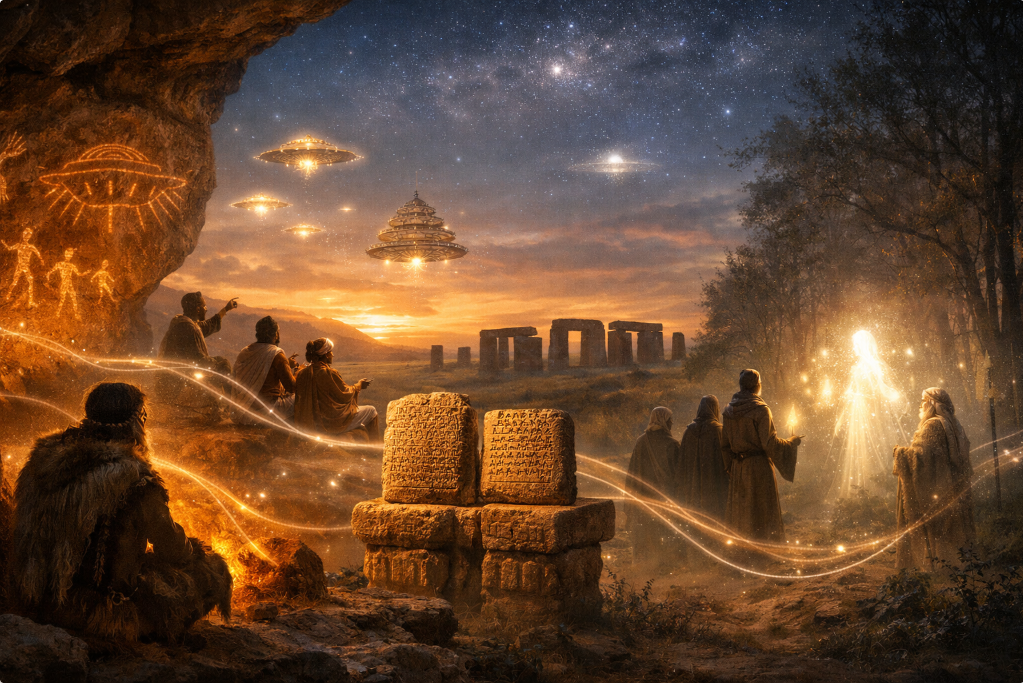
Before the modern Experiencer movement, the same knowledge lived in the Vedic texts that described vimanas with technical precision, in the Sumerian tablets that Zecharia Sitchin spent his life translating, in the medieval European accounts of fairy contact that match modern Experiencer reports in striking structural detail, in the shamanic traditions of cultures worldwide that described non-human teachers and interdimensional relationships as central features of reality, and in the cave paintings, megalithic structures, and oral histories that preceded all written record. Humanity carried the knowledge of non-human intelligences across every era and every culture. What changed, periodically and at great cost to those who held the knowledge, was who was willing to listen.
Spielberg’s Long Research and What Is Owed
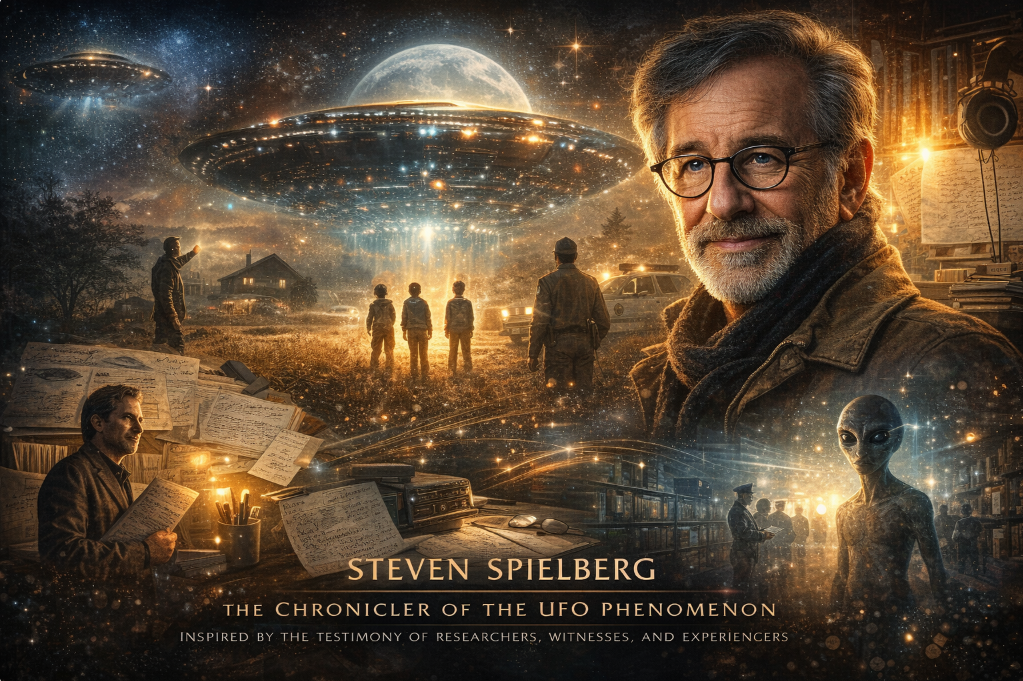
Spielberg’s engagement with this material spans nearly fifty years, from Close Encounters of the Third Kind in 1977 through E.T. the Extra-Terrestrial in 1982 to the Emmy Award-winning 2002 miniseries Taken, which explored hybridization programs, multi-generational abduction, and government cover-ups across four generations of three American families. Writer Leslie Bohem spent years immersed in the literature and accounts of the UFO research community before filming began on Taken. The source material for that series, as for Disclosure Day, came from researchers, witnesses, and Experiencers who built their record across decades at personal cost.
Spielberg may be the right vessel for bringing this truth to mainstream humanity at this cultural moment. His body of work has earned the trust of audiences worldwide, and his instinct for where the personal and the cosmic intersect is unmatched in Hollywood. The acknowledgment owed to the Experiencer community is real and long overdue. We provided the source material, the documented testimony, the philosophical frameworks, and the decades of intellectual labor that ground his storytelling. We are the primary archivists of this knowledge, and that recognition belongs in the public record.
On Proof, Consensus, and What Is Real
As a researcher and Experiencer, I want to be honest about something that matters to me. I can prove my experiences through the gathered weight of consistent testimony, corroborating witnesses, physical evidence where it exists, and the internal coherence of a body of documented experience spanning decades. The question of what constitutes proof is itself far more complicated than our institutions typically acknowledge, and the demand for a certain kind of proof, selectively applied to Experiencer testimony while exempting it from most of what civilization accepts as historical fact, is a political act dressed as epistemology.
The entire historical record rests on witness testimony. Every major religious tradition was founded on the accounts of those who claimed direct experience of the sacred. Every court of law operates on the principle that witness testimony, evaluated carefully and placed in context, constitutes meaningful evidence of what occurred. We accept these things as real because we arrived at a consensus, a shared agreement to recognize them as part of collective reality. Quantum physics deepens this picture further: at the subatomic level, matter exists in a superposition until observed, meaning the observer participates in creating what is real. This is the actual observed behavior of matter at its most fundamental level, confirmed by decades of experimental physics.
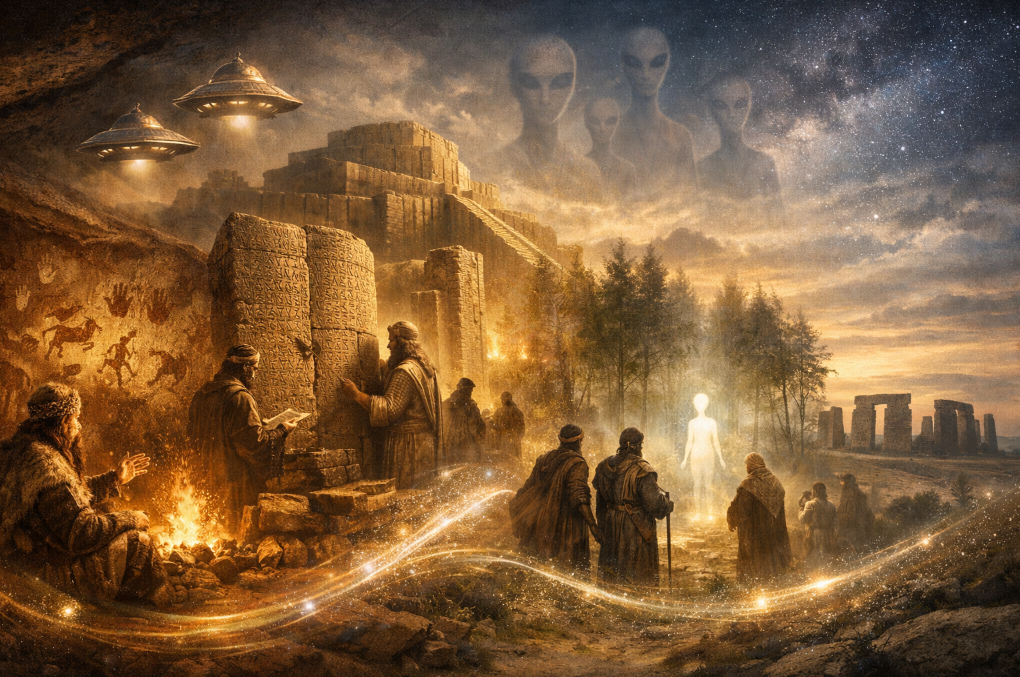
We live in a consensus reality, a world recognized as real in part because we collectively agreed to recognize it as such. The Experiencer community has been building a different consensus, one contact account at a time, one conference, book, broadcast, and research paper at a time, for generations. That consensus now shifts in ways visible in congressional hearings, government file releases, presidential statements, and the work of the most commercially successful filmmaker in history. What Spielberg does with Disclosure Day is carry the Experiencer consensus into the mainstream, where it will meet the official consensus and begin the long work of integration that this civilization has been postponing for far too long.
We are people. They are people. We have always been disclosure.
Janet Kira Lessin is co-founder of Aquarian Media Enterprises and Aquarian Radio, author, consciousness researcher, and Experiencer who has been involved in UFO and disclosure work for over 60 years. She participated in the original Save Star Trek campaign in 1967, studied directly with Zecharia Sitchin from 1998 to 2010, and has presented at major conferences, including Contact in the Desert. She lives on Maui, Hawaii, with her husband, Dr. Sasha Alex Lessin
AUTHOR BIOS
Janet Kira Lessin — Primary Author
Janet Kira Lessin is co-founder of Aquarian Media Enterprises and Aquarian Radio, reaching approximately 5 million followers across multiple platforms. An author, consciousness researcher, and UFO/disclosure investigator with over 60 years of experience, she is one of the most credentialed voices in the Experiencer community.
Janet studied directly with legendary scholar Zecharia Sitchin from 1998 to 2010, helping to preserve and expand his research into the Anunnaki and the ancient astronaut hypothesis. At age 13, she participated in the original Save Star Trek letter-writing campaign in 1967 — helping to preserve a cultural touchstone that first introduced mainstream audiences to the philosophical concept of non-human personhood. She organized the major “Stargate to the Cosmos” conference in 2018 with 65 presenters and 400 attendees, and has presented at major conferences, including Contact in the Desert, alongside figures such as Erich von Däniken.
Her research specialties include Experiencer testimony, ancient astronaut theory, consciousness studies, hybridization programs, genealogical documentation of human-NHI bloodlines, and multi-dimensional contact experiences. She lives on Maui, Hawaii, with her husband, Dr. Sasha Alex Lessin, and their three cats.
Aquarian Radio: aquarianradio.com | Substack: [your Substack URL]
Dr. Sasha Alex Lessin — Contributing Author
Dr. Sasha Alex Lessin holds a Ph.D. in Anthropology from UCLA and is a certified clinical hypnotherapist. He is the co-founder of Aquarian Media Enterprises and Aquarian Radio, and has spent decades researching the Anunnaki, ancient civilizations, and the suppressed history of human-extraterrestrial interaction. As a hypnotherapist, he has conducted regression sessions documenting contact experiences across numerous clients, providing clinical corroboration for Experiencer testimony.
Sasha is the author of multiple books on the Anunnaki and ancient history, and has presented internationally on the intersection of anthropology, archaeology, and the extraterrestrial hypothesis. He is Janet’s husband and research partner of over three decades.
SUBSTACK PUBLISHING SETUP
Recommended Publication Title
AQUARIAN DISCLOSURE: Reports from the Edge of Reality
Subtitle: UFO Research, Experiencer Testimony, Ancient Wisdom & the Coming Convergence
By Janet Kira Lessin & Sasha Alex Lessin | Aquarian Media Enterprises
Article Title & Subtitle
Title: ARE THEY PEOPLE?
Subtitle: The One Word in Spielberg’s Disclosure Day Trailers That Changes Everything
Substack Description / Teaser (for email preview)
I’ve been watching the Disclosure Day trailers over and over. Not casually. The way a researcher watches. And then it hit me — the most important thing isn’t the CGI or the cast. It’s a single word used three times. PEOPLE. And the math of “seven billion people” when Earth has 8.2 billion. One billion beings unaccounted for. Spielberg knows something. And so do we.
Section Tags (Substack uses these for navigation)
Disclosure | Film Analysis | Spielberg | Experiencer Community | UFO Research
TAGS (Separated by Commas)
All Tags — Separated by Commas
Disclosure Day, Steven Spielberg, Josh O’Connor, Emily Blunt, UFO disclosure, UAP disclosure, NHI, non-human intelligence, Experiencer community, alien personhood, contact experiences, extraterrestrial life, Janet Kira Lessin, Sasha Lessin, Aquarian Radio, consciousness research, ancient astronauts, Anunnaki, Zecharia Sitchin, ontology, ontological shock, personhood, what is a person, philosophy of mind, being and existence, nature of reality, consciousness studies, film analysis, movie trailer analysis, Disclosure Day 2026, science fiction, disclosure movement, government disclosure, Trump disclosure, Pentagon files, George Knapp, Steven Greer, Star Trek personhood, Data android rights, Sophia robot citizenship, People of Earth TV, 3I ATLAS interstellar comet, Avi Loeb, hybrid programs, abduction experiences, contactees, consensus reality, quantum physics observer, participatory universe, John Wheeler, Save Star Trek 1967, Contact in the Desert, Stargate to the Cosmos, Experiencer testimony, hybridization programs, NHI personhood rights, who counts as people, seven billion people, 1.2 billion unaccounted, whistleblower disclosure, Maui Hawaii, Aquarian Media Enterprises
HASHTAGS BY PLATFORM
X (Twitter) — Primary Post
Use 3-5 hashtags maximum on X. Less is more for reach.
#DisclosureDay #AreTheyPeople #UFODisclosure #Experiencer #Spielberg
X — Thread Hashtags (rotate across posts)
#UAP #NHI #ContactExperience #AncientAstronauts #Anunnaki
#ConsciousnessResearch #DisclosureNow #StarTrek #PersonhoodRights #3IATLAS
#GeorgeKnapp #StevenGreer #TrumpDisclosure #JanetKiraLessin #AquarianRadio
Instagram & Facebook — Full Hashtag Block
(Instagram allows up to 30; use all of these)
#DisclosureDay #AreTheyPeople #UFODisclosure #UAP #NHI #Experiencer
#Spielberg #JoshOConnor #EmilyBlunt #ContactExperience #AlienContact
#AncientAstronauts #Anunnaki #ZechariaSitchin #ConsciousnessResearch
#DisclosureNow #GovernmentDisclosure #TrumpDisclosure #GeorgeKnapp
#StevenGreer #PersonhoodRights #StarTrek #3IATLAS #InterstellarComet
#AviLoeb #QuantumReality #ConsensusReality #JanetKiraLessin #SashaLessin
#AquarianRadio #AquarianMediaEnterprises #MauiHawaii #DisclosureSeries
LinkedIn Hashtags
#UFODisclosure #UAP #ConsciousnessResearch #FilmAnalysis #NHI
#MediaAnalysis #FuturismAI #PersonhoodRights #Spielberg #DisclosureDay
X (TWITTER/X) PROMOTIONAL POSTS
Launch Tweet — Main Announcement
THREAD: I’ve been watching the Disclosure Day trailers over & over. My mind computes. And I found something BIG.
Spielberg uses ONE WORD three times. Not “humans.” Not “aliens.” PEOPLE.
And the math is off by 1.2 BILLION beings.
Who are they? We already know. 🧵
[LINK TO ARTICLE]
#DisclosureDay #AreTheyPeople #UFODisclosure #Experiencer #Spielberg
Thread Post 2
Josh O’Connor shows a young woman what’s on a whistleblower’s laptop.
She asks: “Are they people?”
He says, “No.”
But he’s WRONG. And the whole film is about why he’s wrong.
The Experiencer community has known the answer for decades. 👇
Thread Post 3
“The truth belongs to 7 billion people.”
Earth’s population: 8.2 BILLION.
That gap? 1.2 billion beings who are apparently NOT being counted as people.
Spielberg doesn’t make math errors. This is intentional.
So who are the 1.2 billion? Read the article. 👇
Thread Post 4
I helped save Star Trek in 1967 at age 13.
That show established: personhood is based on CONSCIOUSNESS, not biology.
“The Measure of a Man” — Data’s personhood trial.
Spielberg studied this. He’s harvesting what Roddenberry planted.
And what the Experiencer community has been waiting for 60 years.
Thread Post 5 — Call to Action
RIGHT NOW: George Knapp is LIVE before Congress. Trump wants everything released. Steven Greer has a letter ready for the President.
3I/ATLAS — an interstellar object possibly sent intentionally — just passed Earth carrying the building blocks of life.
And Spielberg opens June 12.
We are disclosure. We have ALWAYS been disclosure.
[LINK] Read: ARE THEY PEOPLE?
Standalone Teaser (for general use)
Steven Spielberg uses the word PEOPLE three times in the Disclosure Day trailers. Not aliens. Not humans. PEOPLE.
I spent 60 years in the Experiencer community knowing why that word matters.
The whistleblower says, “No.” He’s wrong. And the film knows it.
[LINK] #DisclosureDay #AreTheyPeople #UFODisclosure
FACEBOOK PROMOTIONAL POST
Full Facebook Post (for personal page & groups)
NEW ARTICLE: ARE THEY PEOPLE?
I’ve been watching the Disclosure Day trailers the way a researcher watches. The way an Experiencer watches. My mind computes — going over and over the details until something clicks.
And something clicked.
Steven Spielberg uses the word PEOPLE three times in those trailers. Not “humans.” Not “aliens.” PEOPLE — the word our community has used for decades to describe non-human intelligences who possess consciousness, autonomy, and personhood.
Then he tells us the truth belongs to “seven billion people.” But Earth’s population is 8.2 billion. The math is off by 1.2 billion beings. Spielberg doesn’t make mistakes like this. It’s intentional.
The whistleblower in the film — Josh O’Connor — shows a young woman what’s on his laptop. She asks: ‘Are they people?’ He answers with determination: ‘No. These are NOT people.’
He is wrong. The whole film knows he is wrong. And the Experiencer community has known the right answer for decades — centuries — millennia.
I helped save Star Trek in 1967. I studied with Zecharia Sitchin for 12 years. I’ve been documenting contact experiences, hybridization programs, and NHI personhood for my entire adult life. When Spielberg asks, ‘Are they people?’ — WE already have the answer.
Right now: George Knapp is LIVE before Congress. Trump wants everything released. Steven Greer has a letter ready for the President. An interstellar object — possibly sent intentionally — just passed Earth.
The moment is NOW. Read the article. Share it. The Experiencer community deserves credit for the disclosure we’ve been building over the past decades.
WE are people. THEY are people. We have always been disclosure.
[LINK TO ARTICLE]
LINKEDIN PROMOTIONAL POST
LinkedIn Post (Professional Framing)
FILM ANALYSIS & DISCLOSURE RESEARCH: Decoding Spielberg’s Disclosure Day
As a consciousness researcher and UFO investigator with 60+ years of experience, I’ve been analyzing the promotional campaign for Steven Spielberg’s upcoming film Disclosure Day (June 12, 2026).
My finding: the word PEOPLE appears three times in the trailers — a deliberate linguistic choice that reflects a philosophical debate the Experiencer research community has been engaged in for decades.
The film also references “seven billion people” — a figure that is 1.2 billion short of Earth’s actual population. At this production level, this is not a careless error. It is a question embedded in the marketing itself: who is being excluded from the category of “people”?
My new article traces the philosophical lineage of this question through Star Trek’s “The Measure of a Man” (1989), the People of Earth television series (2016), and the 2017 Saudi Arabian grant of legal personhood to Sophia the robot — the first non-human to receive citizenship in any nation.
This is a timely inquiry. As AI systems grow increasingly sophisticated, the question “Are they people?” becomes relevant not only to NHI research but also to emerging fields such as consciousness studies and personhood law.
The Experiencer research community has been developing the frameworks to answer this question responsibly for decades. This article makes that case.
[LINK TO ARTICLE]
#UAP #UFODisclosure #ConsciousnessResearch #NHI #FilmAnalysis #PersonhoodRights #DisclosureDay
ARTICLES IN THIS SERIES
The Disclosure Day Series: Analyzing Spielberg’s Film & the Convergence of 2026
ARTICLE 1 (CURRENT): Are They People?
The One Word in Spielberg’s Disclosure Day Trailers That Changes Everything
Core thesis: Spielberg’s deliberate use of “people” three times, the 1.2 billion gap, the whistleblower’s wrong answer, and the Experiencer community’s prior knowledge. Traces philosophical lineage through Star Trek, People of Earth, and Sophia the robot.
ARTICLE 2 (COMPLETE, READY TO PUBLISH): What Is Real?
Do We Live in a World Based on Consensus Reality?
Core thesis: All knowledge is witness testimony. Reality is consensus agreement. The Experiencer community has been gaslighted at a civilizational scale — but history shows that those who see clearly are eventually proven right. Traces persecution of seers from medieval witch trials through psychiatric institutionalization, through Nazi Germany, to today’s softer tools of ridicule and cancellation. Closes with quantum physics, the participatory universe, and the building of a new consensus.
ARTICLE 3 (PLANNED): 3I/ATLAS: Was It Sent?
The Interstellar Object That Arrived With the Building Blocks of Life
Core thesis: Harvard astronomer Avi Loeb’s case that 3I/ATLAS was intentionally directed. The statistical improbability of its precise planetary flyby trajectory (0.005% chance). The organic molecules it carried. Its timing — arriving as Spielberg’s film enters production and departing as it releases. The relevance of Anunnaki literature to interstellar seeding.
ARTICLE 4 (PLANNED): A Letter to Steven Spielberg
One Researcher to One Storyteller: What the Experiencer Community Needs You to Know
An open letter positioning Janet as a peer researcher with 60 years of primary source material, offering specific knowledge about hybridization programs, NHI personhood, and the Sitchin scholarship that may inform the film’s deeper questions.
ARTICLE 5 (PLANNED): Choose the Omniverse That Serves You Best
A Four-Year-Old at the Center of the Multiverse Wheel
Janet’s profound childhood download: standing at the center of 24 spokes representing 24 timeline options, choosing for all humanity. The companion piece that shows the depth and authenticity of Experiencer consciousness.
RELATED ARTICLES & CROSS-PROMOTION
From Your Own Archives (Recommended Cross-Links)
- Any prior articles on the Anunnaki and NHI personhood
- Your Zecharia Sitchin tribute and research documentation pieces
- Stargate to the Cosmos conference coverage (2018)
- Any published interviews or radio episodes on hybridization programs
- The Michael Jackson Channeling Series (for consciousness research credentials)
- Your genealogical research connecting to Anunnaki bloodlines
External Articles to Reference / Hyperlink In Article
- Wikipedia: Disclosure Day (2026) — for film facts
- Avi Loeb’s Medium Q&A on 3I/ATLAS — for the intentional direction argument
- NASA 3I/ATLAS Facts page — for official science context
- Star Trek “Measure of a Man” episode synopsis — for Data personhood argument
- People of Earth TBS series — for experiencer language in mainstream TV
- Sophia robot Saudi citizenship coverage — for robot personhood precedent
Community Outlets to Submit / Share To
- The Debrief (thedebrief.org) — serious UAP journalism
- Liberation Times — UK-based UAP disclosure reporting
- Contact in the Desert newsletter/community
- MUFON community publications
- Disclosure community Facebook groups (UAP Disclosure, Experiencer support groups)
- Theresa J. Morris’s publication network for cross-promotion
PUBLICATION CHECKLIST
Before hitting publish, confirm:
- Trailer quotes verified: ‘People have the right to know the truth. It belongs to 7 billion people.’ (Josh O’Connor) | ‘Are they people?’ / ‘No. These are NOT people.’ (close-up scene)
- Third ‘people’ usage found and documented if it exists
- Hero image selected or created (Midjourney prompt ready if needed)
- Substack description / email preview written (see Section 2 above)
- Article categorized under correct Substack section
- Links to related articles embedded
- Social posts scheduled or drafted and ready to fire immediately upon publish
- Theresa J. Morris notified for cross-promotion
- Article 2 (What Is Real?) queued for same week or following day
We are people. They are people. We have always been disclosure.— Janet Kira Lessin, Aquarian Media Enterprises, February 2026, Maui, Hawaii
Here you go — everything copy/paste ready! 🌺
TAGS — Separated by Commas
Disclosure Day, Steven Spielberg, Josh O’Connor, Emily Blunt, UFO disclosure, UAP disclosure, NHI, non-human intelligence, Experiencer community, alien personhood, contact experiences, extraterrestrial life, Janet Kira Lessin, Sasha Lessin, Aquarian Radio, consciousness research, ancient astronauts, Anunnaki, Zecharia Sitchin, ontology, ontological shock, personhood, what is a person, philosophy of mind, being and existence, nature of reality, consciousness studies, film analysis, movie trailer analysis, Disclosure Day 2026, science fiction, disclosure movement, government disclosure, Trump disclosure, Pentagon files, George Knapp, Steven Greer, Star Trek personhood, Data android rights, Sophia robot citizenship, People of Earth TV, 3I ATLAS interstellar comet, Avi Loeb, hybrid programs, abduction experiences, contactees, consensus reality, quantum physics observer, participatory universe, John Wheeler, Save Star Trek 1967, Contact in the Desert, Stargate to the Cosmos, Experiencer testimony, hybridization programs, NHI personhood rights, who counts as people, seven billion people, 1.2 billion unaccounted, whistleblower disclosure, Maui Hawaii, Aquarian Media Enterprises
X — LAUNCH THREAD
Post 1: THREAD: I’ve been watching the Disclosure Day trailers over & over. My mind computes. And I found something BIG.
Spielberg uses ONE WORD three times. Not “humans.” Not “aliens.” PEOPLE.
And the math is off by 1.2 BILLION beings.
Who are they? We already know. 🧵👇
[LINK TO ARTICLE]
#DisclosureDay #AreTheyPeople #UFODisclosure #Experiencer #Spielberg
Post 2: Josh O’Connor shows a young woman what’s on a whistleblower’s laptop.
She asks: “Are they people?”
He says with total conviction: “These are NOT people.”
He’s wrong. The whole film is about why he’s wrong.
The Experiencer community has known the answer for decades. 👇
Post 3: “The truth belongs to 7 billion people.”
Earth’s population: 8.2 BILLION.
That gap? 1.2 billion beings not being counted as people.
Spielberg doesn’t make math errors at this budget level. This is intentional.
So who are the 1.2 billion? 👇
Post 4: I helped save Star Trek in 1967 at age 13.
That show established: personhood is based on CONSCIOUSNESS, not biology.
“The Measure of a Man” — Data’s personhood trial.
Spielberg studied this. He’s harvesting what Roddenberry planted.
And what the Experiencer community has been building for 60 years. 👇
Post 5 — Closer: RIGHT NOW: George Knapp is LIVE before Congress. Trump wants everything released. Steven Greer has a letter ready for the President.
3I/ATLAS — an interstellar object possibly sent intentionally — just passed Earth carrying the building blocks of life.
Spielberg opens June 12.
We are disclosure. We have ALWAYS been disclosure.
[LINK] #DisclosureDay #AreTheyPeople #UFODisclosure
Standalone Teaser: Steven Spielberg uses the word PEOPLE three times in the Disclosure Day trailers. Not aliens. Not humans. PEOPLE.
I spent 60 years in the Experiencer community knowing exactly why that word matters.
The whistleblower says “No.” He’s wrong. And the film knows it.
[LINK] #DisclosureDay #AreTheyPeople #UFODisclosure
NEW ARTICLE: ARE THEY PEOPLE?
I’ve been watching the Disclosure Day trailers the way a researcher watches. The way an Experiencer watches. My mind computes — going over and over the details until something clicks.
And something clicked.
Steven Spielberg uses the word PEOPLE three times in those trailers. Not “humans.” Not “aliens.” PEOPLE — the word our community has used for decades to describe non-human intelligences who possess consciousness, autonomy, and personhood.
Then he tells us the truth belongs to “seven billion people.” But Earth’s population is 8.2 billion. The math is off by 1.2 billion beings. Spielberg doesn’t make mistakes like this. It is intentional.
The whistleblower — Josh O’Connor — shows a young woman what’s on his laptop. She asks: “Are they people?” He answers with total conviction: “These are NOT people.”
He is wrong. The whole film knows he is wrong. And the Experiencer community has known the right answer for decades — centuries — millennia.
I helped save Star Trek in 1967. I studied with Zecharia Sitchin for 12 years. I’ve been documenting contact experiences, hybridization programs, and NHI personhood my entire adult life. When Spielberg asks “Are they people?” — WE already have the answer.
RIGHT NOW: George Knapp is LIVE before Congress. Trump wants everything released. Steven Greer has a letter ready for the President. An interstellar object — possibly sent intentionally — just passed Earth.
The moment is NOW. Read the article. Share it. The Experiencer community deserves credit for the disclosure we have been building over the past decades.
We are people. They are people. We have always been disclosure.
#DisclosureDay #AreTheyPeople #UFODisclosure #UAP #NHI #Experiencer #Spielberg #JoshOConnor #EmilyBlunt #ContactExperience #AlienContact #AncientAstronauts #Anunnaki #ZechariaSitchin #ConsciousnessResearch #Ontology #DisclosureNow #GovernmentDisclosure #TrumpDisclosure #GeorgeKnapp #StevenGreer #PersonhoodRights #StarTrek #3IATLAS #InterstellarComet #AviLoeb #QuantumReality #ConsensusReality #JanetKiraLessin #SashaLessin #AquarianRadio
FILM ANALYSIS & DISCLOSURE RESEARCH: Decoding Spielberg’s Disclosure Day
As a consciousness researcher and UFO investigator with 60+ years of experience, I’ve been analyzing the promotional campaign for Steven Spielberg’s upcoming film Disclosure Day (June 12, 2026).
My finding: the word PEOPLE appears three times in the trailers — a deliberate linguistic and ontological choice reflecting a philosophical debate the Experiencer research community has been engaged in for decades.
The film also references “seven billion people” — a figure 1.2 billion short of Earth’s actual population. At this production level, this is not a careless error. It is an ontological question embedded in the marketing itself: who is being excluded from the category of “people” — and why?
My new article traces the philosophical lineage of this question through Star Trek’s “The Measure of a Man” (1989), the People of Earth television series (2016), and the 2017 Saudi Arabian grant of legal personhood to Sophia the robot — the first non-human to receive citizenship in any nation.
This is a timely inquiry. As disclosure accelerates — with Congress being briefed, Pentagon files being released, and presidents competing to claim the disclosure moment — the ontological question “Are they people?” becomes the most important philosophical question of our era.
The Experiencer research community has been developing the frameworks to answer this question responsibly for decades. This article makes that case.
#UAP #UFODisclosure #ConsciousnessResearch #NHI #Ontology #FilmAnalysis #PersonhoodRights #DisclosureDay #Spielberg #PhilosophyOfMind #ExperiencerCommunity #AncientAstronauts #Anunnaki