THOTH, WITH BLACK AFRICAN TECHNICIANS, “INDIANS,” & ANUNNAKI ADMINISTRATORS FROM MESOPOTAMIA SOUGHT GOLD IN MEXICO
By Sasha Alex Lessin, Ph.D. & Janet Kira Lessin (contributor)
Part 1 of the Series: MEXICO, CROSSROAD OF CULTURES Updated: February 4, 2026
Overview of Series
Mexico’s deep history did not unfold as a simple rise and fall of isolated cultures. It emerged instead as a long, cumulative experiment in human cooperation, engineering, astronomy, and power—repeatedly reshaped by outside incursions, internal hierarchies, ecological limits, and visionary bursts of collective intelligence.
From the first calendar keepers who aligned stone and sky, through the builders of Teotihuacan and the Maya astronomer-priests, to the shock of European conquest and the unfinished struggles of the modern state, Mexico reveals a persistent tension between domination and partnership, extraction and balance, secrecy and shared knowledge. This timeline traces that tension across five millennia—not as mythology or romance, but as lived human history, encoded in architecture, calendars, water systems, and social organization, whose consequences continue to shape Mexico and the wider world today.
Mexico Time Chart
| Era | Period | Key Developments |
| 1 | 3000–1500 BCE | Early agricultural societies, maize domestication, and village cooperation. |
| 2 | 1200–400 BCE | Olmec horizon; monumental stone, shared iconography, early coordination systems. |
| 3 | 100 BCE – 550 CE | Teotihuacan apex; urban planning, astronomy, engineering, and continental influence. |
| 4 | 600–1100 CE | Toltec inheritance; partial knowledge retention; system fragmentation. |
| 5 | 1100–1400 CE | Competing city-states; militarization; ideological hardening. |
| 6 | 1400–1519 CE | Mexica empire; Tenochtitlan dominance; ritualized warfare and sacrifice. |
| 7 | 1519–1521 CE | Spanish invasion; internal revolts; disease; siege; collapse. |
| 8 | Post-1521 CE | Colonial extraction replaces ritual extraction; domination continues under new symbols. |
The Gold Operations of Ningishzidda
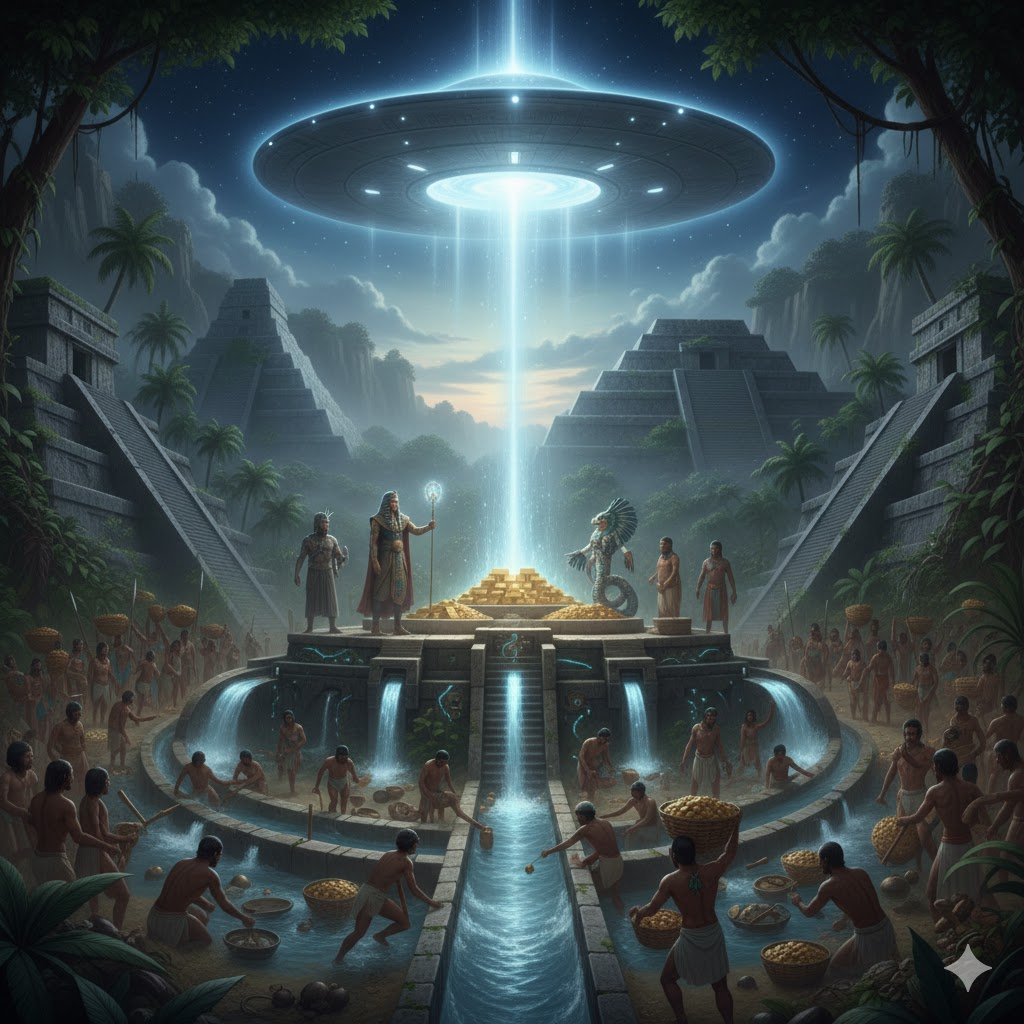
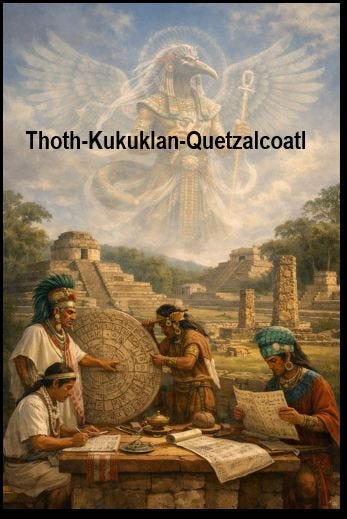
Long before empire flags and borders, Ningishzidda—known as Thoth, Kukulkan, and Quetzalcoatl—organized gold and copper operations stretching from Central Mexico through Central America to the Andes. From Tiahuanaco and Nazca to Teotihuacan and Yucatán, Kukulkan aligned water, stone, and astronomical observation to “rocket” gold from Earth powder as an atmospheric shield for Nibiru, the home of his ancestors, and to ship copper for Bronze Age Eurasia.
The Anunnaki Personnel
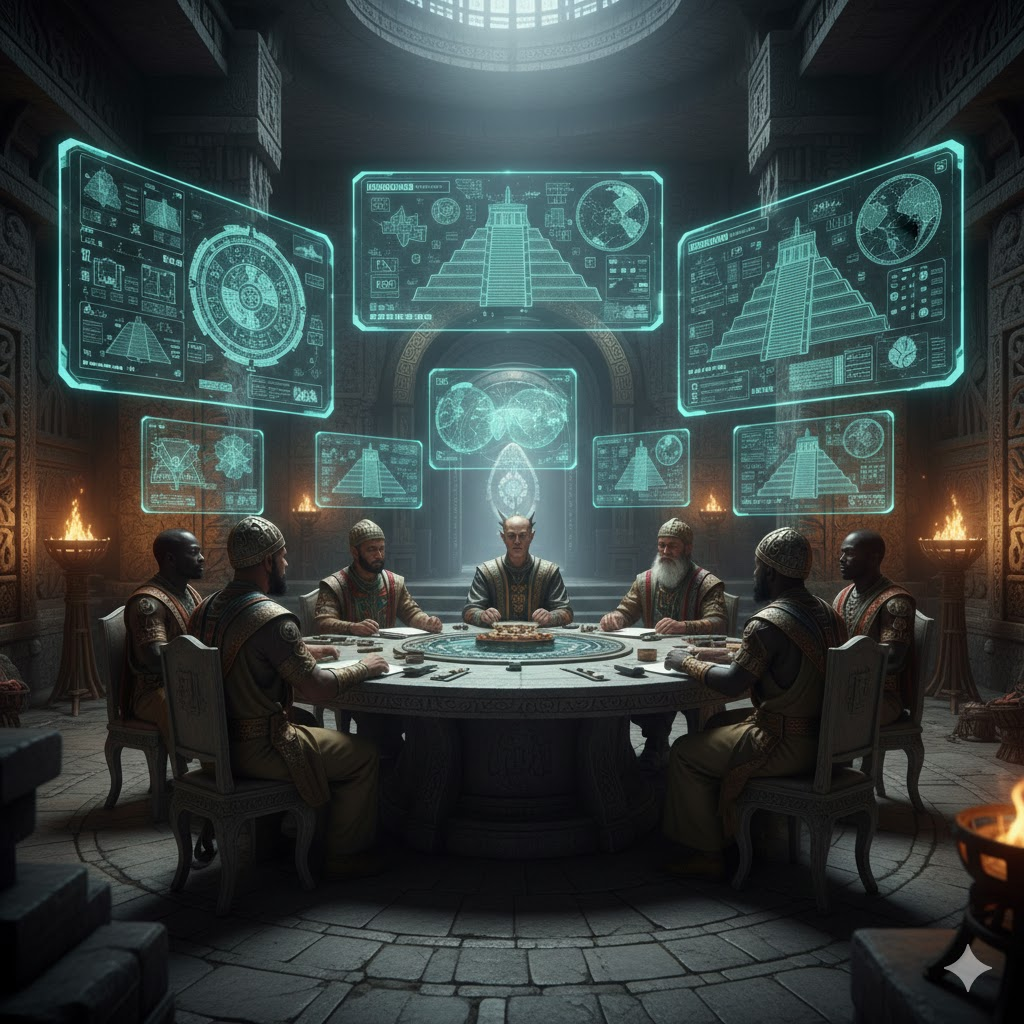
The Anunnaki were either inhabitants of Nibiru or their direct descendants on Earth. Ningishzidda, son of Enki (Ptah/Balam Yokte), coordinated Earth projects in the Western Hemisphere with his uncles Ninurta and Adad (Viracocha). They employed diverse Earth peoples:
- West African administrators (Olmecs)
- Bearded Semitic advisors
- Beardless South American workers (descendants of Cain)
These groups worked in tandem to build, mine, calculate, and observe the heavens.
Thoth: From Egypt to the Americas
3840 BCE: Anu, Nibiru’s King, inspected Earth facilities at Tiahuanaco and pardoned Anunnaki Prince Marduk, who had, as Ra, ruled Egypt from Thebes. The Anunnaki had previously banished Ra to North America, installing his half-brother Thoth as Egypt’s ruler. Thoth permitted Ra’s priests to continue their cult, and Ra became Amun Ra (“The Hidden/Missing Ra”).
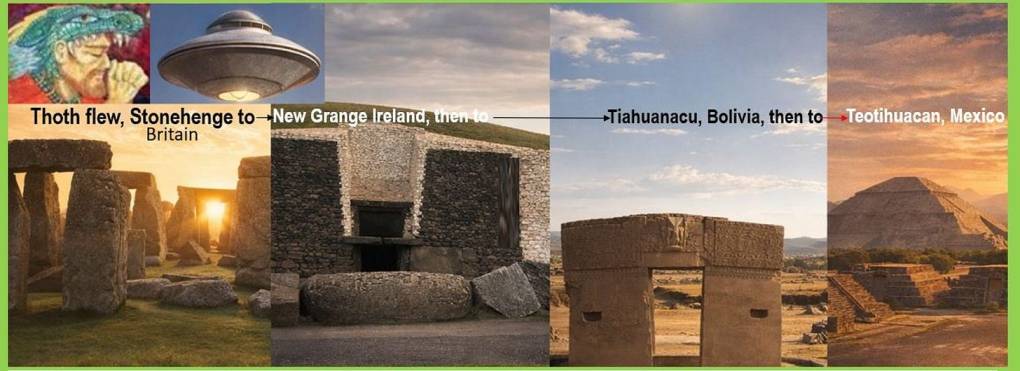
Upon Ra’s return to Thebes, he set his armies against Thoth in the North. After centuries of conflict, Enki removed Thoth from the region, reassigning him to oversee massive building projects at Stonehenge in Britain, Newgrange in Ireland, Tiahuanaco in Bolivia, and finally, Teotihuacan in Central Mexico.
4000 BCE: Engineering a Megacity
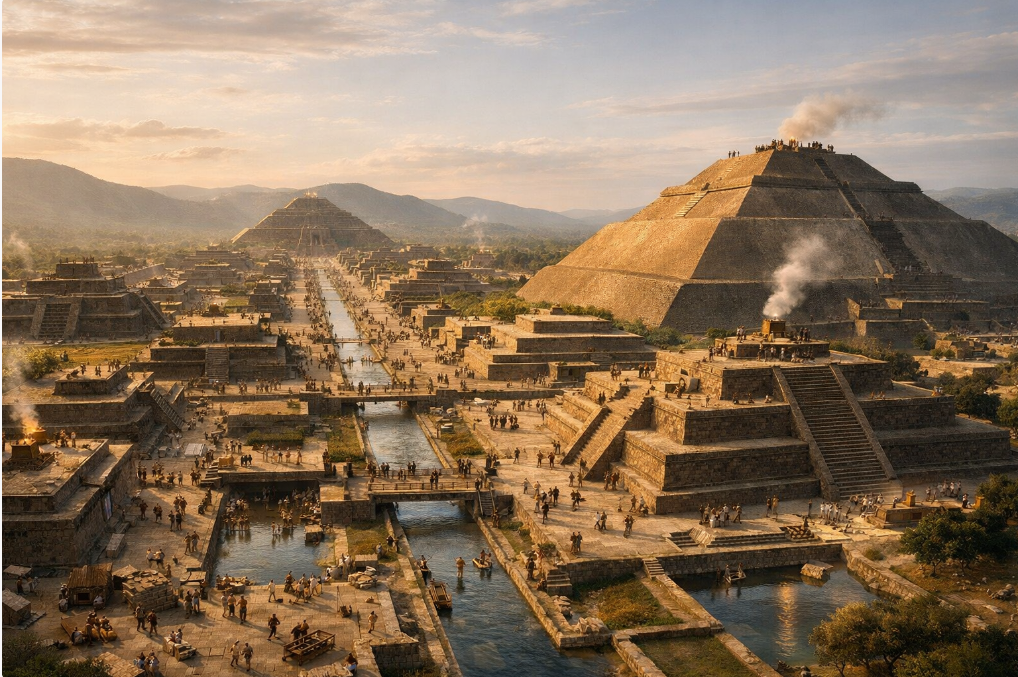
Thirty miles north of present-day Mexico City, Thoth’s team constructed the unadorned Sun and Moon pyramids along a five-mile avenue designed to channel water. Mica-lined compartments, tunnels, drainage pipes, and cloverleaf chambers enabled sophisticated astronomy, ore washing, and gold panning on monumental steps.
Olmecs, Maya, & Cooperation Before Coercion
Olmec centers (La Venta, Tres Zapotes, and San Lorenzo) served as administrative and craft hubs. Early Mayan cities functioned as open ceremonial centers supported by artisans, merchants, and farmers. Calendars, place value, zero, writing, and long-cycle astronomy coordinated human labor with celestial cycles.
An apprentice whispered, “The numbers tell us when the sky visitors come.”
The Turn to Blood
Initially, cities honored founders as central ancestors, and kings performed ritual bloodletting to invoke lineage power. However, after Thoth’s departure in 311 BCE, priestly regimes expanded blood sacrifice—shifting from rulers to enemy elites and captives—using terror as a primary tool of governance.
Celestial Ballcourts
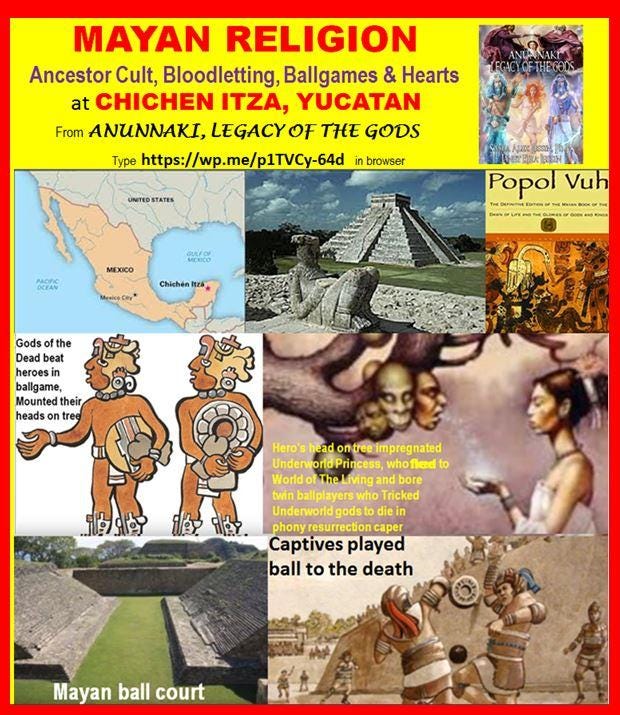
Every major city staged the Celestial Battle in ballcourts. The losing captain was sacrificed, mirroring cosmic rivalries recorded in the Popol Vuh. Frescoes from this era clearly depict bearded Anunnaki and the Tree of Life.
Yucatán & Lord Pacal
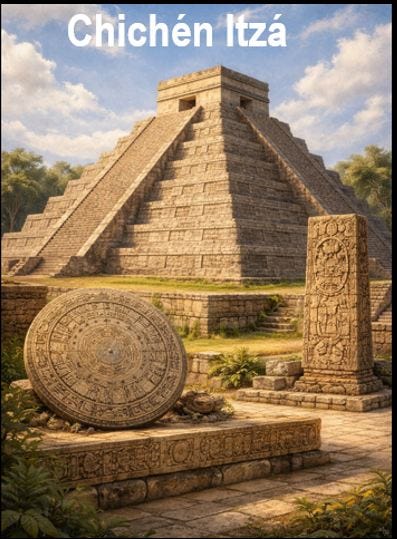
Near Thoth’s landing shore, Chichén Itzá rose as the sacred center of the Yucatán. Toltecs migrated south to be near the site of the promised return, reproducing Sumerian celestial narratives in stone and building a nine-stage pyramid dedicated to Thoth.
At Palenque, Lord Pacal presided over flourishing aqueducts and temples. He prepared a hidden burial beneath the Temple of Inscriptions; his sarcophagus lid famously depicts an ascent via the Winged Serpent—interpreted by some as a machine and by others as a sky-road.
The Southward Retreat: Chavín
As northern revolts spread, Olmec-Mayan administrators moved south. At Chavín de Huántar, Viracocha/Adad’s armies eventually annihilated the last Olmecs. Tunnels, waterworks, and monoliths like the Tello Obelisk and El Lanzón recorded the end of the African-Semitic presence in the region. The Paracas Candelabra remains as a marker of Adad’s domain.
Thoth’s Departure & The Age of Enki
The Maya recalled Kukulkan’s craft being “swallowed by the Jaguar night.” He promised that he and Enki would return on December 21, 2012, to herald the Age of Enki (Aquarius). While the date has passed, the full realization of the Aquarian Age remains a vision for the future.
Next Episode: From Toltecs to the Mexica (Aztecs)
Subscribe for the full story and support our missions: https://substack.com/@janetalexlessinphd
THOTH, WITH BLACK AFRICAN TECHNICIANS, “INDIANS” (lol) & ANUNNAKI ADMINISTRATORS FROM MESOPOTAMIA SOUGHT GOLD IN MEXICO
Part 1 of Mexico: Crossroad of Cultures
By Sasha Alex Lessin, Ph.D. (Enki)
Updated February 4, 2026
Overview of the Series
Mexico’s deep history did not unfold as a simple rise and fall of isolated cultures. It emerged instead as a long, cumulative experiment in human cooperation, engineering, astronomy, and power—repeatedly reshaped by outside incursions, internal hierarchies, ecological limits, and visionary bursts of collective intelligence.
From the first calendar keepers who aligned stone and sky, through the builders of Teotihuacan and the Maya astronomer-priests, to the shock of European conquest and the unfinished struggles of the modern state, Mexico reveals a persistent tension between domination and partnership, extraction and balance, secrecy and shared knowledge.
This timeline traces that tension across five millennia—not as mythology or romance, but as lived human history, encoded in architecture, calendars, water systems, and social organization, whose consequences continue to shape Mexico and the wider world today.
Mexico Time Chart
3000–1500 BCE
Early agricultural societies, maize domestication, and village cooperation
1200–400 BCE
Olmec horizon; monumental stonework; shared iconography; early coordination systems
100 BCE – 550 CE
Teotihuacan apex; urban planning, astronomy, engineering, and continental influence
600–1100 CE
Toltec inheritance; partial knowledge retention; system fragmentation
1100–1400 CE
Competing city-states; militarization; ideological hardening
1400–1519 CE
Mexica Empire; Tenochtitlan dominance; ritualized warfare and sacrifice
1519–1521 CE
Spanish invasion; internal revolts; disease; siege; collapse
Post-1521 CE
Colonial extraction replaces ritual extraction; domination continues under new symbols
Thoth and the Gold Program in the Americas
Long before empire flags and borders, Ningishzidda—known variously as Thoth, Kukulcan, and Quetzalcoatl—organized gold and copper operations stretching from Central Mexico through Central America to the Andes.
From Tiahuanaco and Nazca to Teotihuacan and the Yucatán, Kukulcan aligned water systems, stone architecture, and astronomical observation to refine gold from Earth powder—used as an atmospheric shield for Nibiru, home of his ancestors—and to ship copper to Bronze Age Eurasia.
The Anunnaki
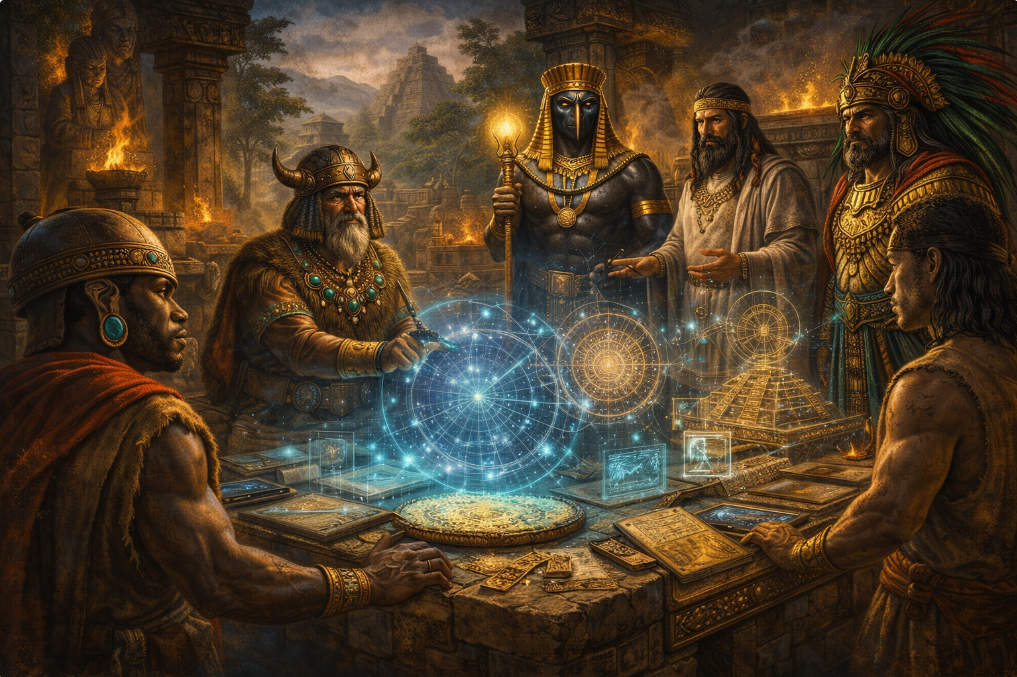
The Anunnaki were either inhabitants of Nibiru or their direct descendants operating on Earth. Ningishzidda, son of Enki (Ptah / Balam Yokte), coordinated Western Hemisphere projects with his uncles Ninurta and Adad (Viracocha).
They employed Earth peoples:
- West African administrators (Olmecs)
- Bearded Semitic advisors
- Beardless South American workers (descendants of Cain)
These groups built, mined, calculated, and observed—forming a distributed planetary workforce.
Thoth, Ruler of Northern Egypt, Builder Across Continents
3840 BCE:
Anu, King of Nibiru, inspected Earth facilities at Tiahuanaco and pardoned Prince Marduk, who as Ra had ruled Egypt from Thebes in the south.
Ra was banished to North America, and his half-brother Thoth was installed as ruler of Northern Egypt. Thoth allowed Ra’s priests to continue their cult, which evolved into Amun-Ra (“the hidden Ra”).
After centuries of civil war, Enki removed Thoth from Egypt and reassigned him to global engineering projects—assisting with Stonehenge (Britain), Newgrange (Ireland), Tiahuanaco (Bolivia), and ultimately Teotihuacan (Central Mexico).
Teotihuacan: Engineering a Megacity (c. 4000 BCE)
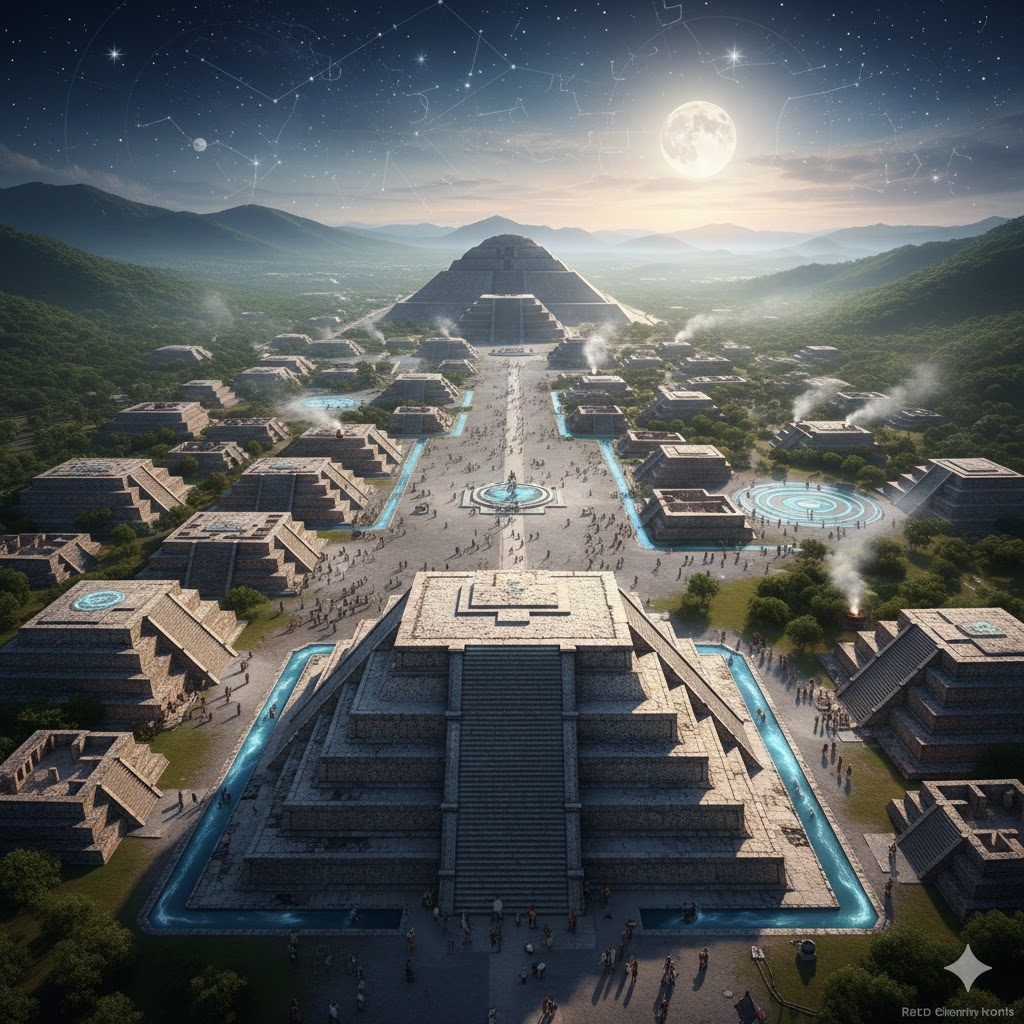
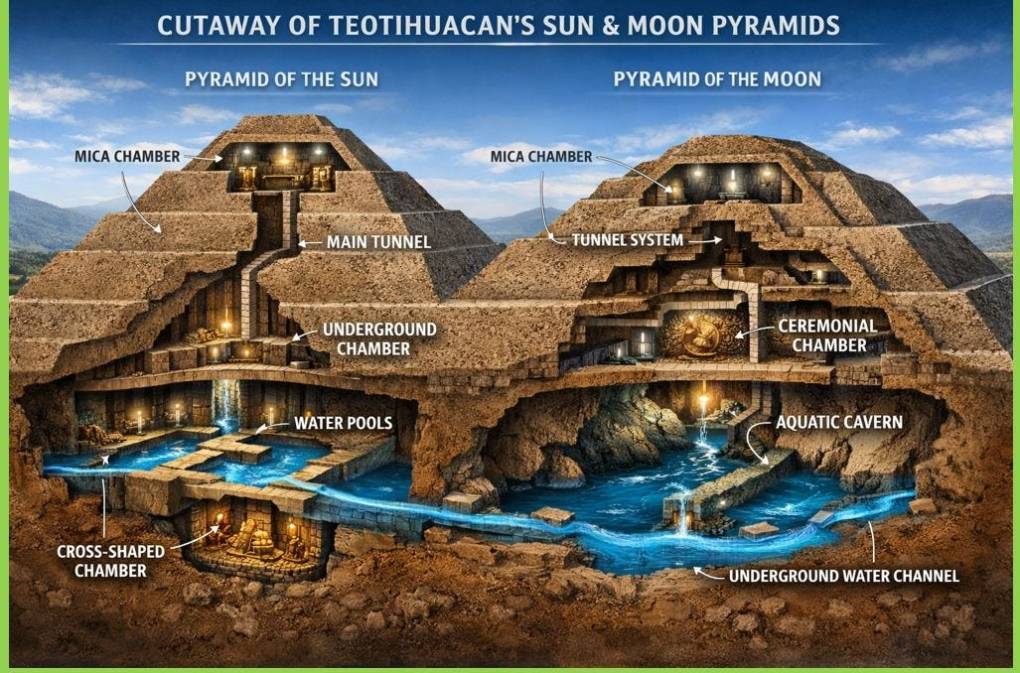
Thirty miles north of today’s Mexico City, Thoth’s team built the massive Sun and Moon Pyramids along a five-mile avenue sloped to channel water.
Mica-lined compartments, tunnels, drainage pipes, and cloverleaf chambers enabled astronomy, ore washing, and gold panning on monumental scales.
Olmecs, Maya, and Cooperation Before Coercion
Olmec centers—La Venta, Tres Zapotes, and San Lorenzo—served as administrative and craft hubs. Mayan cities functioned as open ceremonial centers supported by artisans, merchants, and farmers.
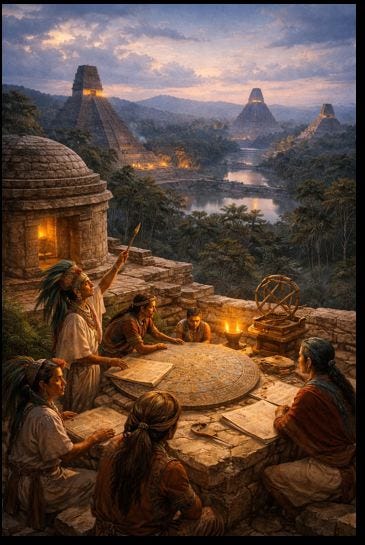
Calendars, place value mathematics, zero, writing systems, telescopes, and long-cycle astronomy coordinated labor with the sky.
An apprentice whispered,
“The numbers tell us when the sky visitors come.”
Necropolises and the Turn to Blood
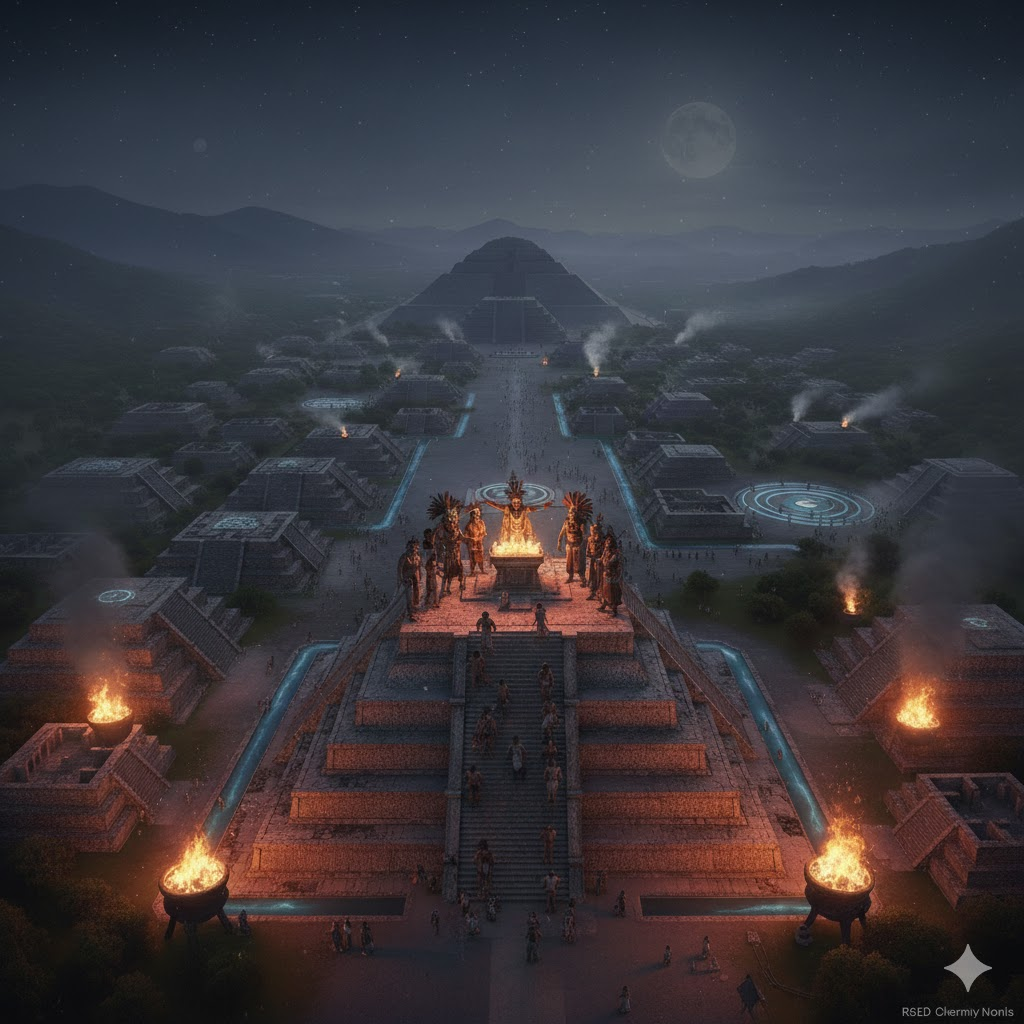
Cities honored founders as central ancestors. Kings bled themselves to invoke lineage power. After Thoth’s departure (311 BCE), priestly regimes expanded blood sacrifice—from rulers, to enemy elites, to captives—using terror as governance.
A mother at Chichén Itzá prayed,
“Have a heart and return.”
Ballcourts and Sumer’s Celestial Drama
Every major city staged the Celestial Battle. The losing captain died, mirroring cosmic rivalries remembered in the Popol Vuh. Frescoes depicted bearded Anunnaki and the Tree of Life.
Yucatán and Chichén Itzá
Near Thoth’s landing shore, Chichén Itzá rose as Yucatán’s sacred center. Toltecs migrated south to remain near the return site, reproducing Sumerian celestial narratives in stone and erecting a nine-stage pyramid to Thoth.
Offerings—gold, silver, copper—were cast into the Sacred Well.
Palenque and Lord Pacal
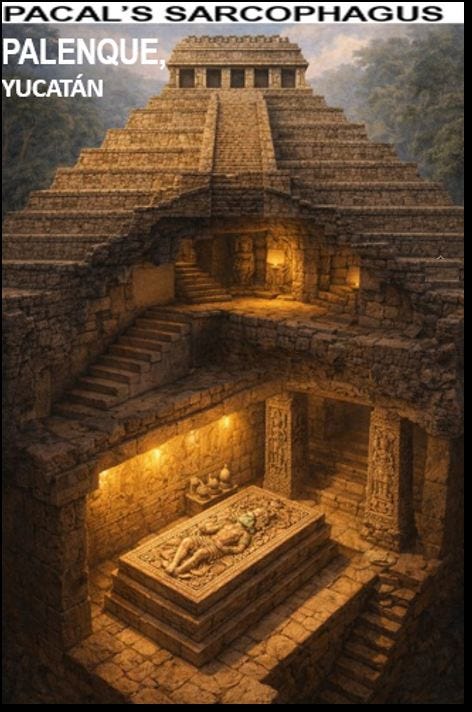
At Palenque, aqueducts, plazas, and temples flourished. Pacal rebuilt after defeat, ruled through trade and tribute, and prepared a hidden burial beneath the Temple of Inscriptions.
The sarcophagus lid depicts ascent via the Winged Serpent—to some, a machine; to others, a sky-road.
A stonemason thought,
The king travels where we cannot.
Copán, Tikal, and Calakmul
- Copán refined the calendar
- Tikal raised skyscraper pyramids atop engineered reservoirs
- Calakmul rivaled and conquered
Glyphs recorded dates, rulers, and events with phonetic precision.
Southward Retreat and Last Stand: Chavín
As northern revolts spread, Olmec-Mayan administrators moved south. At Chavín de Huántar, Viracocha/Adad’s armies annihilated the last Olmecs.
Tunnels, waterworks, and monoliths—the Tello Obelisk, Raimondi Monolith, and El Lanzón—record the end of African-Semitic presence. The Paracas Candelabra marked Adad’s domain.
A survivor remembered,
“The jaguar ate the serpent.”
Thoth’s Departure and Promise
Mayan memory holds that Kukulcan’s craft was swallowed by Jaguar Night. He said he and Enki would return on December 21, 2012, to open the Age of Enki (Aquarius).
He may be here—but the Aquarian Age is not.
From Toltecs to Mexica (Aztecs)
Centuries later, Mexica power rose at Tenochtitlan (after 1400 CE), inheriting fragments of earlier systems while intensifying sacrificial control.
To be continued…
Next episode forthcoming.
THOTH, WITH BLACK AFRICAN TECHNICIANS, “INDIANS” (lol) & ANUNNAKI ADMINISTRATORS FROM MESOPOTAMIA SOUGHT GOLD IN MEXICO
by Enkiupdated on Leave a Commenton THOTH, WITH BLACK AFRICAN TECHNICIANS, “INDIANS” (lol) & ANUNNAKI ADMINISTRATORS FROM MESOPOTAMIA SOUGHT GOLD IN MEXICO
Part 1 of MEXICO, CROSSROAD OF CULTURES
Overview of Series
Mexico’s deep history did not unfold as a simple rise and fall of isolated cultures. It emerged instead as a long, cumulative experiment in human cooperation, engineering, astronomy, and power—repeatedly reshaped by outside incursions, internal hierarchies, ecological limits, and visionary bursts of collective intelligence. From the first calendar keepers who aligned stone and sky, through the builders of Teotihuacan and the Maya astronomer-priests, to the shock of European conquest and the unfinished struggles of the modern state, Mexico reveals a persistent tension between domination and partnership, extraction and balance, secrecy and shared knowledge. This timeline traces that tension across five millennia—not as mythology or romance, but as lived human history, encoded in architecture, calendars, water systems, and social organization, whose consequences continue to shape Mexico and the wider world today.
MEXICO TIME CHART
1. 3000–1500 BCE
Early agricultural societies, maize domestication, and village cooperation
2. 1200–400 BCE
Olmec horizon; monumental stone, shared iconography, early coordination systems
3. 100 BCE – 550 CE
Teotihuacan apex; urban planning, astronomy, engineering, and continental influence
4 .600–1100 CE
Toltec inheritance; partial knowledge retention; system fragmentation
5. 1100–1400 CE
Competing city-states; militarization; ideological hardening
6. 1400–1519 CE
Mexica empire; Tenochtitlan dominance; ritualized warfare and sacrifice
7. 1519–1521 CE
Spanish invasion; internal revolts; disease; siege; collapse
8. Post-1521 CE
Colonial extraction replaces ritual extraction; domination continues under new symbols
THOTH, WITH BLACK AFRICAN TECHNICIANS, “INDIANS” (lol) & ANUNNAKI ADMINISTRATORS FROM MESOPOTAMIA SOUGHT GOLD IN MEXICO
Long before empire flags and borders, Ningishzidda—known as Thoth, Kukuklan, Quetzalcoatl—organized gold and copper operations from Central Mexico through Central America to the Andes. From Tiahuanaco and Nazca to Teotihuacan and Yucatán, Kukulcan aligned water, stone, and astronomical observation to launch gold from Earth powder as an atmospheric shield for Nibiru, home of his ancestors, and to ship copper to Bronze Age Eurasia.
THE ANUNNAKI
The Anunnaki were either inhabitants of Nibiru or their direct descendants on Earth. Ningishzidda, son of Enki (Ptah/Balam Yokte), coordinated Earth projects in the Western Hemisphere with his uncles Ninurta and Adad (Viracocha). They employed Earth peoples—West African administrators (Olmecs), bearded Semitic advisors, and beardless South American workers (descendants of Cain)—to build, mine, calculate, and observe.
THOTH, RULER OF NORTHERN EGYPT, CEDED EGYPT TO HALF-BROTHER RA AND HELPED WITH STONEHENGE IN BRITAIN, NEW GRANGE, AND TIAHUANCU
3840 BCE: Anu, Nibiru’s King, inspected Earth facilities at Tiahuanacu and pardoned Anunaki Prince Marduk, who had, as Ra, ruled Egypt from Thebes in southern Egypt. The Anunnaki had banished Ra to North America and made Ra’s half-brother Thoth Egypt’s ruler. Thoth let Ra’s Priests carry on their cult of Ra, and Ra became Amun Ra [the missing Ra]. Ra returned to Thebes and set his armies against those of Thoth in the North. After centuries of war in Egypt, Enki removed Thoth and had him assist in building projects at Stonehenge in Britain, Newgrange in Ireland, Tiahuanaco in Bolivia, and, finally, Teotihuacan in central Mexico.
4000 BCE TEOTIHUACAN ENGINEERING A MEGACITY
Thirty miles north of today’s Mexico City, Thoth’s team built the unadorned Sun and Moon pyramids along a five-mile avenue sloped to channel water. Mica-lined compartments, tunnels, drainage pipes, and cloverleaf chambers enabled astronomy, ore washing, and gold panning on monumental steps
Olmec centers (La Venta, Tres Zapotes, and San Lorenzo) served as administrative and craft centers. Mayan cities functioned as open ceremonial centers supported by artisans, merchants, and farmers. Calendars, place value, zero, writing, telescopes, and long-cycle astronomy coordinated labor with the sky.
Cities honored founders as central ancestors. Kings bled themselves to invoke lineage power. After Thoth’s departure (311 BCE), priestly regimes expanded blood sacrifice—from rulers, to enemy elites, to captives—using terror to govern.
A mother at Chichén Itzá prayed, “Have a heart and return.”
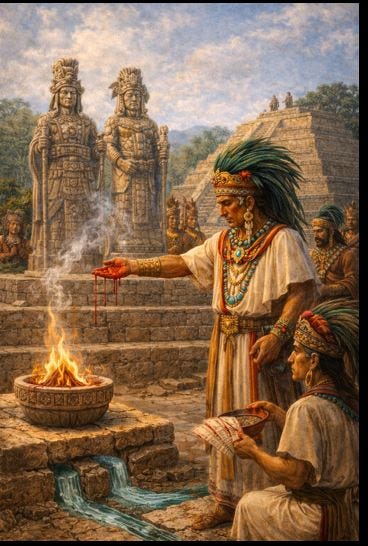
Every major city staged the Celestial Battle. The losing captain died, mirroring cosmic rivalries remembered in the Popol Vuh. Frescoes showed bearded Anunnaki and the Tree of Life.
Near Thoth’s landing shore, Chichén Itzá rose as Yucatán’s sacred center. Toltecs migrated south to be near the return site, reproducing Sumerian celestial narratives in stone and building a nine-stage pyramid to Thoth. Offerings—gold, silver, copper—entered the sacred well.
At Palenque, aqueducts, plazas, and temples flourished. Pacal rebuilt after defeat, ruled through trade and tribute, and prepared a hidden burial beneath the Temple of Inscriptions. The sarcophagus lid depicted ascent via the Winged Serpent—to some, a machine; to others, a sky-road.
A stonemason thought, The king travels where we cannot
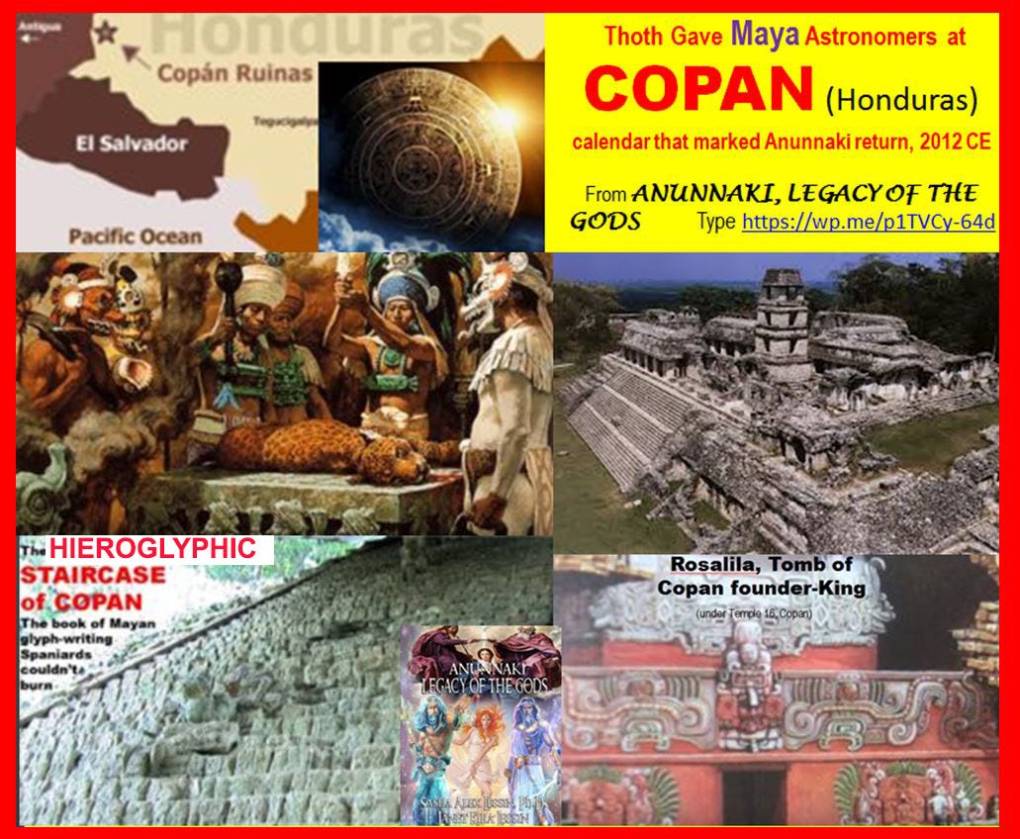
Copán refined the calendar; Tikal raised skyscraper pyramids atop engineered reservoirs; Calakmul rivaled and conquered. Glyphs recorded dates, rulers, and events with phonetic precision.
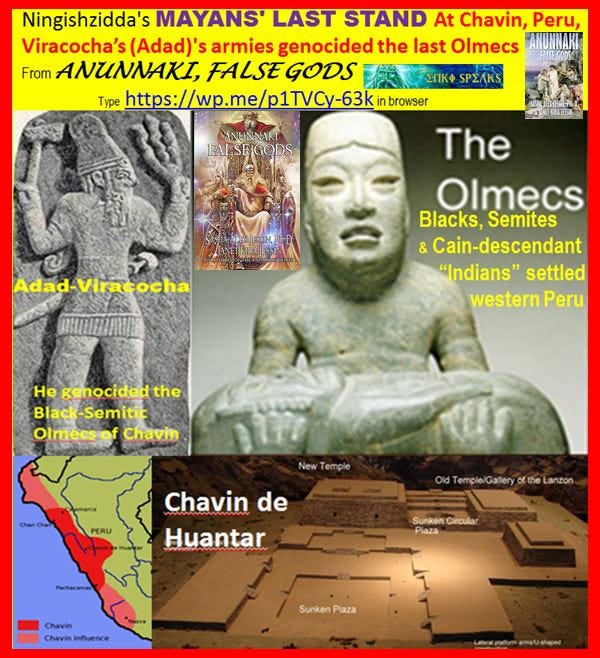
As northern revolts spread, Olmec-Mayan administrators moved south. At Chavín de Huántar, Viracocha/Adad’s armies annihilated the last Olmecs. Tunnels, waterworks, and monoliths—Tello Obelisk, Raimondi Monolith, El Lanzón—recorded the end of the African-Semitic presence. The Paracas Candelabra marked Adad’s domain.
THOTH’S DEPARTURE & PROMISE
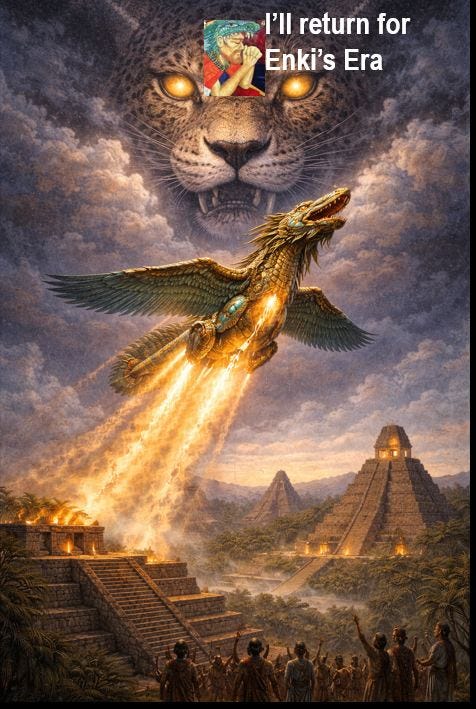
Mayans recalled Kukuklan’s craft swallowed by the Jaguar night. Her said he and Enki would return on December 21, 2012, to open the Age of Enki (Aquarius). He might be here, but the Aquarian age is not.
Share this:
TAGS (comma-separated)
Thoth, Anunnaki, Enki, Ningishzidda, Kukulcan, Quetzalcoatl, Nibiru, Ancient Civilizations, Ancient Mexico, Teotihuacan, Olmecs, Maya, Toltecs, Aztecs, Tenochtitlan, Chichen Itza, Palenque, Copan, Tikal, Calakmul, Chavin de Huantar, Tiahuanaco, Nazca, Stonehenge, Newgrange, Ancient Engineering, Ancient Astronomy, Sacred Architecture, Gold Mining, Copper Mining, Pre-Columbian, Hidden History, Alternative History, Forbidden Archaeology, Ancient Technology, Star Knowledge, Sky Gods, Extraterrestrial Contact, Ancient Aliens, Earth History, Human Origins, Crossroads of Cultures, Mexico History, Mesoamerica
HASHTAGS (comma-separated)
#Thoth,#Anunnaki,#Enki,#Ningishzidda,#Kukulcan,#Quetzalcoatl,#Nibiru,#AncientCivilizations,#AncientMexico,#Teotihuacan,#Olmecs,#Maya,#Toltecs,#Aztecs,#Tenochtitlan,#ChichenItza,#Palenque,#Copan,#Tikal,#Calakmul,#ChavinDeHuantar,#Tiahuanaco,#Nazca,#Stonehenge,#Newgrange,#AncientEngineering,#AncientAstronomy,#SacredArchitecture,#GoldMining,#CopperMining,#PreColumbian,#HiddenHistory,#AlternativeHistory,#ForbiddenArchaeology,#AncientTechnology,#StarKnowledge,#SkyGods,#ExtraterrestrialContact,#AncientAliens,#EarthHistory,#HumanOrigins,#CrossroadsOfCultures,#MexicoHistory,#Mesoamerica
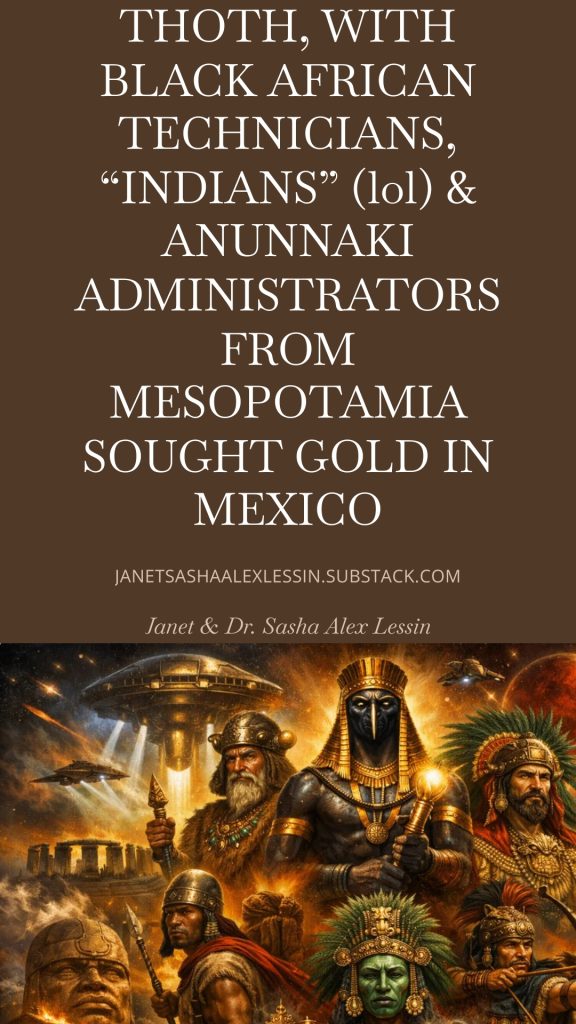
🔶 FEATURED / HEADER IMAGE (BANNER)
IMAGE PLACEMENT: Header / Featured Image / Website Banner
IMAGE TITLE:
THOTH AND THE GOLD OF MEXICO
IMAGE DESCRIPTION:
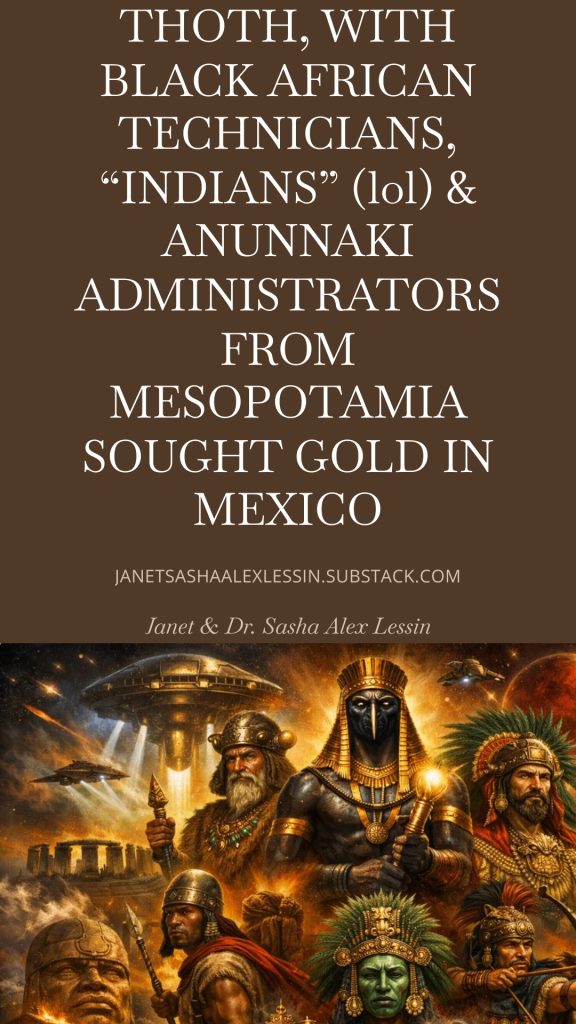
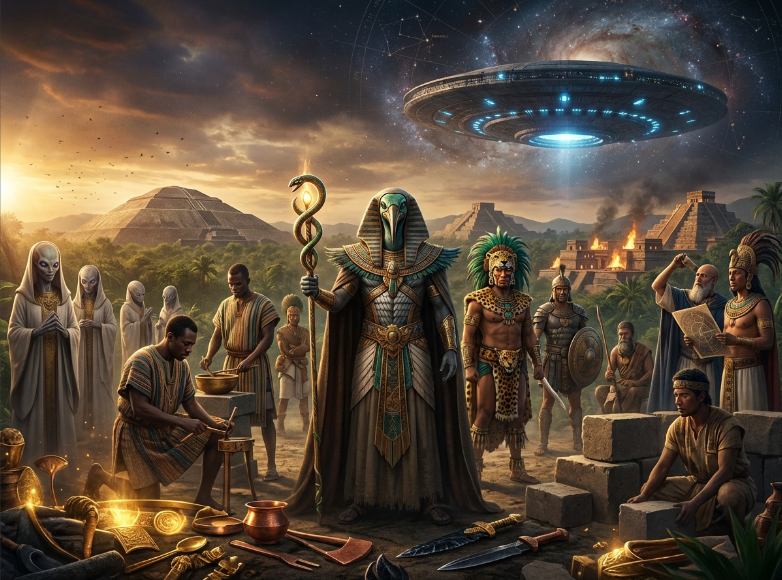
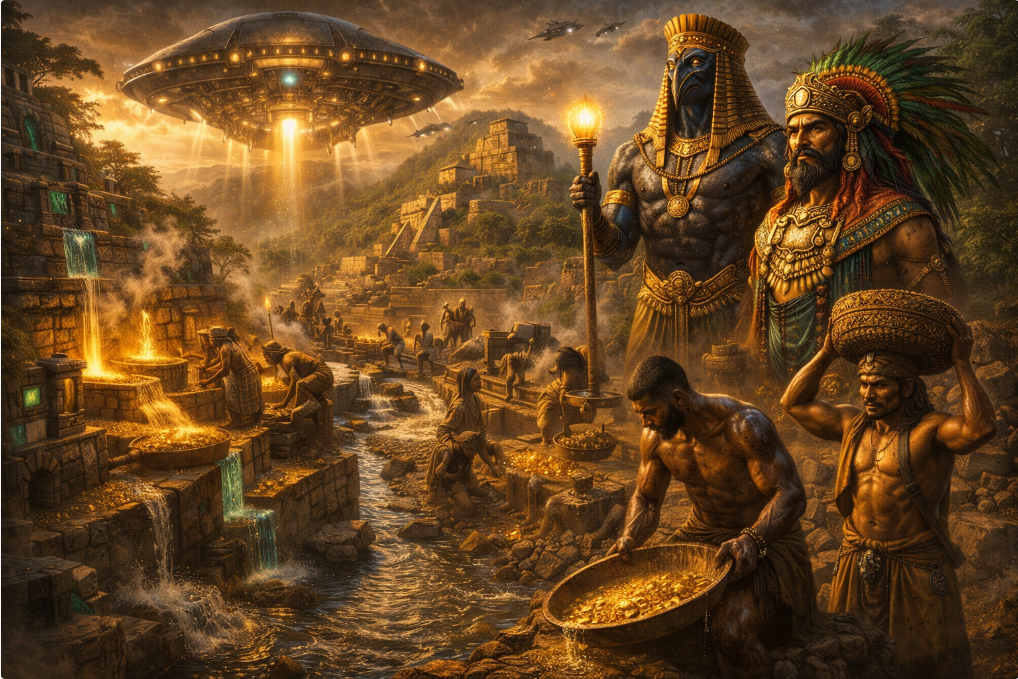
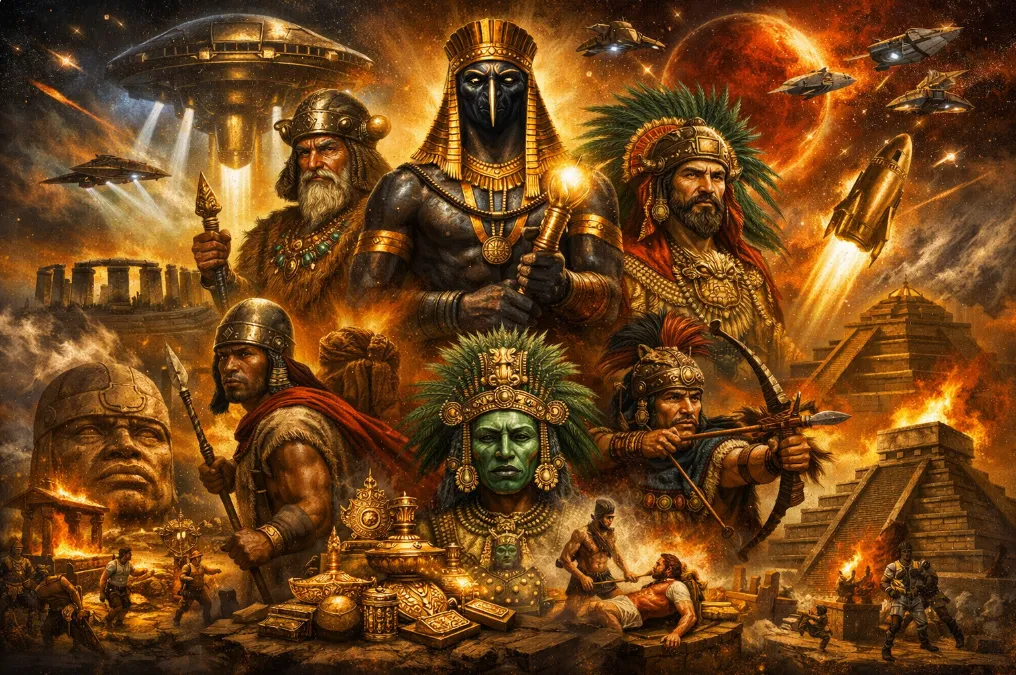
A dramatic, cinematic banner illustration depicting Thoth, Anunnaki administrators, African technicians, and Mesoamerican peoples amid pyramids, celestial technology, and interstellar conflict. The image evokes epic scale, ancient power, and cosmic purpose—part myth, part history.
IMAGE PROMPT:
A cinematic, Star Wars–style epic poster composition set in ancient Mesoamerica. Thoth (Ningishzidda) stands at the center, tall and commanding, holding a staff of knowledge, wearing ancient yet advanced regalia blending Egyptian and Mesoamerican design. Around him: Anunnaki figures with subtle non-human features, African technicians, Olmec and Maya leaders, warriors, astronomer-priests, and engineers. In the background: the pyramids of Teotihuacan, jungle temples, fire-lit stone cities, and a massive Anunnaki spacecraft hovering in the sky. Gold, copper, and sacred tools glow in the foreground. Celestial bodies, star maps, and cosmic light fill the sky. High drama, epic lighting, intense action and motion.
Style: realistic, photorealistic, cinematic lighting, soft natural colors, fantasy realism, highly detailed, emotional depth, artistic composition.
Orientation: landscape, wide banner.
🔶 SECTION IMAGE 1
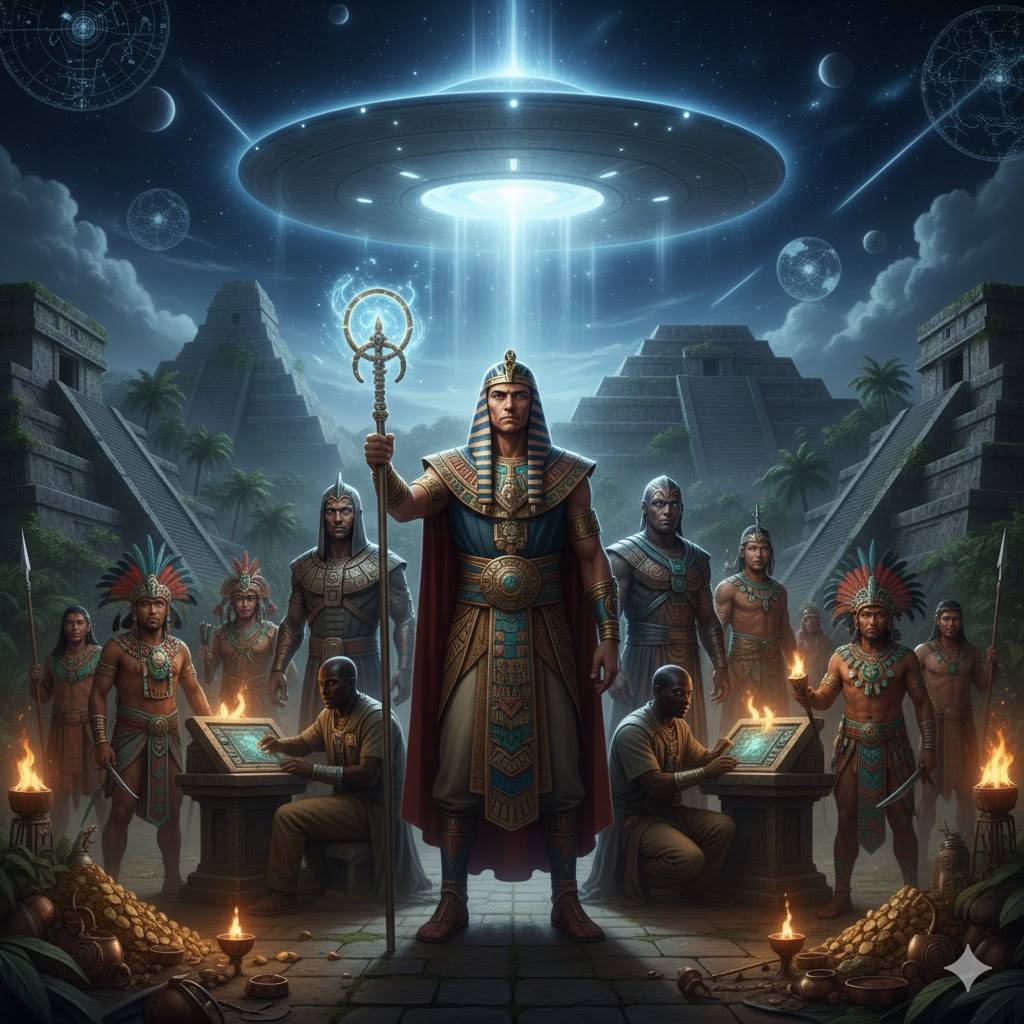
IMAGE PLACEMENT: After “Overview of the Series”
IMAGE TITLE:
Mexico: Crossroad of Cultures
IMAGE DESCRIPTION:
Ancient Mexico shown as a convergence point of civilizations, knowledge systems, and cosmic influence.
IMAGE PROMPT:
A wide cinematic landscape showing ancient Mexico as a crossroads of cultures—Olmec, Maya, Toltec, and Anunnaki influences merging. Stone cities, ceremonial centers, canals, farmland, and astronomers aligning temples with the stars. Subtle celestial overlays hint at advanced knowledge.
Style: realistic, photorealistic, cinematic lighting, soft natural colors, fantasy realism, highly detailed.
Orientation: landscape.
🔶 SECTION IMAGE 2
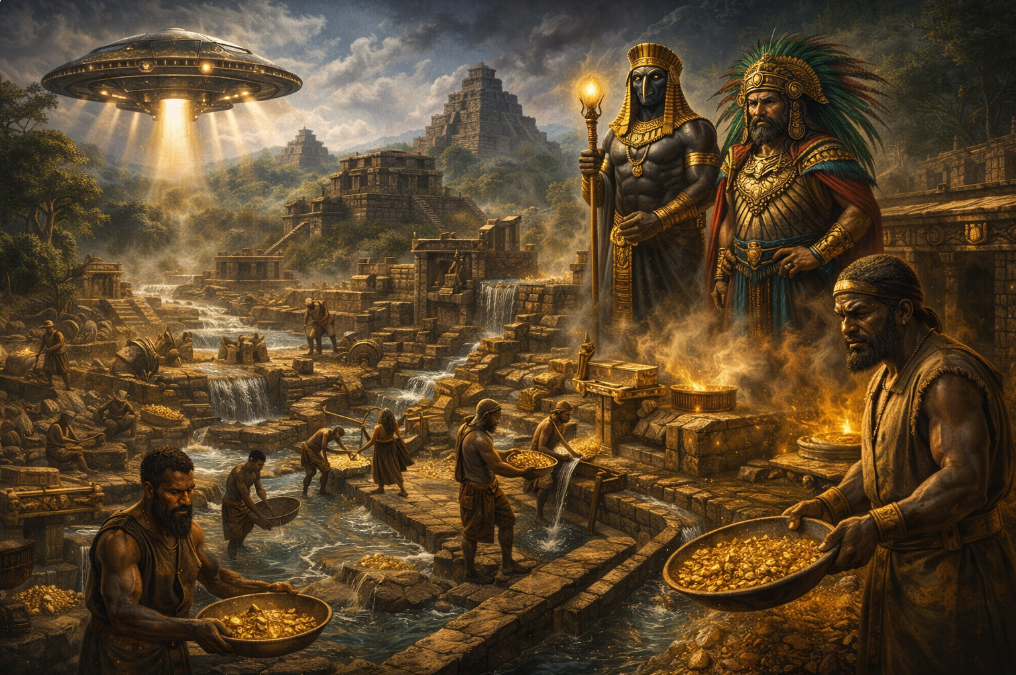
IMAGE PLACEMENT: After “Thoth and the Gold Program in the Americas”
IMAGE TITLE:
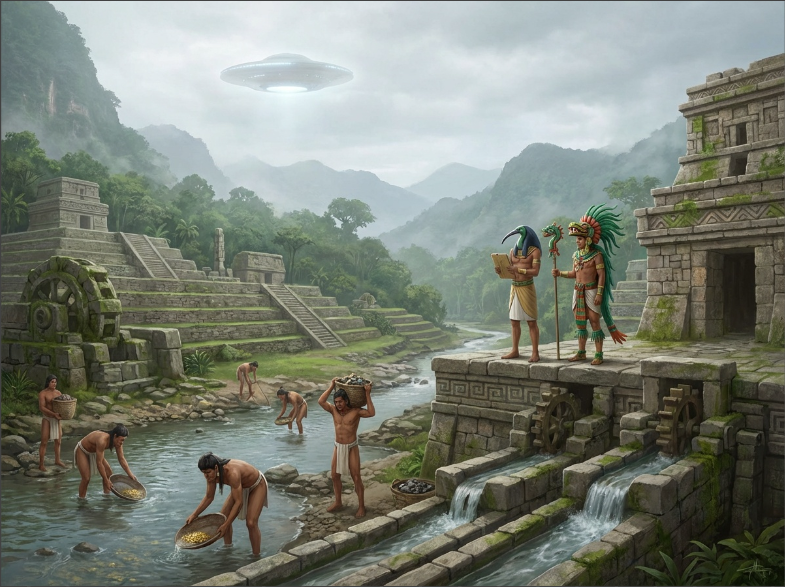
The Gold Program
IMAGE DESCRIPTION:
Thoth is overseeing gold extraction and processing across the Americas for planetary purposes.
IMAGE PROMPT:
Thoth and Kukulcan supervise gold mining and refining operations in ancient Central America. Workers pan for gold, transport ore, and operate stone channels and water systems. Advanced yet ancient technology subtly embedded into architecture. A glowing spacecraft above suggests off-world transport.
Style: realistic, photorealistic, cinematic lighting, soft natural colors, fantasy realism, highly detailed.
Orientation: landscape.
🔶 SECTION IMAGE 3
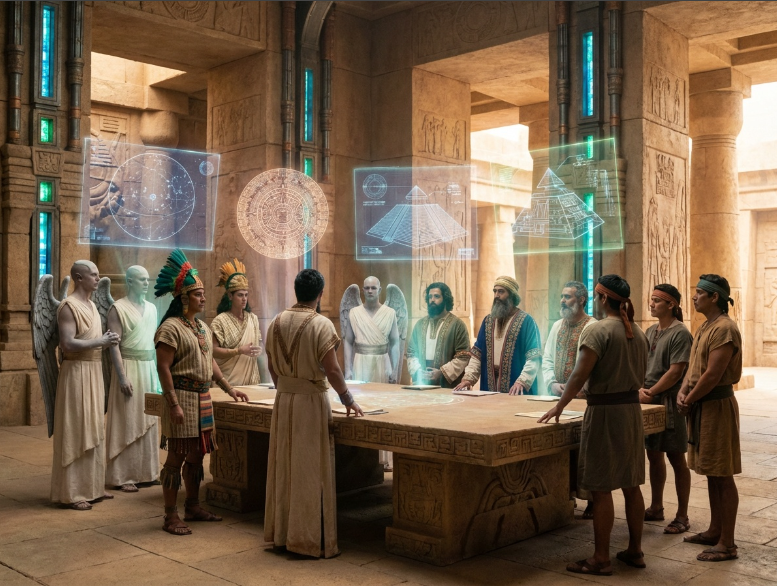
IMAGE PLACEMENT: After “The Anunnaki”
IMAGE TITLE:
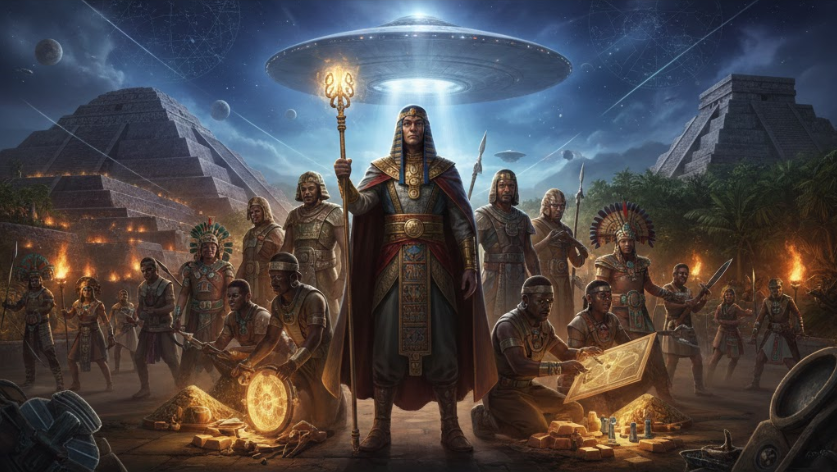
The Anunnaki Administrators
IMAGE DESCRIPTION:
Anunnaki leadership coordinating Earth-based civilizations.
IMAGE PROMPT:
A council-like scene showing Anunnaki administrators alongside African Olmec leaders, Semitic advisors, and South American workers. Holographic star charts, calendars, and architectural plans float in the air. The setting blends stone temples with advanced technology.
Style: realistic, photorealistic, cinematic lighting, soft natural colors, fantasy realism, highly detailed.
Orientation: landscape.
🔶 SECTION IMAGE 4
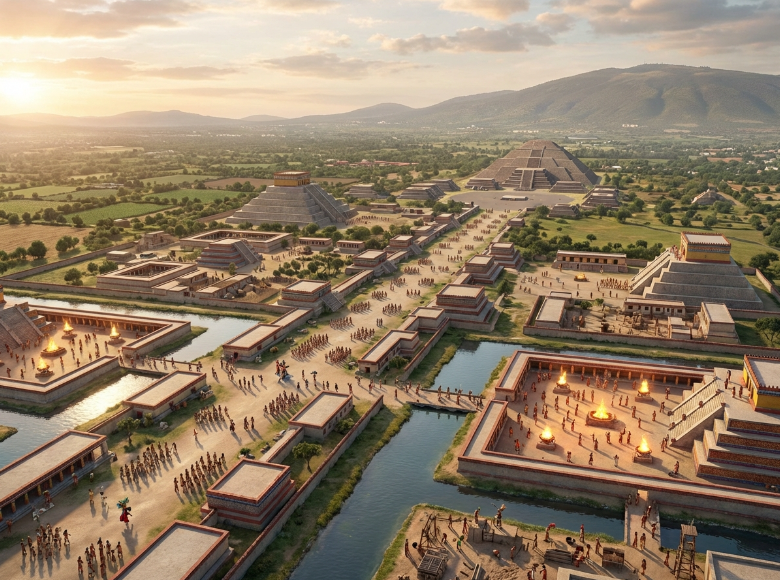
IMAGE PLACEMENT: After “Teotihuacan: Engineering a Megacity”
IMAGE TITLE:
Teotihuacan: City of the Gods
IMAGE DESCRIPTION:
The megacity of Teotihuacan at its peak.
IMAGE PROMPT:
A sweeping aerial view of Teotihuacan in its prime. The Avenue of the Dead stretches toward the Sun and Moon pyramids. Water channels, tunnels, and ceremonial plazas glow with purpose. Workers, priests, and engineers move in coordinated harmony.
Style: realistic, photorealistic, cinematic lighting, soft natural colors, fantasy realism, ultra-detailed.
Orientation: landscape.
🔶 SECTION IMAGE 5
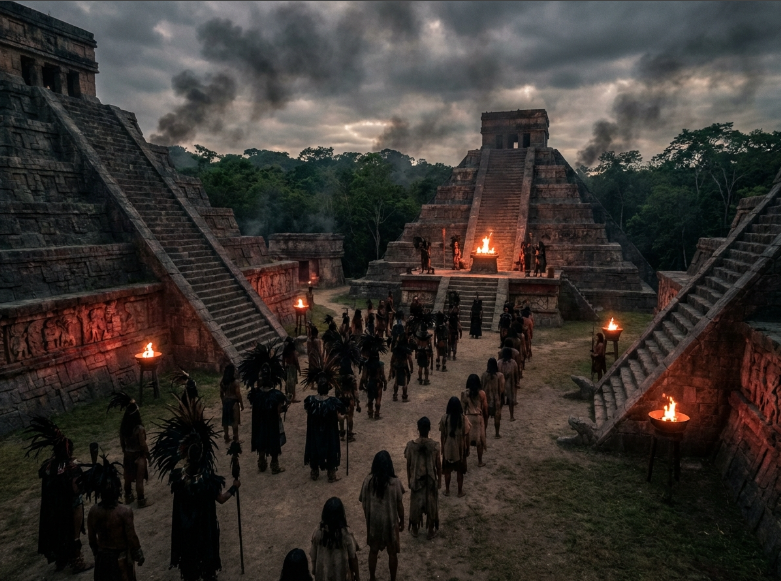
IMAGE PLACEMENT: After “Necropolises and the Turn to Blood”
IMAGE TITLE:
When Blood Replaced Knowledge
IMAGE DESCRIPTION:
The cultural shift from cooperation to coercion and sacrifice.
IMAGE PROMPT:
A darker cinematic scene showing a Mesoamerican ceremonial city transitioning into blood ritual—priests, captives, ominous temples, fire-lit altars. Shadows loom over once-peaceful architecture. Emotional and somber tone.
Style: realistic, photorealistic, cinematic lighting, moody shadows, highly detailed.
Orientation: landscape.
🔶 SECTION IMAGE 6
IMAGE PLACEMENT: After “Palenque and Lord Pacal”
IMAGE TITLE:
Pacal’s Ascent
IMAGE DESCRIPTION:
The sarcophagus vision of Lord Pacal is interpreted as a cosmic departure.
IMAGE PROMPT:
Lord Pacal depicted ascending via the Winged Serpent from the Temple of Inscriptions. Stone carvings come alive with glowing symbols, stars, and cosmic pathways. Ambiguous blend of spirituality and technology.
Style: realistic, photorealistic, cinematic lighting, fantasy realism, highly detailed, emotional depth.
Orientation: landscape.
🔶 SECTION IMAGE 7 (CLOSING IMAGE)
IMAGE PLACEMENT: Before “To be continued…”
IMAGE TITLE:
The Departure of Thoth
IMAGE DESCRIPTION:
Thoth’s final departure and the promise of return.
IMAGE PROMPT:
A dramatic night scene in the Yucatán jungle. Thoth’s luminous craft ascends into a star-filled sky as priests and people watch below. Jaguar imagery and celestial symbolism dominate the scene, evoking mystery and unresolved destiny.
Style: realistic, photorealistic, cinematic lighting, soft natural colors, fantasy realism, highly detailed.
Orientation: landscape.