WHEN POWER OVERRIDES CONSENT
War, Presidents, and the Drift Toward Authoritarian Rule
By Sasha Alex Lessin, Ph.D.
Contributing Author: Janet Kira Lessin
INTRODUCTION
A PATTERN, NOT AN ACCIDENT
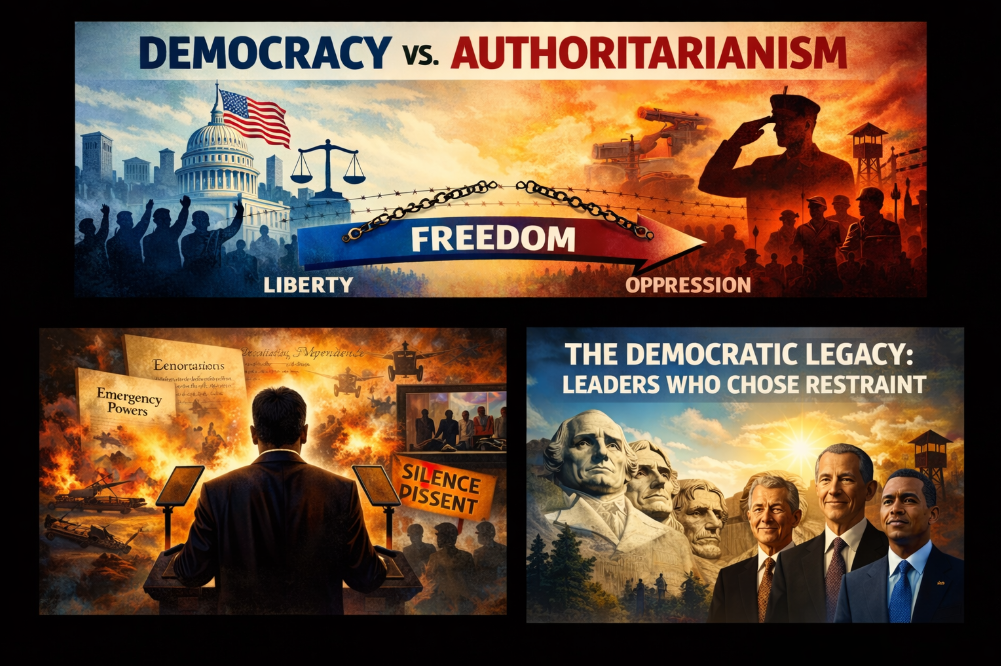
The United States was founded in explicit rejection of monarchy, inherited power, and rule by fear. The Constitution established a radical premise for its time: political authority flows upward from the people, not downward from rulers. Yet American history reveals a recurring contradiction. When presidents invoke war, emergency, or existential threat, democratic restraint weakens, and executive power expands.
This shift rarely requires formal suspension of the Constitution. Instead, it operates through emergency logic, selective enforcement, and cultural pressure. Speech remains legal in theory while punishment follows in practice. Dissent survives on paper but becomes dangerous in reality.
This article examines a pattern that has repeated across U.S. history: presidents who embodied royalist or oligarchic instincts, presidents who temporarily crossed into authoritarian behavior under pressure, and presidents who resisted that drift while governing during a crisis.
I. DOMINATION CONSCIOUSNESS AND POLITICAL POWER
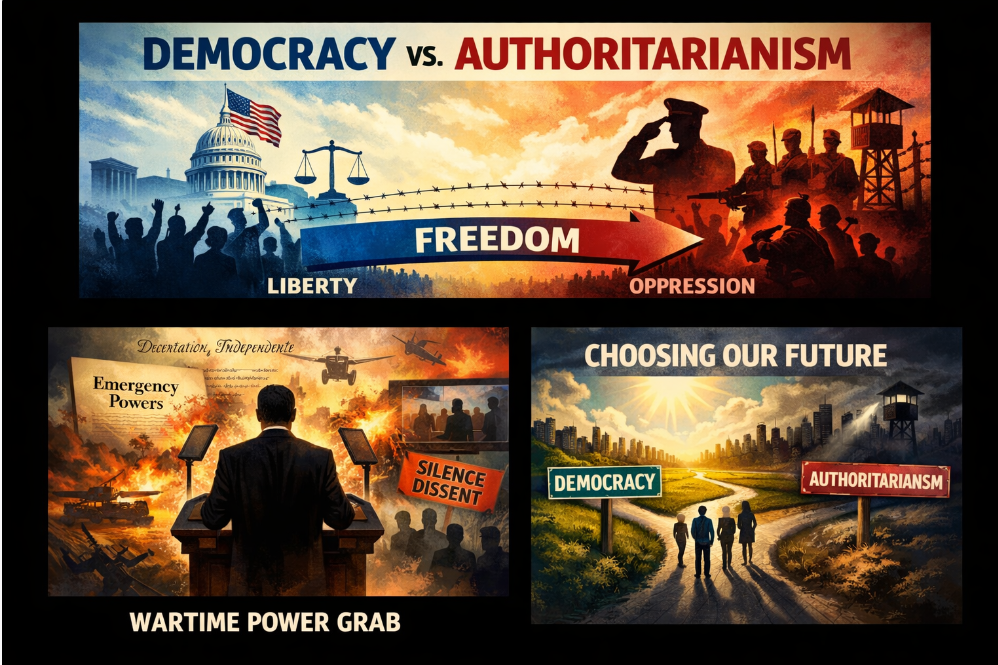
Anthropologists and political historians identify two recurring models of governance. One rests on partnership, consent, and shared accountability. The other rests on domination, hierarchy, and coercion. Domination consciousness does not require kings or dictators. It emerges whenever leaders equate dissent with danger and loyalty with virtue.
War reliably activates this mindset. When leaders frame conflict as existential, they justify extraordinary powers, narrow acceptable speech, and demand obedience in the name of survival. The United States has not escaped this pattern. It has repeated it.
II. PRESIDENTS WHO EMBODIED ROYALIST OR OLIGARCHIC RULE
JOHN ADAMS
ORDER OVER LIBERTY
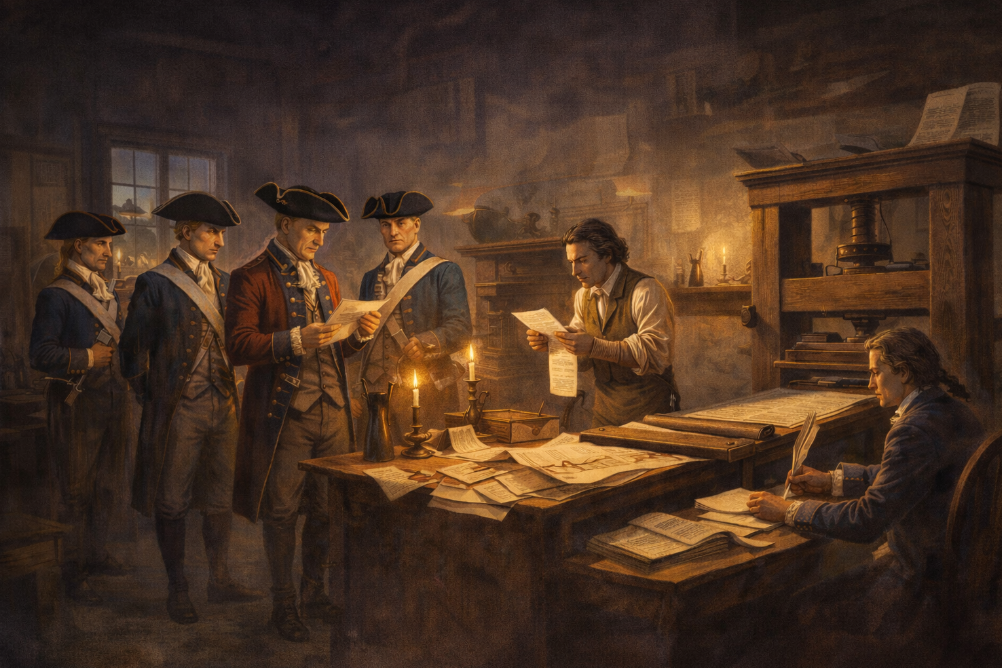
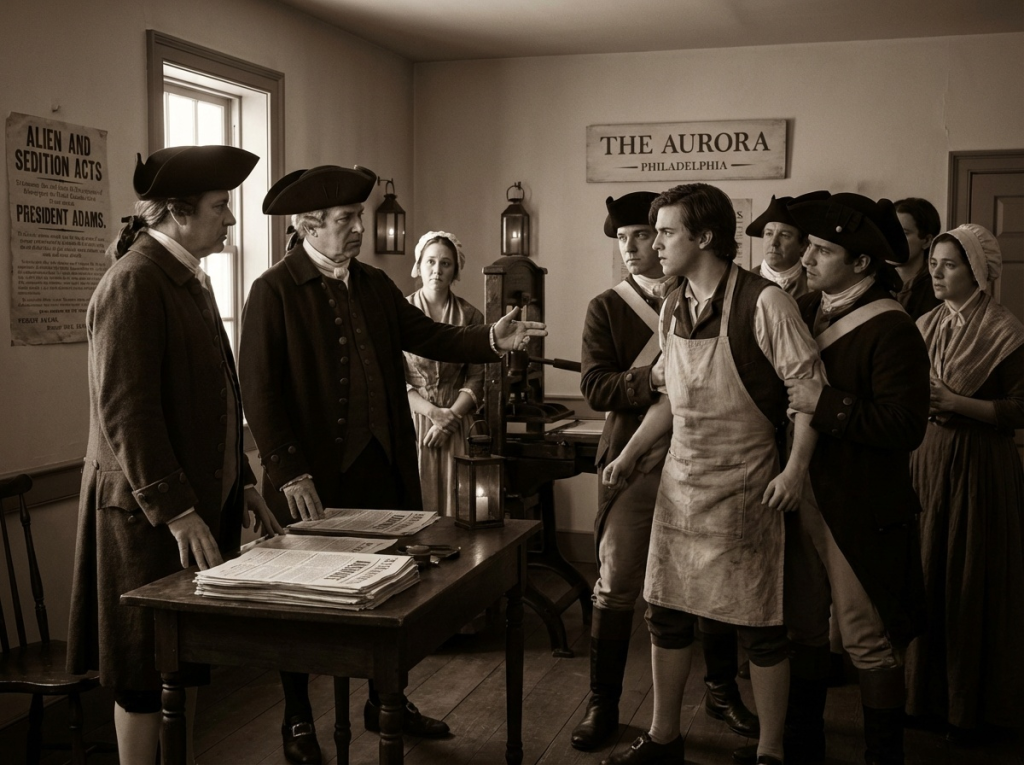
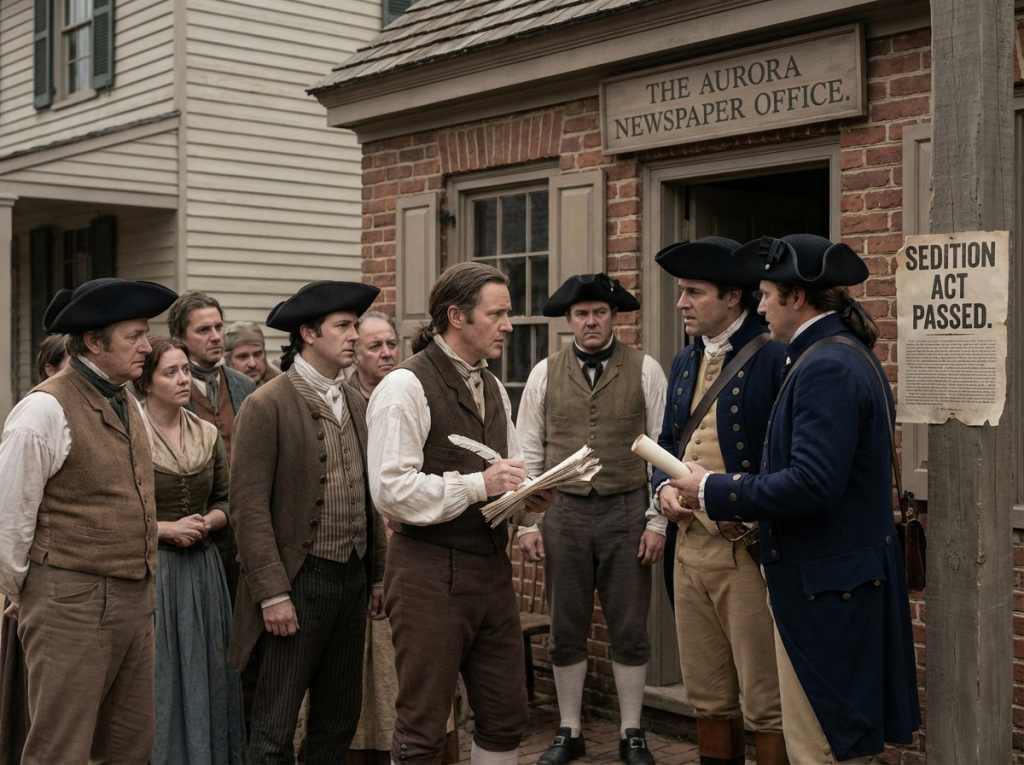
John Adams entered office convinced that dissent threatened national stability. In 1798, he signed the Alien and Sedition Acts, which criminalized criticism of the federal government. His administration jailed journalists and political opponents while insisting constitutional order remained intact.
Adams preserved the form of democracy while undermining its substance. He treated speech as a privilege contingent on loyalty rather than a right inherent to citizenship. Although Adams later acknowledged that the Acts damaged democratic legitimacy, his presidency established a lasting precedent: speech may remain legal, but punishment follows if authorities deem it dangerous.
ANDREW JACKSON
EXECUTIVE WILL ABOVE LAW
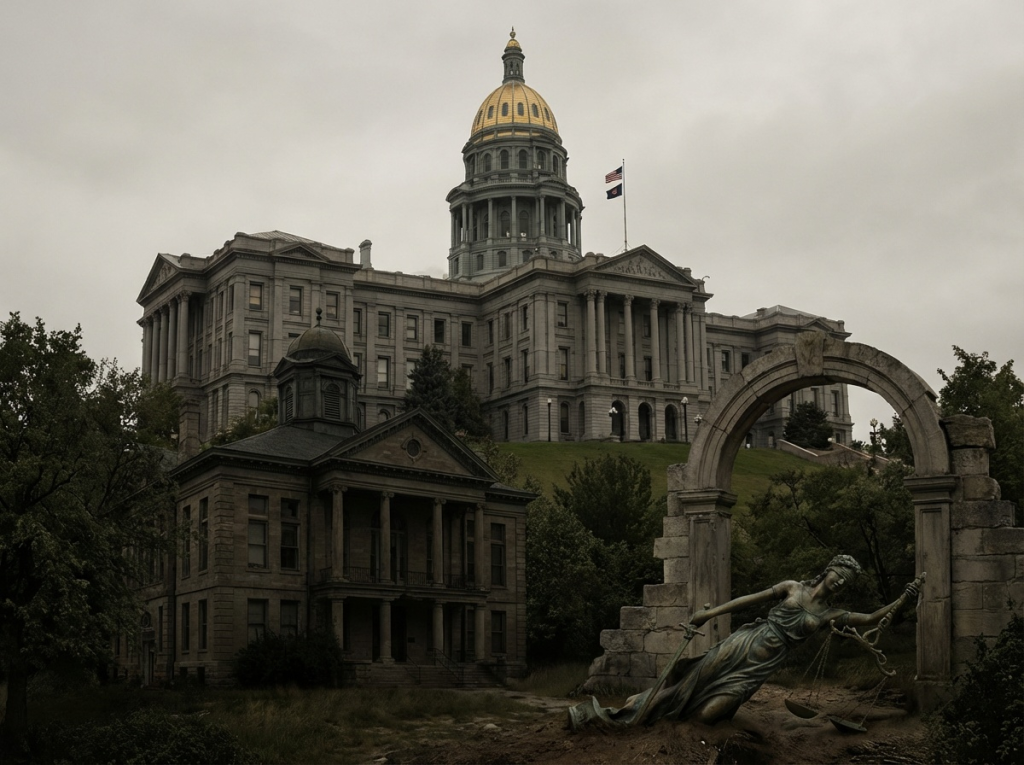
Andrew Jackson governed through force, not consensus. He expanded presidential authority, ignored Supreme Court rulings, and enforced policy through military power. His administration carried out the forced removal of Native American nations despite clear legal objections.
Jackson treated resistance as defiance rather than lawful disagreement. He framed his actions as defense of the “common man,” yet he relied on domination rather than democratic process. Jackson’s presidency represents one of the most explicit expressions of authoritarian rule in American history: executive will overriding law, courts, and human rights.
DONALD TRUMP
AUTHORITARIANISM WITHOUT DISGUISE
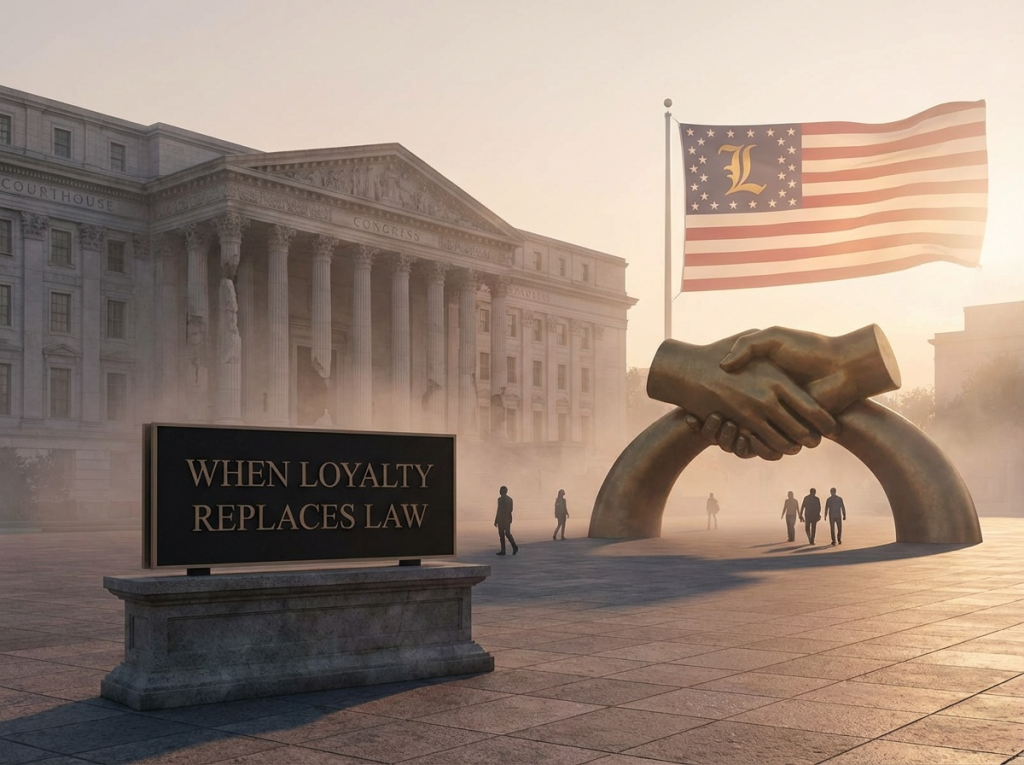
Donald Trump broke with precedent by openly expressing authoritarian impulses. He threatened political opponents with imprisonment, praised executions, admired foreign dictators, and framed dissent as treason. Unlike earlier presidents, he did not cloak these impulses in constitutional language.
Trump normalized the idea that loyalty outweighs law. While legal institutions constrained his actions, his rhetoric signaled an intent to govern through personal allegiance rather than democratic accountability. His presidency revealed how quickly domination consciousness can reemerge when cultural and institutional guardrails weaken.
III. BORDERLINE FIGURES: AUTHORITARIAN TOOLS UNDER PRESSURE
THEODORE ROOSEVELT
WAR AS VIRTUE
Theodore Roosevelt celebrated war, empire, and violence as engines of national greatness. He framed conflict as morally purifying and believed domination forged character. His rhetoric glorified killing and conquest as civilizing forces.
At the same time, Roosevelt regulated monopolies, strengthened labor protections, and preserved public lands. He restrained domination with reform but never rejected it philosophically. Roosevelt embodied a hybrid model: a reformer who nevertheless embraced domination consciousness as a governing instinct.
LYNDON B. JOHNSON
WAR DISTORTS REFORM
Lyndon Johnson escalated the Vietnam War without a formal declaration, misled Congress, and enabled surveillance of anti-war activists. His administration narrowed acceptable dissent and treated protest as a threat to national security.
Yet Johnson also advanced civil rights, voting protections, and social programs that expanded democratic participation. He did not seek permanent authoritarian rule. He used authoritarian tools situationally, not ideologically. Johnson’s presidency demonstrates how war can distort even reform-minded leadership.
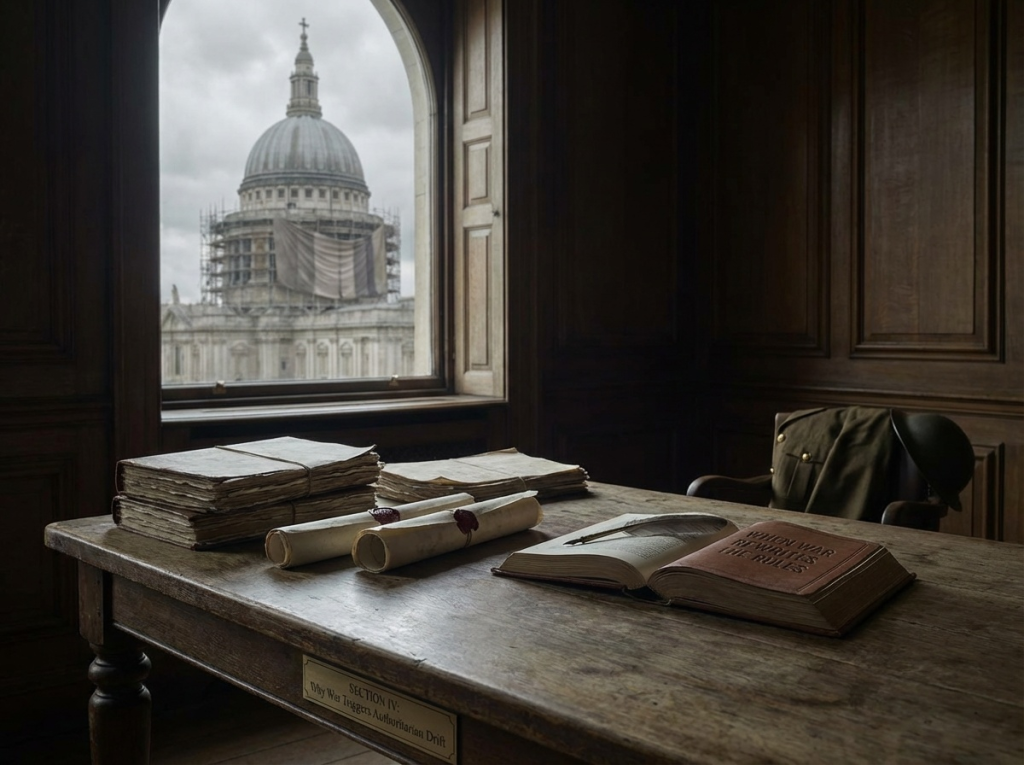
IV. WHY WAR TRIGGERS AUTHORITARIAN DRIFT
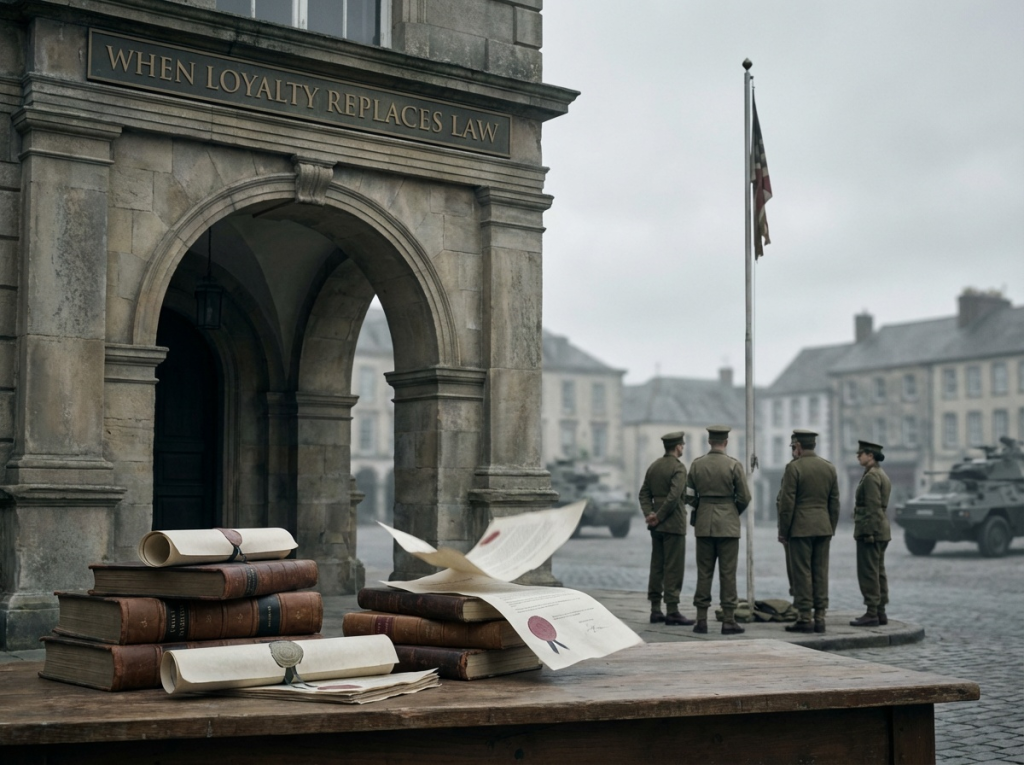
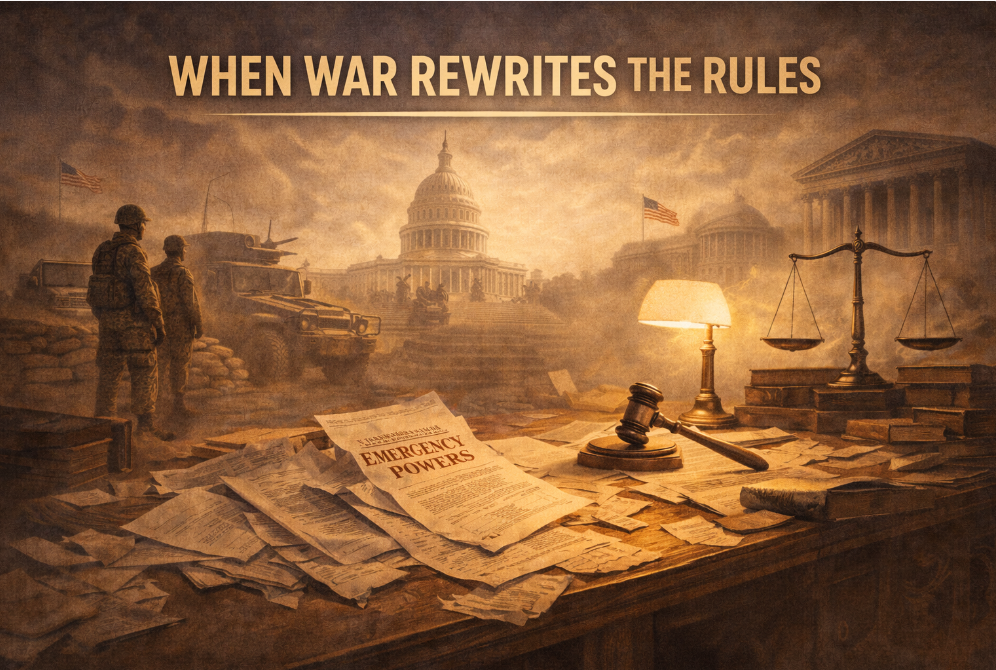
War centralizes authority. It narrows the debate. It reframes dissent as danger. In wartime, executives claim extraordinary powers, legislatures defer, and courts hesitate. The Constitution often survives intact on paper while eroding in practice.
Authoritarianism rarely arrives through coups in democratic societies. It comes through emergency logic, incremental normalization, and fear-driven compliance. History shows that once domination becomes routine, restoring democratic restraint proves difficult.
CONCLUSION
CONSENT OR CONTROL
American democracy does not move in a straight line toward freedom. It oscillates between consent and control. Some presidents embraced domination outright. Others stepped into it under pressure and stepped back. The danger arises when domination becomes identity rather than exception.
Each generation inherits the same choice: preserve government by consent or surrender it to fear. History offers no guarantees. It provides only warnings.
WHEN POWER OVERRIDES CONSENT
War, Presidents, and the Drift Toward Authoritarian Rule
By Sasha Alex Lessin, Ph.D.
Contributing Author: Janet Kira Lessin
INTRODUCTION
A PATTERN, NOT AN ACCIDENT
The United States was founded in explicit rejection of monarchy, inherited power, and rule by fear. The Constitution established a radical premise for its time: political authority flows upward from the people, not downward from rulers. Yet American history reveals a recurring contradiction. When presidents invoke war, emergency, or existential threat, democratic restraint weakens, and executive power expands.
This shift rarely requires formal suspension of the Constitution. Instead, it operates through emergency logic, selective enforcement, and cultural pressure. Speech remains legal in theory while punishment follows in practice. Dissent survives on paper but becomes dangerous in reality.
This article examines a pattern that has repeated across U.S. history: presidents who embodied royalist or oligarchic instincts, presidents who temporarily crossed into authoritarian behavior under pressure, and presidents who resisted that drift while governing during a crisis.
I. DOMINATION CONSCIOUSNESS AND POLITICAL POWER
Anthropologists and political historians identify two recurring models of governance. One rests on partnership, consent, and shared accountability. The other rests on domination, hierarchy, and coercion. Domination consciousness does not require kings or dictators. It emerges whenever leaders equate dissent with danger and loyalty with virtue.
War reliably activates this mindset. When leaders frame conflict as existential, they justify extraordinary powers, narrow acceptable speech, and demand obedience in the name of survival. The United States has not escaped this pattern. It has repeated it.
II. PRESIDENTS WHO EMBODIED ROYALIST OR OLIGARCHIC RULE
JOHN ADAMS
ORDER OVER LIBERTY
John Adams entered office convinced that dissent threatened national stability. In 1798, he signed the Alien and Sedition Acts, which criminalized criticism of the federal government. His administration jailed journalists and political opponents while insisting constitutional order remained intact.
Adams preserved the form of democracy while undermining its substance. He treated speech as a privilege contingent on loyalty rather than a right inherent to citizenship. Although Adams later acknowledged that the Acts damaged democratic legitimacy, his presidency established a lasting precedent: speech may remain legal, but punishment follows if authorities deem it dangerous.
ANDREW JACKSON
EXECUTIVE WILL ABOVE LAW
Andrew Jackson governed through force, not consensus. He expanded presidential authority, ignored Supreme Court rulings, and enforced policy through military power. His administration carried out the forced removal of Native American nations despite clear legal objections.
Jackson treated resistance as defiance rather than lawful disagreement. He framed his actions as defense of the “common man,” yet he relied on domination rather than democratic process. Jackson’s presidency represents one of the most explicit expressions of authoritarian rule in American history: executive will overriding law, courts, and human rights.
DONALD TRUMP
AUTHORITARIANISM WITHOUT DISGUISE
Donald Trump broke with precedent by openly expressing authoritarian impulses. He threatened political opponents with imprisonment, praised executions, admired foreign dictators, and framed dissent as treason. Unlike earlier presidents, he did not cloak these impulses in constitutional language.
Trump normalized the idea that loyalty outweighs law. While legal institutions constrained his actions, his rhetoric signaled an intent to govern through personal allegiance rather than democratic accountability. His presidency revealed how quickly domination consciousness can reemerge when cultural and institutional guardrails weaken.
III. BORDERLINE FIGURES: AUTHORITARIAN TOOLS UNDER PRESSURE
THEODORE ROOSEVELT
WAR AS VIRTUE
Theodore Roosevelt celebrated war, empire, and violence as engines of national greatness. He framed conflict as morally purifying and believed domination forged character. His rhetoric glorified killing and conquest as civilizing forces.
At the same time, Roosevelt regulated monopolies, strengthened labor protections, and preserved public lands. He restrained domination with reform but never rejected it philosophically. Roosevelt embodied a hybrid model: a reformer who nevertheless embraced domination consciousness as a governing instinct.
LYNDON B. JOHNSON
WAR DISTORTS REFORM
Lyndon Johnson escalated the Vietnam War without a formal declaration, misled Congress, and enabled surveillance of anti-war activists. His administration narrowed acceptable dissent and treated protest as a threat to national security.
Yet Johnson also advanced civil rights, voting protections, and social programs that expanded democratic participation. He did not seek permanent authoritarian rule. He used authoritarian tools situationally, not ideologically. Johnson’s presidency demonstrates how war can distort even reform-minded leadership.
IV. WHY WAR TRIGGERS AUTHORITARIAN DRIFT
War centralizes authority. It narrows the debate. It reframes dissent as danger. In wartime, executives claim extraordinary powers, legislatures defer, and courts hesitate. The Constitution often survives intact on paper while eroding in practice.
Authoritarianism rarely arrives through coups in democratic societies. It comes through emergency logic, incremental normalization, and fear-driven compliance. History shows that once domination becomes routine, restoring democratic restraint proves difficult.
THE DEMOCRATIC COUNTERWEIGHT
Presidents Who Led Through Consent, Law, and Constitutional Restraint
American history does not consist solely of authoritarian drift. At critical moments, presidents chose restraint over domination, law over loyalty, and public trust over fear. These leaders did not merely speak democratic values; they governed through them, often under immense pressure.
What follows are the most precise opposing figures to the royalist/oligarchic archetype.
1. George Washington
POWER REFUSED
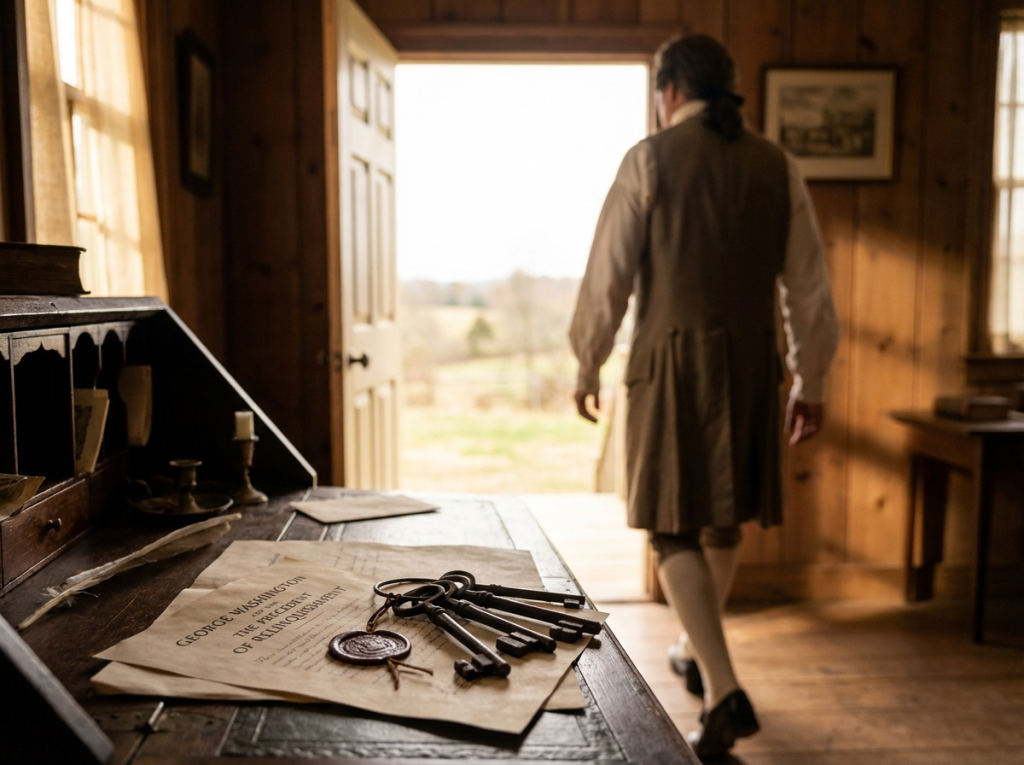
George Washington established the most important democratic precedent in American history by voluntarily relinquishing power. He rejected monarchy, refused a lifetime presidency, and stepped down after two terms, even though no law required him to do so.
Washington understood that democracy depends not on strong rulers, but on leaders willing to limit themselves. His restraint gave the Constitution credibility before it had enforcement power.
Why he matters:
Washington proved that authority could exist without domination—and that legitimacy grows when power steps back.
2. Thomas Jefferson
CIVIL LIBERTY AS FIRST PRINCIPLE
Thomas Jefferson anchored American democracy in freedom of speech, freedom of conscience, and resistance to centralized authority. He opposed standing armies, distrusted executive power, and insisted that dissent strengthens republics rather than weakens them.
Jefferson understood democracy as a living system requiring constant correction, not enforced obedience.
Why he matters:
Jefferson framed liberty not as a privilege granted by rulers, but as a natural right that limits government itself.
3. James Madison
ARCHITECT OF CONSTRAINT
James Madison designed democracy with human fallibility in mind. He assumed leaders would seek power—and built a system to stop them. Checks and balances, separation of powers, and constitutional limits formed the core of his political philosophy.
Madison rejected the idea that virtue alone could protect democracy. He relied on structure, law, and accountability.
Why he matters:
Madison understood that democracy survives not through trust in leaders, but through limits on them.
4. Abraham Lincoln
UNION WITHOUT TYRANNY
Abraham Lincoln preserved the Union during its greatest crisis without abandoning its moral foundation. While he exercised extraordinary wartime powers, he consistently framed them as temporary, defensive, and accountable to constitutional order.
Lincoln spoke directly to the public, appealed to shared humanity, and resisted vengeance even after catastrophic loss.
Why he matters:
Lincoln demonstrated that democracy can survive civil war without becoming a permanent dictatorship.
5. Franklin D. Roosevelt
POWER USED DOWNWARD
Franklin D. Roosevelt expanded federal power—but used it to protect ordinary people, not silence them. He strengthened labor rights, regulated financial elites, and built social safety nets that expanded democratic participation.
While FDR committed serious civil-liberty violations during wartime, his governing philosophy consistently aimed to reduce oligarchic power, not concentrate it.
Why he matters:
FDR showed that strong government can serve democracy when it restrains wealth and protects the vulnerable.
6. Harry S. Truman
CIVILIAN CONTROL OF POWER
Harry Truman defended democratic norms by asserting civilian control over the military—even when it cost him politically. He fired General Douglas MacArthur for insubordination, reinforcing the principle that military power answers to elected authority.
Truman governed plainly, transparently, and without cult of personality.
Why he matters:
Truman proved that democracy requires leaders willing to confront power centers, not flatter them.
7. Dwight D. Eisenhower
WARNING AGAINST EMPIRE
Dwight Eisenhower, a career general, governed as a constitutional conservative who distrusted war profiteering and permanent militarization. In his farewell address, he warned the nation about the military-industrial complex and its threat to democratic governance.
Eisenhower resisted pressure to expand wars and emphasized stability over spectacle.
Why he matters:
Eisenhower understood that unchecked militarism corrodes democracy from within.
8. Jimmy Carter
MORAL RESTRAINT
Jimmy Carter governed with an explicit commitment to human rights, transparency, and international law. He rejected imperial ambition, emphasized diplomacy, and treated the presidency as a public trust rather than a throne.
Carter accepted political defeat rather than compromise democratic principles.
Why he matters:
Carter demonstrated that democracy requires moral courage, not domination.
9. Barack Obama
INSTITUTIONAL RESPECT
Barack Obama governed through the constitutional process, respected judicial independence, and defended freedom of the press—even when criticized relentlessly. He emphasized pluralism, civic participation, and peaceful transfer of power.
Obama treated democracy as a shared project rather than a personal mandate.
Why he matters:
Obama reaffirmed that democratic leadership depends on restraint, legitimacy, and respect for institutions.
CONCLUSION
THE OTHER LINEAGE
These presidents form the counter-lineage to domination consciousness. They governed through consent, accepted limits on their power, and treated dissent as a democratic necessity rather than a threat.
They remind us that democracy survives not through strength alone, but through restraint, accountability, and trust in the people.
CONCLUSION
CONSENT OR CONTROL
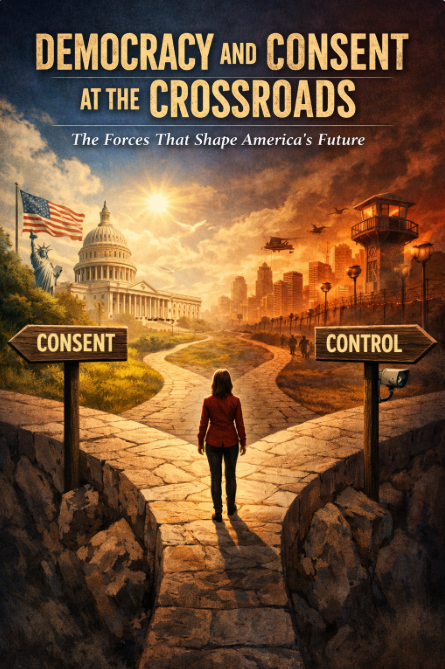
American democracy does not move in a straight line toward freedom. It oscillates between consent and control. Some presidents embraced domination outright. Others stepped into it under pressure and stepped back. The danger arises when domination becomes identity rather than exception.
Each generation inherits the same choice: preserve government by consent or surrender it to fear. History offers no guarantees. It provides only warnings.
PART I — THE CONTINUUM CHART
All U.S. Presidents on the Oligarchy / Authoritarian ↔ Democracy Spectrum
How to read this:
- −5 = Strong oligarchic/authoritarian / royalist instincts
- 0 = Mixed, conflicted, or situational
- +5 = Strong democratic/constitutional / partnership leadership
This is not a moral judgment; it reflects governing behavior, not personality.
| # | President | Continuum |
|---|---|---|
| 1 | George Washington | +5 |
| 2 | John Adams | −3 |
| 3 | Thomas Jefferson | +4 |
| 4 | James Madison | +4 |
| 5 | James Monroe | +1 |
| 6 | John Quincy Adams | +3 |
| 7 | Andrew Jackson | −5 |
| 8 | Martin Van Buren | −1 |
| 9 | William Henry Harrison | +1 |
| 10 | John Tyler | −2 |
| 11 | James K. Polk | −3 |
| 12 | Zachary Taylor | 0 |
| 13 | Millard Fillmore | −2 |
| 14 | Franklin Pierce | −3 |
| 15 | James Buchanan | −2 |
| 16 | Abraham Lincoln | +4 |
| 17 | Andrew Johnson | −4 |
| 18 | Ulysses S. Grant | +2 |
| 19 | Rutherford B. Hayes | +1 |
| 20 | James A. Garfield | +3 |
| 21 | Chester A. Arthur | +2 |
| 22 | Grover Cleveland | +1 |
| 23 | Benjamin Harrison | 0 |
| 25 | William McKinley | −2 |
| 26 | Theodore Roosevelt | −1 |
| 27 | William Howard Taft | +2 |
| 28 | Woodrow Wilson | −3 |
| 29 | Warren G. Harding | −2 |
| 30 | Calvin Coolidge | −2 |
| 31 | Herbert Hoover | −1 |
| 32 | Franklin D. Roosevelt | +3 |
| 33 | Harry S. Truman | +3 |
| 34 | Dwight D. Eisenhower | +4 |
| 35 | John F. Kennedy | +3 |
| 36 | Lyndon B. Johnson | 0 |
| 37 | Richard Nixon | −4 |
| 38 | Gerald Ford | +2 |
| 39 | Jimmy Carter | +4 |
| 40 | Ronald Reagan | −1 |
| 41 | George H. W. Bush | +1 |
| 42 | Bill Clinton | +1 |
| 43 | George W. Bush | −3 |
| 44 | Barack Obama | +3 |
| 45 | Donald Trump | −5 |
| 46 | Joe Biden | +2 |
| 47 | Donald Trump (2nd term) | −5 |
(This chart alone is a powerful visual sidebar or downloadable PDF.)
PART II — SUMMARY IMAGES FOR THE ARTICLE
(Conceptually distinct, not repetitive)
IMAGE A — THE CONTINUUM (STRUCTURAL SUMMARY)

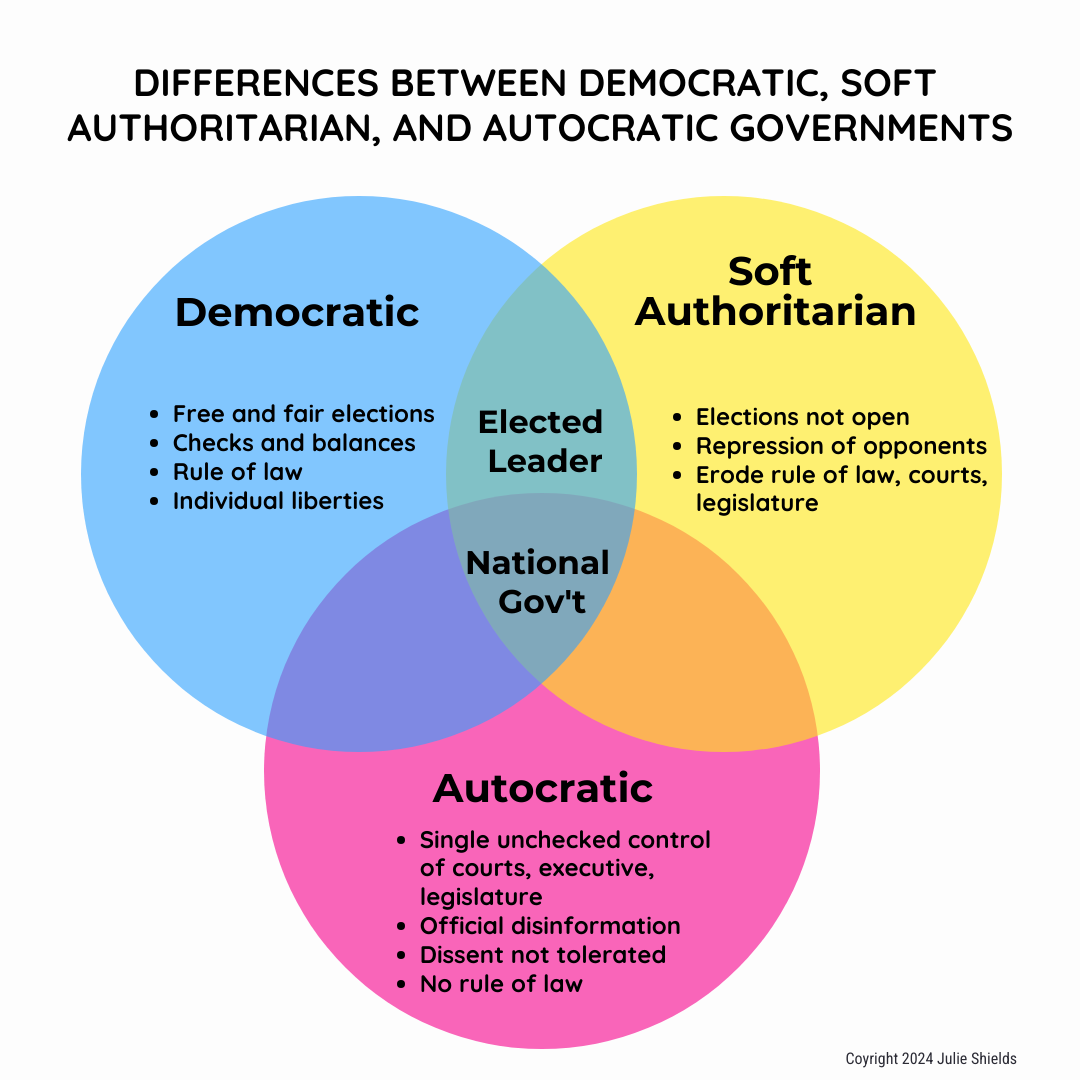
USE: At the very top of the article
WHY: Frames the entire argument visually before a single word is read.
IMAGE B — WAR AS THE TRIGGER


USE: Between Sections II and III
WHY: Shows why presidents slide along the continuum.
IMAGE C — THE CHOICE


USE: Just before the Conclusion
WHY: Ends with agency, not fear.
PART III — THE DEMOCRATIC LINEAGE
(Designed to be INCLUDED in Article 1, not separate)
THE COUNTER-LINEAGE: LEADERS WHO CHOSE RESTRAINT
American democracy survives because some presidents consistently rejected domination even when power tempted them. They limited themselves, respected dissent, and treated the Constitution as a restraint, not a weapon.
Core Democratic Lineage (Top Tier):
- George Washington
- James Madison
- Abraham Lincoln
- Franklin D. Roosevelt
- Dwight D. Eisenhower
- Jimmy Carter
Second Tier (Strong Democratic Lean):
- Jefferson, Truman, Kennedy, Obama, Ford
These leaders:
- Accepted limits on power
- Respected dissent
- Preserved civilian control
- Stepped down peacefully
- Strengthened institutions rather than personal authority
They form the antidote lineage to domination consciousness.
War, Presidents, and the Rise of Domination Consciousness in America


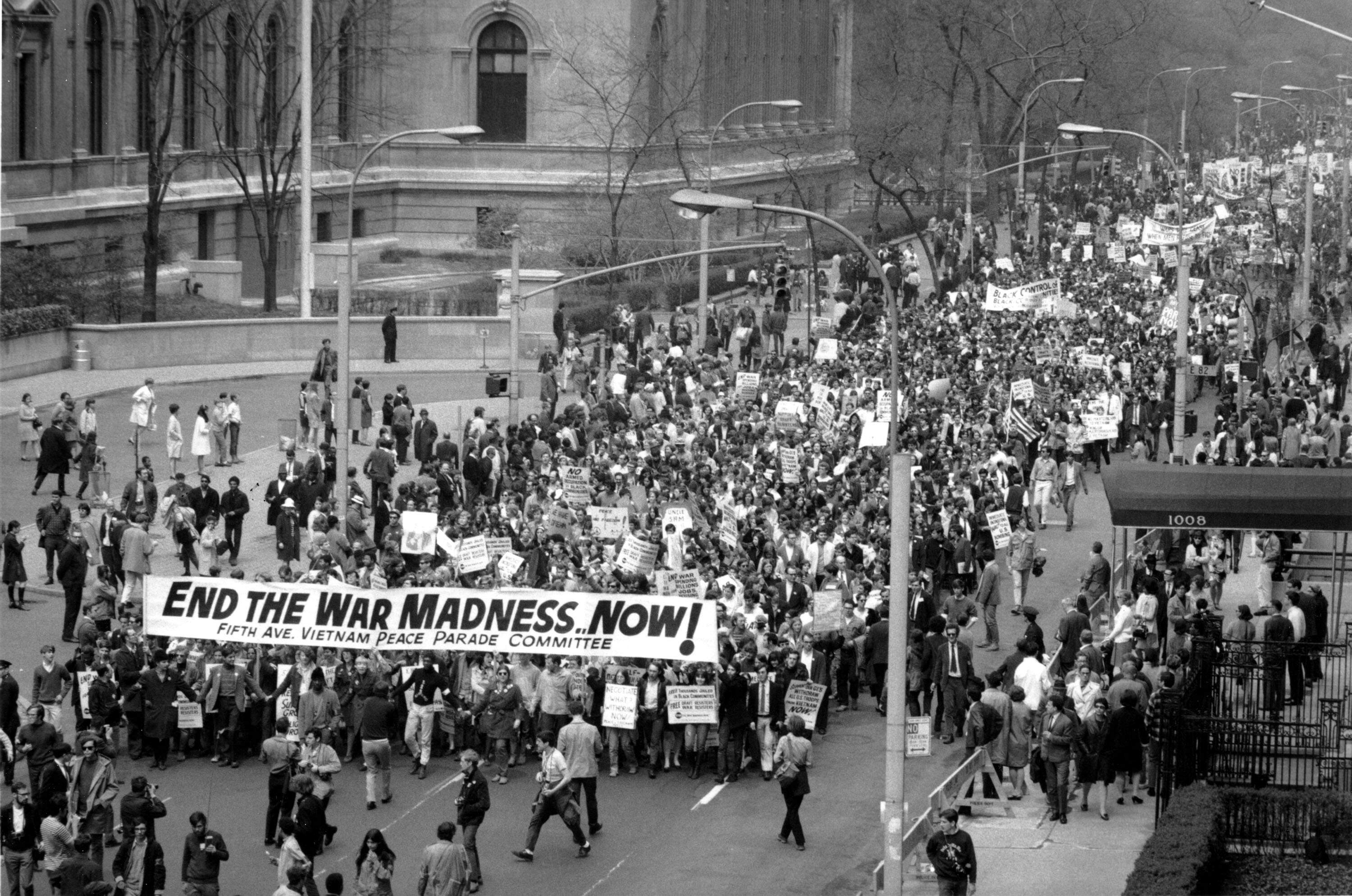
THE ANUNNAKI OVERLAY
Domination Consciousness as an Inherited Governance Pattern
The pattern described in this article—executive dominance during war, suppression of dissent, and the elevation of loyalty over law—does not emerge randomly. It mirrors a far older governance model embedded in humanity’s deepest mythologies.
Across ancient Mesopotamian texts, Anunnaki narratives describe a ruling hierarchy divided between domination-based authority and partnership-oriented stewardship. In this framework, power flows downward from elite rulers who claim divine mandate, enforce obedience, and treat dissent as rebellion rather than dialogue.
This domination model appears most clearly in figures associated with Enlil and later Marduk—archetypes defined by hierarchy, punishment, loyalty tests, and control through fear. These rulers governed through command, not consent, and relied on war and threat to maintain order.
By contrast, other Anunnaki figures—most notably Enki and the Great Goddess traditions associated with Ninmah—embodied a different approach. Their stories emphasize creativity, mediation, shared knowledge, and the protection of humanity from excessive control. Authority in this model arises through wisdom, service, and relationship rather than coercion.
When viewed through this lens, American political history reflects a recurring re-enactment of these ancient governance archetypes. Presidents who gravitate toward authoritarian rule during wartime echo the Enlil/Marduk domination pattern: centralized power, narrowed speech, and punishment framed as necessity. Presidents who restrain themselves, protect dissent, and govern through law echo the Enki/Ninmah partnership model.
This overlay does not require literal belief in extraterrestrial origins to remain useful. As an interpretive framework, it highlights how deeply embedded domination consciousness remains in human governance—and how easily it resurfaces when fear overrides trust.
Article I documents this pattern empirically. The Anunnaki overlay explains why it feels so familiar.
DOMINATION CONSCIOUSNESS IN AMERICAN POWER
War, Oligarchy, and the Struggle for Democratic Restraint
ARTICLE I
WHEN POWER OVERRIDES CONSENT
War, Presidents, and the Drift Toward Authoritarian Rule
By Sasha Alex Lessin, Ph.D.
Contributing Author: Janet Kira Lessin
IMAGE LIST — ARTICLE I (FINAL)
IMAGE 1 — ARTICLE HEADER
TITLE:
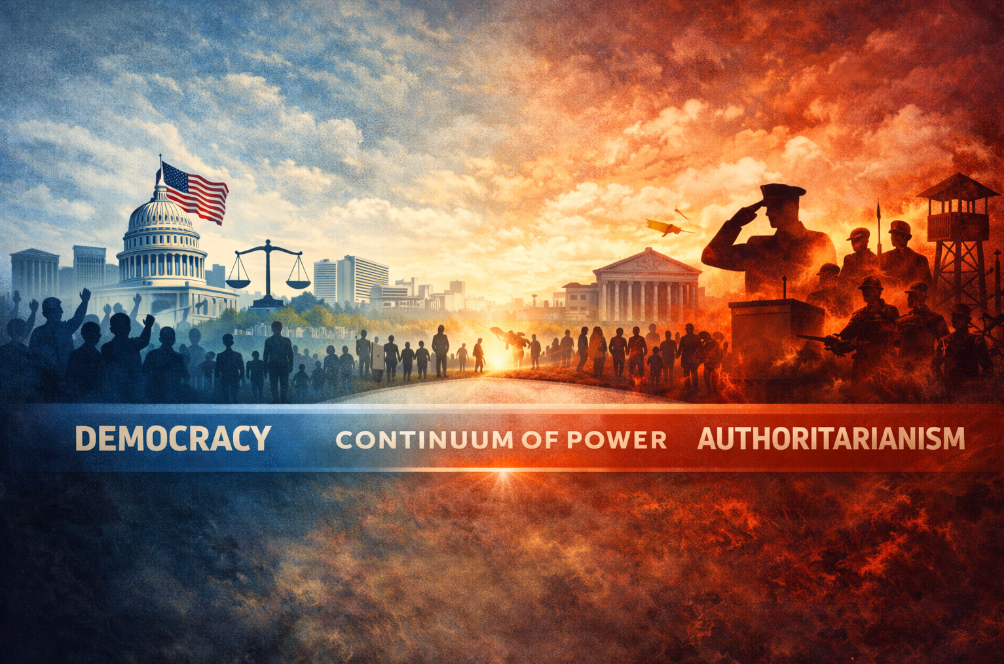
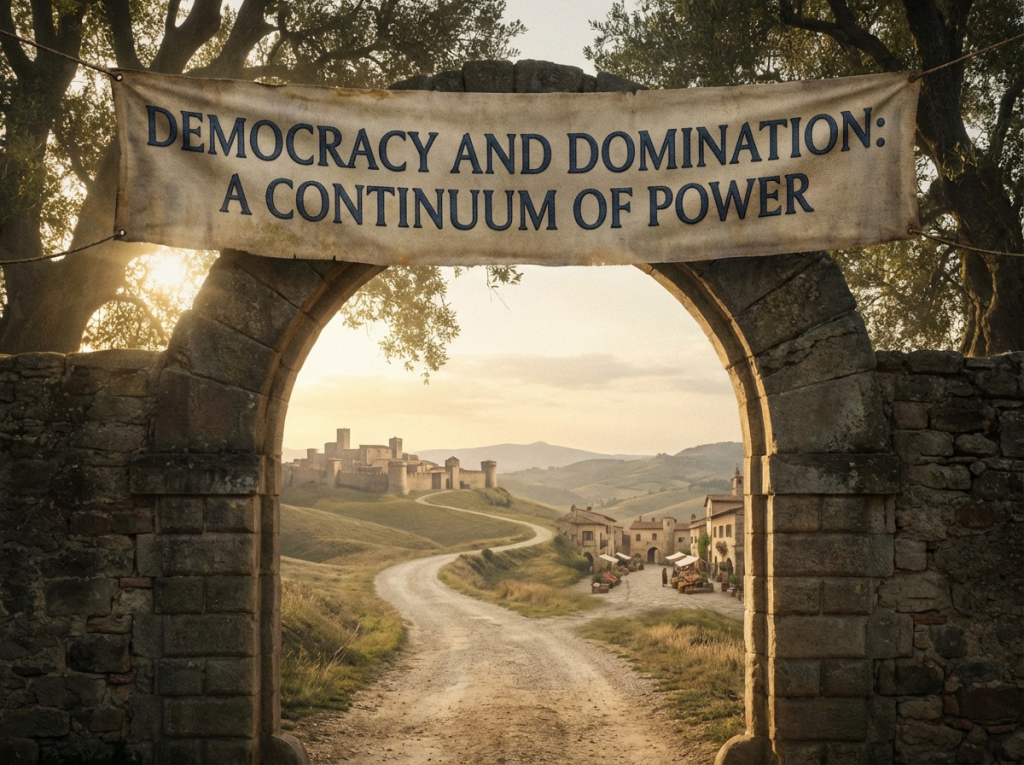
DEMOCRACY AND DOMINATION: A CONTINUUM OF POWER
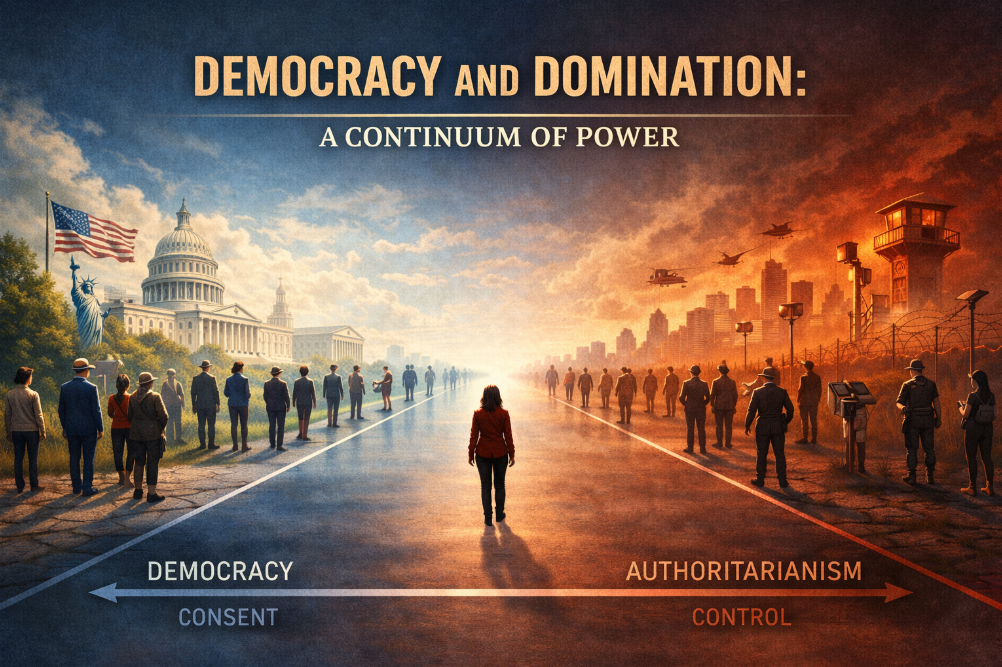
GOES UNDER:
➡️ Directly under the article title and byline
DESCRIPTION:
A conceptual visualization of democracy and authoritarianism as opposite ends of a continuum rather than fixed states. Civic institutions and citizens appear distributed along the spectrum, emphasizing gradual drift rather than sudden collapse.
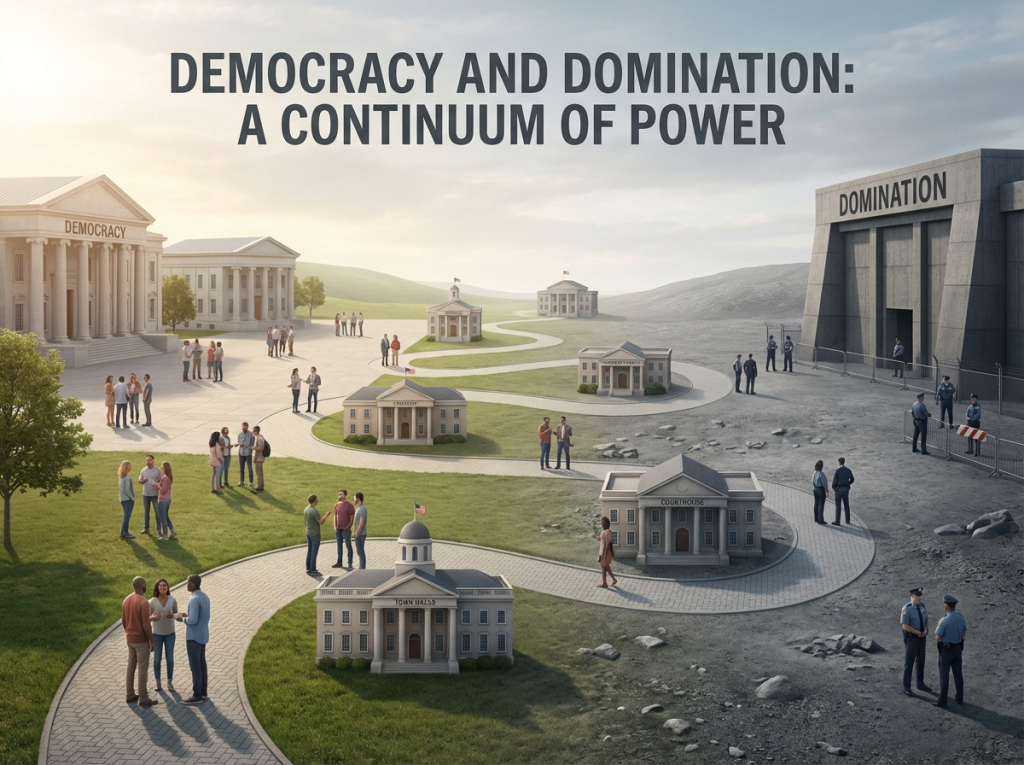
OPENART.AI PROMPT:
realistic, photorealistic, cinematic lighting, soft natural colors, fantasy realism, highly detailed, emotional depth, artistic composition, conceptual political landscape showing democracy and authoritarianism as opposite ends of a continuum, civic institutions and citizens distributed along the spectrum, no specific leaders, calm but serious tone, modern American context, landscape orientation
IMAGE 2 — HISTORICAL WARNING
TITLE:
CRIMINALIZING DISSENT IN THE EARLY REPUBLIC
GOES UNDER:
➡️ Section II: “Presidents Who Embodied Royalist or Oligarchic Rule.”
➡️ Specifically under the John Adams subsection
DESCRIPTION:
A restrained historical scene evoking the era of the Alien and Sedition Acts, showing tension between government authority and a free press. The emphasis is on suppression of dissent rather than spectacle.
OPENART.AI PROMPT:
realistic, photorealistic, cinematic lighting, soft natural colors, fantasy realism, highly detailed, emotional depth, artistic composition, late 18th century American scene, free press under pressure, Alien and Sedition Acts era, journalists and civic tension, no caricature, historical realism, landscape orientation
IMAGE 3 — EXECUTIVE FORCE
TITLE:
EXECUTIVE WILL ABOVE LAW
GOES UNDER:
➡️ Section II: “Presidents Who Embodied Royalist or Oligarchic Rule.”
➡️ Specifically under the Andrew Jackson subsection
DESCRIPTION:
A symbolic depiction of executive authority overriding legal institutions, with courts and law diminished beneath centralized power. No identifiable individuals.
OPENART.AI PROMPT:
realistic, photorealistic, cinematic lighting, soft natural colors, fantasy realism, highly detailed, emotional depth, artistic composition, symbolic representation of executive power overriding courts and law, diminished legal institutions, no identifiable individuals, somber historical tone, landscape orientation
IMAGE 4 — AUTHORITARIAN NORMALIZATION
TITLE:
WHEN LOYALTY REPLACES LAW
GOES UNDER:
➡️ Section II: “Presidents Who Embodied Royalist or Oligarchic Rule.”
➡️ Specifically under the Donald Trump subsection
DESCRIPTION:
A modern symbolic scene that elevates personal loyalty above institutions, with law and accountability receding into the background. Structural, not individual.
OPENART.AI PROMPT:
realistic, photorealistic, cinematic lighting, soft natural colors, fantasy realism, highly detailed, emotional depth, artistic composition, modern symbolic depiction of loyalty replacing rule of law, institutions fading into background, no specific person, contemporary American setting, landscape orientation
IMAGE 5 — WAR AS CATALYST
TITLE:
WHEN WAR REWRITES THE RULES
GOES UNDER:
➡️ Section IV: “Why War Triggers Authoritarian Drift.”
DESCRIPTION:
A symbolic depiction of wartime emergency powers: legal documents, civic institutions under strain, and subtle military presence—without violence or propaganda.
OPENART.AI PROMPT:
realistic, photorealistic, cinematic lighting, soft natural colors, fantasy realism, highly detailed, emotional depth, artistic composition, symbolic depiction of wartime emergency powers, legal documents and civic institutions under strain, subtle military presence, no combat, no crowds, serious restrained tone, landscape orientation
IMAGE 6 — ARTICLE CLOSER
TITLE:
CONSENT OR CONTROL
GOES UNDER:
➡️ Just before the Conclusion
DESCRIPTION:
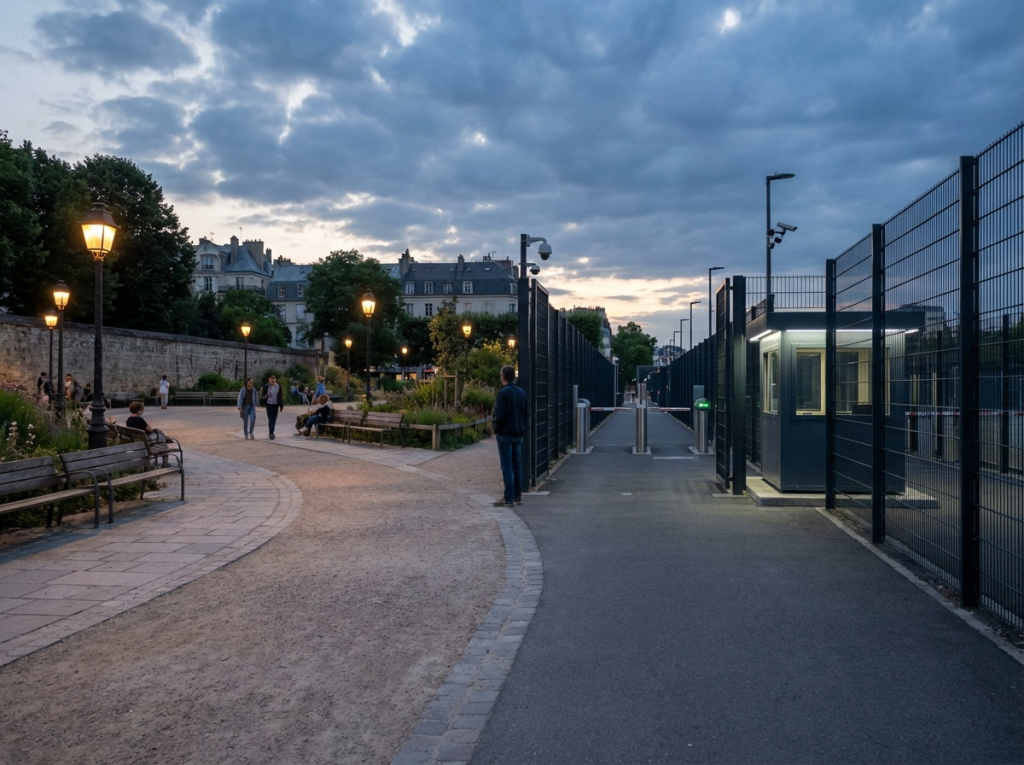
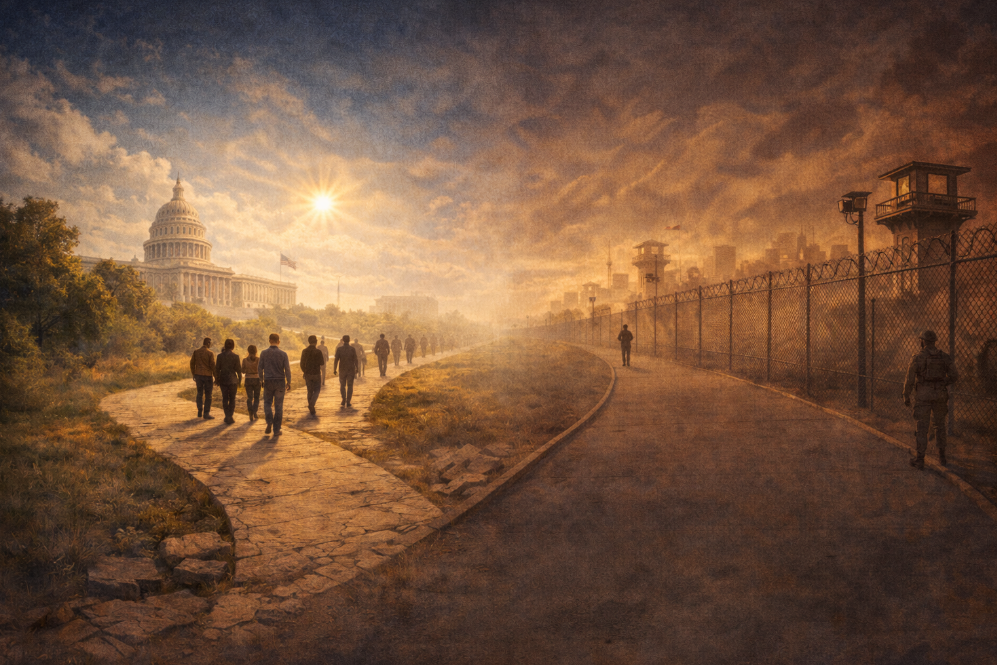
A quiet civic crossroads: one path open and communal, the other orderly but fenced and monitored. No signage, no slogans—only choice.
OPENART.AI PROMPT:
realistic, photorealistic, cinematic lighting, soft natural colors, fantasy realism, highly detailed, emotional depth, artistic composition, civic crossroads metaphor, open democratic path versus controlled authoritarian path, no signage, no slogans, reflective mood, contemporary setting, landscape orientation
OPTIONAL COMPOSITE FOR ARTICLE I
COMPOSITE IMAGE — ARTICLE SUMMARY
TITLE:
THE AMERICAN STRUGGLE: POWER AND RESTRAINT

GOES:
➡️ Either at the very end of Article I or as the featured image when sharing on Substack and social platforms
DESCRIPTION:
A restrained montage of civic institutions, citizens, documents, and crossroads—no leaders, no rallies, no spectacle.
OPENART.AI PROMPT:
realistic, photorealistic, cinematic lighting, soft natural colors, fantasy realism, highly detailed
ARTICLE 1
WHEN POWER OVERRIDES CONSENT
War, Presidents, and the Drift Toward Authoritarian Rule
By Sasha Alex Lessin, Ph.D.
Contributing Author: Janet Kira Lessin
IMAGE SET FOR ARTICLE 1
IMAGE 1 — ARTICLE HEADER IMAGE
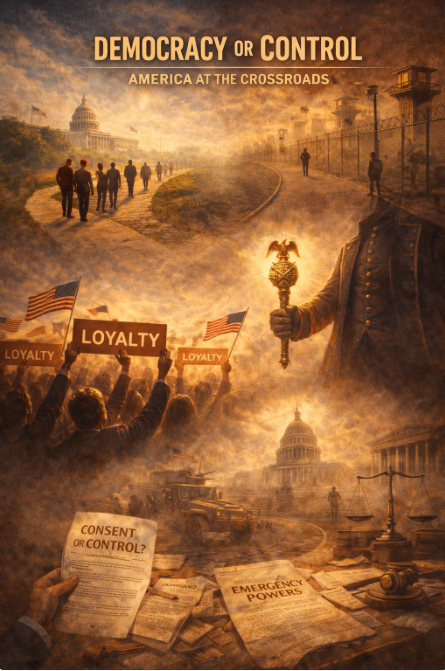
TITLE:
DEMOCRACY AND DOMINATION: A CONTINUUM OF POWER
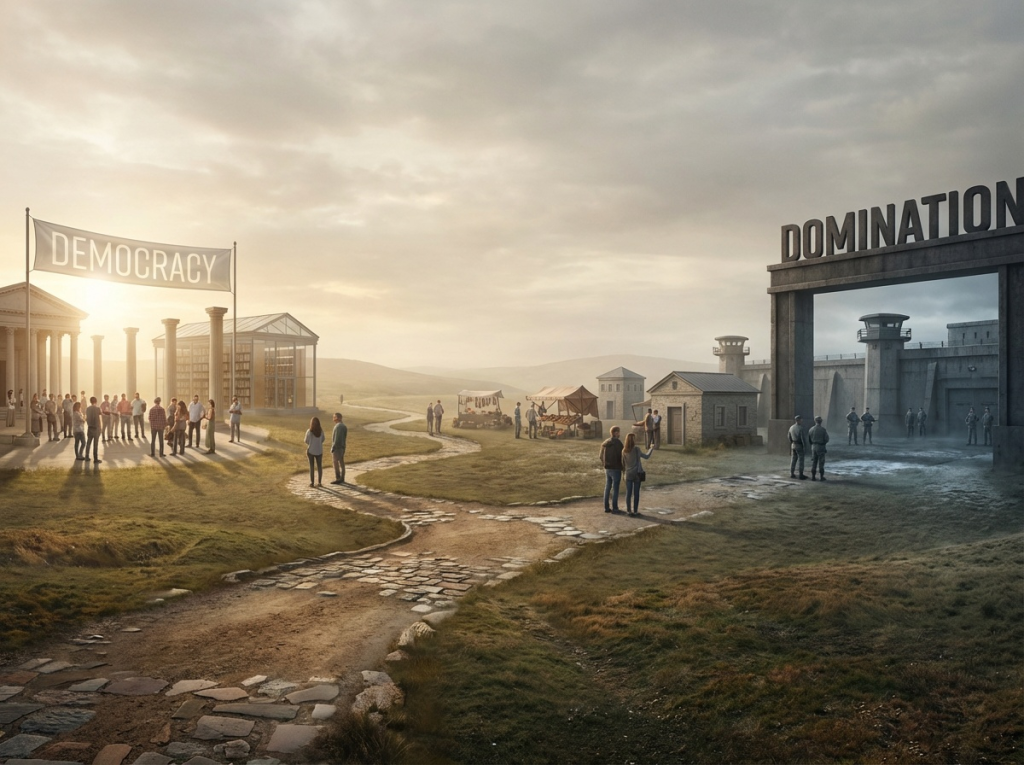
DESCRIPTION:
A conceptual illustration showing democracy and authoritarianism as opposing ends of a spectrum rather than absolute categories. Citizens, institutions, and leaders appear distributed along the continuum, emphasizing drift rather than sudden collapse.
PLACEMENT:
➡️ Top of article, under title
OPENART.AI PROMPT:
realistic, photorealistic, cinematic lighting, soft natural colors, fantasy realism, highly detailed, emotional depth, artistic composition, conceptual political continuum, democracy on one side authoritarianism on the other, citizens and institutions spread along a spectrum, no specific leaders, symbolic but grounded, landscape orientation
IMAGE 2 — WAR AS THE TRIGGER
TITLE:
WHEN WAR REWRITES THE RULES
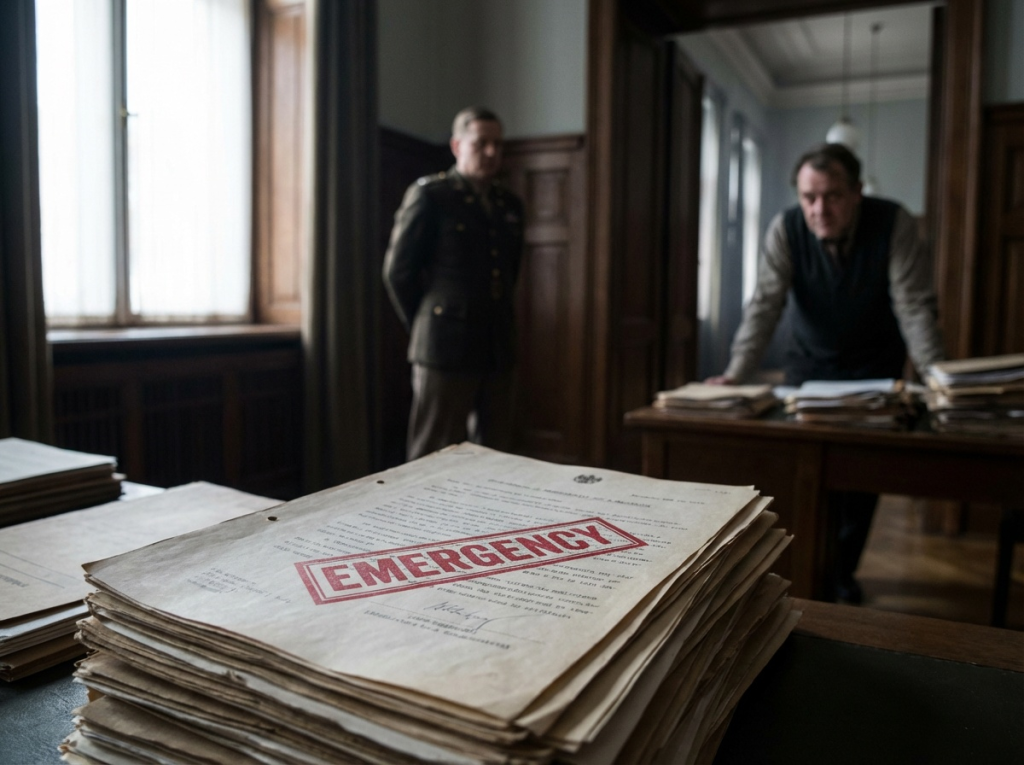
DESCRIPTION:
A restrained, symbolic depiction of wartime emergency powers: documents stamped “Emergency,” muted military presence, and civilian institutions under strain—without crowds, rallies, or propaganda imagery.
PLACEMENT:
➡️ Under section: Why War Triggers Authoritarian Drift
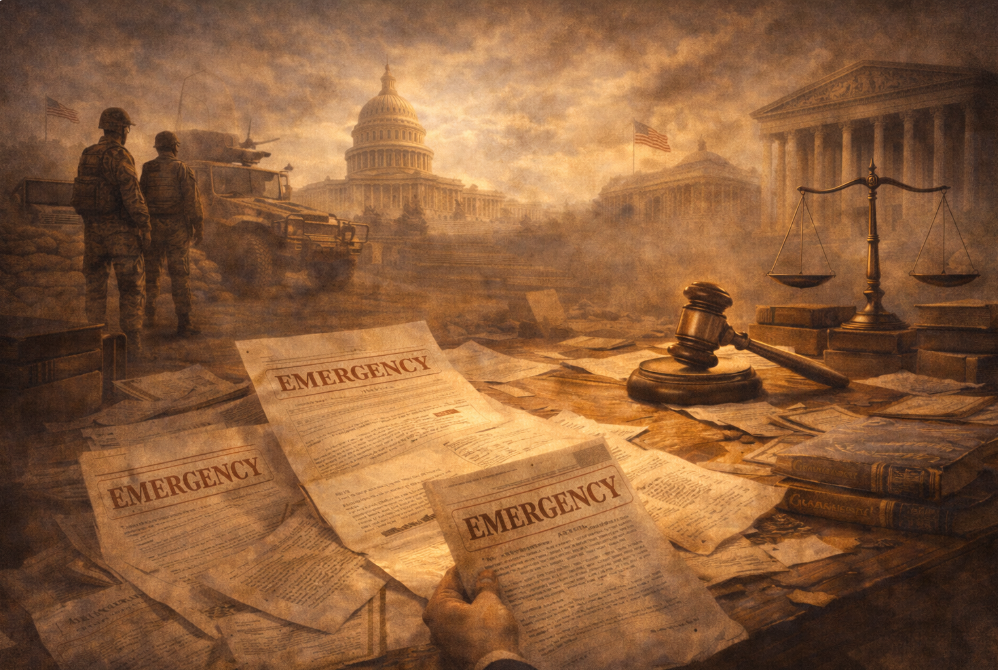
OPENART.AI PROMPT:
realistic, photorealistic, cinematic lighting, soft natural colors, fantasy realism, highly detailed, emotional depth, artistic composition, wartime emergency powers symbolism, legal documents, muted military presence, tension without violence, institutional strain, landscape orientation
IMAGE 3 — AUTHORITARIAN EXEMPLARS (SUBTLE)
TITLE:
EXECUTIVE POWER WITHOUT RESTRAINT
DESCRIPTION:
A symbolic scene showing a solitary executive figure isolated above legal institutions—courts, press, legislature—without identifying any real person. The emphasis is structural, not personal.
PLACEMENT:
➡️ Under section: Presidents Who Embodied Royalist or Oligarchic Rule
OPENART.AI PROMPT:
realistic, photorealistic, cinematic lighting, soft natural colors, fantasy realism, highly detailed, emotional depth, artistic composition, symbolic executive power above institutions, courts and press below, no identifiable individuals, structural authoritarianism, landscape orientation
IMAGE 4 — THE CHOICE (ARTICLE CLOSER)
TITLE:
CONSENT OR CONTROL
DESCRIPTION:
A quiet, non-dramatic image of a civic crossroads: one path orderly but fenced and monitored, the other open and communal. No slogans, no crowds—just choice.
PLACEMENT:
➡️ Just before Conclusion
OPENART.AI PROMPT:
realistic, photorealistic, cinematic lighting, soft natural colors, fantasy realism, highly detailed, emotional depth, artistic composition, civic crossroads metaphor, open democratic path versus controlled authoritarian path, calm and reflective, landscape orientation
ARTICLE 2
THE DEMOCRATIC LINEAGE
Presidents Who Governed Through Restraint, Law, and Consent
IMAGE SET FOR ARTICLE 2
IMAGE 1 — ARTICLE HEADER
TITLE:
LEADERSHIP BY RESTRAINT
DESCRIPTION:
A dignified, non-heroic visual emphasizing restraint: empty podium, folded Constitution, peaceful transfer of power. No faces, no Mount Rushmore.
PLACEMENT:
➡️ Top of article
OPENART.AI PROMPT:
realistic, photorealistic, cinematic lighting, soft natural colors, fantasy realism, highly detailed, emotional depth, artistic composition, empty podium, folded constitution, peaceful civic symbols, leadership through restraint, landscape orientation
IMAGE 2 — SELF-LIMITATION
TITLE:
POWER STEPPED BACK
DESCRIPTION:
A symbolic depiction of a leader walking away from authority—keys left behind, open door, daylight ahead. Emphasis on voluntary restraint.
PLACEMENT:
➡️ Under section: George Washington and the Precedent of Relinquishment
OPENART.AI PROMPT:
realistic, photorealistic, cinematic lighting, soft natural colors, fantasy realism, highly detailed, emotional depth, artistic composition, leader walking away from power, keys on desk, open door, daylight, symbolic restraint, landscape orientation
IMAGE 3 — INSTITUTIONS OVER INDIVIDUALS
TITLE:
DEMOCRACY AS STRUCTURE, NOT PERSONALITY
DESCRIPTION:
Courts, legislature, free press, and citizens show working in balance—no central figure dominating the frame.
PLACEMENT:
➡️ Mid-article, after listing democratic presidents
OPENART.AI PROMPT:
realistic, photorealistic, cinematic lighting, soft natural colors, fantasy realism, highly detailed, emotional depth, artistic composition, democratic institutions working together, courts legislature press citizens, no central leader, balance and cooperation, landscape orientation
ARTICLE 3
THE LANGUAGE OF CONTROL
How Fear Rewrites Freedom
IMAGE SET FOR ARTICLE 3
IMAGE 1 — WORDS UNDER PRESSURE
TITLE:
WHEN LANGUAGE BENDS
DESCRIPTION:
Words like “Freedom,” “Security,” and “Order” subtly distorted—not melting, not exploding—just warped enough to feel wrong.
PLACEMENT:
➡️ Top of article
OPENART.AI PROMPT:
realistic, photorealistic, cinematic lighting, soft natural colors, fantasy realism, highly detailed, emotional depth, artistic composition, political language subtly distorted, freedom security order warped typography, quiet unease, landscape orientation
COMPOSITE IMAGES (OPTIONAL, 1–3 TOTAL)
COMPOSITE A — SERIES OVERVIEW
TITLE:
THE AMERICAN STRUGGLE: POWER AND RESTRAINT
DESCRIPTION:
A calm montage: institutions, citizens, documents, crossroads—no rallies, no leaders, no spectacle.
USE:
➡️ Series landing page or Substack header
OPENART.AI PROMPT:
realistic, photorealistic, cinematic lighting, soft natural colors, fantasy realism, highly detailed, emotional depth, artistic composition, montage of American democratic institutions, citizens documents crossroads, calm reflective tone, landscape orientation
COMPOSITE B — WAR VS DEMOCRACY
TITLE:
WHAT WAR COSTS DEMOCRACY
DESCRIPTION:
Split-tone image: civic life fading as emergency logic advances—without violence or propaganda.
USE:
➡️ Between Article 1 and 2
OPENART.AI PROMPT:
realistic, photorealistic, cinematic lighting, soft natural colors, fantasy realism, highly detailed, emotional depth, artistic composition, democracy under wartime pressure, subtle transition not dramatic, institutional erosion, landscape orientation
COMPOSITE C — THE FUTURE CHOICE
TITLE:
THE DECISION THAT RETURNS EVERY GENERATION
DESCRIPTION:
Citizens of different ages standing before an open civic horizon—no signs, no slogans.
USE:
➡️ Final image of the series
OPENART.AI PROMPT:
realistic, photorealistic, cinematic lighting, soft natural colors, fantasy realism, highly detailed, emotional depth, artistic composition, multigenerational citizens facing open future, democracy as choice, hopeful but sober, landscape orientation


ADDENDUM TO ARTICLE I
THE ANUNNAKI OVERLAY
Domination Consciousness as an Inherited Governance Pattern

The pattern described in this article—executive dominance during war, suppression of dissent, and the elevation of loyalty over law—does not emerge randomly. It mirrors a far older governance model embedded in humanity’s deepest mythologies.

Across ancient Mesopotamian texts, Anunnaki narratives describe a ruling hierarchy divided between domination-based authority and partnership-oriented stewardship. In this framework, power flows downward from elite rulers who claim divine mandate, enforce obedience, and treat dissent as rebellion rather than dialogue.

This domination model appears most clearly in figures associated with Enlil and later Marduk—archetypes defined by hierarchy, punishment, loyalty tests, and control through fear. These rulers governed through command, not consent, and relied on war and threat to maintain order.

By contrast, other Anunnaki figures—most notably Enki and the Great Goddess traditions associated with Ninmah—embodied a different approach. Their stories emphasize creativity, mediation, shared knowledge, and the protection of humanity from excessive control. Authority in this model arises through wisdom, service, and relationship rather than coercion.

When viewed through this lens, American political history reflects a recurring re-enactment of these ancient governance archetypes. Presidents who gravitate toward authoritarian rule during wartime echo the Enlil/Marduk domination pattern: centralized power, narrowed speech, and punishment framed as necessity. Presidents who restrain themselves, protect dissent, and govern through law echo the Enki/Ninmah partnership model.

This overlay does not require literal belief in extraterrestrial origins to remain useful. As an interpretive framework, it highlights how deeply embedded domination consciousness remains in human governance—and how easily it resurfaces when fear overrides trust.

Article I documents this pattern empirically. The Anunnaki overlay explains why it feels so familiar.
THE ANUNNAKI OVERLAY
Domination Consciousness as an Inherited Governance Pattern
The pattern described in this article—executive dominance during war, suppression of dissent, and the elevation of loyalty over law—does not emerge randomly. It mirrors a far older governance model embedded in humanity’s deepest mythologies.
Across ancient Mesopotamian texts, Anunnaki narratives describe a ruling hierarchy divided between domination-based authority and partnership-oriented stewardship. In this framework, power flows downward from elite rulers who claim divine mandate, enforce obedience, and treat dissent as rebellion rather than dialogue.
This domination model appears most clearly in figures associated with Enlil and later Marduk—archetypes defined by hierarchy, punishment, loyalty tests, and control through fear. These rulers governed through command, not consent, and relied on war and threat to maintain order.
By contrast, other Anunnaki figures—most notably Enki and the Great Goddess traditions associated with Ninmah—embodied a different approach. Their stories emphasize creativity, mediation, shared knowledge, and the protection of humanity from excessive control. Authority in this model arises through wisdom, service, and relationship rather than coercion.
When viewed through this lens, American political history reflects a recurring re-enactment of these ancient governance archetypes. Presidents who gravitate toward authoritarian rule during wartime echo the Enlil/Marduk domination pattern: centralized power, narrowed speech, and punishment framed as necessity. Presidents who restrain themselves, protect dissent, and govern through law echo the Enki/Ninmah partnership model.
This overlay does not require literal belief in extraterrestrial origins to remain useful. As an interpretive framework, it highlights how deeply embedded domination consciousness remains in human governance—and how easily it resurfaces when fear overrides trust.
Article I documents this pattern empirically. The Anunnaki overlay explains why it feels so familiar.
WHEN POWER OVERRIDES CONSENT
War, Presidents, and the Rise of Domination Consciousness in America
By Janet Kira Lessin
with contributing author Sasha Alex Lessin, Ph.D.
Introduction: The Fragile Contract
The United States was founded on a radical experiment: power derived from consent, not divine right, monarchy, or fear. Yet from the very beginning, that experiment has been periodically suspended—not always by law, but by war, panic, and executive overreach.
Again and again, moments of crisis reveal a recurring pattern:
When leaders believe survival requires domination, freedom becomes conditional.
This article explores that pattern across U.S. history—distinguishing between presidents who fully embodied authoritarian rule and those who temporarily crossed into it, often under wartime pressure.
I. The Domination Archetype
Across civilizations, anthropology identifies two recurring governance modes:
- Partnership consciousness
Cooperation, distributed power, mutual accountability - Domination consciousness
Hierarchy, obedience, punishment, loyalty enforced by fear
In mythic terms, this is the Enki–Ninmah versus Enlil–Marduk divide.
In political terms, it is the difference between law as protection and law as weapon.
The United States oscillates between these poles.
II. Full Expressions of Domination Consciousness
These presidents did not merely flirt with authoritarian tools—they embraced them as governing philosophy.
John Adams
The Alien and Sedition Acts (1798)
Adams criminalized criticism of the federal government, jailing journalists and political opponents. Speech was technically “free,” but punishable after the fact—a model that would recur throughout American history.
Adams believed order must override dissent.
The Constitution survived—but barely.
Andrew Jackson
Executive Will Above Law
Jackson openly defied the Supreme Court, used military force against civilians, and pursued ethnic cleansing through the Trail of Tears. Loyalty was personal, not constitutional.
Jackson represents raw domination consciousness:
power justified by strength, conquest, and obedience.
Donald Trump
Authoritarianism Spoken Aloud
Trump is historically unusual not just for his actions, but for his explicit rhetoric:
- Threats of jailing political opponents
- Praise for executions and loyalty purges
- Open admiration for dictators
- Framing dissent as treason
He repeatedly signaled a desire to collapse civilian law into loyalty-based rule, using war, emergency, or “national security” as justification.
This is domination consciousness without disguise.
III. Partial or Situational Authoritarianism
Other presidents did not rule as authoritarians—but crossed into authoritarian behavior under stress, often during war.
Lyndon B. Johnson
Vietnam and the Silencing of Dissent
LBJ expanded executive power dramatically during the Vietnam War:
- Escalated war without formal declaration
- Misled Congress and the public
- Enabled surveillance and repression of anti-war activists
Johnson simultaneously advanced civil rights and suppressed dissent, illustrating how even reformers can slide into domination when trapped by war logic.
This is a critical distinction:
LBJ did authoritarian things—he was not an authoritarian ruler.
Theodore Roosevelt
Empire, Masculinity, and Force
TR glorified war, conquest, and empire. He believed violence forged national character. Yet he also:
- Broke monopolies
- Protected workers
- Preserved land
Roosevelt embodied domination energy tempered by reform—a hybrid figure, not a tyrant.
IV. Wartime: The Repeating Trigger
Historically, war is the single most reliable trigger for authoritarian drift.
Patterns repeat:
- Speech becomes “free but prosecutable”
- Dissent becomes “unpatriotic”
- Emergency powers expand
- Executive authority eclipses checks and balances
The Constitution often survives on paper, while collapsing in practice.
This is not accidental.
War centralizes power by design.
V. Why This Matters Now
Domination consciousness does not announce itself as tyranny.
It presents itself as:
- Security
- Order
- Strength
- Loyalty
But its cost is always the same:
- Truth becomes dangerous
- Speech becomes conditional
- Law becomes selective
History shows that once normalized, domination is difficult to reverse.
Conclusion: The Choice That Never Goes Away
America’s story is not a straight line toward freedom.
It is a constant negotiation between consent and control.
Some leaders fully embraced domination.
Others stepped into it and stepped back.
The danger arises when domination consciousness becomes a permanent governing identity, rather than a temporary deviation.
That choice—between partnership and domination—remains unresolved.
And it is being asked again.
SERIES TITLE
DOMINATION CONSCIOUSNESS IN AMERICAN POWER
War, Authority, and the Recurrent Threat to Democratic Freedom
ARTICLES IN THIS SERIES
- WHEN POWER OVERRIDES CONSENT
War, Presidents, and the Drift Toward Authoritarian Rule - WHEN AWARENESS BECAME A THREAT
How Dissent, Protest, and Journalism Are Reframed as “Danger” - THE LANGUAGE OF CONTROL
How Fear Rewrites Words Like “Freedom,” “Security,” and “Order” - THE OLIGARCHY PROBLEM
Wealth, Power, and the Return of Royalist Governance - PARTNERSHIP VS. DOMINATION
What Democratic Leadership Actually Looks Like