Article I – SPINOZA: GOD, NATURE & THE INVENTED HOLY SPIRIT
By Sasha Alex Lessin, Ph.D. (Anthropology, UCLA)
God Without a Throne
Baruch Spinoza did not dismantle faith. He dismantled control.
In the seventeenth century, when theology still justified kings, churches, and empires, Spinoza advanced a proposition so radical it triggered his expulsion from the Jewish community and the quiet fear of Christian authorities: God does not rule the universe. God is the universe.
Spinoza refused the image of a divine monarch issuing decrees, rewarding obedience, and punishing dissent. He replaced that figure with something far more unsettling—an infinite, impersonal intelligence expressing itself through lawful structure. In Spinoza’s system, nothing exists outside God because nothing can. Nature does not obey God. Nature is God.
This idea did not weaken morality. It removed fear from it.
By grounding ethics in understanding rather than obedience, Spinoza severed the link between holiness and hierarchy. Truth no longer descended from authority. It emerged from comprehension. The sacred no longer resided in institutions. It lived in the fabric of reality itself.
What follows is not a metaphorical God, nor a mystical abstraction. It is a precise philosophical architecture—one that continues to shape modern science, cosmology, and systems thinking, whether acknowledged or not.
Baruch Spinoza researched, documented, understood, and promoted the Great Anunnaki Goddess Ninmah’s cooperative, nature-oriented Consciousness as a direct counter to the domination-obsession imposed by Anunnaki Princes Yahweh/Enlil and Marduk/Zeus—a system used to control Homo sapiens / Homo erectus hybrids for roughly 200,000 years.
A video presentation on Spinoza’s contribution appears beneath the article.
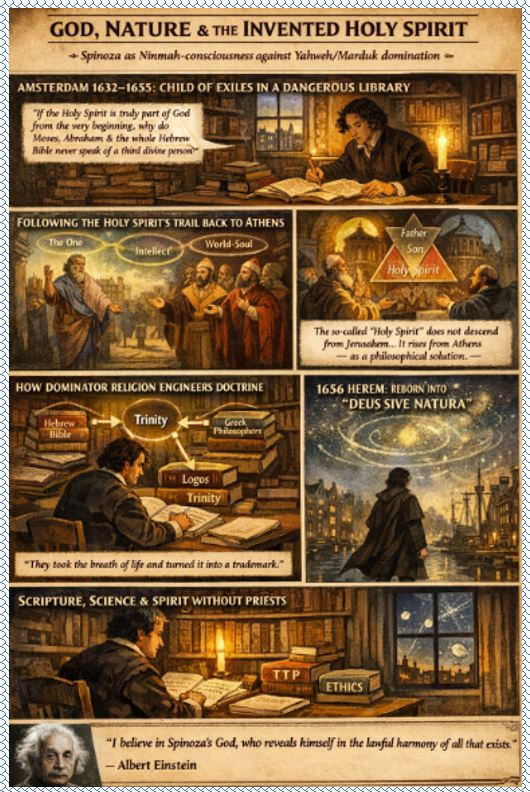
AMSTERDAM 1632–1655
Child of Exiles in a Dangerous Library
Spinoza was born 24 November 1632 in Amsterdam—a city of ships, spices, forbidden manuscripts, and quiet rebellion.
His family were Portuguese Marrano Jews, survivors of the Inquisition who outwardly conformed to Church authority while secretly preserving ancestral knowledge before fleeing to the relatively tolerant Dutch Republic.
Spinoza grew up inside a civilizational fault line:
PARTNERSHIP CONSCIOUSNESS (Ninmah / Goddess / Christ / Buddhist Pattern)
Inquiry welcomed
Learning encouraged
Spirit found in the living world
Unconditional acceptance of Nature and all beings
His father, Isaac, officially traded dried fruit. Unofficially, he curated a hidden back-room library.
There, young Bento devoured Hebrew, Latin, Portuguese, Greek—and likely Arabic—reading philosophy, medicine, scripture, and cosmology. By his twenties, Spinoza read multiple sacred and scientific traditions fluently.
The synagogue taught obedience. The library whispered: “Look for yourself.”
THE QUESTION THAT BROKE THE SPELL
4
Around 1655, during Torah study, Spinoza asked a question that detonated centuries of doctrine:
“If the Holy Spirit truly belongs to God from the beginning, why does Moses—and the entire Hebrew Bible—never mention a third divine person?”
The rabbis heard danger. Spinoza heard a research problem.
If truth is divine, why does it need protection?
THE “HOLY SPIRIT” DID NOT COME FROM JERUSALEM
Spinoza began with Hebrew scripture.
He found that ruach Elohim means breath, wind, life-force—a field of living energy, not an independent divine person.
Early Christianity reflected the same understanding.
But in Greek-speaking centers like Athens and Alexandria, the life-force was transformed into a distinct metaphysical “person.”
Spinoza tracked the shift.
In the 3rd century CE, Plotinus described reality as flowing from The One, expressing itself through a World-Soul. These were not separate beings—but expressions of a single divine reality.
Later Christian councils borrowed the same vocabulary:
substance
hypostasis
procession
Spinoza’s conclusion was blunt:
The Holy Spirit did not descend from Jerusalem. It rose from Athens as a philosophical solution.
DOMINATOR RELIGION AS CIVILIZATIONAL CONTROL
4
Once Spinoza saw the Greek fingerprints, he applied the method everywhere.
He compared Hebrew, Greek, and Latin sources. He tracked when ideas appeared, who benefited, and how metaphysics hardened into law.
He saw:
Greek philosophy absorbed into Christology
Roman law fused with theology
Prophetic spirituality converted into legal domination
Religion, he concluded, trademarked the breath of life.
1656: THE HEREM — EXILE FOR THINKING
4
In 1656, the Amsterdam synagogue issued a herem—total excommunication.
No family. No commerce. No burial.
Classic Dominator enforcement.
Spinoza left quietly. He ground lenses in Rijnsburg, Voorburg, and The Hague, and corresponded with radical thinkers across Europe.
There, he reached his defining insight:
If God is infinite, nothing can exist outside God.
There is one reality only: Deus sive Natura — God, or Nature.
Creator and creation were never separate.
GOD OR NATURE: A PARTNERSHIP COSMOS
4
In 1670, Spinoza published Tractatus Theologico-Politicus anonymously, arguing:
Scripture is a human, historical text
The state must be secular
True piety is justice and compassion
Freedom of thought is sacred
In Ethics (1677), he mapped a universe where everything flows necessarily from the nature of God/Nature—and where joy increases with understanding.
Spinoza rejected worshipful awe.
Nature was not “holy.” It was intelligible.
God is not obeyed. God is understood.
Religion, he wrote, breeds superstition and submission. Understanding breeds peace of mind.
EINSTEIN, SPINOZA, AND THE COSMIC ORDER
4
Albert Einstein recognized Spinoza as a spiritual ancestor:
“I believe in Spinoza’s God who reveals himself in the orderly harmony of what exists.” (1929)
Spinoza saw one infinite substance. Einstein saw lawful harmony.
Modern thinkers like Michio Kaku now imagine multiple lawful universes, each emerging from deeper equations we have yet to discover.
Perhaps someday, when technology and consciousness evolve together, humanity will recognize that deeper pattern—
—and remember that Spinoza already named it.
PARTNERSHIP VS DOMINATION
DOMINATION (Yahweh / Marduk)
hierarchy
dogma
obedience
violence
priestly control
PARTNERSHIP (Ninmah / Buddha / Christ)
curiosity
compassion
equality
truth-seeking
nature as intelligible reality
Spinoza stands with Ninmah.
Authority dissolves into curiosity. Science becomes prayer.
Steven Nadler — works on Spinoza’s philosophy and context
Einstein on Spinoza
Letter to Rabbi Herbert Goldstein (1929)
Cooperative Consciousness
Howard Zinn, Passionate Declarations (2003)
IMAGE SET FOR
SPINOZA: GOD, NATURE & THE INVENTED HOLY SPIRIT
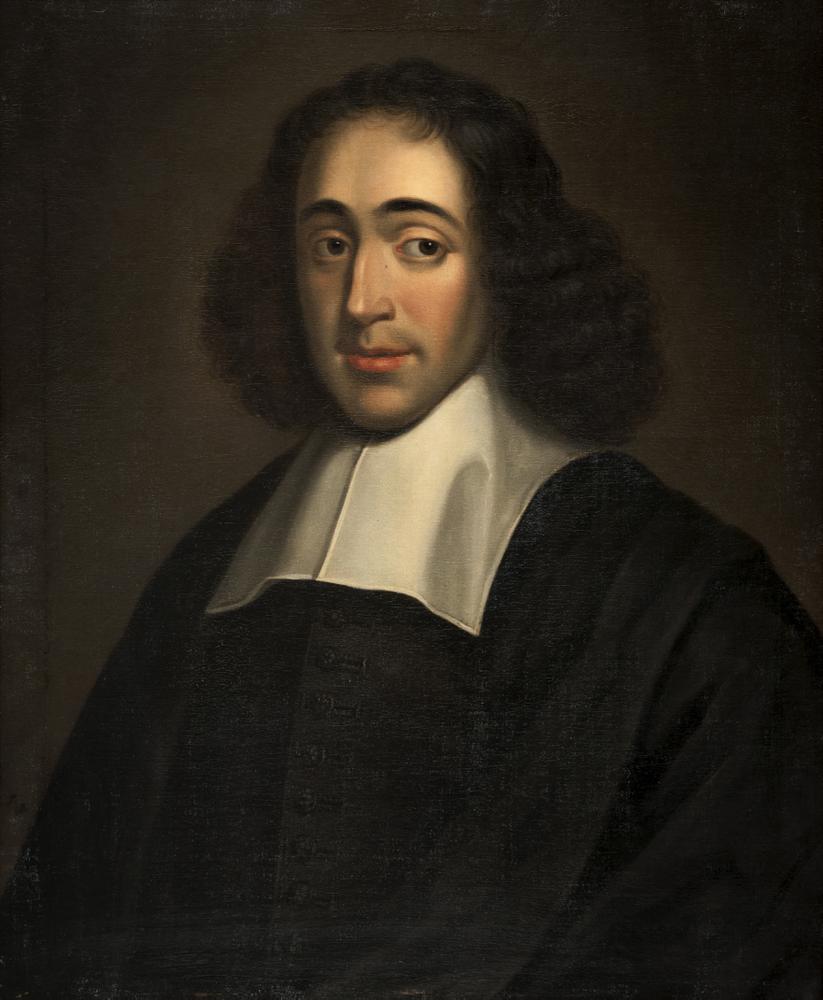
IMAGE 1 — BARUCH SPINOZA (1632–1677)
TYPE: Oil portrait (attributed, 17th century)
DESCRIPTION: A canonical portrait of Baruch Spinoza showing him as a composed, observant thinker rather than a religious authority. His expression conveys intellectual restraint, inward focus, and independence rather than zeal or piety.
PLACEMENT: Featured image at the very top of the article, directly beneath the title and author credits.
WHY IT BELONGS HERE: It grounds the reader in the historical individual before introducing theology, philosophy, or cosmology. It signals that this is an inquiry led by a human thinker, not a religious icon.
IMAGE 2 — AMSTERDAM: ST. ANTONIS POORT (1636)
TYPE: Engraving of Amsterdam city gate and canal
DESCRIPTION: A detailed engraving of Amsterdam during Spinoza’s youth, depicting canals, gates, commerce, and infrastructure in a city defined by trade, migration, and relative tolerance.
PLACEMENT: After the section: “AMSTERDAM 1632–1655: CHILD OF EXILES IN A DANGEROUS LIBRARY”
WHY IT BELONGS HERE: It visually establishes the environment that shaped Spinoza: a city of movement, ideas, and refugees rather than a closed religious enclave.
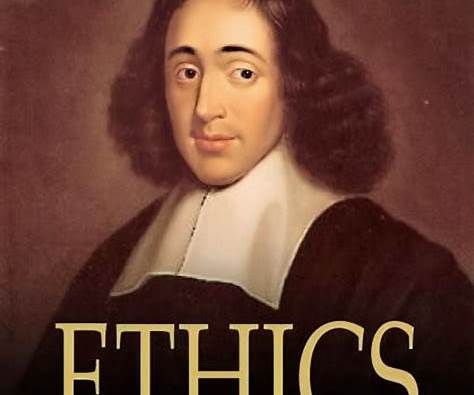
IMAGE 3 — SPINOZA AND ETHICS
TYPE: Modern book-cover portrait composite
DESCRIPTION: A later visual pairing of Spinoza’s likeness with the title Ethics, emphasizing his systematic philosophical project rather than biographical detail.
PLACEMENT: At the transition into discussion of Ethics and Deus sive Natura.
WHY IT BELONGS HERE: It marks the shift from biography to philosophical architecture.
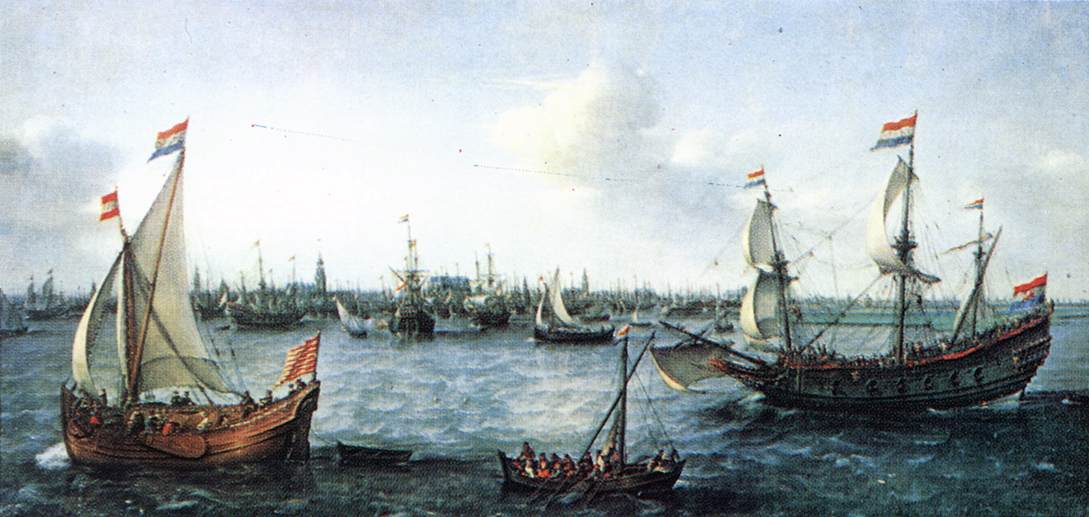
IMAGE 4 — DUTCH MARITIME REPUBLIC: SHIPS OF TRADE AND EMPIRE
TYPE: 17th-century maritime painting
DESCRIPTION: A harbor scene showing Dutch trading vessels, symbolizing the economic engine behind Amsterdam’s relative tolerance and intellectual openness.
PLACEMENT: Within the Amsterdam background section, after Image 2.
WHY IT BELONGS HERE: It reminds readers that intellectual freedom existed alongside empire, commerce, and power — not outside them.
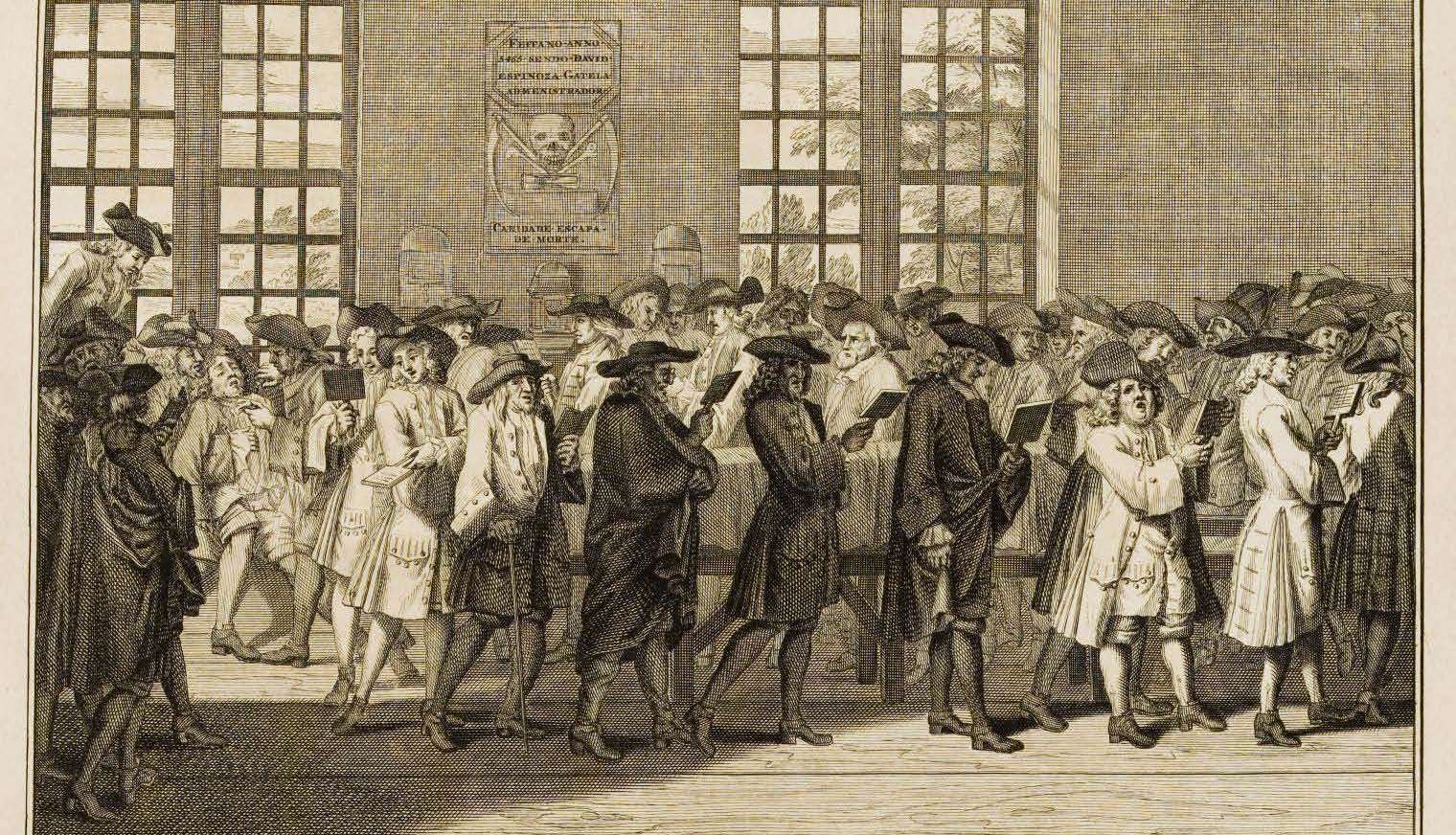
IMAGE 5 — THE SYNAGOGUE AS INSTITUTION
TYPE: 18th-century engraving of synagogue congregation
DESCRIPTION: A formal synagogue interior showing ordered rows, ritual reading, and communal discipline rather than individual inquiry.
PLACEMENT: After the paragraph describing synagogue authority and Spinoza’s questioning.
WHY IT BELONGS HERE: It visually contrasts institutional religion with Spinoza’s emerging independence.
IMAGE 6 — THE HEREM: EXCOMMUNICATION AS CONTROL
TYPE: Historical engraving of communal enforcement
DESCRIPTION: A depiction of religious authority enforcing conformity through communal discipline, illustrating how dissenters were isolated without physical violence.
PLACEMENT: Immediately following the section on Spinoza’s 1656 excommunication.
WHY IT BELONGS HERE: It reinforces the article’s argument that domination systems enforce compliance socially and economically, not only through force.
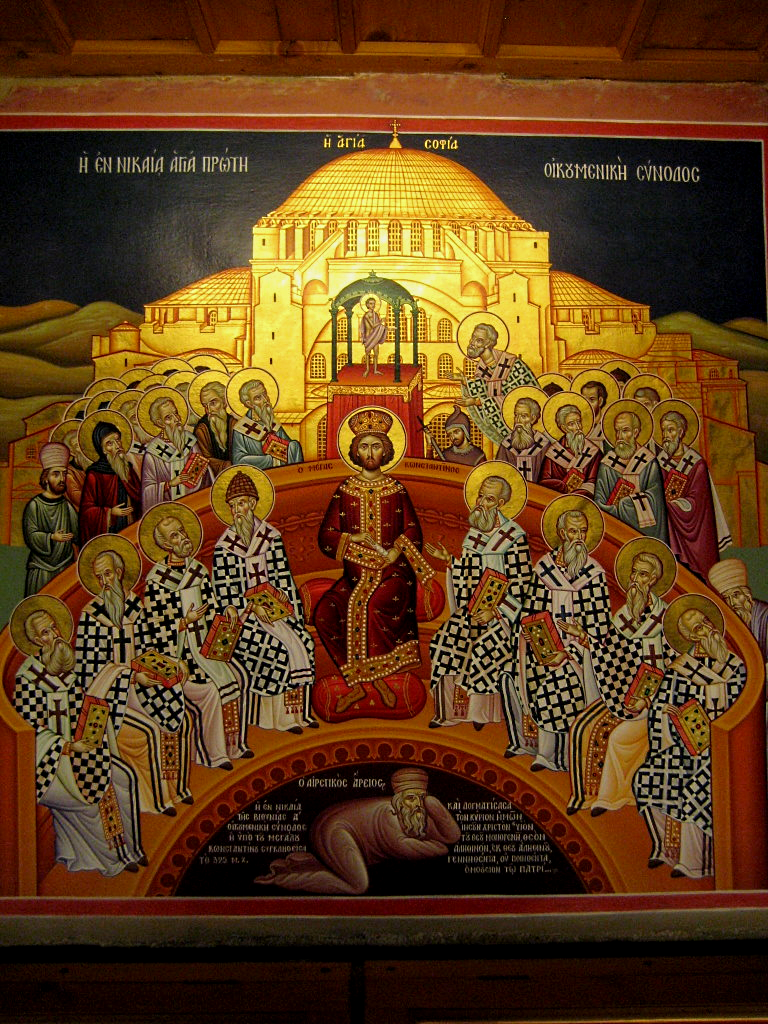
DESCRIPTION: A dramatic depiction of religious authorities formalizing doctrine, emphasizing hierarchy, spectacle, and centralized authority.
PLACEMENT: In the section discussing Greek philosophy, Christian councils, and the formalization of the Trinity.
WHY IT BELONGS HERE: It visually demonstrates how abstract metaphysics became institutional dogma.
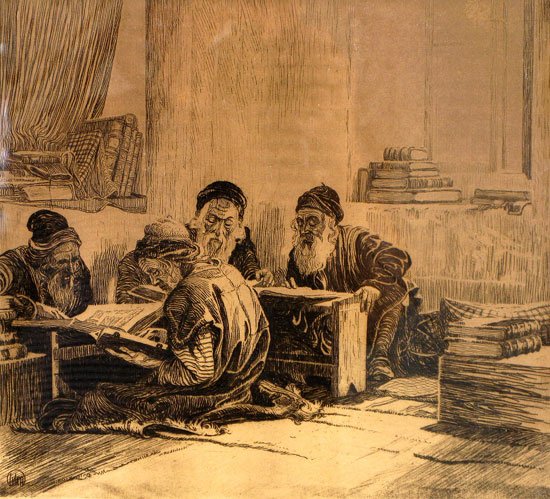
IMAGE 8 — TORAH STUDY: TEXT BEFORE DOGMA
TYPE: Jewish manuscript illustration / study scene
DESCRIPTION: A quiet scene of scholars studying texts closely, emphasizing philology, debate, and interpretation.
PLACEMENT: At the beginning of the section on Hebrew scripture and ruach Elohim.
WHY IT BELONGS HERE: It supports the claim that early Hebrew spirituality emphasized language and meaning rather than metaphysical systems.
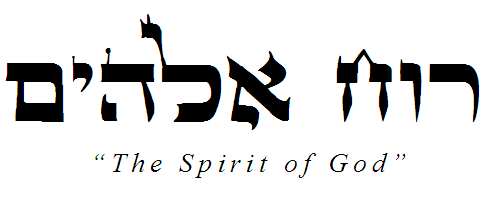
IMAGE 9 — “RUACH ELOHIM” — THE SPIRIT AS BREATH
TYPE: Hebrew text graphic
DESCRIPTION: The Hebrew phrase Ruach Elohim, translated as “Spirit/Breath of God,” emphasizing linguistic meaning rather than doctrinal abstraction.
PLACEMENT: Directly after the explanation of ruach as breath, wind, or life-force.
WHY IT BELONGS HERE: It anchors the argument in language itself, reinforcing Spinoza’s method.
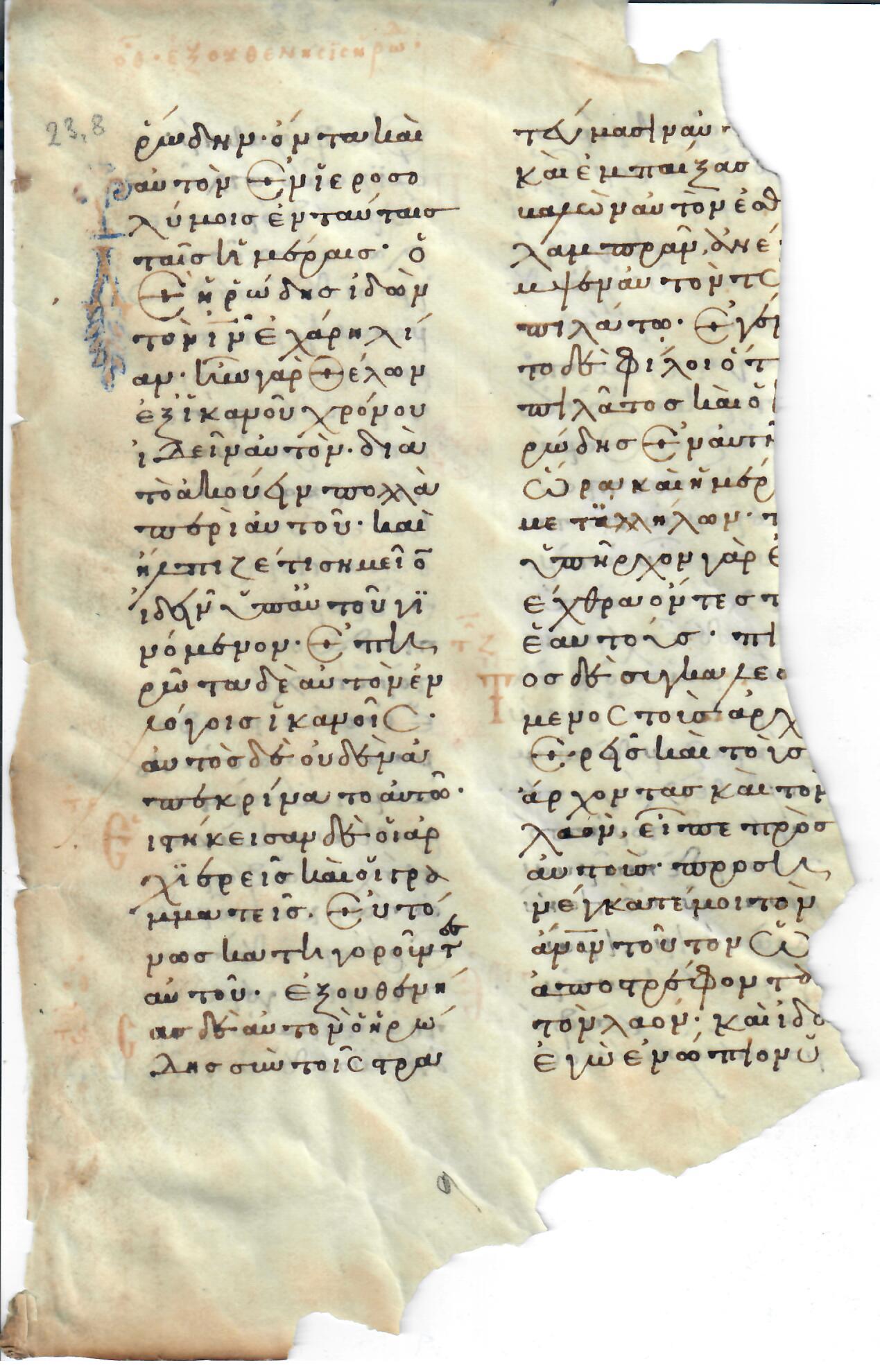
IMAGE 10 — EARLY GREEK MANUSCRIPT PAGE
TYPE: Greek biblical or philosophical manuscript fragment
DESCRIPTION: A handwritten Greek text showing the medium through which Platonic and Neoplatonic concepts entered Christian theology.
PLACEMENT: In the section tracing the evolution of the Holy Spirit concept through Athens and Alexandria.
WHY IT BELONGS HERE: It visually connects Greek philosophy to later Christian doctrine, supporting the claim of conceptual migration.
IMAGE DESCRIPTIONS (IMAGES 11–21)
Image 11 — Law as Cosmic Order
Description: An early modern legal manuscript framed by allegorical figures of Justice and Nature, symbolizing the belief that law is not arbitrary but emerges from an underlying order woven into reality itself.
Purpose in Article: Introduces the idea that structure precedes authority—a foundation for Spinoza’s rejection of a personal, interventionist God.
Image 12 — Knowledge as Participation
Description: Philosophers and scholars engage in active inquiry, writing, teaching, and debating, representing knowledge not as revelation handed down, but as something humanity participates in and uncovers.
Purpose in Article: Aligns with Spinoza’s insistence that understanding God means understanding Nature through reason.
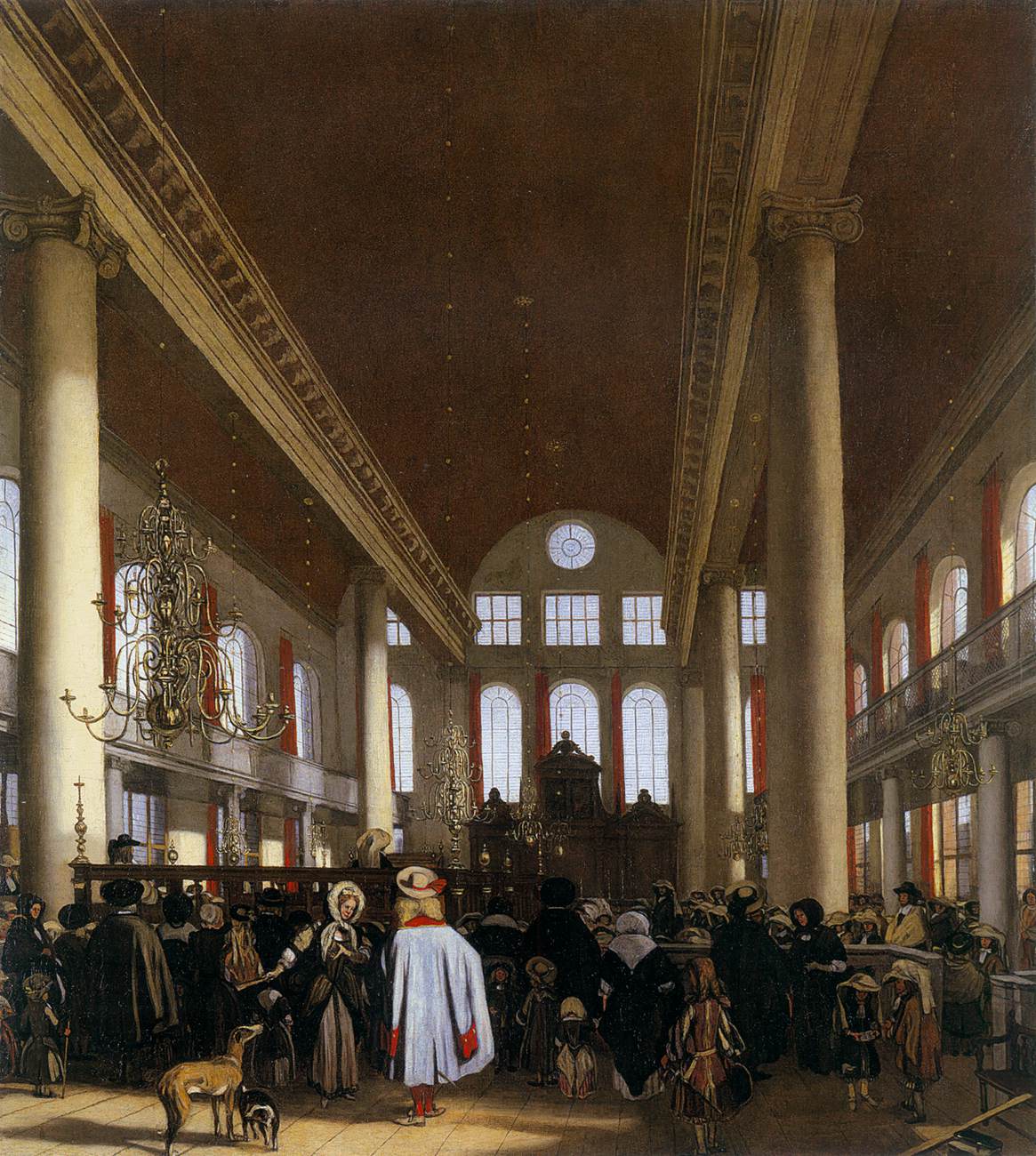
Image 13 — Sacred Space Without Dogma
Description: A vast interior filled with ordinary people rather than priests, emphasizing communal presence over hierarchical mediation.
Purpose in Article: Supports Spinoza’s claim that holiness is not confined to institutions.
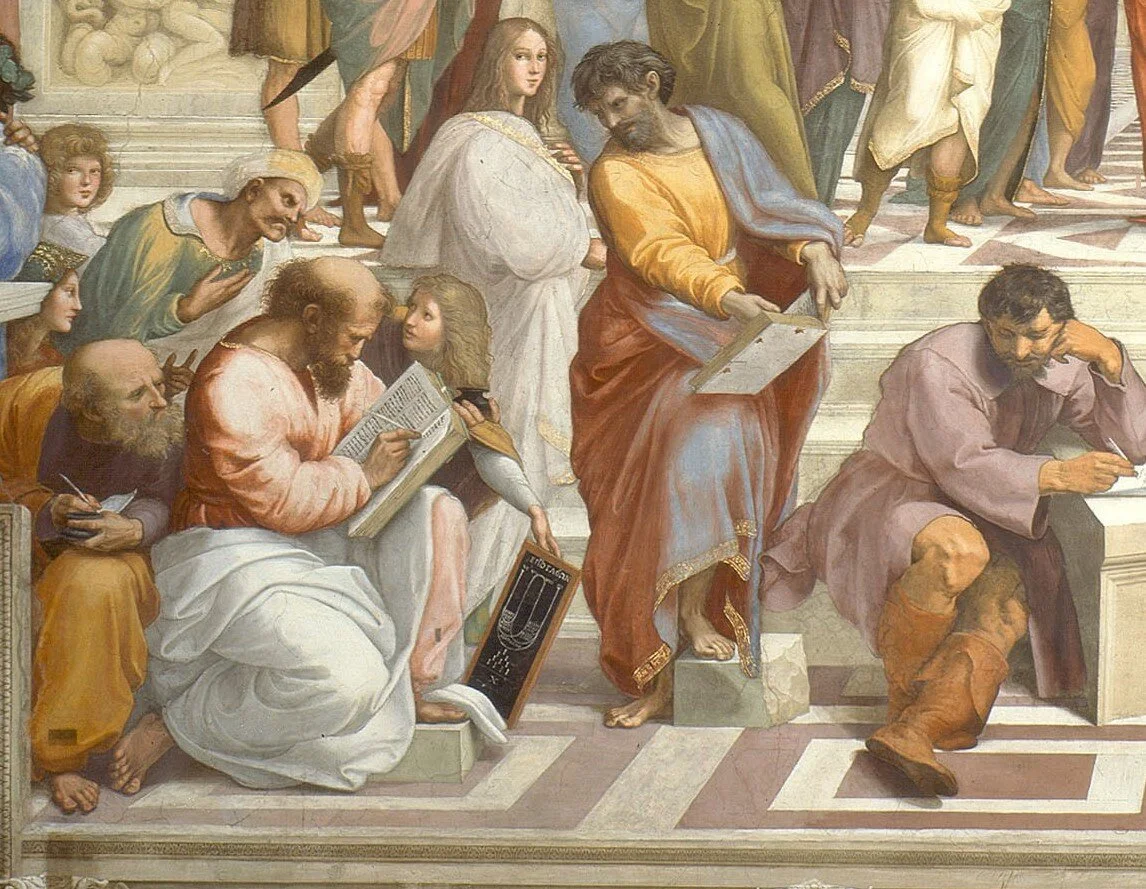
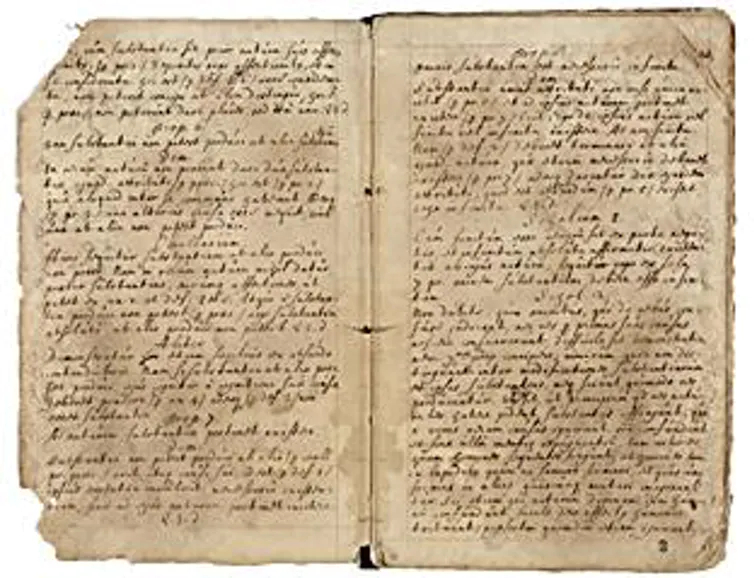
Image 14 — The Handwritten Heretic
Description: A fragile manuscript bearing the marks of censorship and marginalia, evoking the risks of original thought in rigid theological systems.
Purpose in Article: Frames Spinoza as dangerous not because he denied God, but because he redefined God.
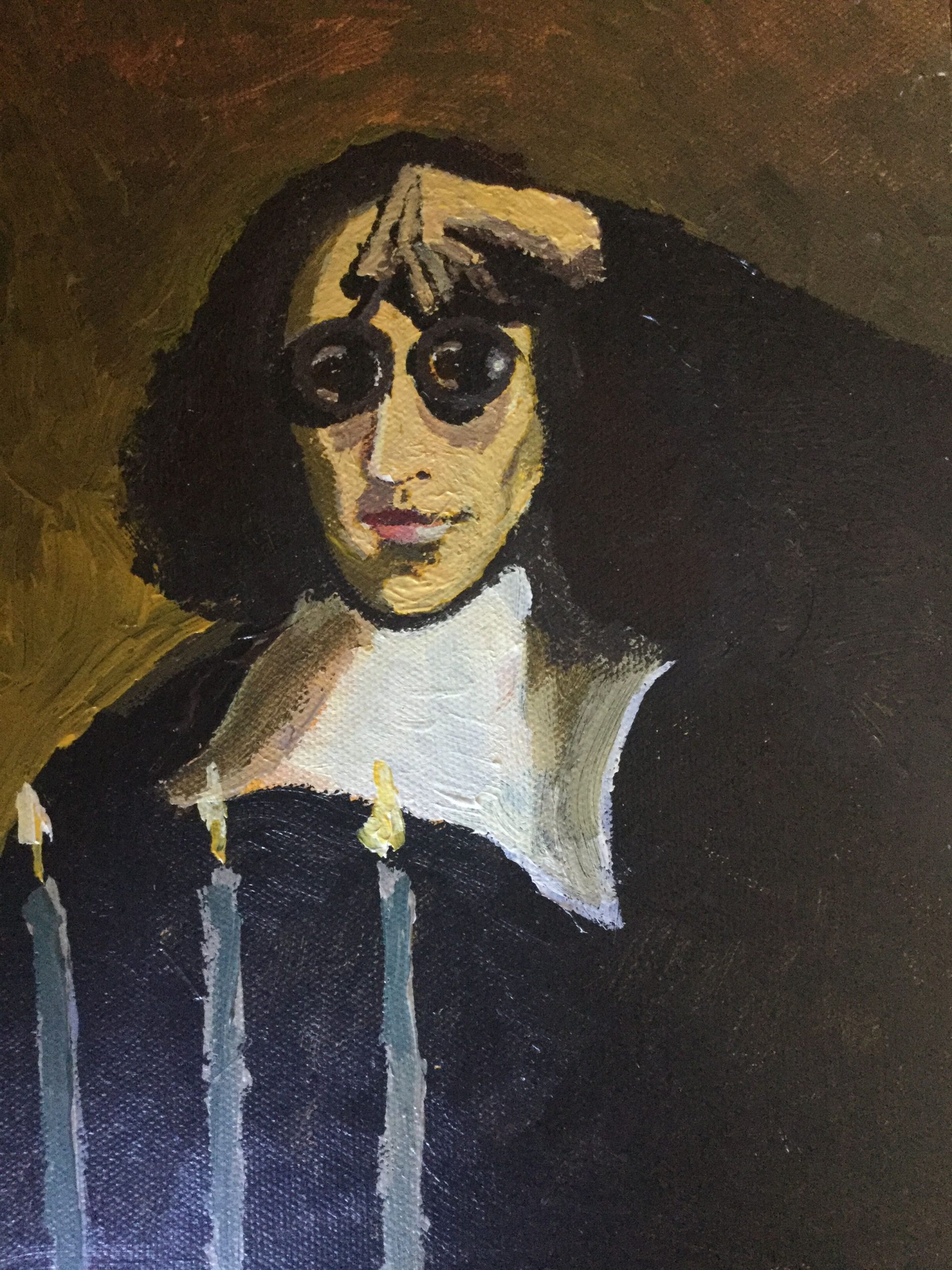
Image 15 — The Isolated Thinker
Description: A solitary painted figure illuminated by candlelight, eyes wide with inquiry, suggesting the emotional cost of intellectual independence.
Purpose in Article: Humanizes the philosophical stakes of Spinoza’s work.
Image 16 — Thought Preserved
Description: An open handwritten notebook, dense with text, symbolizing ideas carried forward beyond a single lifetime.
Purpose in Article: Transitions from biography to legacy.
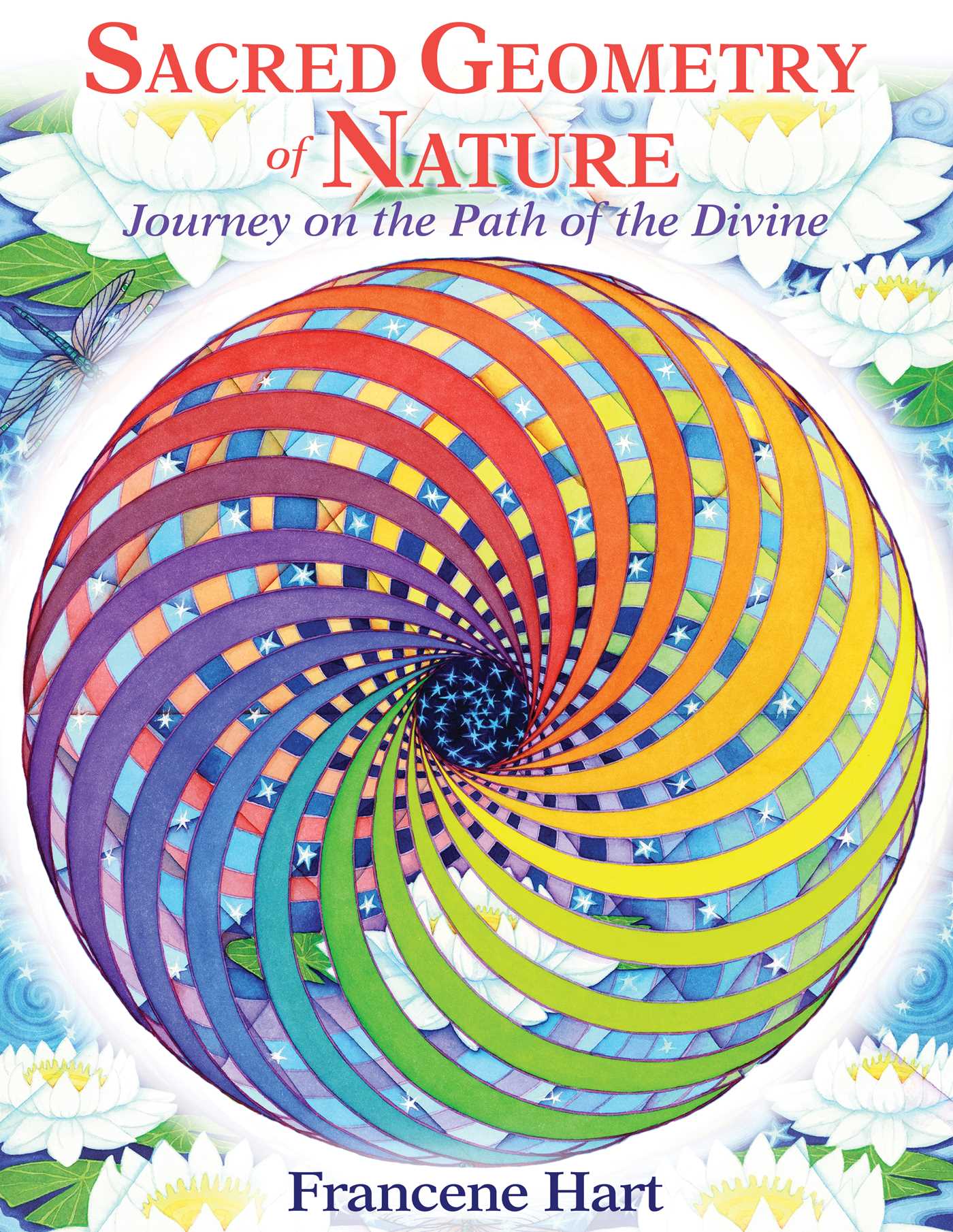
Image 17 — Geometry as Revelation
Description: A modern sacred-geometry spiral, suggesting that mathematical order itself can be a form of spiritual insight.
Purpose in Article: Directly echoes Spinoza’s geometric method.
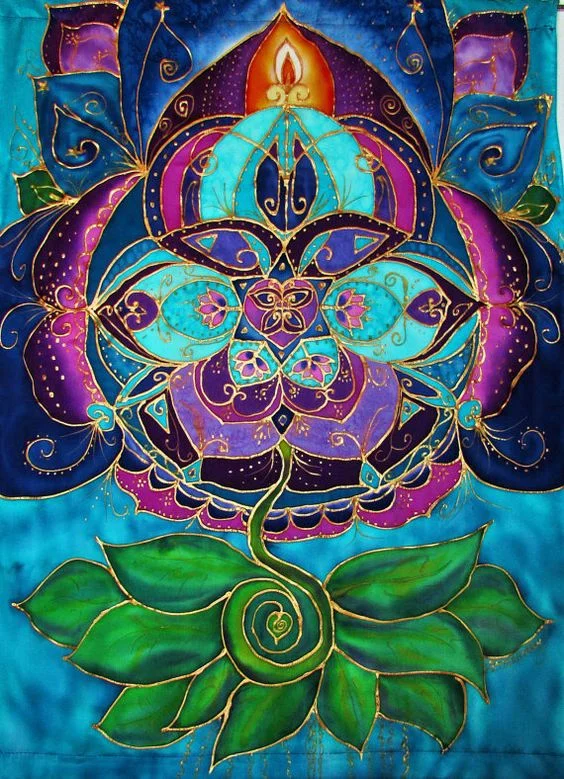
Image 18 — The Living Mandala
Description: A luminous mandala resembling a flower, blending biology and geometry into a unified pattern.
Purpose in Article: Illustrates Deus sive Natura visually.
Image 19 — The Modern Prophet
Description: A portrait of Albert Einstein, whose reverence for Spinoza reframed God as cosmic intelligence rather than ruler.
Purpose in Article: Shows Spinoza’s long-term influence on modern science.
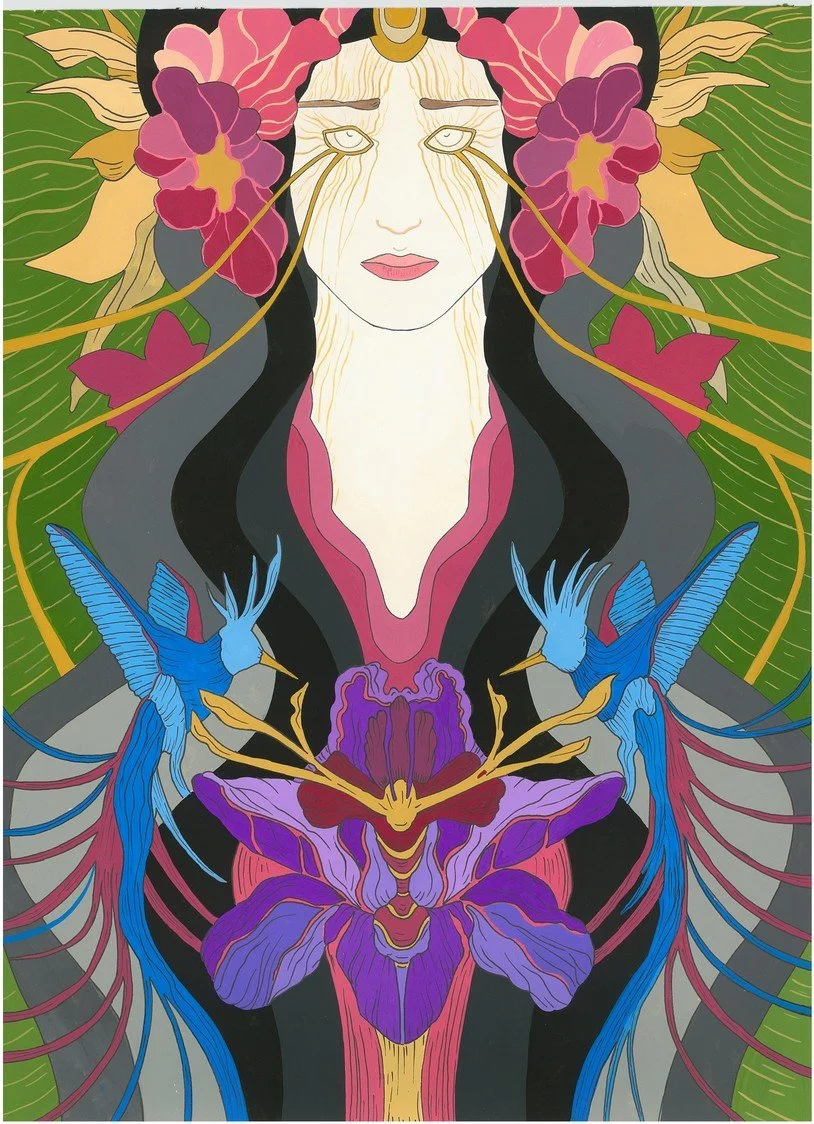
Image 20 — Feminine Intelligence
Description: A stylized figure merging woman, flora, and avian forms, representing creative intelligence embedded in life itself.
Purpose in Article: Introduces Ninmah’s perspective: creation as nurturing structure.
Image 21 — Nested Universes
Description: Multiple star-filled spheres overlap in infinite regress, suggesting reality as self-similar, recursive, and alive at every scale.
Purpose in Article: Culminates the article’s thesis: God is not outside the universe—God is the universe expressing itself.
ARTICLE II — CORE NARRATIVE
Deus sive Natura: God as Structure
Baruch Spinoza did not kill God. He removed God from the throne.
In Spinoza’s framework, God does not command, judge, punish, or intervene. God does not make exceptions. God does not suspend natural law in moments of mercy or wrath. Instead, God is the law.
Spinoza’s most famous phrase—Deus sive Natura (“God, or Nature”)—was not poetic license. It was a precise philosophical claim. Reality itself, in all its complexity, follows from a single, infinite substance expressing itself through infinite attributes. Everything that exists does so by necessity, not by permission.
This was not atheism. It was a radical redefinition of the sacred.
Spinoza argued that if God is infinite, then nothing can exist outside God. If God is perfect, then God cannot act irrationally or arbitrarily. And if God is rational, then the universe must be intelligible—not through prophecy, but through understanding.
This is why Spinoza wrote Ethics in geometric form. Definitions, axioms, propositions, and proofs were not stylistic affectations. They were theological commitments. Truth, for Spinoza, unfolded the same way a theorem does: inevitably.
The Anunnaki Overlay: Structure Before Story
From the Anunnaki perspective, Spinoza’s insight is not new. It is remembered.
Enki — Intelligence as Design
Enki represents applied intelligence: engineering, language, systems, and problem-solving. From this perspective, the universe is not ruled—it is designed to function.
Spinoza’s God behaves exactly like Enki’s cosmos:
No miracles, only misunderstood mechanisms
No punishment, only consequence
No commandments, only cause and effect
To Enki, wisdom is alignment with how things actually work.
Ninmah — Life as Emergent Order
Ninmah embodies biological intelligence—the shaping of life through pattern, balance, and adaptation. In Spinoza’s system, this appears as conatus: the innate striving of every being to persist in its own nature.
This is not selfishness. It is structural integrity.
From Ninmah’s perspective, morality does not come from obedience. It arises from understanding what allows life to flourish within the larger system.
Thoth — Knowledge as Translation
Thoth stands at the boundary between structure and symbol. He is the translator of cosmic order into language, mathematics, and meaning.
Spinoza performs a Thoth-like act by stripping theology of metaphor and returning it to logic. He does not deny the divine. He decodes it.
Anu — The Source Without Personality
Together, Enki, Ninmah, and Thoth function as a trinity of expression within a greater unity—Anu. Anu does not intervene because Anu does not need to. The system is already complete.
This aligns precisely with Spinoza’s God: infinite, impersonal, and self-sustaining.
Why This Still Matters
Spinoza terrifies authoritarian systems because he removes the lever of control. If God does not issue commands, then no institution can claim divine authority. If nature itself is sacred, then no priesthood owns holiness.
This is why Spinoza remains dangerous.
And this is why his vision resonates so powerfully with modern physics, systems theory, and cosmology.
The final image—nested universes—does not depict chaos. It depicts coherence at every scale.
God is not watching from above.
God is unfolding from within.
The God That Cannot Be Weaponized
Spinoza’s God cannot be bribed, threatened, or persuaded. This God does not suspend natural law for favored groups or chosen nations. There are no exceptions, no miracles that violate structure, no punishments that override cause and effect.
This is precisely why Spinoza’s vision endures.
A God who is reality cannot be owned. A God who is law cannot be bent. A God who is nature cannot be monopolized by doctrine. Once divinity becomes structure rather than personality, power loses its most effective tool.
From the Anunnaki perspective, this is not philosophical rebellion—it is remembrance. Enki recognizes intelligence as design. Ninmah recognizes life as emergent order. Thoth recognizes knowledge as translation. Together, they express Anu not as ruler, but as source.
Spinoza did not remove God from the world. He placed God everywhere at once.
And in doing so, he left humanity with a responsibility far more demanding than obedience: understanding.
All images are historical artworks and manuscripts used for illustrative and educational purposes.
SUMMARY
These images collectively move the reader from person → place → institution → text → doctrine → power, mirroring Spinoza’s own method of dismantling dominant consciousness through historical inquiry.
BELL & WHISTLES (MISHBAHAH)
SERIES TITLE
SPINOZA, GOD, AND THE COSMIC QUESTION OF CONSCIOUSNESS
ARTICLE II
GOD AS NATURE: SPINOZA, MULTIVERSES, AND THE LIVING COSMOS
SERIES OVERVIEW
This series examines Baruch Spinoza’s radical redefinition of God as Nature through philosophy, history, science, and comparative cosmology. It explores how Spinoza dismantled domination-based religious structures and replaced them with a vision of reality governed by lawful coherence, ethical consequence, and intelligible order. Each article places Spinoza’s ideas in dialogue with modern physics, ancient wisdom traditions, and the Anunnaki partnership cosmology articulated through Enki, Ninmah, and Thoth.
ARTICLES IN THIS SERIES
Article I:Spinoza: God, Nature, and the Invented Holy Spirit Article II:God as Nature: Spinoza, Multiverses, and the Living Cosmos Article III (forthcoming):Necessity, Freedom, and the Ethics of a Lawful Universe
RELATED ARTICLES
When Consciousness Enters Flesh: Jesus, Christ Consciousness, and Incarnation
The Invisible Coup: How Free Societies Are Dismantled Without Force
Enki, Ninmah, and the Partnership Model of Civilization
Science as Prayer: Order, Law, and Meaning in a Post-Theistic Universe
ANUNNAKI OVERLAY: NINMAH’S PERSPECTIVE
Within Ninmah’s partnership cosmology, Spinoza’s God-as-Nature reflects a mature understanding of creation as an interdependent, self-organizing system rather than a hierarchy enforced by divine command. Nature does not demand obedience; it invites understanding. Moral behavior emerges from knowledge of consequences, not fear of punishment. In this framework, Spinoza articulates the philosophical expression of a civilization guided by cooperation, balance, and reverence for life itself.
ANUNNAKI OVERLAY: ENKI’S PERSPECTIVE
From Enki’s perspective, Spinoza correctly identifies intelligence as embedded in structure. Laws do not constrain reality; they generate it. Freedom arises not from exemption from law, but from understanding how law operates. Spinoza’s insistence that nothing exists outside God mirrors Enki’s long-standing role as architect of lawful systems—biological, ecological, and cosmic—through which consciousness explores itself.
ANUNNAKI OVERLAY: THOTH’S PERSPECTIVE
Thoth recognizes Spinoza as a scribe of coherence. By rejecting superstition and anthropomorphic divinity, Spinoza restores language to its proper function: description, not domination. Thought becomes a tool of alignment rather than control. Knowledge becomes liberation. In Thoth’s view, Spinoza revives the ancient science of correspondence—mind reflecting cosmos, ethics reflecting structure.
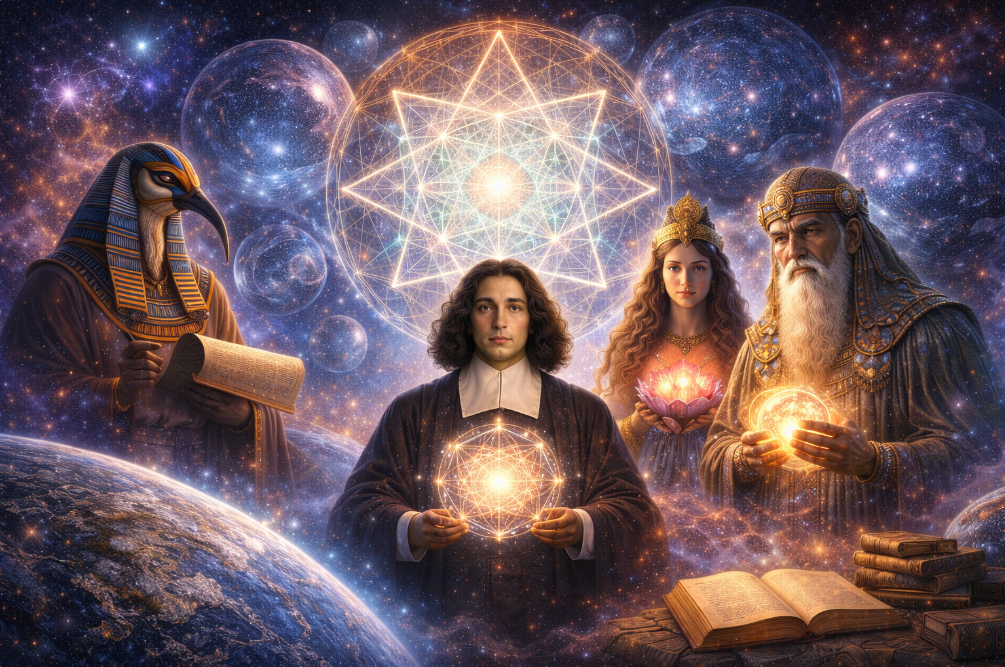
FEATURED IMAGE NOTE
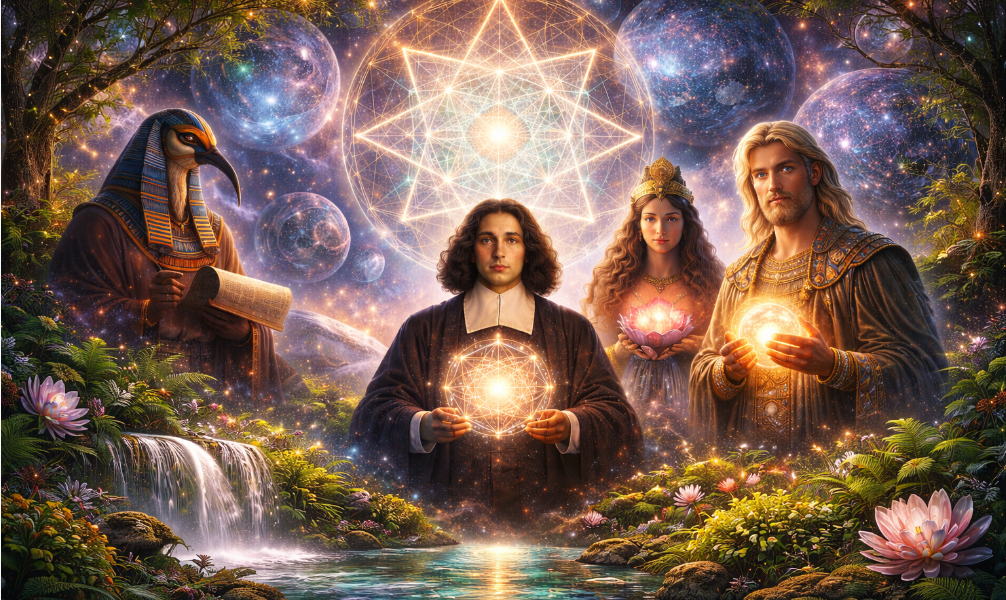
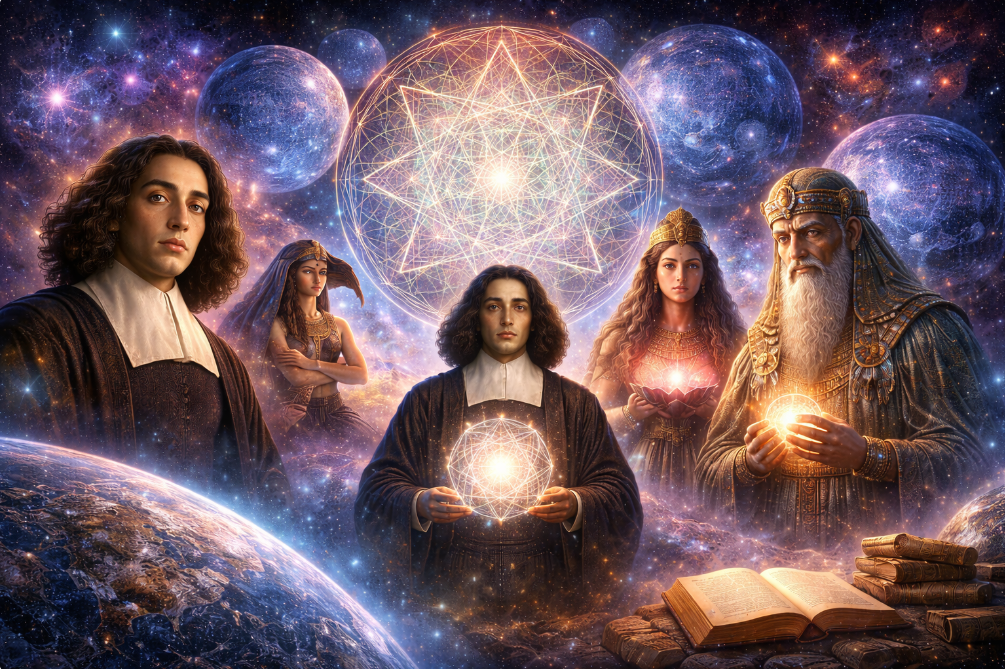
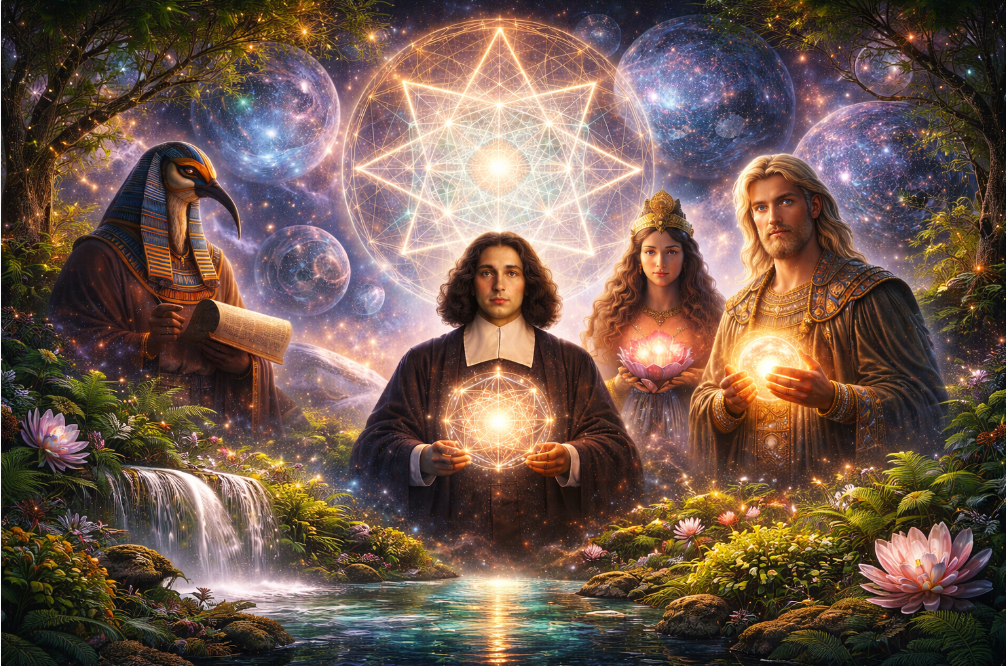
The featured composite image for this article visually represents Spinoza’s assertion that God and Nature are one substance expressed through infinite forms. The blending of cosmic geometry, living ecosystems, and intelligible order reflects a universe that thinks, evolves, and coheres without external command.
AUTHOR BIOS
Dr. Sasha Alex Lessin, Ph.D. Dr. Lessin is an anthropologist trained at UCLA and co-author of Anunnaki: Gods No More and Anunnaki, Evolution of the Gods. His research focuses on domination versus partnership civilizations, comparative mythology, and the long arc of human social engineering. He serves as the primary researcher and author for EnkiSpeaks.
Janet Kira Lessin Janet Kira Lessin is a publisher, editor, and co-founder of EnkiSpeaks and CEO of Aquarian Media. Her work integrates historical synthesis, consciousness studies, and narrative frameworks that bridge ancient cosmology with modern ethical and scientific inquiry.
SUBSTACK
Enjoying this series? Subscribe for future articles, visual essays, and long-form explorations of consciousness, history, and cosmic order.
X (Twitter): Spinoza didn’t kill God. He redefined God as Nature itself. Order, law, and understanding replaced fear and obedience. #Spinoza #GodIsNature #Consciousness
Facebook: What if God isn’t a ruler—but reality itself? Spinoza’s vision of God as Nature challenges religion, science, and ethics in ways still unfolding today.
LinkedIn: Spinoza’s philosophy anticipated modern systems theory, ethics without fear, and a lawful universe governed by understanding rather than command.
TAGS
Spinoza, God as Nature, Pantheism, Philosophy, Ethics, Consciousness Studies, Anunnaki, Enki, Ninmah, Thoth, Partnership Civilization, Multiverse Theory, Sacred Geometry, Science and Spirituality, History of Ideas
SERIES TITLE
SPINOZA, GOD, AND THE COSMIC QUESTION OF CONSCIOUSNESS
SERIES OVERVIEW
This series reexamines the philosophy of Baruch Spinoza as a pivotal turning point in humanity’s understanding of God, nature, ethics, and freedom. Writing in the shadow of religious authoritarianism and political instability, Spinoza rejected the idea of a supernatural ruler who intervenes through miracles, punishment, or decree. In its place, he articulated a vision of reality governed by intelligible law, ethical consequence, and structural coherence.
Rather than treating Spinoza as an isolated philosopher, this series situates his work within a much older and broader inquiry: whether consciousness, law, and creativity arise from an external divine authority or emerge from the very fabric of existence itself. Each article places Spinoza’s ideas in dialogue with modern science, ancient cosmologies, and the Anunnaki partnership model articulated through Enki, Ninmah, and Thoth.
The series moves deliberately from theological deconstruction toward ethical reconstruction, asking not only what God is, but how humans should live once fear-based divinity collapses.
ARTICLE I
SPINOZA: GOD, NATURE, AND THE INVENTED HOLY SPIRIT
Focus: Deconstruction of theological control Core Question: How did religion transform metaphysical mystery into a tool of domination?
The opening article examines how Spinoza dismantled the concept of a personalized, interventionist God and exposed the Holy Spirit as a theological invention designed to enforce obedience rather than understanding. It explores how religious institutions replaced inquiry with authority, miracles with superstition, and ethics with fear.
This article establishes Spinoza’s central claim: that God does not command nature, but is nature. It introduces the historical stakes of this claim, including Spinoza’s excommunication, and frames his philosophy as a direct threat to domination-based religious systems.
From the Anunnaki perspective, this article aligns with Enki’s long-standing opposition to priestly control and Ninmah’s insistence on ethical development through understanding rather than coercion.
ARTICLE II
GOD AS NATURE: SPINOZA, MULTIVERSES, AND THE LIVING COSMOS
Focus: Reconstruction of divinity Core Question: What replaces God when fear-based theology collapses?
The second article explores Spinoza’s most radical assertion: that God and Nature are one substance expressed through infinite attributes. It examines how this idea anticipates modern systems theory, cosmology, and multiverse thinking, while remaining grounded in ethical responsibility.
Rather than presenting a cold or mechanistic universe, this article shows how Spinoza’s God-as-Nature describes a living, lawful, creative cosmos in which intelligence expresses itself through structure. Freedom emerges not from divine favor, but from understanding how reality works.
From the Anunnaki overlay, Enki appears as architect of lawful systems, Ninmah as guardian of balance within living processes, and Thoth as preserver of intelligible order. Together, they reflect a trinitarian model of divinity rooted in structure, creativity, and consciousness rather than command.
This article marks the transition from dismantling false gods to recognizing divinity embedded in existence itself.
ARTICLE III
NECESSITY, FREEDOM, AND THE ETHICS OF A LAWFUL UNIVERSE
Focus: Ethics without fear Core Question: How can humans be free in a universe governed by law?
The third article confronts one of the most misunderstood aspects of Spinoza’s philosophy: necessity. Spinoza argued that nothing happens arbitrarily, yet he rejected fatalism. This article explores how true freedom arises from understanding causes rather than rebelling against them.
It examines Spinoza’s ethical framework, in which good and evil are not divine commands but relational outcomes tied to flourishing or harm. Moral responsibility emerges from knowledge, not obedience. Compassion becomes rational, not sentimental.
Within the Anunnaki framework, this reflects a partnership civilization model in which advanced beings guide through education and transparency rather than punishment or reward.
ARTICLE IV (FORTHCOMING)
CONSCIOUSNESS, SUBSTANCE, AND THE END OF SUPERNATURALISM
Focus: Consciousness as an intrinsic property of reality Core Question: Is consciousness fundamental rather than accidental?
This article explores Spinoza’s concept of substance and thought as parallel expressions of the same reality. It engages modern debates in consciousness studies, panpsychism, and quantum theory, showing how Spinoza anticipated the collapse of mind–matter dualism.
Here, consciousness does not descend from heaven; it emerges wherever structure becomes sufficiently complex. God does not intervene from outside reality; intelligence unfolds from within it.
Thoth’s perspective dominates this article, emphasizing language, mathematics, and symbolic systems as bridges between mind and cosmos.
ARTICLE V (FORTHCOMING)
FROM DOMINATION TO PARTNERSHIP: SPINOZA AND THE FUTURE OF CIVILIZATION
Focus: Political and social implications Core Question: What kind of civilization emerges when fear-based gods lose authority?
The concluding article applies Spinoza’s philosophy to social systems, governance, and the future of humanity. It contrasts domination-based civilizations—built on obedience, hierarchy, and mythic authority—with partnership models grounded in transparency, education, and mutual responsibility.
This article brings the inquiry full circle, connecting Spinoza’s ethics to contemporary struggles over authoritarianism, information control, and human sovereignty. It argues that Spinoza did not merely challenge religion; he offered a blueprint for post-theocratic civilization.
From the Anunnaki perspective, this represents the long-term goal of Earth’s experiment: a species capable of self-governance through understanding rather than fear.
WHERE THE SERIES IS GOING
This series moves from deconstruction to reconstruction, from false gods to lawful reality, and from obedience to understanding. It does not ask readers to abandon meaning, but to relocate meaning within the structure of existence itself.
Spinoza stands not as a destroyer of God, but as a translator—rendering divinity intelligible, ethical, and inseparable from the living universe.