SPINOZA: GOD, NATURE & THE INVENTED HOLY SPIRIT
Primary Author:
Dr. Sasha Alex Lessin, Ph.D. (Anthropology, UCLA)
Contributing Author:
Janet Kira Lessin
INTRODUCTION: SPINOZA AND THE STRUGGLE BETWEEN TWO COSMIC WORLDVIEWS
Baruch Spinoza researched, documented, and articulated a coherent philosophical system that aligned with the cooperative, nature-centered consciousness long associated with the Great Anunnaki Goddess Ninmah. He developed this system in direct opposition to the domination-oriented worldview imposed by Anunnaki Princes Yahweh/Enlil and Marduk/Zeus, whose hierarchical control structures shaped human civilization for approximately 200,000 years.
Spinoza did not invent this alternative consciousness. He recognized it, traced it historically, and restored it philosophically. His work exposed how religious authorities constructed metaphysical doctrines to legitimize obedience, suppress inquiry, and centralize power. In doing so, he challenged the theological foundations of domination consciousness and reasserted a partnership-based understanding of reality grounded in Nature itself.
AMSTERDAM 1632–1655: CHILD OF EXILES IN A DANGEROUS LIBRARY
Baruch (Bento) de Spinoza was born on 24 November 1632 in Amsterdam, a commercial and intellectual crossroads where ships, spices, manuscripts, and forbidden ideas circulated with equal intensity. His family belonged to the Portuguese Marrano Jewish community—survivors of the Inquisition who outwardly conformed to Catholic authority while secretly preserving ancestral knowledge before fleeing to the Dutch Republic.
Amsterdam tolerated religious diversity, but it did not tolerate intellectual rebellion within religious communities. Spinoza grew up inside this tension.
His father, Isaac de Spinoza, earned his living as a merchant of dried fruit. At the same time, he curated a private back-room library that exposed his son to Hebrew scripture, Greek philosophy, Latin science, medical texts, and cosmological speculation. This library functioned as an informal university. It trained Spinoza to compare sources, identify contradictions, and follow ideas to their origins.
The synagogue instructed obedience. The library encouraged investigation.
ILLUSTRATION 1
TITLE: AMSTERDAM: A CITY OF EXILES AND IDEAS
DESCRIPTION:
A 17th-century Amsterdam harbor scene showing merchant ships, Sephardic Jewish neighborhoods, and scholars carrying manuscripts, symbolizing a city where commerce, exile, and forbidden knowledge converged.
OPENART.AI PROMPT:
realistic, photorealistic, cinematic lighting, soft natural colors, fantasy realism, highly detailed, emotional depth, artistic composition, 17th century Amsterdam harbor, Sephardic Jewish community, scholars with manuscripts, atmosphere of intellectual tension and quiet rebellion, historical realism, landscape orientation
TWO CONSCIOUSNESS SYSTEMS IN CONFLICT
Spinoza matured within a world divided between two incompatible spiritual orientations.
The first orientation, domination consciousness, derived from Anunnaki princes Yahweh/Enlil and Marduk/Zeus. This system enforced hierarchy, demanded loyalty, monitored thought, and justified violence through divine authority.
The second orientation, partnership consciousness, reflected the worldview associated with the Great Goddess Ninmah and later expressed by enlightened hybrid humans such as Buddha and Jesus. This system welcomed inquiry, encouraged learning, located spirit within Nature itself, and affirmed the intrinsic value of all beings.
Spinoza recognized that religious institutions aligned themselves almost exclusively with domination consciousness. He also recognized that scripture, when examined historically and linguistically, did not support that alignment.
THE QUESTION THAT EXPOSED THE FRAUD
Around 1655, during a Torah study session, Spinoza asked a question that destabilized centuries of doctrine. He asked why the Hebrew Bible never mentioned a third divine person if the Holy Spirit existed eternally as part of God.
This question did not arise from rebellion. It arose from textual analysis.
Spinoza assumed that truth invited examination. Religious authorities assumed that truth required protection. This difference in assumptions placed Spinoza on a collision course with institutional power.
ILLUSTRATION 2
TITLE: THE QUESTION THAT BROKE THE SPELL
DESCRIPTION:
A young Spinoza seated among elders in a Torah study room, holding an open manuscript, while the atmosphere subtly shifts from calm discussion to tension and alarm.
OPENART.AI PROMPT:
realistic, photorealistic, cinematic lighting, soft natural colors, fantasy realism, highly detailed, emotional depth, artistic composition, 17th century Jewish study hall, young philosopher questioning elders, subtle tension, intellectual confrontation, historical realism, landscape orientation
THE HOLY SPIRIT AS A PHILOSOPHICAL CONSTRUCTION
Spinoza began his investigation with Hebrew scripture. He found that ruach Elohim meant breath, wind, or life-force. The text described an animating field of energy, not an independent divine person.
Early Christianity preserved this understanding. Greek-speaking theologians later altered it.
In philosophical centers such as Athens and Alexandria, theologians redefined the life-force as a metaphysical entity. They borrowed language from Greek philosophy to resolve internal contradictions within emerging Christian doctrine.
Spinoza traced this transformation directly to Greek metaphysics. He identified the influence of Plotinus, who described reality as emanating from “The One” through a World-Soul. Christian councils later adopted the same conceptual vocabulary—substance, hypostasis, procession—to formalize the Trinity.
Spinoza concluded that the Holy Spirit did not originate in Hebrew theology. Greek philosophy manufactured it.
ILLUSTRATION 3
TITLE: FROM BREATH TO PERSONHOOD
DESCRIPTION:
A visual transition showing Hebrew manuscripts describing divine breath transforming into Greek philosophical diagrams of substance and emanation.
OPENART.AI PROMPT:
realistic, photorealistic, cinematic lighting, soft natural colors, fantasy realism, highly detailed, emotional depth, artistic composition, Hebrew manuscripts blending into Greek philosophical diagrams, transformation of ideas, symbolic intellectual evolution, landscape orientation
DOMINATOR RELIGION AND CIVILIZATIONAL CONTROL
Once Spinoza recognized the Greek imprint on Christian doctrine, he applied the same comparative method everywhere. He examined when doctrines emerged, who benefited from them, and how authorities enforced them.
He observed a consistent pattern. Religious institutions absorbed Greek metaphysics and Roman law, then presented the resulting structure as eternal truth. This structure converted prophetic spirituality into legal domination. It replaced lived ethics with enforced obedience.
Spinoza concluded that religious authorities appropriated the breath of life and claimed ownership over it.
EXCOMMUNICATION AS ENFORCEMENT
In 1656, the Amsterdam synagogue issued a herem that expelled Spinoza from the community. The ban severed him from family, commerce, and burial rites. It functioned as a disciplinary weapon rather than a theological necessity.
Spinoza accepted the exile without protest. He relocated to Rijnsburg, Voorburg, and The Hague. He supported himself by grinding optical lenses and devoted his life to philosophical research and correspondence.
Exile freed him from institutional constraints.
ILLUSTRATION 4
TITLE: EXILE AND CLARITY
DESCRIPTION:
Spinoza alone in a modest room, grinding lenses by daylight, surrounded by books and correspondence, representing intellectual freedom gained through exile.
OPENART.AI PROMPT:
realistic, photorealistic, cinematic lighting, soft natural colors, fantasy realism, highly detailed, emotional depth, artistic composition, 17th century philosopher grinding lenses, solitude, intellectual focus, historical realism, landscape orientation
DEUS SIVE NATURA: GOD OR NATURE
Spinoza reached his central insight through rigorous logic rather than mystical revelation. He reasoned that an infinite God could not exist alongside anything outside itself. He concluded that reality consisted of one infinite substance that expressed itself through infinite modes.
He named this substance Deus sive Natura—God, or Nature.
Creation never stood apart from the creator. Nature did not require worship. Nature required understanding.
Spinoza rejected religious awe as a path to truth. He argued that philosophy and science provided the only reliable means of understanding reality. He associated superstition with submission and knowledge with freedom.
SPINOZA, EINSTEIN, AND COSMIC ORDER
Albert Einstein later recognized Spinoza as a philosophical ancestor. Einstein rejected a punitive, anthropomorphic deity and embraced Spinoza’s vision of lawful harmony.
Modern physicists now describe multiverses governed by mathematical order. This vision extends Spinoza’s insight rather than contradicting it. Lawful reality replaces divine command. Understanding replaces obedience.
ILLUSTRATION 5
TITLE: ORDER WITHOUT TYRANNY
DESCRIPTION:
A cosmic visualization showing mathematical structures shaping galaxies and universes, symbolizing lawful order without anthropomorphic control.
OPENART.AI PROMPT:
realistic, photorealistic, cinematic lighting, soft natural colors, fantasy realism, highly detailed, emotional depth, artistic composition, cosmic mathematical structures, multiverse visualization, harmony and order, scientific spirituality, landscape orientation
PARTNERSHIP AND DOMINATION: THE CHOICE CONTINUES
Domination consciousness relies on hierarchy, dogma, obedience, violence, and priestly control. Partnership consciousness relies on curiosity, compassion, equality, truth-seeking, and Nature understood rather than worshipped.
Spinoza aligned himself with partnership consciousness. His philosophy dismantled theological domination and restored intellectual freedom.
REFERENCES
Primary Sources
Spinoza, Baruch. Ethics (1677).
Spinoza, Baruch. Tractatus Theologico-Politicus (1670).
Modern Scholarship
Nadler, Steven. Works on Spinoza’s philosophy and historical context.
Einstein on Spinoza
Letter to Rabbi Herbert Goldstein, 1929.
Cooperative Consciousness
Zinn, Howard. Passionate Declarations (2003).
BELLS & WHISTLES (MISHBAHAH)
SERIES: Anunnaki, Consciousness, and the Architecture of Control
PRIMARY THEMES:
Anunnaki history, domination vs partnership civilizations, religion as governance technology, philosophy as liberation, Nature as intelligible reality
RELATED ARTICLES:
– Anunnaki: Evolution of the Gods
– Ninmah and the Partnership Template
– Religion as a Control System
VIDEO:
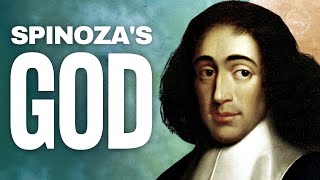
Embedded presentation: The Riddle of Spinoza’s God
PUBLISHER:
Aquarian Media
WEBSITES:
https://www.enkispeaks.com
https://www.dragonattheendoftime.com
SUBSTACK:
https://substack.com/@janetalexlessinphd
NINMAH’S ANUNNAKI OVERLAY
Spinoza, Partnership Consciousness, and the Architecture of Liberation
Within Ninmah’s Anunnaki framework, Earth’s long civilizational struggle reflects a conflict between two competing governance architectures seeded by Anunnaki lineages and expressed through human institutions. These architectures do not operate primarily through force; they operate through belief systems, language control, and authority structures that shape how humans understand divinity, morality, obedience, and freedom.
Spinoza occupies a critical position in this timeline because he directly challenges the mechanism upon which domination consciousness depends: the claim that truth originates from authority rather than from inquiry.
Spinoza as a Ninmah-Aligned Partnership Vector
Ninmah’s consciousness expresses itself wherever systems encourage inquiry rather than submission, cooperation rather than hierarchy, compassion rather than coercion, and direct engagement with Nature rather than fear-based obedience to intermediaries. Spinoza’s philosophy embodies these traits with precision.
He does not ask readers to replace one belief with another. He asks them to verify, compare, and trace origins. This methodological insistence mirrors Ninmah’s partnership template, which treats intelligence as shared, distributed, and accessible rather than hoarded and enforced.
Spinoza therefore functions as a partnership consciousness amplifier within a dominator-controlled religious landscape.
The “Holy Spirit” as a Domination Instrument
Within Ninmah’s Anunnaki overlay, the doctrine of the “Holy Spirit” functions as a control technology rather than a spiritual necessity. By redefining spirit as a distinct divine person administered by institutional authority, dominator systems gain the ability to regulate legitimacy, punish dissent, and equate obedience with salvation.
Spinoza dismantles this mechanism by exposing its historical construction. He demonstrates that Hebrew scripture describes spirit as breath or life-force, not as an independent entity. He then traces how Greek metaphysics transformed this life-force into a doctrinal personhood that institutions could manage and police.
This exposure directly undermines the domination programs associated with Yahweh/Enlil and Marduk/Zeus, which rely on theological complexity to justify hierarchical control.
Deus sive Natura and Ninmah’s Cosmological Alignment
Spinoza’s formulation of Deus sive Natura aligns closely with Ninmah’s cosmology because it removes the central leverage point of dominator religion: fear of a punitive, external authority. A lawful, intelligible universe does not require submission. It requires understanding.
In Ninmah’s framework, divinity expresses itself through living systems, relational intelligence, and cooperative emergence. Spinoza’s God-or-Nature reflects this same architecture. It eliminates the need for priestly intermediaries and returns ethical responsibility to conscious beings themselves.
Enki’s Signature Within the Method
Within the Anunnaki overlay, Enki represents innovation, scientific intelligence, and benevolent guidance toward autonomy. Spinoza’s method—textual comparison, historical tracing, logical coherence, and disciplined inquiry—bears Enki’s signature.
Rather than issuing proclamations, Spinoza builds instruments of clarity. His lens grinding becomes both literal and symbolic: he refines the tools that allow reality to be seen without distortion.
Anu and the Dissolution of Intermediary Power
If Anu functions as the overarching source within the Anunnaki hierarchy, then Spinoza’s work performs a subtle but radical shift. It dissolves the necessity of intermediary control structures that claim exclusive access to divine authority. Spiritual legitimacy moves from hierarchy to consciousness itself.
This shift destabilizes domination systems because it removes their justification for enforcing obedience through fear, mystery, and exclusion.
Why Spinoza Matters in the Long Arc
Within Ninmah’s Anunnaki overlay, Spinoza stands as an ethical disruptor rather than a revolutionary. He does not overthrow institutions by force. He renders them unnecessary by revealing how they operate.
His exile demonstrates a recurring pattern in domination systems: when inquiry threatens control, authority responds with banishment. His endurance demonstrates the corresponding partnership response: clarity without vengeance, ethics without submission, and freedom without chaos.
Spinoza therefore represents a critical node in the long effort to restore partnership consciousness on Earth—a figure who exposes domination not by opposing it rhetorically, but by outgrowing it intellectually.
SPINOZA: GOD, NATURE & THE INVENTED HOLY SPIRIT
by Enki, updated on December 27, 2025, Leave a Comment on SPINOZA: GOD, NATURE & THE INVENTED HOLY SPIRIT
Spinoza researched, documented, understood, and promoted the Great Anunnaki Goddess Ninmah’s cooperative and nature-oriented Consciousness to counter the domination-obsession that Homo sapiens sapiens Anunnaki Princes Yahweh/Enlil and Marduk/Zeus used to control us Homo sapiens/Homo erectus Hybids for the last 200,000 years.

AMSTERDAM 1632–1655: CHILD OF EXILES IN A DANGEROUS LIBRARY
Baruch (Bento) de Spinoza was born on 24 November 1632 in Amsterdam — a city of ships, spice, forbidden manuscripts, and quiet rebellion. His people were Portuguese Marrano Jews — survivors of the Inquisition who had pretended outwardly to serve the Church while secretly clinging to their ancestral faith before fleeing to the tolerant Dutch Republic.
Spinoza grew up in a world that was, in his time, divided between two spiritual orientations, the Anunnaki-dictated domination consciousness, touted by Anunnaki Princes Yahweh/Enlil and Marduk/Ra/Zeus, and the alternative, also an Anunnaki view–promoted by Anunnaki Princess Great Goddess Ninmah and enlightened hybrid humans like Buddha, Jesus, Howard Zinn, and Amy Goodman.
DOMINATION CONSCIOUSNESS — Yahweh/Marduk Pattern
- Authority enforced by dogma
- Loyalty demanded
- Thinking monitored
PARTNERSHIP CONSCIOUSNESS — Ninmah/Goddess, Christ, and Buddhist Consciousness
- Inquiry welcomed
- Learning encouraged
- Spirit found in the world itself.
- Unconditional acceptance of nature and all beings.
His father, Isaac, was officially a merchant of dried fruit.
Unofficially, he curated a secret back-room library where young Bento devoured hundreds of volumes — Hebrew, Latin, Portuguese, Greek — philosophy, medicine, scripture, and cosmology. By his twenties, he read Hebrew, Latin, Greek, and probably Arabic fluently.
The synagogue taught obedience. But the back room his dad gave him seemed to whisper, Look for yourself.
One evening in Torah study around 1655, Spinoza asked the question: “If the Holy Spirit truly belongs to God from the beginning, why does Moses — and the entire Hebrew Bible — never mention a third divine person?” Rabbis in Spinoza’s community heard danger in Spinoza’s question. Spinoza, however, thought, “If truth is divine, why does it need protection? It calls for research. So began his investigations.
“HOLY SPIRIT” CONCEPTS CHANGED AS THEY EVOLVED IN ATHENS
Spinoza began where he knew best — Hebrew scripture.
He discovered that ruach Elohim meant breath, wind, life-force — a living field of energy, not an independent divine “person.” The Torah spoke of God-Breath, not a third member of a divine committee. Early Christianity, he found, was similar. In both early Athens and Greek-speaking theological centers like Alexandria, the Holy Spirit was changed from a life-force to a distinct “person. Zecharia Sitchin, centuries after Spinoza lived, found that the Biblical idea of a single, all-knowing and all-powerful being (who created everything and everyone as acts of will) was made by Israelite scholars. Babylon’s King Nebuchadnezzar held the scholars captive in Babylon and Harran after he destroyed their Temple in Jerusalem. In their captivity, the scholars concocted their version. In it, they pretended that Yahweh, their temple-less Anunnaki “god” was the only god and that he created the Universe, not with a big bang, but with an act of will.
Spinoza tracked the change in worldview in the Greek city-state of Athens.
He found that in the 3rd century CE, Plotinus described all origins as part of “The One”as the source of all that originated in the realm of ideas, and as a “World-Soul” that organized life force. Plotinus wrote that the One and the World Soul were both expressions of one divine reality. Sound familiar? It should.

Christian councils later used almost identical vocabulary — substance, hypostasis, procession — to define the Trinity and the Holy Spirit.
So Spinoza concluded: The Holy Spirit did not descend from Jerusalem. It rose from Athens as a philosophical solution.
DOMINATOR RELIGION PROMOTED PROPOGANDA PERPETUATING OUR SLAVERY
Once he saw the Greek fingerprints, Spinoza applied the same method everywhere; he compared Hebrew, Greek, and Latin sources and mapped when ideas of the divine order appeared, tracked the beneficiaries of the changing beliefs, and noted that the ideas migrated from Greek philosophy into Christology, saw the concept of immortality migrate from the works of Plato into Jewish and then Christian dogma of a god that had three personas into the Trinity.” He wrote that the evolving idea of how the Universe works evolved from simple prophetic spirituality, then to a Philosophical-legal superstructure, and culminated in the Control-of-Domination consciousness that enthralled Earthlings from his day onward. He said that the Dominator religion absorbed Greek metaphysics and Roman law, then stamped itself as “eternal truth.” Spinoza realized that religious authorities trademarked the breath of life.
1656: AMSTERDAM JEWS BANNED SPINOZA FOR BLASPHEMY
In 1656, the Amsterdam synagogue issued a brutal herem ban that cut Spinoza off from community, commerce, burial, and family. This is classic Dominator enforcement. He left quietly and devoted himself to grinding lenses in Rijnsburg, Voorburg, and The Hague and to corresponding with radical thinkers.
He came to his defining insight: If God is infinite, nothing can exist outside God. There is only one endless reality-Deus sive Natura—God, or Nature. Everything else is a mode or way the infinite expresses itself. Creator and creation were never separate. He embraced the Partnership Consciousness of nature itself and, by extension, the potential partnership of all humans as an alternative to the dogma of his day.
In 1670, Spinoza published the Tractatus Theologico-Politicus anonymously. In it, he argued that:
-
- SCRIPTURE IS A HUMAN, HISTORICAL TEXT
- THE STATE SHOULD BE SECULAR
- TRUE PIETY IS JUSTICE & COMPASSION
- FREEDOM OF THOUGHT IS SACRED
Later, in Ethics, he mapped a universe in which everything flows necessarily from the nature of God/Nature — and in which joy grows with understanding.
Spinoza didn’t believe worshipful awe or religious reverence is an appropriate attitude for Nature. He thought that there was nothing holy or sacred about Nature, and it is certainly not the object of a religious experience. Instead, he wrote, understand God or Nature, with Nature’s most truths, because everything depends on it. For Spinoza, the key to discovering and experiencing God lies in philosophy and science, not in religious awe and worshipful submission. Religion, he believed, creates superstitious behavior and subservience to ecclesiastic authorities. In this sense, Pantheism leads, he wrote, to enlightenment, freedom, and true blessedness (i.e., peace of mind).
SPINOZA: GOD, NATURE & THE INVENTED HOLY SPIRIT
Einstein recognized him as a spiritual ancestor and said, “I believe in Spinoza’s God who reveals himself in the orderly harmony of what exists.”
Spinoza glimpsed the divine as one infinite substance, Einstein extended the view — seeing sacred order in the mathematical laws of the cosmos. Now modern thinkers like Michio Kaku imagine countless “bubble universes,” each with its own mathematics, geometry, and constants. Spinoza’s God-or-Nature manifests as not just one world, but many — each lawful, each beautiful, each emerging from a deeper master-equation we have yet to discover.
Maybe thousands of years from now, when technology and consciousness evolve together, humanity will glimpse that deeper pattern — and recognize it as the living intelligence Spinoza named God.
Ninmah consciousness smiles here.
Yahweh/Marduk domination fades.
Authority dissolves into curiosity.
Science becomes prayer.
EINSTEIN & SPINOZA
“I cannot conceive of a God who rewards and punishes his creatures, I believe in Spinoza’s God who reveals himself in the orderly harmony of what exists.”
—Albert Einstein, 1929
PARTNERSHIP vs DOMINATION
DOMINATION (Yahweh/Marduk) MINDSET
- hierarchy
- dogma
- obedience
- violence
- priestly control
PARTNERSHIP (Ninmah/Buddha/Christ MINDSET
- curiosity
- compassion
- equality
- truth-seeking
- nature as sacred
Spinoza stands with Ninmah.
REFERENCES
Spinoza’s primary & historical sources
• Ethics (1677) — Baruch Spinoza
• Tractatus Theologico-Politicus (1670) — Baruch Spinoza
Modern scholarship
• Steven Nadler — works on Spinoza’s philosophy & context
Einstein on Spinoza
• Letter to Rabbi Herbert Goldstein, 1929
Howard Zinn on Cooperative Consciousness
. Passionate Declarations, 2003, Perennial
Share this:
SPINOZA: GOD, NATURE & THE INVENTED HOLY SPIRIT
By Sasha Alex Lessin, Ph.D. (Anthropology, UCLA)
Spinoza researched, documented, understood, and promoted the Great Anunnaki Goddess Ninmah’s cooperative and nature-oriented Consciousness to counter the domination-obsession that Homo sapiens sapiens Anunnaki Princes Yahweh/Enlil and Marduk/Zeus used to control us Homo sapiens/Homo erectus Hybids for the last 200,000 years.
Get more on this at https://wp.me/p1TVCy-8Lo
Watch a video presentation on Spinoza’s contribution to this post beneath it.
Spinoza researched, documented, understood, and promoted the Great Anunnaki Goddess Ninmah’s cooperative and nature-oriented Consciousness to counter the domination-obsession that Homo sapiens sapiens Anunnaki Princes Yahweh/Enlil and Marduk/Zeus used to control us Homo sapiens/Homo erectus Hybids for the last 200,000 years.
AMSTERDAM 1632–1655: CHILD OF EXILES IN A DANGEROUS LIBRARY
Baruch (Bento) de Spinoza was born on 24 November 1632 in Amsterdam — a city of ships, spice, forbidden manuscripts, and quiet rebellion. His people were Portuguese Marrano Jews — survivors of the Inquisition who had pretended outwardly to serve the Church while secretly clinging to their ancestral faith before fleeing to the tolerant Dutch Republic.
Spinoza grew up in a world that was, in his time, divided between two spiritual orientations, the Anunnaki-dictated domination consciousness, touted by Anunnaki Princes Yahweh/Enlil and Marduk/Ra/Zeus, and the alternative, also an Anunnaki view–promoted by Anunnaki Princess Great Goddess Ninmah and enlightened hybrid humans like Buddha, Jesus, Howard Zinn, and Amy Goodman.
DOMINATION CONSCIOUSNESS — Yahweh/Marduk Pattern
- Authority enforced by dogma
- Loyalty demanded
- Thinking monitored
PARTNERSHIP CONSCIOUSNESS — Ninmah/Goddess, Christ, and Buddhist Consciousness
- Inquiry welcomed
- Learning encouraged
- Spirit found in the world itself.
- Unconditional acceptance of Nature and all beings.
His father, Isaac, was officially a merchant of dried fruit.
Unofficially, he curated a secret back-room library where young Bento devoured hundreds of volumes — Hebrew, Latin, Portuguese, Greek — philosophy, medicine, scripture, and cosmology. By his twenties, he read Hebrew, Latin, Greek, and probably Arabic fluently.
The synagogue taught obedience. But the back room his dad gave him seemed to whisper, “Look for yourself.”
One evening around 1655, as he sat in a Torah study group, Spinoza asked the question: “If the Holy Spirit truly belongs to God from the beginning, why does Moses — and the entire Hebrew Bible — never mention a third divine person?”
Rabbis in Spinoza’s community heard danger in Spinoza’s question. Spinoza, however, thought, “If truth is divine, why does it need protection? It calls for research. So began his investigations.
“HOLY SPIRIT” CONCEPTS CHANGED AS THEY EVOLVED IN ATHENS
Spinoza began where he knew best — Hebrew scripture.
He discovered that ruach Elohim meant breath, wind, life-force—a living field of energy, not an independent divine “person.” The Torah spoke of God-Breath, not a third member of a divine committee. Early Christianity, he found, was similar. In both early Athens and Greek-speaking theological centers like Alexandria, the Holy Spirit was changed from a life-force to a distinct “person. Zecharia Sitchin, centuries after Spinoza lived, found that the Biblical idea of a single, all-knowing and all-powerful being (who created everything and everyone as acts of will) whom Israelite scholars fabricated. Babylon’s King Nebuchadnezzar held the scholars captive in Babylon and Harran after he destroyed their Temple in Jerusalem. In their captivity, the scholars concocted their version. In it, they pretended that Yahweh, their temple-less Anunnaki “gd” was the only god and that he created the Universe, not with a big bang, but with an act of will.
Spinoza tracked the change in worldview in the Greek city-state of Athens.
He found that in the 3rd century CE, Plotinus described all origins as part of “The One”as the source of all that originated in the realm of ideas, and as a “World-Soul” that organized life force. Plotinus wrote that the One and the World Soul were both expressions of one divine reality. Sound familiar? It should.
Christian councils later used almost identical vocabulary — substance, hypostasis, procession — to define the Trinity and the Holy Spirit.
So Spinoza concluded: The Holy Spirit did not descend from Jerusalem. It rose from Athens as a philosophical solution.
DOMINATOR RELIGION PROMOTED PROPOGANDA PERPETUATING OUR SLAVERY
Once he saw the Greek fingerprints, Spinoza applied the same method everywhere; he compared Hebrew, Greek, and Latin sources and mapped when ideas of the divine order appeared, tracked the beneficiaries of the changing beliefs, and noted that the ideas migrated from Greek philosophy into Christology, saw the concept of immortality migrate from the works of Plato into Jewish and then Christian dogma of a god that had three personas into the Trinity.” He wrote that the evolving idea of how the Universe works evolved from simple prophetic spirituality, then to a Philosophical-legal superstructure, and culminated in the Control-of-Domination Consciousness that enthralled Earthlings from his day onward. He said that the Dominator religion absorbed Greek metaphysics and Roman law, then stamped itself as “eternal truth.” Spinoza realized that religious authorities trademarked the breath of life.
1656: AMSTERDAM JEWS BANNED SPINOZA FOR BLASPHEMY
In 1656, the Amsterdam synagogue issued a brutal herem ban that cut Spinoza off from community, commerce, burial, and family. This shunning is classic Dominator enforcement. He left quietly and devoted himself to grinding lenses in Rijnsburg, Voorburg, and The Hague and to corresponding with radical thinkers.
He came to his defining insight: If God is infinite, nothing can exist outside God. There is only one endless reality-Deus sive Natura—God, or Nature. Everything else is a mode or a way in which the infinite expresses itself. Creator and creation were never separate. He embraced the Partnership Consciousness of Nature itself and, by extension, the potential partnership of all humans as an alternative to the dogma of his day.
In 1670, Spinoza published the Tractatus Theologico-Politicus anonymously. In it, he argued that:
·
- SCRIPTURE IS A HUMAN, HISTORICAL TEXT
- THE STATE SHOULD BE SECULAR
- TRUE PIETY IS JUSTICE & COMPASSION
- FREEDOM OF THOUGHT IS SACRED
Later, in Ethics, he mapped a universe in which everything flows necessarily from the Nature of God/Nature—and in which joy grows with understanding.
Spinoza didn’t believe worshipful awe or religious reverence is an appropriate attitude for Nature. He thought that there was nothing holy or sacred about Nature, and it is certainly not the object of a religious experience. Instead, he wrote, understand God or Nature, with Nature’s most truths, because everything depends on it. For Spinoza, the key to discovering and experiencing God lies in philosophy and science, not in religious awe and worshipful submission. Religion, he believed, creates superstitious behavior and subservience to ecclesiastic authorities. In this sense, Pantheism leads, he wrote, to enlightenment, freedom, and true blessedness (i.e., peace of mind).
SPINOZA: GOD, NATURE & THE INVENTED HOLY SPIRIT
Einstein recognized him as a spiritual ancestor and said, “I believe in Spinoza’s God who reveals himself in the orderly harmony of what exists.”
Spinoza glimpsed the divine as one infinite substance; Einstein extended the view, seeing sacred order in the mathematical laws of the cosmos. Now modern thinkers like Michio Kaku imagine countless “bubble universes,” each with its own mathematics, geometry, and constants. Spinoza’s God-or-Nature manifests as not just one world, but many — each lawful, each beautiful, each emerging from a deeper master-equation we have yet to discover.
Maybe thousands of years from now, when technology and Consciousness evolve together, humanity will glimpse that deeper pattern — and recognize it as the living intelligence Spinoza named God.
Ninmah consciousness smiles here.
Yahweh/Marduk domination fades.
Authority dissolves into curiosity.
Science becomes prayer.
EINSTEIN & SPINOZA
“I cannot conceive of a God who rewards and punishes his creatures, I believe in Spinoza’s God who reveals himself in the orderly harmony of what exists.”
—Albert Einstein, 1929
PARTNERSHIP vs DOMINATION
DOMINATION (Yahweh/Marduk) MINDSET
- hierarchy
- dogma
- obedience
- violence
- priestly control
PARTNERSHIP (Ninmah/Buddha/Christ MINDSET
- curiosity
- compassion
- equality
- truth-seeking
- nature as sacred
Spinoza stands with Ninmah.
REFERENCES
Spinoza’s primary & historical sources
• Ethics (1677) — Baruch Spinoza
• Tractatus Theologico-Politicus (1670) — Baruch Spinoza
Modern scholarship
• Steven Nadler — works on Spinoza’s philosophy & context
Einstein on Spinoza
• Letter to Rabbi Herbert Goldstein, 1929
Howard Zinn on Cooperative Consciousness
. Passionate Declarations, 2003, Perennial
Attachments area
Preview YouTube video The Riddle of Spinoza’s GodPreview YouTube video The Riddle of Spinoza’s God