WHITENING OF AMERICA: A BROKEN PROMISE
By Janet Kira Lessin
With Sasha Alex Lessin, Ph.D., Contributing Author
I. THE PROMISE THAT BUILT A NATION
America did not emerge as a finished identity. It emerged as a proposition — an invitation extended across oceans and generations. Those who arrived here were not promised wealth or comfort. They were offered something more abstract and more powerful: the possibility that sacrifice could mature into belonging, that endurance could yield opportunity, and that even if the dream eluded one generation, it might reach the next.
This implied covenant sustained the country for nearly 250 years. Immigrants arrived knowing the cost would be high, but trusting that their labor, loyalty, and perseverance would open doors for their children. That promise, fragile and often broken, nevertheless functioned as the moral engine of the American experiment.
HEADER IMAGE — THE PROMISE
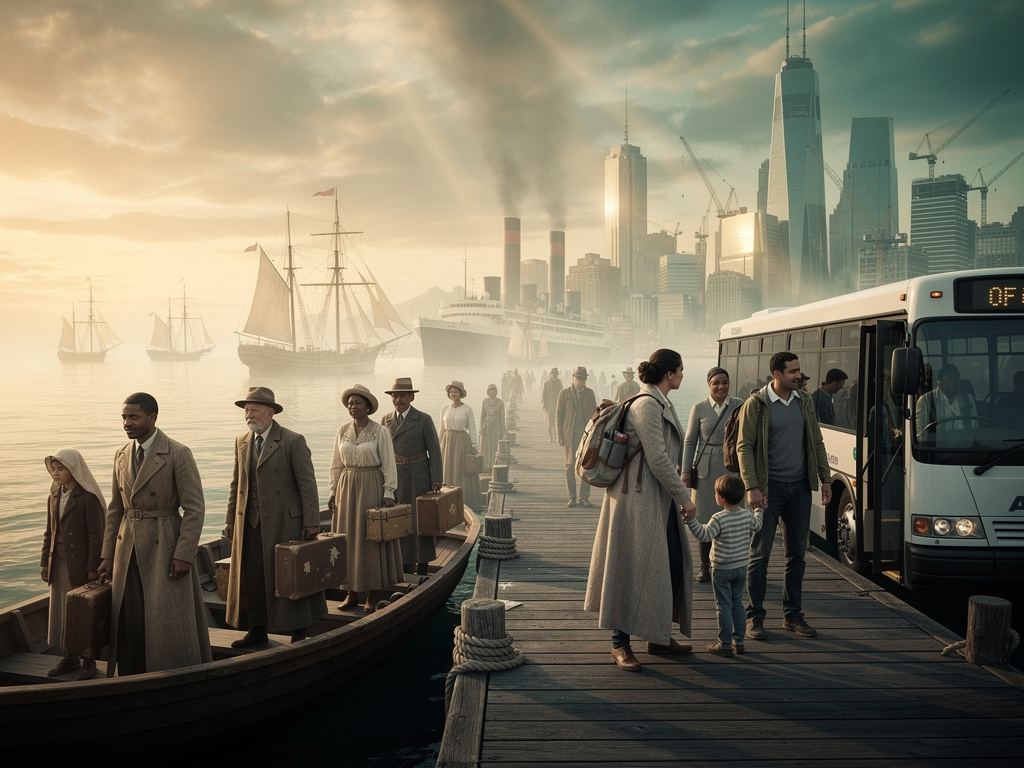
A symbolic image of immigrants arriving across eras, blending past and present into a single horizon of hope.
Prompt:
realistic photorealistic landscape, cinematic lighting, diverse immigrants from different centuries overlapping in a single scene, ships fading into modern skylines, warm natural colors, emotional depth, fantasy realism, highly detailed, 1024×576
II. WAVES OF ARRIVAL AND SHIFTING CASTES
Each wave of newcomers reshaped the definition of who counted as “American.” Religious refugees arrived first, followed by Europeans fleeing famine, war, and rigid social hierarchies. Irish, Italians, Jews, Germans, Eastern Europeans — each group was initially cast as inferior, dangerous, or unassimilable. Over time, each was absorbed, not because prejudice vanished, but because power redrew its boundaries.
Race and class operated as evolving filters. Whiteness expanded selectively, while others remained excluded. The American Dream did not unfold evenly, but it remained visible enough to sustain belief. Even those marginalized by the system could imagine a future in which their descendants might stand on firmer ground.
IMAGE — WAVES OF ARRIVAL
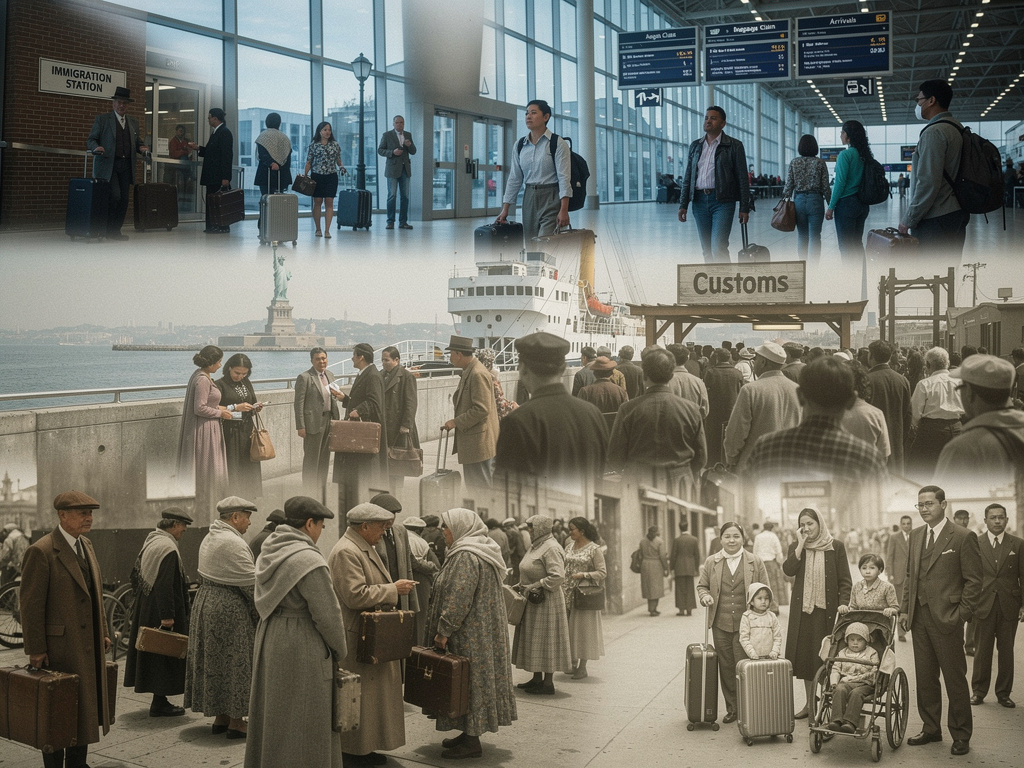
A layered visual of different immigrant groups arriving at various points in history.
Prompt:
realistic photorealistic historical montage, immigrants from Europe, Asia, and Latin America arriving in different eras, layered time effect, cinematic lighting, muted natural colors, documentary realism, highly detailed, 1024×576
III. THOSE BROUGHT WITHOUT CHOICE
Not all who arrived came willingly. Black Americans were forced into this nation through enslavement, stripped of autonomy, culture, and legal identity. For generations, they were excluded from the promise entirely. And yet, even within that brutal reality, many believed that endurance might someday yield freedom for their descendants.
Over time — through resistance, education, and relentless effort — parts of that promise did begin to materialize. Later waves of Black immigrants arrived voluntarily, seeking education and opportunity. They, too, invested in the long arc of American possibility. The dream did not erase injustice, but it did function as a horizon that people could move toward.
IMAGE — ENDURANCE AND MEMORY
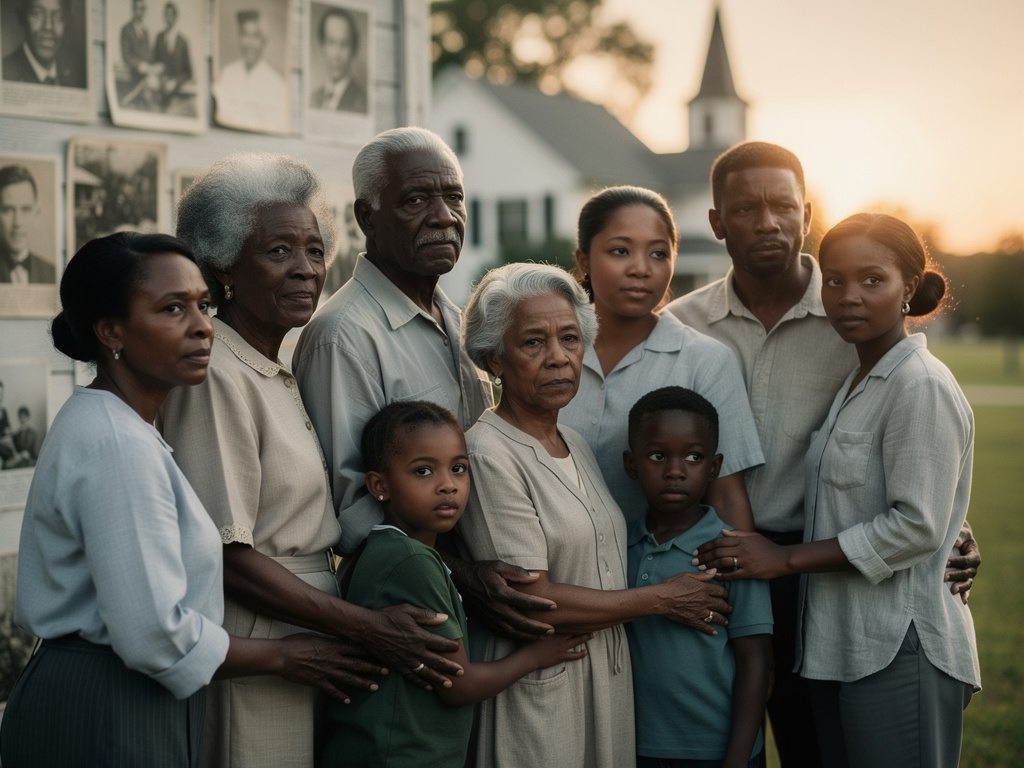
A respectful, symbolic representation of generational endurance.
Prompt:
realistic photorealistic portrait-style scene, Black families across generations standing together, subtle historical references, cinematic lighting, dignified and solemn mood, soft natural colors, emotional depth, highly detailed, 1024×576
IV. BLENDING, BELONGING, AND THE ERA OF HOPE
As the twentieth century unfolded, America became a meeting place for the world. Japanese families rebuilt after internment. Indian scholars and professionals arrived. Brown people from every continent came seeking education, safety, and contribution. Over time, something rare occurred: people did not merely coexist — they blended.
Accents softened. Cultures intertwined. Families crossed racial and religious lines. Children spoke with voices that belonged entirely to this land, even when their parents carried the music of elsewhere. Diversity became not a threat, but a stabilizing force. Extremes softened. Humanity expanded.
This was the era that sang its values aloud: We Shall Overcome, Kumbaya, We Are the World. It was not perfect, but it was hopeful.
IMAGE — THE BLENDED NATION
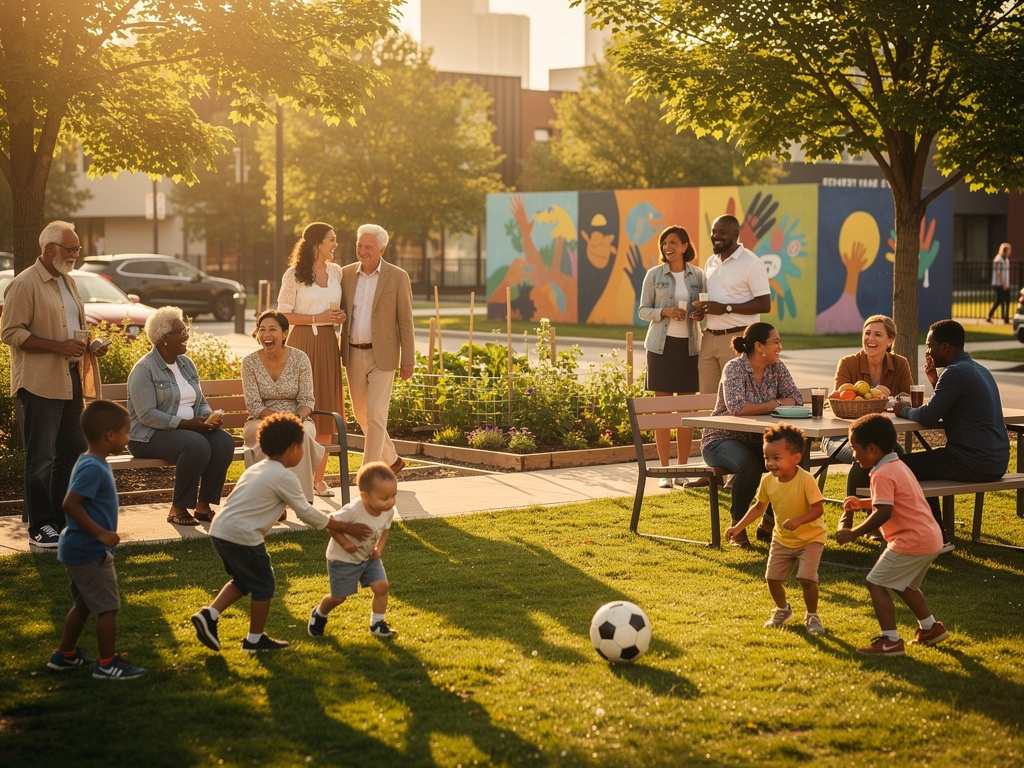
A warm, inclusive scene of multiracial families and shared community life.
Prompt:
realistic photorealistic community scene, multiracial families interacting, children playing, shared public space, golden hour lighting, soft natural colors, hopeful tone, fantasy realism, highly detailed, 1024×576
V. THE WITHDRAWAL OF THE PROMISE
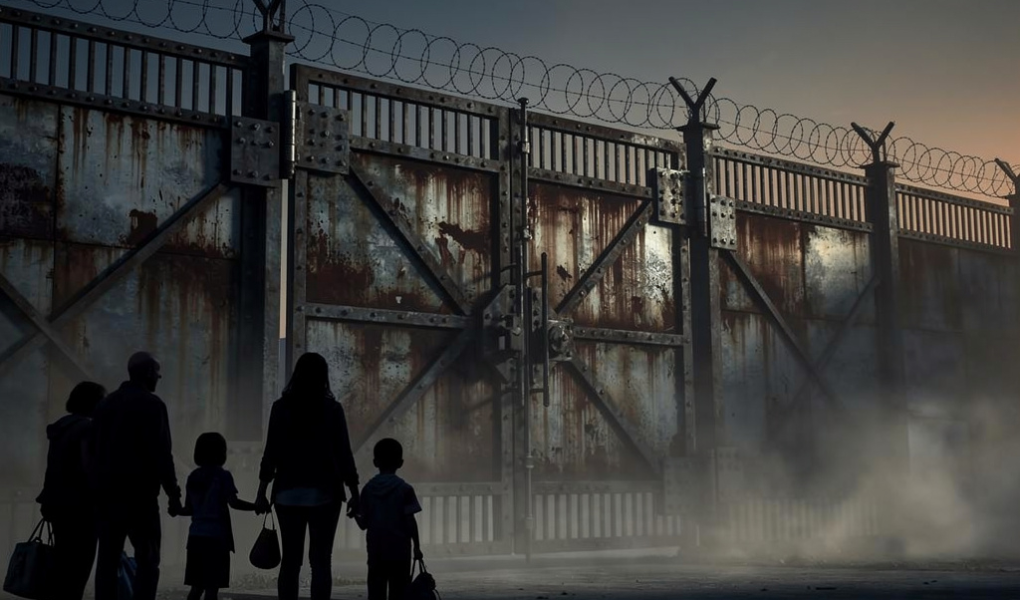
What feels different now is not that prejudice exists — it always has — but that exclusion is being reframed as virtue. Policies once justified as temporary safeguards are now presented as moral corrections. Immigration is no longer debated as a practical concern, but as an existential threat. Even visitors are questioned. Doors, once opened cautiously, are now slammed shut.
This is not simply about labor, though immigrants still perform much of the work others refuse to do. It is about belonging. The whitening of America is not merely demographic; it is ideological. It seeks to reverse the long, uneven expansion of who gets to belong.
History warns us where this path leads. A nation that revokes its promise dismantles itself from within.
IMAGE — THE CLOSED DOOR
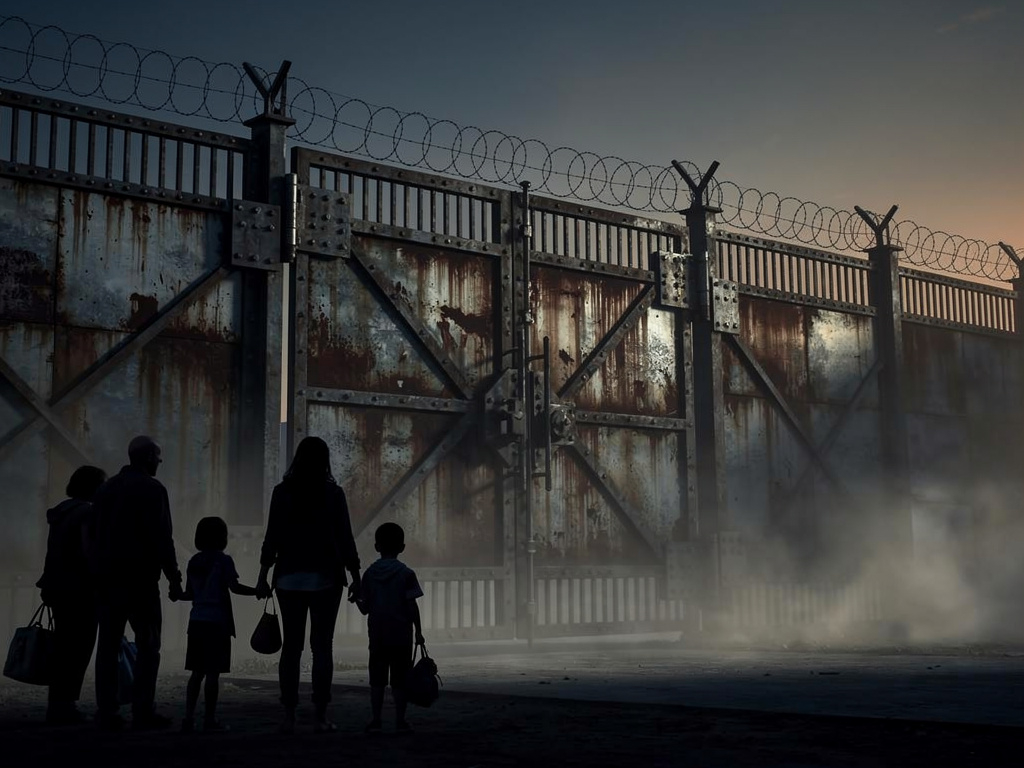
A stark, symbolic image of exclusion and fear.
Prompt:
realistic photorealistic dystopian symbolism, closed gate or border wall at dusk, silhouettes of families on one side, cold cinematic lighting, subdued colors, ominous mood, fantasy realism, highly detailed, 1024×576
CONCLUSION: A MOMENT OF CHOICE
The American Dream was never easy, but it was real enough to sustain generations of sacrifice. To abandon it now is to betray not only immigrants, but the nation’s own origin story—memory matters. History matters. And the future depends on whether we remember who we have already become.
NEXT IN THE SERIES
EVIL EMPIRE: AN ORWELLIAN TALE
(How fear, surveillance, and mythic leadership fracture democratic societies)
BELLS & WHISTLES
Series Title:
When Systems Fail
This Article:
Whitening of America: A Broken Promise
Related Article:
Evil Empire: An Orwellian Tale
Tags:
immigration, American Dream, race, history, democracy, authoritarianism, civil rights, cultural identity, inclusion, social justice
Suggested Hashtags:
#WhiteningOfAmerica #AmericanDream #ImmigrationHistory #DemocracyAtRisk #CulturalMemory
Author Bios:
Janet Kira Lessin is a writer, researcher, and narrative historian exploring the intersection of lived experience, cultural memory, and power structures in modern society.
Sasha Alex Lessin, Ph.D., is an anthropologist whose work focuses on social systems, hierarchy, and the long arc of human governance.
Websites:
www.dragonattheendoftime.com
www.enkispeaks.com
Substack: https://substack.com/@janetalexlessinphd
WHITENING OF AMERICA: A BROKEN PROMISE
By Janet Kira Lessin
(with Sasha Alex Lessin, Ph.D., Contributing Author)
The Promise That Built a Nation
America did not begin as a finished idea. It started as a longing.
From its earliest days, this country presented itself not as a bloodline or a tribe, but as a possibility. In this place, those fleeing persecution, poverty, rigid caste systems, religious oppression, and political violence might begin again. That promise was never written as a guarantee of immediate success. It was something subtler and, in many ways, more powerful: an implied covenant across generations.
Come here, the nation seemed to say. Please give us your labor, your loyalty, your sweat, your ingenuity, your endurance. Even if you do not fully reach the dream, your children might. If not your children, then their children. If not them, then someday—down the line—the promise will unfold.
For nearly 250 years, that idea sustained wave after wave of newcomers. And those waves were not static. They shifted constantly, each one reshaping the country’s social fabric, economy, culture, and sense of itself.
Who Came, and When
The earliest immigrants were often those escaping religious persecution—Puritans, Quakers, dissenters seeking freedom of conscience. They were followed by waves of Europeans fleeing famine, feudalism, and war: the Irish, the Germans, the Italians, the Jews, and the Eastern Europeans. Each group was, at first, treated as a suspect. Each was labeled foreign, inferior, and unassimilable. Each was warned—sometimes violently—that they were not truly welcome.
And yet, over time, they became Americans.
They learned the language. Their children lost their accents. Their grandchildren forgot the old-country fears. Slowly, sometimes painfully, they were absorbed into the expanding definition of “white,” a category that was never natural or fixed, but constructed and reconstructed to serve power.
Alongside them were people who did not come by choice at all.
Those Brought in Chains
Black Americans were not immigrants in the conventional sense. They were brought here against their will, stripped of language, lineage, and legal personhood. For generations, they were denied even the illusion of the American Dream. And yet, even under slavery, and later under segregation and terror, many held onto a belief that their descendants might live freer lives.
That belief was not naïve. It was hard-won.
Over time, despite systemic barriers, some Black families did see progress. Education opened doors. Professional opportunities expanded, unevenly and incompletely, but tangibly. Later waves of Black immigrants arrived voluntarily—from Africa, the Caribbean, and beyond—seeking education, safety, and opportunity. They too entered the long American experiment, contributing to its intellectual, cultural, and economic life.
The promise was imperfect, delayed, and often betrayed—but it was not imaginary.
The World Comes to America
As the twentieth century unfolded, America drew people from across Asia, Latin America, the Middle East, and India. Japanese families arrived, endured internment, and still rebuilt. Indian scholars, engineers, and doctors came seeking education and professional opportunity. Brown people from every corner of the world arrived with hope, ambition, and resilience.
They studied here. They worked here. They stayed.
Over time, something extraordinary happened. The dream that had eluded earlier generations began to materialize—not necessarily for the pioneers themselves, but for their grandchildren and great-grandchildren. The promise was slow, but it functioned. The arc bent, however unevenly, toward inclusion.
And with that inclusion came love.
The Era of Blending
People met across cultures, races, and religions. They fell in love. They married. They had children who embodied multiple histories at once. Accents softened. Identities blended. A distinctly American voice emerged—one that belonged to no single ancestry but carried traces of many.
This was not a perfect era. Racism did not vanish. Inequality persisted. But there was a prevailing sense, especially in the latter half of the twentieth century, that the future was opening rather than closing.
People sang it aloud.
We Shall Overcome.
Kumbaya.
We Are the World.
These were not empty songs. They reflected a shared aspiration: that diversity was not a threat, but a strength. That difference could soften extremes. That tolerance, love, and acceptance were not weaknesses, but evolutionary steps.
For many, it truly felt like progress.
Work, Welcome, and Everyday Humanity
This country was built—quite literally—on the backs of immigrants. And even into the present century, it relied heavily on immigrant labor to perform the work many native-born Americans refused to do.
Immigrants cleaned hotel rooms, cooked meals, harvested crops, repaired homes, drove taxis, and later Ubers and Lyfts. They staffed hospitals, cared for the sick, tended gardens, and kept cities functioning. They showed up early. They worked hard. They were reliable.
In many communities—including mine—they were not resented. They were welcomed.
In my own life, immigrants attended my classes and workshops. They cared for me in hospitals. They helped me through difficult moments with kindness and presence. They repaired my home, worked in my yard, smiled at me in stores and restaurants. When I traveled for decades, it was brown people who greeted me at hotels, cleaned rooms, and served meals with professionalism and warmth.
I did not experience them as “others.” I experienced them as people.
Memory, Diversity, and Home
Some of my earliest memories reflect that openness. As a young girl, I remember a man wearing a turban—likely Indian—coming to our home selling vacuum cleaners door to door. I was fascinated, curious, full of questions. He demonstrated his machine while I sat on the floor beside him. My mother welcomed him warmly and remained present, engaged in conversation. We did not buy the vacuum, but he returned several times just to talk.
After the Vietnam War, refugees were welcomed into our neighborhood. Friends entered green-card marriages—some successful, some not. One friend’s niece married a Muslim man, and while there were fears about safety abroad, there was also love, acceptance, and concern rooted in care, not hatred.
Later, when I worked at Penn State, I felt at home in its diversity. And when I moved to Hawai‘i—an international crossroads where cultures blend daily—I felt an even deeper sense of belonging. Diversity did not feel threatening. It felt like balance. Pittsburgh, by comparison, felt starkly black and white.
In diverse spaces, extremes softened. Humanity expanded.
The Turning
Yes, racism always existed. I remember “jokes” about sending Black people “back to Africa,” comments so cruel they demanded confrontation. And when confronted, people knew they were wrong. There was shame. There was awareness.
What feels different now is not that prejudice exists—but that it is being legitimized, amplified, and institutionalized.
Today, we hear serious discussions about halting not only immigration, but even visitors. About closing doors entirely. About purity, exclusion, and fear. About undoing the implied promise that sustained generations of sacrifice.
This is not merely a policy shift. It is a moral rupture.
What Happens When the Promise Is Broken
What happens when the country that relied on immigrant labor expels those workers? Who will harvest the crops? Who will care for the elderly? Who will clean the hospitals, repair the homes, drive the transport systems?
Robots, some say.
But this is not really about labor. It is about belonging.
The whitening of America is not simply demographic. It is ideological. It seeks to reverse a long, painful, but meaningful expansion of who gets to belong. It treats diversity not as destiny, but as contamination.
And history tells us where that leads.
A Moment of Choice
For decades, the American Dream functioned—slowly, imperfectly, but real enough to sustain hope. People believed that if they endured, their descendants would thrive. That belief built universities, cities, families, and futures.
To withdraw that promise now is to betray not only immigrants, but America itself.
This is not nostalgia. It is memory.
And memory, when honored, can still guide us.
The question is whether we will remember who we have been—or allow fear to convince us we were never meant to become what we already are.


