When the Violence Comes Home
Parricide, grief, and the questions society avoids
Some crimes horrify because they are violent, and crimes that horrify because they rupture something foundational. The alleged killing of Rob and Michele Reiner by their adult son belongs to the latter category. It is not only a story about death, or even about murder. It is a story that collapses the assumed boundary between family and danger, forcing the public into a conversation it would rather avoid.
The legal process is ongoing, and guilt will ultimately be determined in court. But societies do not wait for verdicts before they begin to reckon with meaning. They never have. We talk about JFK, about 9/11, about Vietnam, and Watergate, not because all facts are settled, but because events of this magnitude demand interpretation while they are alive in the culture.
What has stunned people in this case is not only that a child allegedly killed a parent, but that both parents were allegedly killed. That distinction matters. It changes the nature of the inquiry.
This was not a single explosive moment between two people locked in conflict. Allegedly, killing both parents requires time, persistence, and choice. Even in the presence of severe mental disturbance, it raises questions about intention, internal narrative, and perceived threat. One parent could have been spared. One could have escaped. The fact that neither did intensifies the psychological and moral shock.
Parricide — the killing of a parent by a child — is among the rarest forms of homicide, accounting for roughly one to three percent of all murders. Its rarity has allowed it to remain largely invisible in public discourse and policy, treated as an anomaly rather than a phenomenon worthy of sustained study. Yet when parricide occurs, it often exposes long-festering failures that were visible long before violence erupted.
Research consistently shows that adult parricide is disproportionately associated with severe mental illness, particularly untreated psychosis involving paranoia, delusional thinking, and collapse of reality-based judgment. These cases frequently involve years of deterioration, inconsistent treatment, and escalating instability that went uncontained. This does not mean that mental illness causes violence. Most people with serious mental illness never harm anyone. But when parricide does occur, untreated psychiatric collapse appears far more often than chance alone would predict.
What is far less studied — and more troubling — is how often housing instability, family strain, and systemic neglect intersect with this deterioration. National crime databases do not track homelessness or housing precarity in homicide cases. We do not know how many perpetrators cycled between family homes, shelters, and the street. We do not know how often families were left to manage crises that required professional intervention. The absence of this data is not neutral. It reflects a system that prefers not to look too closely.
In the Reiner case, the public record includes a documented history of struggle, including a collaborative film project between father and son that openly explored that struggle. That fact alone unsettles the easy narratives. It suggests effort, engagement, and care — and raises the most painful question of all: What happens when insight, creativity, and love are not enough?
These are not accusations. They are the questions that arise when private breakdowns collide with public tragedy. They are the questions societies must ask if they wish to prevent recurrence rather than merely mourn.
Parricide is rare, but it is not random. It sits at the end of a spectrum that includes untreated mental illness, prolonged instability, eroded boundaries, and systems that intervene only when danger becomes undeniable. By the time violence occurs, the failure is rarely sudden. It is cumulative.
This is why the shock reverberates so deeply. It is not only grief for two lives lost, but an instinctive recognition that something long broken was allowed to stay broken — until it broke everything.
When Safety No Longer Means Safe
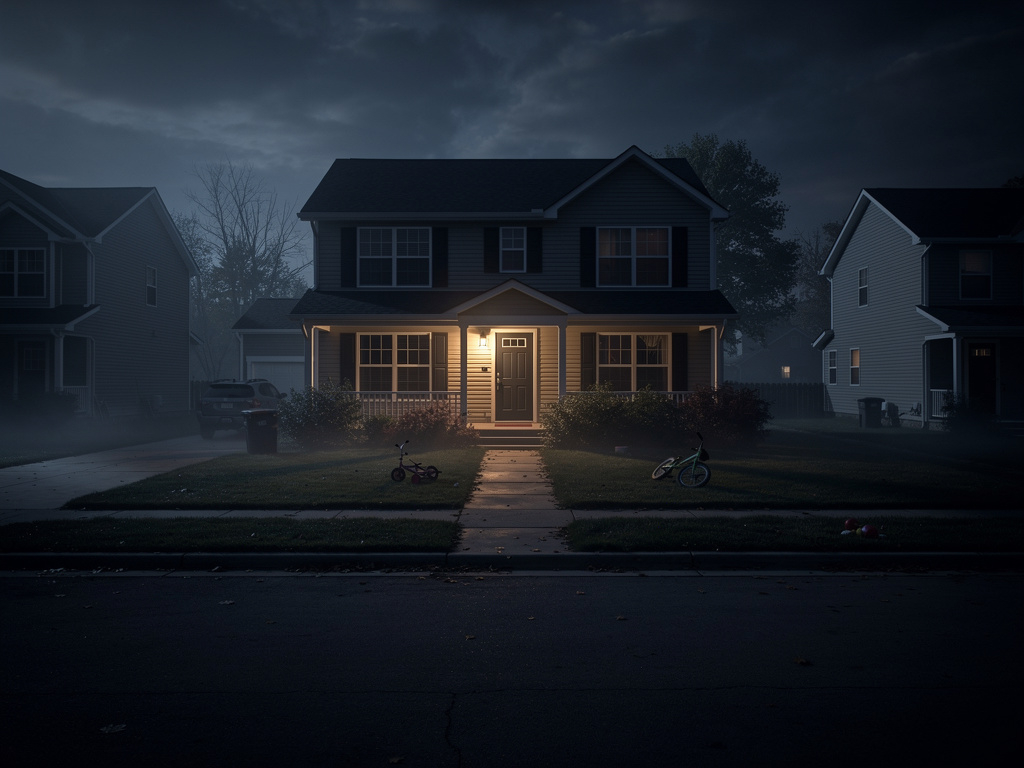
PROMPT:
realistic, photorealistic, cinematic lighting, soft natural colors, fantasy realism, highly detailed, emotional depth, artistic composition, quiet suburban family home at night, exterior view, darkened windows, a single porch light glowing faintly, empty street, no people, moody atmosphere, sense of unease and silence, home as a place of lost safety, contemplative tone, wide landscape orientation
The Long Unseen Descent
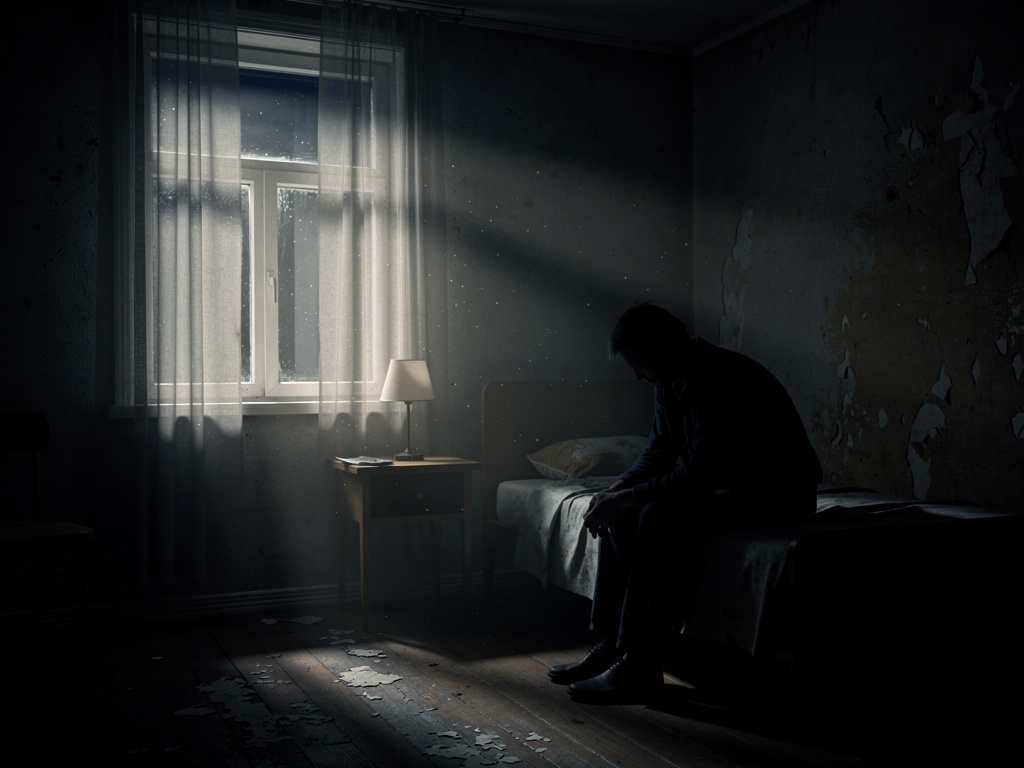
PROMPT:
realistic, photorealistic, cinematic lighting, soft natural colors, fantasy realism, highly detailed, emotional depth, artistic composition, solitary adult figure seen in silhouette, sitting alone in a dimly lit room near a window at night, light filtering in softly, no visible facial details, atmosphere of isolation and psychological strain, quiet interior space, introspective and somber mood, no violence, no action, wide landscape orientation
After Everything
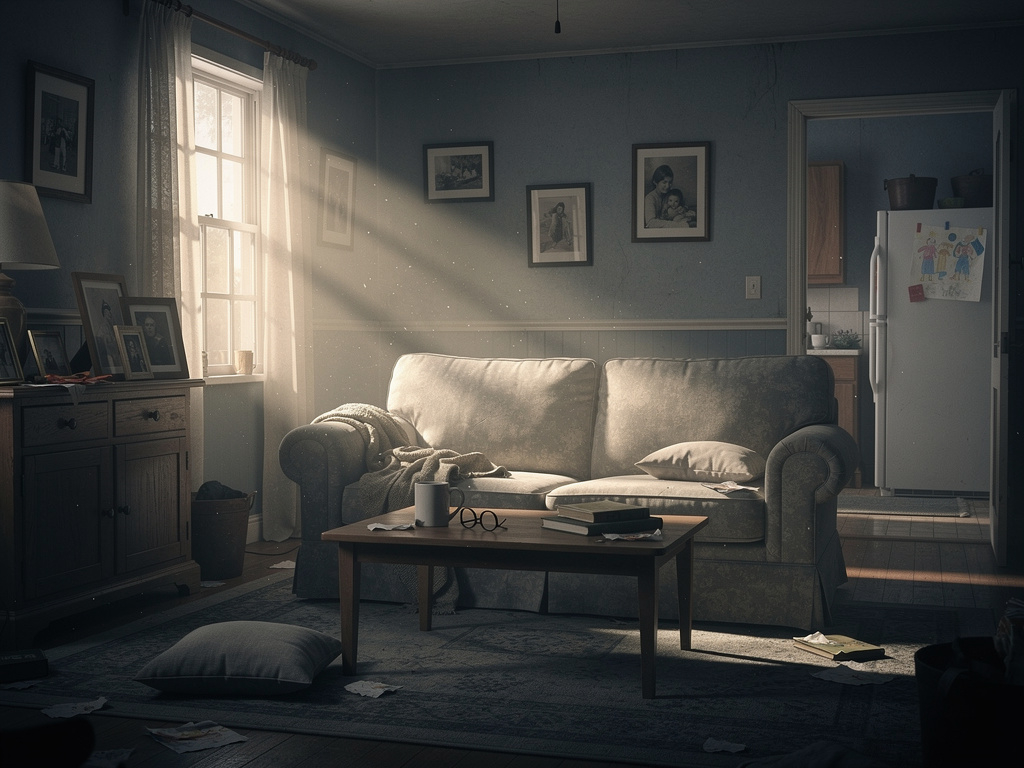
PROMPT:
realistic, photorealistic, cinematic lighting, soft natural colors, fantasy realism, highly detailed, emotional depth, artistic composition, empty family living room in early morning light, sunlight streaming through a window, untouched furniture, no people present, atmosphere of loss and stillness, reflective and quiet mood, sense of aftermath and grief without violence, wide landscape orientation with aftermath rather than action — grief, silence, and unanswered questions.
Why it works: It echoes your final line: something broken long before violence occurred.

