Homelessness, Mental Health, and the Cost of Looking Away
Homelessness is often framed as a tragic but isolated humanitarian issue, a condition affecting a marginal population whose suffering, while regrettable, is assumed to exist largely outside the lives of the housed majority. This framing allows society to express sympathy without responsibility, concern without intervention. It also obscures a more uncomfortable truth: prolonged, unsheltered homelessness is not merely a social ill endured by those living on the street. It is a systemic failure with consequences that ripple outward, destabilizing public space, public safety, and public mental health.
Street homelessness is not a neutral condition. It is a sustained environment of instability that predictably alters human behavior, cognition, and emotional regulation. The longer people are exposed to it, the more profound those effects become—not only for the unhoused, but for everyone compelled to live amid unmanaged suffering.
Instability as a Generator of Mental Illness
Modern psychology and neuroscience leave little room for ambiguity about what chronic instability does to the human nervous system. Sleep deprivation, constant exposure to threat, lack of privacy, absence of a secure place to rest, and the erosion of personal boundaries create conditions under which even psychologically healthy individuals begin to deteriorate. Anxiety deepens into hypervigilance, vigilance hardens into paranoia, and cognition itself becomes impaired as the brain shifts into survival mode.
Popular culture occasionally captures this reality more clearly than policy discourse. In the television series ER, the character of Dr. Victor Clemente—a trained, intelligent, and initially competent physician—gradually descends into paranoia and psychosis after being subjected to prolonged threat, exhaustion, and instability. Clemente did not begin as a mentally ill man. His unraveling was environmental, not intrinsic. The story resonated precisely because it reflected a truth clinicians recognize: sustained threat and sleep deprivation can fracture even strong minds.
Crucially, Clemente still had housing. He still had professional status. He still had access to resources. When those supports proved insufficient to protect his mental health, the implications for people living without shelter are stark. Mental illness is not always the cause of homelessness. In many cases, homelessness is the cause, or at least the accelerant, of mental illness.
Living Inside the Failure
In cities where homelessness is widespread and unmanaged, its effects are not confined to those without housing. Public space itself begins to change character. Sidewalks, transit corridors, intersections, and commercial districts become sites of uncertainty, where ordinary social expectations no longer reliably apply.
In Hawaii, where homelessness is highly visible, the experience of daily life is shaped by constant, low-level vigilance. Walking to work, getting off a bus, or stopping at a traffic light requires quiet calculations about proximity, unpredictability, and personal safety. This is not a matter of prejudice or judgment against homeless individuals. It is a response to instability that any human nervous system would register.
The illusion that risk is limited to nighttime or isolated areas collapses quickly. When someone can be chased in broad daylight while performing a routine task—such as walking to get coffee—the problem can no longer be dismissed as exceptional or situational. It becomes evident that the environment itself has become unsafe, not through malice, but through neglect.
The Burden of Unstructured Compassion
Many people respond to visible homelessness with genuine compassion, sometimes expressed through personal acts of kindness that cross boundaries out of desperation to relieve suffering. Yet when care is left to individuals rather than systems, compassion becomes dangerous, particularly for women. Inviting unstable strangers into private spaces, attempting to substitute personal goodwill for professional care, or absorbing risk that should never belong to an individual is not a virtue. It is evidence of systemic abdication.
A functioning society does not rely on isolated acts of bravery or generosity to manage predictable harm. It builds structures that protect both those in need and those who would otherwise be forced into impossible moral choices between empathy and self-preservation. Compassion without structure does not create safety. It creates anxiety, exhaustion, and eventually resentment.
The Myth of Temporary Solutions
Well-intended stopgaps are often offered as proof of action, but they rarely address the underlying problem. Living in a car is not housing. It is an exposed, precarious state in which people—especially women—are vulnerable to assault, theft, and coercion. Even that fragile refuge is unstable, as laws and policing practices often criminalize rest itself, forcing exhausted individuals to relocate repeatedly in the middle of the night.
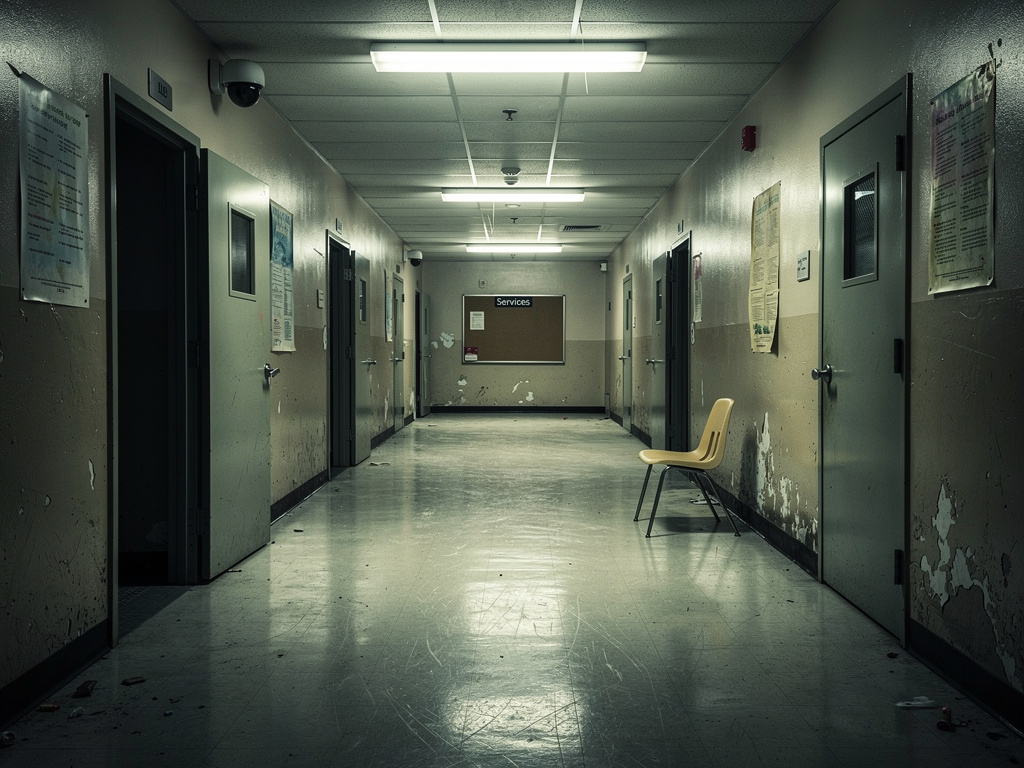
Shelters and low-cost hostels frequently fail in different ways. Noise, crowding, lack of secure storage, and sleep disruption make them untenable for people attempting to work or stabilize their lives. The result is a cruel paradox in which the very environments meant to provide relief instead perpetuate exhaustion and psychological decline.
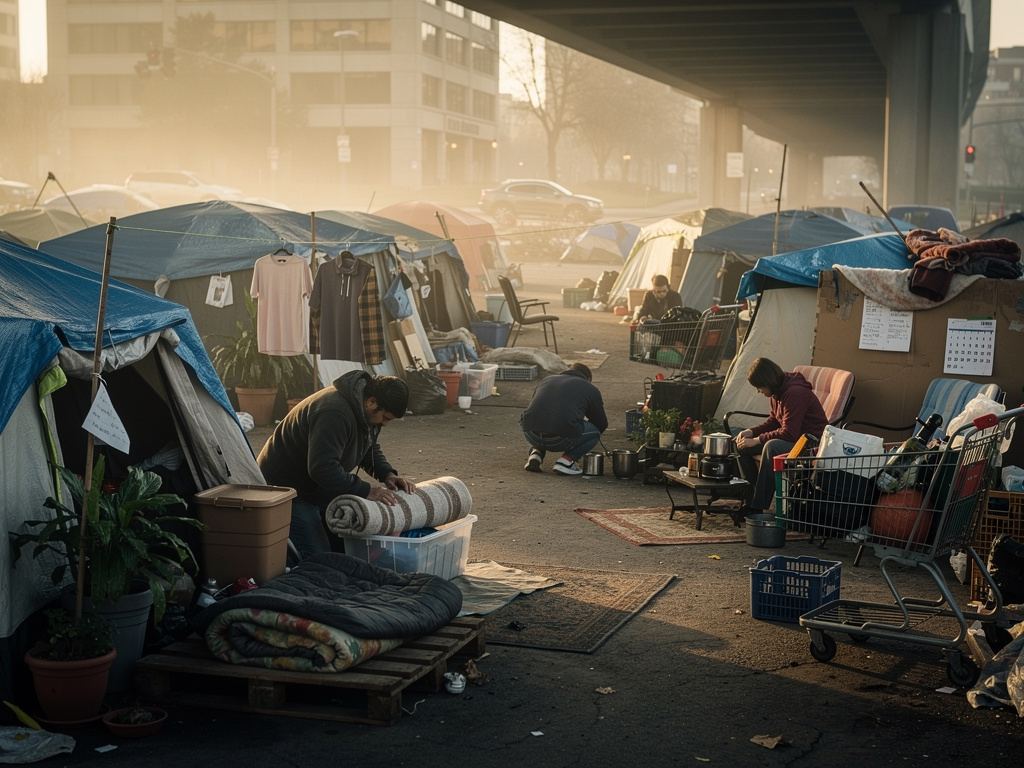
Tent cities, meanwhile, may offer visibility but not dignity. They communicate abandonment rather than care, signaling that suffering has been normalized rather than addressed. Housing placed far from town, far from services, and far from community may remove homelessness from sight, but it does not resolve it. Isolation is not integration.
How Risk Spreads
Unmanaged homelessness transfers risk outward. Public spaces become contested, not because homeless individuals are inherently dangerous, but because untreated instability erodes predictability. Drivers are approached while immobilized at intersections. Pedestrians alter routes to avoid confrontation. Women carry an unspoken burden of constant situational assessment. Elders withdraw from shared spaces. Trust in the social environment weakens.
This erosion is cumulative. As public confidence declines, patience wanes, and political discourse hardens. The tragedy is that this outcome is often misinterpreted as a failure of compassion, when in fact it is the predictable consequence of allowing systemic neglect to persist.
Prevention Without Punishment
Addressing homelessness does not require cruelty or mass incarceration. It requires acknowledging that prolonged street living is itself a form of harm and that waiting for crisis thresholds—such as imminent danger to self or others—is a strategy that intervenes too late.
Effective responses prioritize early intervention, stable housing, professional oversight, and graduated care that addresses mental health deterioration before it becomes catastrophic. This approach recognizes that freedom without safety is not freedom at all, and that intervention grounded in care is not punishment but prevention.
The Choice Before Us
Society already accepts preventive intervention in other domains. Children are removed from neglectful environments before irreversible harm occurs. Elders who cannot care for themselves are protected. Buildings are inspected before collapse. Public health measures are enacted before epidemics spiral out of control.
Homelessness is treated differently, not because the harm is unknown, but because the political will to address it has been lacking. A society capable of building infrastructure on a massive scale can provide humane, monitored housing integrated into community life. What is missing is not capacity, but commitment.
Conclusion
Homelessness is not an isolated tragedy endured quietly by those on the margins. It is a destabilizing force that affects mental health, public safety, and the social fabric as a whole. To ignore its predictable consequences is not compassion; it is complicity.
A society that understands how human beings break under sustained instability, yet continues to tolerate conditions that produce that breakdown, has made a choice. The question is whether we are willing to make a different one.
Homelessness, Mental Health, and the Cost of Looking Away
Homelessness is often framed as a tragic but isolated humanitarian issue, a condition affecting a marginal population whose suffering, while regrettable, is assumed to exist largely outside the lives of the housed majority. This framing allows society to express sympathy without responsibility, concern without intervention. It also obscures a more uncomfortable truth: prolonged, unsheltered homelessness is not merely a social ill endured by those living on the street. It is a systemic failure with consequences that ripple outward, destabilizing public space, public safety, and public mental health.
Street homelessness is not a neutral condition. It is a sustained environment of instability that predictably alters human behavior, cognition, and emotional regulation. The longer people are exposed to it, the more profound those effects become—not only for the unhoused, but for everyone compelled to live amid unmanaged suffering.
Instability as a Generator of Mental Illness
Modern psychology and neuroscience leave little room for ambiguity about what chronic instability does to the human nervous system. Sleep deprivation, constant exposure to threat, lack of privacy, absence of a secure place to rest, and the erosion of personal boundaries create conditions under which even psychologically healthy individuals begin to deteriorate. Anxiety deepens into hypervigilance, vigilance hardens into paranoia, and cognition itself becomes impaired as the brain shifts into survival mode.
Popular culture occasionally captures this reality more clearly than policy discourse. In the television series ER, the character of Dr. Victor Clemente—a trained, intelligent, and initially competent physician—gradually descends into paranoia and psychosis after being subjected to prolonged threat, exhaustion, and instability. Clemente did not begin as a mentally ill man. His unraveling was environmental, not intrinsic. The story resonated precisely because it reflected a truth clinicians recognize: sustained threat and sleep deprivation can fracture even strong minds.
Crucially, Clemente still had housing. He still had professional status. He still had access to resources. When those supports proved insufficient to protect his mental health, the implications for people living without shelter are stark. Mental illness is not always the cause of homelessness. In many cases, homelessness is the cause, or at least the accelerant, of mental illness.
Living Inside the Failure
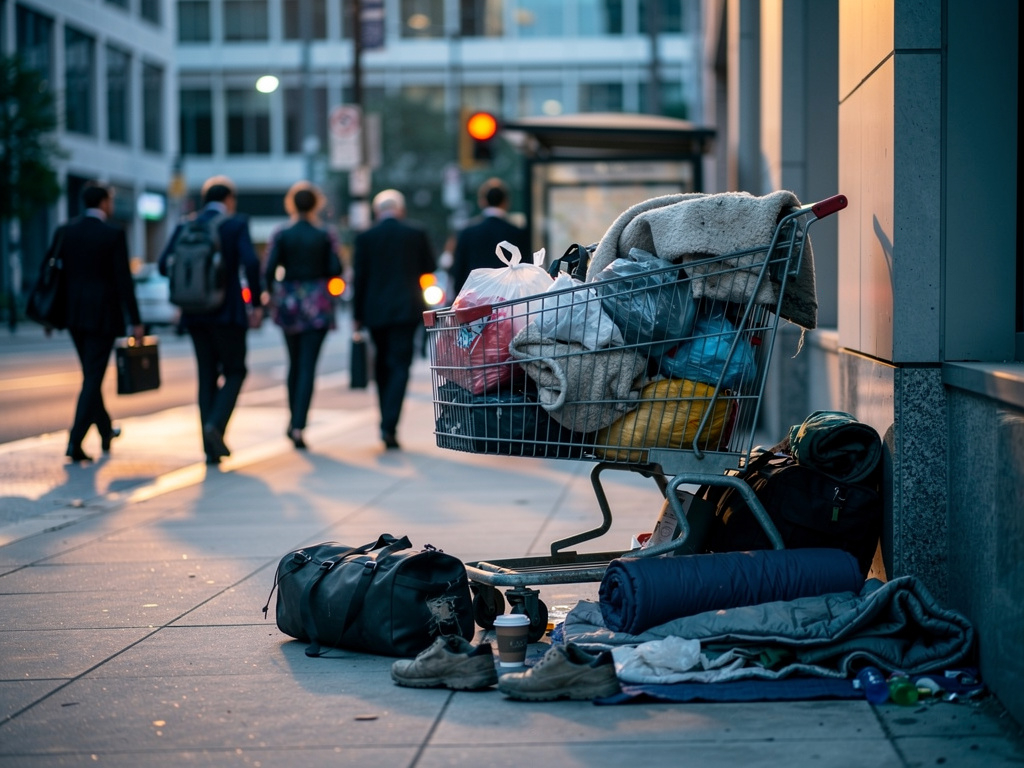
In cities where homelessness is widespread and unmanaged, its effects are not confined to those without housing. Public space itself begins to change character. Sidewalks, transit corridors, intersections, and commercial districts become sites of uncertainty, where ordinary social expectations no longer reliably apply.
In Hawaii, where homelessness is highly visible, the experience of daily life is shaped by constant, low-level vigilance. Walking to work, getting off a bus, or stopping at a traffic light requires quiet calculations about proximity, unpredictability, and personal safety. This is not a matter of prejudice or judgment against homeless individuals. It is a response to instability that any human nervous system would register.
The illusion that risk is limited to nighttime or isolated areas collapses quickly. When someone can be chased in broad daylight while performing a routine task—such as walking to get coffee—the problem can no longer be dismissed as exceptional or situational. It becomes evident that the environment itself has become unsafe, not through malice, but through neglect.
The Burden of Unstructured Compassion
Many people respond to visible homelessness with genuine compassion, sometimes expressed through personal acts of kindness that cross boundaries out of desperation to relieve suffering. Yet when care is left to individuals rather than systems, compassion becomes dangerous, particularly for women. Inviting unstable strangers into private spaces, attempting to substitute personal goodwill for professional care, or absorbing risk that should never belong to an individual is not a virtue. It is evidence of systemic abdication.
A functioning society does not rely on isolated acts of bravery or generosity to manage predictable harm. It builds structures that protect both those in need and those who would otherwise be forced into impossible moral choices between empathy and self-preservation. Compassion without structure does not create safety. It creates anxiety, exhaustion, and eventually resentment.
The Myth of Temporary Solutions
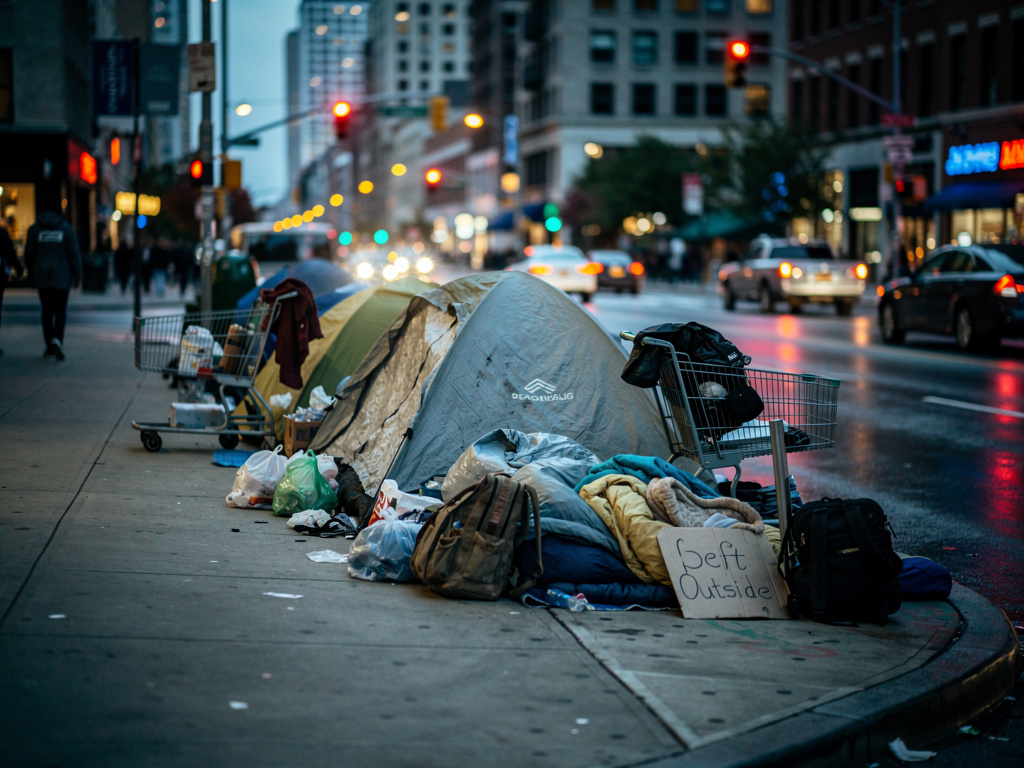
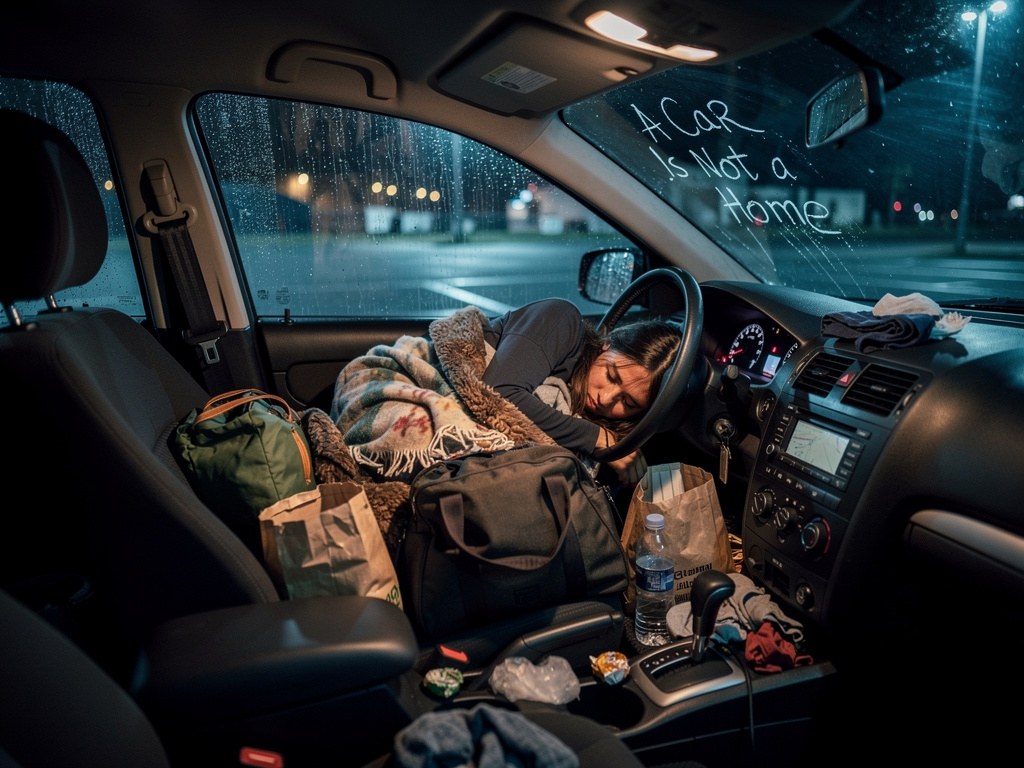
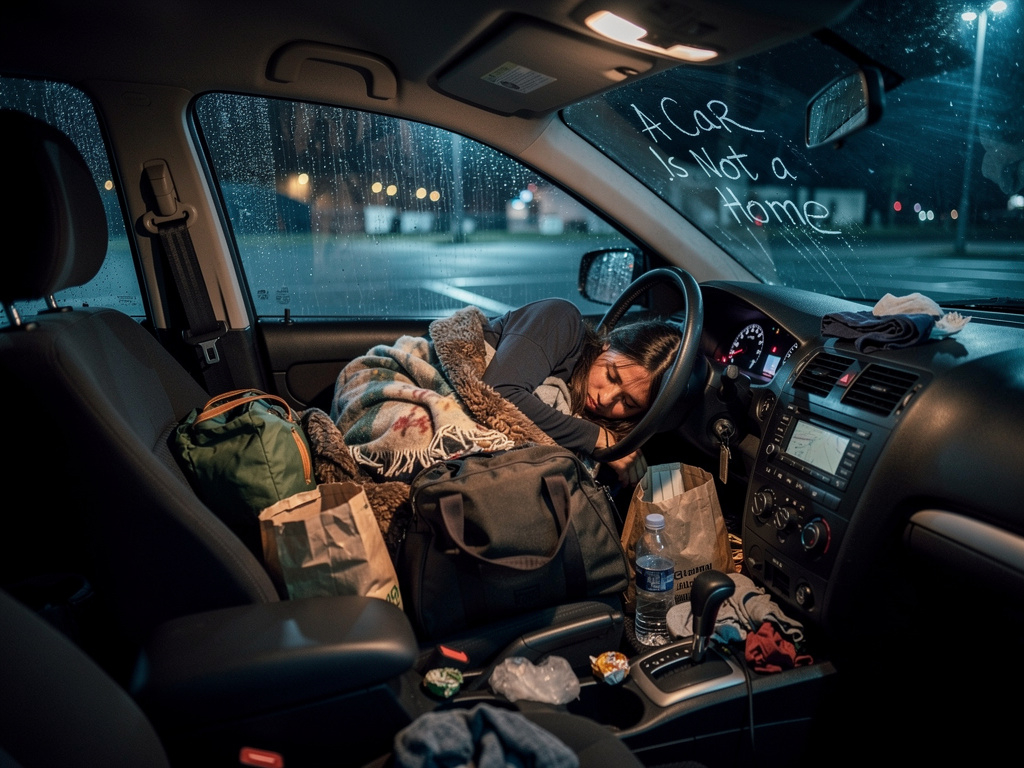
Well-intended stopgaps are often offered as proof of action, but they rarely address the underlying problem. Living in a car is not housing. It is an exposed, precarious state in which people—especially women—are vulnerable to assault, theft, and coercion. Even that fragile refuge is unstable, as laws and policing practices often criminalize rest itself, forcing exhausted individuals to relocate repeatedly in the middle of the night.
Shelters and low-cost hostels frequently fail in different ways. Noise, crowding, lack of secure storage, and sleep disruption make them untenable for people attempting to work or stabilize their lives. The result is a cruel paradox in which the very environments meant to provide relief instead perpetuate exhaustion and psychological decline.
Tent cities, meanwhile, may offer visibility but not dignity. They communicate abandonment rather than care, signaling that suffering has been normalized rather than addressed. Housing placed far from town, far from services, and far from community may remove homelessness from sight, but it does not resolve it. Isolation is not integration.
How Risk Spreads
Unmanaged homelessness transfers risk outward. Public spaces become contested, not because homeless individuals are inherently dangerous, but because untreated instability erodes predictability. Drivers are approached while immobilized at intersections. Pedestrians alter routes to avoid confrontation. Women carry an unspoken burden of constant situational assessment. Elders withdraw from shared spaces. Trust in the social environment weakens.
This erosion is cumulative. As public confidence declines, patience wanes and political discourse hardens. The tragedy is that this outcome is often misinterpreted as a failure of compassion, when in fact it is the predictable consequence of allowing systemic neglect to persist.
Prevention Without Punishment
Addressing homelessness does not require cruelty or mass incarceration. It requires acknowledging that prolonged street living is itself a form of harm and that waiting for crisis thresholds—such as imminent danger to self or others—is a strategy that intervenes too late.
Effective responses prioritize early intervention, stable housing, professional oversight, and graduated care that addresses mental health deterioration before it becomes catastrophic. This approach recognizes that freedom without safety is not freedom at all, and that intervention grounded in care is not punishment but prevention.
The Choice Before Us
Society already accepts preventive intervention in other domains. Children are removed from neglectful environments before irreversible harm occurs. Elders who cannot care for themselves are protected. Buildings are inspected before collapse. Public health measures are enacted before epidemics spiral out of control.
Homelessness is treated differently, not because the harm is unknown, but because the political will to address it has been lacking. A society capable of building infrastructure on a massive scale can provide humane, monitored housing integrated into community life. What is missing is not capacity, but commitment.
Conclusion
Homelessness is not an isolated tragedy endured quietly by those on the margins. It is a destabilizing force that affects mental health, public safety, and the social fabric as a whole. To ignore its predictable consequences is not compassion; it is complicity.
A society that understands how human beings break under sustained instability, yet continues to tolerate conditions that produce that breakdown, has made a choice. The question is whether we are willing to make a different one.
Homelessness Is Not Neutral: When Society Normalizes Instability, Everyone Pays
Homelessness is often discussed as a humanitarian tragedy affecting only those without shelter. That framing is incomplete. Prolonged, unsheltered homelessness is also a public safety, public health, and mental-health crisis—and pretending otherwise has consequences for everyone.
Leaving people to live indefinitely on sidewalks, in cars, in tent cities, or in chaotic shelters is not compassion. It is neglect. And neglect produces predictable outcomes.
Instability Creates Mental Breakdown
We already understand what prolonged instability does to the human mind.
Chronic sleep deprivation, constant threat of violence, lack of a safe place to rest, and ongoing hypervigilance erode psychological stability—even in people who begin healthy, educated, and housed. Fictional portrayals like the ER storyline of Dr. Clemente captured this with unsettling accuracy: a competent, trained physician gradually descending into paranoia and psychosis under sustained threat and exhaustion.
He did not start “mentally ill.”
The environment broke him.
That matters because it reframes the issue entirely.
Mental illness is not always the cause of homelessness.
Very often, homelessness is the cause—or the accelerator—of mental illness.
Street Homelessness Transfers Risk to Everyone
Unmanaged homelessness does not remain contained.
Public space becomes contested space:
- commuters navigating encampments on the way to work
- drivers approached while trapped at intersections
- Pedestrians are altering routes out of fear
- women quietly calculating escape options
- ordinary routines becoming unsafe
In Los Angeles, Hawaii, and other cities, people are chased in broad daylight during routine errands—going for coffee, walking to transit, moving through public space.
When everyday activities require escape velocity, the problem is not individual behavior.
It is an environmental failure.
Cars and Shelters Are Not Housing
Telling someone, “At least you have a car,” is not offering a solution. It is an outsourcing danger.
Cars are not secure dwellings. They can be broken into. People can be assaulted while sleeping. Women are especially vulnerable. And even that fragile refuge is temporary: police move people along, parking becomes illegal, and exhausted individuals are forced to drive in the middle of the night because resting itself is criminalized.
Shelters and low-cost hostels often offer no better alternative. Many are loud, chaotic, unsafe for belongings, and incompatible with sleep. For people trying to work or protect equipment, the question becomes grimly practical:
Do I sleep on top of my computer? Where are my things safe?
These are not solutions.
They are pressure cookers.
Tent Cities Signal Abandonment, Not Care
Tent cities may be tolerated, but they communicate something unmistakable: this place is unmanaged.
They evoke pity not because the people are lesser, but because the situation represents systemic failure—of planning, of care, of responsibility. Few people want to live in communities that visibly broadcast neglect, and fewer still wish to be pitied rather than offered dignity.
Housing placed far from town, far from services, and far from oversight is not integration.
It is exile.
Boundaries Are Not Cruelty
Compassion without structure places impossible burdens on individuals—especially women, caregivers, and elders. It forces people to choose between empathy and personal safety, a choice no one should have to make alone.
Boundaries are not the opposite of compassion.
They are a prerequisite for it.
A humane society does not leave individuals to absorb systemic risk on their own.
Homelessness Is a Mental-Health Issue—Whether We Admit It or Not
A large proportion of people experiencing long-term homelessness struggle with untreated mental illness, trauma, substance dependence, or combinations of all three. Some arrive homeless because of illness. Others develop illnesses because of homelessness. Over time, the distinction collapses.
Living without safety, privacy, sleep, or stability is inherently destabilizing.
A society that waits until someone becomes an “imminent danger” before intervening has already waited too long.
Prevention Is Not Punishment
Ending street homelessness does not require cruelty or mass incarceration. It requires early intervention, visibility, and care.
That means:
- guaranteed indoor placement
- monitored environments
- professional oversight
- mental-health evaluation
- graduated intervention before the crisis becomes a catastrophe
It means recognizing that allowing people to deteriorate in public space is not respecting freedom—it is abandoning responsibility.
A Society Capable of Housing Everyone Has No Excuse
Homelessness is not inevitable. It is the result of policy choices.
A society capable of building resorts, highways, airports, and military infrastructure is capable of building humane, monitored housing close to services and community.
Criminalizing rest while refusing to provide safe places to rest is not public order.
It is manufacturing instability—and then blaming the people who break under it.
Conclusion
Street homelessness is not a neutral condition. It degrades mental health, public safety, and the social contract itself. Ignoring this reality does not make us compassionate—it makes us complicit.
A society that understands how the human nervous system works, and still allows people to live indefinitely without safety, sleep, or shelter, has chosen neglect over prevention.
We can do better.
And we should.
IMAGE SELECTION & EDITORIAL INTENT
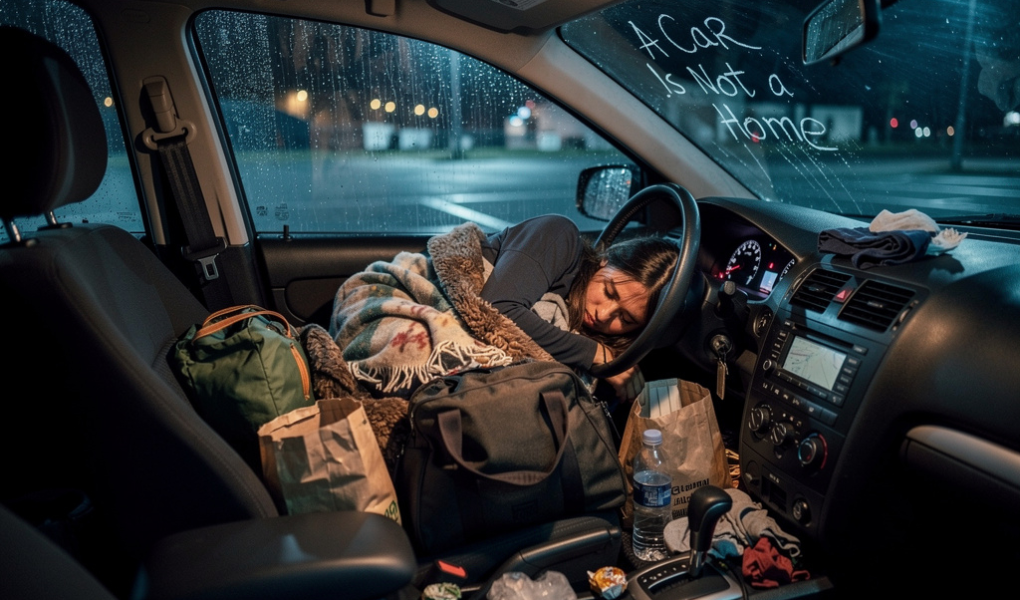
Image 1 — “Left Outside”
Description:
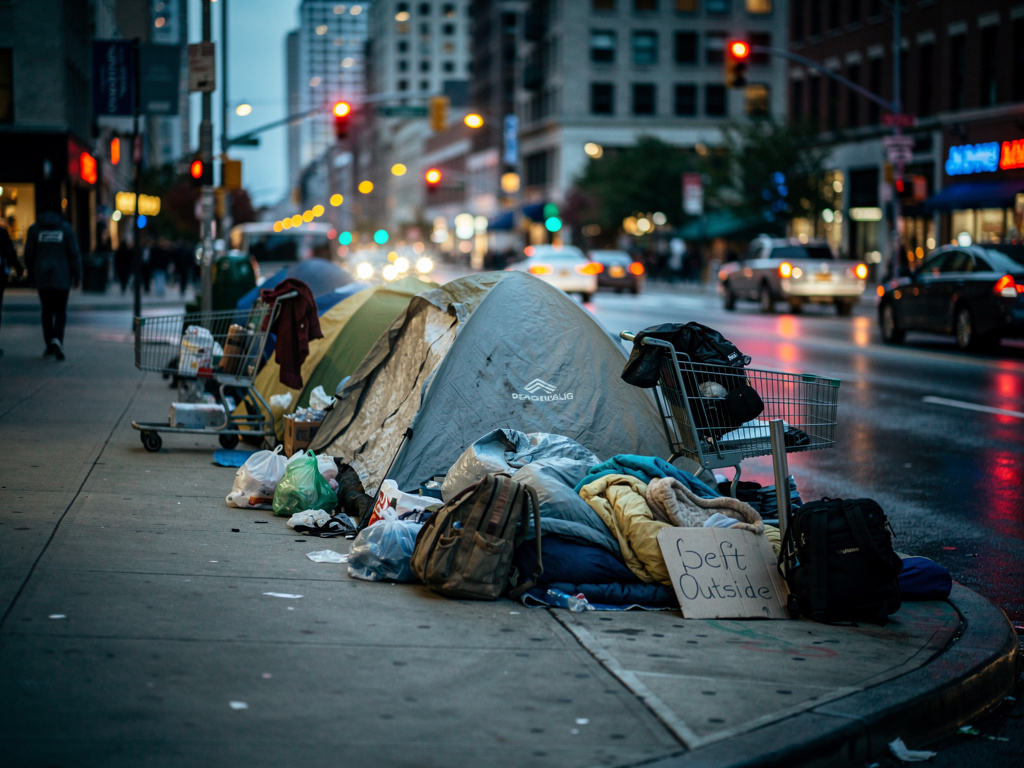
A city sidewalk at dusk with tents and personal belongings lining the curb, traffic lights glowing in the background.
Why it works:
This establishes homelessness as public, visible, normalized neglect — not hidden, not rare, not abstract.
Image 2 — “A Car Is Not a Home”
Description:
Interior view of a car at night, with fogged windows, a woman curled in the seat, wrapped in blankets and bags.
Why it works:
This directly supports your argument that “living in a car” is not a solution — it conveys vulnerability, exhaustion, and danger without sensationalism.
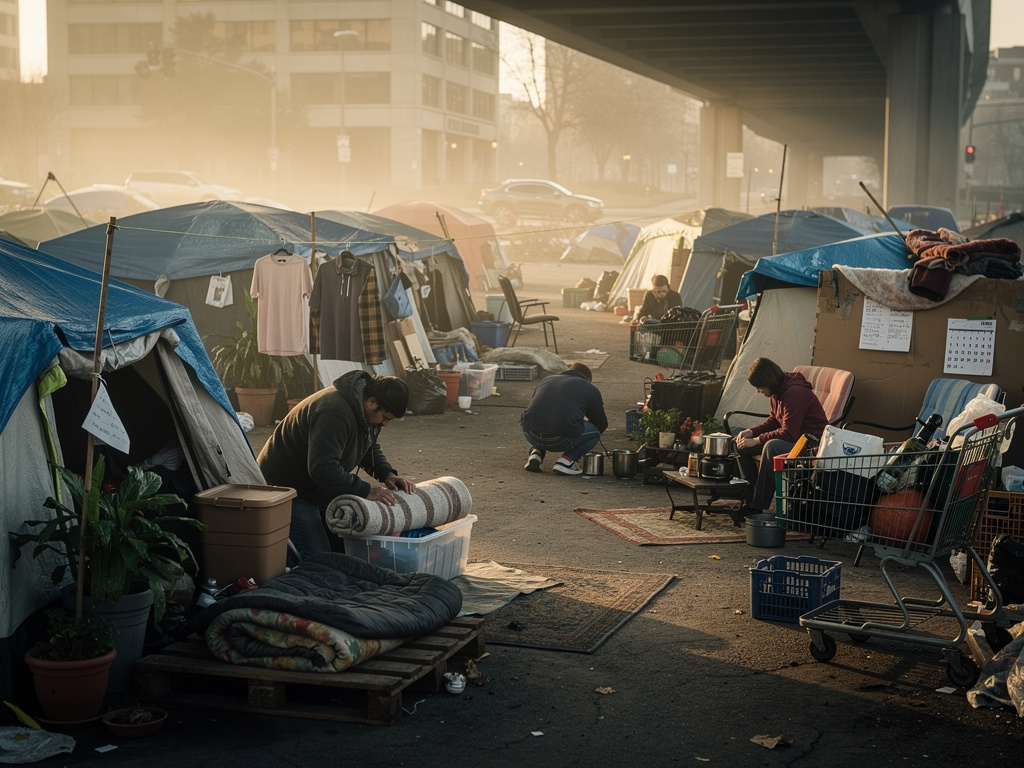
Image 3 — “Temporary Becomes Permanent”
Description:
A homeless encampment in early morning light, people waking, organizing belongings, starting another day on the street.
Why it works:
This image captures the slippery slope — how emergency conditions quietly harden into long-term reality.
Image 4 — “The Absence of Care”
Description:
An empty shelter hallway with harsh fluorescent lighting, institutional and impersonal.
Why it works:
This shows that “services exist” does not mean they are humane, sufficient, or safe. It visually represents bureaucratic abandonment.
Image 5 — “What Society Walks Past”
Description:
A city street at dawn, with abandoned bags, blankets, and carts, commuters beginning to pass by.
Why it works:
This is a powerful closing image — homelessness as background noise, socially erased even while physically present.
Tags
homelessness, housing crisis, mental health, public safety, social systems failure, urban poverty, human dignity, untreated mental illness, street homelessness, housing insecurity, social responsibility, compassion and boundaries, community safety, systemic neglect, homelessness policy, vulnerable populations, civil society, social collapse, ethics of care, human rights
