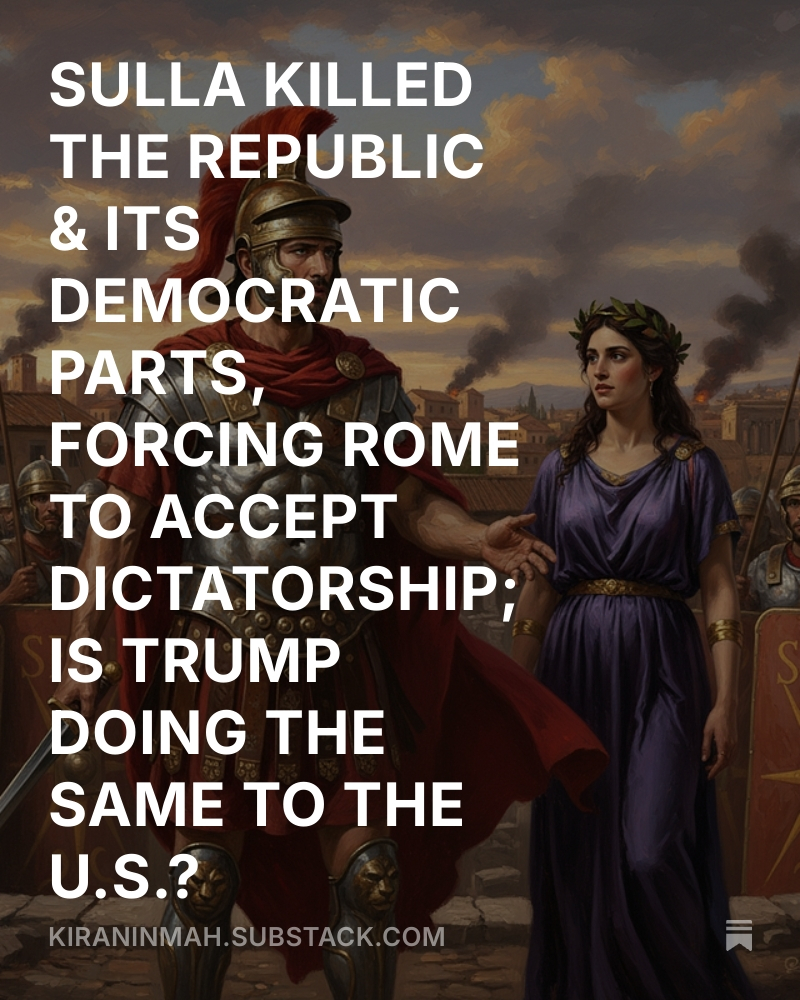
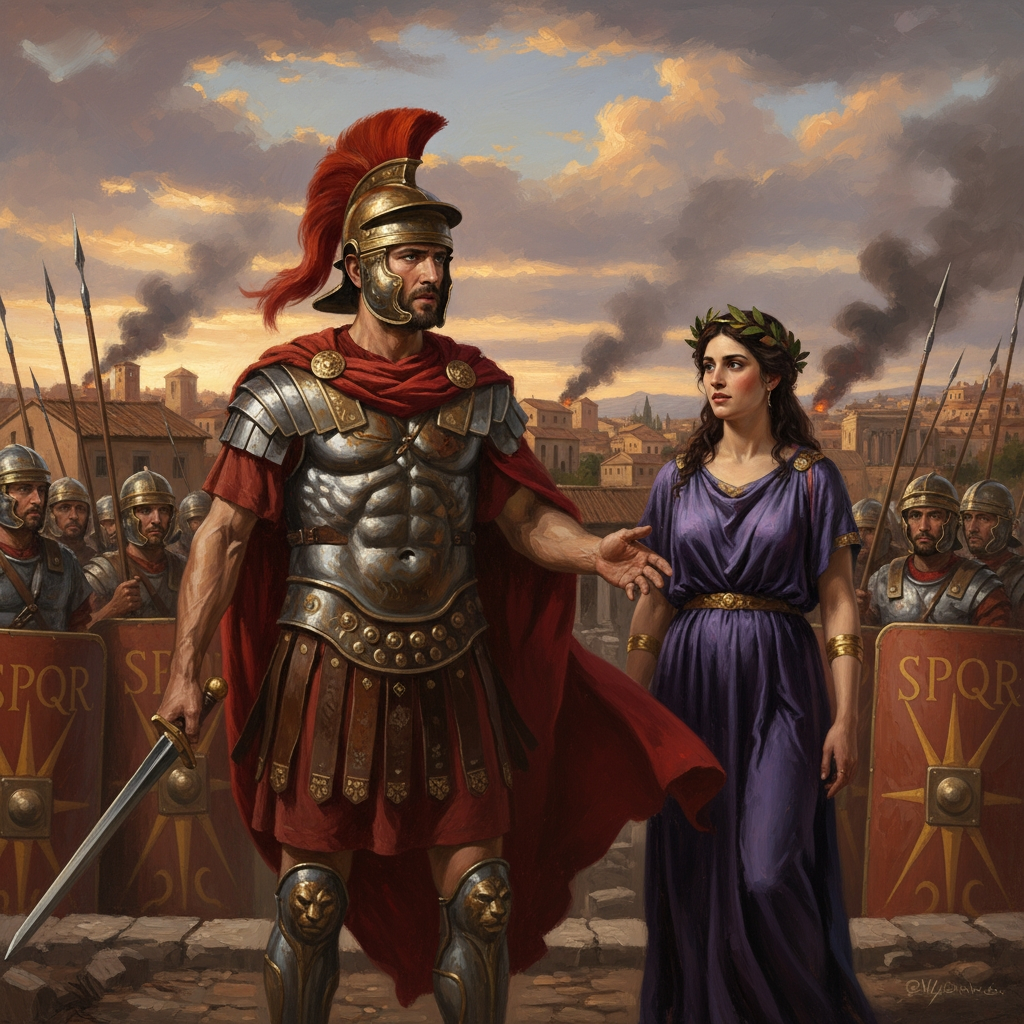
A traditional oil painting of Lucius Cornelius Sulla in his early military career. He wears ornate bronze armor and a red cloak, flanked by Roman soldiers holding spears. A woman in a purple gown gazes at him, hinting at his mix of charm and ruthlessness. In the background, Roman buildings rise under a cloudy sky.
SULLA KILLED THE REPUBLIC & ITS DEMOCRATIC PARTS, FORCING ROME TO ACCEPT DICTATORSHIP; IS TRUMP DOING THE SAME TO THE U.S.?
🎥 Watch the Video Here
(Click THE HEAD OF THE HORSE to start the show)
By Sasha Alex Lessin, Ph.D. (Anthropology, UCLA)
Co-author (with Janet Kira Lessin) of Anunnaki: Evolution of the Gods
SULLA’S RISE
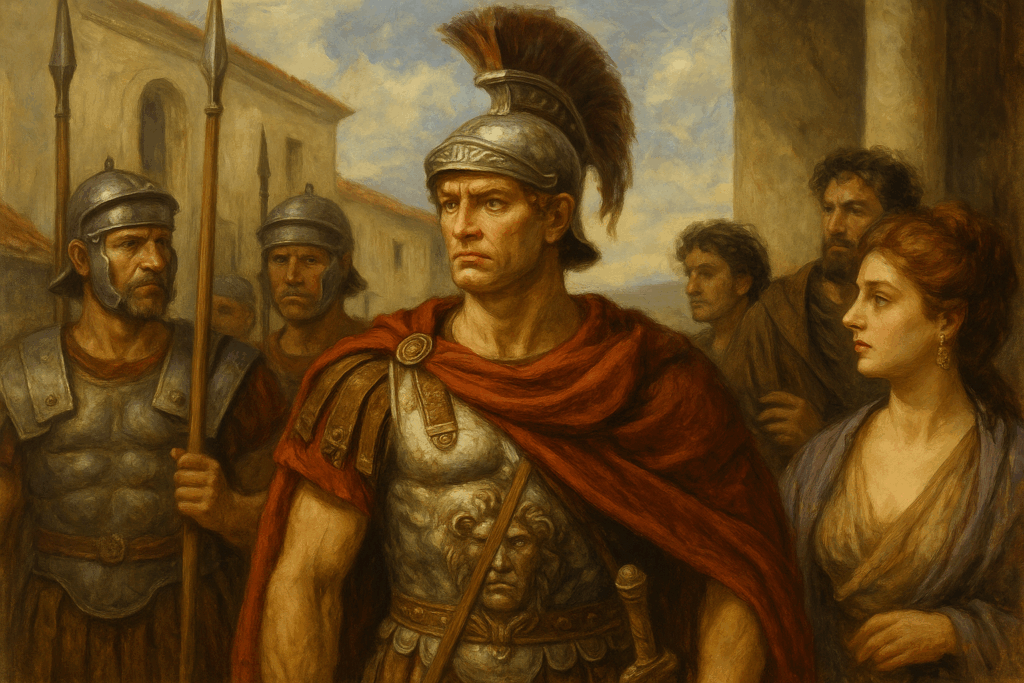
Lucius Cornelius Sulla, born 138 BCE, rose from an impoverished patrician family to become Rome’s first dictator for life. Ruthless, ambitious, and calculating, Sulla charmed Rome’s elites and commoners alike, maneuvering through scandal, intrigue, and civil war.
MARIUS AND SULLA
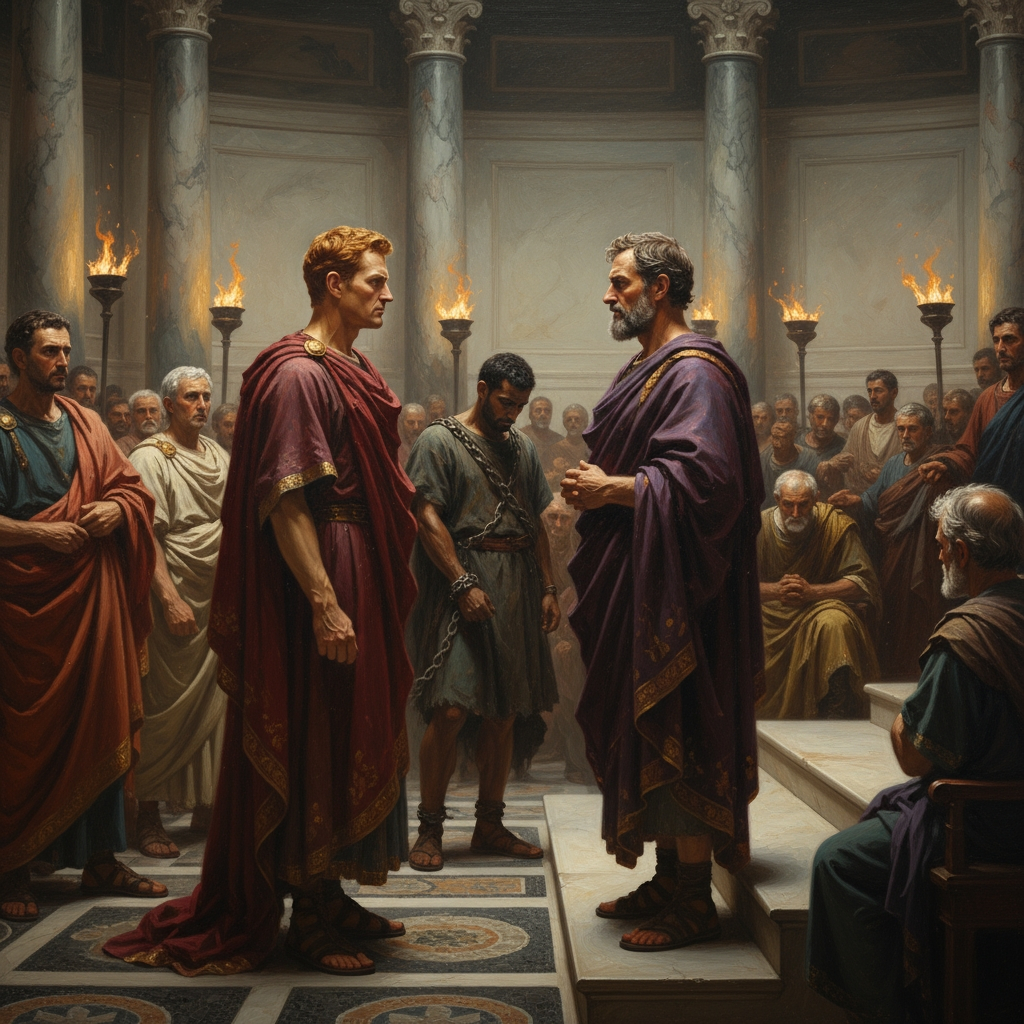
Sulla and Gaius Marius stand face to face in the Roman Senate. Behind them, Jugurtha appears in chains, the prize of their campaign. The tension between the two generals is palpable, foreshadowing decades of rivalry and bloodshed.
The Jugurthine War brought Sulla early fame under Gaius Marius. But Marius’s resentment of Sulla’s laurels ignited a rivalry that split Rome.
CITIZENSHIP & CIVIL WAR
The Social War (91 BCE), which involved the Italian allies’ demand for Roman citizenship, tested every commander. Sulla’s daring victories at Aesernia and Campania elevated him to consul in 88 BCE.
EASTERN CAMPAIGNS VS. MITHRIDATES
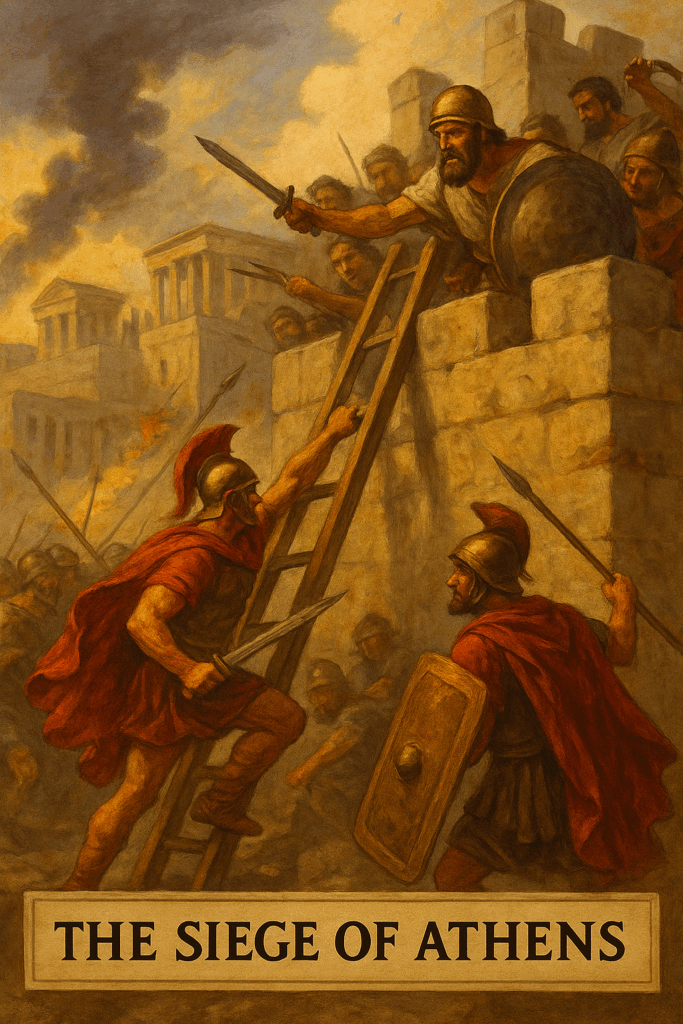
Roman soldiers scale the starving walls of Athens under Sulla’s command. Emaciated defenders struggle in desperation as Sulla’s legions breach the gates. The backdrop shows the Acropolis under siege.
Sulla stormed Athens, plundered its treasures, and shattered Pontus’ armies at Chaeronea and Orchomenus. His legions proclaimed him invincible.
SULLA MARCHES ON ROME
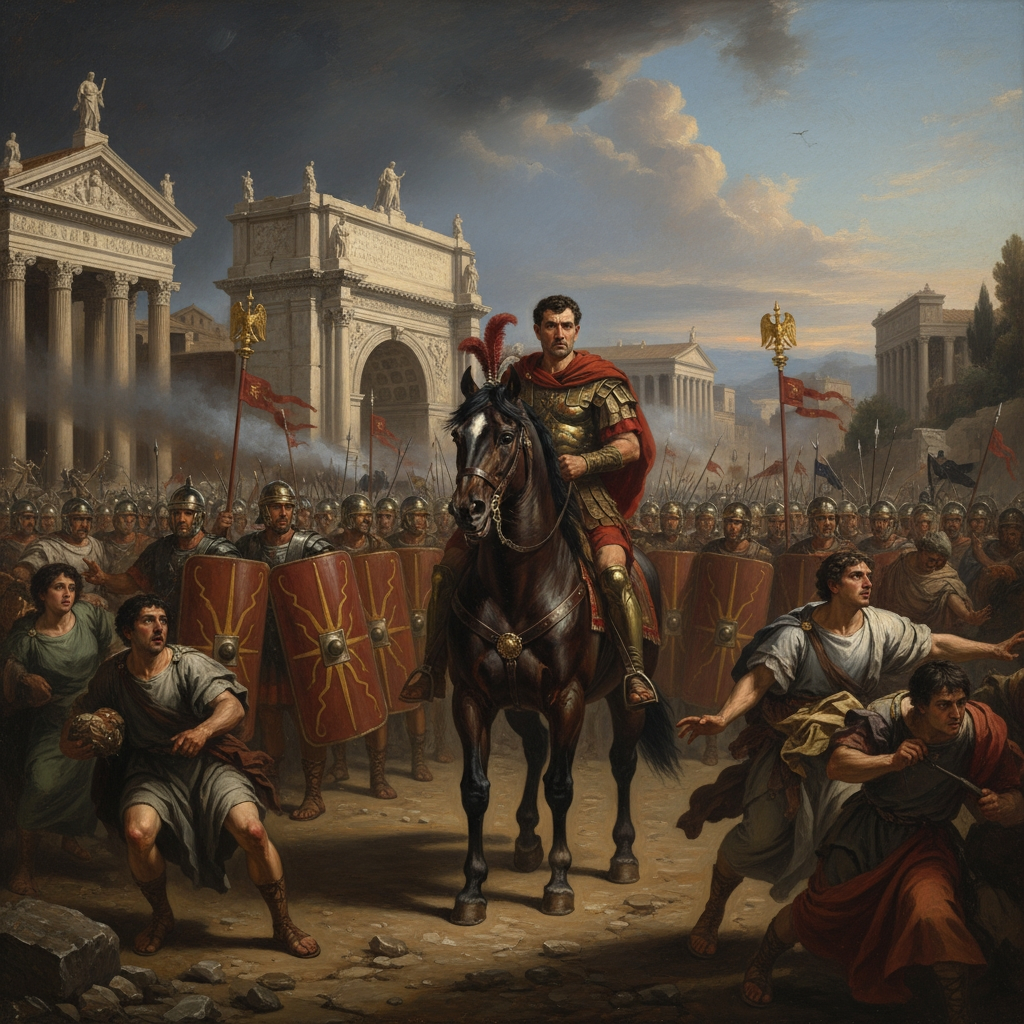
Sulla leads his legions into Rome for the first time in history. Crowds scatter in panic as disciplined Roman soldiers march through the city gates. Sulla, on horseback, raises his arm in command.
For the first time in history, a Roman general turned his army on Rome itself. In 83 BCE, Sulla invaded Italy, defeating consuls and rivals until all opposition crumbled.
DICTATORSHIP & PROSCRIPTIONS
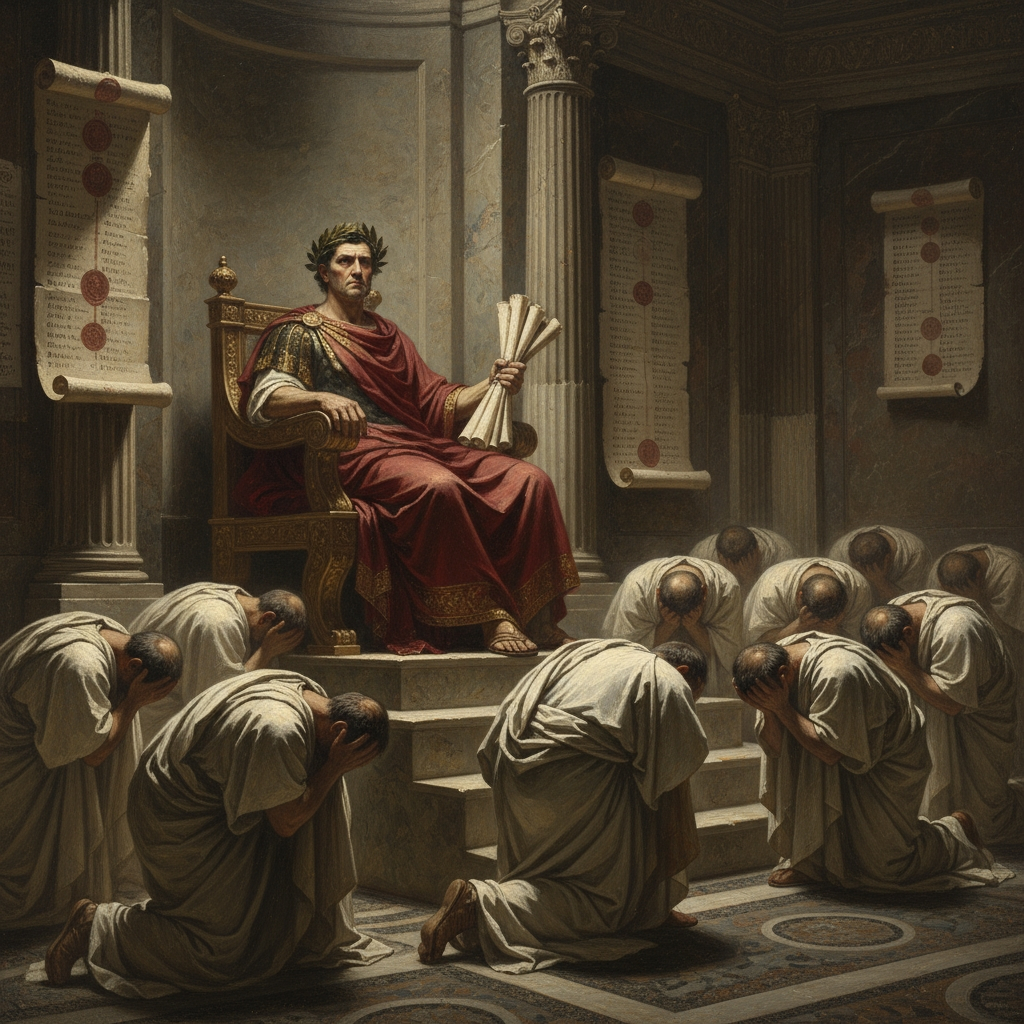
Sulla sits on a throne in the Senate, holding scrolls of proscriptions. Senators bow while lists of condemned names hang behind them. A sense of fear and power radiates from the scene.
Declared dictator, Sulla rewrote Rome’s constitution, expanded the Senate, and crippled the tribunes’ powers. His proscriptions listed thousands for execution—rivals slain, fortunes seized.
SULLA’S LEGACY
Although Sulla resigned voluntarily, he left Rome irrevocably changed. His march set a precedent: once an army could seize the city, no law could restrain ambition. Caesar, Augustus, and countless dictators followed.
MODERN PARALLEL: TRUMP & AUTHORITARIAN POPULISM
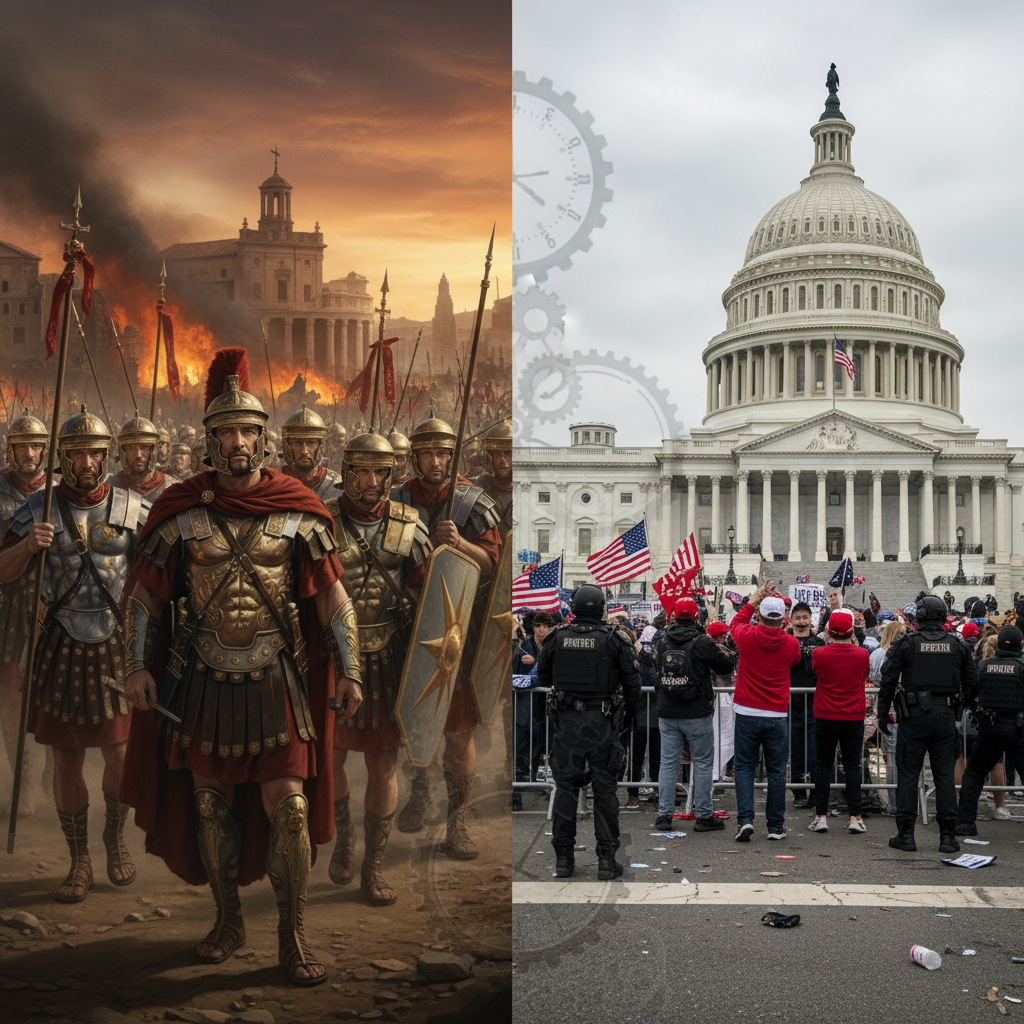
A split-image diptych. On the left, Sulla enters Rome at the head of legions. On the right, Trump supporters storm the U.S. Capitol, waving flags. The contrast shows history repeating through authoritarian populism.
Sulla claimed to “restore order” while dismantling safeguards. MAGA leaders echo this language, presenting themselves as saviors while eroding democracy. Like Sulla, Trump and his enablers may pave the way for dictatorship under the guise of restoration.
CONCLUSION
Rome survived Sulla, but weakened—setting the stage for the empire. Will America repeat this mistake?
💬 Do you think Trump is perverting America into a dictatorship? Comment below.
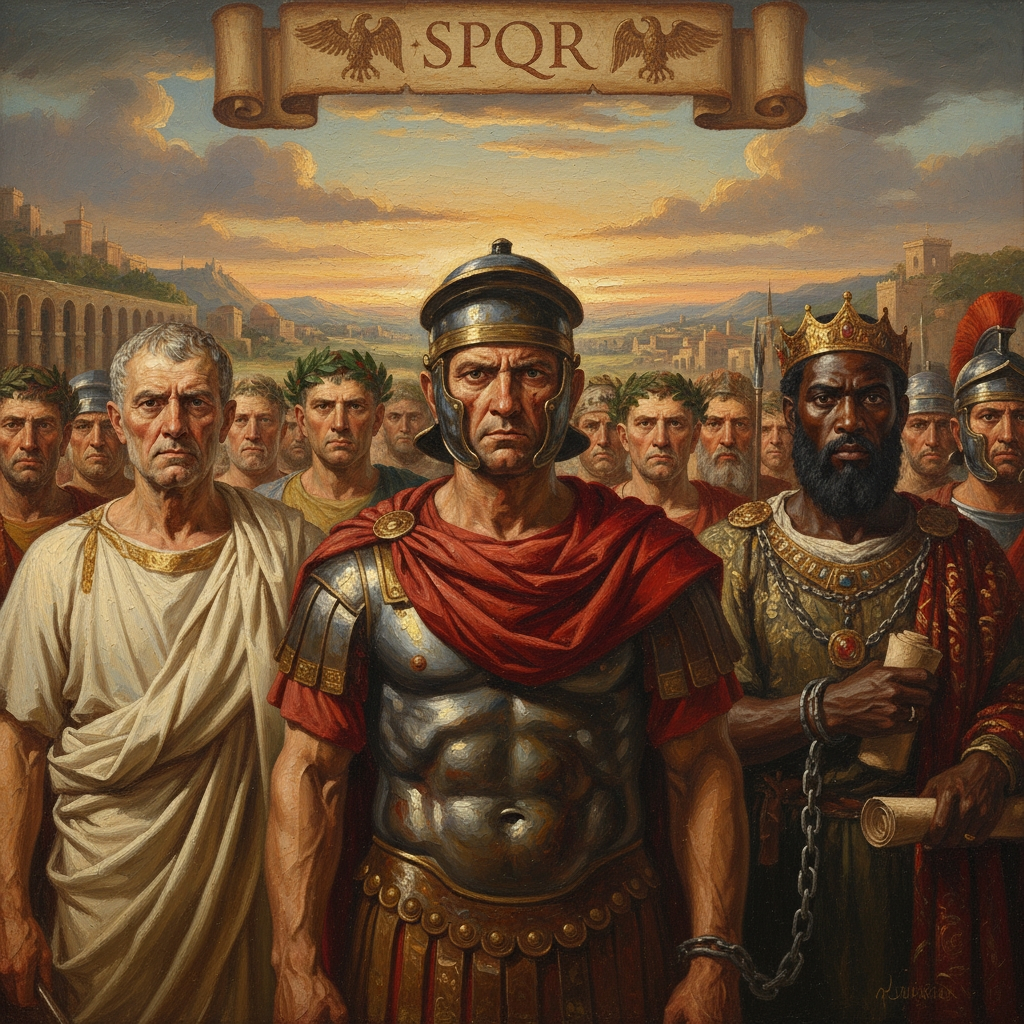
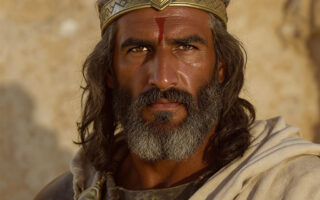
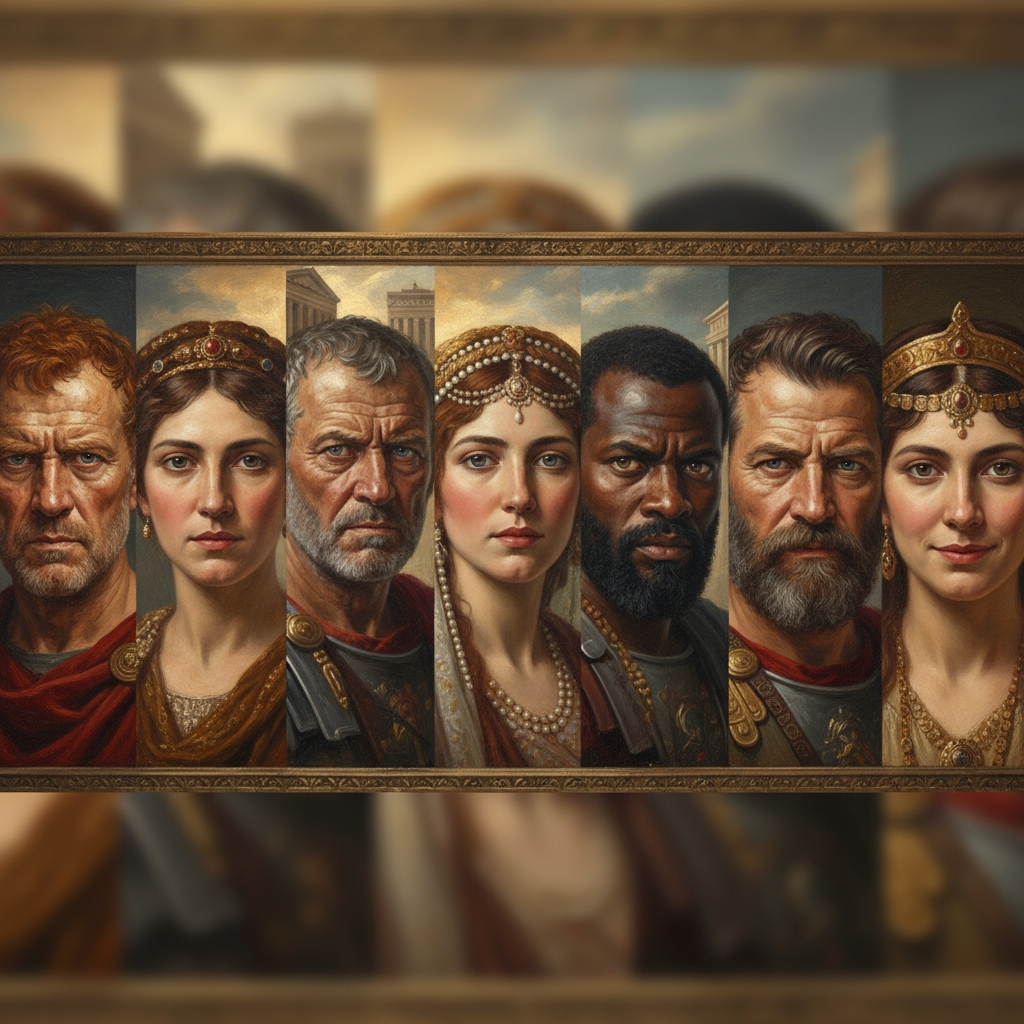
A lineup of the men featured in the article, each shown as if posing for a portrait. Sulla in red cloak and armor, Marius in a white toga, Jugurtha in chains, Mithridates VI with regal features, and Roman senators/soldiers.
References
- Harman, C., A People’s History of the World (2017), Verso
- Sulla: Life and Battles – The Man Who Conquered Rome (Kings & Generals, YouTube)
Tags
Sulla, Roman Republic, dictatorship, Trump, MAGA, authoritarianism, democracy, history repeating, Rome and America parallels, populism.

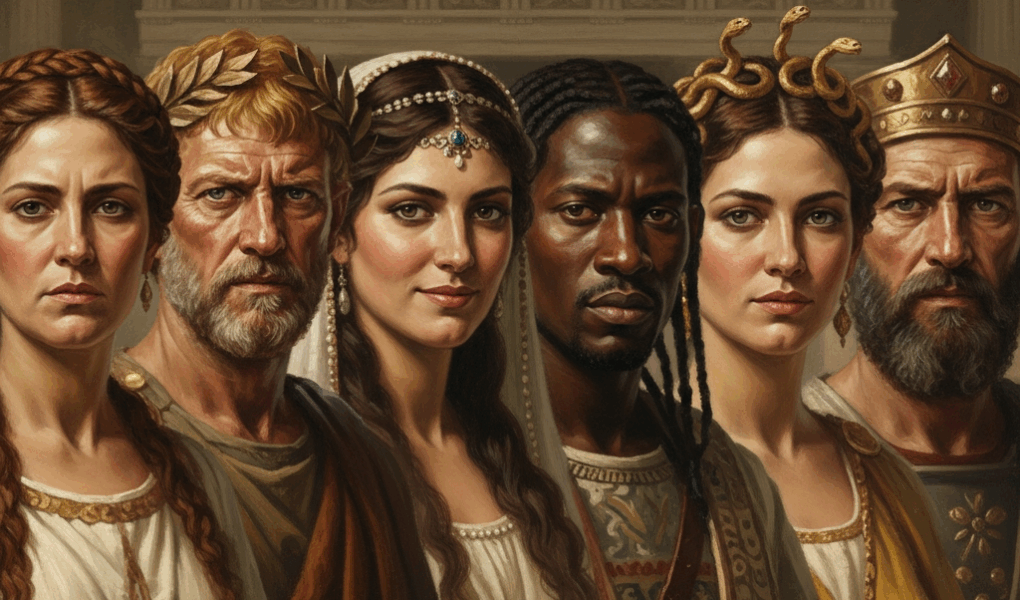
The women connected to Sulla’s rise and reputation — Roman noblewomen and courtesans he charmed, plus the widow rumored to have been poisoned. Their faces, adorned with jewelry and elegant Roman hairstyles, are arranged in a continuous row, gazing at the viewer with expressions ranging from suspicion to allure.
Author Bios
Sasha Alex Lessin, Ph.D. (Anthropology, UCLA), is co-author (with Janet Kira Lessin) of Anunnaki: Evolution of the Gods. He writes on ancient civilizations, anthropology, and modern political parallels.
Janet Kira Lessin is a writer, experiencer, and co-author, along with Sasha, of multiple works that explore myth, history, and the evolution of consciousness.
Our Websites
🌐 www.enkispeaks.com
🌐 www.aquarianmedia.com
🌐 www.dragonattheendoftime.com
For Social Sharing
Facebook Post:
⚖️ Rome’s Republic died when Sulla seized power. Is Trump doing the same to America? History warns us—dictators rise when citizens ignore the signs. Watch & read Sasha’s latest article. 👉 Watch the Video
X (Twitter) Post:
Sulla “saved” Rome by killing its Republic. Is Trump doing the same to the U.S.? Parallels are chilling. Watch Sasha’s new video/article 👇
https://youtu.be/62sbXMpx9Ms?si=iikqQSQ6KiIT-37y
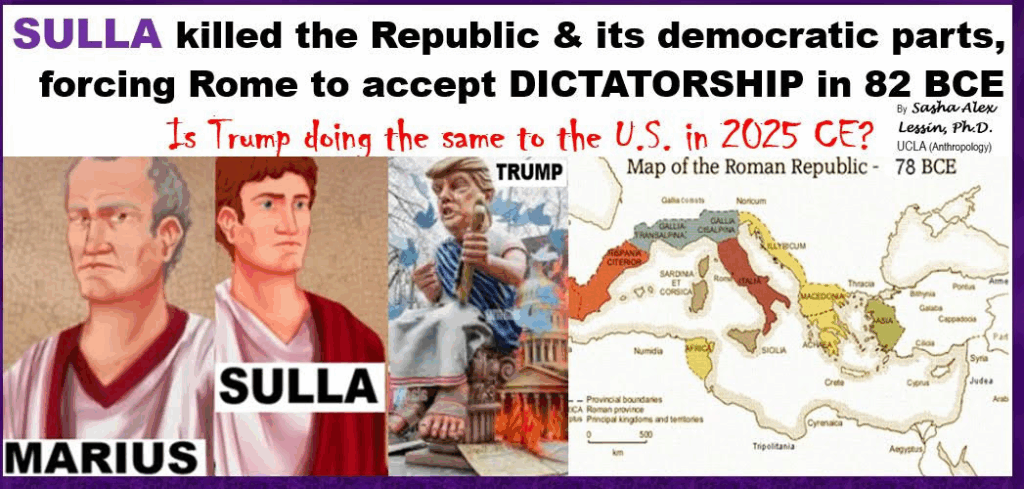
SULLA killed the Republic & its democratic parts, forcing Rome to accept DICTATORSHIP; Is Trump doing the same to the U.S.?
https://youtu.be/62sbXMpx9Ms?si=iikqQSQ6KiIT-37y
This is a VIDEO; click THE HEAD OF THE HORSE to start the show.
SULLA killed the Republic & its democratic parts, forcing Rome to accept DICTATORSHIP; Is Trump doing the same to the U.S.?
By Sasha Alex Lessin, Ph.D. (Anthropology, UCLA), co-author (with Janet Kira Lessin) of ANUNNAKI, EVOLUTION OF THE GODS
SULLA’S RISE
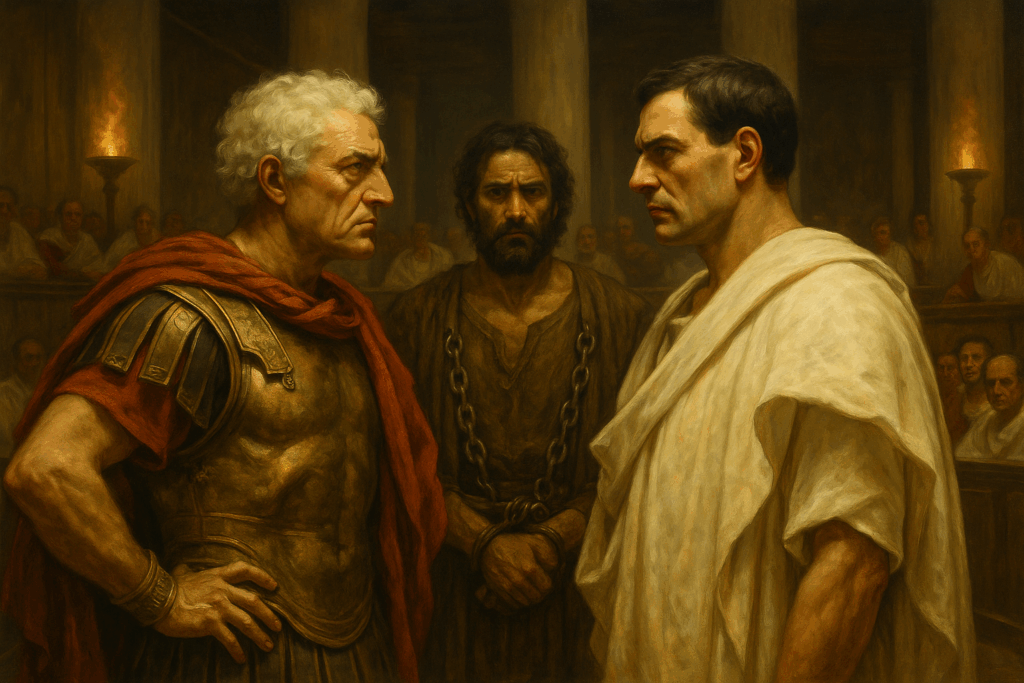
Sulla and Gaius Marius stand face to face in the Roman Senate. Behind them, Jugurtha appears in chains, the prize of their campaign. The tension between the two generals is palpable, foreshadowing decades of rivalry and bloodshed.
Lucius Cornelius Sulla was born in 138 BCE into a patrician family that had long since fallen into poverty. His early life carried little promise. Yet Sulla was shrewd, calculating, and endlessly ambitious. Ancient gossip—repeated by later authors, and by Mary Renault in her novelized treatment—claimed that he poisoned two wealthy women, one a widow, to secure their estates. We cannot confirm or deny such allegations, but they colored his reputation: Sulla, ruthless when fortunes were at stake.
What set him apart was his ability to charm men and women alike, mingling with actors and courtesans as easily as senators and generals. Rome’s rigid society distrusted such fluidity, but Sulla thrived in the shadows of both worlds.
Sulla made himself dictator of Rome in 82 BCE and retired from public life, abdicating his dictatorship, in 79 BCE. He then withdrew to a country villa, where he lived drunkenly until his death the following year in 78 BCE.
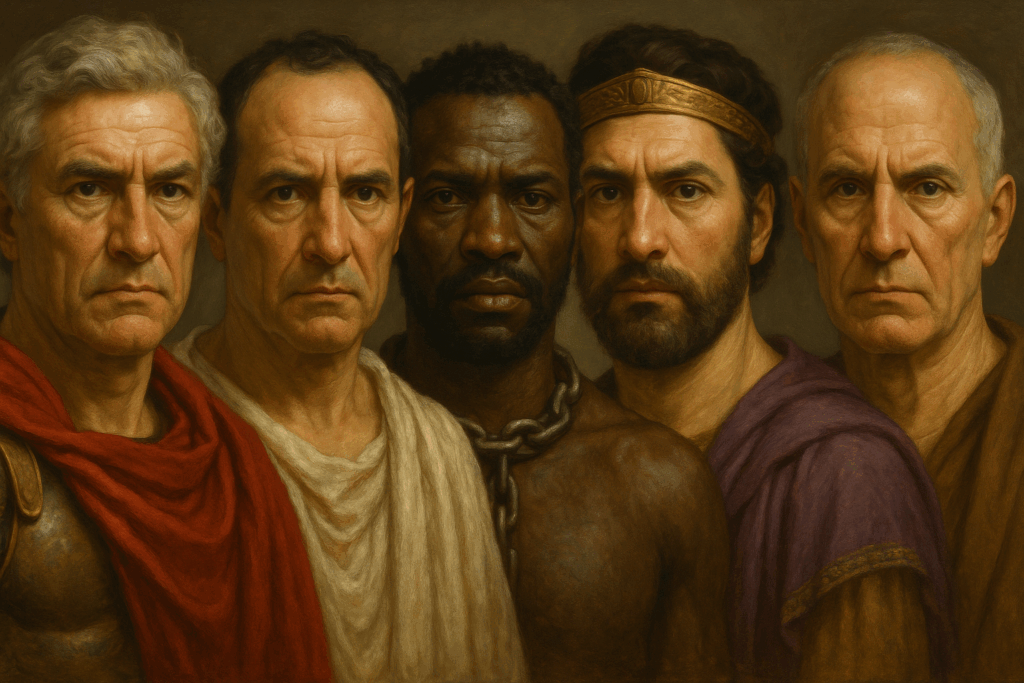
A lineup of the men featured in the article, each shown as if posing for a portrait. Sulla in red cloak and armor, Marius in a white toga, Jugurtha in chains, Mithridates VI with regal features, and Roman senators/soldiers.
MARIUS AND SULLA
The war against Jugurthine, of NUMIDIA in northwest Africa gave Sulla his first great stage. Serving under the seasoned Gaius Marius, Sulla proved himself a bold cavalry commander. His negotiations led to the capture of Jugurtha, a triumph that Marius resented, for the laurels of victory seemed to settle on the younger man.
Marius grumbled, It was I who broke Jugurtha’s power, yet Rome whispers Sulla’s name.
Sulla answered coolly, Rome whispers what Rome chooses. We each played our part.
Thus began the rivalry—two men bound by early success, then divided by pride.
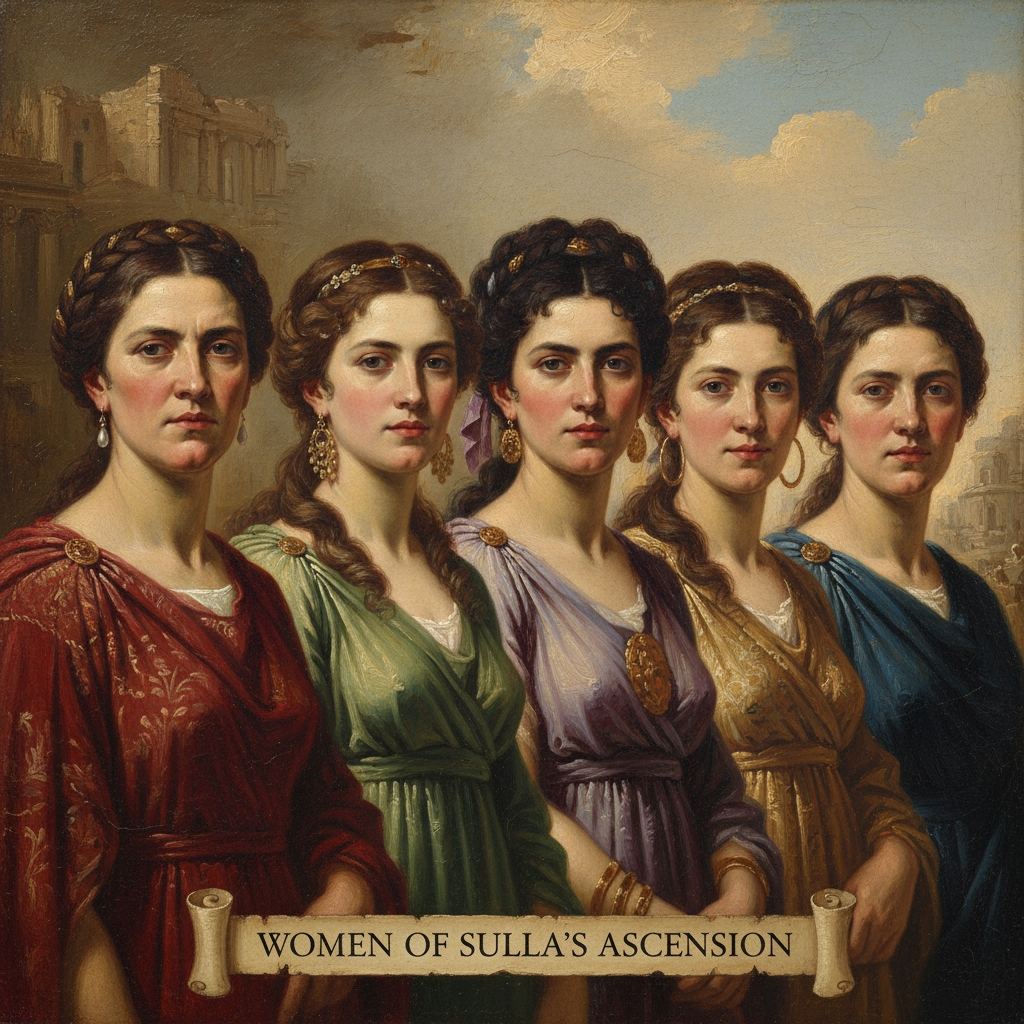
The women connected to Sulla’s rise and reputation — Roman noblewomen and courtesans he charmed, plus the widow rumored to have been poisoned. Their faces, adorned with jewelry and elegant Roman hairstyles, are arranged in a continuous row, gazing at the viewer with expressions ranging from suspicion to allure.
CIVIL WAR OVER ALLIES’ DEMANDS FOR ROMAN CITIZENSHIP
Italy erupted in 91 BCE when Rome’s allies demanded citizenship. The Social War tested every Roman commander. At AESERNIA and at CAMPANIA, Sulla won victories with speed and daring. He marched his troops relentlessly, inspiring them with his fearlessness in the thick of combat.
A centurion recalled, “Our general stands where arrows fall thickest. He smiles, as though Mars [aka Aries] himself guards him.”
For these exploits, Sulla was elected consul in 88 BCE, a meteoric rise from his impoverished youth.
SULLA & HIS EASTERN CAMPAIGN VS MITHRIDATES
Almost immediately, a crisis arose abroad. Mithridates VI of Pontus swept across Asia Minor, ordering the massacre of tens of thousands of Romans and Italians. Sulla, appointed to command, sailed east.
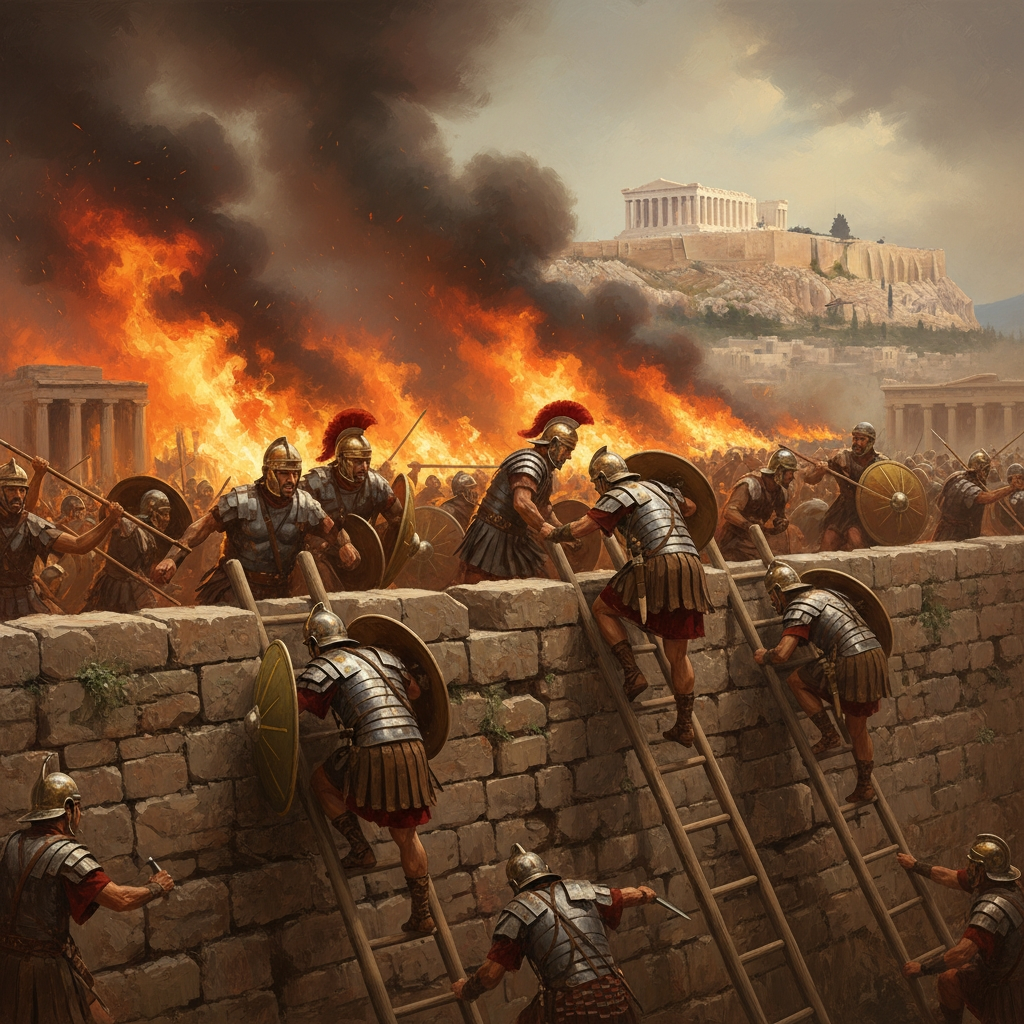
Roman soldiers scale the starving walls of Athens under Sulla’s command. Emaciated defenders struggle in desperation as Sulla’s legions breach the gates. The backdrop shows the Acropolis under siege.
ATHENS had fallen under Mithridates’ influence, and Sulla laid siege. The city starved, its defenders weakened, and in 86 BCE, his troops stormed the walls. The Romans plundered Athens and carted off its treasures. Sulla thus reminded Greece of Rome’s power.
At CHAERONEA, Sulla faced Pontus’ reinforcements. Sulla’s disciplined legions shattered them. At ORCHOMENUS again, Sulla crushed Pontus’ army after two days of desperate fighting.
Standing before his men, Sulla declared, If we fall here, Rome itself falls. So dig trenches, raise ramparts, and hold fast!
They obeyed, and victory followed. The PEACE OF DARDANUS ended the campaign, forcing Mithridates into submission.
SULLA & HIS SOLDIERS RETURNED TO, & OCCUPIED ROME (like Trump’s minions in D.C.)

Sulla leads his legions into Rome for the first time in history. Crowds scatter in panic as disciplined Roman soldiers march through the city gates. Sulla, on horseback, raises his arm in command.
While Sulla fought in Greece, Marius and his ally CINNA seized Rome. Their rule bled the city with purges and executions.
Sulla, victorious in the East, now turned his legions toward Italy itself—a fateful decision, for NEVER BEFORE HAD A ROMAN GENERAL MARCHED ON ROME AT THE HEAD OF HIS ARMY.
In 83 BCE, Sulla landed in BRUNDISIUM. At MOUNT TIFATA, he crushed the consul Norbanus, his veterans unstoppable. Cities opened their gates to him.
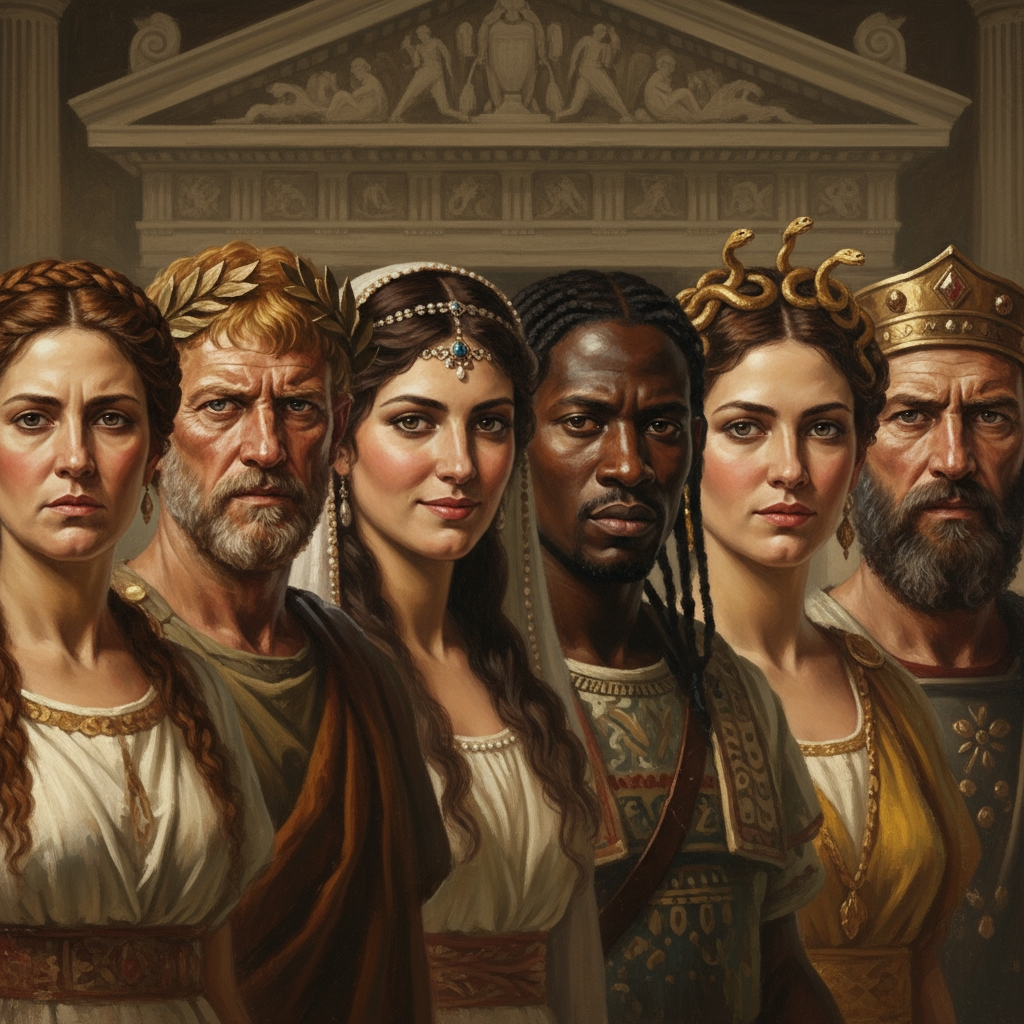
A combined lineup of men and women — Sulla, Marius, Jugurtha, Mithridates, and several Roman women. The row alternates male and female faces, each rendered in classical style but united in realism, their expressions intense, as if each holds a piece of Rome’s fate.
CIVIL WAR
Consul SCIPIO ASIATIUS raised an army to oppose Sulla, but his soldiers deserted, swayed by Sulla’s promises.
Sulla greeted them, I do not come as tyrant but as restorer of Rome. Follow me, and you shall have reward and honor. They abandoned Scipio, and his cause collapsed.
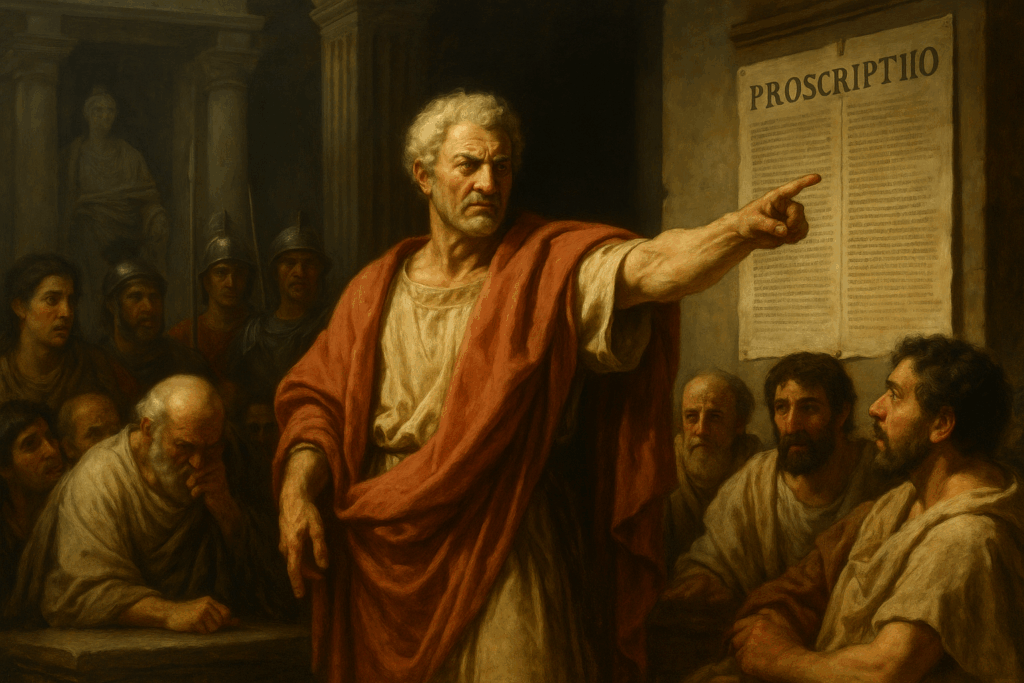
The final reckoning came at SACRIPORTO in 82 BCE. MARIUS THE YOUNGER, son of Sulla’s old rival, faced him with a vast force. Yet panic spread among Marius’ troops, and they fled to Praeneste, where Marius later took his own life.
SULLA’S NORTHERN ITALIAN CAMPAIGNS
Sulla pressed north to finish the resistance to his rule. At FAVENTIA, he routed enemy forces; at FIDENTIA, his lieutenant, LUCULLUS, crushed the reinforcements. One by one, Italy’s strongholds fell. The SAMNITES, last and fiercest of his foes, marched on Rome itself, but Sulla met them outside the Colline Gate. The battle was savage, but Sulla prevailed, and Rome was his.
DICTATOR OF ROME
In victory, Sulla assumed the dictatorship, rewriting the constitution, expanding the Senate, and curbing the powers of tribunes. His proscriptions—lists of enemies marked for death—brought terror to Rome. He killed his rivals and took their fortunes.”
He told the Senate, I have taken power not for myself alone, but to restore the dignity of this Republic.
After securing his power, Sulla voluntarily resigned as Rome’s first dictator for life. But Roman politics would never be the same. From that moment on, the path to absolute rule was wide open, shaping the future of the Roman Empire and the history of the world’s greatest dictators.
Yet blood-stained that claim. Thousands perished, and Rome learned that once an army could seize the city, nothing could restrain ambition.
CONCLUSION
Sulla rose from obscurity through charm, audacity, and ruthless calculation. He bent the Republic to his will, declaring himself the restorer of order even as he tore down old safeguards. His career echoes eerily in modern times, where MAGA maniacs pretend to rescue states but take them over instead. Just as Sulla entered Rome at the head of loyal legions, so too do we see populist figures in Hungary, Venezuela, and Russia lead and program followers who believe only the populists can “restore” greatness.
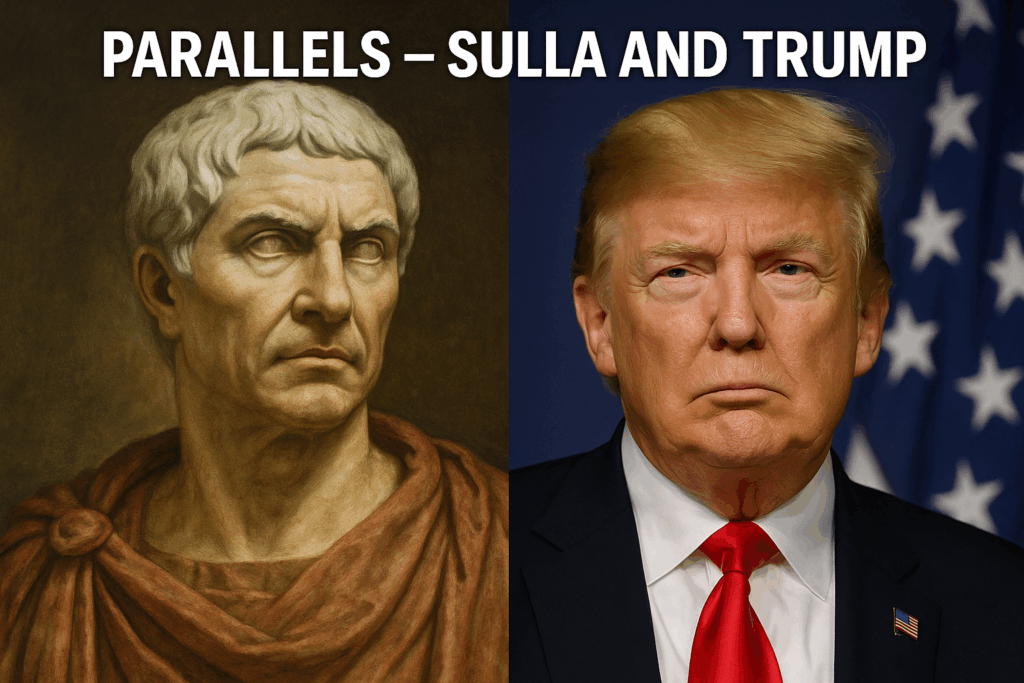
A powerful split-image comparison showing Lucius Cornelius Sulla, Rome’s first dictator for life, beside Donald Trump, the 45th president of the United States. On the left, a classical oil painting of Sulla in a red cloak conveys the stern resolve of ancient authoritarianism. On the right, a modern portrait of Trump in a suit and red tie stands before the American flag. Together, the juxtaposition highlights unsettling historical echoes between Rome’s collapse into dictatorship and the threats facing modern democracy.
The Republic survived Sulla, but weakened, setting the stage for Caesar and the emperors. Rome learned too late that a single man’s ambition could reshape the state forever.
Do you think Trump is perverting America to become a dictatorship, too? Do comment.
*Harman, C., 2017, A People’s History of the World, Verso
**Illustrations from Sulla: Life and Battles – The Man Who Conquered Rome in Kings & Generals, https://www.youtube.com/watch?v=gQKMW_XLJgM
Please share this post; perhaps it’ll awaken America to its peril.

Preview YouTube video SULLA – ROME’S FIRST DICTATOR FOR LIFE
Preview YouTube video Sulla: Life and Battles – The Man Who Conquered Rome