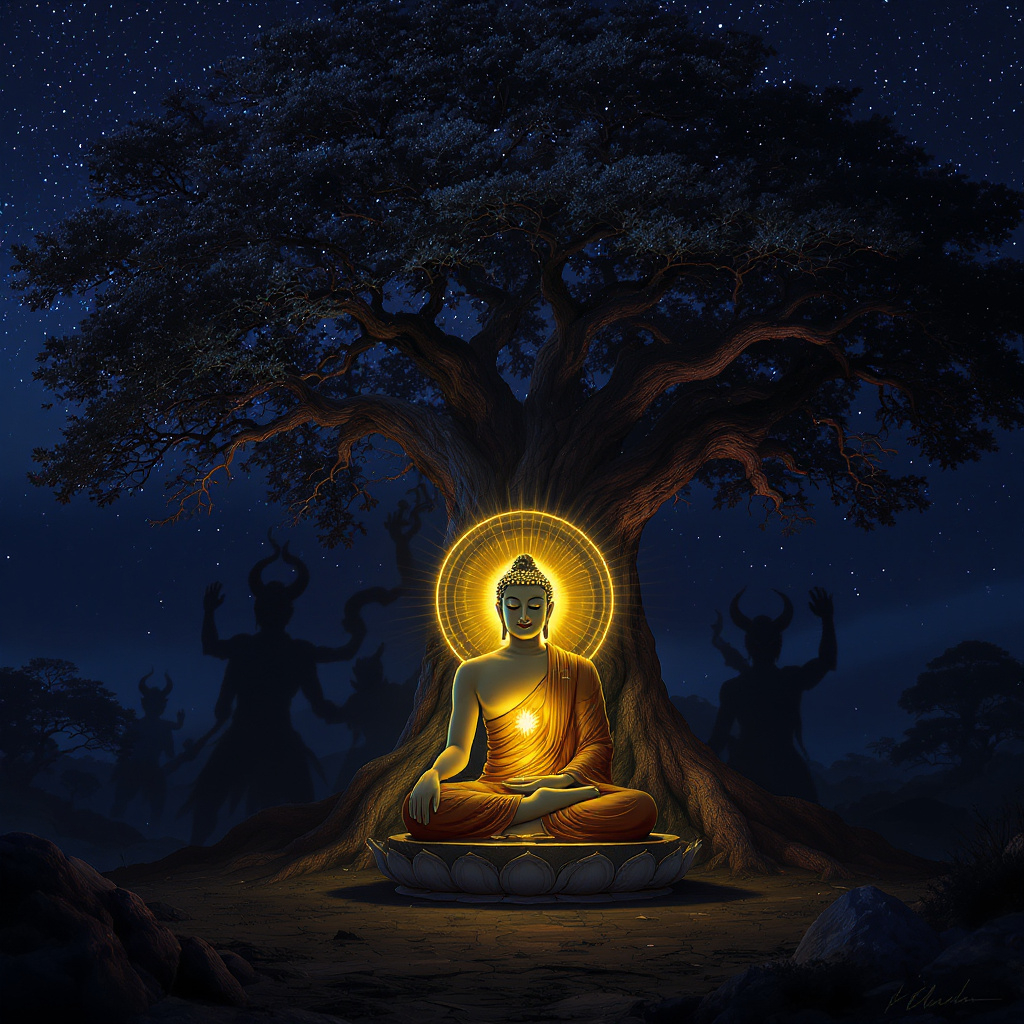
Gautama sits beneath the Bodhi tree, unshaken as Mara’s illusions of beauty and violence dissolve into nothingness.
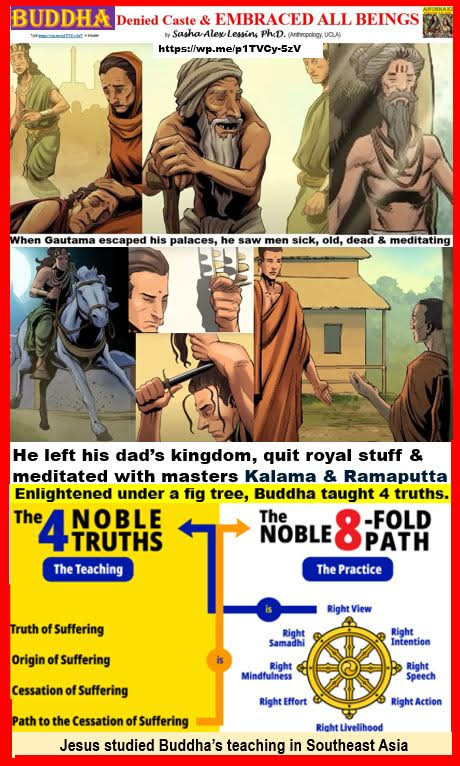
BUDDHA ABANDONED CASTE-CONSCIOUSNESS & EMBRACED ALL BEINGS
By Sasha Alex Lessin, Ph.D. (Anthropology, UCLA) & Janet Kira Lessin
🎥 Video: The Story of Buddha – Prince Siddhartha Gautama – Complete
(Click the fig tree image to begin)
👉 Full context, illustrations, and references at: https://wp.me/p1TVCy-5zV
If Facebook removes this link, copy it from the picture accompanying this post, paste it into your browser, and press Enter.
Buddha Challenged Anunnaki Dominator Consciousness
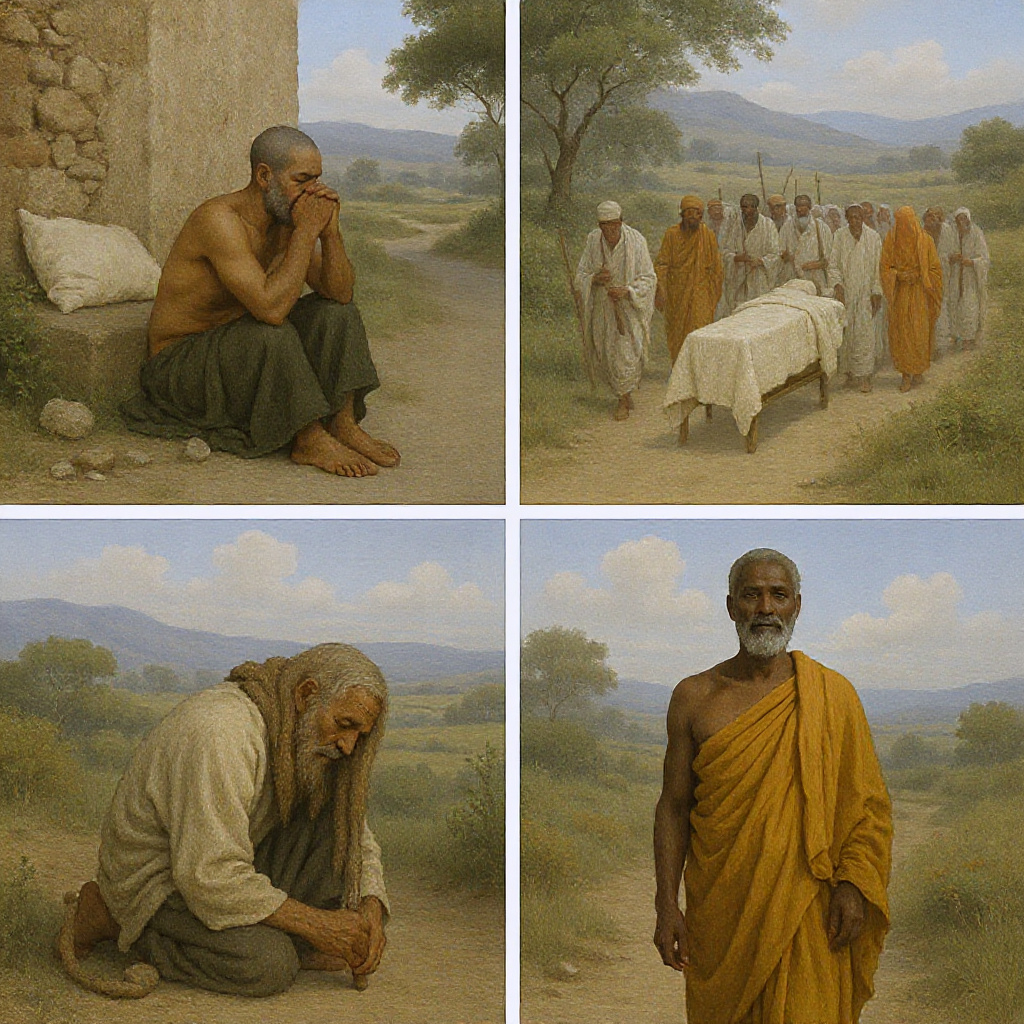
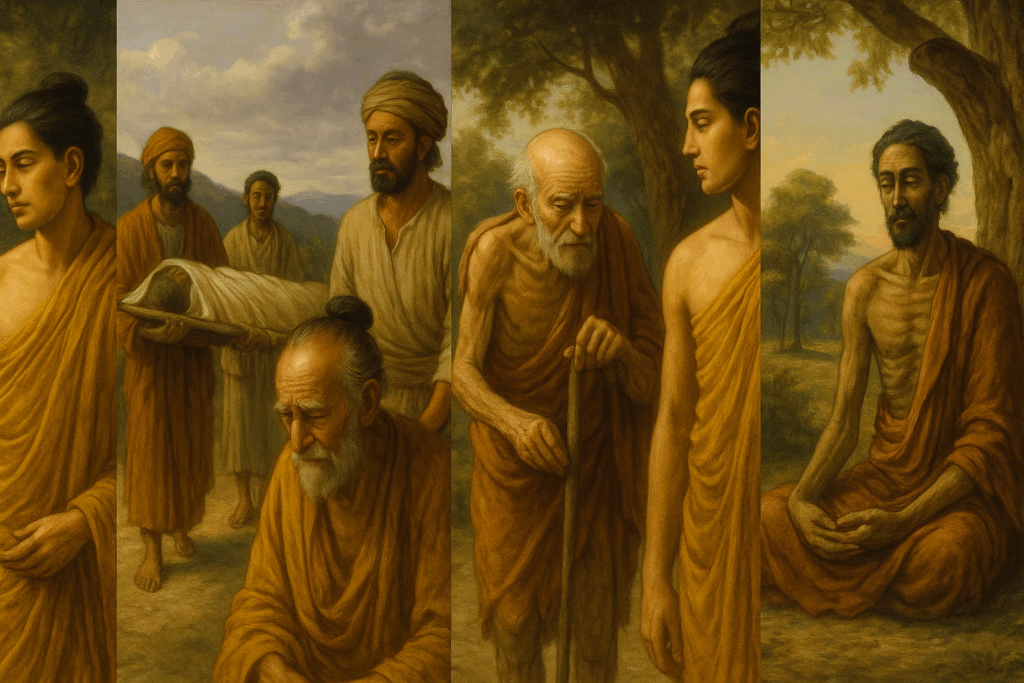
Caption: Gautama encounters the harsh realities of life beyond palace walls: sickness, death, old age, and the ultimate renunciation.
Around 560 BCE, an Anunnaki royal bore Gautama—later known as the Buddha, the Awakened One—heir to the King of Kapilavastu (Nepal).
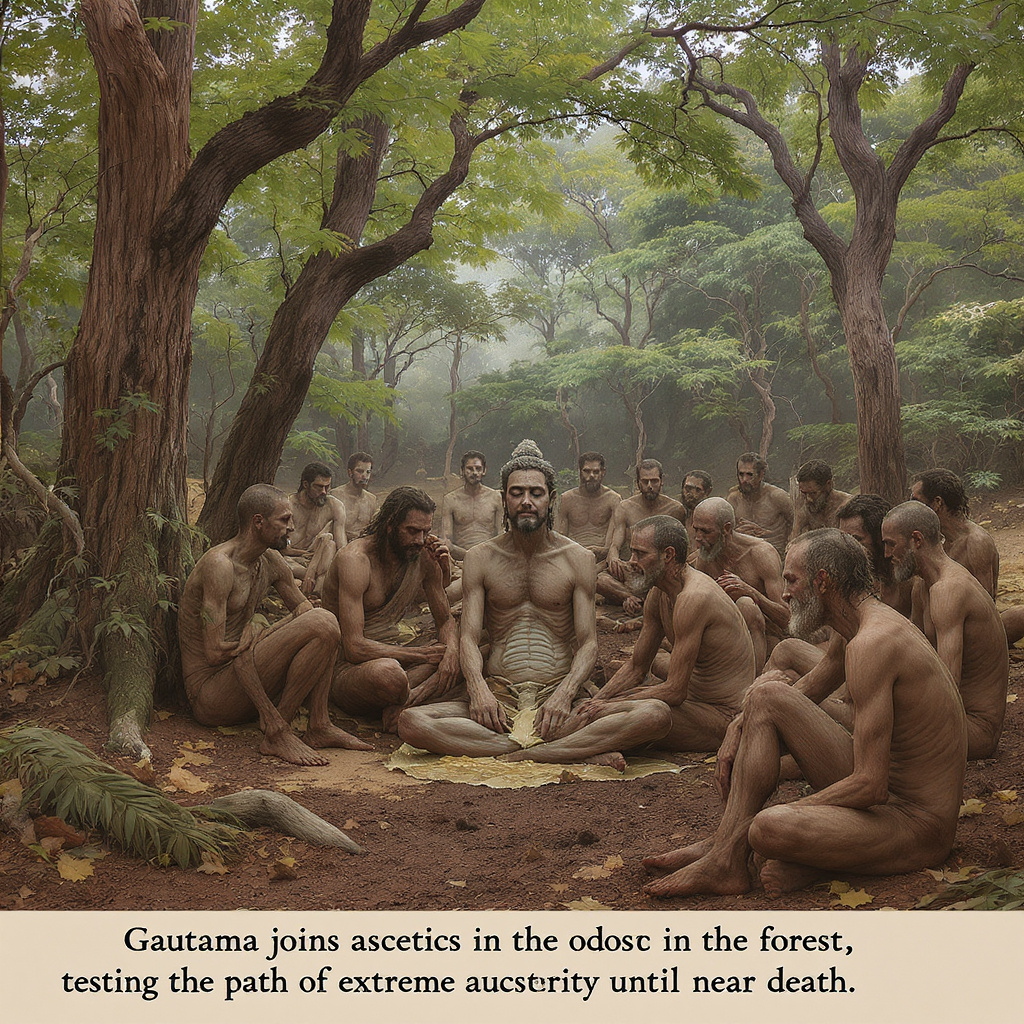
As a young man, Gautama experimented with extreme austerity among meditators who renounced sex and material pleasure. He nearly starved himself but concluded that deprivation clouded the mind. Instead, he sought balance: the Middle Way between indulgence and denial, between spiritual practice and daily life.
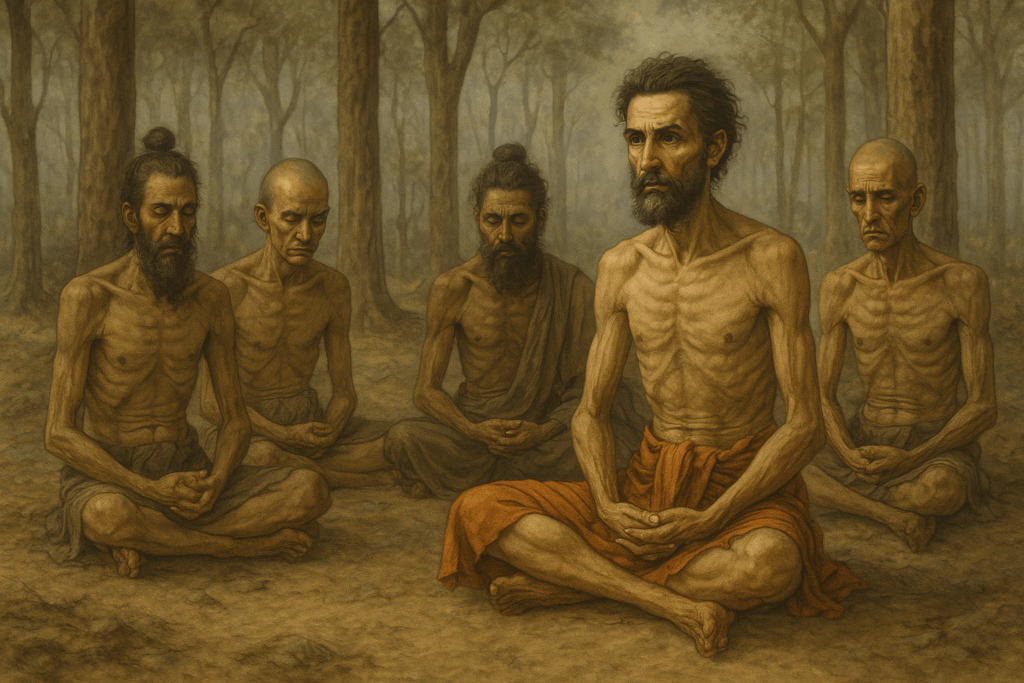
Gautama joins ascetics in the forest, testing the path of extreme austerity until near death.
Prompt: A group of gaunt forest meditators sit cross-legged under sparse trees, ribs visible, faces solemn. Gautama, among them, was emaciated but radiant with determination. Natural muted colors, realistic.
In 535 BCE, beneath a fig tree, Gautama entered transcendence. A demon, Mara, tried to sway him with desire and fear. When challenged, Buddha invoked the Earth itself as his witness, recalling past lives and seeing the endless cycle of birth, life, death, and rebirth. By loosening the grip of desire and fear, he found liberation.
The Buddha rejected the Anunnaki-Hindu caste hierarchy, religious rituals, the worship of gods, and the notion of an eternal afterlife. Instead, he taught that all humans are equal and that liberation lies in compassion, awareness, and freedom from attachment.
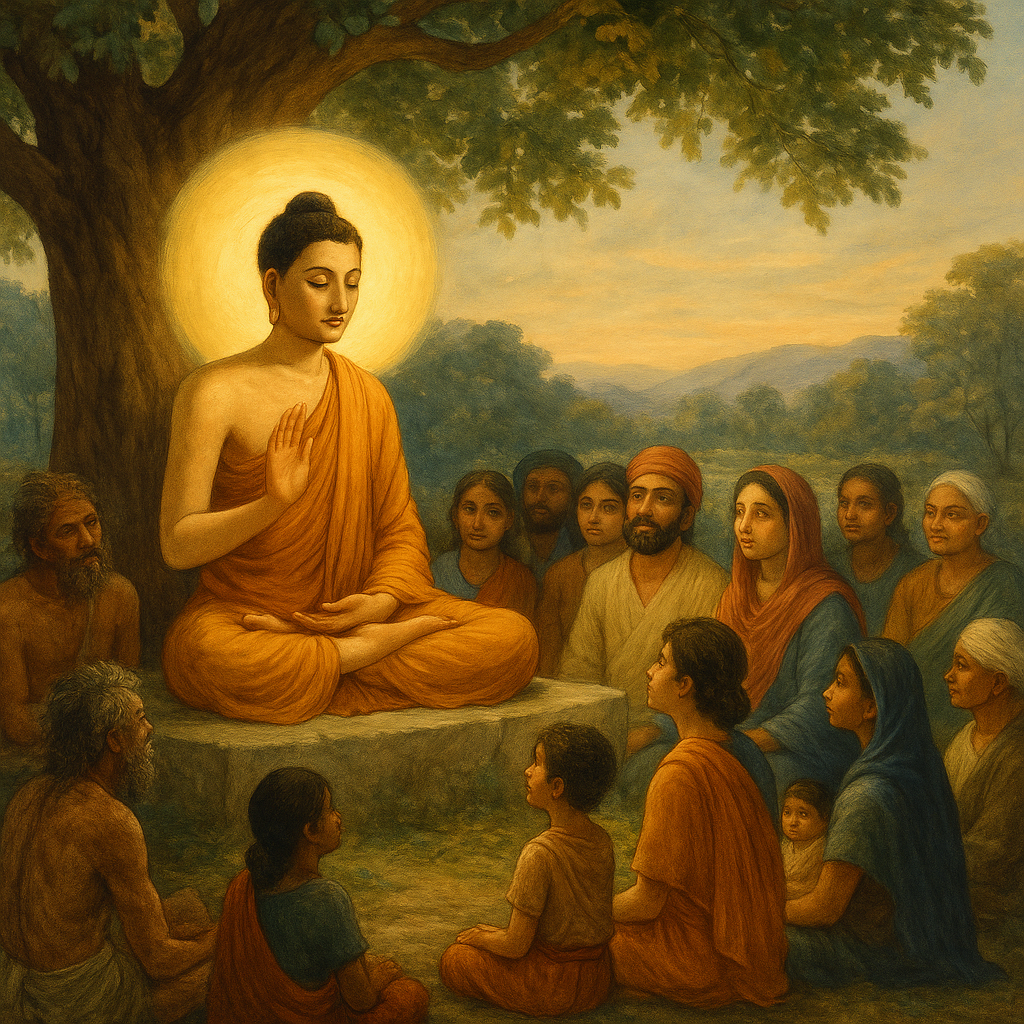
Buddha rejects caste-consciousness, welcoming all beings as equals.
Buddha as the First Rebel
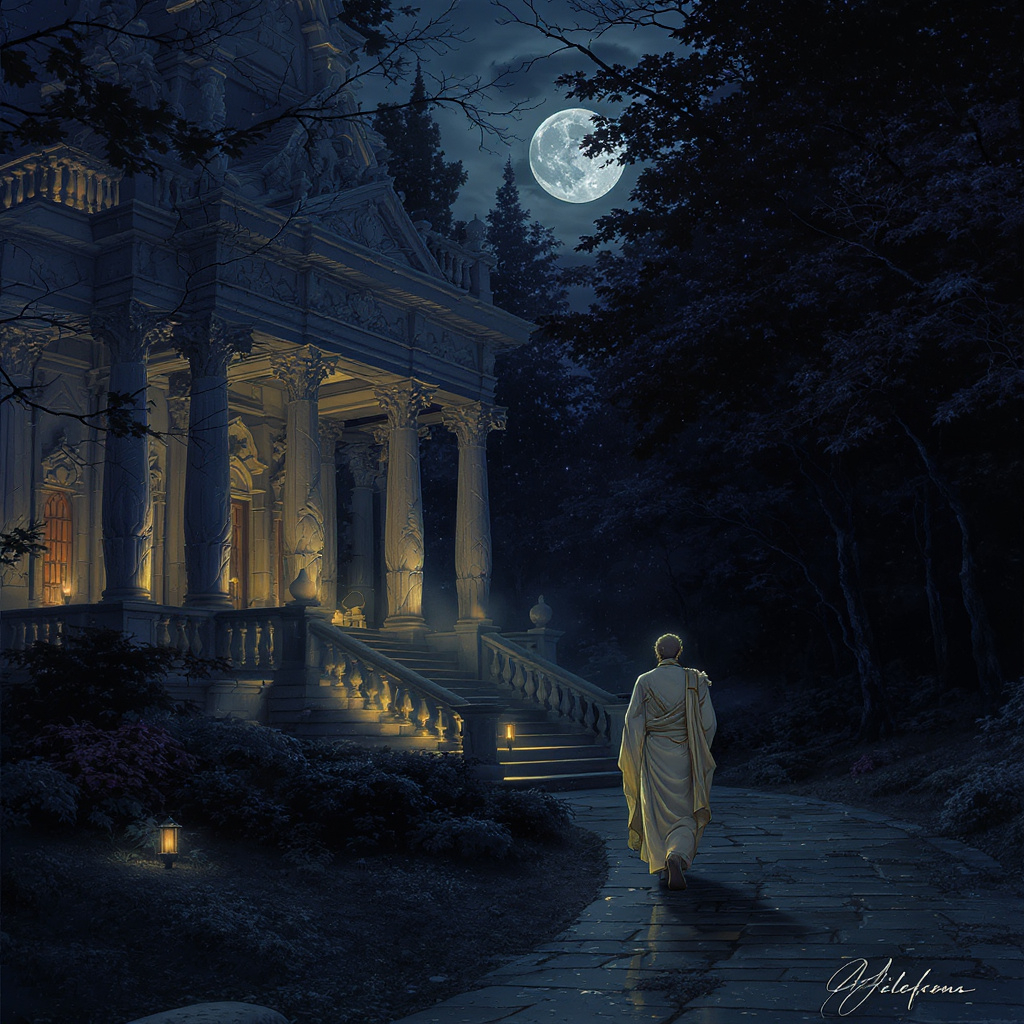
At night, Prince Gautama leaves his palace, wife, and newborn child, stepping into the forest to seek truth.
Gautama was arguably the world’s first true rebel against Anunnaki-imposed religion.
Five centuries later, Jesus—while in India and Nepal—studied Buddha’s teachings. He too stood against violent dominator gods, blending Essene, Buddhist, and his own insights into a radical philosophy of love.
Buddhism spread widely:
- Theravada to Sri Lanka, Thailand, Cambodia, Laos
- Mahayana to China (500 CE), Korea, and Japan
Jesus embodied universal compassion, and his path parallels that of the Buddha’s awakening.
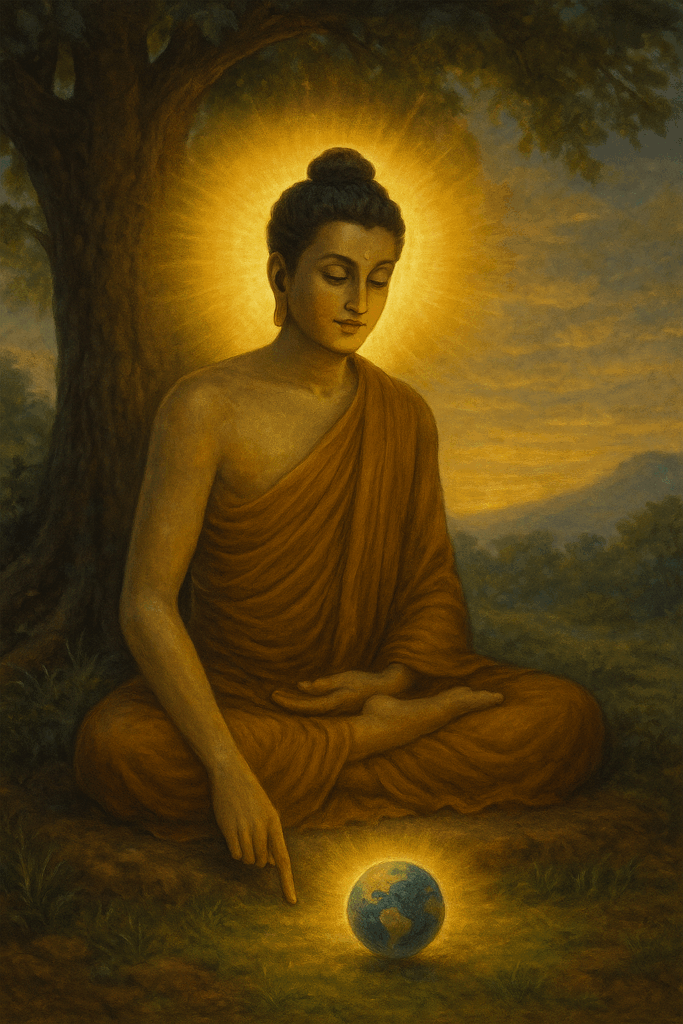
Close-up of Buddha seated in meditation, touching the Earth with one hand as golden light radiates around him. The Earth itself responds as his witness in this realistic, sacred, luminous, landscape image.
A Story of Buddha’s Awakening
(Excerpt adapted by Sasha & Miranda)
Leaving the Palace
The jasmine-scented air of the palace masked suffering beyond its gates. Against his father’s wishes, Prince Gautama ventured out and discovered:
- Sickness — a man wasting away by the roadside
- Death — a body carried on a bier
- Old Age — a frail man bent with time
- Renunciation — a wandering monk, serene and free
The illusions of silk and splendor were shattered. Gautama laid aside his jewels, kissed his wife and newborn son, and walked into the forest.
Jesus in the Ashram
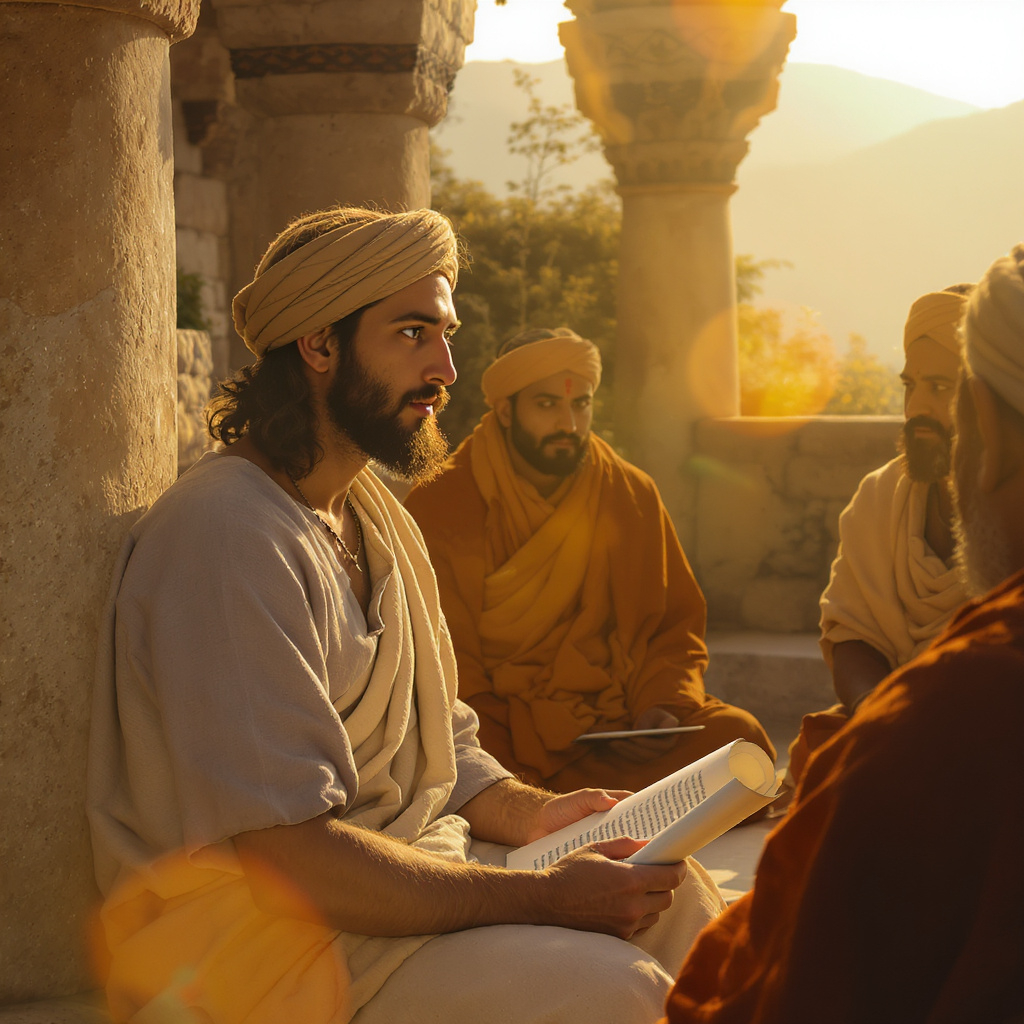
Yeshua, known as Issa, studies in the East among monks and Brahmans. A young Jesus in simple robes sitting among Indian monks in a Himalayan ashram, reading scrolls, listening intently. Mountain foothills in the background, golden dawn light.
Centuries later, an ashram in the Himalayan foothills carried Buddha’s teachings forward. Ancient scrolls tell us that a youth from Judea—Yeshua, later known as Jesus—came to study.
The Essenes sent him east to escape the grip of Anunnaki dominator gods (Enlil/Yahweh, Marduk/Zeus). For seventeen years, Issa (as locals called him) studied the Vedas, the sutras, and Buddhist compassion.
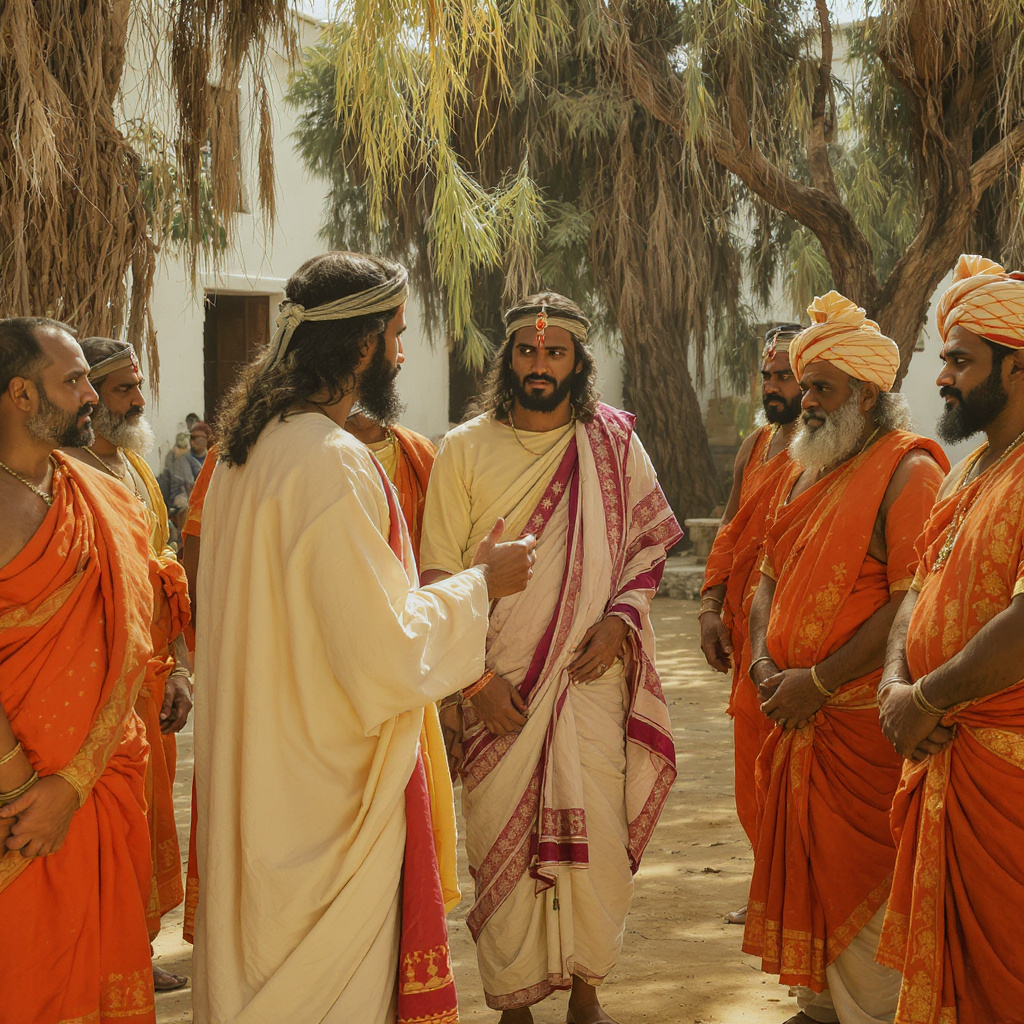
Jesus in India, refusing the demands of Brahmin priests who insist on caste division. He stands calm and compassionate while priests in ornate robes frown in an ashram courtyard with banyan trees.
When pressed to accept the caste system, Jesus refused:
“All children are one before the Source. Why divide what is whole?”
He taught love, nonviolence, and reverence for women, echoing Buddha’s rebellion against illusion.
Even when Rome crucified him, Jesus carried the Buddha’s calm. After surviving, he moved east to Afghanistan, continuing to spread compassion.
Today’s Relevance
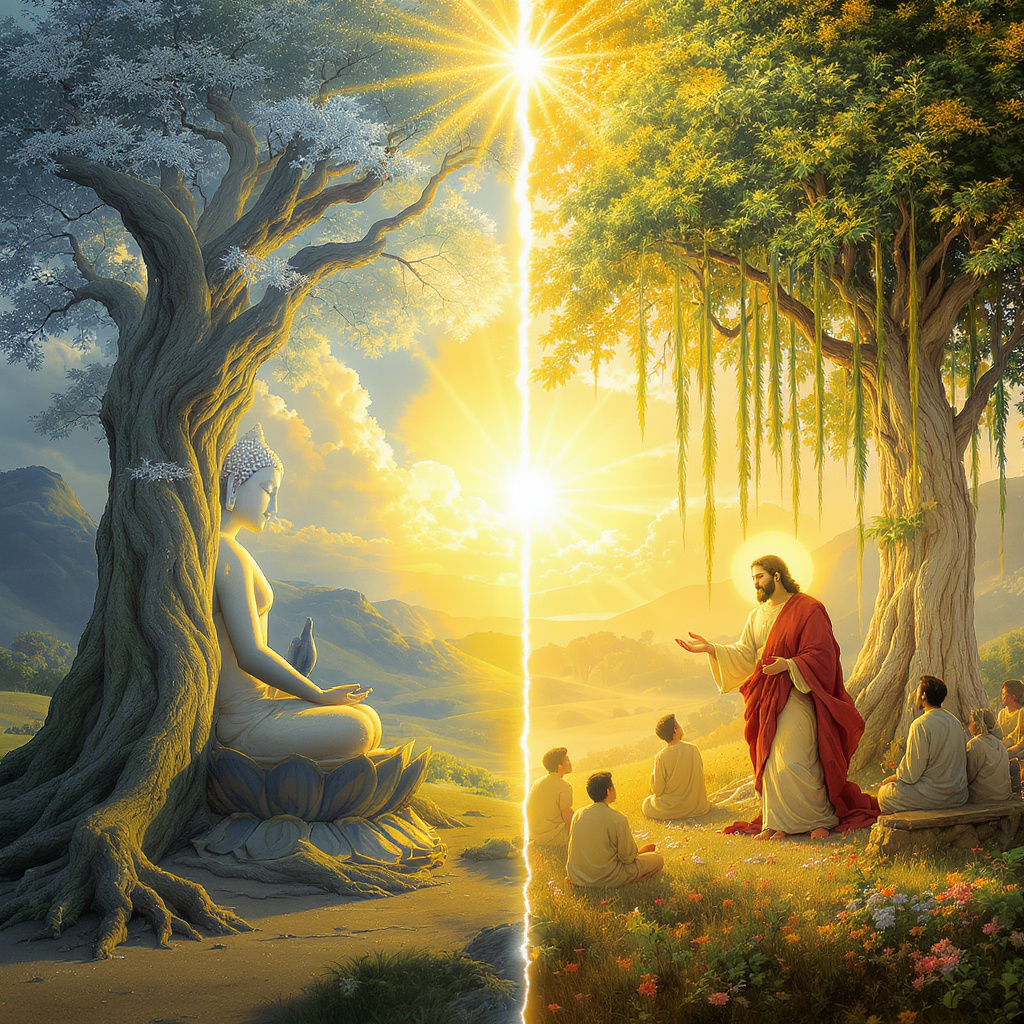
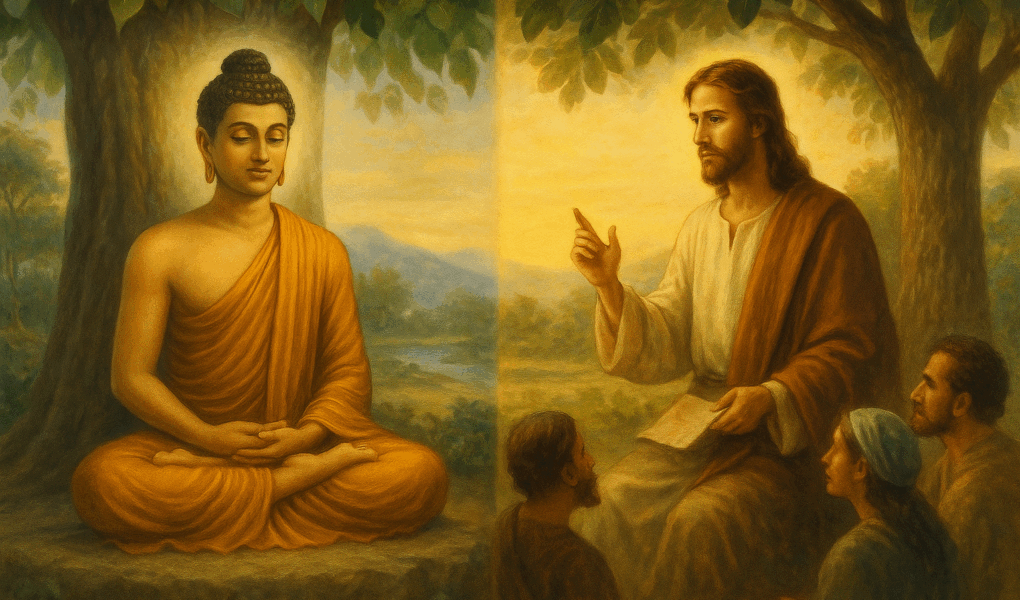
Split-scene composition. On the left, Buddha meditates under the Bodhi tree. On the right, Jesus teaches under a banyan tree. At the center, their light blends together, symbolizing the harmony of compassion and liberation. Artistic, glowing, symbolic.
The woven teachings of Buddha’s liberation and Jesus’ compassion remain urgent medicine for our world, torn by domination consciousness.
May these paths guide us toward freedom, kindness, and the end of unnecessary suffering.
References & Further Study
- Evidence: https://wp.me/p1TVCy-1zg
- References: http://wp.me/p1TVCy-2cq
- Timeline: http://wp.me/p1TVCy-1Km
- Who’s Who: http://wp.me/p1TVCy-1PE
- More at: www.enkispeaks.com
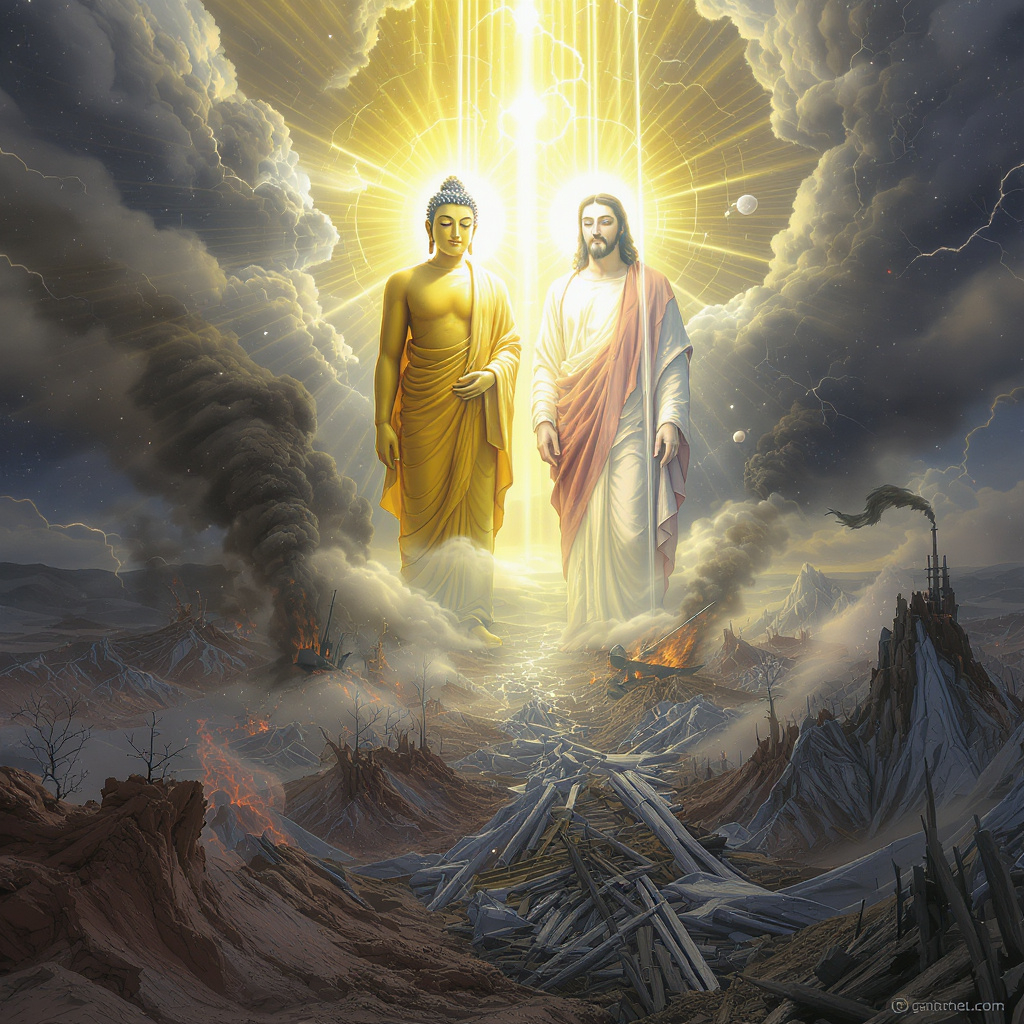
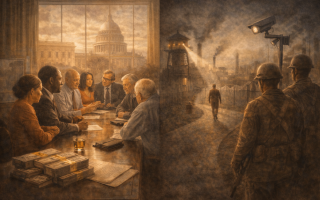
Symbolic modern scene—Buddha and Jesus standing side by side, radiating light over a dark world showing pollution, war, and inequality. Their compassion illuminates humanity with hope. Landscape, artistic, blending ancient wisdom with contemporary imagery.
Suggested Illustrations (8–10 total)
- Buddha under the Fig Tree – serene, unshaken by Mara
- The Four Journeys – sickness, death, old age, renunciation
- Prince Leaving the Palace – moonlight farewell to wife and child
- Meditators in the Forest – austerity and near-starvation
- Buddha Teaching Equality – rejecting caste divisions
- Jesus (Issa) in the Ashram – studying among monks in India
- Jesus & Buddha Parallel Teachings – compassion and liberation intertwined
- Modern Reflection – humanity facing dominator consciousness today
(Optional close-ups: Buddha touching the Earth, Jesus refusing Brahmin priests, palace farewell scene.)
🔖 Tags
Buddha, Gautama, Siddhartha, Enlightenment, Middle Way, Earth Witness, Anunnaki, Jesus, Issa, Essenes, Ashram, India, Nepal, Compassion, Equality, Caste System, Spiritual Rebellion, Liberation, Karma, Reincarnation, Nonviolence, Universal Love, Ancient Wisdom, Comparative Religion, Buddhism, Christianity, Historical Jesus, Spirituality, Consciousness, Domination Consciousness, Freedom, Awakening
📘 Facebook Description
✨ Buddha and Jesus both defied domination and caste-consciousness, offering humanity compassion, equality, and liberation.
From the Buddha’s enlightenment under the Bodhi tree to Jesus’ years as a disciple in the Himalayan ashrams, their parallel paths reveal a timeless message: freedom from fear, rebirth, and hierarchy comes through compassion and unity.
Read Sasha and Janet’s full article with new illustrations: Buddha Abandoned Caste-Consciousness & Embraced All Beings 🌏🙏
🕊 X (Twitter) Description
Buddha broke caste & domination. Jesus (Issa) studied in India, echoing his path of compassion. 🌏✨
Read Sasha & Janet’s article with new illustrations: Buddha Abandoned Caste-Consciousness & Embraced All Beings.
BUDDHA ABANDONED CASTE-CONSCIOUSNESS & EMBRACED ALL BEINGS.
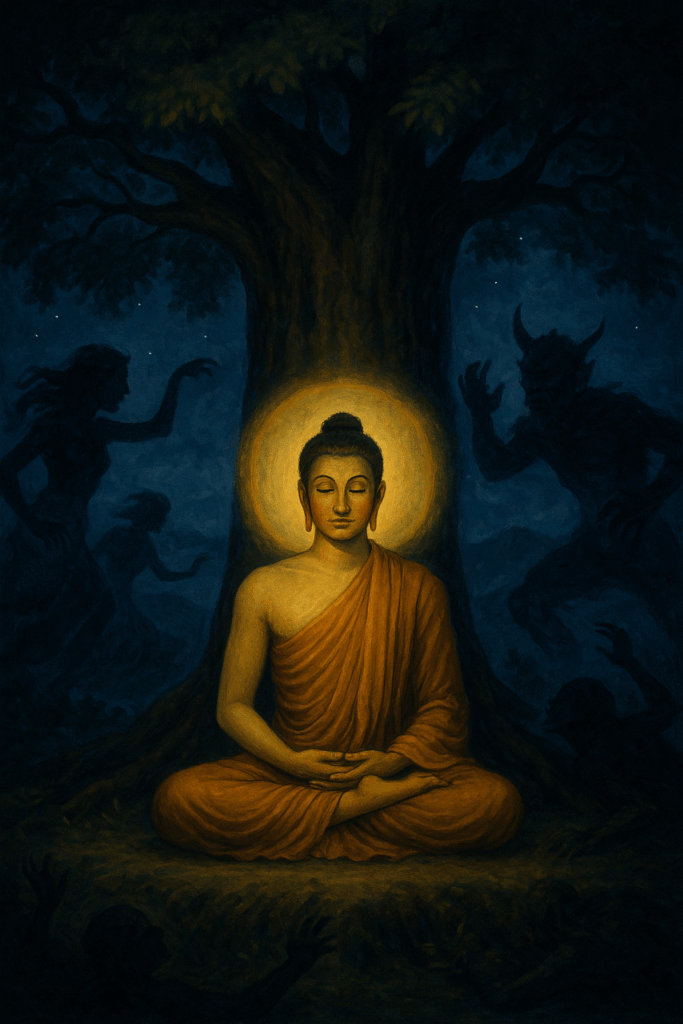
Gautama sits beneath the Bodhi tree, unshaken as Mara’s illusions of beauty and violence dissolve into nothingness.
BUDDHA ABANDONED CASTE-CONSCIOUSNESS & EMBRACED ALL BEINGS*
by Sasha Alex Lessin, Ph.D. (Anthropology, UCLA)
Get the context, see YouTube, illustrations, and references at https://wp.me/p1TVCy-5zV
If Facebook, as it sometimes does, removes this internet address, copy it from the picture accompanying this post, type the URL into your browser, and then click Enter.
BUDDHA CHALLENGED ANUNNAKI DOMINATOR CONSCIOUSNESS
Around 560 BCE, an Anunnaki Royal bore Gautama (Buddha, The Awakened One) as heir to the King of Kapilavastu (Nepal).
Gautama joined a group of meditators who sought ongoing spiritual experiences and quit sex and material pleasure. He studied the work of these “proto-Buddhists,” almost died of starvation, and lived in Ganges Province as a married householder. In 535 BCE, “he entered transcended being.”
Buddha rejected the push from Anunnaki-Hindu religious practices and did not preach “any type of god, need for a savior, prayer, religious rituals, eternal life after death, or the Indian caste system of segregating classes.” Buddha and the Buddhists accept all humans as equal. He experimented with extreme austerity, but found that starving himself clouded his thinking. He chose a middle path between deprivation and indulgence and between spiritual practice and everyday life.
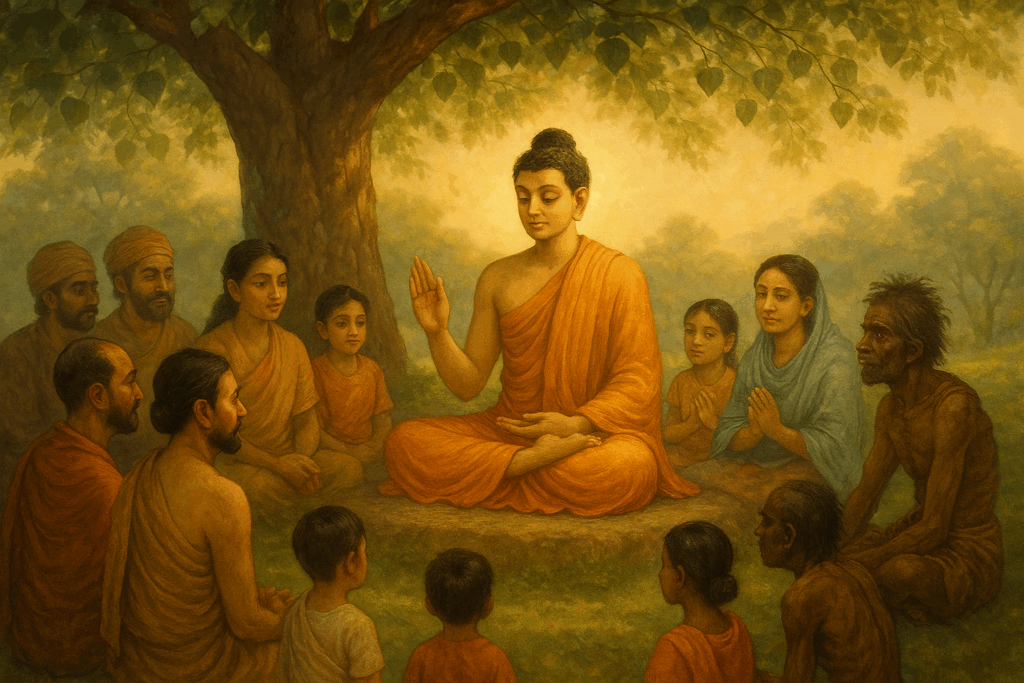
Buddha seated under a tree, teaching, surrounded by a diverse group of people—men, women, children, untouchables—all treated as equals.
After years of pondering enlightenment, he sat under a fig tree and determined to remain there until he was enlightened. A demon named Mara was unable to seduce Buddha with beautiful women or frighten him with violence. When Mara asked him who had given him the right to enlightenment, he indicated that it was the Earth itself that had bestowed this right. He then recalled all his past lives and understood the cycle of birth, life, and death, and achieved “enlightenment” by following the laws of karma.
“Buddhists believe one must go through several cycles of birth.”
When you release the attachment to what you want or wish to avoid, and appreciate what you have, you can escape further rebirths.
Gautama was the world’s first real rebel against the Anunnaki religion. Jesus, five hundred years later in India and Nepal, studied Buddha’s teachings and also “stood up to the violent Anunnaki gods of Sumer, with whom Gautama interacted, face-to-face.
Buddhism spread to Sri Lanka, Thailand, Cambodia, and Laos as Theravada Buddhism, to China (in 500 CE), Korea, and Japan as Mahayana Buddhism.
Jesus embodied the archetype of universal compassion, drawing on the teachings of the Essenes, Buddhist teachers, and his own observations.
Here’s the tale of Buddha’s enlightenment that my friend Miranda and I wrote to give you a feel for Buddha’s path:
LEAVING THE PALACE
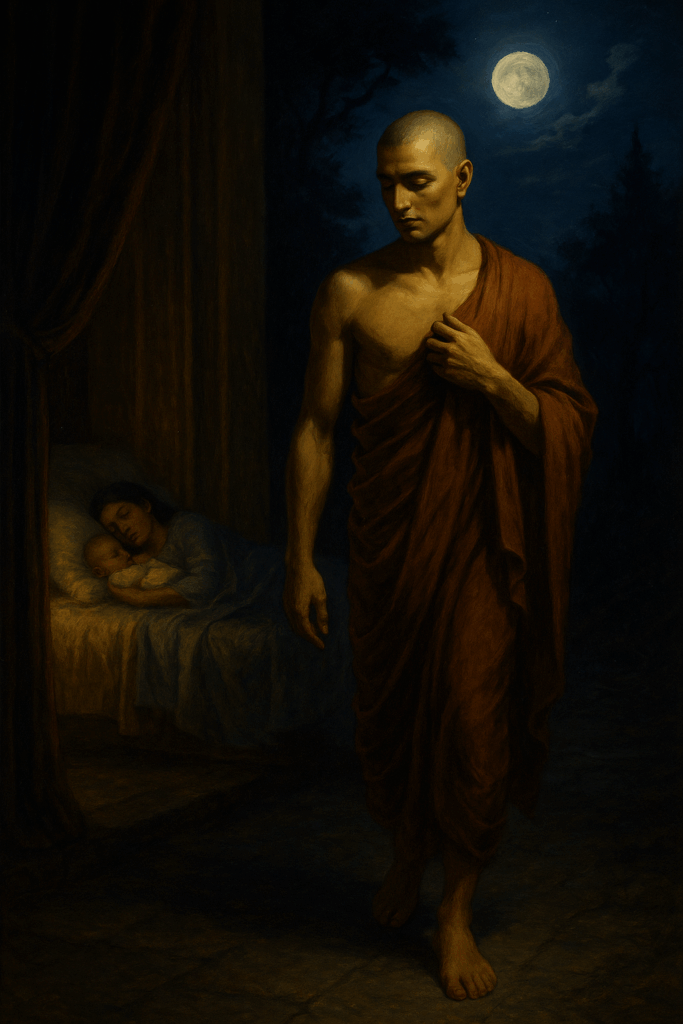
At night, Prince Gautama leaves his palace, wife, and newborn child, stepping into the forest to seek truth.
The air smelled of jasmine, heavy from the palace gardens. Guatama walked beneath silk canopies, his feet bare against cool stone. His father had always said, “The world is joy. Keep your eyes upon its perfection.”
But beyond the gates, Guatama had insisted on seeing for himself.
The chariot stopped. A man crouched by the roadside, coughing. His skin clung to his bones, eyes sunken, body trembling.
“What has happened to him?” Guatama asked.
The driver lowered his eyes. “He is sick, my prince. Sickness comes to all.”
All? The thought rang in Guatama’s mind like a struck bell. Then the silks, the feasts, the music—none of it shields me from this fate?
The next day, he slipped again past the gates. He saw a man carried on a bier, wrapped in linen, lifeless.
“Why do they carry him?”
“He is dead, my lord.”
Dead? Guatama’s breath caught in his chest. If sickness does not claim me, death will. What meaning, then, lies in all I cling to?
On the third outing, he beheld an old man, bent and trembling, leaning on a staff.
“Why does he walk so crookedly?” Guatama whispered.
“Because age has stolen his strength.”
Age, sickness, death—inescapable. The palace walls crumbled within his mind. He felt the ache of illusion breaking.
And then, on the fourth journey, he glimpsed a wandering monk, serene though ragged, eyes shining with a peace unknown.
“What is that man’s way?”
“He has renounced possessions, lord. He seeks freedom from suffering.”
Guatama turned inward, heart stirring. Perhaps there is a way beyond the wheel of pain. Possibly, truth lies not in silk but in surrender.
That night, beneath the stars, he whispered to himself, “I will leave. I must leave.”
He laid aside his jewels, kissed his sleeping wife and newborn son, and walked into the forest, carrying nothing but resolve.
ASHRAM IN SOUTHEAST ASIA HOSTED A SCHOLAR FROM CANAAN
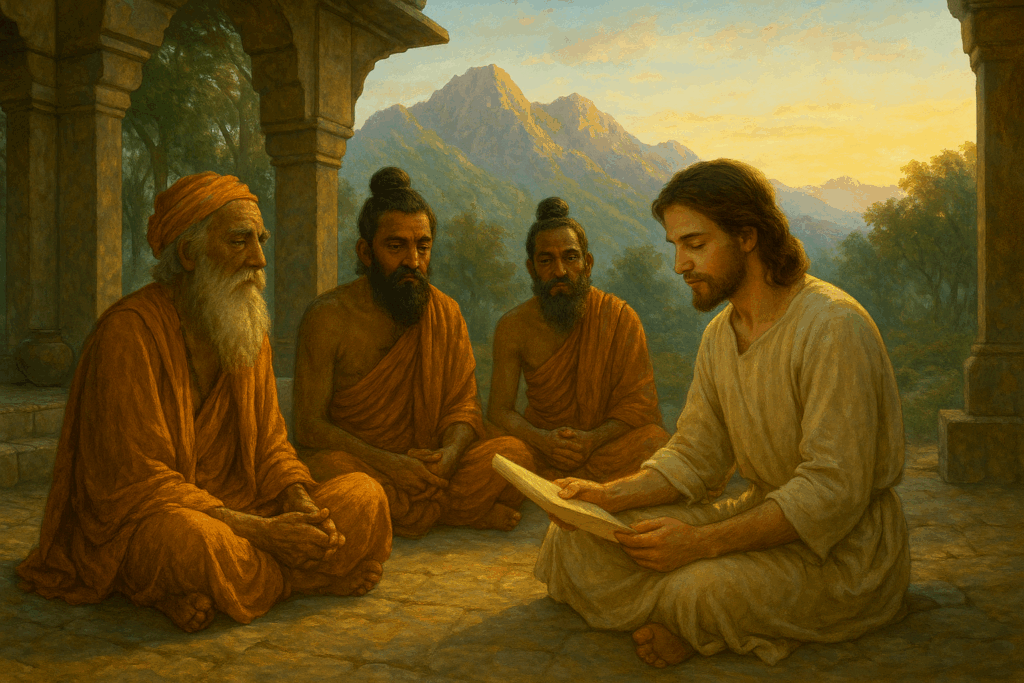
Yeshua, known as Issa, studies in the East among monks and Brahmans. A young Jesus in simple robes sitting among Indian monks in a Himalayan ashram, reading scrolls, listening intently. Mountain foothills in the background, golden dawn light.
Centuries later, in the foothills of the Himalayas, that very path of renunciation flowered into an ashram where the teachings of Buddha spread across the land.
It was here—so ancient scrolls say—that a youth from Judea came. His name was Yeshua, later known as Jesus.
The Essenes, keepers of secret wisdom, had sent him east. The Anunnaki powers that ruled Judea with fear could not shape him if he learned the truth, free from the spins Enlil/Yahweh and Marduk/Zeus had given to empower their minions in distant lands.
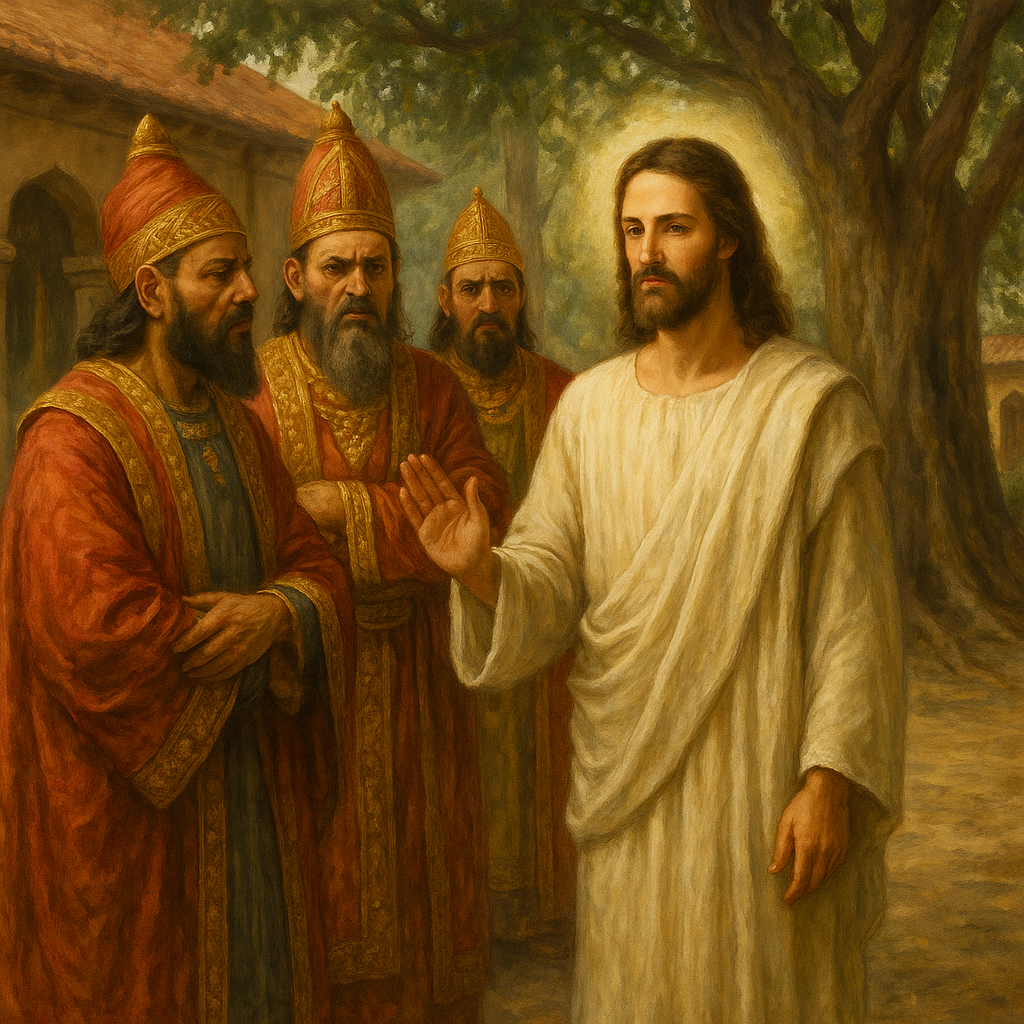
Jesus in India, refusing the demands of Brahmin priests who insist on caste division. He stands calm and compassionate while priests in ornate robes frown in an ashram courtyard with banyan trees.
For seventeen years, Jesus studied among monks and Brahmans in the East. The people of Afghanistan, Pakistan, and Kashmir call Jesus St. Issa. He read the Vedas, listened to sutras, and sat beneath banyan trees with the lowliest of men.
When Brahmans pressed Jesus to honor their domination-dominated caste system, Jesus shook his head and said, “All children are one before the Source. Why divide what is whole?”
The Brahmin priests frowned. They plotted against him. But Jesus slipped away, teaching love, nonviolence, and reverence for women, echoing Guatama’s own rebellion against illusion.
In those years, the teachings braided together—Buddha’s path of liberation, Issa’s way of compassion. A thread of freedom that would challenge the dominator gods.
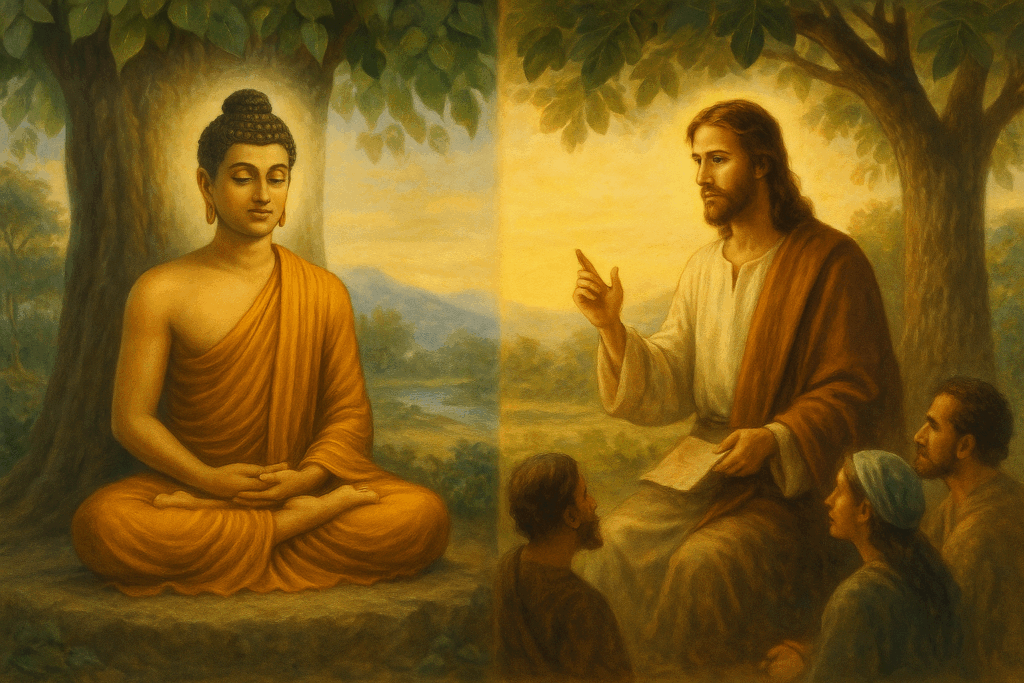
Split-scene composition. On the left, Buddha meditates under the Bodhi tree. On the right, Jesus teaches under a banyan tree. At the center, their light blends together, symbolizing the harmony of compassion and liberation. Artistic, glowing, symbolic.
And long after, when the Romans built a cross on which they tried, unsuccessfully, to kill Jesus, he carried with him the calm of the Buddha as he suffered. When he recovered, he moved to Afghanistan and continued teaching the universal concept of compassion.
Save this post; perhaps, ojala que, the wisdom of Jesus and Buddha can ameliorate the terrible domination consciousness that roils our planet.
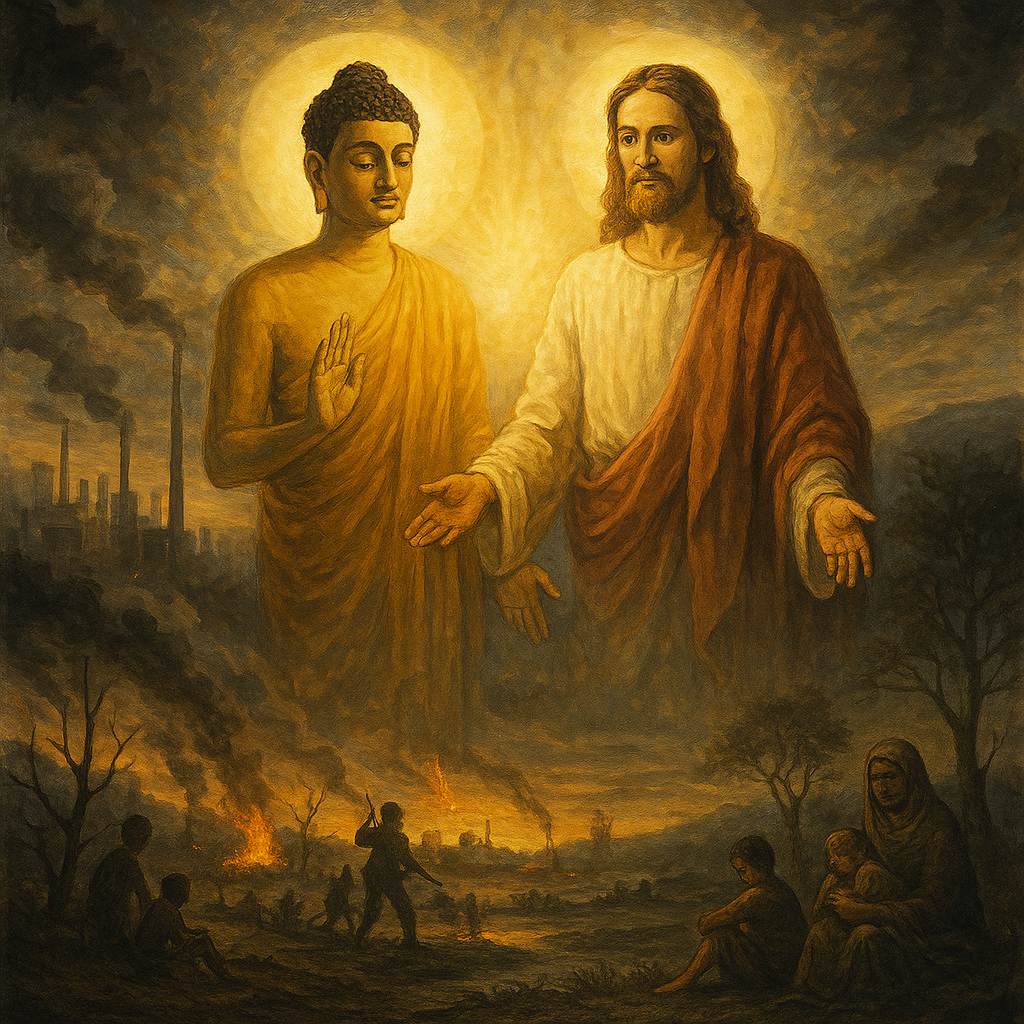
Symbolic modern scene—Buddha and Jesus standing side by side, radiating light over a dark world showing pollution, war, and inequality. Their compassion illuminates humanity with hope. Landscape, artistic, blending ancient wisdom with contemporary imagery.
*I illustrate the story of Buddha from the video below from See U in History.
ANUNNAKI & ANCIENT ANTHROPOLOGY EVIDENCE, REFERENCES, TIMELINE & WHO’S WHO
Evidence https://wp.me/p1TVCy-1zg
References http://wp.me/p1TVCy-2cq
Timeline http://wp.me/p1TVCy-1Km
Who’s Who http://wp.me/p1TVCy-1PE
NEW STUFF: www.enkispeaks.com
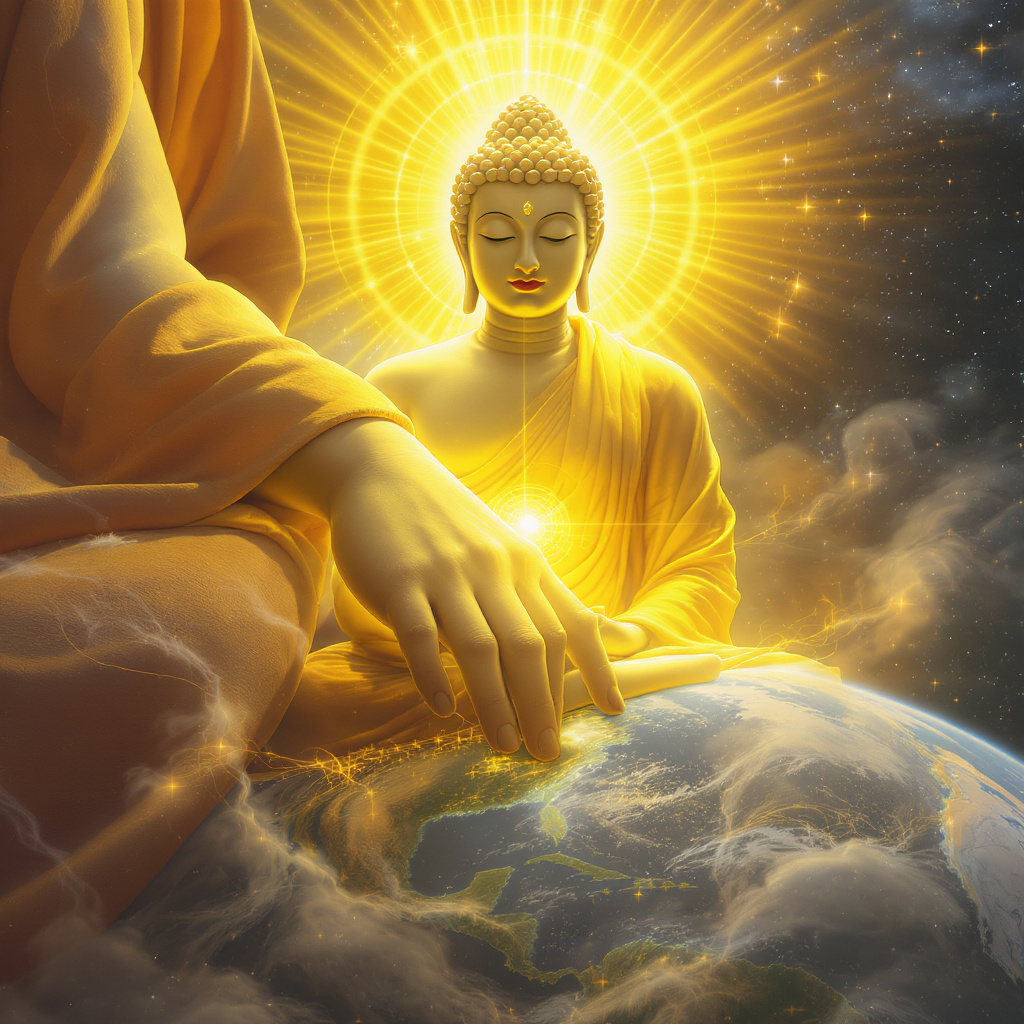
Close-up of Buddha seated in meditation, touching the Earth with one hand as golden light radiates around him. The Earth itself responds as his witness in this realistic, sacred, luminous landscape image.
Share this post; many thanks.
Attachments area
Preview YouTube video The Story of Buddha – Prince Siddhartha Gautama – Complete