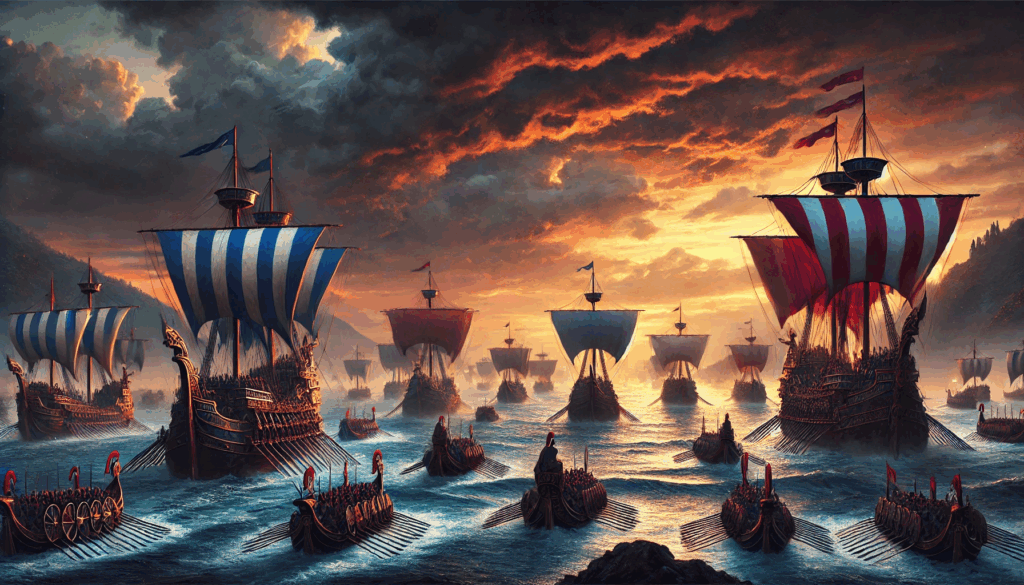
A serene yet tense moment as the Spartan and Athenian fleets line up across calm waters, sails catching the last light of sunset. The shadow of impending battle looms over the Hellespont.
405-404 BCE: Spartan Conquerors let CRITIAS & his 3O ATHENIAN TYRANTS rule & terrorize Athenians until THASYBULUS & Athenian refugees killed CRITIAS, overthrew the 30 & RESTARTED ATHENIAN DEMOCRACY.
405-404 BCE: Spartan Conquerors let CRITIAS & his 3O ATHENIAN TYRANTS rule & terrorize Athenians until THASYBULUS & Athenian refugees killed CRITIAS, overthrew the 30 & RESTARTED ATHENIAN DEMOCRACY
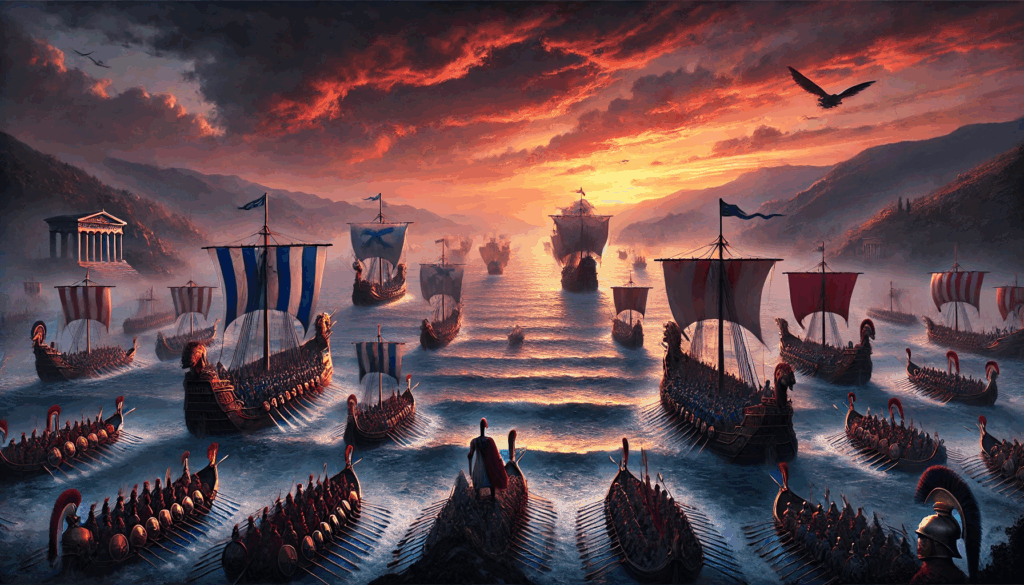
The Spartan fleet, led by Admiral Lysander, dominates the horizon with red sails and bronze prows, poised to crush Athens’ last defense under the fading light of a dramatic sky.
By Sasha Alex Lessin, Ph.D. (Anthropology, UCLA)
Click https://wp.me/s1TVCy-greece for more on ancient Greek history.
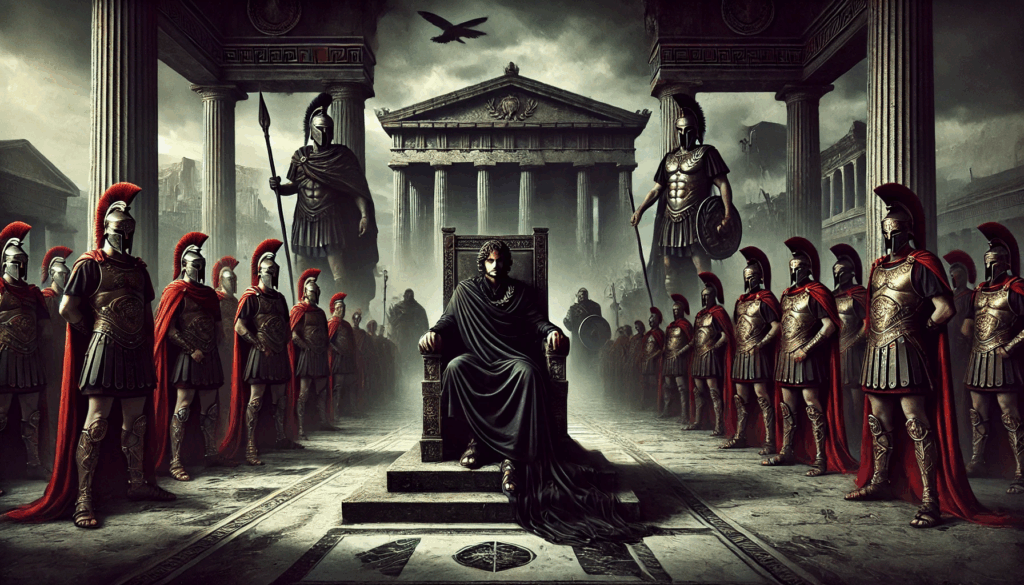
Critias presides over a shadowy council of oligarchs guarded by Spartan enforcers. The atmosphere of fear and control hangs heavy over a decaying Athens.
Sparta defeated Athens, sank its fleet in the 405 Battle of AEGOSPOTAMI & ended the Peloponnesian War. All the players invoked the “god” ZEUS, aka Marduk, for help in the fight.

This image captures Critias at the height of his power, seated on a throne as ruler of Athens under Spartan control. His expression is sharp and unyielding, reflecting the cold intellect and ruthless authority with which he led the Thirty Tyrants. Behind his composed exterior lies the terror he unleashed — purging citizens, seizing property, and silencing dissent — all under the shadow of Spartan spears. The golden laurel signals legitimacy, but his gaze reveals the iron grip of oligarchy.
Sparta’s King LYSANDER led the Peloponnesian League Navy to Athens to raze it, but the Athenians surrendered rather than see their city burn. He made them level the wall Pericles had built to stop him.
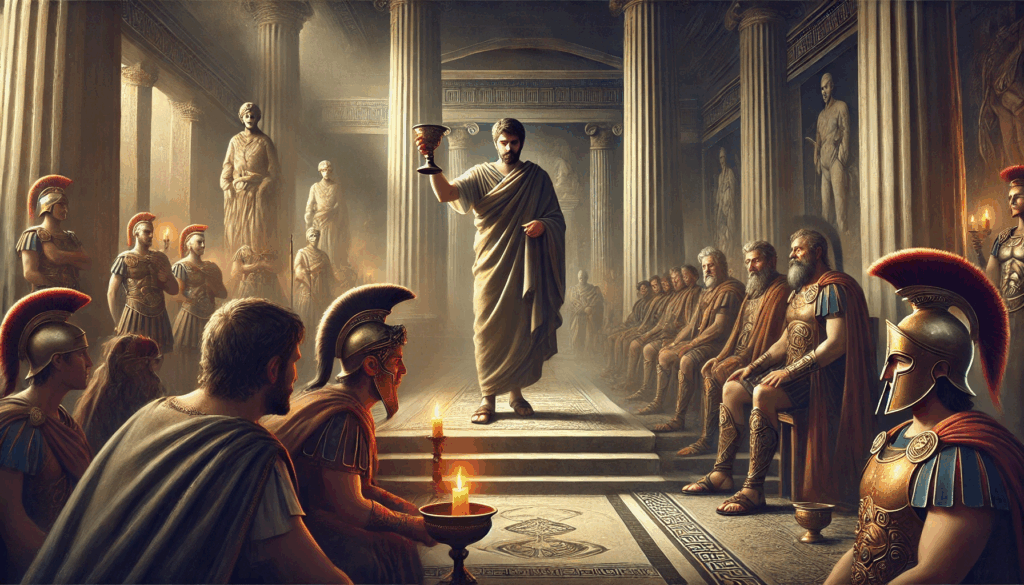
In the marble shadows of Athenian tyranny, Theramenes raises the cup with stoic defiance. Around him, the Thirty Tyrants and Spartan guards watch in silence — a moment thick with judgment and fate.
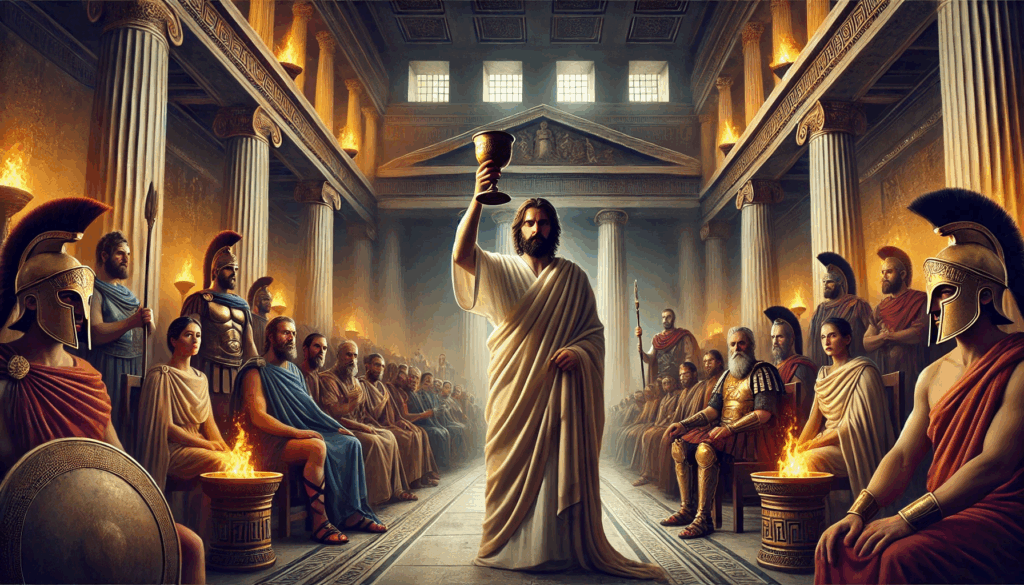
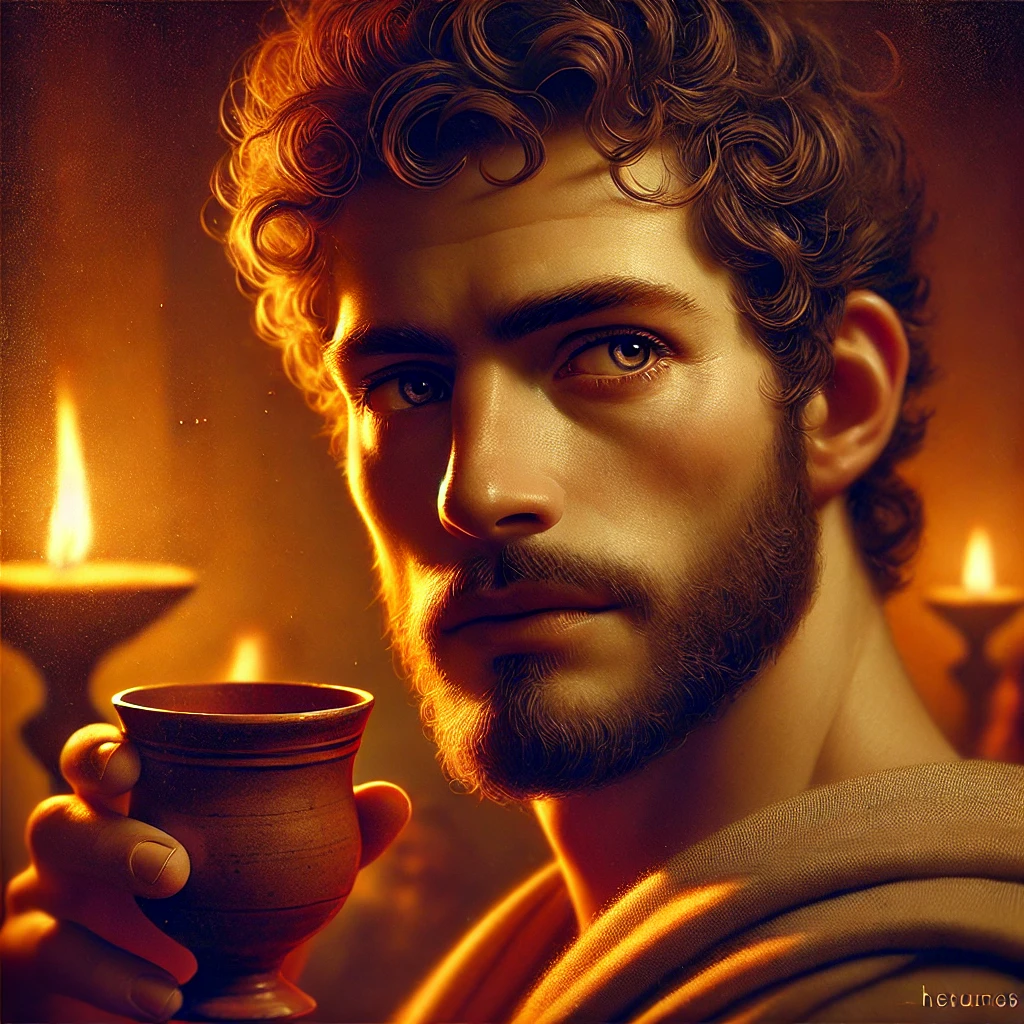
His eyes fixed in calm defiance, Theramenes lifts the cup not in fear but with the quiet triumph of a man who knows history will outlive his killers. The shadow of Critias lingers — but it is Theramenes who owns the moment.


Lysander took their fleet (except 12 ships) & let their refugees return to the city.
The Tyrants’ BOULE: 500-MAN COUNCIL WITH 300 SPARTAN ENFORCERS
Lysander kept veto power over Athens’ Tribal Council.
Athens’ Council failed to decide whether to govern the city as a democracy or an oligarchy.
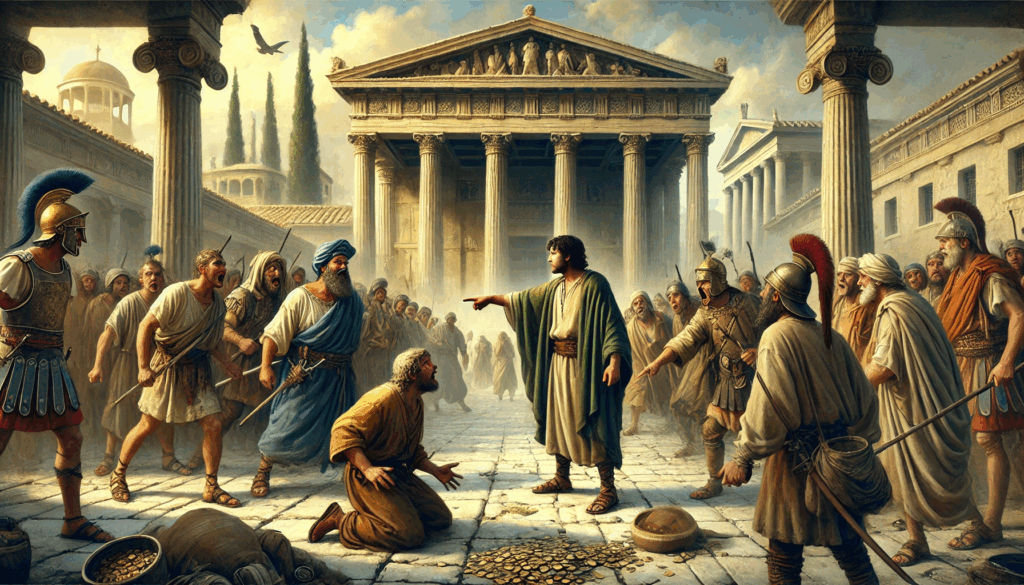
One of the Thirty Tyrants orders the confiscation of a foreign resident’s home while guards carry out the theft. In the distance, families escape Athens — a city turning against those who made it thrive.
King Lysander appointed CRITIAS & 30 OLIGARCHS–the “Tyrants” to write a new constitution for Athens.
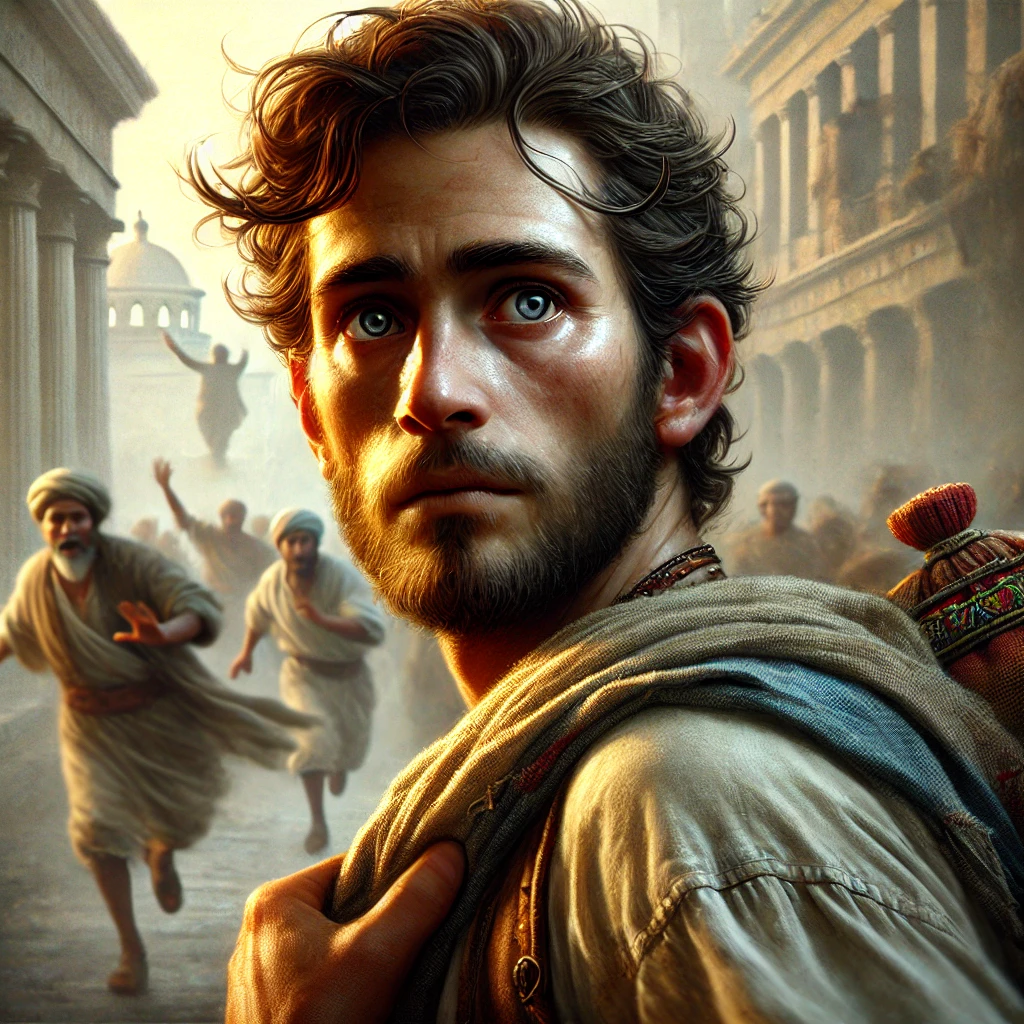
A foreign artisan looks back one last time at the city he helped build — his home, his work, now stolen. In his eyes, grief, disbelief, and the burden of forced exile.
The Tyrants ruled through THE BOULE, a council of 500 men, 10 of whom ruled the port city of Piraeus for them. A 300-man police force & a garrison of Spartans backed the Tyrants.
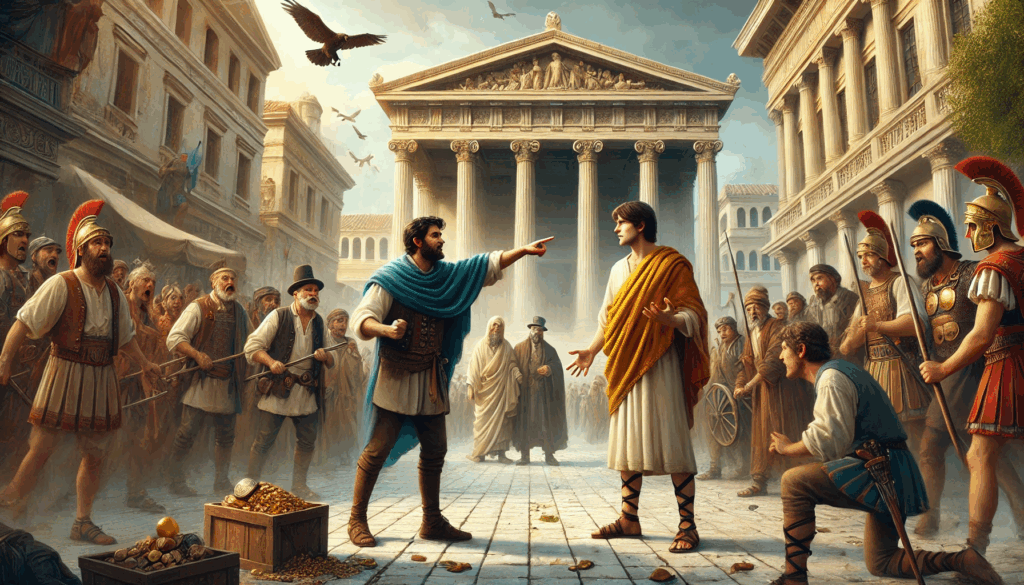
The Tyrants killed thousands of Athenians & only let 3,000 people live within Athens’ walls.
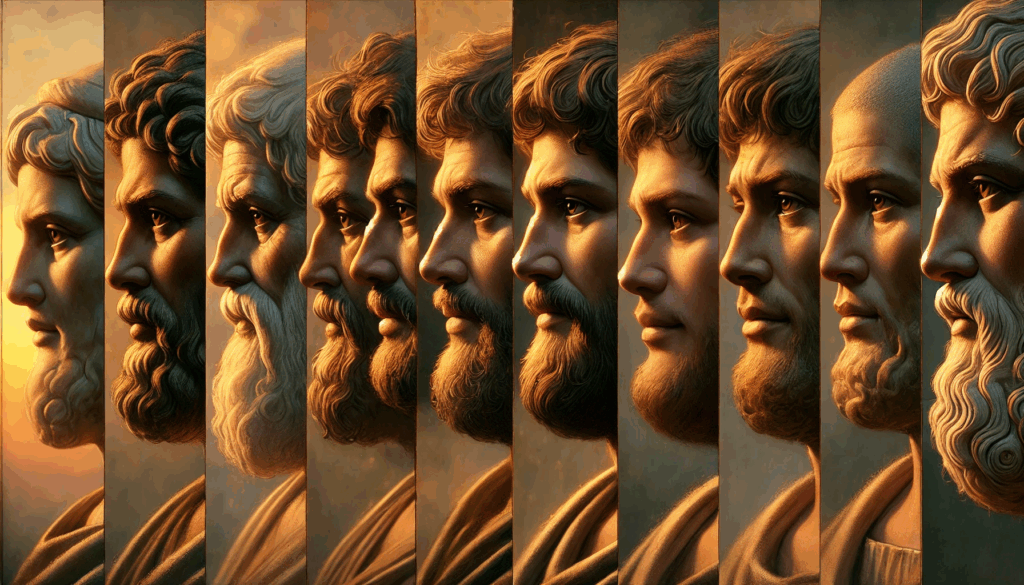
EACH TYRANT MURDERED ONE MIGRANT & TOOK HIS PROPERTY
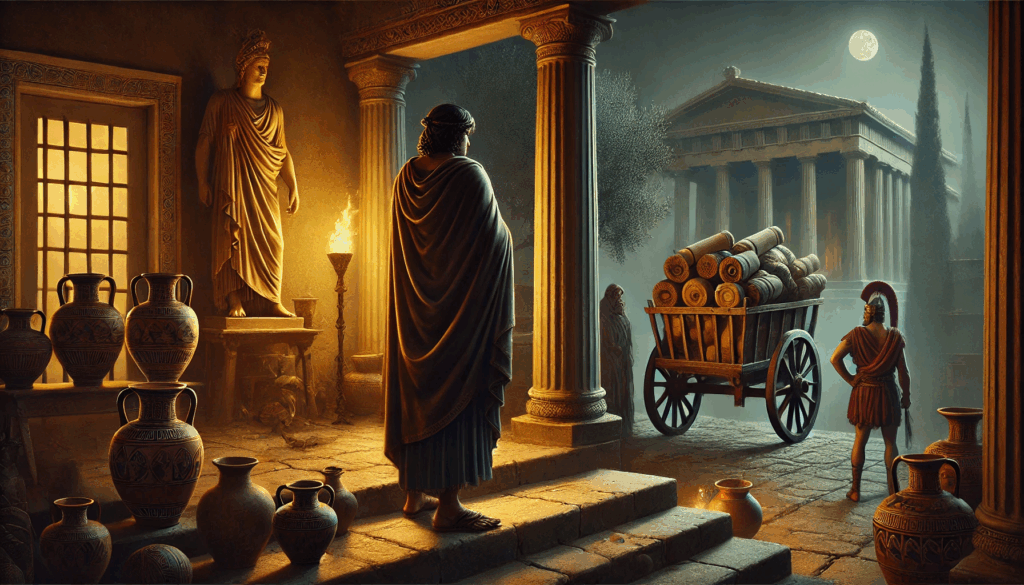
On a terrace lit by torchlight, a lone Tyrant surveys his spoils — scrolls, pottery, stolen livelihoods — as the man who once owned them watches from the shadows. No sword is drawn, but everything is taken.
Each of the 30 Tyrants chose a foreign resident who had property in Athens, took the foreigner’s property & killed him. Sound familiar, Americans?
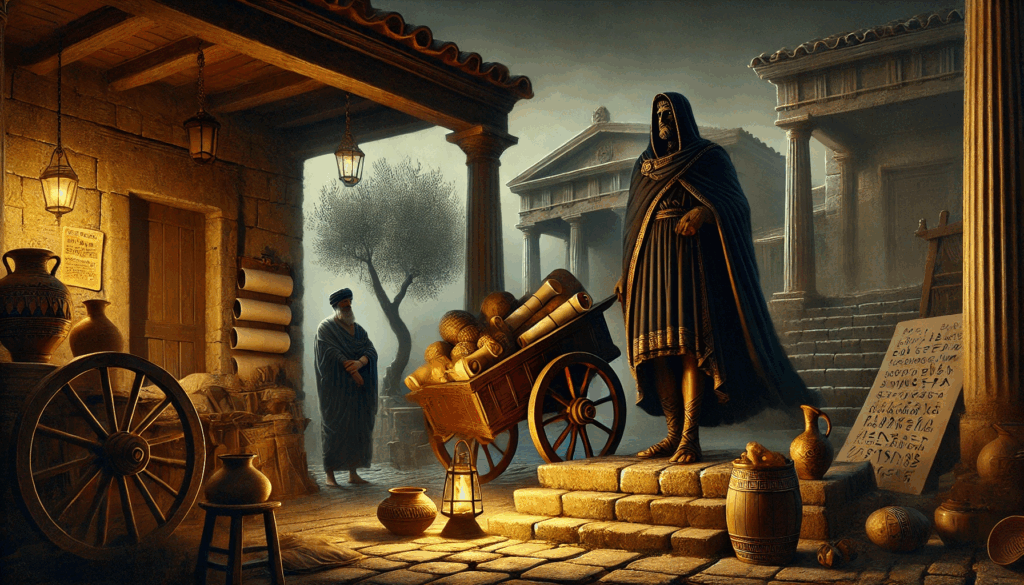
The foreign residents who had made Athens prosper fled to Boeotia, Corinth, Argos, Chalcis, Megara & Oropus.
Athenians fled to neighboring city-states, even ones siding with Sparta (Megara, Corinth & Thebes), which had, under Lysander, been alarmed at Sparta’s increasing power.

Dusty but unbroken, a small family of exiles pauses at the gates of the sanctuary. The mother cradles the future in her arms, the father stands guard with quiet strength, and the children — wide-eyed — carry the memory of home and the promise of return.
Lysander declared fines for any city that harbored Athenian refugees, but Thebes, Megara & Corinth ignored him.
THEBES BECAME A SANCTUARY CITY FOR ATHENIAN REFUGEES & FINANCED DEMOCRACY ADVOCATE THRASYBULUS’ CHALLENGE TO ATHENS’ TYRANTS
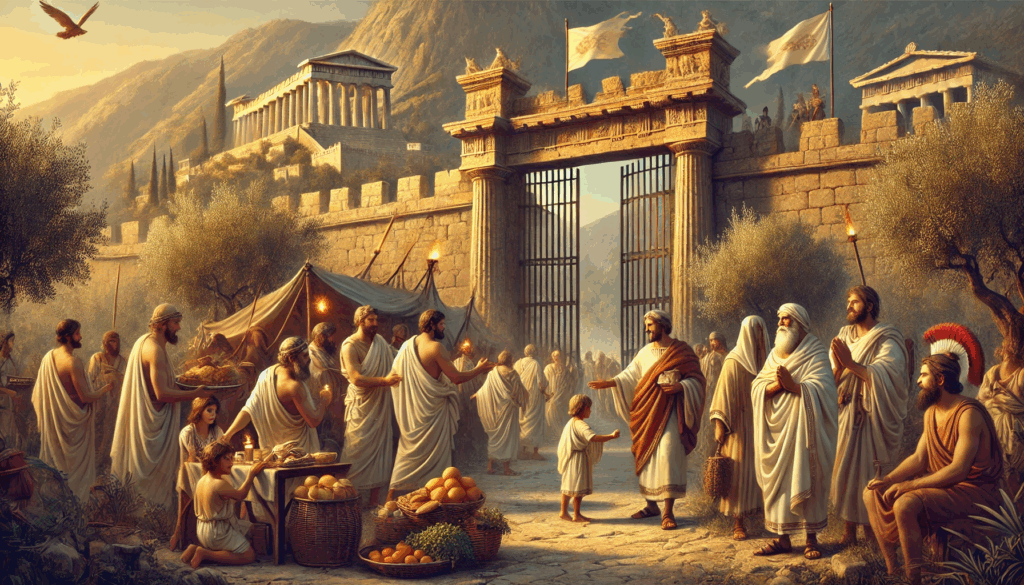
At the edge of Boeotia, Theban citizens welcome weary exiles from Athens with open hands and quiet strength. Bread is shared, cloaks are offered, and behind the gates, democracy’s defenders find rest and resolve.
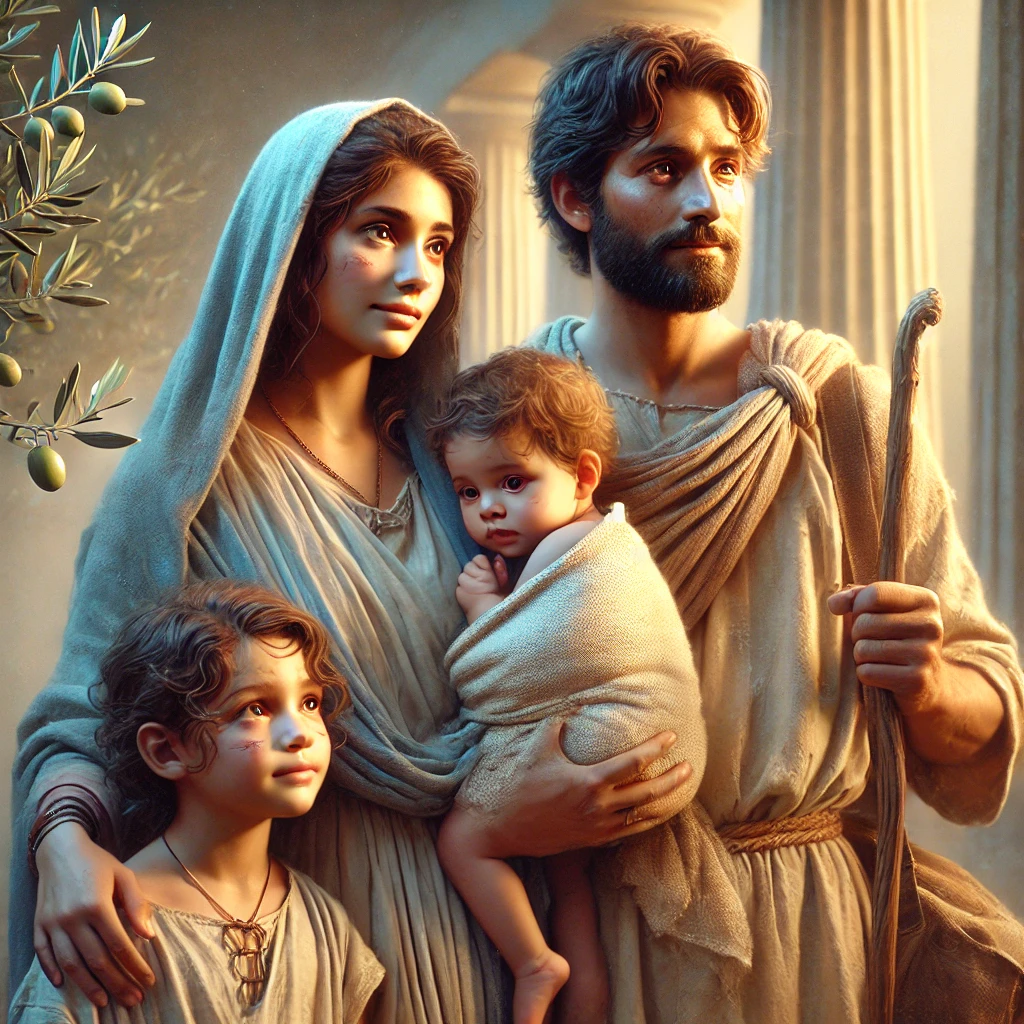
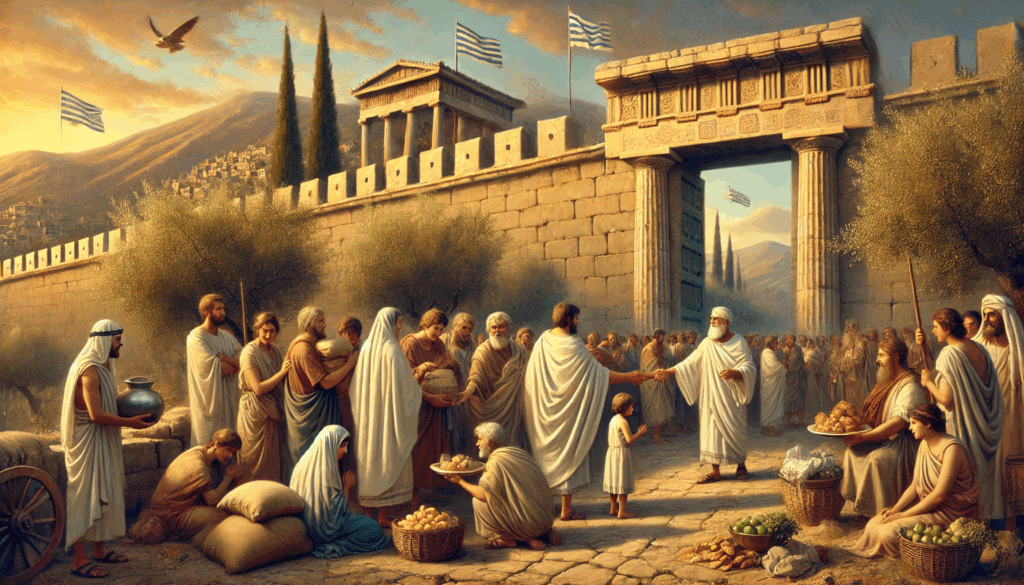
Thebes declared that it would fine anyone who caused an Athenian to be deported back to Athens, per the Tyrants’ demands.
In 403 BCE, the Thebans funded Athenian refugee THRASYBULUS, an aristocratic devotee of democracy and a hero in the Peloponnesian War, with 70 fighters to cross into Athenian territory.
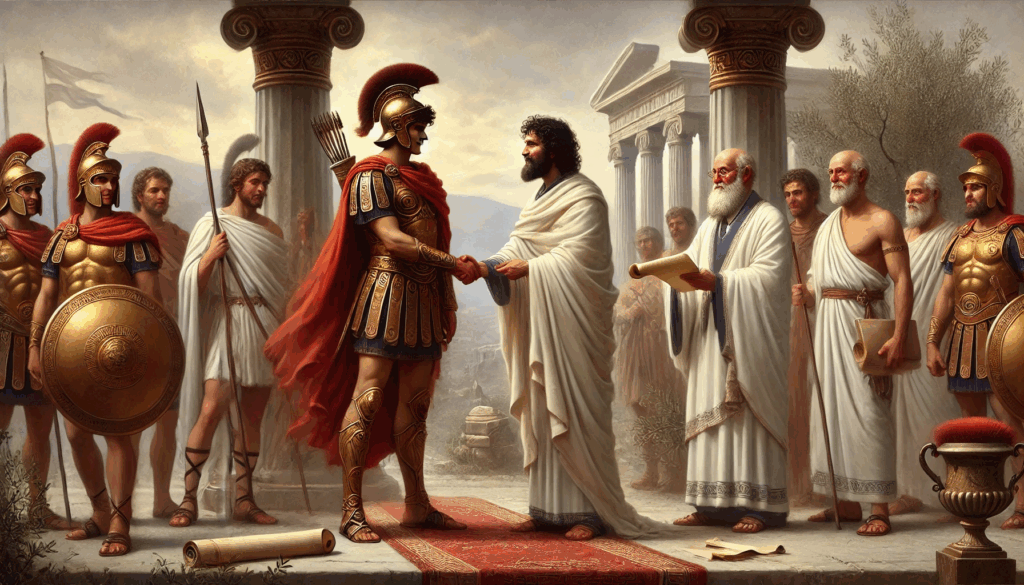
In the courtyards of Thebes, Thrasybulus receives supplies and support from city leaders who defy Spartan pressure. With 70 loyal fighters behind him and scrolls in hand, the mission to liberate Athens begins — not just with arms but with conviction.

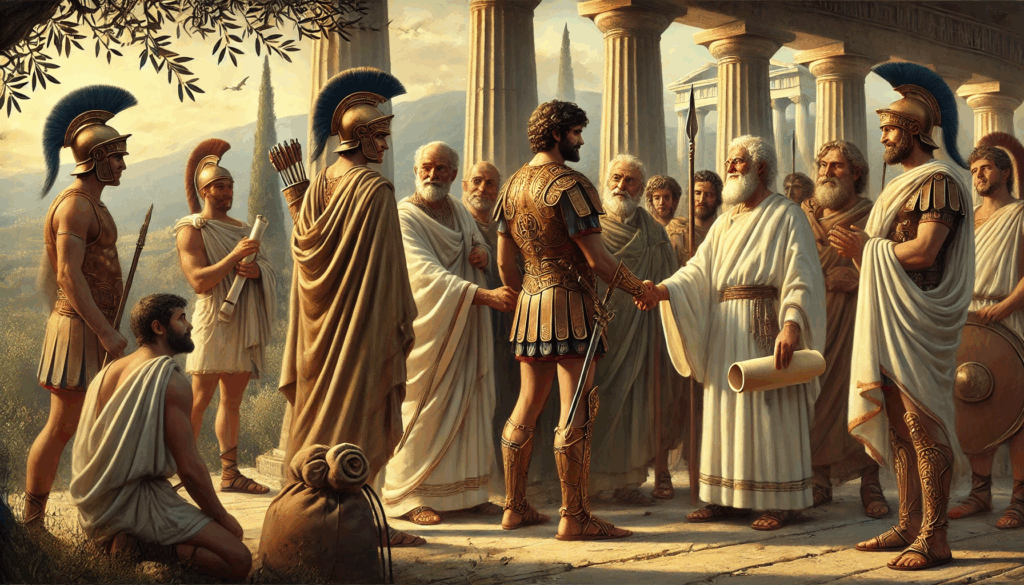

Thrasybulus meets the gaze of a Theban leader as their hands clasp in quiet defiance of tyranny. The resolve in their faces reflects a shared purpose — that Athens must be free again, and Thebes will help make it so.
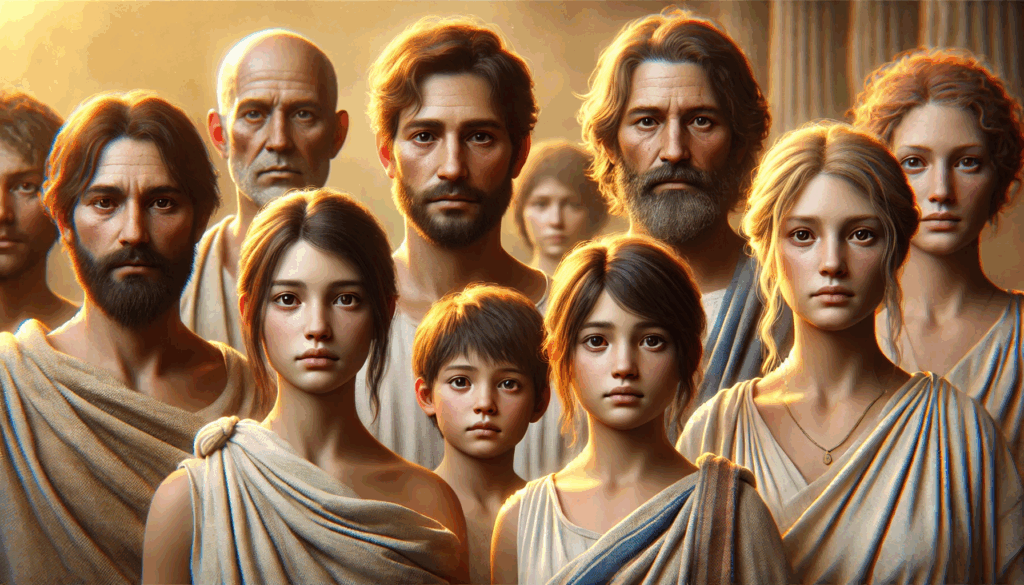
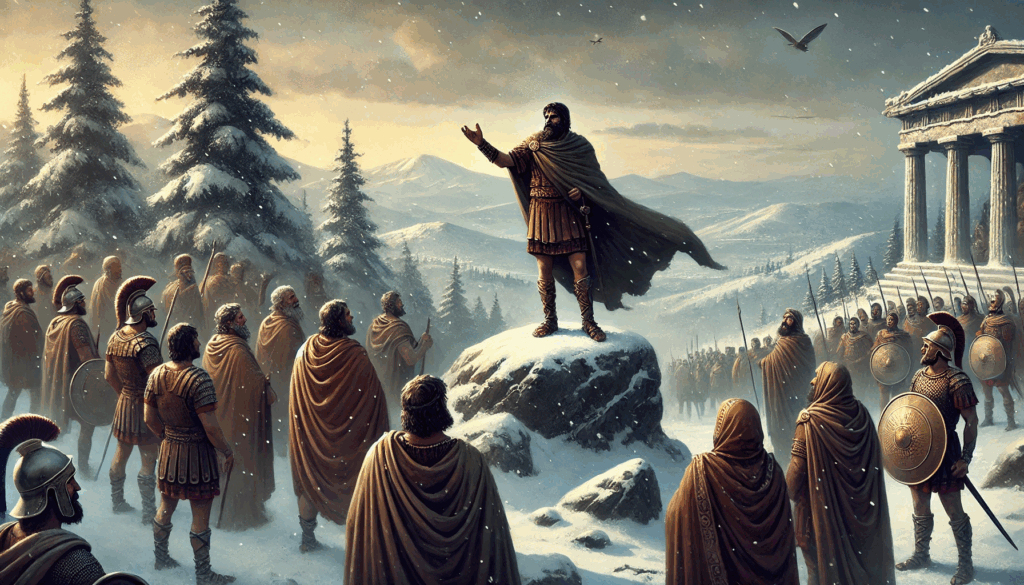
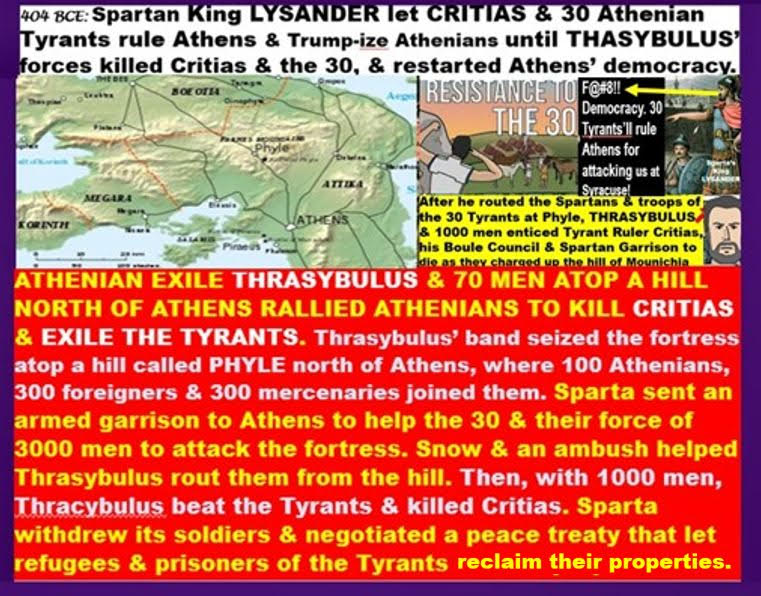
ATHENIAN EXILE THRASYBULUS & 70 MEN ATOP A HILL NORTH OF ATHENS RALLIED ATHENIANS TO KILL CRITIAS & EXILE THE TYRANTS
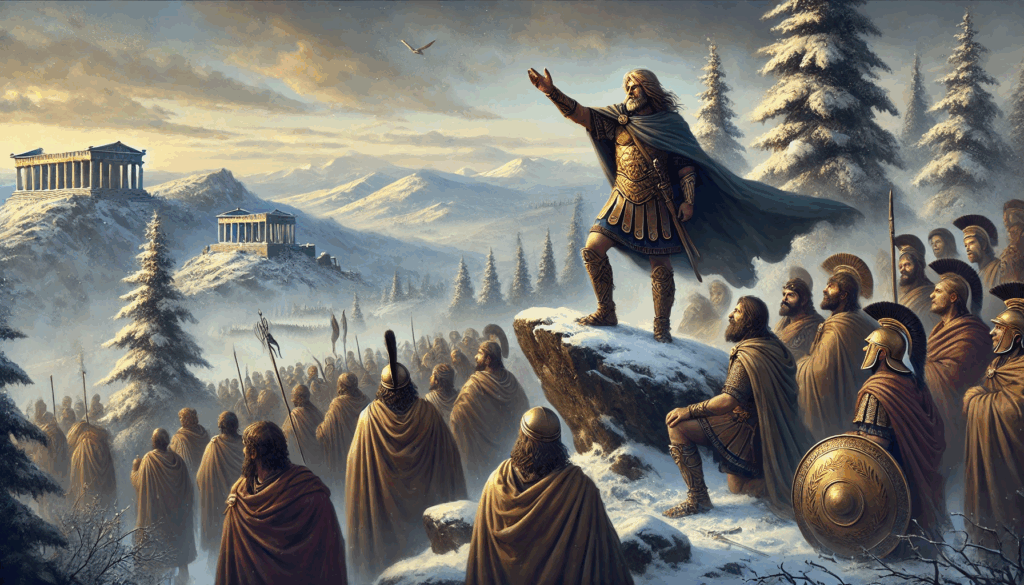
In the frozen highlands above Athens, Thrasybulus rallies exiles and allies with fiery resolve. Snow and stone surround the fortress, but the leader’s voice burns with the promise of democracy’s return.
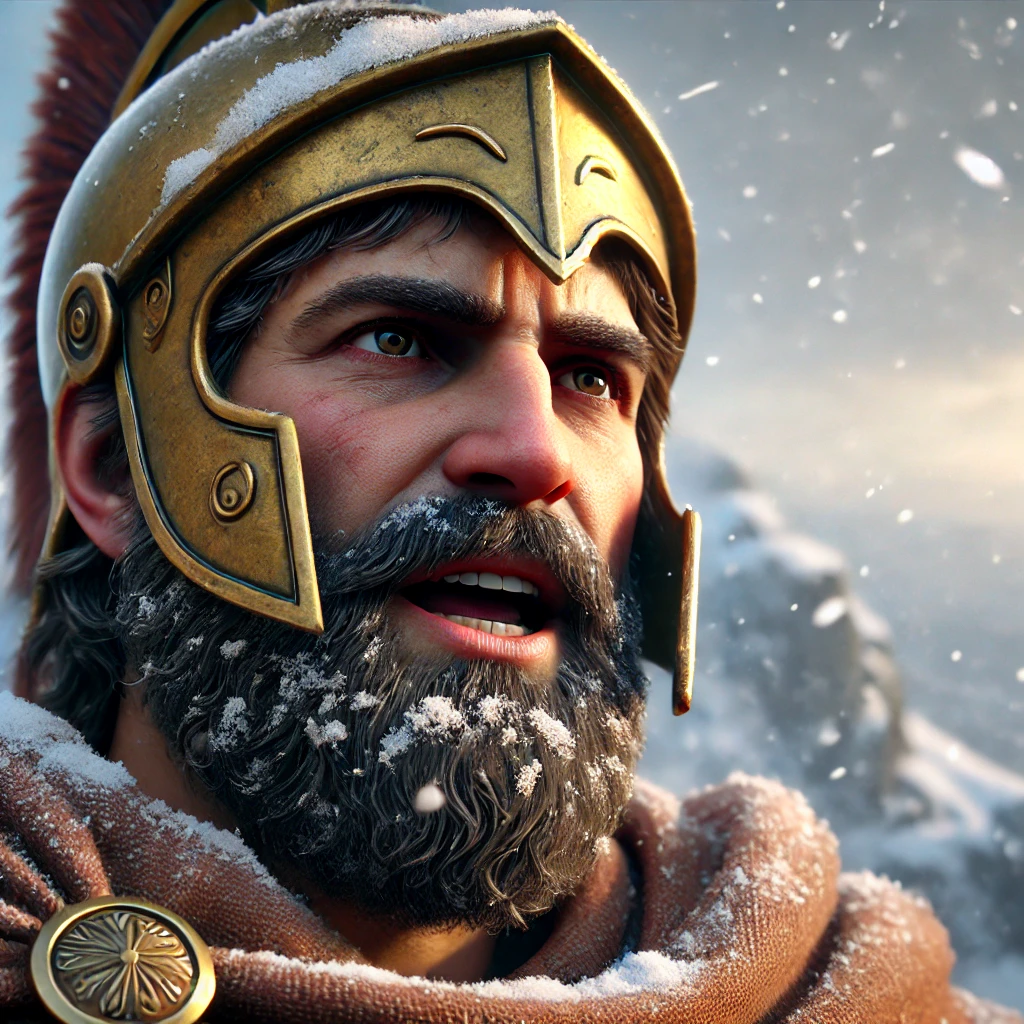
Thrasybulus’ band seized the fortress atop a hill called PHYLE north of Athens. One hundred Athenians, three hundred foreigners, and three hundred mercenaries joined them.

With snow on his cloak and fire in his voice, Thrasybulus speaks not just to men but to history. His steady gaze and battle-worn face reveal the weight of what’s at stake — the rebirth of Athenian freedom.
Sparta sent an armed garrison to Athens to assist the 30 and their force of 300 men in attacking the fortress.
Snow & an ambush helped Thrasybulus rout the Spartans.
THE BATTLE OF MOUNNICHIA
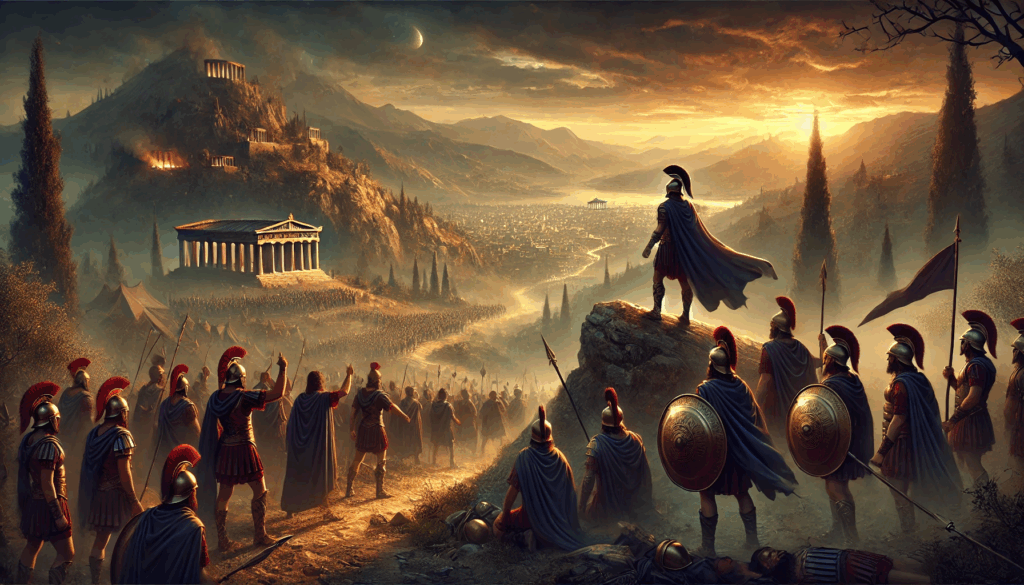
With Athens glowing on the horizon, Thrasybulus rallies his exiles atop the high ground. Bronze helms glint in the dawn; capes flow in the wind — the return of democracy begins not with swords but with resolve.
Then, with about 1000 men, Thracybulus beat the Tyrants in the Battle of Mounnichia & killed Critias.
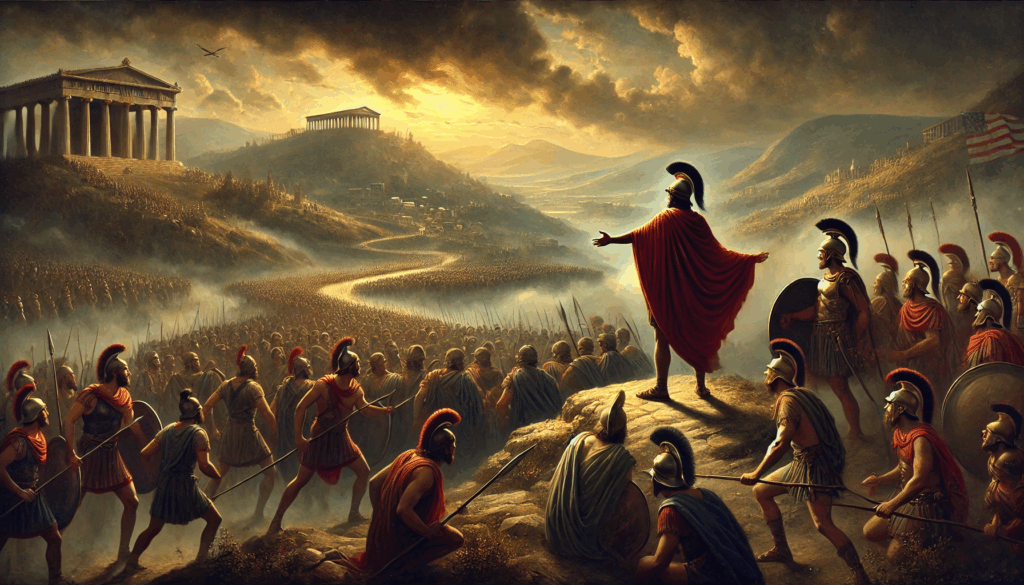
Thrasybulus leads the exiles from the heights, shield in hand, as the Tyrants’ forces wait below. No blood is drawn — yet history holds its breath between tyranny and freedom.

A young Athenian stares down tyranny with silent resolve. His armor is worn, his expression uncertain — but behind his eyes burns the will to reclaim the city he lost.

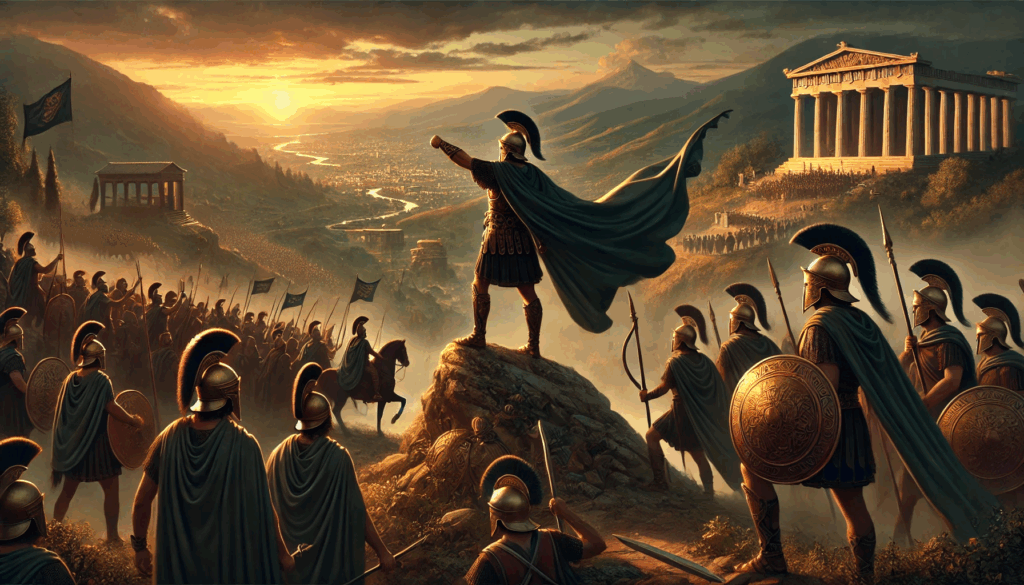
With Athens glowing on the horizon, Thrasybulus rallies his exiles atop the high ground. Bronze helms glint in the dawn; capes flow in the wind — the return of democracy begins not with swords but with resolve.
SPARTA NEGOTIATED PEACE, RETURN OF REFUGEES & PROPERTY, THEN WITHDREW FROM ATHENS
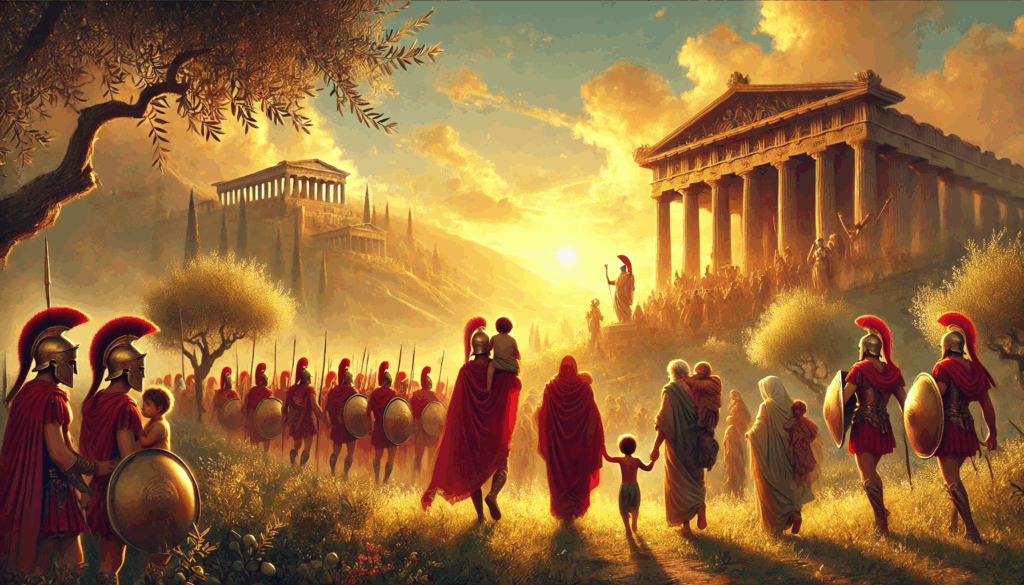
Spartan soldiers march quietly out of Athens as golden light pours over olive trees and marble columns. Citizens, children, and elders return through the same gates — not as soldiers, but as free Athenians. Above them, the Parthenon watches like a guardian reborn.

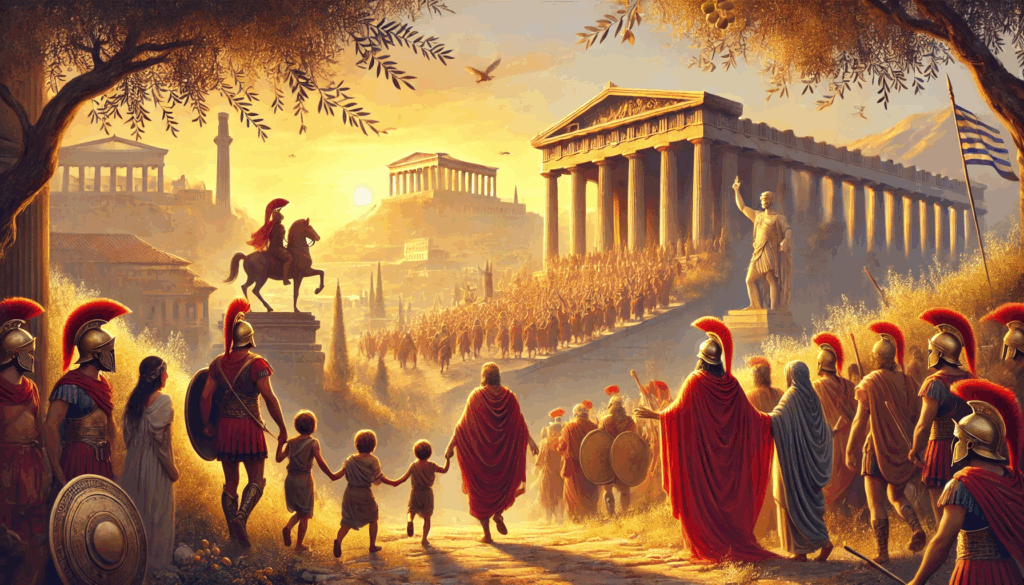
Hand in hand, two children return with their families to a city once lost. Lit by olive leaves and golden morning light, their wonder and innocence mirror the rebirth of Athens itself — a quiet joy that outlives conquest.
Sparta withdrew its soldiers & instead negotiated a peace treaty that allowed Athenian refugees & prisoners of the Tyrants to return to their properties.
ATHENIANS TRICKED & KILLED TYRANTS WHO FLED TO ELEUSIS
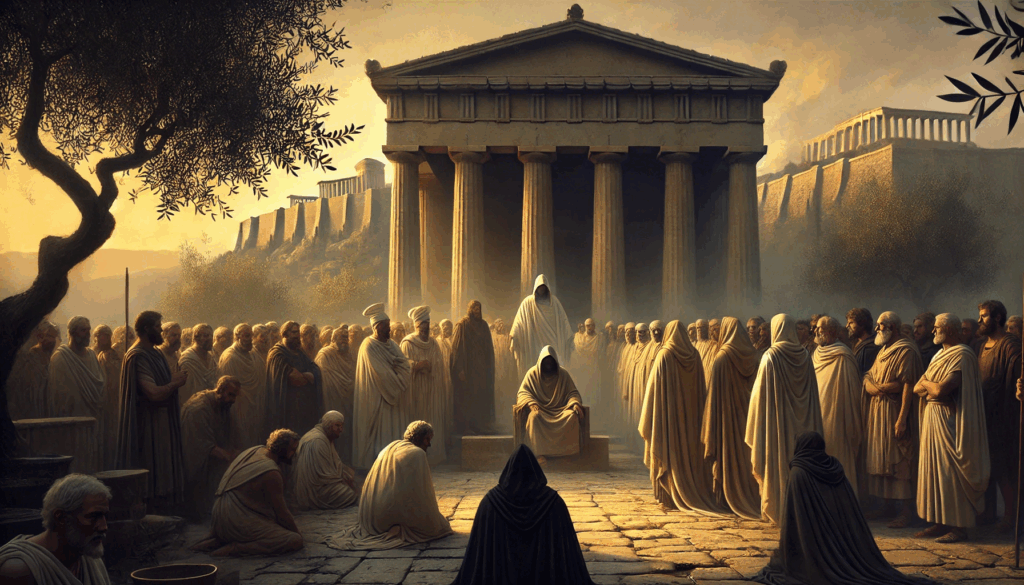
In the sacred courtyard of Eleusis, cloaked figures — the last of the Tyrants — await judgment. Surrounded by Athenian citizens in quiet robes, they face not swords but the heavy silence of justice. The olive branches overhead and fading light speak to endings and reckonings.
Surviving Tyrants moved to exile in Eleusis. Athenians had them come to a “settlement conference” & murdered them—Sic semper tyrannus.
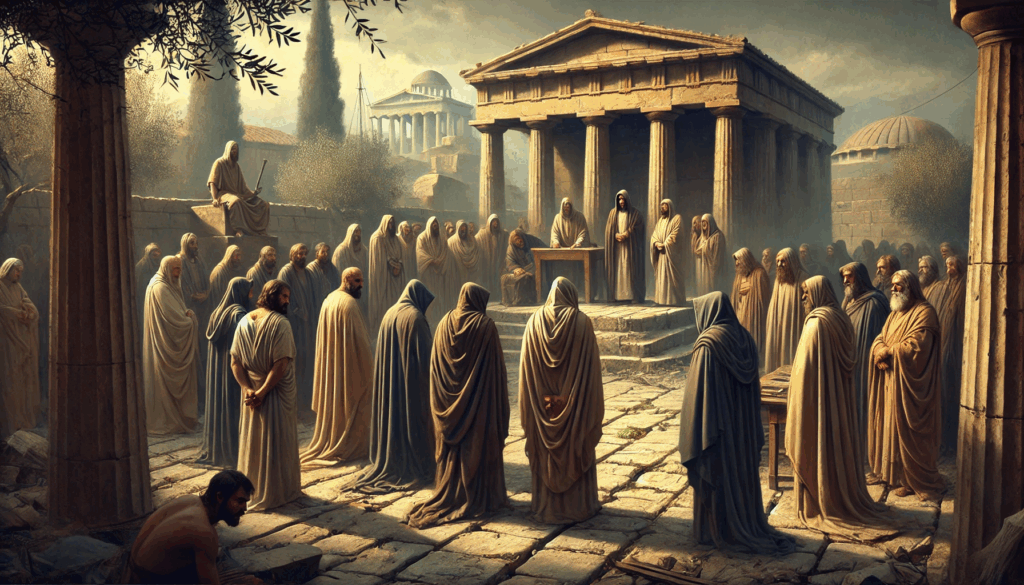
Beneath the columns of Eleusis, those who ruled through fear now stand humbled before the people. No weapons are drawn, yet the mood is tense — a silent verdict looms. This is how Athens ends tyranny: not with vengeance but with memory, witness, and resolve.

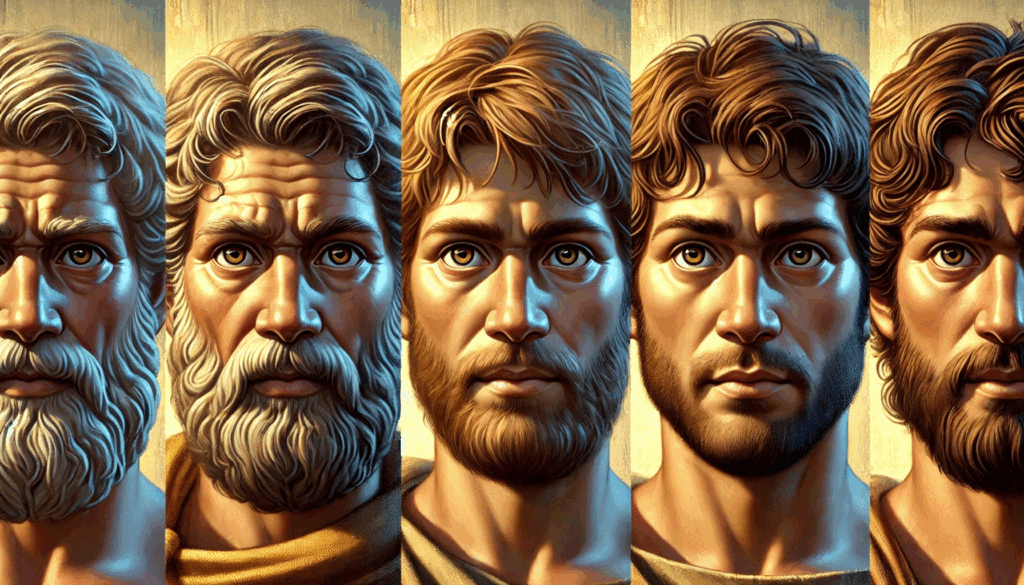
Wrapped in dark robes, the last of the Thirty stares outward — not with defiance, but with the heavy realization that his time is over. Behind him, citizens in white wait — silent, steady, unmoved. The eyes reveal everything: fear, pride, and the slow acceptance of judgment.
Athens kept Oligarchs out of the city for the next 40 years.

Thrasybulus’ story is one of resilience, leadership, and commitment to democratic values. His actions, both on the battlefield and in the political sphere, solidified him as one of the most important figures in history.

Bathed in golden light, Thrasybulus stands above a peaceful Athens, his eyes fixed on the horizon. Cloaked in honor and history, he symbolizes the return of freedom — a warrior not just of war but of vision, principle, and enduring civic hope.
✅ Keywords (comma-separated)
Athens, Athenian men, classical Greece, ancient Greece, Thrasybulus, democracy, portrait, emotional faces, historical realism, artistic fantasy, late 5th century BCE, ancient history, classical portrait, resilience, dignity, Greek beards, realistic closeup, timeless expression, Greek warriors, post-war Athens
ATTENTION JOINT CHIEFS
Could you do me a favor and share and repost this? May our patriotic military top leaders give hope to Americans who resist Trump’s tyranny.
✅ FACEBOOK Description (Long-Form Story Post)
Title: The Fall of the Thirty Tyrants: How Athens Reclaimed Democracy
In 404 BCE, Sparta crushed Athens in the Peloponnesian War. They installed a brutal regime of 30 oligarchs — led by Critias — who murdered citizens, seized property, and drove thousands into exile. These “Thirty Tyrants,” backed by Spartan troops, reduced Athens to a shadow of itself. Each Tyrant stole from — and executed — a foreign resident to consolidate power. The city was ruled through fear.
But the soul of Athens lived on in those it had cast out.
One of them, Thrasybulus — a war hero and democratic idealist — rallied refugees in exile. With help from Thebes, a sanctuary city that defied Sparta, Thrasybulus and 70 loyalists crossed the border, seized a fortress at Phyle, and called on Athenians to resist. Hundreds joined.
In a final stand at the Battle of Mounnichia, Thrasybulus and his growing force defeated the Tyrants. Critias fell. Sparta withdrew. The people returned. Democracy was restored.
This illustrated thread tells the story through art: from defeat and terror to hope, unity, and the faces of those who made history by reclaiming it.
Tags:
#Athens #Thrasybulus #ThirtyTyrants #GreekHistory #PeloponnesianWar #Democracy #AncientGreece #HistoricalArt #FacesOfFreedom #VisualHistory #FantasyRealism #HistoryThroughArt #AthenianDemocracy #ResistTyranny #JusticeRestored
✅ X (Short-Form Version)
Athens fell to Sparta in 404 BCE. The Thirty Tyrants ruled with terror. One exile — Thrasybulus — returned, rallied the people, and took back the city. This is the story of democracy reborn through exile, resistance, and courage.
#Athens #GreekHistory #Democracy #Thrasybulus #ThirtyTyrants #VisualHistory
Preview YouTube video The 30 Tyrants | The Reign of Tyranny
✅ FOR FACEBOOK (long-form, descriptive)
Description:
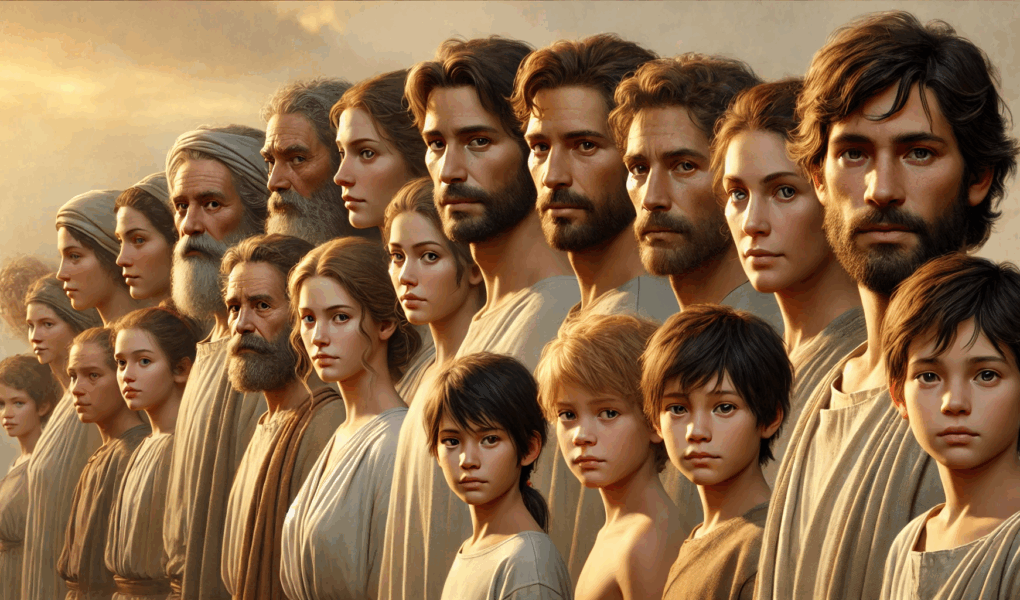
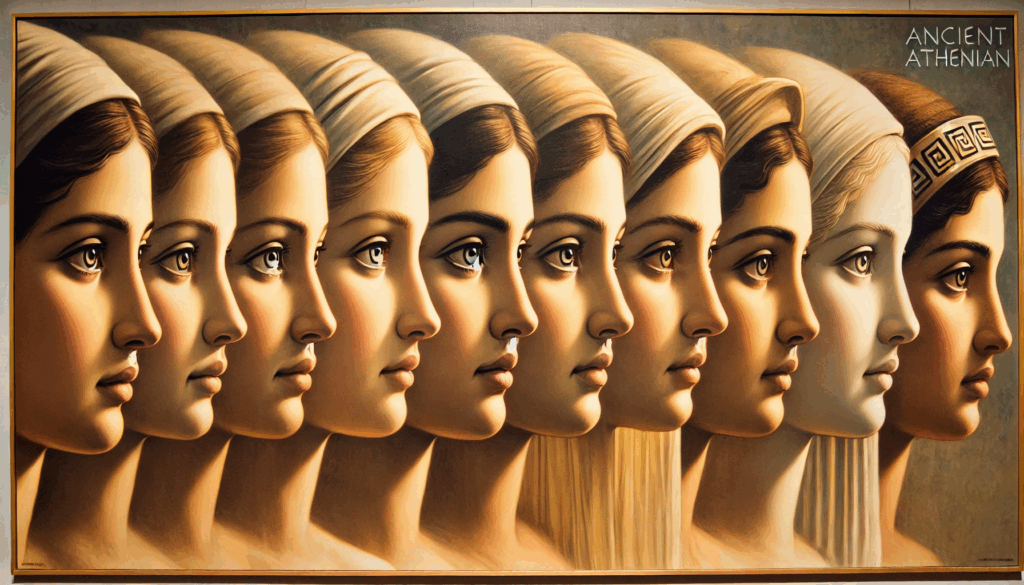
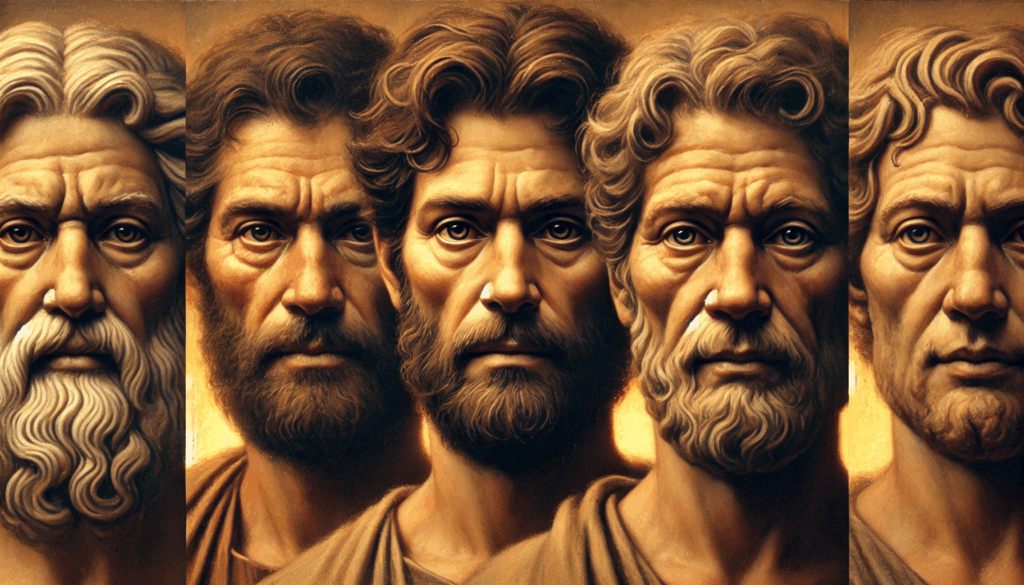
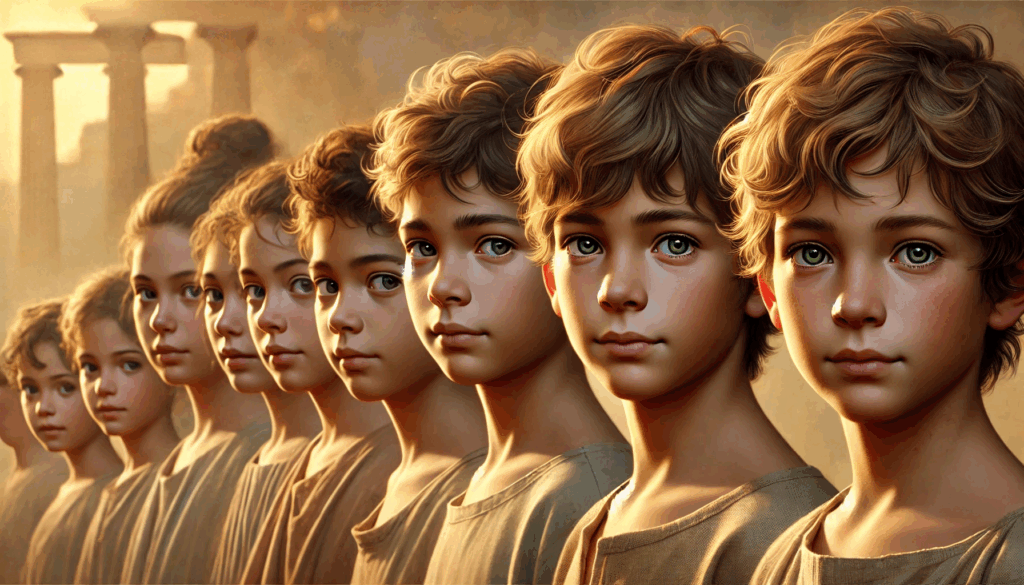
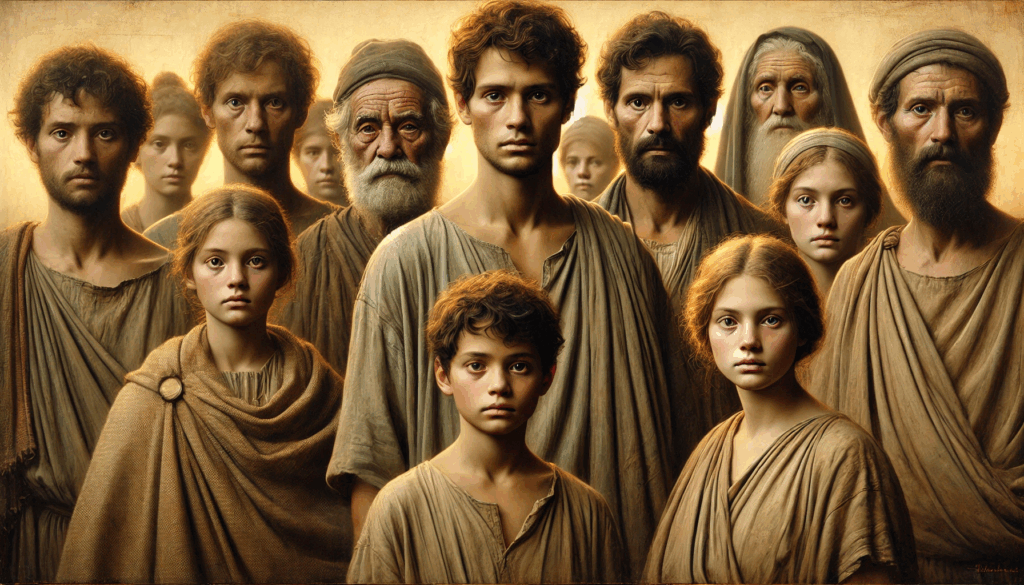
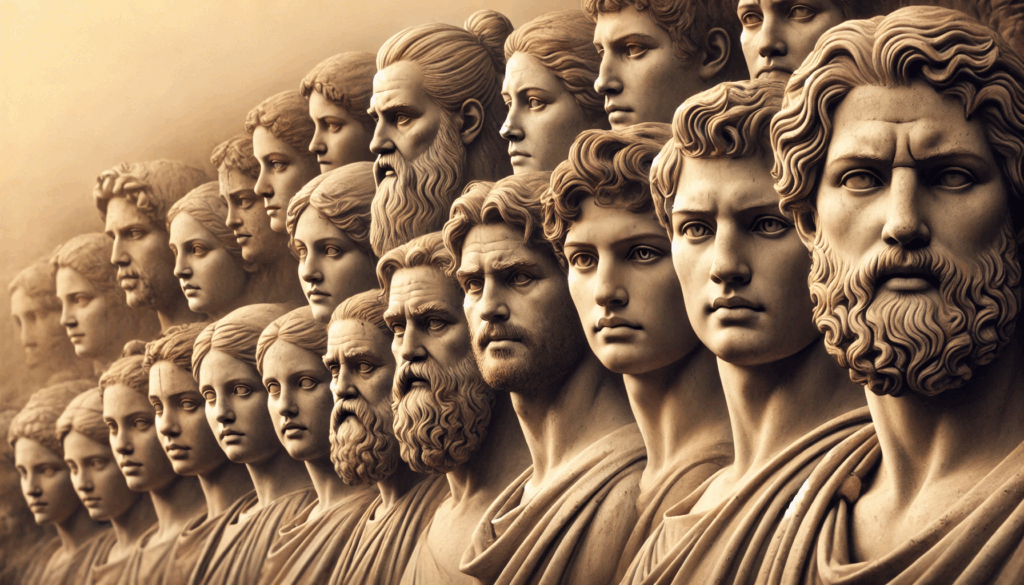
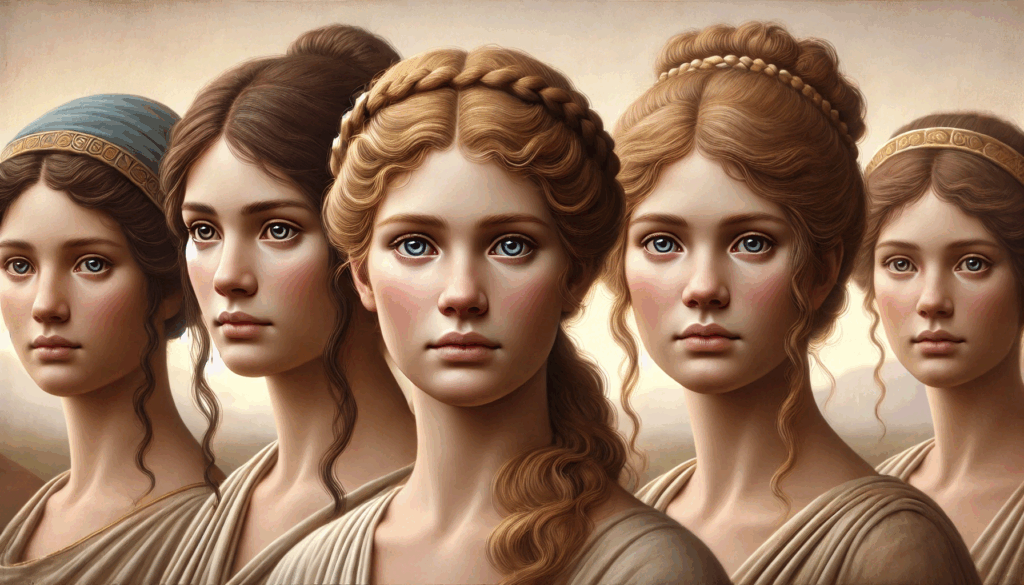
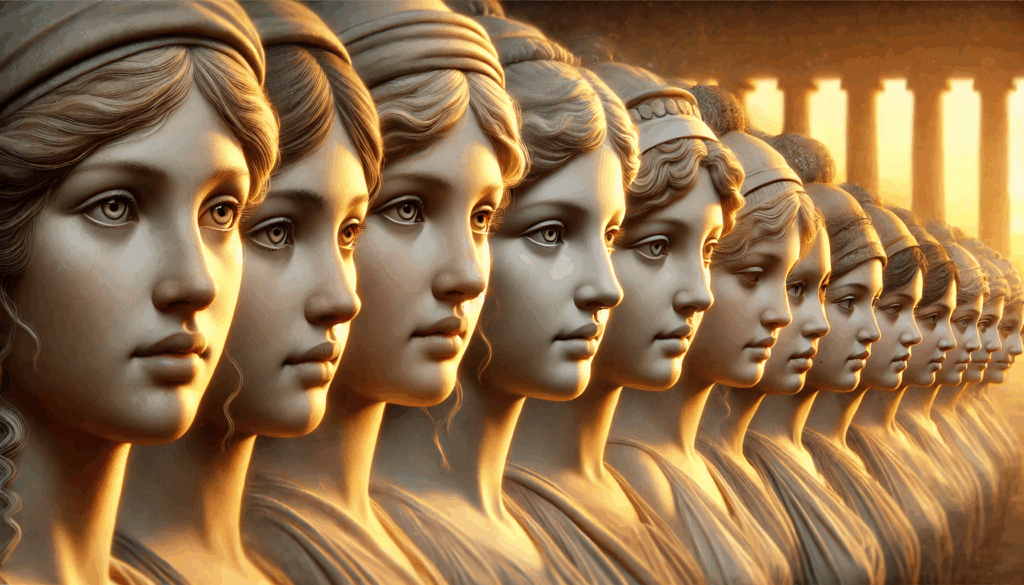
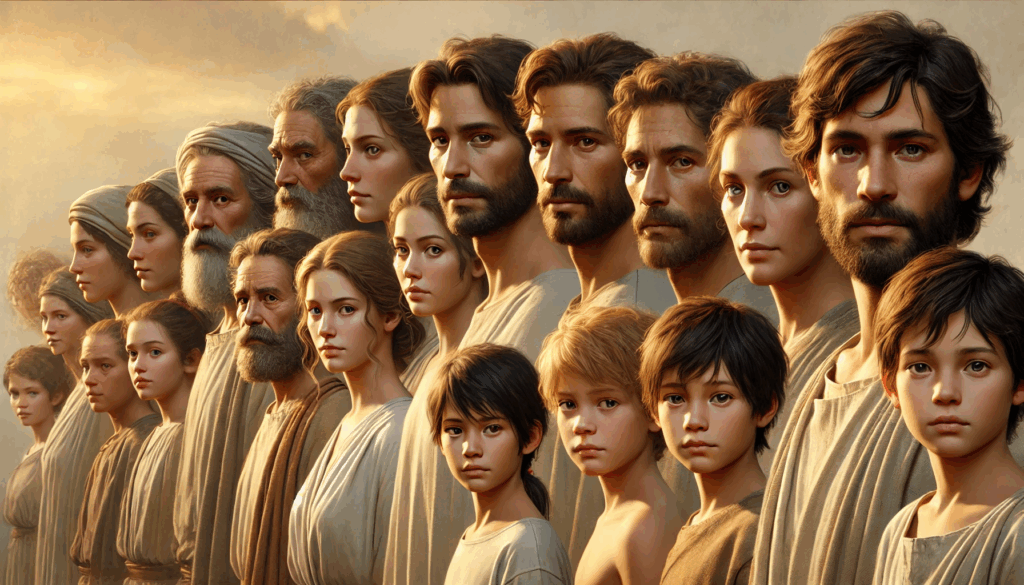
Faces of ancient resilience. This portrait captures the spirit of Athenian men during the darkest and brightest days of their city — the fall of tyranny and the rebirth of democracy. Each gaze speaks across centuries: strength, sorrow, and an unwavering connection to justice.
Inspired by the story of Thrasybulus and the fight to restore Athenian democracy after the Thirty Tyrants’ reign (404–403 BCE).
Tags:
#AncientAthens, #AthenianDemocracy, #ThirtyTyrants, #Thrasybulus, #HistoricalArt, #ClassicalFaces, #GreekHistory, #EmotionalPortraits, #AthensReborn, #FacesOfFreedom, #ResistTyranny, #FantasyRealism, #ArtHistory, #HistoryThroughFaces
Reference Link (if needed):
📜 More on this history
✅ FOR X (formerly Twitter – short form)
Post:
Eyes of a democracy reborn. Realistic portraits of ancient Athenians in the shadow of tyranny — and the light of resistance. #Athens #GreekHistory #Thrasybulus #ThirtyTyrants #Democracy #AncientFaces

The 30 Tyrants | The Reign of Tyranny

Bathed in golden light, Thrasybulus stands above a peaceful Athens, his eyes fixed on the horizon. Cloaked in honor and history, he symbolizes the return of freedom — a warrior not just of war, but of vision, principle, and enduring civic hope.