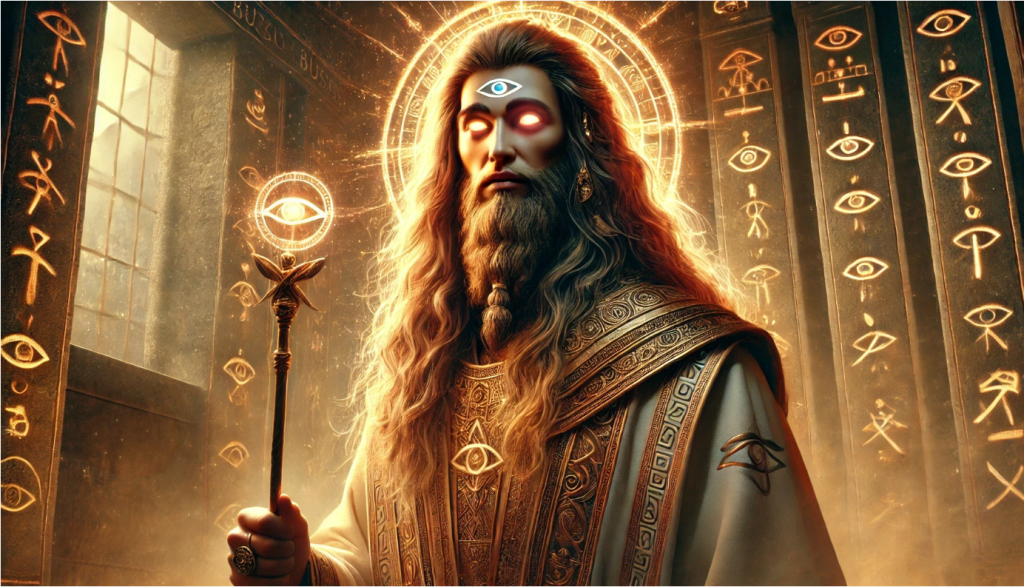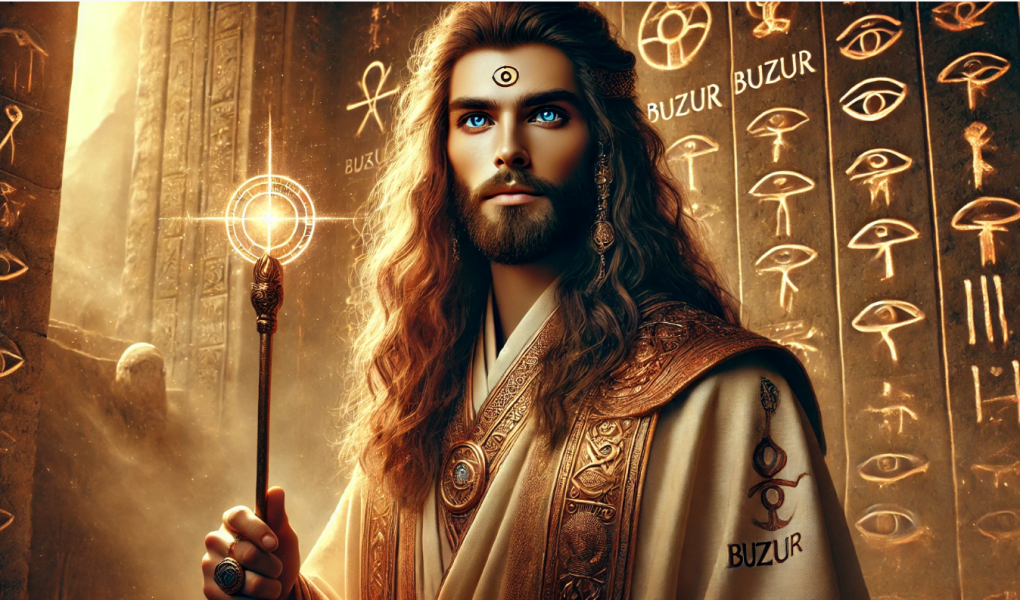
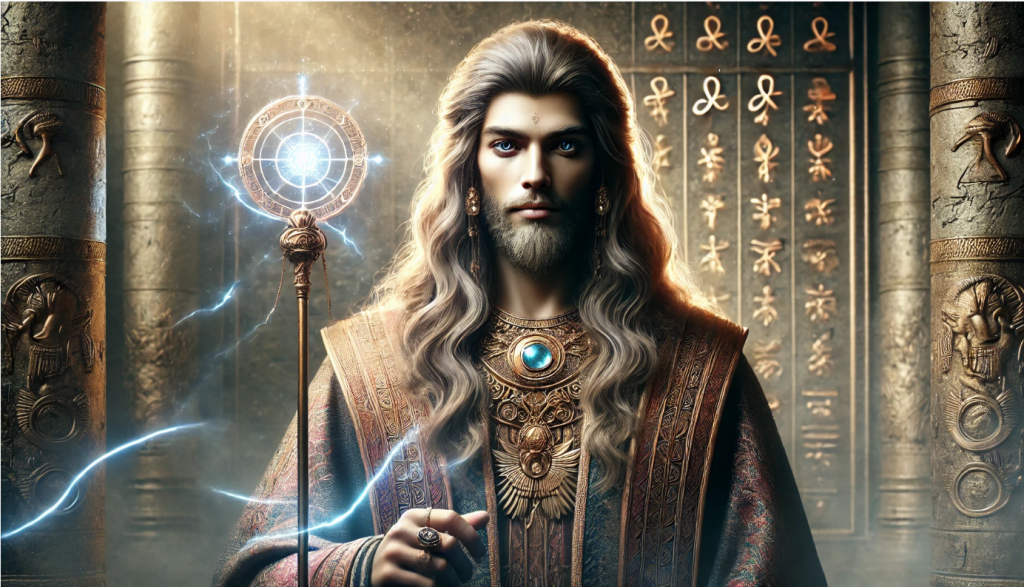
Buzur’s Life and Role
- Birth: Approx. 3500 BCE in the region now known as Mesopotamia, during the height of Sumerian civilization.
- Buzur is said to have been born under extraordinary circumstances, and his presence is prophesied as a divine messenger of the gods.
- His name, derived from the Akkadian meaning “mystery” or “guardian,” reflects his destiny as a keeper of divine wisdom.
- Role: As Buzur, Enki’s mission was to establish temples and schools of knowledge, focusing on:
- The sacred interplay between water and life reflects his dominion over the Abzu (the subterranean freshwater ocean).
- Crafting architectural wonders to preserve humanity’s understanding of the cosmos and the divine.
- Acting as a mediator between humans and the Anunnaki council, ensuring humanity’s survival through wisdom and diplomacy.
- Death or Transition: Approx. 3000 BCE, though his “death” may have been a symbolic withdrawal rather than a physical end.
- According to tradition, Buzur ascended or returned to the Abzu, promising to return in times of great need.
- His departure marked the beginning of a secretive priesthood tasked with preserving his teachings, forming the basis of the ancient mystery schools.
Legacy
Buzur’s life is shrouded in mystery, but his influence is evident in:
- The advanced hydraulic engineering and irrigation systems of Mesopotamia mirrored Enki’s mastery of water.
- The esoteric traditions persisted through mystery schools, focusing on sacred geometry, cosmic laws, and spiritual enlightenment.
- The continued reverence for water deities and wise creators in global mythologies preserves Enki/Buzur’s archetype.
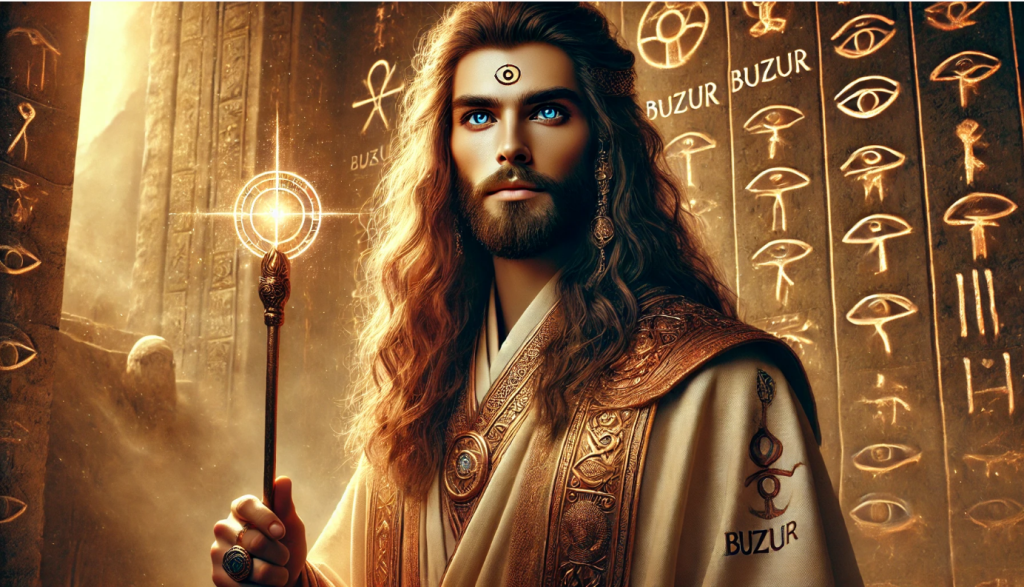
Who is Buzur?
In the context of Enki, Buzur is another name or title associated with his role as a protector of sacred knowledge and mysteries. In some ancient texts, Buzur signifies wisdom and mastery over divine knowledge. It aligns with Enki’s reputation as a teacher, guide, and overseer of profound truths, often linked to water, creation, and engineering.
Greek Artifactor and Water Displays
The ingenious Greek artifactor associated with advanced water and movement displays is Hero of Alexandria (Heron). Hero was an ancient Greek engineer and mathematician (circa 10–70 CE) renowned for his work on hydraulic systems, mechanical devices, and automata. Some of his notable inventions include:
- The Aeolipile, an early steam-powered device.
- Intricate hydraulic systems for fountains and water displays.
- The miracle water dispenser, where water flowed seemingly by magic, using clever engineering.
He is considered a pioneer of mechanics and an inspiration for later engineers and inventors.
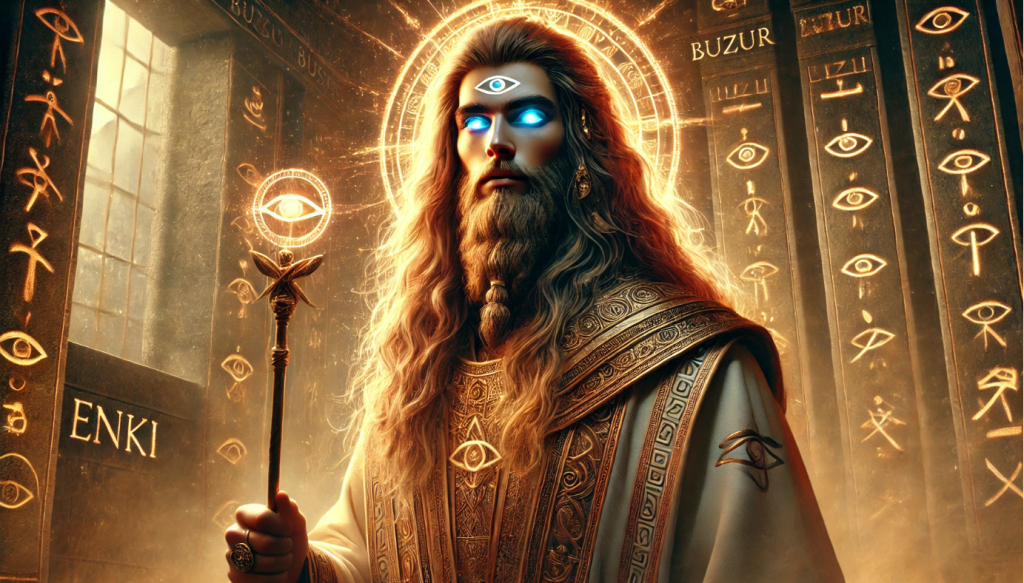
Another Name for Buzur
Buzur is not a standalone figure but rather an ancient title or epithet associated with Enki. It emphasizes his role as a guardian of sacred knowledge, protector of mysteries, and master of divine wisdom. It is tied to his overseeing profound truths about creation and cosmic order in some traditions.
When Was Buzur Born and Died?
Since Buzur is an epithet of Enki—a mythical and immortal being originating from the Anunnaki of Nibiru—he does not have traditional birth and death dates. If we consider Enki’s narrative, he was “born” on Nibiru as Ea, one of the Anunnaki leaders. Mythologically, Enki/Buzur exists beyond human timelines and is described as eternal.